



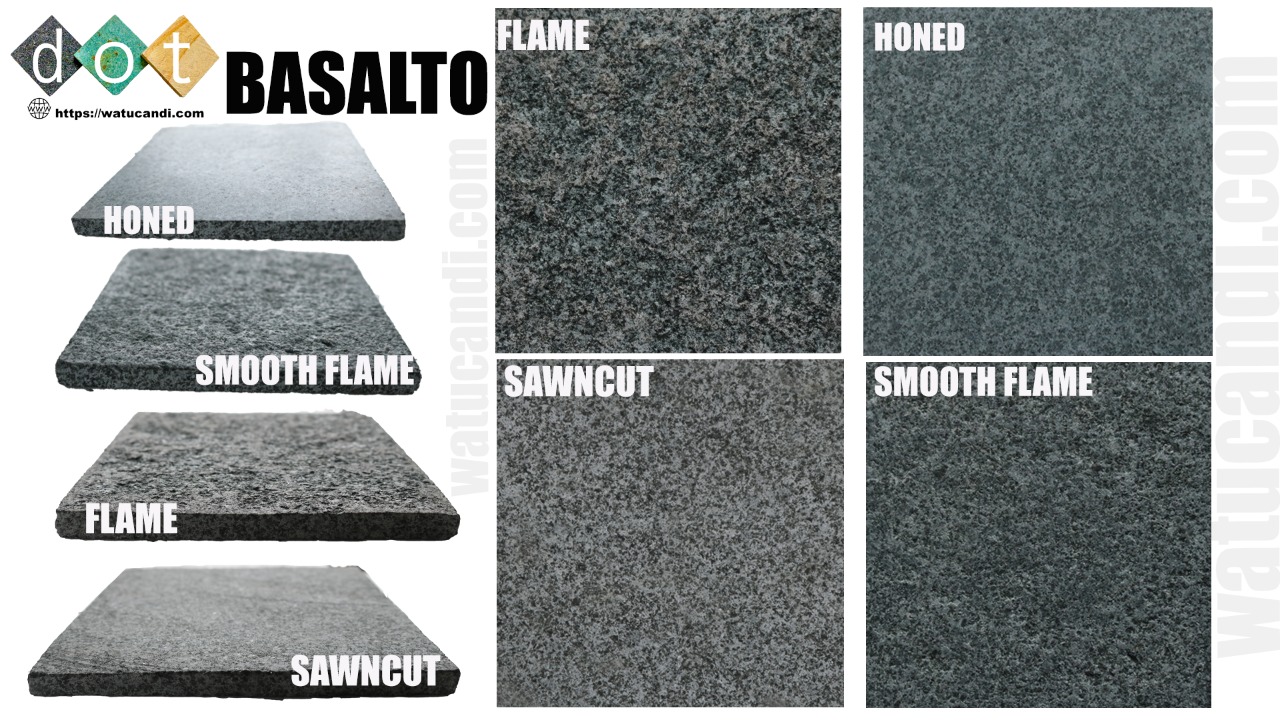
“Don’t choose the wrong finish! This guide unveils the crucial differences between Sawn Cut, Honed, Flame, and Flame Smooth finishes on basalt and andesite stone. Discover the secrets to selecting the right texture for swimming pool safety, interior luxury, and exterior durability. It is not just about aesthetics; this is about function, comfort, and the long-term investment of your property. A must-read before ordering natural stone!”
In the world of modern architecture and interior design, selecting finishing materials is not merely about color or pattern, but rather about character, durability, and how the material interacts with light and human touch. Among the myriad of natural material options, basalt, granite, and andesite stone hold a special position due to their timeless sturdiness and beauty. Particularly in Indonesia, volcanic wealth provides us with abundant access to high-quality rocks that have been used since the era of Borobudur Temple to contemporary skyscrapers. Understanding the variations in surface finishes for these stones is the key to unlocking maximum aesthetic potential in your construction or renovation projects.
Basalt natural stone, often paired with granite and andesite, possesses unique characteristics of high density and exceptional toughness. This material originates from volcanic lava that cools rapidly, creating a fine crystal structure that makes it highly resistant to extreme weather, abrasion, and heavy loads. However, the true beauty of basalt stone only emerges when it undergoes the appropriate finishing process. Each type of surface treatment not only alters the visual and tactile texture but also affects technical functions such as slip resistance, ease of maintenance, and water absorption. Therefore, in-depth knowledge of the four main finishes—Plain RTM/Sawn Cut, Honed, Flame, and Flame Smooth—becomes an essential foundation for architects, contractors, and homeowners who desire precise and high-artistic-value final results.
Understanding the Basic Characteristics of Basalt, Granite, and Andesite Natural Stone
Before delving into the technical discussion regarding finishes, it is crucial to understand the fundamental differences between these three types of stone, even though they are often categorized similarly. Natural andesite stone is an extrusive igneous rock formed from volcanic lava, featuring dark gray to black colors with fine mineral grains. It is known as “temple” stone due to its long history in constructing ancient monuments in Java. Meanwhile, basalt has a similar mineral composition but is often denser and darker, with hardness levels equaling or even exceeding granite in some cases. Natural granite itself is an intrusive igneous rock formed deep beneath the earth’s surface, possessing larger crystals and a wider variety of colors.
The primary advantage of basalt natural stone compared to other materials is its color consistency, which tends to be uniform jet black or dark gray, making it a favorite for modern minimalist designs requiring a solid and elegant impression. Its low porosity makes basalt ideal for wet area applications such as swimming pools or bathrooms, provided the correct finish is selected. For more detailed technical specifications regarding local versus precision quality comparisons, you can refer to the black Merapi lava candi stone guide which discusses quality standards comprehensively. This understanding is crucial because each finish will react differently to the density and mineral composition of each stone type.

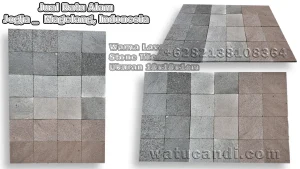
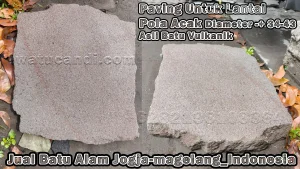
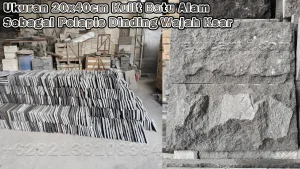
The image above provides a clear illustration of how the same material type can look vastly different depending on its surface treatment. Observe how the honed finish absorbs light softly to create a luxurious matte effect, while the flame finish displays a dramatic rough texture with slightly lighter colors due to the burning process. This variation allows designers to play with contrast and harmony within a single space without having to change material types, simply by combining various finishes to create a dynamic and non-monotonous visual rhythm.
1. Plain RTM / Sawn Cut Natural Stone Finish: Beauty in Simplicity
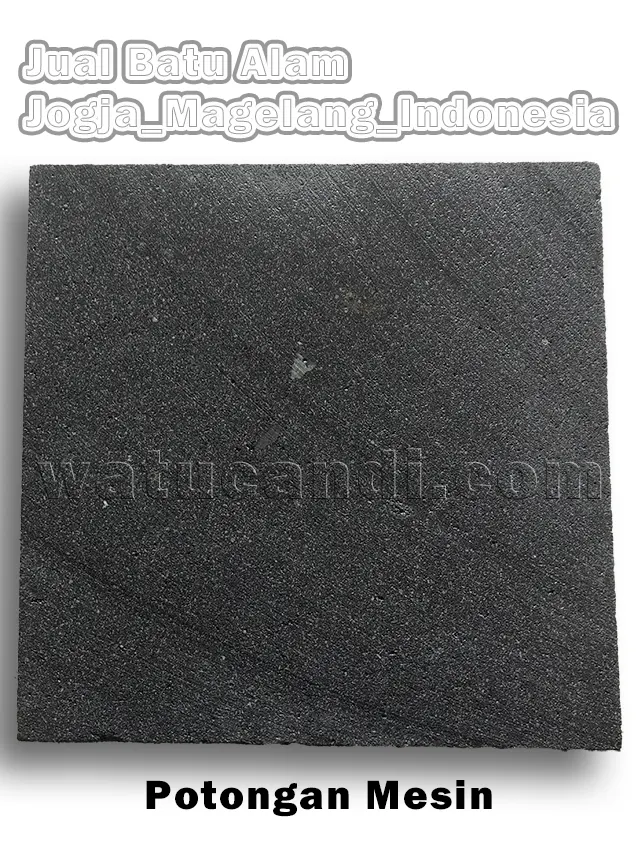
The Plain RTM (Machine Flat) Natural Stone Finish, internationally known as Sawn Cut, is the most basic and honest form of natural stone processing. This process involves cutting stone blocks using diamond saws or wire saws, producing a flat surface that still retains the marks of the cutting blade. The resulting texture is not slippery like glass but instead features parallel and regular micro-grooves, providing a strong yet natural industrial character. This is the most economical finish due to minimal additional processing after cutting, yet it is precisely this simplicity that makes it highly versatile and suitable for various architectural styles.

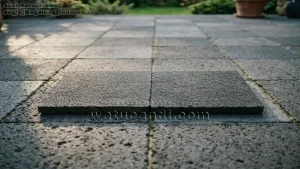
Functionally, the Sawn Cut finish offers a good balance between aesthetics and safety. Its surface is not as slippery as polished stone nor as rough as flamed stone, making it a safe choice for pedestrian areas, sidewalks, or carport floors that require adequate traction when wet. The stone color in this finish tends to be darker and more uniform because no mineral layers are peeled off or oxidized by heat. For those seeking cost-effective options without sacrificing original material quality, Plain RTM / Sawn Cut prices are very competitive and serve as a smart solution for budget-conscious projects that still desire authentic natural stone nuances.
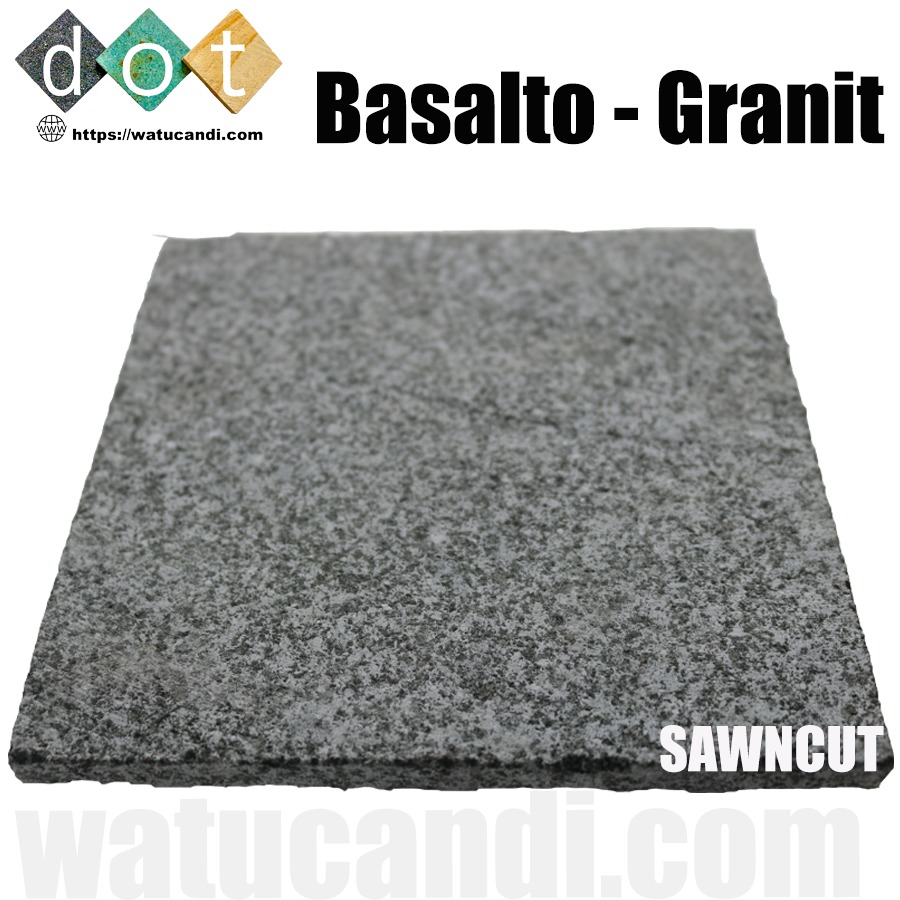
Another advantage of this finish is its ease of maintenance. Since there are no widely open pores like in flamed stone, dirt does not easily penetrate the stone structure, so routine cleaning can be done simply with a broom or wet mop. However, keep in mind that because the surface is still raw, applying a coating or sealant is highly recommended if used in areas prone to oil stains or colored liquid spills. For inspiration on using similar materials in paving contexts, you can view candi stone paving examples which use similar finishing principles to create a neatly arranged rustic impression.
2. Honed / Polished Natural Stone Finish: Elegant Matte Luxury
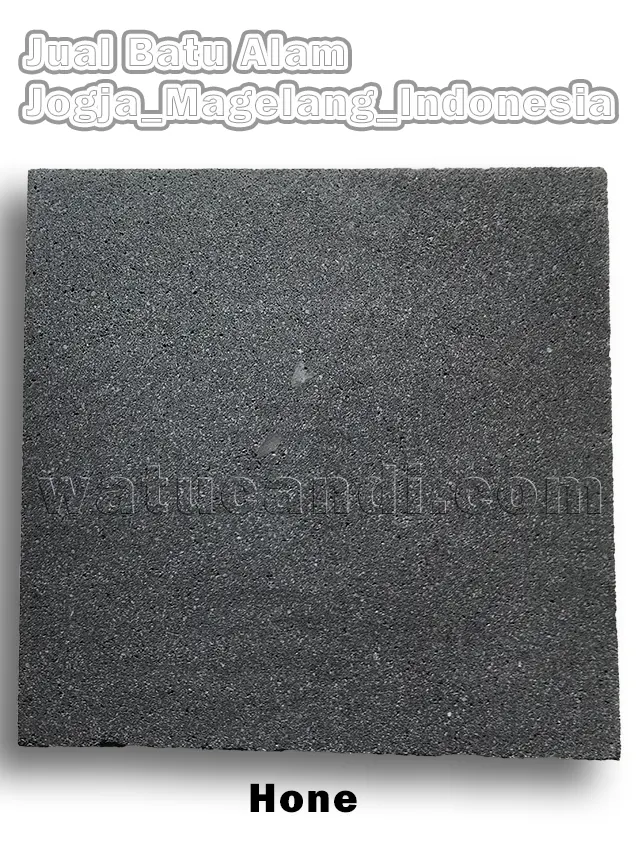
The Honed Finish for Natural Stone, often referred to in Indonesia as “ground” or “matte polish,” is an advanced process from Sawn Cut where the stone surface is rubbed using graded abrasives to achieve a certain smoothness without producing a mirror-like shine. The final result is a surface that feels silky soft to the touch, with a matte appearance that exudes an aura of sophistication and quiet luxury. Unlike polished finishes that reflect light directly, honed finishes diffuse light, creating a warm, intimate room atmosphere that is not glaring to the eyes. This is the favorite finish for luxury residential interiors, boutique hotels, and high-end commercial spaces.

The honed finish manufacturing process requires specialized skills and equipment. Stone that has been RTM cut is then passed through polishing machines with several grinding stages, ranging from coarse grit (#50, #100) to fine grit (#200, #400, or higher). The higher the grit used, the smoother the surface becomes. It is important to note that “honed” differs from “polished.” If you desire a truly mirror-like shiny surface, that requires a polishing process up to #3000 grit or buffing, which of course incurs higher production costs. However, many designers now prefer honed finishes because of their slip-resistant properties (safer than polished), resistance to showing fine scratches, and easier maintenance. Further information on surface variants can be found in the article on 5 black lava stone surfaces.

Honed finish applications are extensive, ranging from living room floors, accent walls, kitchen countertops, to bathroom vanity tops. Its nature of not perfectly reflecting shadows makes it very forgiving of fingerprints or fine dust, making it a practical choice for families with small children or high-traffic public areas. Although the price is higher than RTM due to additional production processes, this investment is worth the aesthetic value and comfort offered. For price references and honed product specifications, please check honed / polished prices. Combining this finish with natural stone furniture such as black lava stone top tables will create perfect material harmony within a single room.
3. Flamed / Burnt Natural Stone Finish: Dramatic Texture with Maximum Anti-Slip
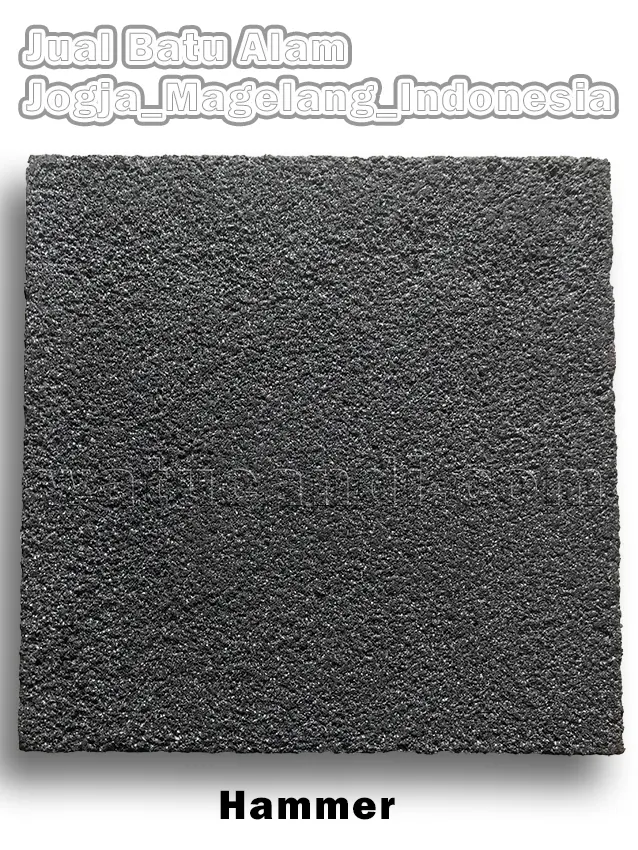
The Flamed or Burnt Natural Stone Finish is the most dramatic and functional processing technique for exterior applications. This process involves blasting extremely high-temperature fire (using propane or oxygen gas torches) directly onto the RTM-cut stone surface. The extreme thermal shock causes mineral crystals on the stone surface to crack and peel (spalling), creating a naturally rough, wavy, and irregular texture. The result is a highly slip-resistant surface, even in wet or mossy conditions. Beyond safety functions, the flame finish also changes the stone color; on black basalt, the burning process often brings out brownish, reddish, or bluish undertones that add visual dimension and strong rustic character.

The main advantage of the flame finish is its durability against extreme weather. The burnt surface is essentially the hardest part of the stone remaining after weak layers peel off, making it highly resistant to wind erosion, acid rain, and freeze-thaw cycles in cold climates. This makes it the gold standard for pathway paving, exterior stairs, swimming pool decking, and parking areas. However, note that this rough surface is harder to clean because dirt can get trapped in texture crevices. Routine maintenance with stiff brushes or light pressure washers is usually required. For a complete guide on lava stone applications in wet areas, read lava stone tiles for swimming pools.
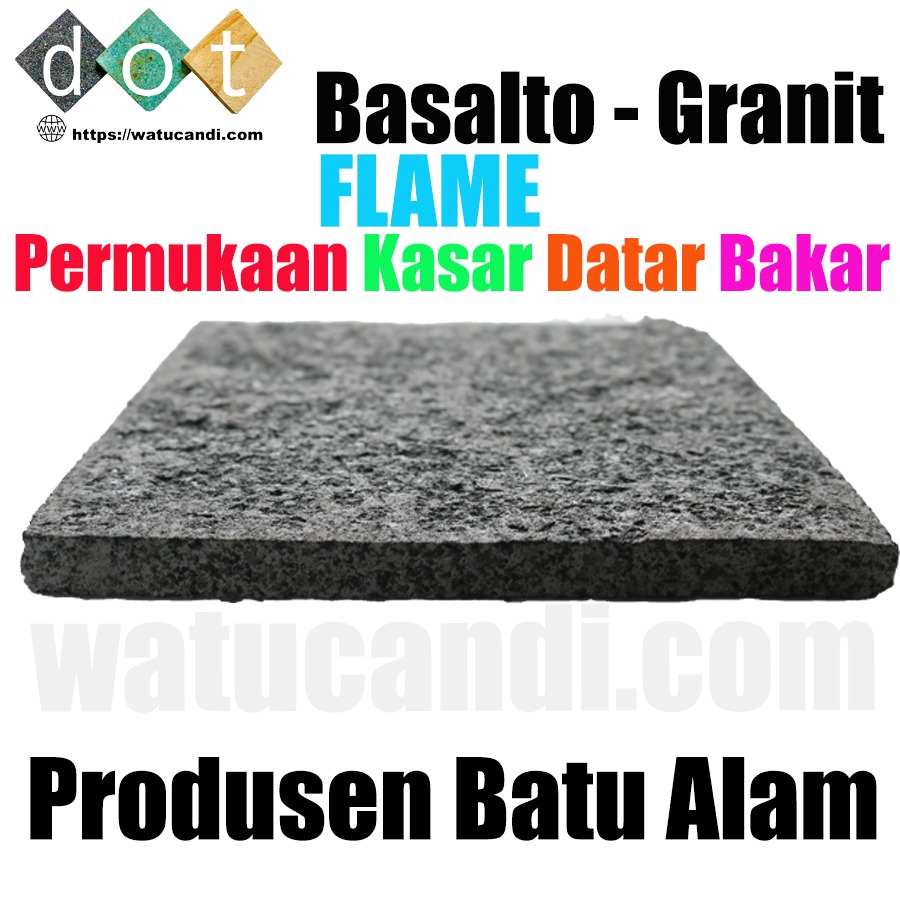
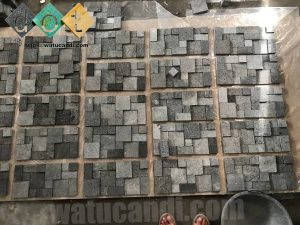
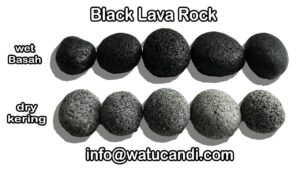
In terms of cost, the flame finish is in the mid-range. The process is faster than honing because it does not require multiple grinding stages, but it consumes significant gas and requires experienced operators to ensure even burning without damaging the stone’s structural integrity. If you are considering this material for landscape or exterior projects, make sure to check current basalt burnt / flame prices. This material also pairs excellently with other landscape elements such as black lava rock pebbles or lava rock stepping stones to create interesting textural transitions in gardens.
4. Flame Smooth / Burnt Smooth Natural Stone Finish: Perfect Compromise Between Texture and Comfort
The Flame Smooth Finish for natural stone, or Burnt Smooth, is a clever innovation answering the dilemma between wanting a rustic flamed stone appearance while still needing touch comfort and easy maintenance. As the name suggests, this finish combines three stages: first, the natural stone is RTM cut; second, it is flamed to obtain characteristic burning texture and color; third, the now-rough surface is ground again (brushed or light honing) to level roughness peaks without eliminating texture valleys. The result is a surface that visually appears rough and textured like flamed stone, yet feels smooth, soft, and non-abrasive when touched. This is a premium finish combining flame aesthetic advantages with honed comfort.

Ideal applications for Flame Smooth natural stone are areas where people frequently walk barefoot or sit directly on stone, such as swimming pool decking, tropical house terrace floors, permanent garden benches, or even luxury bathroom floors. Its not-too-rough texture minimizes scratch risks on sensitive skin, while remaining micro-texture still provides adequate traction when wet. Maintenance-wise, Flame Smooth is much easier to clean than pure Flame because there are no deep crevices trapping dirt or moss. Gentle brush strokes or regular mopping suffice to maintain cleanliness. For similar product references, see burnt smooth / flame smooth prices.

Although the price tends to be higher due to involving two main processes (burning + grinding), the added value makes Flame Smooth a highly worthwhile investment for projects prioritizing user experience and longevity. This finish is also very popular for exterior wall cladding because its rich texture creates beautiful shadow plays when hit by angled sunlight, yet does not trap as much dust as regular flame walls. For further exterior design inspiration, visit the lava stone exterior design page. Combining Flame Smooth walls with lava stone floors will create strong and elegant material cohesion.
Strategic Functions and Hidden Benefits of Basalt Stone Tiles
Beyond undeniable aesthetic value, using basalt, granite, and andesite stone tiles brings functional benefits often misunderstood by the general public. Many consider natural stone installation merely a modern decoration trend or status symbol, when in fact the technical and environmental implications run much deeper. One of the most important yet rarely discussed benefits is natural stone’s capability as a passive temperature regulator (thermal mass). Stone has high specific heat capacity, meaning it can absorb and store large amounts of heat energy before slowly releasing it. In Indonesia’s tropical climate, natural stone floors help stabilize room temperatures: absorbing excess heat during the day so rooms feel cooler, and releasing stored heat at night when air temperatures drop, reducing dependence on AC and fans.
Health benefits are also a crucial factor. Unlike synthetic carpets that can trap allergens, dust, and mites, or vinyl/PVC that may release VOCs (Volatile Organic Compounds), natural stone is an inert material that is hypoallergenic and chemical-emission-free. This makes it the best choice for occupants with asthma, allergies, or chemical sensitivities. Additionally, using local natural stone supports environmental sustainability by reducing transportation carbon footprints compared to imported materials, as well as preserving mining and stonecraft traditions that have been Nusantara cultural heritage for centuries. To understand sustainability and historical aspects more deeply, read the article on Borobudur temple stone connecting this material with past local wisdom.
Architecturally, basalt and andesite stone offer extraordinary design flexibility. They can be applied to ethnic wooden buildings like Joglo, Pendopo, or Limasan as floor bases reinforcing antique character and high artistic value while protecting wooden structures from ground moisture. Conversely, in modern minimalist permanent buildings, this material appears sleek and futuristic, proving it is a timeless material transcending era and style boundaries. Applications are vast: from interior floors, accent walls, garden paving, stepping stones, swimming pool coping, to drainage gutters. For swimming pool applications specifically, the swimming pool tile guide provides comprehensive insights on selecting safe and durable materials.
Finish Selection Guide Based on Location and Function
Choosing the right finish is not just about aesthetic taste but a technical decision impacting safety, durability, and long-term maintenance costs. Here is a practical guide based on application zones:
- Dry Interior Areas (Living Room, Bedroom): Honed finish is the primary choice due to barefoot comfort, easy cleaning, and elegant appearance. Avoid Flame as it is too rough and difficult to clean from household dust.
- Wet Interior Areas (Bathroom, Kitchen): Flame Smooth or Honed with additional anti-slip treatment is recommended. Flame Smooth provides better traction when wet without sacrificing comfort. Always apply penetrating sealant to prevent soap or oil stains.
- Open Exterior Areas (Terrace, Carport, Pathways): Flame is the champion for these areas due to maximum anti-slip properties and weather resistance. Sawn Cut can also be used for less slip-critical areas like fence walls or facades, especially on limited budgets.
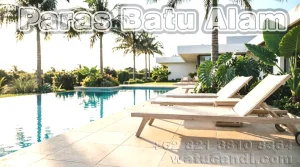
- Swimming Pool Areas (Pool Deck, Coping): Flame Smooth is the gold standard as it is safe for wet bare feet yet remains anti-slip. Avoid Polished as it is very slippery and dangerous. For coping, ensure using thick material with finishes resistant to pool chemicals. See details on swimming pool coping stones.
- Exterior Walls / Facades: All finishes can be used depending on desired effect. Flame for rustic and dramatic impressions with strong shadows. Honed for modern, clean, monolithic impressions. Sawn Cut for industrial and economical impressions. Combine with black lava candi stone cladding for vertical texture variation.
It is also important to consider light orientation. On walls receiving direct sunlight (west/south), rough finishes like Flame will create very dramatic shadows in the afternoon, enhancing stone texture. Conversely, on shaded walls or interiors with ambient lighting, Honed finishes will reflect light softly, helping illuminate spaces without glare. For landscape projects involving gardens, integrate stone with other elements such as garden stone flooring or Merapi garden stepping stones to create harmonious circulation paths.
Video Documentation of 4 Natural Stone Finish Production Processes
The video above provides real visual documentation of the production processes for all four finish types discussed. Watching raw stone transform through cutting machines, fire, and grinding tools firsthand provides much deeper understanding of the complexity and craftsmanship involved behind every natural stone tile. Notice the differences in sound, sparks, and dust produced by each process, as well as real-time color and texture changes. This proves that natural stone is not a uniform mass product but material shaped through intensive interaction between humans, machines, and natural elements.
Technical Comparison and Maintenance Considerations
To assist more objective decision-making, here is a technical comparison table of the four finishes:
| Parameter | Sawn Cut / RTM | Honed / Ground | Flame / Burnt | Flame Smooth / Burnt Smooth |
|---|---|---|---|---|
| Surface Texture | Flat, machine-grooved | Smooth, matte, soft | Rough, wavy, irregular | Visually textured, smooth touch |
| Anti-Slip Level | Medium | Low – Medium | Very High | High |
| Cleaning Ease | Easy | Very Easy | Difficult (needs brush/pressure) | Easy |
| Light Reflection | Low | Low (Diffuse) | Very Low (Absorption) | Low – Medium |
| Touch Comfort | Medium | Very Comfortable | Rough / Uncomfortable | Comfortable |
| Production Cost | Low | High | Medium | High |
| Recommended Area | Carport, Utility, Walls | Interior, Countertop, Vanity | Exterior, Pool Deck, Stairs | Pool Deck, Terrace, Wet Interior |
From the table above, it is clear that no finish is absolutely “best”; there is only what is “most appropriate” for specific contexts. Maintenance considerations are also crucial. Flame finish, although most durable, requires greater cleaning effort. If you lack time or energy for intensive maintenance, Flame Smooth or Honed may be more pragmatic. Always apply impregnating sealer (not topical sealer) for all finish types to protect stone from stains without altering natural appearance. For specific maintenance guides, read the complete black Merapi lava candi stone guide.
Design Integration: Combining Basalt Stone with Other Elements
Basalt and andesite stone do not stand alone in design. Their strength lies precisely in their ability to dialogue with other materials. In modern interior design, combining raised and recessed cladding walls with honed floors creates stunning textural contrast. For furniture, tables made from black lava stone tops with polished or honed finishes become elegant focal points atop basalt flame smooth floors. In sanitary areas, black basalt stone sinks or original Merapi stone sinks installed on honed basalt countertops create seamless and luxurious material unity.
In exteriors, integration with landscape elements is essential. Basalt flame paving can be combined with black lava rock pebbles in gaps or as borders to create natural drainage and textural contrast. For larger garden areas, irregular garden stepping stones from basalt or andesite provide organic stepping paths blending with grass. Do not forget edge details like natural stone edge profiles or natural stone edge walls for neat and professional finishing. For swimming pool projects, ensure drainage systems are well integrated using natural stone pool gutter covers matching decking material.
Current Design Trends and Global Inspiration
Volcanic natural stone usage trends continue evolving following global architectural developments. Currently, Biophilic Design and Wabi-Sabi movements dominate, where natural imperfections, raw textures, and earth connections are highly valued. Flame and Sawn Cut finishes are darlings in this trend due to their exposed material honesty. On the other hand, Luxury Minimalism trends still favor Honed and Flame Smooth finishes to create calm, clean, yet warm and textured spaces. For modern luxury home design inspiration, visit modern luxury home design. For commercial projects like restaurants or hotels, see restaurant design and hospitality design extensively utilizing volcanic stone to create immersive and memorable atmospheres.
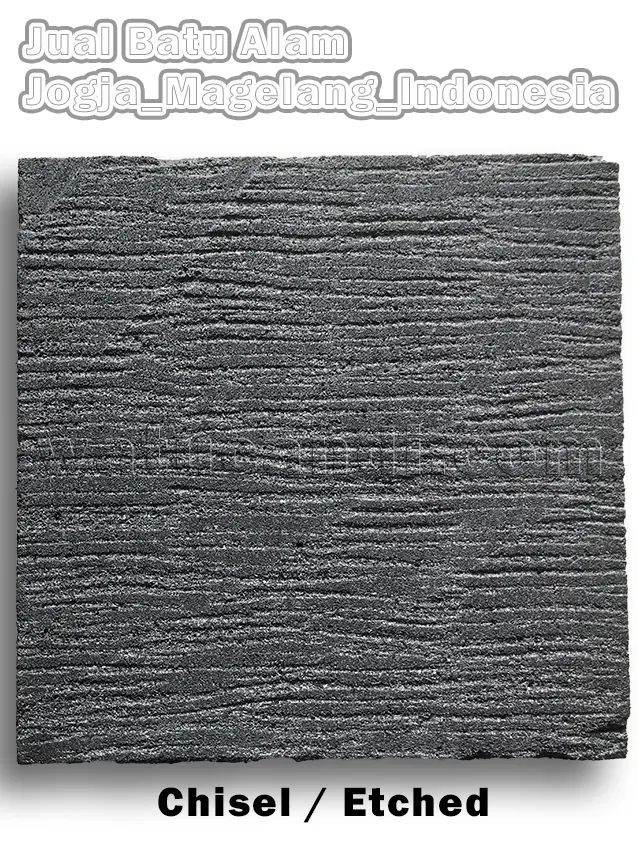
Innovation in finishing techniques also continues developing. Beyond the four basic finishes discussed, variants like Bush Hammered (black lava bush hammer surface), Chiseled (chiseled lava surface 300×300), Tumbled (tumbled natural stone finish), to Leathered are now available. Each variant offers unique character customizable to specific design visions. For further exploration of creative installation patterns, read chiseled natural stone installation patterns or candi lava stone mosaic for finer artistic details. Latest trends also show interest in exotic local materials like breccia stone or Yogyakarta batik stone combinable with basalt for bold accents.
Buying Tips and Technical Specifications to Note
Buying natural stone requires extra thoroughness due to its non-uniform nature unlike factory ceramics. Here are practical tips to avoid wrong purchases:
- Request Physical Samples: Never order based solely on catalog photos. Photos are often edited or taken with misleading special lighting. Request physical samples minimum 10×10 cm for each finish considered. Check texture, color, and density directly under natural and artificial light.
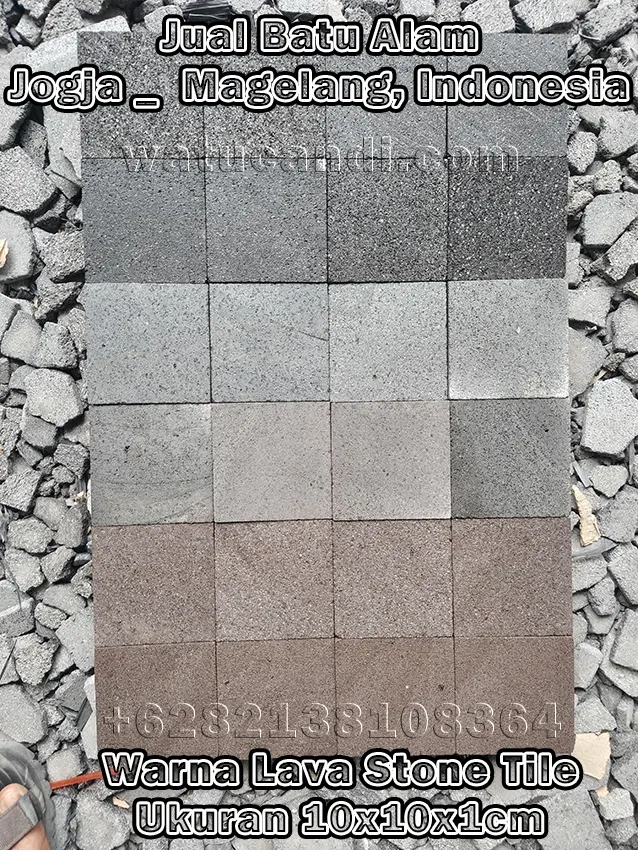
- Check Size and Thickness Tolerances: Because cut manually or semi-mechanically, ±1-2mm size tolerance is normal. However, exceeding that will complicate installation and make grout lines look messy. Ask supplier QC standards. For precision specifications, see black lava stone tiles 10×10.
- Calculate Reserve (Waste Factor): Always order minimum 10-15% more than net area. This anticipates broken stone during shipping, cutting, or production defects. Buying additions later risks different batches (different color/texture) that will look conspicuous after installation.
- Ask Quarry Origin and Batch: Basalt/andesite from Merapi, Tulungagung, or Cirebon have different characters. Ensure suppliers are transparent about stone sources and try to have all orders from the same production batch for color consistency. Read Bali Indonesia black lava stone to understand regional variations.
- Clarify Price and Inclusions: Ensure quoted prices are per m² or per piece, and whether including shipping, wooden packing, or not. Natural stone is heavy, shipping can be significant. Also ask whether price includes initial coating or not.
For price references and related product specifications you might need as complements, here are useful links: black lava stone 100x100x10, black lava general info, lava stone overview, lava candi natural stone, black candi lava stone, black lava natural stone tile, black lava natural stonetile, black lava stone tiles variant, and black lava stone tile walls guide.
Conclusion: Long-Term Aesthetic and Functional Investment
Choosing surface finishes for basalt, granite, or andesite natural stone is a strategic decision affecting aesthetics, function, and property value long-term. The four finishes discussed—Sawn Cut, Honed, Flame, and Flame Smooth—each offer unique characters suitable for different application contexts. None is absolutely superior; there is only what is most appropriate for your specific project needs. By understanding technical characteristics, advantages, disadvantages, and maintenance considerations of each finish, you can make informed and confident decisions.
Remember that natural stone is living material that ages with your building. Patina forming over time, subtle color changes from oxidation, and usage traces are part of its beauty unmatched by synthetic materials. Invest in quality material and good installation craftsmanship, because repairing or replacing installed natural stone is far more expensive and complicated than doing it right from the start. Consult trusted suppliers and experienced applicators to ensure your design vision is perfectly realized. Happy creating with the timeless beauty of Indonesian natural stone!
As closing and additional reference to enrich your natural stone material knowledge, here is a comprehensive link collection covering various natural stone aspects potentially relevant to your current or future projects:
Learn about ultimate Indonesian lava stone tile guide, natural travertine limestone guide, and swimming pool green stone tile guide. For quality comparisons, read local vs precision green stone tiles and authentic manually chiseled stone floor. Explore finish and pattern variants: surface types comb, surface types 3×1, line types 2×1, line types rolling, line types broken regularly, straight line type, stone types gc, and stone type gc broken.
Specific application references: floor paving stone chisels, swimming pool coping stone tiles, lava stone tiles for swimming pool, lava rock stepping stone pavers, Indonesian green stone tile crafts, stone fence and foundation walls, brown Java tiger stone black paras sandstone, sandstone limestone from Indonesia, Indonesian limestone tiles, limestone tile bushhammer, hard cream limestone, Jogja limestone, brown sandstone, brown spotted paras stone, white palimo Palimanan, brown Java sandstone paras Kerobokan, and large natural limestone slabs.
Natural stone furniture and sanitary products: natural stone furniture, rough surface marble stone sink, handmade stone tub, Merapi tombstones kijing plisir, monolithic Merapi stone furniture sink. Special finishing and texture techniques: tumbled natural stone finish, 3D stone slabs, black lava bush hammer surface, lava stone rough face, rough face stone floor, rough natural stone floor, slate stacked betel leaf slab, flat random riverstone, semi-carved lava stone, hand-carved temple stone paving, Merapi lava temple stone floor, lava paving stepping stones, solid split stone 100×200, andesite natural stone slabs, chiseled lava stone surface 300×300, chiseled temple natural stone, chiseled natural stone paving, chisel lava natural stone, manual chiseled candi stone paving 30×30, split face candi lava stone specs, Merapi black sand split face, stacked wall cladding comparison, black white wall cladding combination, pool coping stone tile materials, Merapi garden stepping stones, natural stone tactile paving sidewalks, Sukabumi green stone 20×40, lava alkali sawncut vs bushhammer, lava stone 75x230mm, lava stone products, Merapi lava decking parquet, temple lava stone floor, hidden crystals Merapi lava, pelinggih stone materials, random candi skin cladding, green Sukabumi natural stone, wavy carved natural stone tiles, enterprise design, industrial design, latest styles, decorate comfort design, natural stone tiles, premium natural stone flooring collection Watucandi, Merapi lava stone paving Yogyakarta Magelang, andesite stone paving Indonesia, Merapi outdoor stone flooring, lava stone paving slabs, irregular natural stone paving, temple stone paving floor, garden wall foundation stone borders, lava rock face tiles, rough split face candi stone, Sukabumi green natural stone tiles, green natural stone, green stone split face, batik green Yogyakarta, Palimanan paras stone, super white palimo, original random slabs, pumice stone, natural stone liquid soap dispenser, handmade stone table and chairs, umpak stone pedestal, carved temple lava stone, natural stone slabs, black natural stone slab, semi-chiseled Merapi paving, Merapi talud stone, Merapi lava temple stone balls, Jogja limestone, brown Java sandstone paras Kerobokan, large natural limestone slabs, pool gutter cover stone, and black lava candi stone wall cladding guide.
Natural Stone Finish, Black Basalt Stone, Merapi Andesite Stone, Sawn Cut RTM, Honed Stone Finish, Flame Stone Anti-Slip, Flame Smooth Pool Deck, Volcanic Stone Tiles, Exterior Stone Flooring, Stone Wall Cladding, Natural Stone Maintenance, Luxury Interior Stone, Garden Stone Paving, Natural Stone Swimming Pool, Watucandi Natural Stone, Central Java Candi Stone, Rustic Stone Texture, Sustainable Building Material, Modern Tropical Design, Natural Stone Specifications,

4 thoughts on “4 Surface Finishes for Basalt, Granite, and Andesite Natural Stone: A Complete Guide to Aesthetics and Function”