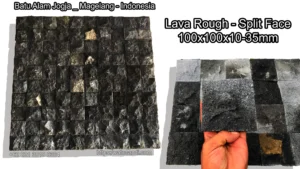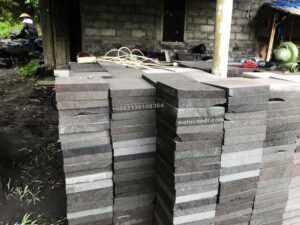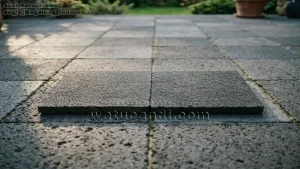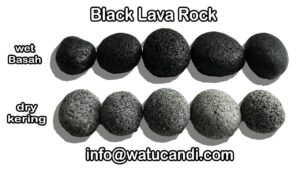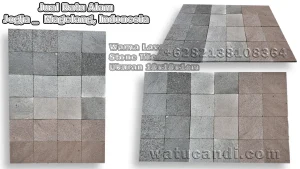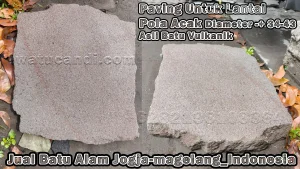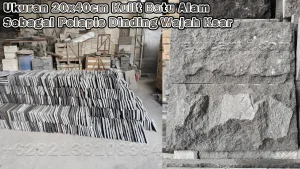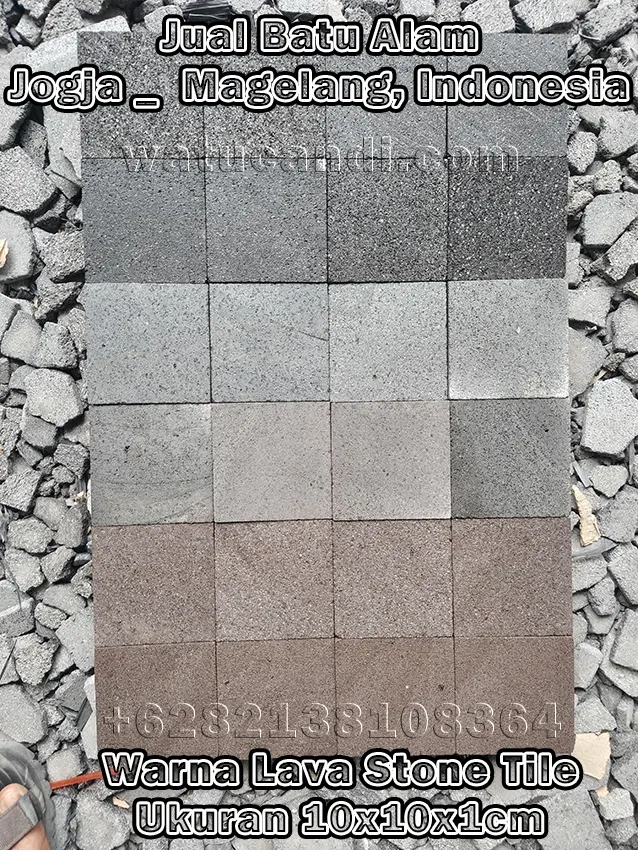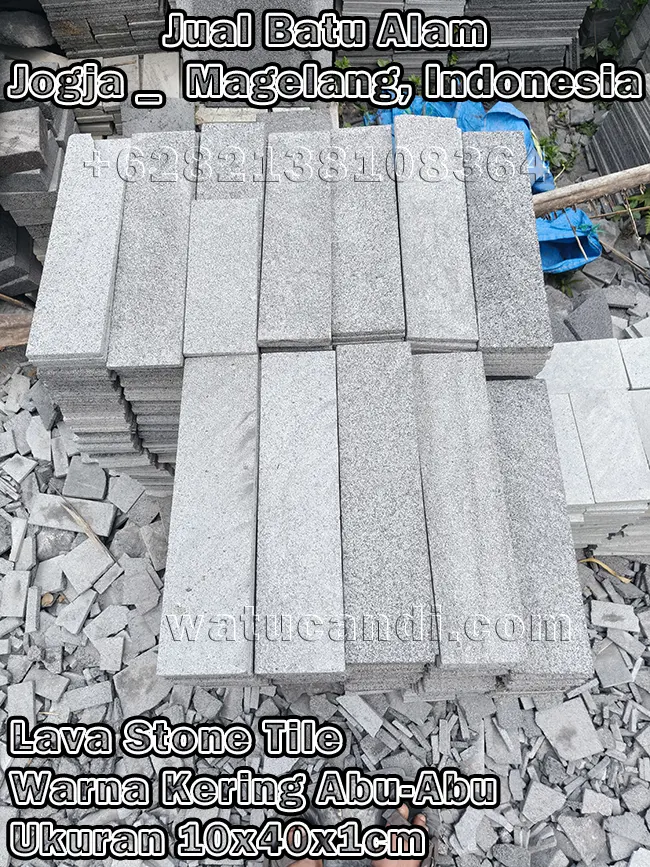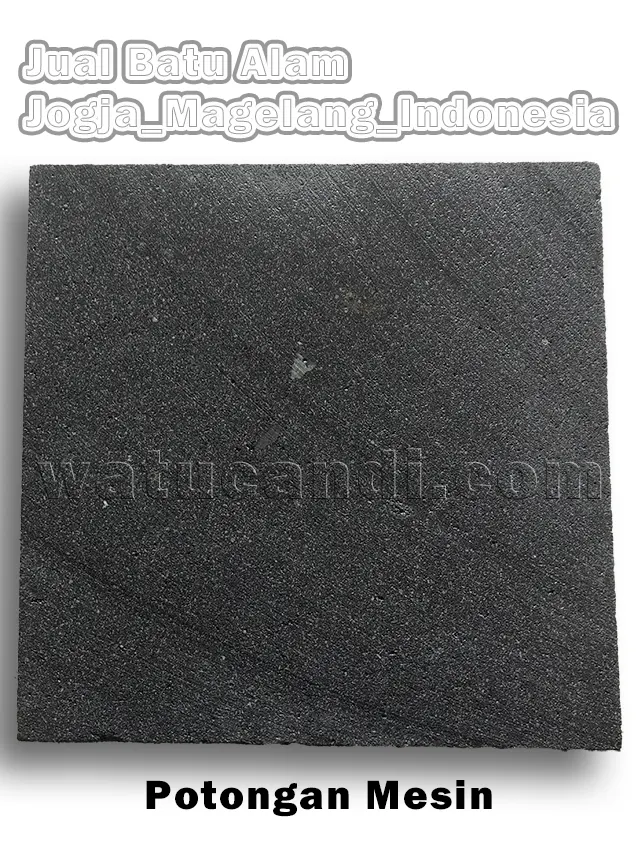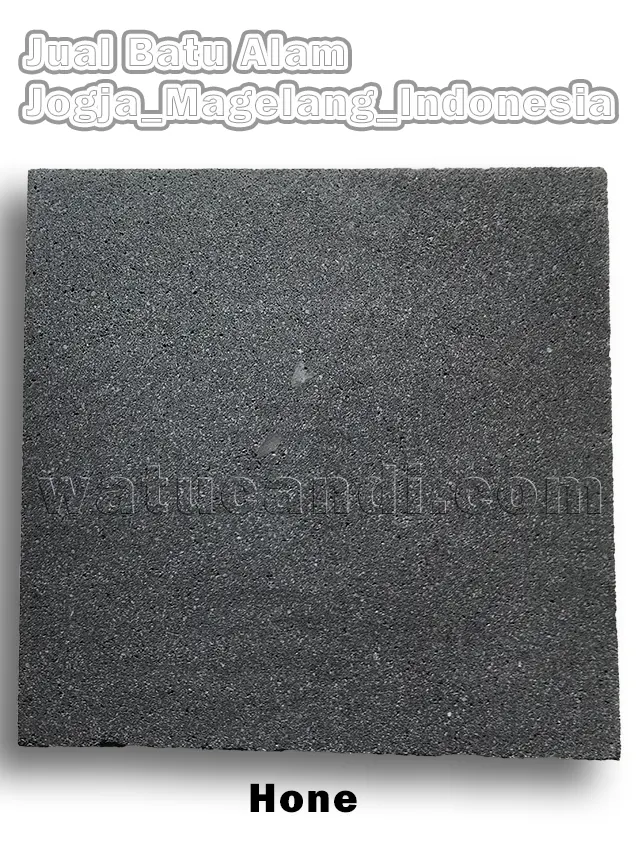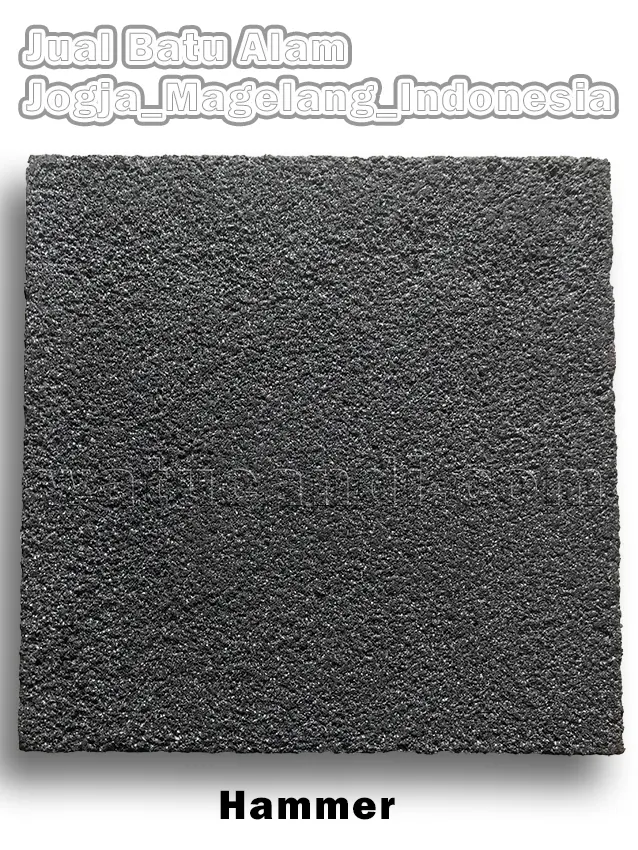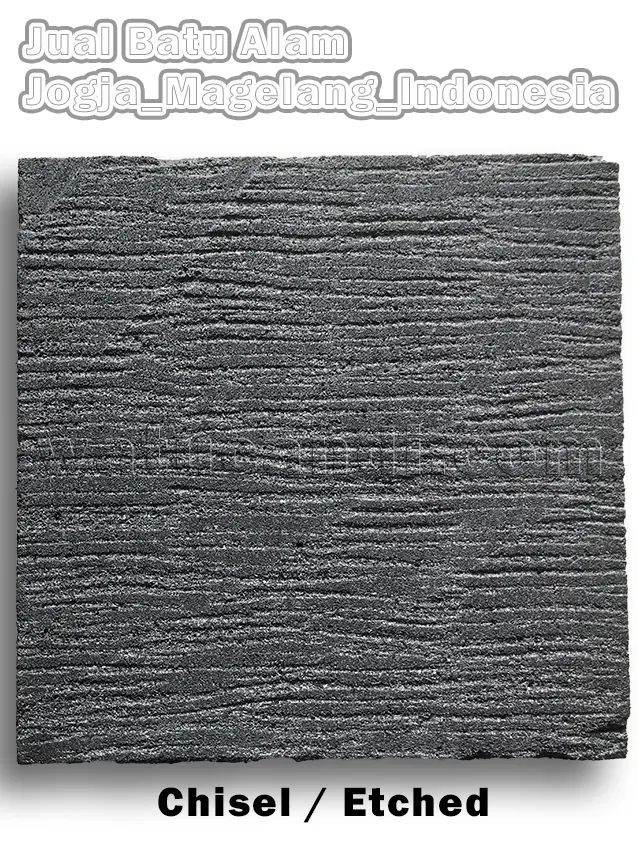
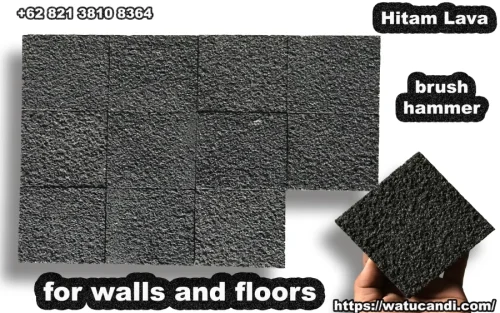
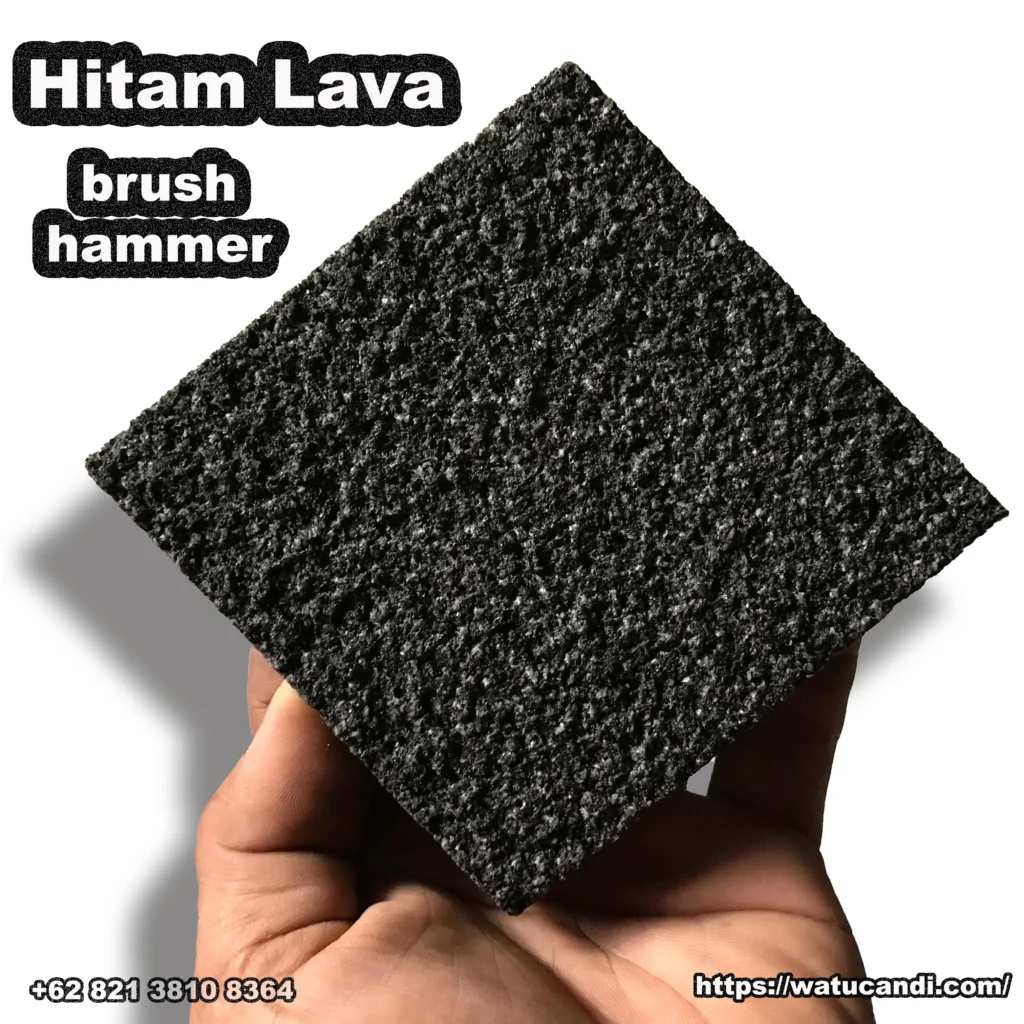
The Black Lava Bush Hammer Surface is the answer for those seeking a perfect blend of natural aesthetics and high performance in natural stone materials. In modern architecture and interior design, surface finishing is the key that determines not only visual appearance but also long-term function and durability of the material.
One of the best finishing techniques we offer at watucandi.com is the Black Lava Bush Hammer Surface. This bush hammer technique has long been known in the global natural stone industry, yet its application on black lava stone from Mount Merapi imparts a unique character unmatched by other materials.
This bush hammer technique produces a coarse texture that is even yet flat, delivering a strong character while being safe for foot traffic. Unlike slippery polished finishes or overly smooth honed finishes, the bush hammer surface offers the ideal balance between tactile beauty and functional safety.
If you are looking for wall or floor cladding that stands out from ordinary polished surfaces, one that makes a design statement while providing maximum safety, this is the solution worth considering. This comprehensive article will take you through every aspect of the Black Lava Bush Hammer Surface, from definition, production process, advantages, and applications, to selection and maintenance tips.
Table of Contents:
- Getting to Know Black Lava – Origin and Characteristics
- What Is a Bush Hammer Surface?
- Production Process of Black Lava Bush Hammer Surface
- Outstanding Characteristics of Black Lava Bush Hammer Surface
- Dimensions and Technical Specifications
- Best Applications: Walls, Floors, and Architecture
- Comparison with Other Natural Stone Finishes
- Advantages of Buying from Yogya-Magelang Artisans
- Tips for Selecting and Caring for Bush Hammer Surfaces
- Case Studies and Design Inspiration
- FAQ – Frequently Asked Questions
Getting to Know Black Lava – Origin and Characteristics
Before diving into the Black Lava Bush Hammer Surface technique, it’s important to first understand the base material. Black Lava is no ordinary stone—it is a silent witness to nature’s power over thousands of years.
Geological Origin of Mount Merapi Lava Stone
The Black Lava we use is genuine lava stone from the Mount Merapi area, which spans the border of Yogyakarta and Magelang, Central Java. Mount Merapi, one of the most active volcanoes in the world, has undergone countless eruption cycles over millennia. Each eruption produced lava flows that cooled and solidified into high-quality volcanic rock.
This lava cooling process occurred naturally over a very long period. As incandescent lava flowed from the belly of the mountain and came into contact with the cooler surface air, a gradual cooling process took place, forming a unique rock structure. The not-too-rapid cooling allowed the formation of small, evenly distributed pores, creating distinctive characteristics not found in other types of natural stone.
The mining area for this lava stone is spread along the legendary Krasak River, stretching from the slopes of Merapi in Sleman, Yogyakarta, to Magelang, Central Java. Local communities have known and utilized this stone for centuries, especially for the construction of temples and traditional buildings. It is no wonder that this stone is also known as “Candi Stone” due to its close association with the history of ancient temple construction in Central Java and Yogyakarta.
Physical and Mechanical Characteristics of Black Lava
Black Lava possesses a range of characteristics that make it highly ideal for architectural applications, especially when given a Bush Hammer Surface finish. Here are the details of its main characteristics:
- Consistent Natural Color – The stone has a dark gray to jet-black color derived from its volcanic mineral composition, not from artificial dyes. This color will not fade over time because it comes from the stone’s own constituent minerals. The level of darkness may slightly vary between blocks, providing a natural nuance that is in itself attractive.
- Compact Micro-Pore Structure – Unlike pumice which has large pores, Merapi lava stone has small, evenly distributed, and closely spaced pores (micropores). This structure provides an ideal balance between relatively light weight and high strength. These pores also contribute to excellent natural grip.
- High Density and Compressive Strength – Laboratory tests show that Merapi lava stone has a compressive strength ranging from 20 to 40 MPa, depending on the mining point and block quality. This is equivalent to medium-grade structural concrete, but with a natural aesthetic advantage that cannot be replicated by man-made concrete.
- Resistance to Extreme Weather – Exposure to UV rays, acid rain, drastic temperature changes between day and night—all these do not significantly affect the lava stone. It has been proven to withstand decades of outdoor conditions without significant degradation.
- Easy to Shape and Carve – Although hard, the homogeneous mineral composition of the lava stone makes it relatively easy to cut, carve, and shape. This is what allows artisans to create various surface finishes, including bush hammer, as well as intricate carvings for sacred architectural applications.
From Mount Merapi to Your Project – A Sustainable Supply Chain
It is important to know that the lava stone we use is mined using traditional, sustainable methods. The local miners—part of a stone artisan community that has existed for generations—dig manually while respecting environmental preservation. They extract stone blocks from certain depths without excessively damaging the surface soil structure.
After mining, the raw stone blocks are transported to processing workshops scattered in the Tempel area, Sleman, and the border of Magelang. Here, the stones are processed into various products, including the Black Lava Bush Hammer Surface tiles we will discuss in depth.
What Is a Bush Hammer Surface?
The Bush Hammer Surface, known internationally as a bush hammered surface, is a mechanical finishing technique that produces a micro-waved coarse texture on the stone surface. To understand this technique well, let’s explore its definition, history, and working principles.
Definition and Basic Principles of Bush Hammer
The Bush Hammer (bush hammer) on Black Lava stone is a mechanical treatment technique using a hammer with many pointed tips repeatedly struck onto the surface of natural stone tiles. Modern bush hammer tools consist of a hammer head equipped with dozens or even hundreds of pointed tips made of extremely hard carbide or tungsten steel. When this tool is mechanically struck or pressed onto the stone surface, each pointed tip creates a tiny crater, producing an evenly distributed pattern of dots.
The result?
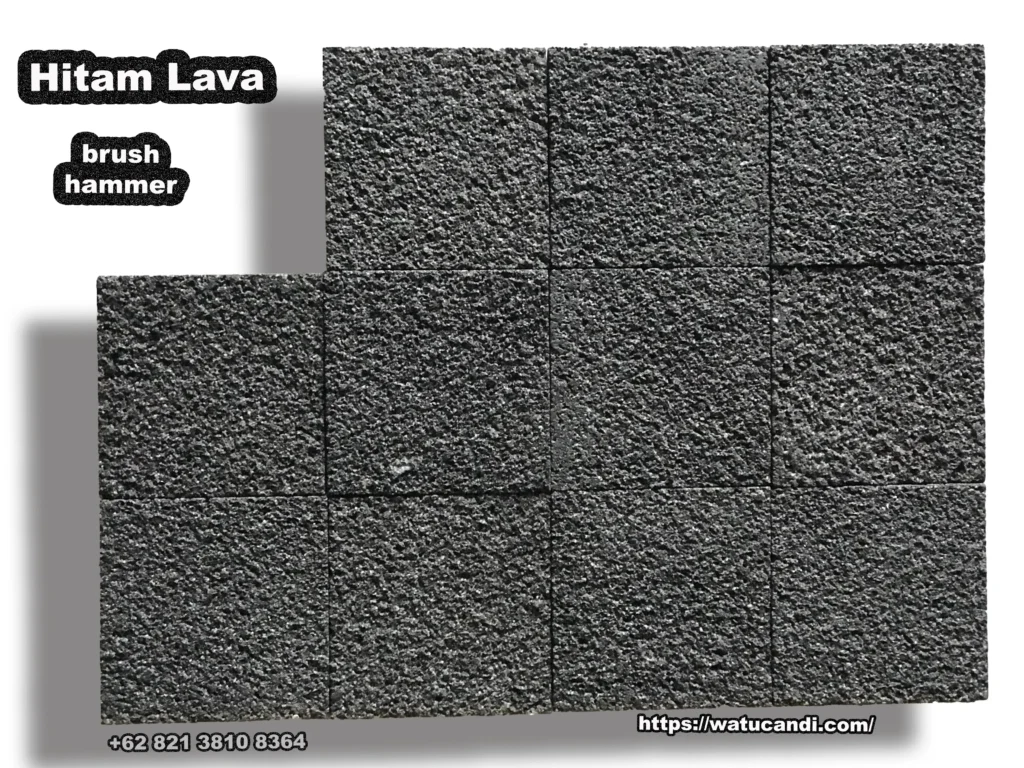
Coarse texture that is even and regular, yet when touched, the roughness detail is very pronounced. Unlike the random and irregular natural texture of split stone, the bush hammer surface has a uniform and controlled pattern. Each strike produces a relatively similar depth, creating a consistent micro-relief across the entire surface.
From a distance, the tile looks like a precision machined piece with an elegant dark color. But up close, the details of the impact dots reveal a captivating natural aesthetic. This is the uniqueness of the bush hammer surface—it offers a visual complexity that can only be fully appreciated through direct observation and physical touch.
History and Development of the Bush Hammer Technique
The bush hammer technique actually has a long history in natural stone processing. Initially, this technique was performed manually using a hand hammer with a single or double pointed tip. Stone artisans in medieval Europe used a similar technique to create anti-slip surfaces on cathedral stairs and floors. In Italy, the bocciardatura technique (the Italian term for bush hammer) has been used since ancient Roman times to process marble and granite.
As technology evolved, bush hammer tools advanced from simple manual hammers to much more efficient electric and pneumatic machines. Modern bush hammer machines can produce thousands of impacts per minute with highly consistent depth and pattern. However, the basic principle remains the same: creating a controlled coarse texture on the stone surface.
In Indonesia, the application of the bush hammer technique on black lava stone is a relatively new but rapidly growing innovation. Pioneered by artisans in the Yogya-Magelang natural stone center, this technique addresses the market’s need for a natural stone finish that is not only visually beautiful but also functional, especially for floor applications requiring high slip resistance.
Why Is Bush Hammer Suitable for Black Lava?
Not all types of natural stone are suitable for bush hammer finishing. Stones that are too hard, like granite, are very difficult to process and require special expensive tools. Conversely, stones that are too soft, like paras stone, will easily crumble or be excessively eroded when struck. Black Lava from Merapi sits at the ideal point—hard enough to produce a firm, durable texture, yet soft enough to be processed efficiently without damaging its structure.
Moreover, the natural dark color of the lava stone creates a beautiful shadow contrast at each bush hammer impact point. When light hits the surface, each tiny crater creates a micro-shadow that gives dimension and visual depth. This effect would not be as strong on lighter colored stones. This is why the Black Lava Bush Hammer Surface has such a special aesthetic appeal.
Production Process of Black Lava Bush Hammer Surface
The final quality of the Black Lava Bush Hammer Surface depends heavily on precision and consistency in each stage of its production. At our workshop in the Tempel area, Sleman, every tile goes through a series of controlled processes designed to produce the highest standard products. Let’s trace each step in detail.
Step 1: Selection and Cutting of Raw Stone Blocks
Everything starts with the selection of quality raw stone blocks. Not all mined lava stone is fit to be processed into premium finishing products. Our team performs a strict selection based on several criteria:
- Density and Homogeneity – The stone block must have uniform density without large cavities or internal cracks. Blocks with too many large pores or natural fracture lines are separated for other purposes.
- Color Uniformity – For premium products, we select blocks with a consistent dark gray to black color. Natural color variations are still acceptable as long as they fall within a reasonable range.
- Block Size – The block must be large enough to be cut into slabs of efficient dimensions. Blocks that are too small will produce too much off-cut waste.
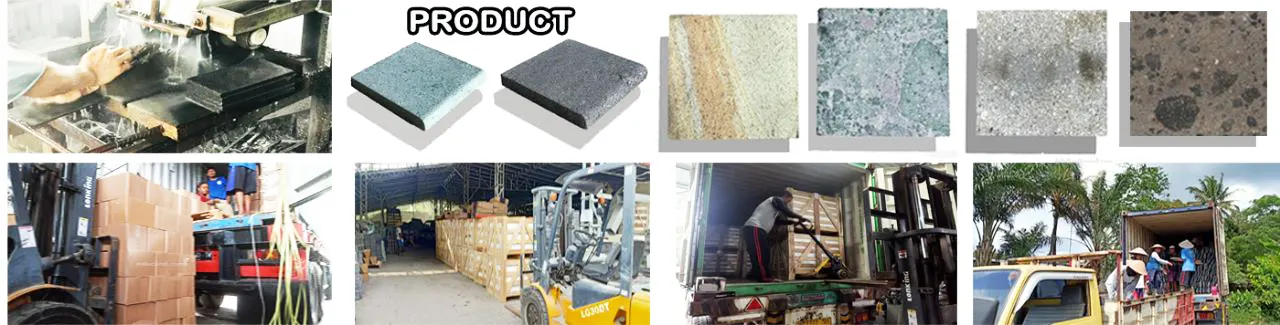
After selection, the stone blocks are cut using a special large-diameter saw machine (usually 120-160 cm) with a diamond blade. This initial cutting produces slabs or plates with larger dimensions than the final size—typically around 60×120 cm, 80×120 cm, or other custom sizes. This oversize cutting technique is important because it provides enough space for the bush hammer process and subsequent precision cutting.
The slab thickness at this stage is already close to the final thickness, usually around 1.5 cm, 3 cm, or 5 cm depending on the order. The cutting process uses water as a coolant to prevent damage to the saw blade and reduce dust. The water used also acts as a lubricant, ensuring the cuts remain clean and precise.
Step 2: Forming the Bush Hammer Surface
This is the core stage that determines the character of the final product. The cut stone slabs are then processed using an electric bush hammer machine. This machine has a hammer head equipped with dozens of pointed tips made of carbide steel. Here are the details of the process:
Machine and Slab Preparation: The stone slab is placed on a stable and flat work table. The operator checks the condition of the bush hammer machine, ensuring all pointed tips are in good condition and not worn. Dull pointed tips will produce a texture that is less crisp and uneven.
Bush Hammer Process: The bush hammer machine is moved systematically across the entire surface of the slab. This movement can be done manually by an experienced operator or using an automatic machine for mass production. Each pass must overlap with the previous pass to ensure no area is missed.
The impact depth is controlled through pressure and the number of passes. For floor applications requiring maximum anti-slip, 2-3 passes are usually used to produce a deeper texture. For wall applications that prioritize aesthetics more, 1-2 passes are sufficient to provide texture without significantly reducing surface flatness.
Quality Inspection: After the bush hammer process is complete, each slab is inspected visually and tactilely. The experienced operator will feel the surface to ensure the texture feels even across the entire area. Areas that are under-textured will be re-processed. The surface is also checked for flatness using a spirit level or straight edge.
This process produces a coarse texture that is uniform with a neat pattern of dots. Unlike the random split stone surface, the bush hammer texture has a regularity that gives a planned and sophisticated impression.
Step 3: Precision Size Cutting
After the bush hammer texture is perfectly formed, the slab is then cut to the final precise dimensions. This is a crucial step that distinguishes our products from similar ones on the market.
Why Re-cut? During the bush hammer process, the edges of the slab may experience slight damage or unevenness due to vibration and pressure. By re-cutting the edges after the texturing process is complete, we ensure that every side of the tile remains square, clean, and neat. There is no “forcing” of the material, so the stone’s strength remains optimal.
Cutting Process: The textured slab is cut using a precision saw with a smaller diamond blade (approximately 40-60 cm). This machine can produce cuts with a tolerance of ±1-2 mm. Cutting is performed at a controlled speed to avoid edge cracking.
Final Dimensions: After cutting, the tiles are ready with the ordered dimensions. The most frequently ordered standard sizes are 20×40 cm and 20×30 cm, but we also accept custom orders for special sizes. Available thicknesses are 1 cm, 2.5 cm, and 4.5 cm, each with different application recommendations.
Final Inspection: Each cut tile is checked one by one. The inspection covers surface flatness, corner squareness, edge neatness, and texture consistency. Tiles that do not meet the standards are separated and not shipped to the customer.
Outstanding Characteristics of Black Lava Bush Hammer Surface
After understanding the production process, let’s delve into what makes the Black Lava Bush Hammer Surface so special. Here are the outstanding characteristics that make it the top choice for architects, designers, and project owners:
1. Uniform Coarse Texture & Very Flat
This is the most defining characteristic of the bush hammer surface. The impact pattern forms a uniform micro-relief across the entire surface. Each impact point has a diameter of about 1-3 mm with a depth of about 0.5-1.5 mm, depending on the machine settings and number of passes.
What distinguishes it from other coarse textures like split stone or natural surface is its macro-flatness. Although microscopically the surface is full of tiny craters, overall the surface remains flat. This means the tiles can be installed easily, the grout lines between tiles can be made neat and uniform, and the floor surface will not be wavy.
For installers, this flatness is very helpful because they don’t need to make complicated grout thickness adjustments or leveling. The final floor or wall result will look professional with straight grout lines and a perfectly flat surface.
2. Natural Anti-Slip – Maximum Safety
One of the greatest advantages of the Black Lava Bush Hammer Surface is its natural anti-slip property. This is not the result of a chemical coating that can wear off over time, but comes from the physical texture of the stone itself, which is permanent.
How Does the Anti-Slip Mechanism Work? When the foot steps on the bush hammer surface, the sole skin or shoe sole “locks” onto the thousands of impact points. This creates friction far higher than a flat or polished surface. Even when the surface is wet—a condition where ordinary slippery surfaces become very dangerous—the bush hammer texture still provides a safe grip.
Based on unofficial tests we have conducted, the bush hammer surface on lava stone has a coefficient of friction well above the minimum standard for wet areas. This makes it an ideal choice for:
- Terraces and yards frequently exposed to rain
- Pool edges and outdoor shower areas
- Bathrooms and indoor wet areas
- Walkways and stairs
- High-traffic commercial areas
3. Exclusive Appearance with Visual Dimension
The visual effect of the Black Lava Bush Hammer Surface is truly unique and difficult to replicate with synthetic materials. When light—both natural and artificial—hits the surface, each impact point creates a micro-shadow that gives depth and dimension to the stone.
In the morning and late afternoon when the sunlight is slanted, this shadow effect becomes even more dramatic. A wall with a bush hammer finish will display a play of light and shadow that constantly changes as the sun moves. This creates a dynamic and lively visual experience, something that painted surfaces or ordinary ceramic cannot provide.
From a design standpoint, the bush hammer texture is very versatile. It can complement various architectural styles:
- Modern Minimalist Architecture – The stone texture provides an interesting material contrast with glass, steel, and exposed concrete.
- Contemporary Tropical Architecture – Blends perfectly with wood, plants, and water elements.
- Traditional Balinese Architecture – Complements the sacred and natural character of temples, shrines, and gateways.
- Industrial Style – Provides an authentic raw and unfinished touch.
4. Precision Square Edges – Best Installation Quality
As explained in the production process, after the bush hammer process, the tiles are re-cut to the final dimensions. As a result, every side of the tile remains square and neat, without cracks or chipping on the edges.
Why are square and neat edges so important?
- Neat Grout Lines – Straight and square edges allow for installation with uniform grout joints, typically 2-5 mm. Neat grout not only looks beautiful but also prevents water and dirt from entering the gaps between tiles.
- Easier Installation – Installers can work faster and more efficiently because the tiles have consistent dimensions. Less on-site adjustment or cutting is needed.
- Professional Finish – The floor or wall will look like it was done by professional hands with high attention to detail.
- Minimizes Waste – With precise dimensions, fewer tiles need to be cut on site, reducing material waste.
5. Durability of Genuine Lava Stone – Long-Term Investment
The density and strength of the lava stone guarantee the durability of this finish. Unlike anti-slip coatings that are applied and can wear out within a few years, the texture of the Black Lava Bush Hammer Surface is permanent because it is an integral part of the stone itself.
Even in high-traffic areas—such as hotel lobbies, corridors, or commercial areas—the bush hammer surface will not significantly wear or change. At most, over a very long time (decades), the sharp points of the texture may slightly soften, but this actually adds character and natural patina to the stone.
In terms of maintenance, the bush hammer surface is also very easy to clean. Dirt and dust can be cleaned with water and a brush, without the need for special chemicals. The dark color of the lava stone also helps disguise minor stains, keeping the floor looking clean longer.
Dimensions and Technical Specifications
To facilitate your project planning, here are the complete technical specifications of the Black Lava Bush Hammer Surface tiles we provide:
Standard Dimensions
| Size (cm) | Available Thickness | Recommended Application |
|---|---|---|
| 20 x 40 | 1 cm / 2.5 cm / 4.5 cm | Walls, Floors, Stairs, Gates |
| 20 x 30 | 1 cm / 2.5 cm / 4.5 cm | Walls, Small area floors |
| Custom | 1 cm / 2.5 cm / 4.5 cm | According to project needs |
Application Recommendations by Thickness
- 1 cm Thickness – Recommended for interior and exterior wall cladding, decorative elements, and backsplashes. Not recommended for heavy-load floors.
- 2.5 cm Thickness – Most versatile. Suitable for terrace floors, bathroom floors, facade walls, light stairs, and areas with normal pedestrian traffic.
- 4.5 cm Thickness – For structural applications and heavy-load areas. Ideal for garage floors, main stairs, gate pillars, shrine bases, and high-traffic commercial areas.
Dimensional Tolerance
It is important to understand that as a mechanically processed natural stone product that still retains its natural character, dimensional tolerance is normal. We maintain length and width tolerance within ±1-2 mm, and thickness tolerance within ±1-2 mm. This is a tight standard for natural stone products and equivalent to export standards.
For installation, we recommend using grout joints 3-5 mm wide to accommodate this natural tolerance. Slightly wider grout joints also help absorb minor thermal expansion that may occur in outdoor applications.
Best Applications: Walls, Floors, and Architecture
One of the advantages of the Black Lava Bush Hammer Surface is its exceptional flexibility. This finish can be applied to various building elements, from the most functional to the most decorative. Here is a complete application guide by use type:
Floor Applications: Safety Without Sacrificing Aesthetics
Villa & Resort Floors: The floor is the area where the anti-slip properties of the bush hammer surface play the biggest role. For villas and resorts in tropical areas like Bali, outdoor floors are often wet due to rain, morning dew, or splashes from swimming pools. The Black Lava Bush Hammer Surface provides maximum safety without sacrificing the luxurious and natural feel that characterizes quality resorts.
Imagine walking barefoot in the morning on your villa terrace, stepping on textured lava stone tiles that feel cool and safe underfoot. This sensation cannot be obtained from ordinary ceramic or slippery polished stone. Combined with the natural dark color that gives a grounded and sturdy impression, this floor creates a truly different spatial experience.
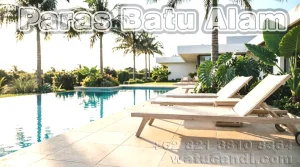
Swimming Pool & Garden Areas: Around the swimming pool, safety is the top priority. The wet pool deck is a high-risk zone for slips. The bush hammer surface with its high friction coefficient is the ideal solution. Standing water on the surface will not make it slippery because the micro-texture provides channels for water to flow and allows direct contact between the foot and the stone surface.
Additionally, the dark color of the lava stone does not become too hot under the sun as happens with lighter colored stones. This makes it comfortable to walk barefoot during the day. The lava stone also does not absorb too much heat due to its unique pore structure, remaining relatively cool even under the scorching sun.
Commercial and Public Floors: For commercial areas such as restaurants, cafes, hotel lobbies, and public spaces, floors must meet safety standards while looking attractive. The Black Lava Bush Hammer Surface meets both demands. Its high wear resistance makes it a wise long-term investment, as it does not need to be replaced or intensively maintained like wooden floors or carpets.
Wall Applications: Texture That Speaks
Facade Walls & Interior Accents: If floors prioritize function, walls are a canvas for expression. Facade appearance with a bush hammer finish provides a rich, visually engaging texture. From a distance, the wall looks like a solid dark plane. But upon approaching, the details of the texture dots begin to appear, giving a layered visual experience.
As an interior accent, a wall with the Black Lava Bush Hammer Surface can become a strong focal point. In the living room, one bush hammer textured wall can be the perfect backdrop for artwork, a television, or a fireplace. The contrast between the rough stone texture and the smoothness of furniture and fabric creates an interesting and sophisticated visual tension.
Kitchen and Bathroom Backsplashes: For kitchen backsplashes, tiles with 1 cm thickness are ideal. Their texture provides visual dimension without sacrificing functionality—easy to clean and resistant to water and oil splashes. In the bathroom, a shower wall with a bush hammer finish creates a calming natural spa ambiance.
Sacred and Traditional Architecture Applications
Balinese Shrines, Temples & Gates: In Balinese sacred architecture, every element has its own meaning and specific requirements. Natural lava stone has been the primary choice for the construction of pelinggih shrines, temples, and gates for centuries. Adding a Bush Hammer Surface finish to this stone provides a modern touch without removing its traditional essence.
The bush hammer texture on gates, for example, adds dimension and character to the stone surface. When carved with traditional Balinese ornaments, the contrast between the bush hammer textured area and the smooth carved area creates an interesting visual hierarchy. The textured area can serve as a background that makes the carving stand out even more.
For sacred area floors, the anti-slip properties of this surface are also very important considering the many rituals performed barefoot. Safety and sanctity blend in perfect harmony.
Special and Custom Applications
In addition to the applications above, we have also worked on various custom projects that demonstrate how flexible this material is:
- Stair Treads with Bush Hammer Nosing – The combination of a bush hammer surface on the tread area and a flat surface on other areas creates stairs that are both safe and beautiful.
- Outdoor Kitchen Countertops – With a thickness of 4.5 cm, lava stone with a bush hammer finish can become a weather-resistant and anti-slip countertop.
- Signage and Plaques – The bush hammer texture provides an interesting background for raised lettering or engraving.
- Landscape Elements – Stepping stones in the garden with a bush hammer texture provide safety and natural aesthetics.
Comparison with Other Natural Stone Finishes
To help you make the right decision, here is an objective comparison between the Black Lava Bush Hammer Surface and other commonly available natural stone finishes:
Bush Hammer vs Natural (Sawn)
A natural surface is a finish where the stone is cut flat using a saw, leaving a relatively smooth surface with slight natural variations. This is the most basic and economical finish.
| Aspect | Bush Hammer | Natural (Sawn) |
|---|---|---|
| Texture | Uniform coarse, high anti-slip | Relatively smooth, slightly slippery |
| Visual | Dimension and shadow, exclusive | Flat, plain |
| Safety | Excellent for wet areas | Adequate, caution needed |
| Price | Higher due to extra process | More economical |
Bush Hammer vs Honed
A honed surface is a finish where the stone is ground with a machine to produce a very smooth and flat surface, almost like ceramic.
| Aspect | Bush Hammer | Honed |
|---|---|---|
| Texture | Rough, tactile | Smooth, slippery when wet |
| Impression | Natural, masculine, strong | Modern, minimalist, clean |
| Maintenance | Easy, stains disguised | Stains and scratches easily visible |
| Application | Floor and wall | More suitable for walls |
Bush Hammer vs Flamed
A flamed surface is a finish where the stone is heated at a very high temperature until its surface peels, resulting in an irregular coarse texture.
| Aspect | Bush Hammer | Flamed |
|---|---|---|
| Texture | Orderly, controlled | Random, irregular |
| Edge Strength | Precise, square | Often messy at edges |
| Process | Mechanical, consistent | Thermal, can damage stone |
| Suitable for | Lava stone, granite | More suitable for hard granite |
Bush Hammer vs Polished
A polished surface is a finish where the stone is buffed to a shine, often used on marble and granite.
| Aspect | Bush Hammer | Polished |
|---|---|---|
| Luster | Matte, natural | Glossy, reflective |
| Slip Resistance | High | Very low, dangerous when wet |
| Impression | Masculine, earthy | Luxurious, formal |
| Floor Application | Highly recommended | Not recommended for wet areas |
From the comparisons above, it is clear that the Black Lava Bush Hammer Surface offers the best balance of aesthetics, safety, and practicality, especially for floor applications in tropical climates.
Advantages of Buying from Yogya-Magelang Artisans
As a manufacturer of natural stone tiles directly from artisans in the Yogya-Magelang area, we at watucandi.com offer a number of advantages you cannot get from resellers or ordinary material shops:
- Genuine Mount Merapi Lava Stone Raw Material – All our products use genuine lava stone mined directly from the Mount Merapi area. The strong character and tight pores of this stone have been proven for decades in various projects in Bali and throughout Indonesia. We do not use lava stone from other unverified sources.
- Craftsmanship by Experienced Workers – Our artisans have worked with natural stone for years, even decades. They understand the character of the stone, the precision required, and how to produce beautiful textures. Every tile that reaches your hands is the result of inherited skills combined with modern technology.
- More Competitive Prices Without Middlemen – By buying directly from us as the producer, you cut out the long distribution chain. There are no margins for distributors, sub-distributors, or retail stores. This price difference can be very significant, especially for large-volume projects.
- Available Stock and Size Customization – We have a production capacity supported by several workshops and dozens of artisans. This allows us to fulfill large orders while remaining flexible to accept custom requests. Need a specific size? A certain installation pattern? We are ready to discuss and realize it.
- Consultation Support for Finish Selection – Not sure which finish is best for your project? Our team is ready to provide free consultation. We can help you choose between bush hammer, natural sawn, honed, or a combination of several finishes to create a unique look.
- Direct Visit to Production Location – Our working location is in the “Black Candi Natural Stone” center, Tempel, Sleman, Yogyakarta (Kali Krasak area, Jogja-Magelang border, Central Java). You are welcome to come directly to see the production process, select materials, and discuss your project needs face to face. We believe transparency is the key to trust.
Tips for Selecting and Caring for Black Lava Bush Hammer Surfaces
To ensure you get the best results from this material investment, here is a complete selection and maintenance guide:
Tips for Choosing the Right Tiles
- Match Thickness to Application – Do not use 1 cm tiles for floors that will bear heavy loads. Conversely, do not use 4.5 cm tiles for walls as they will add unnecessary structural weight. Consult with us if unsure.
- Pay Attention to Grade and Quality – Ask about the grade of stone used. For highly visible areas like main facades or lobby floors, choose the best grade with the most uniform color and tightest pores.
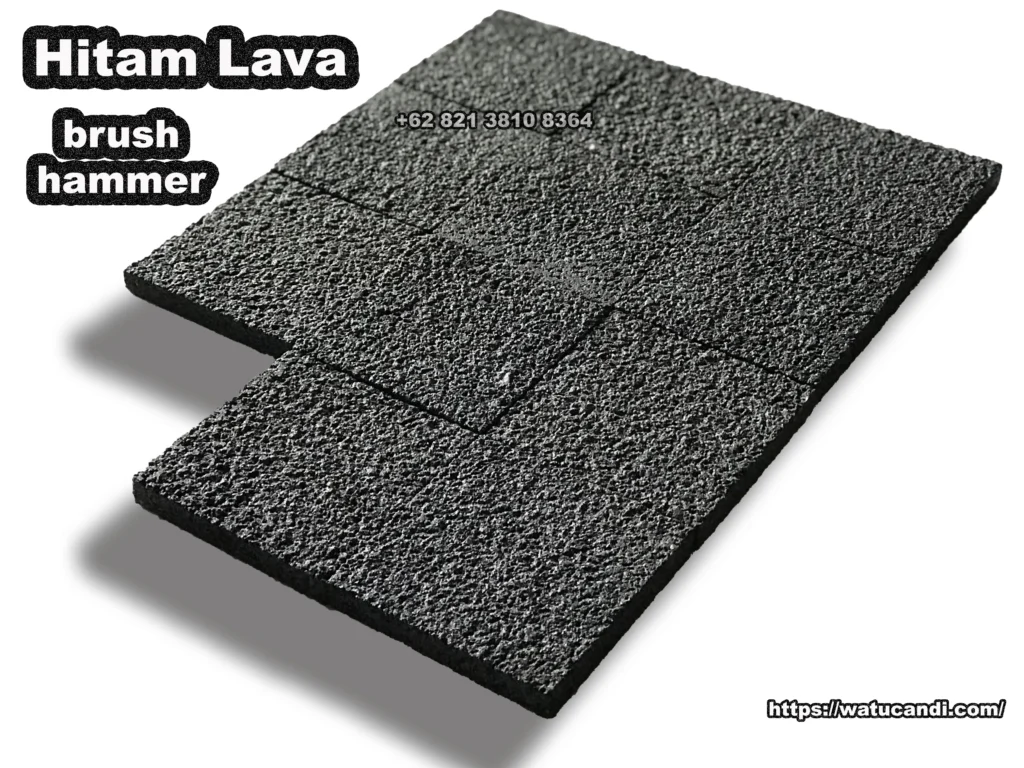
- Consider Installation Patterns – 20×40 tiles can be installed in various patterns: straight (stack bond), brick (running bond), herringbone, or combinations with other sizes. The installation pattern will affect the quantity of tiles needed and the final aesthetics.
- Order Samples First – Colors and textures in photos may differ slightly from reality. We recommend ordering samples first so you can see and feel the material directly.
- Calculate Needs with Buffer – Always add 5-10% of the total area for a buffer, considering cut-offs and possible installation damage.
Long-Term Maintenance Tips
- Routine Cleaning – Simply use clean water and a medium-bristle brush. For more stubborn dirt, use mild soap or a pH-neutral natural stone cleaner. Avoid strong acidic or alkaline cleaners that can damage the stone surface.
- Immediately Clean Spills – Although lava stone is relatively stain-resistant, spills of oil, coffee, or colored liquids should be cleaned immediately before they seep into the pores.
- Use Doormats at Entrances – This helps reduce the amount of sand and abrasive dirt that can scratch the floor surface in the long run.
- Re-Sealing (Optional) – For areas with high stain exposure (like kitchens), you can apply a natural stone sealer that does not alter the color. This sealer will fill the pores and prevent stain absorption. However, note that a sealer may slightly reduce the natural anti-slip property of the stone.
- Check Grout Condition Periodically – Grout is the most wear-prone part. Check periodically and repair any cracks or missing grout to prevent water from entering under the tiles.
Case Studies and Design Inspiration
To provide a real picture of how the Black Lava Bush Hammer Surface can be applied, here are some case studies and design inspirations:
Case Study 1: Luxury Resort in Ubud, Bali
A boutique resort in the Ubud area used Black Lava Bush Hammer Surface tiles with a thickness of 2.5 cm for all terrace areas and walkways within the resort. With a total area of about 800 m², the resort needed a material that was not only safe for guests who often walk barefoot but also blended with the lush natural concept of Ubud.
As a result, the bush hammer textured lava stone floor became the element that unified the entire resort area. Its dark color provided a beautiful contrast with the green tropical vegetation, while its texture provided safe footing even in the rain. The resort management was very satisfied with the minimal maintenance required—just occasional sweeping and mopping, the floor continues to look pristine.
Case Study 2: Private Villa in Canggu, Bali
The owner of a private villa in Canggu wanted a sturdy, masculine carport floor and entrance area that still blended with the tropical industrial villa design. They chose Black Lava Bush Hammer Surface tiles with a thickness of 4.5 cm, capable of withstanding vehicle loads without issues.
The bush hammer texture not only provided the necessary durability but also created a seamless visual transition from the outside area into the villa. Inside the villa, the accent wall in the living room also used the same tiles with a thickness of 1 cm, creating a sophisticated material continuity.
Case Study 3: Family Temple in Denpasar
A family temple in Denpasar used a combination of lava stone with various finishes, including the Bush Hammer Surface for the ceremonial area floor. With a total size of about 150 m², this area required a floor that was safe for worshippers praying barefoot, yet remained sacred and aligned with the temple architecture.
The bush hammer texture provided the necessary safety without looking too modern or contrasting with the traditional temple elements. The dark color of the stone also aligned with the color philosophy in Balinese sacred architecture.
FAQ – Frequently Asked Questions
Q: Is the Black Lava Bush Hammer Surface suitable for outdoor areas?
A: Very suitable. This is actually one of its best applications. Its texture provides natural anti-slip that is very important for frequently wet outdoor areas. The lava stone itself is also very resistant to extreme weather, UV rays, and temperature changes.
Q: What is the price range for this finish?
A: Prices vary depending on size, thickness, order volume, and complexity. As a general picture, bush hammer finishing usually has a higher price than natural sawn or honed due to the extra processing required. Contact us directly for the best offer according to your project needs.
Q: Can I order custom sizes?
A: Yes, we accept custom orders. However, note that custom sizes may require longer production times and a certain minimum volume. Discuss your needs with our team.
Q: Is this surface comfortable for walking barefoot?
A: Yes, although textured, the bush hammer surface remains comfortable for bare feet. The texture is not sharp—just rough enough to provide grip. Many resort guests who use this floor actually enjoy the light massage sensation when walking barefoot.
Q: How long is the production time?
A: Production time varies depending on volume and stock availability. For standard orders with normal volume, 2-4 weeks is usually required. For large volumes or custom orders, it may take longer. We always provide a realistic time estimate when you place an order.
Q: Can the stone color differ between batches?
A: As a natural product, minor color variations between batches are normal. However, we strive to maintain color consistency as best as possible through a strict selection process. If your project requires absolute color consistency, discuss it with us beforehand.
Ready to Bring the Black Lava Bush Hammer Surface to Your Project
After reading the entire description above, we are confident that you better understand the value and potential of the Black Lava Bush Hammer Surface. This material is not just tile—it is a design statement, a safety investment, and a natural beauty legacy that will last for decades.
Do you need natural stone tiles with strong character and a classy anti-slip finish?
The Black Lava Bush Hammer Surface is the answer. We are ready to accept large volume orders for hotels, villas, housing, and religious buildings.
Don’t hesitate to contact us and get an attractive offer. Our friendly and professional team is ready to assist you from the consultation and planning stage until the material arrives at your project site.
Contact Us Now:
📞 Phone/WhatsApp: +6282138108364
🌐 Official Website: https://watucandi.com/
📍 Location Visit: Black Candi Natural Stone Center, Tempel, Sleman, Jogja (Magelang border)
The final touch determines luxury.
Choose the Black Lava Bush Hammer Surface for beauty and safety without compromise.
Note: To see the appearance and details of the Black Lava Bush Hammer Surface more clearly, you can watch the process and final result video through our website or contact us directly. Our team will be happy to send documentation and digital samples to help you make the best decision.
Tags: Black Lava Bush Hammer Surface, bush hammer lava stone, natural stone finishing, black lava stone tile, stone rough texture, candi stone bush hammer, lava stone tile, black natural stone, sell pelinggih stone, jogja magelang candi stone, watu candi, natural stone manufacturer, stone wall cladding, anti-slip stone floor, lava tile price, mount merapi natural stone, bush hammer finishing, jogja natural stone factory, sleman stone tile, bali temple stone material