'%3E%3Cpath%20stroke='%23000'%20stroke-width='4'%20d='m-35-37-13%2020m5%203%2013-20m5%203-13%2020m63%2042%206-9m1-2%206-9m5%203-6%209m-1%202-6%209m5%203%206-9m1-2%206-9m-96%200%2013%2020m5-3-6-9m-1-2-6-9m5-3%2013%2020m63-42-6-9m-1-2-6-9m5-3%2013%2020m5-3-6-9m-1-2-6-9'/%3E%3Ccircle%20r='24'%20fill='%23cd2e3a'/%3E%3Cpath%20fill='%230047a0'%20d='M0%200a12%2012%200%201%201%2020%2013%2024%2024%200%201%201-40-26A12%2012%200%201%200%200%200'/%3E%3C/g%3E%3C/svg%3E)


'/%3E%3Cpath%20fill='%23b2b2b2'%20d='M241%20382q0%2016%2017%2026%2017%2011%2042%2011t42-11q16-11%2017-26V269H241'/%3E%3Cpath%20fill='%239f7e00'%20d='M241%20379q0%2014%208%2023%209%209%2021%209%2014%200%2021-9%209-9%209-23V269h-59'/%3E%3Cpath%20d='M241%20339v-70h59v110q0%2014-9%2023l-6%205v-68h-15v72q-8%200-14-4v-68zm59%2040c0%2022%2015%2032%2029%2032%2021%200%2030-18%2030-32v-40h-59'/%3E%3Cpath%20fill='%239f7e00'%20d='M266%20277v5h2v12h-3v-5h2v-5h-9v5h2v5h-4v9h3v18h-5v10h34v-10h-5v-18h3v-9h-4v-5h2v-5h-9v5h2v5h-3v-12h2v-5zm42%20101q0%2010%206%2017%206%206%2015%207%2010-1%2016-7%206-7%206-17v-29h-43'/%3E%3Ccircle%20fill='%230044ad'%20cx='329.5'%20cy='372'%20r='6'/%3E%3Cellipse%20fill='%230044ad'%20cx='300'%20cy='340'%20rx='16'%20ry='21'/%3E%3C/svg%3E)



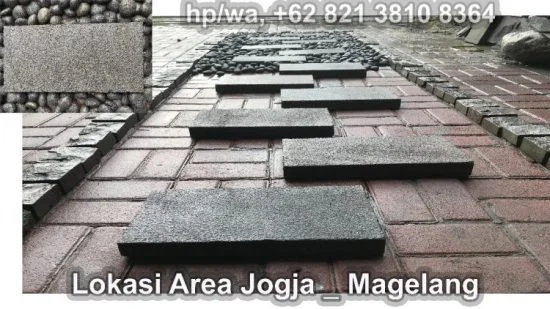
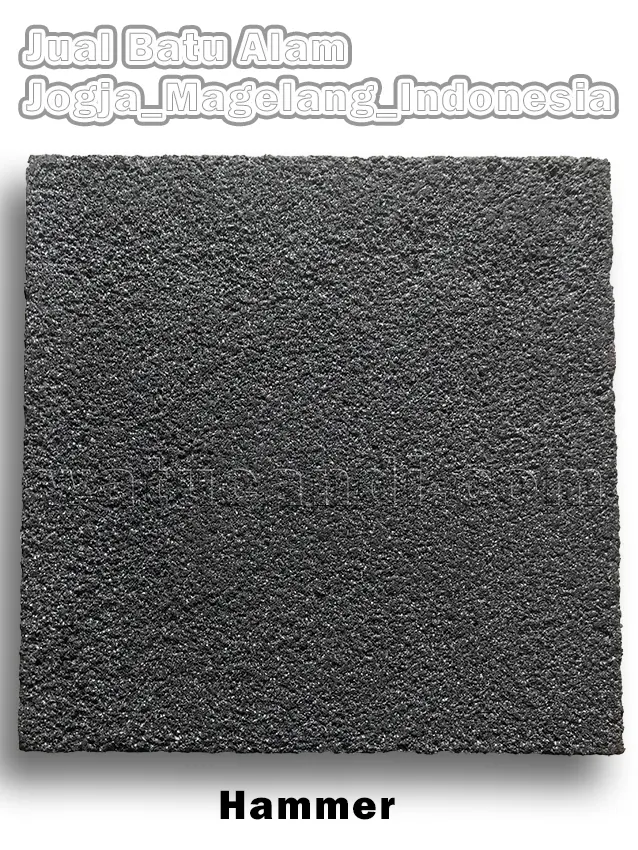
Lava Paving Stepping Stones are the ideal choice for those who want a garden path, yard, or garden area that is not only visually beautiful but also safe and comfortable to use. This product combines the original character of natural Candi stone with a Bush Hammered Natural Stone (brush hammer) finish, producing a flat, rough surface that reduces the risk of slipping.
In this article, we will thoroughly discuss everything about Candi Stone Paving Stepping Stones: from the origin of the stone, the production process, technical specifications, design inspiration, installation guide, to comparisons with other materials. We will also include exclusive videos and photos so you get a complete picture.
This article is written with a customer approach, making it easy for you to find information about natural Candi stone products for stepping stones, paving, and garden pathways.
What Is Candi Stone?
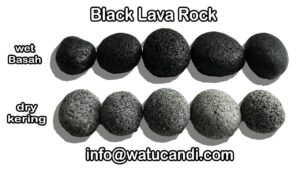
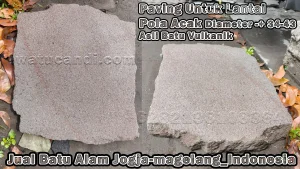
Candi Stone is a popular term in Indonesia for a type of volcanic natural stone (Lava) that was widely used in ancient temples such as Borobudur and Prambanan. Geologically, this stone belongs to the fine-pored andesite or basalt group formed from rapidly cooling volcanic lava. Due to this specific cooling process, Candi stone has dense, tiny pores and a distinctive texture.
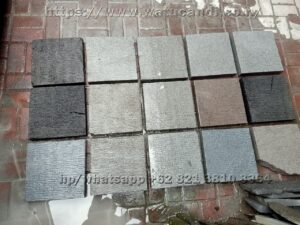
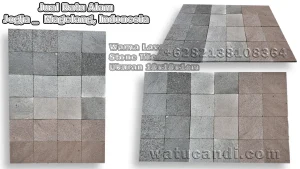
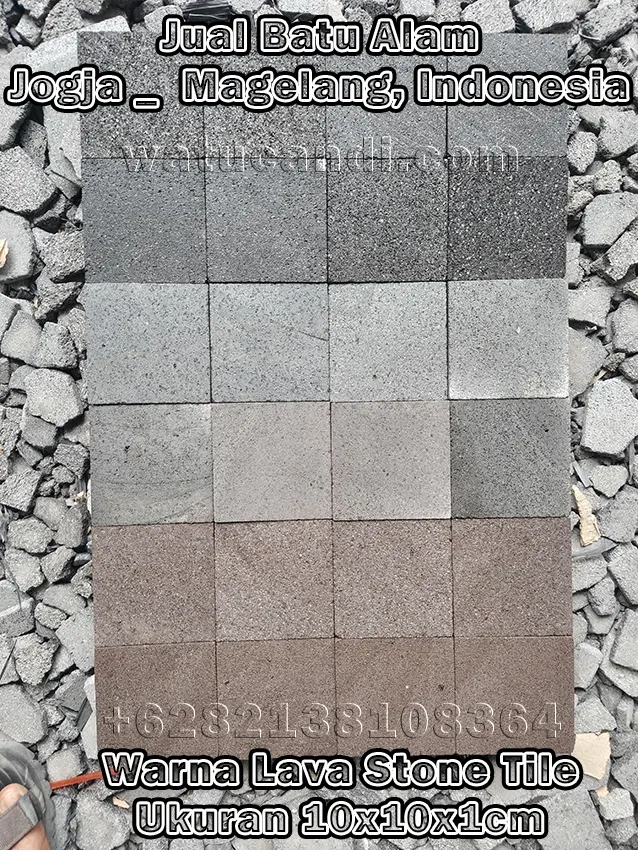
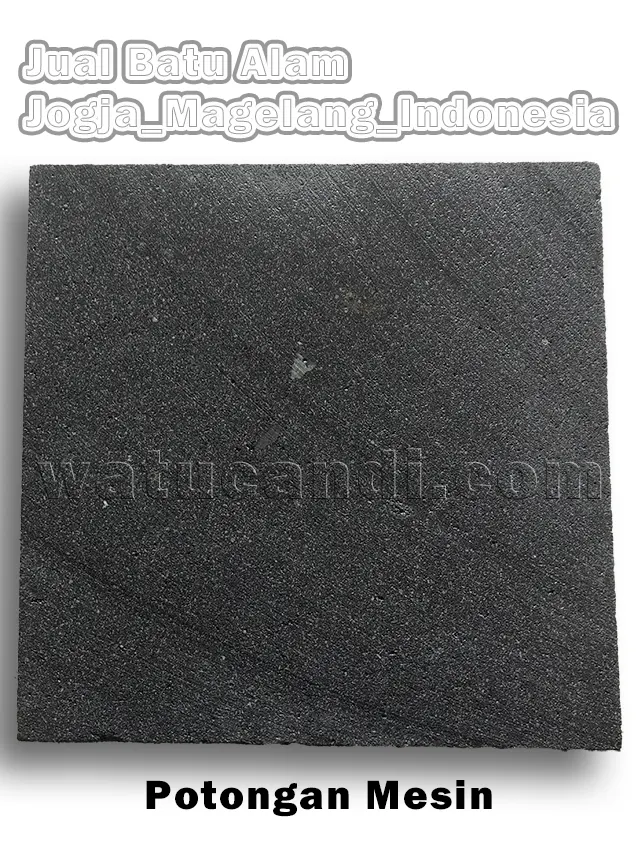
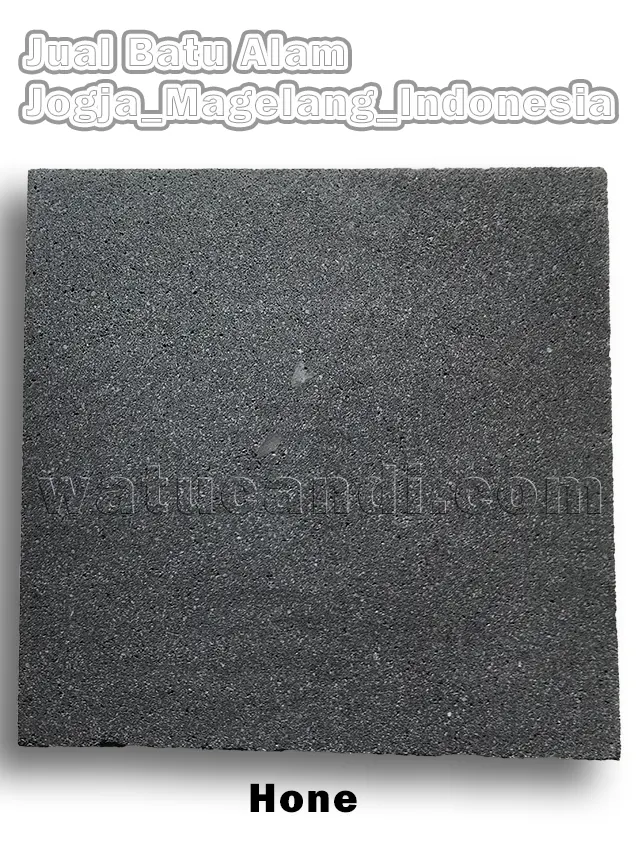
The natural color of Candi stone is typically blackish gray, deep black, or brownish gray, with subtle natural tonal variations that give an artistic impression.
The main characteristic of Candi stone is its evenly distributed tiny pores. These pores make the stone non-slip, yet not too rough to hurt the skin. The right combination of hardness, density, and porosity makes Candi stone highly resistant to tropical weather, extreme temperature changes, and heavy loads. That is why this material is chosen as the base for Candi Stone Paving Stepping Stones. When applied outdoors, Candi stone does not crack easily, does not expand excessively, and its color does not fade quickly.
Besides paving and stepping stones, Candi stone is also often used for temple walls, reliefs, garden ornaments, and traditional construction materials. But now, with modern cutting techniques and an innovative “bush hammer” surface finish, Candi stone appears as a stepping stone paving product with precision-sized natural stone (for export needs) and a contemporary look.
Advantages of Candi Stone Paving Stepping Stones
Why choose Candi Stone Paving Stepping Stones over other materials? Here are the advantages you will get:
- Natural Anti-Slip: The surface hammered with a brush hammer on one side creates a rough yet flat texture. The stone’s own pores help add traction, so pedestrians remain safe even when the floor is wet, dirty, or mossy.
- Durable and Strong: Candi stone has high density and hardness. With a thickness of 4.5 cm, this paving can withstand repeated foot traffic without breaking, even when occasionally crossed by small carts or garden furniture.
- Unique Natural Aesthetics: Colors and textures will never be 100% uniform because they come from nature. Each piece has its own character, presenting an exclusive nuance like an ancient temple floor brought to a modern dwelling.
- Easy Maintenance: Simply brush with water, and dirt will come off. No special coating is needed unless you want a glossy look; however, many love its natural matte appearance.
- Eco-Friendly: A natural product with no synthetic chemical mixtures. The production process is low in emissions, and the stone can be recycled.
- Cool Underfoot: Because it comes from volcanic stone, its surface remains cool even when exposed to sunlight. Very comfortable to step on barefoot in the morning or evening.
Production Process of Candi Stone Paving Stepping Stones
The Candi Stone Paving Stepping Stones we offer are the result of a series of selective processes and detailed work by experienced natural stone craftsmen. Here are the stages:
- Stone Quarrying: The stone is extracted from mountain quarries in high-quality andesite-producing regions, such as Central Java and its surroundings. The selection of stone blocks considers minimal natural cracks and uniform base color.
- Block Cutting: Large blocks are cut using a gangsaw or water-lubricated circular saw to minimize dust and maintain precision. At this stage, slabs are cut with a thickness slightly larger than the 4.5 cm target.
- Precise Size Cutting: The slabs are cut into the standard size of 20 cm x 40 cm (length x width). The size tolerance is very small (±2 mm) so that the pieces fit neatly when installed.
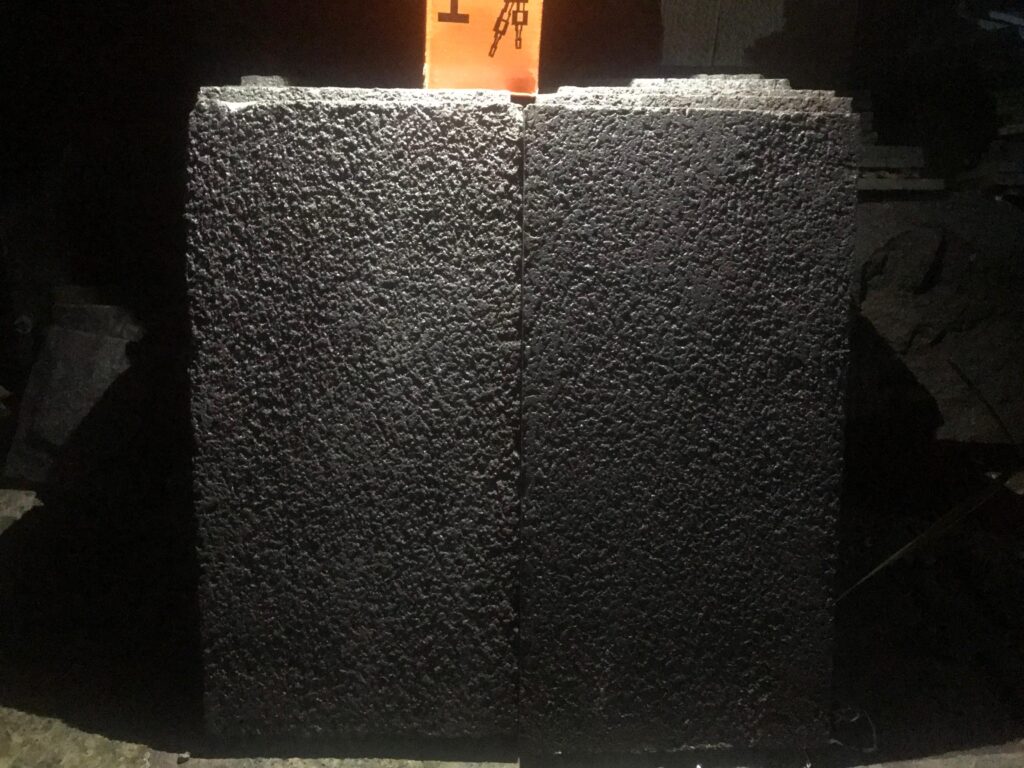
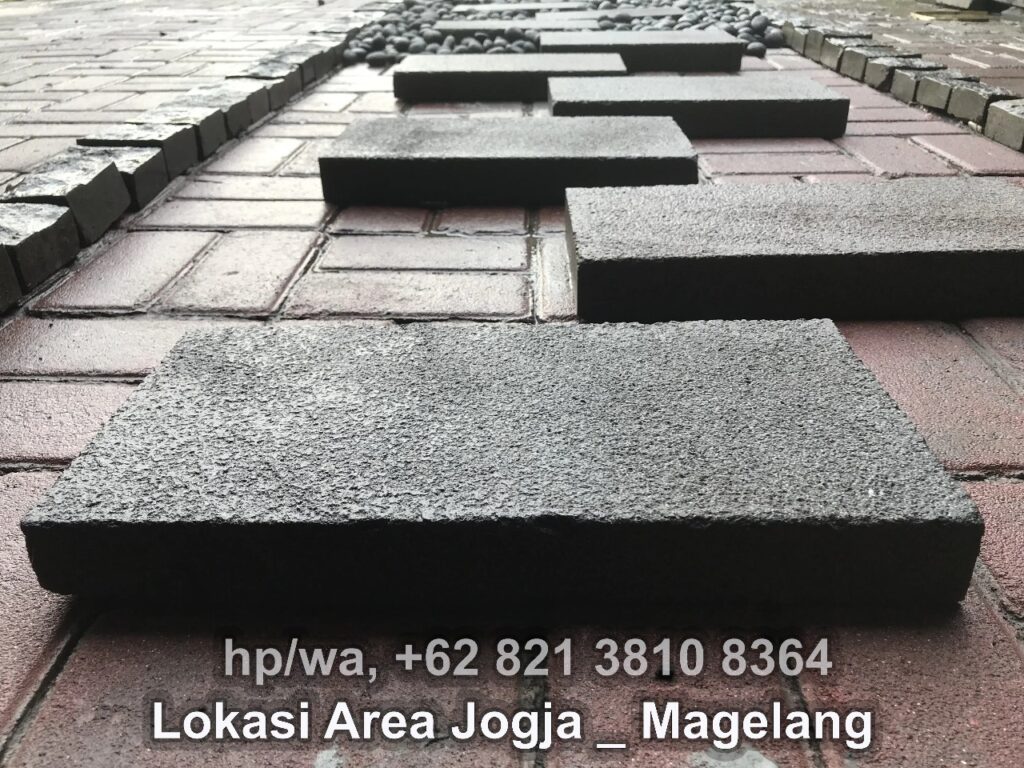
- Single-Sided Bush Hammer Finish: The top surface of the paving is mechanically hammered using a brush hammer machine or a manual bush hammer. This tool has many pointed chisel heads that strike the stone surface, creating a uniformly rough yet flat texture. This technique slightly opens the stone’s pores and creates thousands of tiny points that serve as a natural grip.
- Cleaning and Sorting: Each piece is cleaned from remaining stone dust, inspected for hairline cracks, and sorted by color uniformity. Only products that pass quality control are ready to be packed.
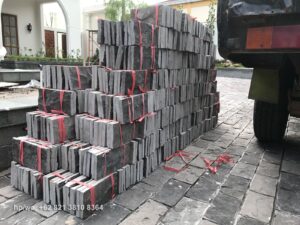
- Packaging: The paving is packed on wooden pallets and protected with styrofoam or cardboard to maintain integrity during shipping.
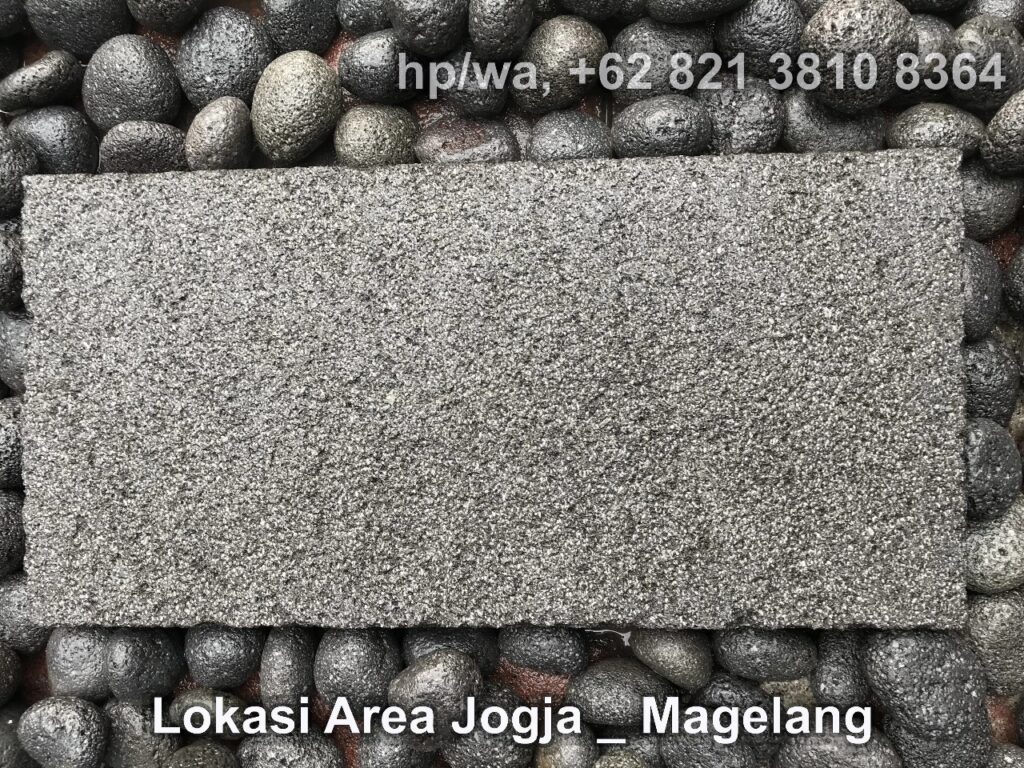
Complete Specifications of Candi Stone Paving Stepping Stones
The product displayed on this page has the following main specifications:
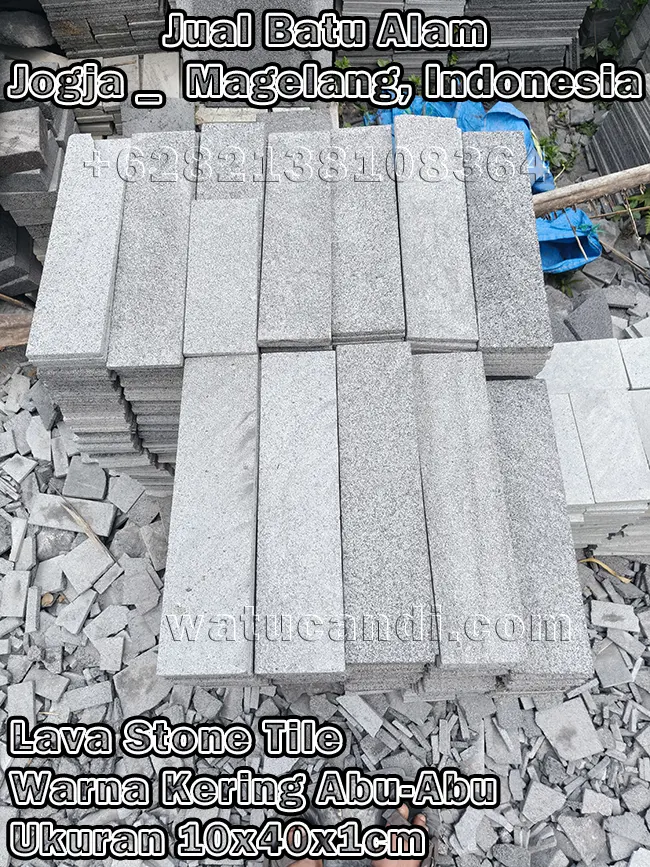
- Size: 20 cm x 40 cm x 4.5 cm (length x width x thickness)
- Material: Genuine Candi stone (volcanic andesite/basalt)
- Color: Natural according to available raw materials; generally dark gray, black, with natural tinges. Colors may vary between pieces.
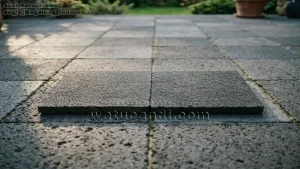
- Top Surface: One side with a flat rough texture resulting from a bush hammer finish.
- Bottom Surface: Relatively flat (sawn cut) to facilitate installation.
- Weight Per Piece: Approximately 7–8 kg (depending on stone density), making it sturdy in place and not easily shifted.
- Application: Stepping stones, garden paths, yards, pool edges, and pedestrian walkways.
- Packaging: On wooden pallets; quantity per pallet according to the order.

Why Is the Bush Hammer Finish So Important?
The technique of one side flat rough surface, known as bush hammer, is not just a style. This finishing has a significant function on Candi Stone Paving Stepping Stones:
- Maximum Safety: The texture like thousands of small dots creates high friction between the sole of the foot or shoe and the stone surface. The risk of slipping when it rains, exposed to moss, or dust is greatly minimized.
- Remains Flat and Comfortable: Unlike irregular split natural stone, the bush hammer surface remains flat so that garden chairs, pots, or footsteps do not wobble. Comfort for bare feet is also maintained because the texture is not sharp.
- Unique Aesthetics: The reflection of light on the dotted surface creates a visual effect different from polished stone. The natural and masculine impression is very suitable for minimalist and tropical gardens.
- Scratch Resistant and Not Easily Soiled: The rough surface conceals small scratches. Dust and soil do not stick easily because the texture is not slippery glossy.
Design Inspiration for Candi Stone Paving Stepping Stones in Gardens and Yards
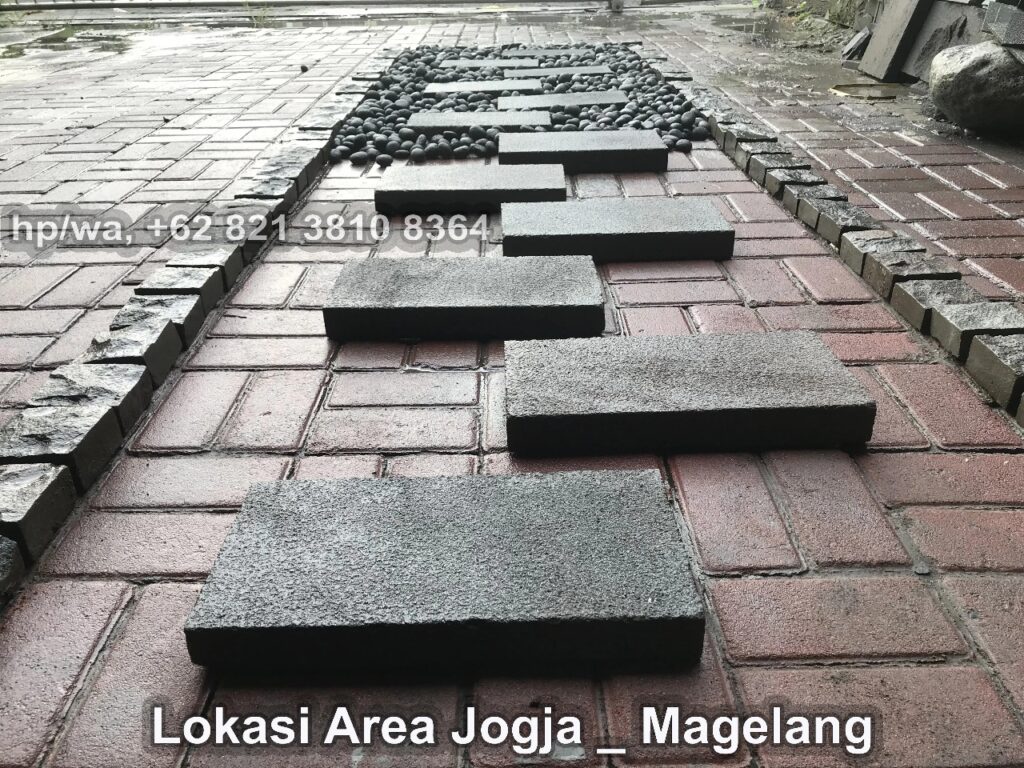
One of the main attractions of Candi Stone Paving Stepping Stones is its design flexibility. The proportional 20×40 cm size can be arranged in various patterns. Here are some ideas you can copy:
1. Stepping Stones Amid Green Grass
Place the Candi stone paving pieces separately with an adult stride distance (about 30–40 cm between centers) on a lawn. This pattern gives a natural impression and invites people to stroll in the garden without damaging the grass. Use 5–7 pieces for a short path, or more for a longer route.
2. Straight or Zigzag Pattern Pathways
You can arrange the paving parallel lengthwise with the 40 cm side as the step length, or use two parallel stones 40 cm wide if you want a wider path. A zigzag pattern is also interesting with alternating slanted placement, giving a dynamic impression. This path can divide the garden, connect the terrace to the gazebo, or lead to a fish pond.
3. Seating Area and Fire Pit Circle
Candi stone paving with a thickness of 4.5 cm is strong enough to be placed on compacted soil or sand as the floor for an outdoor seating area. You can make a circle of several pieces and place lounge chairs or a portable fire pit. The rough side prevents chairs from sliding easily.
4. Pool or Pond Edges
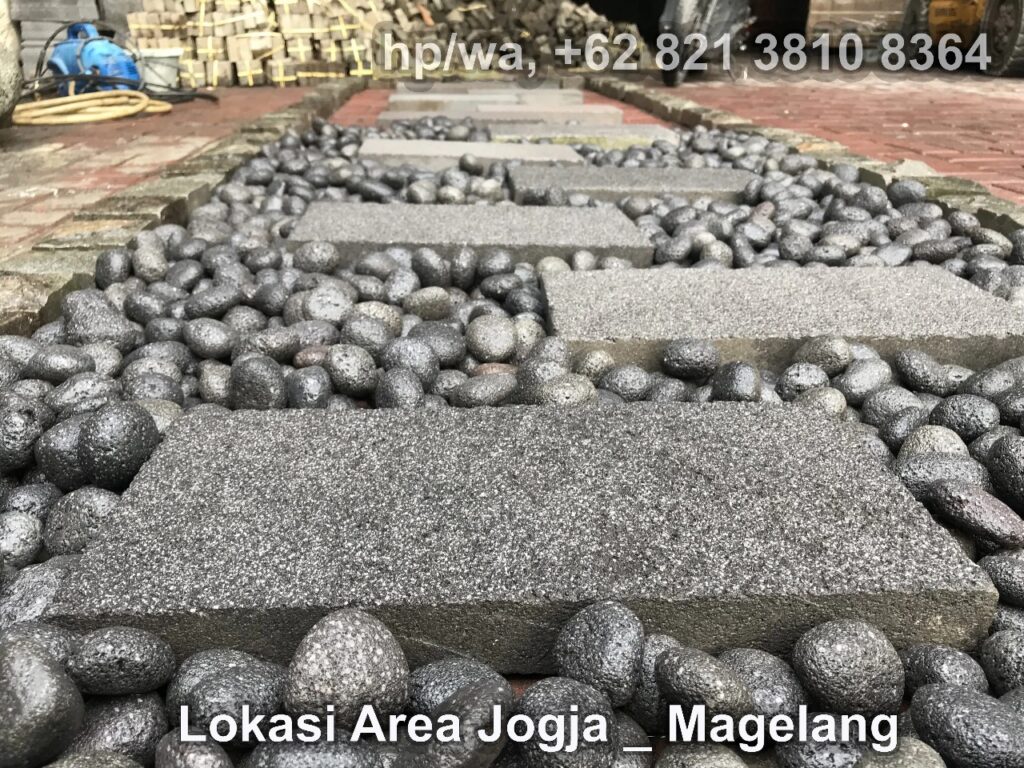
The anti-slip nature of Candi Stone Paving Stepping Stones makes it a safe choice for wet areas such as pool edges. Place the pieces as stepping stones around the pool, combining them with coral stones or gravel as gap fillers so rainwater can seep through.
5. Zen-Style Dry Garden
Combine Candi stone paving with white sand or gray gravel raked into wavy patterns. Add large stones as accents. The result is a calming Japanese-style minimalist dry garden.
6. Combination with Other Paving
You don’t have to be monotonous with one type of paving. Use Candi Stone Paving Stepping Stones as a “carpet” for the path, then surround it with light-colored concrete pavers or brushed coral stone to provide contrast. The result is very artistic.
Installation Guide for Candi Stone Paving Stepping Stones
Installation of Candi Stone Paving Stepping Stones can be done as a DIY project as long as you follow the correct steps. The 4.5 cm thickness makes the pieces quite heavy and stable, but proper base preparation will ensure the paving does not shift or sink. Here’s the guide:
Tools and Materials Needed
- Candi stone paving size 20x40x4.5 cm in the required quantity
- Masonry sand or coarse sand
- Shovel and hoe
- Spirit level or water level
- Rubber mallet
- String and wooden stakes
- Measuring tape
- Manual soil compactor (hand tamper)
- Small gravel or crushed stone (optional for base layer)
- Coral or decorative stone for gap filler (optional)
Step 1: Path Planning and Marking
Determine the route of the path to be installed. Measure its width and length. If using single stepping stones, mark the center point of each stone with a distance of 30–40 cm from center to center. Use string and stakes to create guide lines.
Step 2: Soil Excavation
Dig the area under each paving piece to a depth of about 6–8 cm (depending on soil conditions). If the soil tends to be soft or muddy, increase the depth to 10 cm and fill with a 5 cm thick layer of crushed stone that is compacted. For a close paving path, dig the entire path area.
Step 3: Base Compaction
Compact the excavated base using a manual tamper or a wooden block. Make sure the base surface is relatively flat and has a minimum slope of 1% towards the water drainage direction to prevent puddling.
Step 4: Sand Layer Installation
Spread masonry sand 2–3 cm thick over the compacted base. Level it with a wooden screed and control the level with a spirit level. For single stepping stones, create a sand layer at each point.
Step 5: Paving Placement
Carefully place each piece of Candi Stone Paving Stepping Stones on the sand. Do not slide them because that can ruin the sand flatness. Gently tap the surface with a rubber mallet until the height is as desired. Check the level between pieces with a spirit level and string.
Step 6: Gap Filling and Finishing
If the pieces are installed closely together, fill the gaps with fine sand or stone dust. Sprinkle a little water to bind. For separated stepping stones, you can fill the gaps with grass, gravel, or coral stones. Finally, clean the paving surface from remaining sand or soil.
Proper installation will make Candi Stone Paving Stepping Stones last for decades. Its heavy weight also helps hold the position without needing cement adhesive. If you are in doubt, use the services of an experienced mason.
Maintenance of Candi Stone Paving Stepping Stones
One of the advantages of Candi stone is its low maintenance. Here are tips to keep the paving in top condition:
- Routine Cleaning: Sweep or spray with low-pressure water to remove dust and dry leaves. Use a soft brush with a mild soap solution if there are stubborn stains.
- Avoid Harsh Chemicals: Acid, strong bleach, or abrasive detergents can alter the natural stone color. Use a special natural stone cleaner if necessary.
- Dealing with Moss: If moss grows on the surface, leave it if you like the natural look. To remove it, use a 1:1 mixture of water and vinegar, spray, let sit for 15 minutes, then brush.
- Optional Sealer: You can coat with a water-based stone sealer to enhance the color and repel stains, but make sure the sealer does not make the surface slippery. Choose a sealer with low adhesion for porous stone.
- Repairing Broken Pieces: Because it is installed without permanent cement mortar, a damaged piece is easy to lift and replace without damaging the surroundings.
Comparison of Candi Stone Stepping Stones with Other Materials
To make you more confident, let’s compare Candi Stone Paving Stepping Stones with several other popular materials:
| Aspect | Bush Hammered Candi Stone | Concrete Paving | Wood (Decking) | Ceramic/Granite |
|---|---|---|---|---|
| Anti-Slip | Excellent, natural | Standard, can be slippery when wet | Fair, but can be slippery with moss | Slippery, needs rough coating |
| Weather Durability | Very high, unchanged | Can crack or get mossy | Needs anti-termite maintenance, rot | Strong, but grout can get dirty |
| Maintenance | Easy, just water | Easy, but moss cleaning needed | Must be periodically coated | Difficult if grout is dirty |
| Aesthetics | Exclusive natural, earthy colors | Manufactured look, monotonous | Warm, but fades | Modern, various motifs |
| Eco-Friendly | 100% natural | Cement, high carbon footprint | Wood can be from sustainable forests | Energy-intensive production |
| Price | Competitive, proportional to quality | Cheaper, but not as strong | Expensive, especially hard wood | Varies, complicated installation |
From the comparison above, Candi Stone Paving Stepping Stones excels in terms of safety, durability, and ease of installation, especially for outdoor use.
Getting to Know More About Candi Stone Colors and Variations
Candi stone has a limited yet elegant color palette. The most common Merapi Lava Natural Stone color (Candi Stone) is charcoal gray, black, and brownish gray. These variations arise from the mineral content during lava solidification. In Candi Stone Paving Stepping Stones, you will find that no two pieces are identical. Some have lighter mineral spots, others are evenly dark. This is the uniqueness that cannot be imitated by a factory.
If you want a slightly more uniform look, you can request sorting from the supplier. However, many designers actually use these variations to create a dynamic natural mosaic. The dark color of Candi stone also strongly contrasts with green plants, making the garden look more alive.
Tips for Choosing Quality Candi Stone Paving Stepping Stones
So that your investment does not go to waste, pay attention to the following when buying:
- Thickness Precision: Make sure the thickness is 4.5 cm with a small tolerance. Measure several samples.
- Density: Good stone feels heavy and dense. Avoid stones with large cavities or natural cracks.
- Bush Hammer Texture: Touch the surface; it should feel uniformly rough, with no parts that are still slippery or irregularly chipped.
- Stock Availability: Make sure the supplier has enough stock to complete your project at once. Stones from different blocks may have slight color differences.
- Certification: Although not mandatory, some suppliers already have natural stone material certification.
By purchasing from a trusted source like watucandi.com, you will get a quality-assured Candi Stone Paving Stepping Stone product with free usage consultation.
How to Calculate the Need for Candi Stone Stepping Stones
Before ordering, first calculate how many pieces are needed. For single stepping stones, measure the length of the path (in meters) then divide by the distance between stone centers (0.3–0.4 m) to get the number. Example: a 5 meter path with a center distance of 35 cm (0.35 m) requires about 14–15 pieces. For close paving, calculate the area (m²) divided by the area of one piece (0.2 m x 0.4 m = 0.08 m²). The number of pieces per square meter is 12.5 pieces. Add 5–10% for cutting or damage reserves.
Price of Candi Stone Paving Stepping Stones
The price of Candi Stone Paving Stepping Stones varies greatly depending on the order volume, delivery location, and fluctuations in quarry costs. This natural stone product is sold per piece or per square meter. Compared to its aesthetic value and durability, the price is very competitive. For the latest price information and special offers, you can directly contact our team through the watucandi.com website. We are always ready to provide the best offers with logistics support throughout Indonesia.
Testimonials and Real Project Examples
Many homeowners, landscape contractors, and architects have used Candi Stone Paving Stepping Stones in various projects. A villa in the Puncak area applied these stepping stones on the path to the gazebo, combined with black gravel to blend with nature. In an elite housing complex in South Jakarta, this paving was installed as a side path often passed by children playing, and parents did not worry about slipperiness when it rained. In a city park in Yogyakarta, pedestrian paths using Candi stone give a heritage touch reminiscent of temple sites.
The success of these projects is inseparable from the consistent product quality and the ease of installation offered by this material. You can be part of those who enjoy the beauty as well as the safety of natural stepping stones.
Candi Stone Paving Stepping Stones for Commercial Spaces
Not only private homes, Candi Stone Paving Stepping Stones are also very suitable for commercial areas such as outdoor cafes, garden restaurants, boutiques, spas, and resorts. The rough texture prevents guests from slipping, while the natural nuance creates a premium relaxation atmosphere. Because of its high durability, this paving can withstand dense visitor traffic without significant wear. The slightly higher initial investment will pay off with minimal maintenance and replacement costs in the future.
Ecological Aspects and Sustainability
In an era that increasingly cares for the environment, using natural stone such as Candi Stone Paving Stepping Stones is a positive step. Its production process does not require high-temperature burning like cement, so its carbon footprint is lower. Installation without cement mortar also allows rainwater to seep into the ground, reducing surface runoff and helping groundwater recharge. After its service life ends, the stone can be reused or left to become part of nature without polluting the soil.
Frequently Asked Questions (FAQ)
Is Candi stone suitable for indoor areas?
Yes, this stepping stone can be installed indoors such as semi-outdoor terraces, natural-style bathrooms, or industrial concept interior pathways. However, its main purpose is outdoor stepping stones.
What if the paving is exposed to oil or grease?
Immediately absorb with a cloth or newspaper, then clean with soapy water and a brush. Most oil stains will fade over time. You can also use a special natural stone cleaner.
Is the bush hammer surface comfortable for bare feet?
Very comfortable. The texture is like a fine sandpaper surface but not sharp. Many users say it provides a light, healthful massage sensation.
How long is delivery for outside Java?
Depending on the location, usually 5–14 working days after confirmation. We serve delivery throughout Indonesia with safe packaging.
Can we order custom sizes?
For large projects, we can produce custom sizes with a certain minimum order. Please contact us for consultation.
Video: Take a Closer Look at Candi Stone Paving Stepping Stones
Here are two videos that show product details, the finishing process, and installation examples. Watch them to get a more vivid picture:
The first video shows the bush hammer texture and how water flows on its surface, proving its non-slip nature.
The second video shows the process of installing stepping stones in a garden so you can directly imagine the final result.
Why Choose Candi Stone Paving Stepping Stones from watucandi.com?
We are a trusted natural stone supplier that prioritizes quality and customer satisfaction. By choosing us, you get:
- Genuine products from selected quarries, not mixed stone.
- Neat and precise finishing process.
- Competitive and transparent pricing.
- Free consultation for your project needs.
- Safe delivery to your location.
Do not hesitate to contact us via the contact page or the available chat button. Realize your dream garden and yard with Candi Stone Paving Stepping Stones.
Closing
Candi Stone Paving Stepping Stones are the right solution for those who appreciate natural beauty, safety, and durability. The 20x40x4.5 cm size with a bush hammer finish provides a blend of classic aesthetics and modern functionality. Whether as stepping stones in a small garden or a long pathway in a commercial area, this product will always look charming over time. Support a lifestyle that is in harmony with nature by choosing original Indonesian natural stone material.
Immediately visit our product gallery at watucandi.com and find more quality natural stone options for all your building needs.
Candi Stone Paving Stepping Stones, candi stone stepping stone, natural candi stone paving, candi stone stepping stones, candi stone bush hammer, bush hammer finish, 20×40 candi stone, natural stone for garden, natural stone pathway, anti-slip paving, rough flat candi stone, candi stone garden floor, candi stone paving price, stepping stone installation, anti-slip stepping stones, black candi natural stone, candi stone for yard, watucandi.com, rough stepping stones, natural stone stepping stones, 4.5 cm candi stone paving, genuine candi stone, candi stone garden design, how to install stepping stones, outdoor natural stone floor, black natural stone paving, andesite candi stone, minimalist candi stone floor, natural garden material
Candi Stone Paving Stepping Stones, candi stone stepping stone, natural candi stone paving, rough flat candi natural stone, bush hammer finish, candi stone bush hammer, size 20x40x4.5, anti-slip stepping stone, candi stone garden, candi stone paving price, candi stone stepping stone installation, natural stone pathway, black candi stone, outdoor natural stone floor, watucandi.com, garden pathway design, natural stone stepping stone, 4.5 cm thick paving, natural stone for stepping stones, natural stone stepping stones, genuine Indonesian candi stone, garden floor material, candi stone products, rough flat paving, cheap natural stone floor, buy candi stone paving, candi stone supplier, anti-slip natural stone, minimalist stepping stone, candi stone yard floor,