A comprehensive breakdown of Candi Stone _ Lava Stone Split-Face (Rough Face): physical characteristics of Merapi lava, precision size variants, wall cladding applications, anti-detachment installation techniques, and sealing tips. Essential reading before purchasing rough-surface natural stone for your building project.
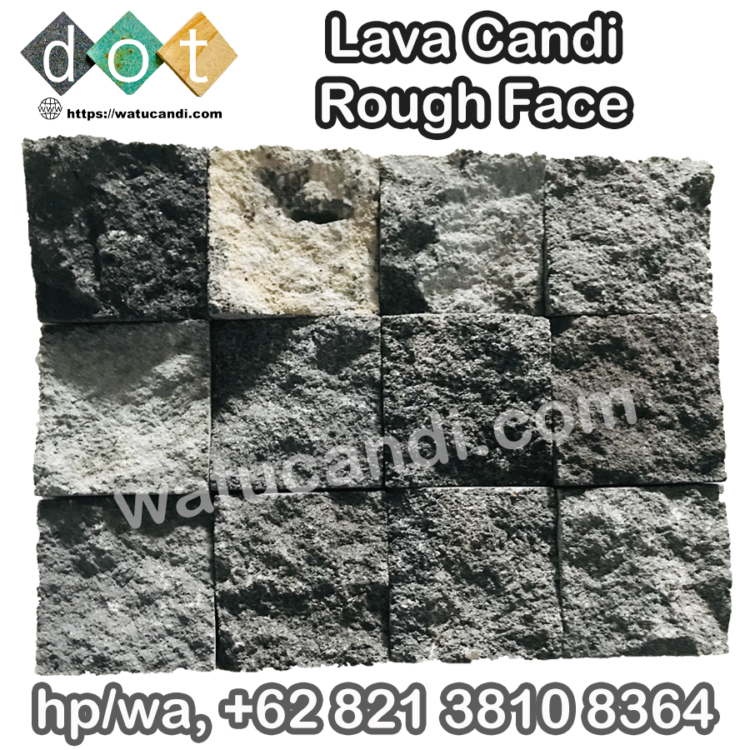
Candi Lava Split-Face Stone is a wall cladding material with a rough surface featuring three-dimensional natural stone texture produced through chiseling or splitting of Merapi andesite lava stone. This material is selected not only for its aesthetics but also for its physical durability against tropical weather, thermal insulation capabilities, and long-term economic value. For contractors, homeowners, and property developers, understanding the technical specifications of this stone is the first step before making a purchase decision.
This article examines in detail what RTA Split Face Rough Candi Stone is, covering geological structure, precision versus local grade size variants, proper installation techniques to prevent detachment, and performance comparisons with other natural stone types. This reference is compiled based on field data and production standards from Watucandi as an exporter and direct distributor from the slopes of Mount Merapi.
Definition and Physical Characteristics of Split Face Lava Stone
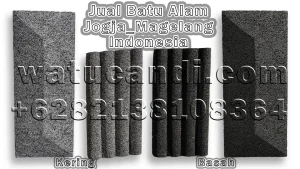
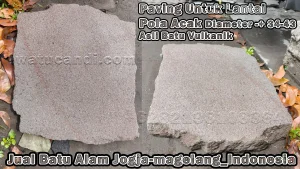
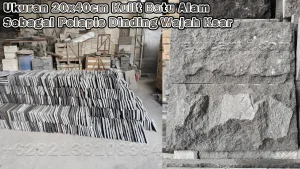
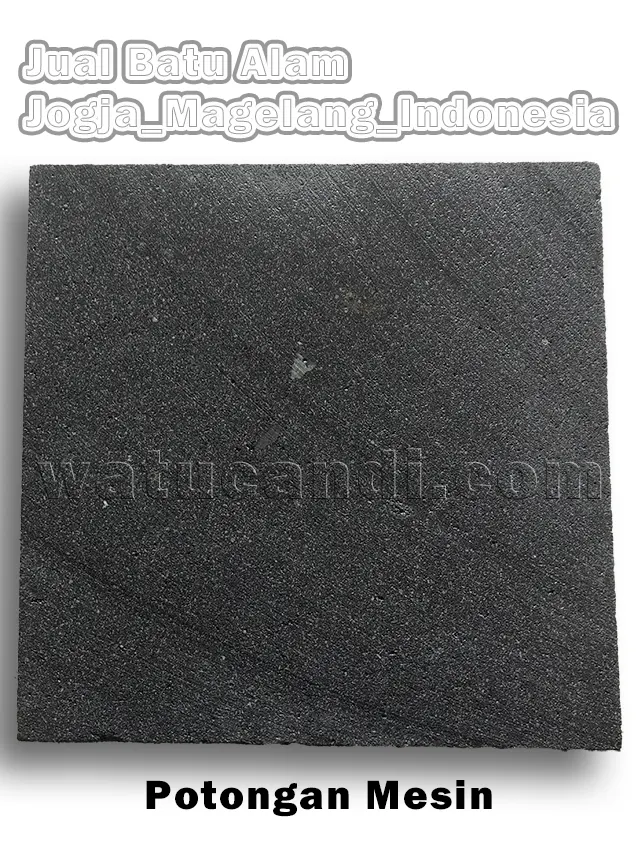
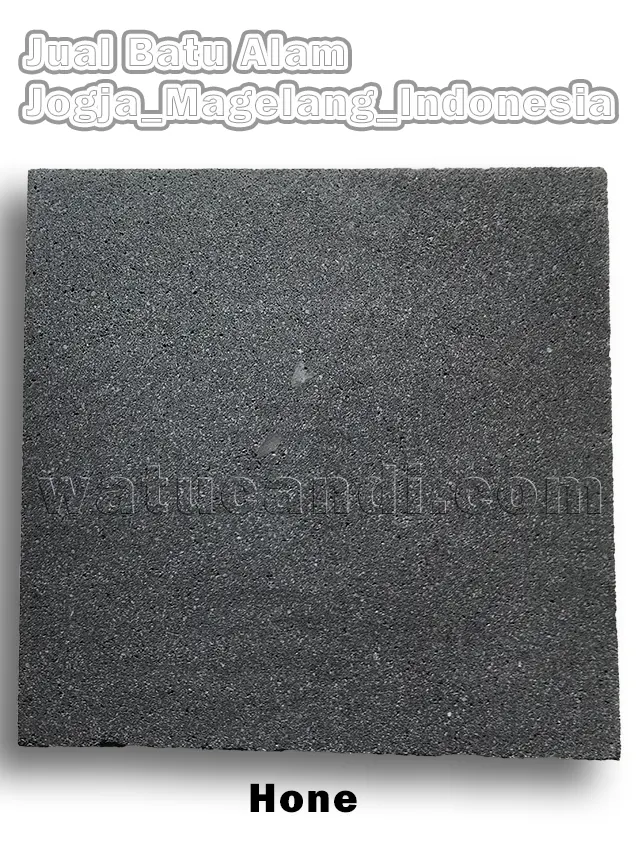
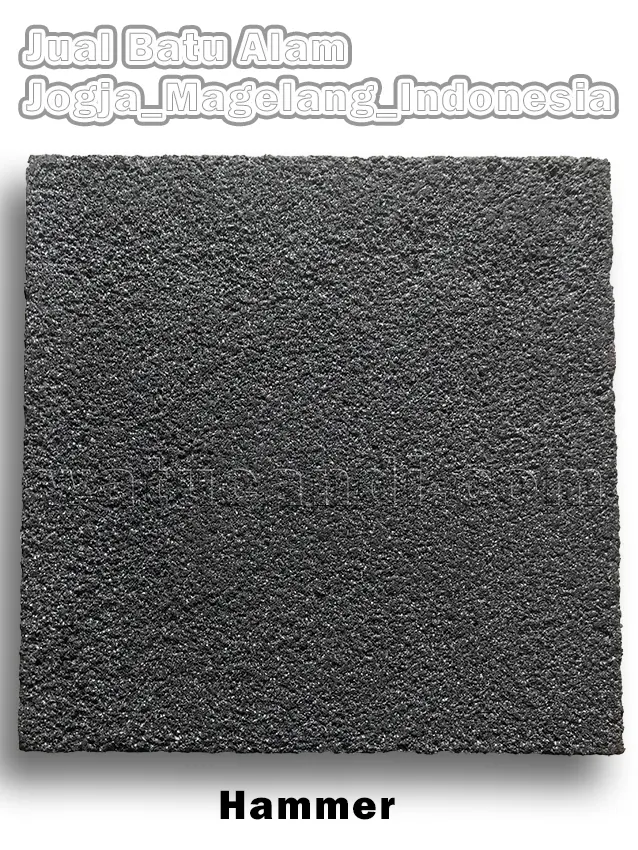
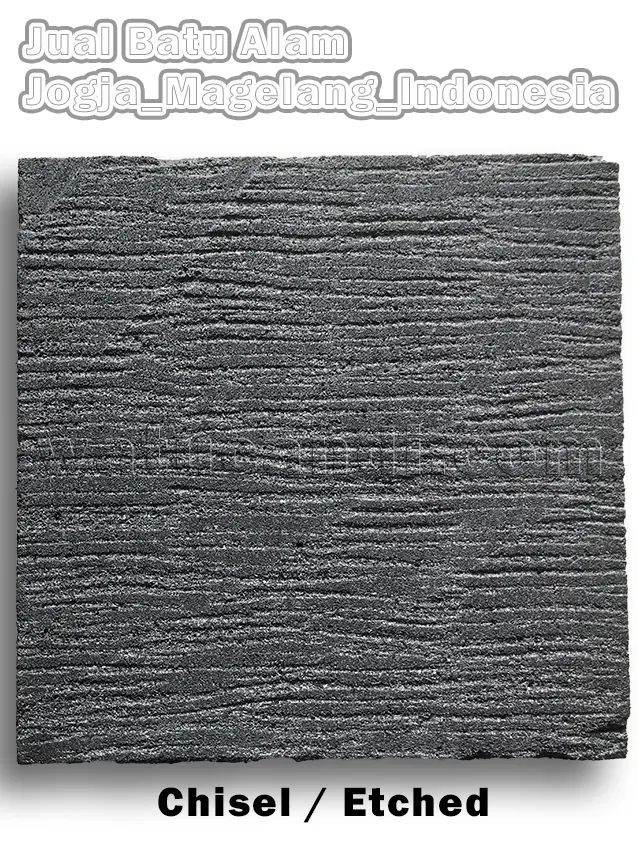
Split face is not a stone type name but rather a finishing designation. The base material is Black Lava Candi Stone quarried from Merapi cold lava flows. The split face process involves breaking the stone surface using manual chisels or hydraulic splitter machines to create irregular wavy textures. The final result is stone tiles with varying thickness (uneven) that produce dramatic shadow effects when exposed to light.
The main physical characteristics distinguishing Merapi candi stone from andesite in other regions include:
- High Density: Formed from rapid lava cooling, its crystal structure is dense, making it strong enough to withstand mechanical loads and resistant to cracking when nailed or drilled.
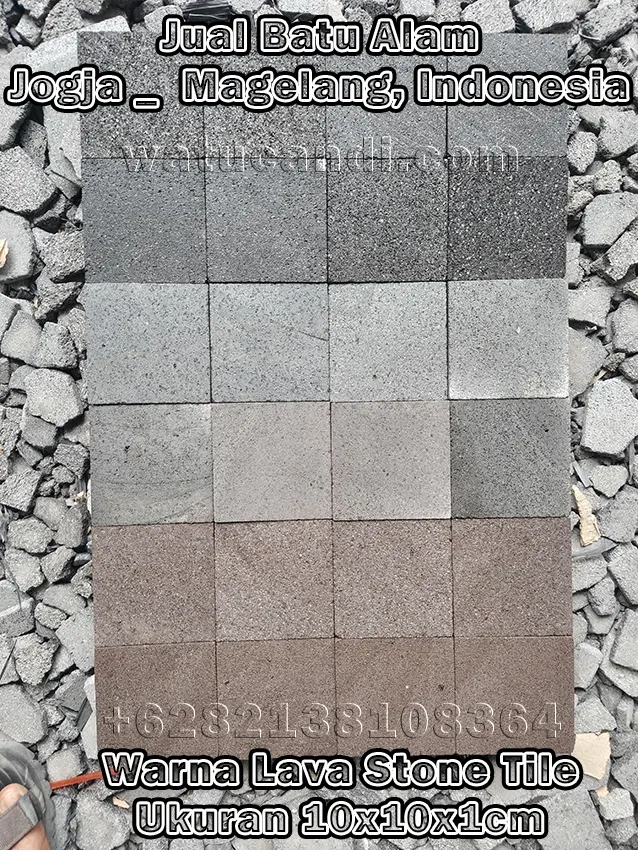
- Permanent Black Color: Color pigments come from natural iron and silica minerals, not chemical dyes. The color will not fade even after years of UV exposure. Detailed black color variations are available in small module formats such as Black Lava Stone Tiles 10x10x1cm.
- Controlled Porosity: Features micro-pores that allow air circulation (breathable), preventing moisture trapping that could damage the concrete wall behind it.
- Anti-Slip and Dirt-Hiding Texture: The rough surface conceals dust stains and water splashes, reducing cleaning frequency compared to polished stone.

Size Specifications and Production Tolerances
Selecting the right size and grade determines installation success and cost estimation. Watucandi produces two primary quality categories:
Local Grade versus Export Grade (Precision)
The fundamental difference lies in dimensional tolerance and texture consistency:
- Local Grade: Size tolerance of ±3-5mm. Thickness is not uniformly calibrated. Suitable for garden fences, retaining walls, or service areas. More economical pricing.
- Precision/Export Grade: Size tolerance of ±1.5mm. Undergoes thickness calibration process (adjusted to additional requests) and texture selection. Installation joints can be made thin and neat. Mandatory for commercial building facades, luxury interiors, and export projects. This calibration principle is the same as applied to Local vs Precision Green Stone Tiles.
Available Dimension Variants
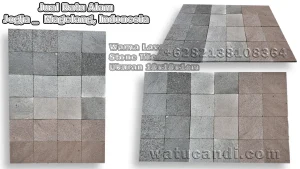
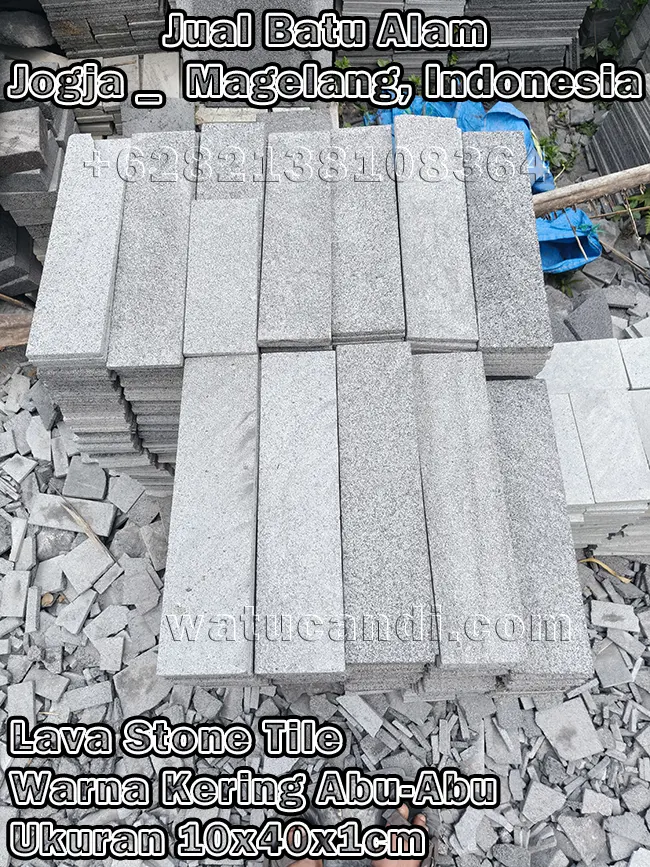
Standard market sizes for split face are 10×10 cm, 10×20 cm, and 20×20 cm with thickness ranging from 1.5 to 3 cm. However, to minimize joints and accelerate installation, many projects now switch to large formats. Availability of black lava slabs for custom needs can be checked through the Black Slab Natural Stone catalog. Slab formats enable designers to create cleaner and more modern modular patterns.
For complete technical specifications including specific gravity, water absorption rate, and hardness testing, please refer to the Black Lava Candi Stone Merapi Complete Guide document. This data is essential for structural consultants calculating dead loads on walls.

Application Guide Based on Building Location
Split face stone has broad usage flexibility, but each location requires special treatment. Below is the application guide:
Exterior Facades and Fence Walls
This is the primary function of split face stone. Its rough texture effectively conceals air pollution and rainwater splashes. Combination with glass or steel elements creates strong material contrast. For proven exterior design references, read Lava Stone Exterior Design. Ensure use of special natural stone adhesive mortar (not regular cement) and stainless steel anchors for heights above 3 meters to prevent detachment risks.
Swimming Pool Areas and Water Features
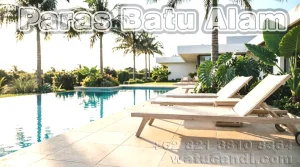
Candi split face stone is frequently used as pool wall accent or edge coping. The black color makes water appear clearer. However, due to its porous nature, waterproofing sealing is mandatory before and after installation. Without sealing, pool chlorine or salt can penetrate and cause efflorescence (white stains). As an alternative pool material with better chemical resistance, consider combining with Green Stone Tiles Swimming Pools Ultimate Guide or learn about safe coping materials at Swimming Pool Coping Stone Tiles Complete Guide.
Interior: Accent Walls and Bathrooms
Indoors, split face serves as a focal point. Downlight illumination sweeping the wall (wall washer) will emphasize its wavy texture. For bathrooms, ensure areas directly exposed to water are sealed with silane/siloxane-based penetrating sealer to prevent absorption of soap or body oils. Inspiration for other carved textures for interiors can be viewed at Authentic Manually Chiseled Stone Floor.
Landscaping and Gardens
As retaining walls or garden borders, split face stone is ideal because it withstands soil moisture and moss growth actually enhances the natural impression. Combine with paving stones for garden pathways as discussed in Lava Rock Stepping Stone Pavers Guide or garden foundations at Garden Wall Foundation Stone Borders Guide.

Proper Installation Methods and Safety Standards
Natural stone installation failures usually stem not from stone quality but from incorrect installation methods. Follow these protocols to guarantee durability:
- Substrate Preparation: Walls must be clean, dry, and rough. If plastered walls are too smooth, perform scratching/roughening first so mortar adheres perfectly.
- Use Special Adhesive: Do not use conventional sand-cement mixtures. Use polymer-based natural stone adhesive (Sika, Mapei, or equivalent) with high bonding strength and flexibility against thermal expansion.
- Mechanical Anchor System: For vertical installation above 2-3 meters height, mandatory installation of pins/stainless steel anchors every 60-90 cm is required. Adhesive alone cannot withstand long-term gravitational load on relatively thick and heavy split face stone.
- Pattern Arrangement: To avoid rigid repetitive patterns, use random or brick bond systems. See chiseled stone installation pattern examples at Chiseled Natural Stone Installation Patterns as layout reference.
- Joints and Grouting: Leave minimum 3-5mm joints to accommodate natural stone tolerances. Use dark-colored grout (black/dark gray) to harmonize with stone color and conceal dirt.
Specific installation guidelines for candi lava stone cladding are fully available at Black Lava Candi Stone Cladding Complete Guide. Reading this guide before starting work will prevent material and time losses.
Maintenance, Sealing, and Common Problem Prevention
Natural stone is a living material requiring maintenance. Below are common problems and their solutions:
Efflorescence (White Stains)
Caused by mineral salt migration from mortar or substrate to stone surface. Prevent by using low-alkali adhesive and penetration sealing. If already present, clean with specialized efflorescence cleaner (do not use pure HCl as it can erode stone).
Moss and Fungus
In damp areas without sunlight, moss may grow. This can be a desired aesthetic (rustic look) or a nuisance. To prevent, apply anti-fungal sealer every 2-3 years. For areas intentionally left mossy, ensure water drainage does not pool on stone surface.
Oil Stains and Graffiti
Rough face surfaces are difficult to clean when exposed to liquid stains. Pre-sealing with hydrophobic and oleophobic impregnating sealer is a mandatory investment for public areas or outdoor kitchens. Care products and cleaning agents should be matched to the stone finishing type.
In-depth information on maintenance and maintenance schedules is available at the end of the Black Lava Candi Stone Merapi Complete Guide article.

Comparison with Other Natural Stone Materials
Before finalizing decisions, compare candi split face stone performance with other material options available in the Indonesian market:
| Parameter | Candi Lava Split Face Stone | Paras/Limestone Stone | Sukabumi Green Stone | Polished Andesite |
|---|---|---|---|---|
| Hardness | High | Low-Medium | Medium | High |
| Water Absorption | Medium (Porous) | High | Low | Very Low |
| Weather Resistance | Excellent | Poor (easily weathered) | Good | Excellent |
| Maintenance | Low | High | Medium | Low |
| Relative Price | Medium | Cheap | Expensive | Expensive |
| Suitable For | Exterior, Interior Accents | Dry Interior, Ornaments | Swimming Pools, Wet Areas | Indoor Flooring, Countertops |
If your project requires material for intensive wet areas (main swimming pools), Sukabumi green stone may be technically superior. Read details at Sukabumi Green Natural Stone Tiles Pedra Hijau. However, for exterior walls requiring minimal maintenance and high durability, candi lava split face stone is the absolute winner.
For softer and classic paras stone options (requiring extra maintenance), references are available at Palimanan Paras Stone Tiles and Brown Java Tiger & Black Paras Sandstone Guide. Meanwhile, for high-traffic flooring, andesite paving or limestone bushhammer can be complementary companions. Check options at Andesite Stone Paving Indonesia and Limestone Tile Bushhammer.
Integration with Other Design Elements
Split face stone rarely stands alone. This material works best when combined with other elements:
- Furniture & Furnishing: Tables or sinks made from matching lava stone reinforce the theme. View collection at Top Table Black Lava Stone, Black Basalt Stone Sink, and Handmade Stone Table and Chairs.
- Companion Flooring: Do not use split face on floors (too rough and difficult to clean). Use sawcut or chiseled lava stone flooring for walking areas. References: Stone Floor Lava Stone Floor and Rough Face Stone Floor (for non-barefoot pedestrian areas).
- Decoration & Accessories: Candi stone mosaic for column details or borders: Candi Lava Natural Stone Mosaic. Or traditional carved elements: Carved Temple Lava Stone.
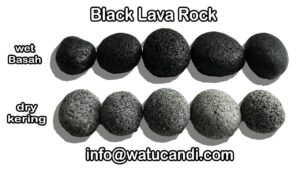
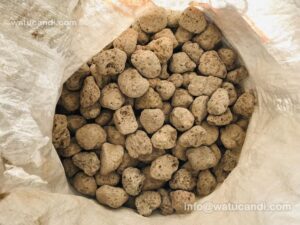
- Gravel/Pebbles: For garden areas below split face walls, spread black lava gravel for smoother wall-to-ground transition: Black Lava Rock Pebbles Volcanic Stone Guide.
Why Choose Direct Supplier from Merapi?
Material source determines quality consistency. Watucandi is located in the Merapi candi stone production zone, enabling quality control from quarry to delivery. Direct sourcing advantages include:
- Color Consistency: One production batch comes from the same quarry block, minimizing color variation.
- Custom Flexibility: Can request non-standard sizes, special thickness, or hybrid finishing (e.g., split face + brushed edge).
- Competitive Pricing: Without multi-layer intermediaries, pricing is more efficient for large volumes.
- Technical Support: Our team understands Merapi stone characteristics empirically, not just catalog theory. Pre-purchase consultation helps avoid specification errors.
For large-scale paving projects, we also provide Paving Natural Stone Lava Stone Merapi and premium collections for villa courtyards at Premium Natural Stone Flooring Collection by Watucandi.
FAQ: Frequently Asked Questions About Candi Split Face Stone
Can split face stone be installed on gypsum/light partition walls?
Not recommended. Split face stone weight (±40-60 kg/m²) exceeds gypsum board load capacity. Must be installed on brick, concrete, or AAC block walls reinforced with wiremesh and special adhesive. If light partitions must be used, backing board of fiber cement (calcium silicate board) minimum 12mm thick + reinforced metal stud framing is required.
What waste factor should be calculated when ordering?
For straight installation with uniform sizes, waste factor is 5-7%. For random patterns, diagonal layouts, or curved surfaces, waste can reach 10-15%. Always order minimum 10% reserve from net area to anticipate breakage during transport, cutting, and future repairs.
Is coating necessary after installation?
Depends on aesthetic preference and location. Glossy/wet look coating will darken color and highlight texture but requires recoating every 1-2 years. Impregnating sealer (invisible) maintains natural appearance and protects from stains without changing color, with protection duration of 3-5 years. For exteriors left to natural weathering, sealing is optional but still recommended to prevent efflorescence.
How to clean dirty split face walls?
Use stiff nylon brush + low-pressure water (high pressure washer can damage joints and erode surface if too close). For stubborn stains, use pH-neutral stone cleaner. Avoid strong acids (HCl, vinegar) or strong alkalis (bleach) except for special treatments under professional supervision.
Additional References and Related Product Catalogs
To expand knowledge about Indonesian natural stone materials and other finishing options, here is a collection of relevant comprehensive guides:
- General Lava Stone Guides: Indonesian Natural Lava Stone Tiles Ultimate Guide, Lava Stone Overview, Lava Candi Natural Stone, Black Lava Category.
- Lava Finishing Variations: Lava Stone Rough Face, Black Lava Bush Hammer Surface, 5 Black Lava Stone Surfaces, Lava Alkali Sawncut vs Bushhammer.
- Lava Paving & Flooring Products: Lava Stone Paving Slabs, Irregular Natural Stone Paving, Lava Paving Stepping Stones, Merapi Natural Stone Outdoor Flooring, Garden and Yard Stone Flooring.
- Alternative Wall Cladding: Random Candi Stone Skin Lava Wall Cladding, Lava Rock Tiles Premium Volcanic Stone Cladding, Black Lava Stone Tile Walls Ultimate Guide, Green Stone Split Face Tiles.
- Other Natural Stones: Natural Limestone Travertine Guide, Sandstone Limestone Natural Stone from Indonesia, Indonesian Limestone Tiles Natural Stone Wall Floor, Brecci Natural Stone Tiles, Pumice Stone, Natural Andesite Stone.
- Decorative Elements & Stone Furniture: Natural Stone and Furniture, Natural Stone Liquid Soap Dispenser, Natural Rough Surface Marble Stone Sink, Handmade Stone Tub, Original Merapi Stone Sink.
- Design Inspiration & Styles: Luxury Home Design Modern, Hospitality Design, Restaurant Design, Commercial Design, Latest Styles, Decorate Comfort Design.
- Slabs & Large Formats: Natural Stone Slabs, 3D Stone Slabs, Original Random Slabs Stone, Andesite Natural Stone Slabs, Large Natural Limestone Slabs Complete Guide.
- Edges, Borders & Details: Natural Stone Edges, Natural Stone Edge Wall, Stone Fence and Foundation Walls Guide.
- Chiseled & Handcrafted Variants: Chiseled Temple Natural Stone, Chiseled Natural Stone Paving, Chisel Lava Natural Stone, Hand Carved Temple Stone Flooring Paving, Floor Paving Stone Chisels.
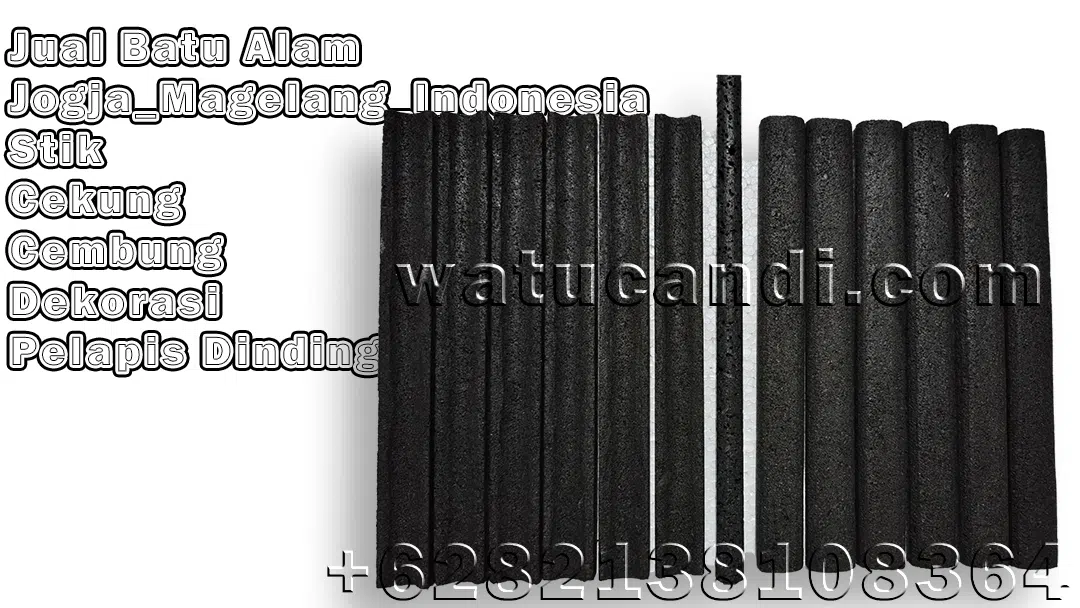
- Line Types & Surface Patterns: Surface Types 05×05 Comb, Surface Types 3×1, Line Types 2×1, Line Types Rolling2, Line Types 0.5×0.5 Broken Regularly, Straight Line Type 1×0.5, Stone Types GC, Stone Type GCBroken.
- Specific Size & Code Products: Black Lava Stone 100x100x10, Solid Split Stone Size 100x200mm, Lava Stone 75x230mm, Lava Stone Products Catalog, Decking Parquet Merapi Lava Stone.
- Heritage & Temple Stone: Borobudur Temple Stone, Temple Stone Paving Floor, Stone Floor of the Temple Merapi Lava, Lava Stone Floor Temple, Black Candi Lava Stone, Black Lava Natural Stone Tile, Black Lava Natural Stonetile, Black Lava Stone Bali Indonesia.
- Green Stone & Batik Stone: Green Natural Stone, Green Sukabumi Natural Stone, Indonesian Green Stone Tile Crafts Guide, Batik Green Stone Tiles Yogyakarta, Batik Green Natural Stone Yogyakarta.
- Palimanan & White Stone: White Palimo Palimanan Natural Stone, Super White Palimo Limestone, Brown Spotted Paras Stone.
- Unique & Specialty Items: Hidden Crystals of Merapi Lava, Getting to Know Umpak Batu, Sell Pelinggih Stone Materials, Slate Stacked Betel Leaf Slab Surface, Genuine Susun Sirih Slate, Flat Random Riverstone Natural Stone, Wavy Carved Natural Stone Tiles, Tumbled Natural Stone Finish, Rough Natural Stone Floor, Example of Candi Stone Paving, Lava Stone Semi Carved, Unique Models of Beautiful Products, Brown Sandstone, Natural Stone Tiles General, Industrial Design, Enterprise Design.
- Indonesian Language Guide: Merapi Lava Candi Natural Stone Complete Guide (ID).
Conclusion and Next Steps
Candi Lava Split-Face Stone is a material investment offering optimal balance between natural beauty, structural durability, and ease of maintenance. Success depends on three factors: selecting appropriate grade for budget and function, following standard technical installation methods, and scheduled preventive maintenance.
Do not make decisions based solely on catalog photos. Request physical samples to see and feel texture, color, and stone weight directly. Compare local and precision grades side by side. Discuss application plans with suppliers who master the product, not just general sellers.
Watucandi is ready to support your project with quality material supply, free technical consultation, and export logistics support. Contact our team to obtain quotations, samples, or schedule visits to Merapi production workshops. Every project is unique, and material solutions should be customized rather than forced from generic templates.
Tags: Candi Stone Split Face, Lava Stone Wall Cladding, Merapi Rough Face, Natural Stone Wall Cladding, Lava Stone Exterior Design, Split Face Installation Guide, Candi Lava Stone Maintenance, Local vs Precision Grade, Natural Stone Care, Volcanic Stone Wall Tiles, Andesite Paving Indonesia, Green Stone Split Face, Candi Lava Mosaic, Premium Natural Stone Flooring, Watucandi Lava Stone,