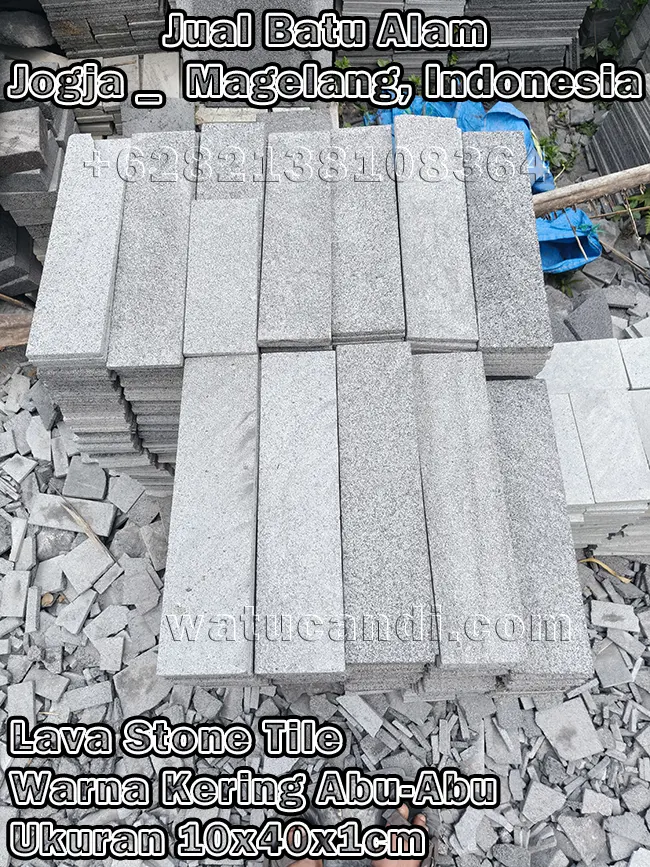
Discovering Batik Green Stone Tiles Yogyakarta: The Natural Beauty of Tropical Travertine for Exclusive Homes
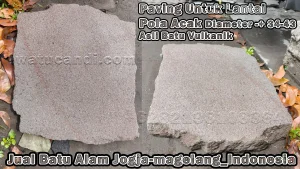
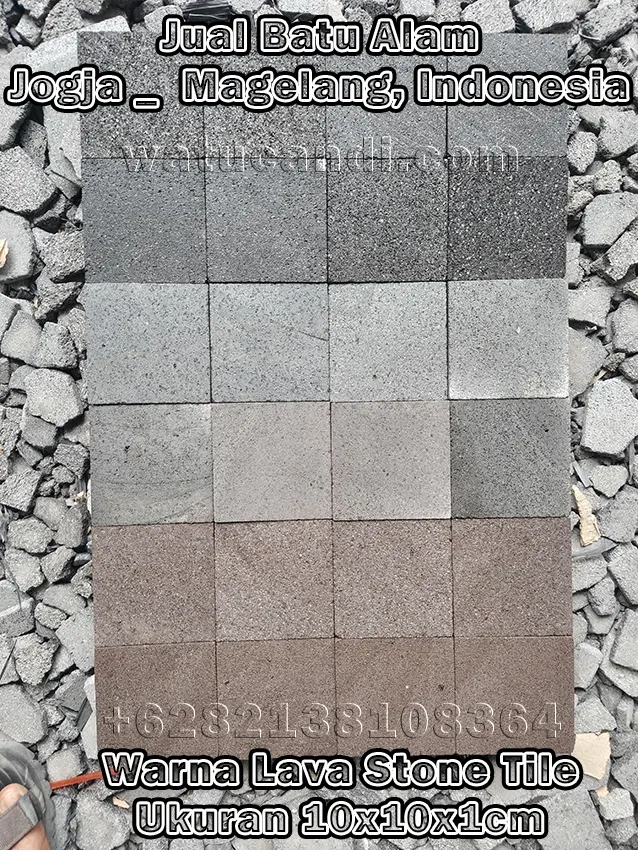
Among Indonesia’s abundant natural wealth lies a decorative material that holds the beauty of traditional art within every slab. Batik Green Stone Tiles Yogyakarta, also known as Paras Batik or Batik Green Stone Tiles, is one of the most unique natural stone variants originating from the earth beneath Yogyakarta. This material is not just ordinary stone; it is a natural canvas upon which nature has painted patterns resembling traditional Indonesian batik motifs, creating a perfect fusion of cultural heritage and geological beauty.
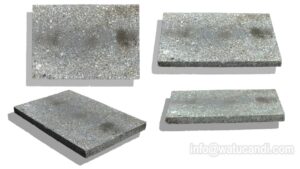
Batik green stone tiles are authentic natural rocks from Yogyakarta that are also widely used as sandstone tile crafts for decoration. Their existence has become the target of architects, interior designers, and homeowners who desire an aesthetic touch that cannot be replicated by factory-made materials. Each slab of tile carries a story of geological processes that have taken place over thousands of years, producing visual characteristics that are truly exclusive and will never be duplicated.
These rocks are typically sourced from natural stone quarries in the areas surrounding Yogyakarta, particularly in the Sleman region and its surroundings. This area is indeed known as one of the sources of high-quality natural stone in Indonesia, thanks to its unique geological conditions. Situated on the slopes of the active Mount Merapi, thousands of years of volcanic activity have created rich and diverse mineral deposits. From here, natural stones with distinctive characteristics that are hard to find elsewhere are born.
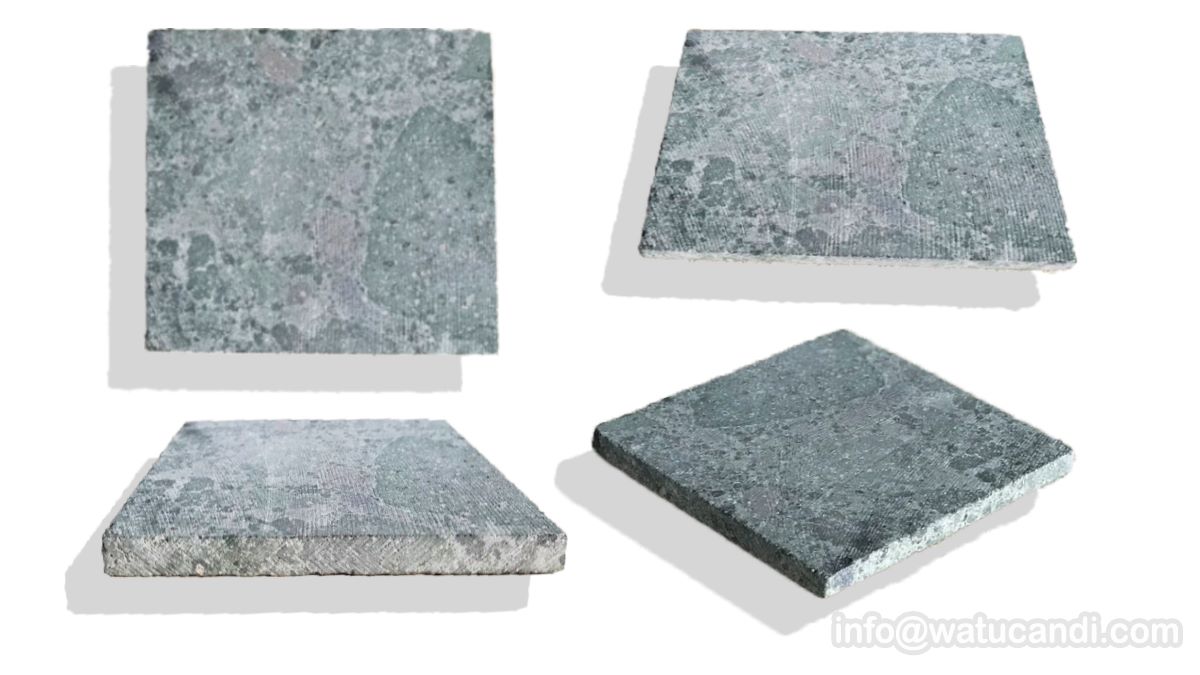
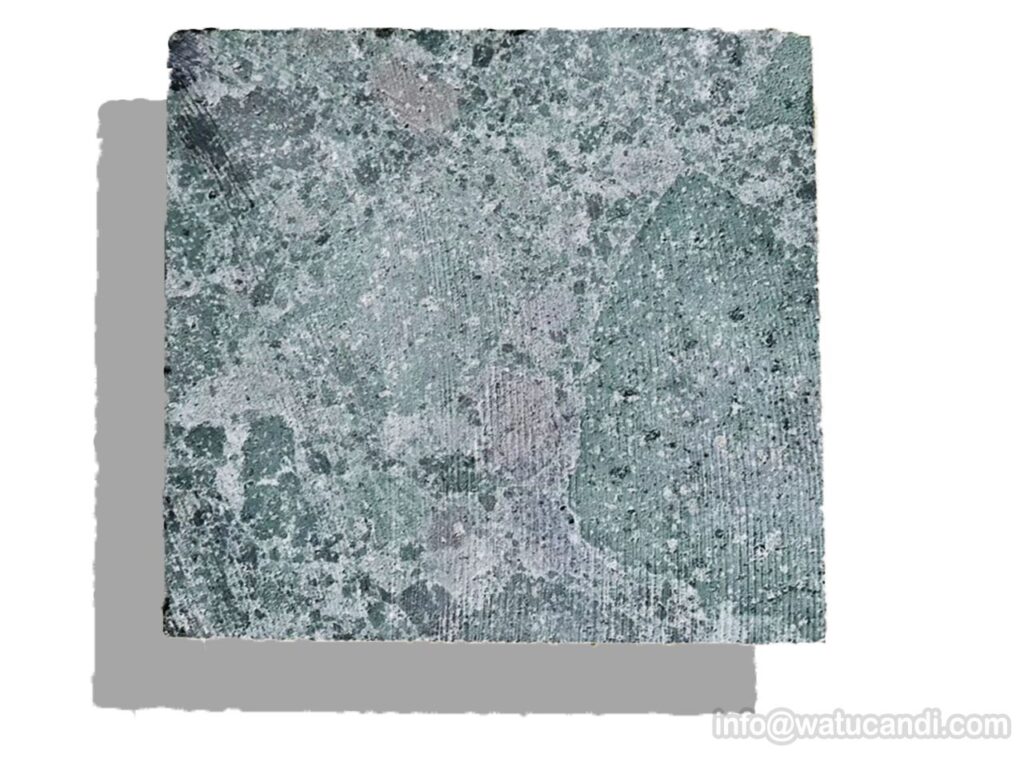
Batik green stone has its own uniqueness, namely a distinctive green color and batik texture that appears natural. Its green color is not uniform and flat like paint, but rather possesses gradations, nuances, and depth that continuously change depending on the viewing angle and lighting. This is what makes each tile feel alive and dynamic. The “batik” texture that appears on its surface is not the result of human touch, but rather natural mineral formations created during geological processes, producing abstract patterns reminiscent of classic batik motifs such as parang, kawung, or mega mendung in a wild and free interpretation of nature.
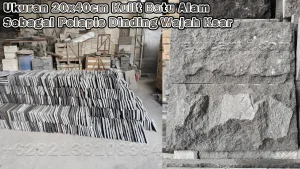
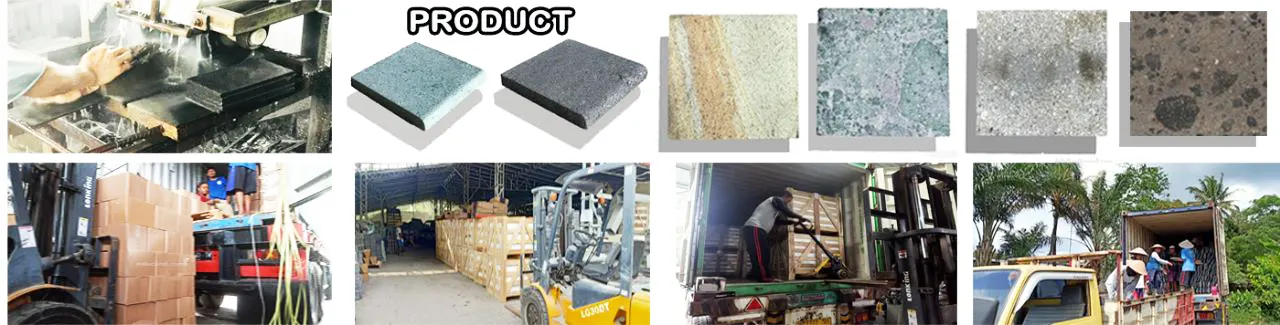
Before being crafted into green natural stone products (pedra hijau – green stone), the batik green stone is first cut using stone cutting machines to achieve sizes and shapes that match your needs. This cutting process is not a simple task; it requires special skills to read the grain direction and stone patterns so that the cut results maximize the beauty of its natural motifs. An experienced craftsman will be able to determine the best cutting angle that will display the most artistic side of each stone block.
Then the natural batik texture pattern on the stone will be clearly visible on the stone surface, which will add to the beauty of the natural stone tile product. This is the most anticipated moment in the production process, when a stone block that looks ordinary from the outside, after being cut, suddenly reveals a hidden natural “painting” within. Every cut is a surprise, every slab is an unpredictable masterpiece. No two tiles are identical, making every project that uses this material truly unique and personal.
The processing of batik green stone (Batik Green Stone Tiles Yogyakarta) into batik green natural stone tiles requires adequate skill and experience for maximum results. This is not work that can be done by just anyone. It requires a deep understanding of the stone’s characteristics, how it reacts to cutting tools, how its texture changes when honed, and how its color emerges after the finishing process. Each stage requires the touch of skilled hands that have been honed over many years.
Therefore, producers of batik green natural stone tiles in Yogyakarta typically have a skilled and experienced workforce in the field of natural stone cutting. These craftsmen are heirs to a stone processing tradition that has been passed down through generations, combining local wisdom with modern techniques to produce export-quality products. Their expertise lies not only in technical ability, but also in the artistic sensitivity to recognize and optimize the natural beauty of each stone they process.
Geology and Origins: Understanding Yogyakarta’s Tropical Travertine
To truly appreciate the beauty of Batik Green Stone Tiles Yogyakarta, we need to understand the natural processes that gave birth to them. Geologically, this stone belongs to the travertine family, a type of limestone formed from carbonate mineral deposits, especially calcium carbonate, which precipitate from hot springs or mineral water sources. However, Yogyakarta’s travertine has unique characteristics that distinguish it from travertine found in Italy, Turkey, or other countries, thanks to the distinctive volcanic geological conditions in this region.
The existence of Mount Merapi as one of the most active volcanoes in the world plays a key role in the formation of this stone. Volcanic activity over thousands of years has created a complex hydrothermal system beneath the surface of Yogyakarta. Groundwater rich in volcanic minerals, particularly calcium, silica, and various other minerals, rises to the surface through rock fractures. As this water reaches the surface and undergoes changes in temperature and pressure, these minerals slowly precipitate, layer by layer, forming travertine rock with very distinctive characteristics.
What differentiates Yogyakarta travertine from travertine elsewhere is its unique volcanic mineral content. The green color that characterizes this stone comes from mineral content such as chlorite, serpentine, or certain iron minerals carried by volcanic hot water. Meanwhile, the “batik” pattern that is its main attraction is formed from variations in mineral concentration that precipitate unevenly during the formation process, creating layers with different colors and textures, similar to the process of making hand-drawn batik, where wax creates patterns by covering certain parts of the cloth.
This geological process takes place on a scale of time that is difficult to imagine, hundreds to thousands of years to form a layer of stone only a few centimeters thick. This is what makes each slab of batik green stone tile a silent witness to an incredibly long journey of time, a natural artifact that holds the history of the earth in every fiber and color.
The Formation Process of Batik Green Stone Yogyakarta: A Fascinating Natural Chronology
Batik Green Stone Tiles Yogyakarta – Batik green sandstone is formed through a natural process that takes a very long time. The journey of its formation can be divided into several main stages, each contributing to the final characteristics of this stone. Understanding this process not only increases appreciation for its beauty, but also helps us understand its physical properties: why it has certain pores, why its color can vary, and how best to care for it.
Here is the chronology of batik green sandstone formation:
Formation Stage: Birth from the Volcanic Earth
Batik green sandstone is formed through a rock formation process that occurs within the earth. This is the earliest and most decisive phase in creating the unique character of this stone. Far beneath the surface of Yogyakarta, groundwater meets volcanic heat sources from Mount Merapi, creating a hydrothermal solution extremely rich in dissolved minerals. This hot water has an extraordinary ability to dissolve minerals from surrounding rocks, far more effectively than ordinary cold water.
This process includes the cooling and crystallization of magma or hot fluids located beneath the earth’s surface. When this mineral-rich hydrothermal solution begins to cool, either because it approaches the cooler surface or because it mixes with cooler groundwater, the dissolved minerals begin to crystallize and precipitate. This deposition process does not occur uniformly; variations in temperature, pressure, and mineral concentration create layers with different compositions, which will later be visible as “batik” patterns on the stone.
What is very interesting is how certain minerals, especially those containing iron, chlorite, and serpentine, give the distinctive green color. Meanwhile, gas bubbles trapped during the deposition process create small pores and cavities that are characteristic of travertine. This process can take hundreds to thousands of years, creating rocks that are not only beautiful but also hold a complex geological history within their structure.
Erosion Stage: Character Maturation by Nature
After being formed, batik green sandstone undergoes an erosion process caused by wind, water, and solar heat. This is the phase where nature begins to “sculpt” and refine the stone that has been formed. Over the following thousands of years, the rock that was once buried underground may be exposed to the surface due to tectonic activity or the erosion of the soil layer above it. Once exposed, it begins to interact directly with natural elements.
This erosion makes the rock surface smooth and sometimes unique texture patterns are formed, such as the batik patterns on the green stone. Slightly acidic rainwater slowly dissolves certain parts of the stone surface, creating deeper textures and clarifying the layer patterns that were previously hidden. Wind carrying fine particles acts like natural sandpaper, smoothing the surface and giving a soft final touch.
This natural erosion process is very important in creating the visual character of batik green stone. It acts like the “revealing” process in painting, where different layers are exposed and create a complex visual composition. This is why stones taken from different depths or from different locations can show different patterns and color intensities, each location has its own unique “erosion history.”
Collection Stage: From Quarry to Craftsman’s Hands
Batik green stone is then collected from mining locations in several areas in Indonesia, including in the Yogyakarta region. The process of natural stone mining in Yogyakarta, especially in the Sleman area, is carried out using methods that respect the balance of nature. Traditional miners have generational knowledge about how to identify locations with the best quality stone, as well as extraction techniques that minimize damage to the stone and the surrounding environment.
The collected rocks are then cut and processed into various forms, including batik tiles, natural stone, and green natural stone. This is where the important role of the craftsmen begins. They receive raw stone blocks from the quarry and begin to “read” each block to determine the best cutting method. This is a skill that requires years of experience, the ability to see the potential beauty in stone that is still rough and unprocessed.
The process of making batik green sandstone involves natural processes that take a long time. From geological formation to being ready for installation in your home, each slab of tile has gone through an extraordinarily long journey: thousands of years in the earth’s belly, hundreds of years of natural erosion, and finally the touch of skilled craftsmen’s hands that reveal its hidden beauty.
Therefore, batik green sandstone is very valuable and has high aesthetic value, making it very suitable for use as a base material for decorative crafts. Its value lies not only in its visual beauty, but also in its rarity, its unique formation process, and the skill required to process it into ready-to-use products. Each tile is an investment in natural beauty that can never be replicated by human technology.
The Production Process: Skilled Hands Revealing Beauty
Batik Green Stone Tiles Yogyakarta – Once the stone blocks arrive at the craftsman’s workshop, a series of processes begins that transforms raw stone into ready-to-use decorative tiles. Each stage requires precision, patience, and a deep understanding of the material’s character. This is what distinguishes high-quality products from mass-produced results that are carelessly made.
The cutting process for batik green stone tiles can be done using modern stone cutting tools such as laser-based cutting machines or water jet cutting. Water jet cutting technology, in particular, is highly ideal for natural stone because it uses high-pressure water mixed with fine abrasive particles. It does not produce heat that could damage the stone structure, and is capable of making very precise cuts with clean edges. However, this technology requires very large equipment investment and high operational costs.
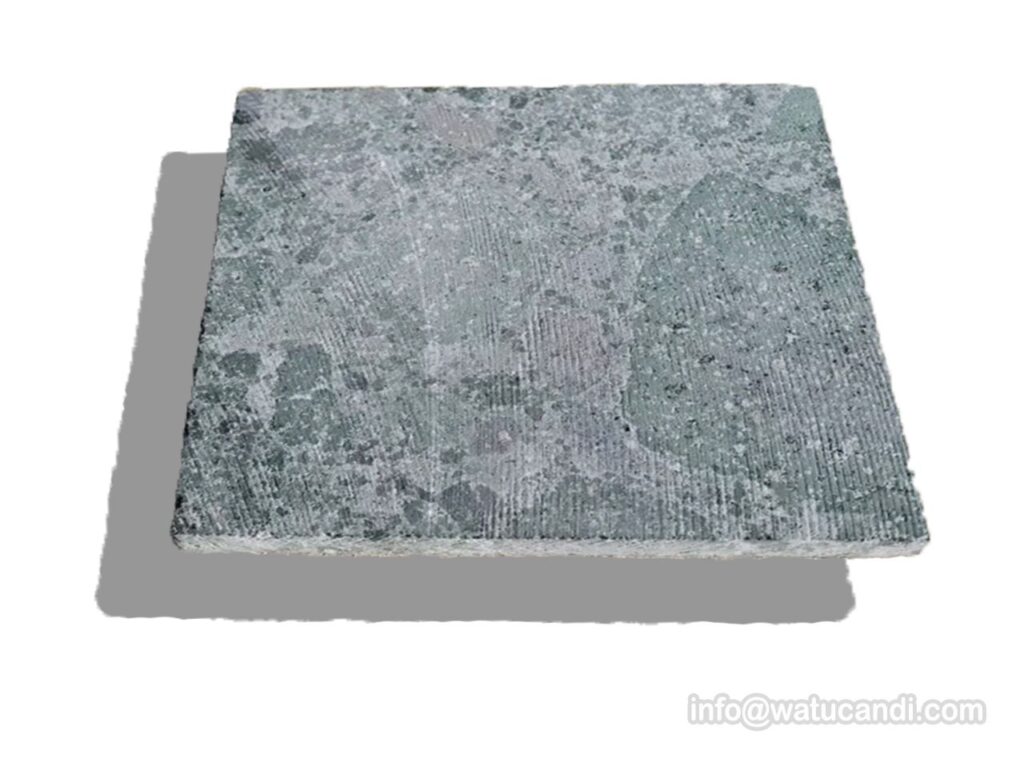
Currently, we use simple cutting machines to cut natural stone. Although the technology is simpler, it does not mean the results are inferior. In fact, this is where the advantage of traditional craftsmen lies: their ability to compensate for the limitations of tools with extraordinary hand skills. They understand how the stone will react to the saw blade, where its weak points are, and how to direct the cut to maximize the beauty of the natural pattern.
This process is carried out carefully and meticulously so that the natural stone does not crack or become damaged. Each stone block has internal “stress points” such as micro-cracks or weak planes that are not visible from the outside. Experienced craftsmen can “read” these signs and adjust their cutting techniques. One small mistake could cause the stone to crack and lose its aesthetic value, or even shatter completely. This is why the cutting process takes time and cannot be rushed.
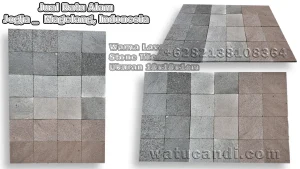
After the cutting process is complete, the batik green stone tiles can be finished with several finishing techniques, including:
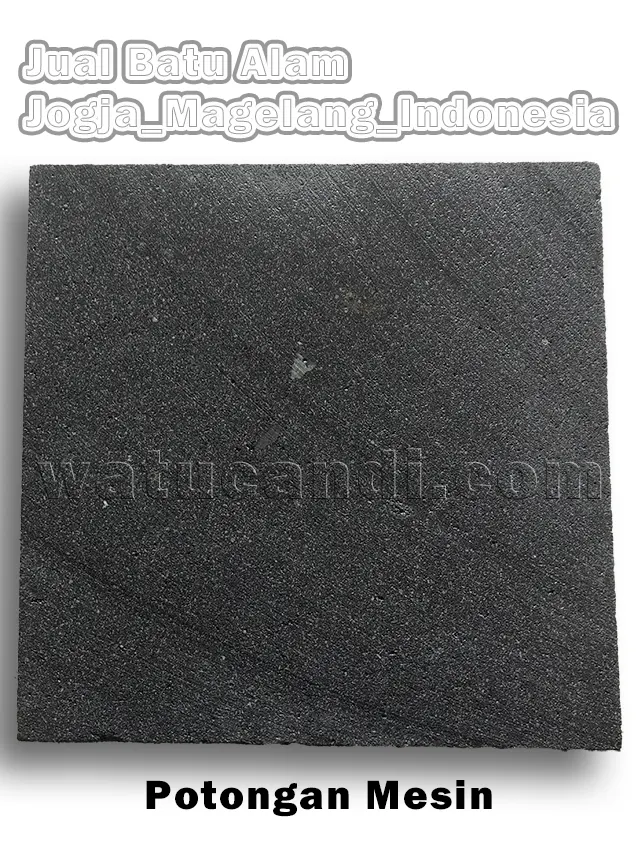
Sawn Finish – Preserving Natural Authenticity
Batik Green Stone Tiles Yogyakarta – The sawn technique is done by slicing the surface of the batik green stone tile using a stone cutting tool. This is the most basic and most natural finish. The resulting surface has a distinctive sawn mark texture that is slightly rough yet flat, with a very natural appearance. This technique can make the surface of batik green stone tiles flat and look cleaner without removing their original character.
Sawn finishing is very suitable for applications that want the most authentic and rustic look. The batik patterns on the stone remain clearly visible, and the green color appears with full intensity because it has not undergone additional abrasion. However, because the natural pores remain completely open, tiles with this finish require more intensive sealer application, especially if they will be used in areas frequently exposed to water or dirt.
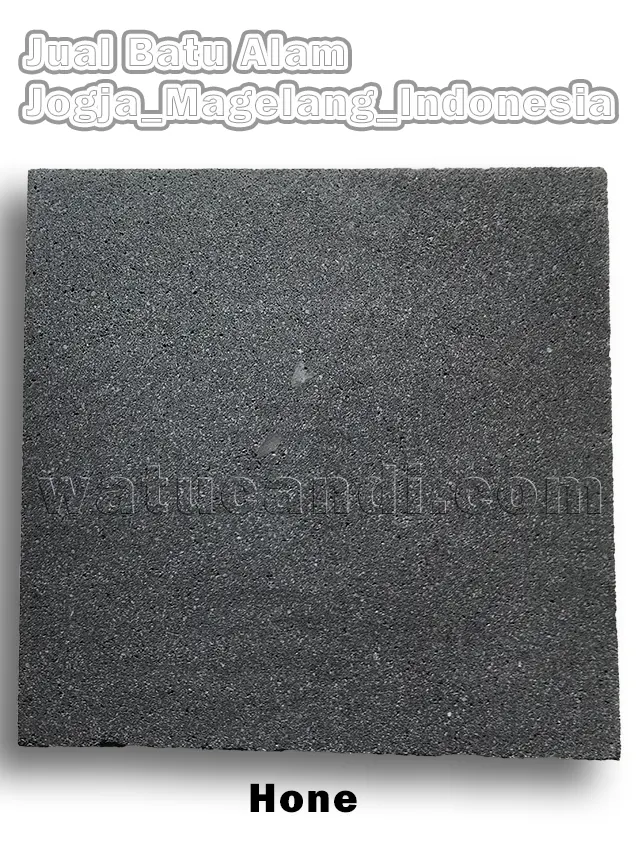
Honed – Smoothness That Highlights Patterns
Batik Green Stone Tiles Yogyakarta – In the process after being cut and shaped to natural stone tile sizes, the honing technique is performed to give a smoother final touch. This is the stage where the beauty of the batik pattern is truly brought to the surface. Using special sanding tools, usually in the form of grinding stones with different levels of coarseness, the tile surface is honed gradually until it reaches the desired level of smoothness.
The honing technique is performed by rubbing the surface of the batik green stone tile using special tools so that the surface becomes smooth and looks matte. This process is usually carried out in several stages: starting with coarse sandpaper to level the surface, then medium sandpaper to smooth it, and finally fine sandpaper to give a soft final touch. Each stage removes a micro-layer from the stone surface, gradually opening up pattern details that were previously hidden.
This technique can make batik green stone tiles more pleasing to the eye and strengthen the texture of the batik motif with a smoother surface. The result is a surface that is pleasant to touch, not rough like a sawn finish, yet not slippery like polished stone. This is the ideal choice for interior areas such as accent walls, where people will often look at and sometimes touch the surface.
It removes visible stone cutting blade marks and makes the surface pores on the natural stone tile smaller. The honing process not only smooths, but also “closes” some of the stone’s natural pores, making it more resistant to water and dirt penetration. This means tiles with a honed finish will be easier to maintain and more durable, especially for applications in frequently used areas.
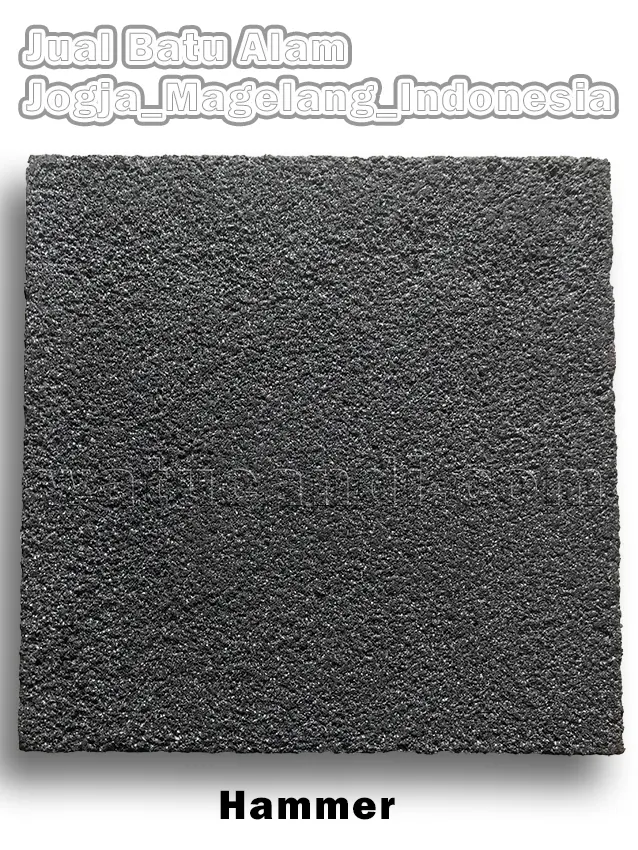
ROCK – Artistic Rough Touch
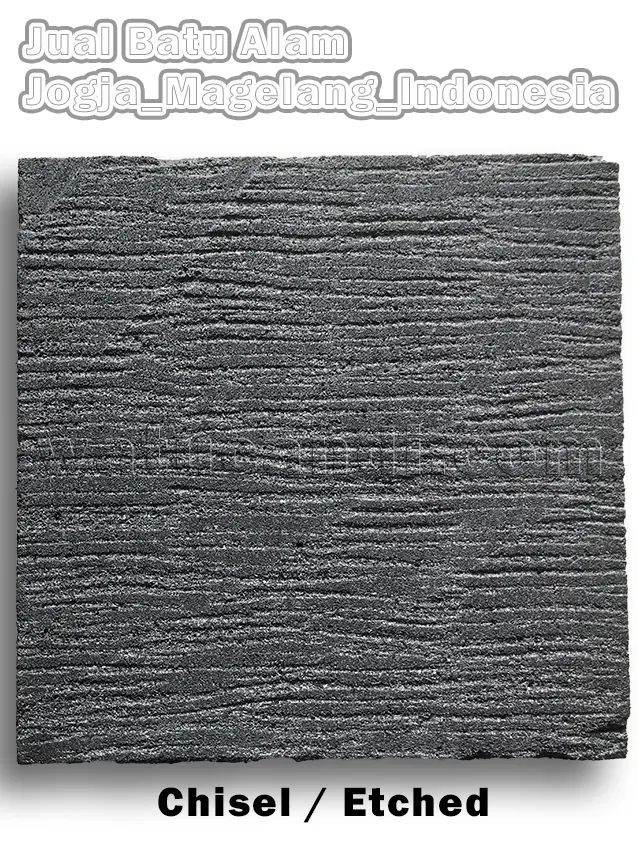
Batik Green Stone Tiles Yogyakarta – The rock-facing technique is done by making irregular scratches on the surface of the batik green stone tile. Unlike the honing technique that smooths, the “rock” technique actually adds texture to the surface. Craftsmen use special tools such as small chisels, wire brushes, or even pounding tools to create an artistically uneven textured surface.
This technique can give a natural impression to batik greenstone tiles and make them look rougher. The result is a surface with very strong character that feels “raw” and organic, as if the stone had just been taken from nature and untouched by modern tools. Ironically, creating this “natural” impression actually requires high skill, because the scratches must be made with a pattern that appears random yet remains aesthetic.
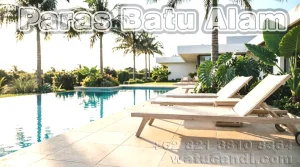
Rock finishing is very popular for exterior applications such as garden walls, pillars, or areas around swimming pools. Its rough texture provides natural anti-slip grip, while its rustic appearance creates an atmosphere like a tropical resort. However, because its pores are more open, tiles with this finish require more frequent sealing maintenance.
The choice of finishing technique depends on the needs and taste of the consumer. Each technique has its own advantages and unique characteristics, and the right choice will depend greatly on where the tile will be installed, the overall design style of the room, and how much maintenance you are willing to do. After the cutting and finishing process is complete, the batik green stone tiles are ready to be used as wall or floor decoration materials.
Functions and Uses of Batik Green Stone Tiles Yogyakarta in Design
Batik Green Stone Tiles Yogyakarta – Batik green stone tiles have various uses that can enhance the aesthetics of a room. Their flexibility as a decorative material makes them suitable for various applications, from the most conventional to the most creative. Their natural beauty allows this material to become a focal point in any design, whether as an accent or as the main element dominating the room.
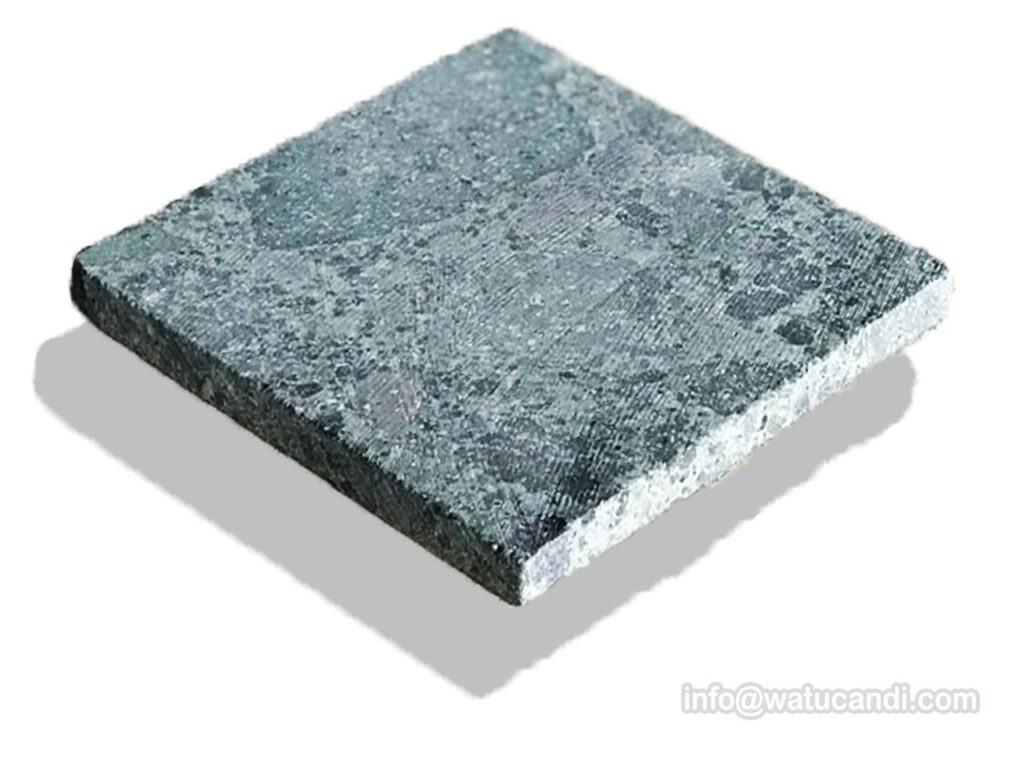
Here are some uses of batik green stone tiles:
Wall Cladding: Creating Stunning Focal Points
Batik green stone tiles can be used as wall cladding material that gives a natural and unique impression to a room. In modern interior design, accent walls have become one of the most popular techniques for adding character to a room without having to decorate the entire space. And there is no more perfect material for an accent wall than natural stone with unique patterns like this batik green stone.
The batik motif on batik green stone provides an artistic touch to walls that cannot be achieved with other wall covering materials. Wallpaper, texture paint, or even batik motif ceramic tiles are all human attempts to imitate the beauty of nature. However, nothing can match the depth, dimension, and authenticity of genuine natural stone. Every time light falls on the surface of batik green stone tiles, it creates a play of shadows and highlights that continuously change throughout the day, making the wall feel alive and dynamic.
Popular wall applications include: the wall behind the bed (headboard wall) in the master bedroom, the wall behind the TV in the family room, hotel or restaurant lobby walls, and exterior facade walls of houses. For best results, the accent wall should be installed on one side of the room only, the side that is first seen when entering the room, so that it immediately captures attention and sets the tone for the entire interior design.
Floor Covering: A Solid and Artistic Foundation
Besides being used as wall cladding, batik green stone tiles can also be used as floor covering. This is perhaps one of the boldest and most stunning applications of this material. Imagine walking on a floor where every step takes you across a unique natural “painting” with patterns you will never find anywhere else in the world.
This natural stone material is very durable and strong, making it suitable for use as floor covering in high-traffic areas. Travertine, although porous, is actually quite hard and long-lasting. With the right finishing (honed or filled) and good sealing maintenance, batik green stone floors can last for decades without losing their beauty. In fact, like natural stone in general, it will actually develop a patina over time that adds character and aesthetic value.
For floor applications, it is highly recommended to use a honed finish with filled pores. This will create a surface that is flat, comfortable to walk on, and easy to clean. Avoid using rock or rough sawn finishes for floors because they will be difficult to clean and less comfortable for walking barefoot.
Interior Decoration: Artistic Touches in Every Detail
Batik green stone tiles can also be used as interior decoration to bring a natural touch to a room. They do not always have to be on a large scale; sometimes small details give the most significant impact in interior design. Some creative ideas for using these tiles as decoration include: as a panel above a fireplace (fireplace surround), as decorative insets among plain tiles, or as a stone “carpet” in the center of a room with a special installation pattern.
For example, batik green stone tiles can be displayed as wall art or table decoration. Several selected tiles with exceptionally beautiful patterns can be framed and hung like paintings, creating a private natural art gallery in your home. For table decoration, tiles can be used as artistic trivets, centerpiece bases, or even as unique small coffee table surfaces. The possibilities are limited only by your imagination.
Room Dividers: Separating with Beauty
Batik green stone tiles can be used as room dividers or partitions that give a natural impression to a room. In modern open plan concept homes, we often need to create visual separation between different zones, for example between the living room and dining room, without having to build full walls that would block the flow of light and air.
Partition panels clad in batik green stone tiles are the perfect solution for this need. Panels can be designed at half-wall height or full ceiling height, depending on the desired level of privacy. The beauty of the batik pattern on the stone will create an attractive focal point, while the natural nature of the material brings warmth and texture into the room. This is far more characterful than plain wooden partitions or cold glass walls.
Exterior Decoration: Bringing Beauty to the Outdoors
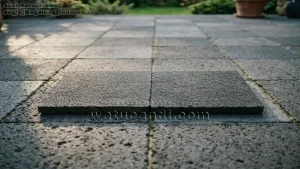
Batik green stone tiles can also be used for exterior decoration such as in gardens or yards. This is where this material truly returns to its roots, blending with the nature from which it came. Installed on garden walls, gate pillars, or as cladding for water features, batik green stone tiles create a seamless transition between the built environment and the surrounding nature.
With the natural beauty of batik greenstone, the batik green tiles (green stone) can give a fresher and more natural impression to a garden. Their distinctive green color resonates with surrounding plants and foliage, creating a harmonious color palette. Meanwhile, their natural texture provides an interesting contrast with the softness of plants and the freshness of water.
For exterior applications, rock or sawn finishes are the best choices because they provide greater resistance to weather elements. Be sure to use a special exterior sealer with UV protection to prevent color fading due to long-term sun exposure.
With the beauty and uniqueness of the batik motif, batik green stone tiles are the right choice to add aesthetic value to a room. Whether you are designing a private residence, a boutique hotel, a luxury restaurant, or a commercial space that wants to stand out, this material offers a perfect combination of natural beauty, cultural heritage, and practical functionality that is hard to match with other materials.
Maintenance Guide for Batik Green Natural Stone Tiles Yogyakarta
Maintenance of batik green colored natural stone tiles is very important to maintain their beauty and quality. Like all high-quality natural materials, batik green stone is a long-term investment that will provide beauty for decades, provided it is properly cared for. The good news is that its maintenance is not as complicated as many people imagine. With the right routine, your tiles will continue to look stunning from generation to generation.
Here are some tips for caring for batik green natural stone tiles:
Routine Cleaning: The Main Key to Maintenance
Cleaning batik green stone tiles regularly can prevent the formation of stains or dirt on the surface. The basic principle is simple: dust and dirt left to accumulate will act like fine sandpaper scratching the surface every time it is stepped on or passed over. Therefore, routine cleaning, even if the surface looks clean, is the most effective preventive measure.
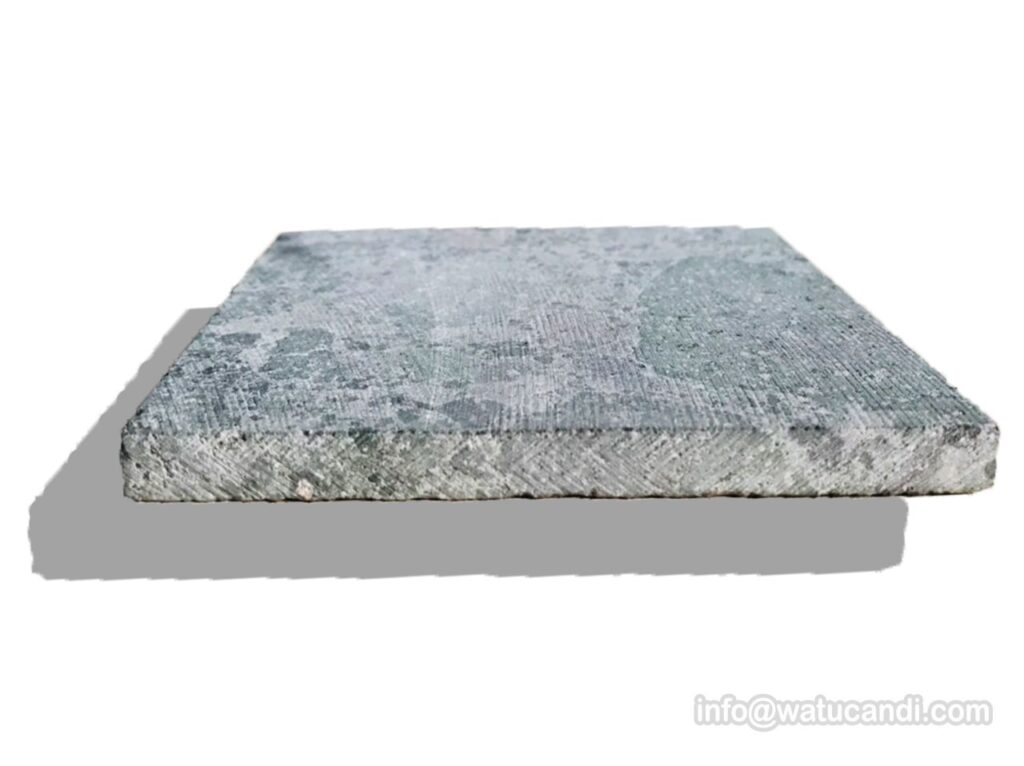
Use a soft brush and clean water to clean the tiles, and avoid using harsh chemical cleaners that can damage the tile surface. For daily cleaning, simply sweep or vacuum to remove dust and loose particles. For wet cleaning, use a soft microfiber mop with warm water mixed with a little pH-neutral (balanced) soap. pH-neutral soap is very important because acidic or alkaline soaps can react with the minerals in the stone and cause permanent damage.
After mopping with soapy water, always rinse with clean water and dry the surface with a dry cloth. Do not let water pool on the stone surface, especially if your stone has not been sealed or if the sealer has started to wear off. Pooling water can seep into the pores and carry dirt with it, creating stains that are difficult to remove.
Avoid Harsh Chemicals: The Main Enemy of Natural Stone
Avoid using chemicals such as acids, bleach, or harsh stain removers on batik green stone tiles. This is a golden rule that cannot be compromised in natural stone care, especially for travertine and other limestones. This stone is formed from calcium carbonate, which reacts chemically with acids, even weak ones. This reaction is called “etching,” where the acid dissolves part of the stone surface, leaving dull marks or even depressions that cannot be repaired without professional sanding.
These chemicals can damage the tile surface and ruin the natural texture of batik green stone. What is often not realized is that many everyday household cleaning products contain acids or harsh chemicals. Vinegar, all-purpose floor cleaners, bathroom cleaners, even lemon juice can all damage your natural stone. Always read the labels of cleaning products before using them, and make sure the product specifically states it is safe for natural stone.
If you are unsure, use only warm water and pH-neutral soap. For stubborn stains, consult your stone supplier or use a natural stone-specific cleaner that is recommended. It is better to go through a little trouble finding the right product than to have to replace permanently damaged tiles.
Sealing: Vital Invisible Protection
Seal protects batik green stone tiles from water, oil, and other dirt that can seep into the stone’s pores and damage the surface. Sealer is a transparent protective layer that penetrates into the stone’s pores, not coating it like paint, but filling the microscopic spaces between mineral particles. It works like an invisible umbrella: water and oil that fall on the surface will form beads and not immediately soak in, giving you time to clean them before they leave stains.
Sealing can also extend the life of batik green stone tiles. The frequency of sealing depends on several factors: the type of stone, surface finishing, installation location, and intensity of use. As a general guide, tiles in dry areas with low traffic may only need to be sealed every 2-3 years. Meanwhile, tiles in bathrooms, kitchens, or outdoor areas may need to be sealed every 6-12 months.
An easy way to test whether your tiles need to be re-sealed: drop a few drops of water on the surface. If the water beads up, your sealer is still functioning. If the water immediately soaks in and darkens the surface, it is time to apply a new sealer. Always use a high-quality sealer specifically designed for natural stone, and follow the application instructions from the manufacturer carefully.
Avoid Heat Exposure and Impact: Protecting Stone Integrity
Avoid placing hot or heavy objects on batik green stone tiles. Although natural stone is famous for its durability, it is not an indestructible material. Extreme heat can cause “thermal shock,” a sudden temperature change that can crack the stone, especially if there is moisture trapped in its pores. Always use a trivet under pots, pans, or other heating appliances.
Heat can damage the tile surface and its effects can cause chipping or cracking in the stone. Likewise with impact, dropping heavy objects on the tile can cause cracking or breaking. Be careful when moving furniture; use protective pads on chair and table legs to prevent scratches. If damage occurs, immediately consult a professional for repair, as small cracks left untreated can widen over time due to temperature and humidity changes.
Wet Area Maintenance: Extra Attention for Humid Environments
If batik green stone tiles are used in areas exposed to water such as bathrooms, swimming pools, or outdoor areas exposed to rain, then more intensive maintenance is required. Water is one of the biggest enemies of natural stone, not because the water itself damages the stone, but because water can carry minerals, dirt, and other contaminants that can seep in and leave stains or cause mold growth.
Make sure to clean and dry the area regularly and seal it more frequently. In bathrooms, use a squeegee to remove water from the tile surface after showering. Ensure ventilation functions properly to reduce humidity. For outdoor areas, ensure there is sufficient slope so that water does not pool. Clean moss or mold as soon as it is seen, as it can damage the surface and make it slippery.
For swimming pool areas, maintenance becomes more complex due to the presence of chlorine and other pool chemicals. Make sure to use a sealer specifically designed for swimming pool applications, which is resistant to chemicals and continuous immersion. Test and re-seal more frequently, at least every 6 months or according to the sealer manufacturer’s recommendations.
With proper care, batik greenstone tiles can still look beautiful and durable for many years to come. Remember that caring for natural stone is not a burden, but rather a ritual that connects you with a material that has existed for thousands of years before your house was built. Every time you clean and care for it, you contribute to the preservation of beauty that will continue to be enjoyed by future generations.
Why Choose Batik Green Stone Tiles Yogyakarta?
In a market flooded with synthetic materials and mass products, choosing batik green stone tiles from Yogyakarta is a statement about appreciation for natural beauty, cultural heritage, and sustainability. Each tile is not just a product; it is a geological artifact that has gone through an extraordinarily long journey of time, shaped by the same natural forces that created mountains and valleys. When you install it in your home, you bring a piece of earth’s history into your living space.
The uniqueness of the natural batik motif ensures that no two rooms will ever be exactly the same. The abstract patterns formed naturally provide character that cannot be replicated by man-made designs. Their distinctive green color, a result of Yogyakarta’s unique geological conditions, brings coolness and tranquility into a room, reminiscent of tropical forests and lush green rice fields. This is a color that soothes the soul and refreshes the eyes.
In addition to its high aesthetic value, choosing local natural stone is also an environmentally responsible decision. This material does not require energy-intensive manufacturing processes like ceramic or porcelain. It does not contain harmful chemicals or VOCs (Volatile Organic Compounds) that can pollute indoor air. And because it comes from local quarries in Yogyakarta, the carbon footprint from its transportation is much lower compared to imported stone.
By choosing batik green stone tiles, you not only beautify your home; you also support local craftsmen, preserve traditional skills, and contribute to the economy of the surrounding community. Every purchase is a vote for a future where natural beauty and human craftsmanship are valued above uniform and soulless mass production.
Posting Tags: Batik Green Stone Tiles Yogyakarta, Green Batik Stone Tiles, Paras Batik Yogyakarta, Yogyakarta Travertine, Green Natural Stone, Green Stone Indonesia, Green Sandstone Tiles, Yogyakarta Natural Stone, Natural Stone Crafts, Natural Wall Tiles, Natural Stone Floor Tiles, Green Stone Wall Cladding, Batik Green Stone Sleman, Yogyakarta Stone Quarry, Natural Stone Finishing, Honed Natural Stone, Sawn Natural Stone, Natural Batik Motif, Stone Batik Pattern, Tropical Travertine, Green Volcanic Stone, Green Stone Tiles, Affordable Yogyakarta Natural Stone, Batik Motif Stone Tiles, Paras Green Stone, Green Sandstone, Natural Wall Decoration, Natural Stone Interior, Natural Stone Exterior, Green Stone Garden Tiles, Natural Stone Care, Stone Sealer, Cleaning Natural Stone, Water Resistant Natural Stone, Green Stone Sink, Green Stone Table, Natural Stone Accent Wall, Green Stone for Swimming Pools, Pedra Hijau, Green Stone Tile Indonesia, Watucandi, Eco Friendly Natural Stone, Biophilic Design, Sustainable Materials, Handmade Natural Stone, Yogyakarta Stone Craftsmen,
Table of Contents:
- Geology and Origins: Understanding Yogyakarta’s Tropical Travertine
- The Formation Process of Batik Green Stone Yogyakarta: A Fascinating Natural Chronology
- The Production Process: Skilled Hands Revealing Beauty
- Functions and Uses of Batik Green Stone Tiles Yogyakarta in Design
- Maintenance Guide for Batik Green Natural Stone Tiles Yogyakarta
- Why Choose Batik Green Stone Tiles Yogyakarta?