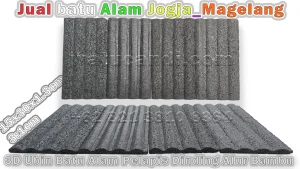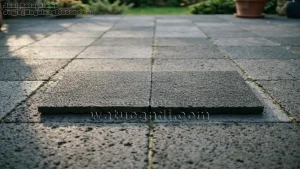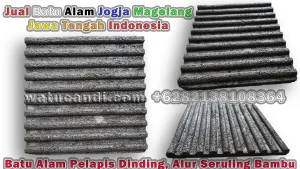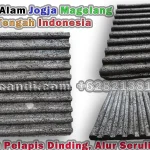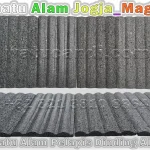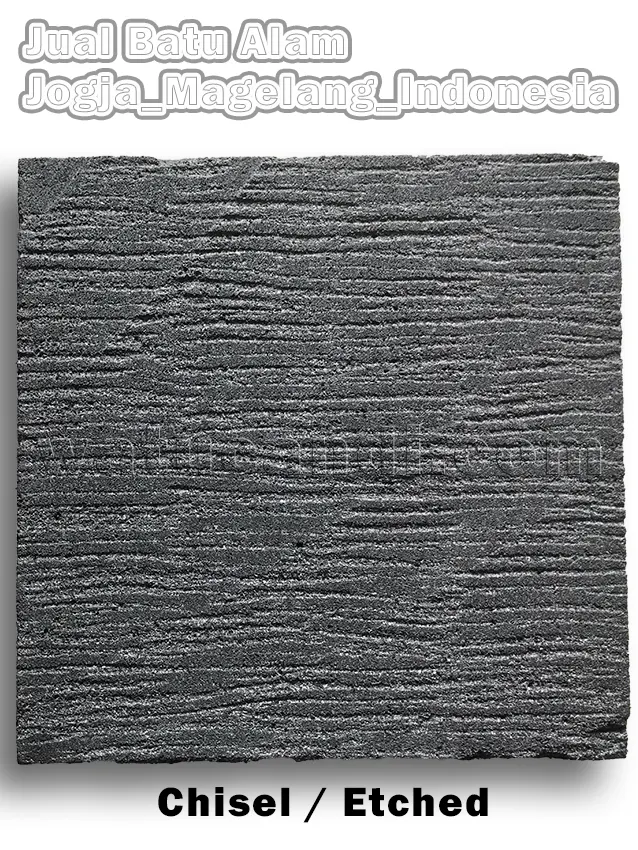
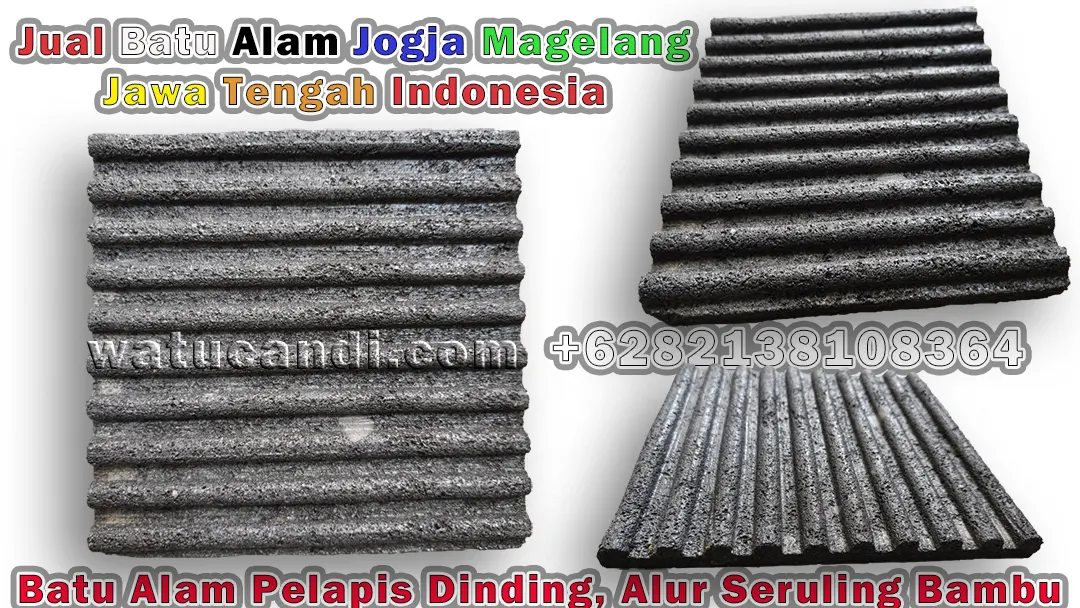
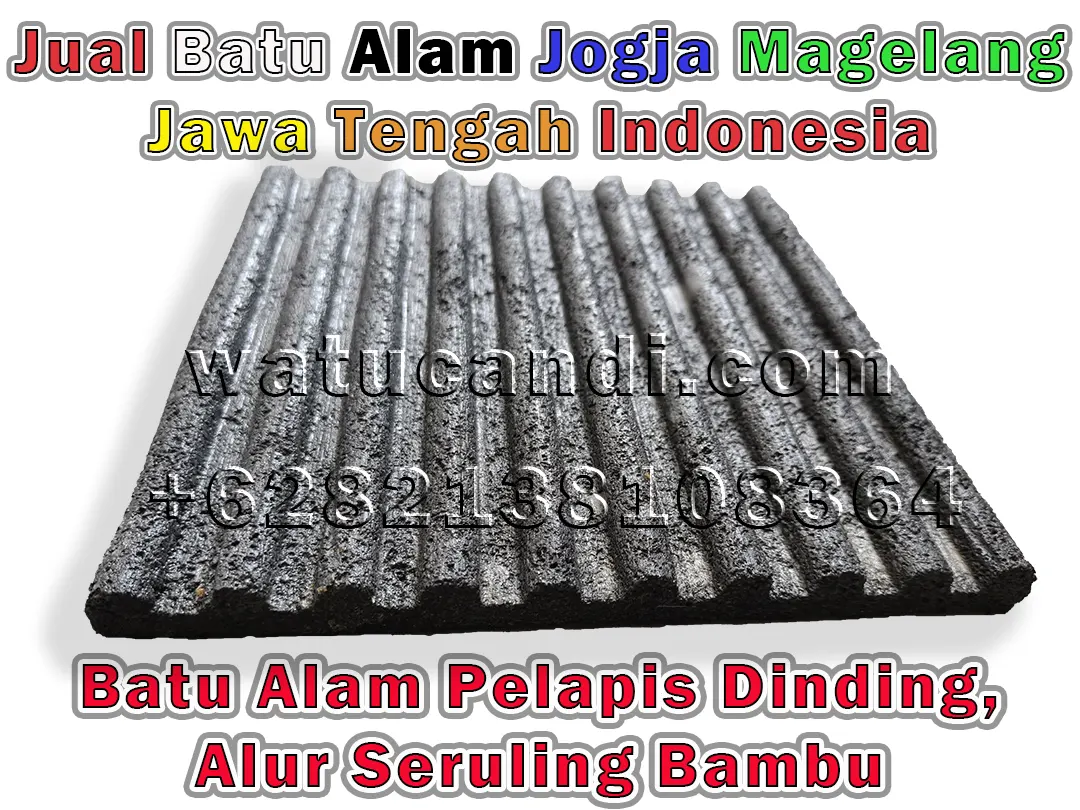
Some walls merely define a space, while others make people stop and look. The bamboo flute groove natural lava stone of Merapi temple belongs to the second kind. From the slopes of Mount Merapi in Jogja and Magelang, temple lava stone is cut and shaped into natural stone tile slabs with a sawn face measuring 20x20x1.2 cm. The surface is set with a saw at precise intervals: surface lines around 1 cm and saw grooves around 1 cm, equal and repeating. The strip lines that first looked like stitching are then reshaped until the distinctive profile appears: a flat recess formed by the union of usually three saw blades, while the raised parts are rounded into elongated half circles. That is the bamboo flute groove natural lava stone of Merapi temple, unique, distinctive, and rarely found on the market. This texture is what sets it apart from the common groove pattern of Merapi volcanic natural stone.
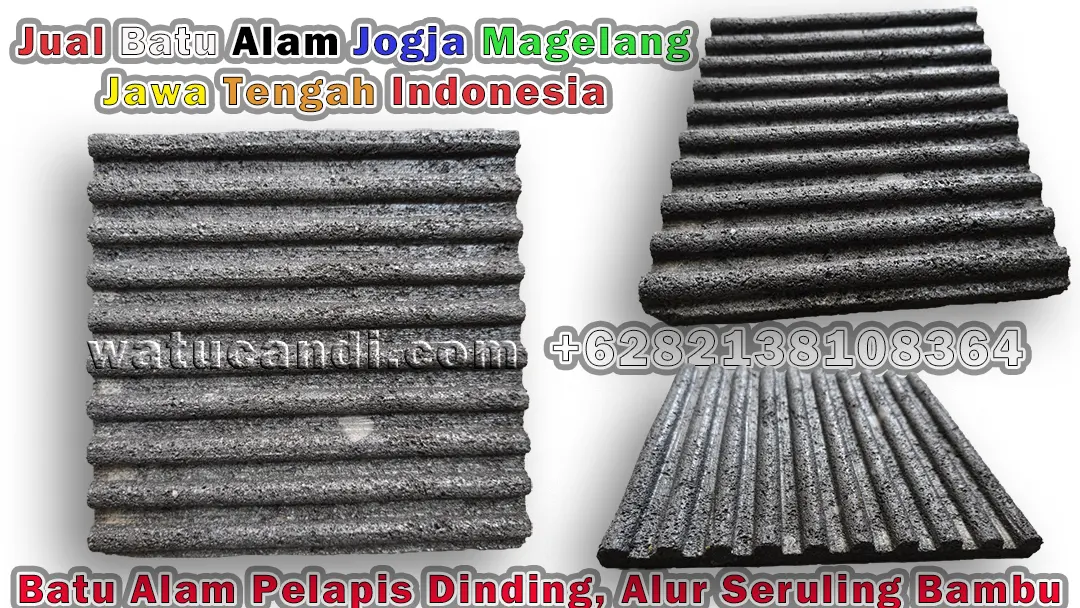
This article explains in full what makes this texture different, how it is shaped in the artisan workshop, its technical specifications, how to choose sizes, and care guidance for dry and wet areas. If you are designing a facade, a garden wall, a living room accent wall, or a pool area, this discussion is written to be used directly as project consideration and specification.
More Than a Tile: Merapi Stone Shaped into a Flute
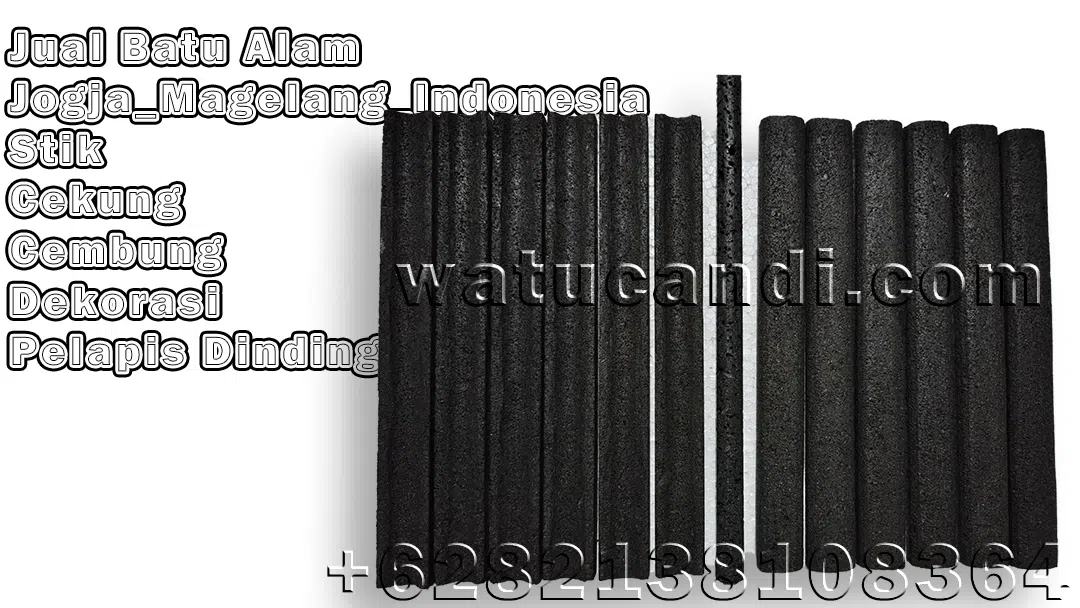
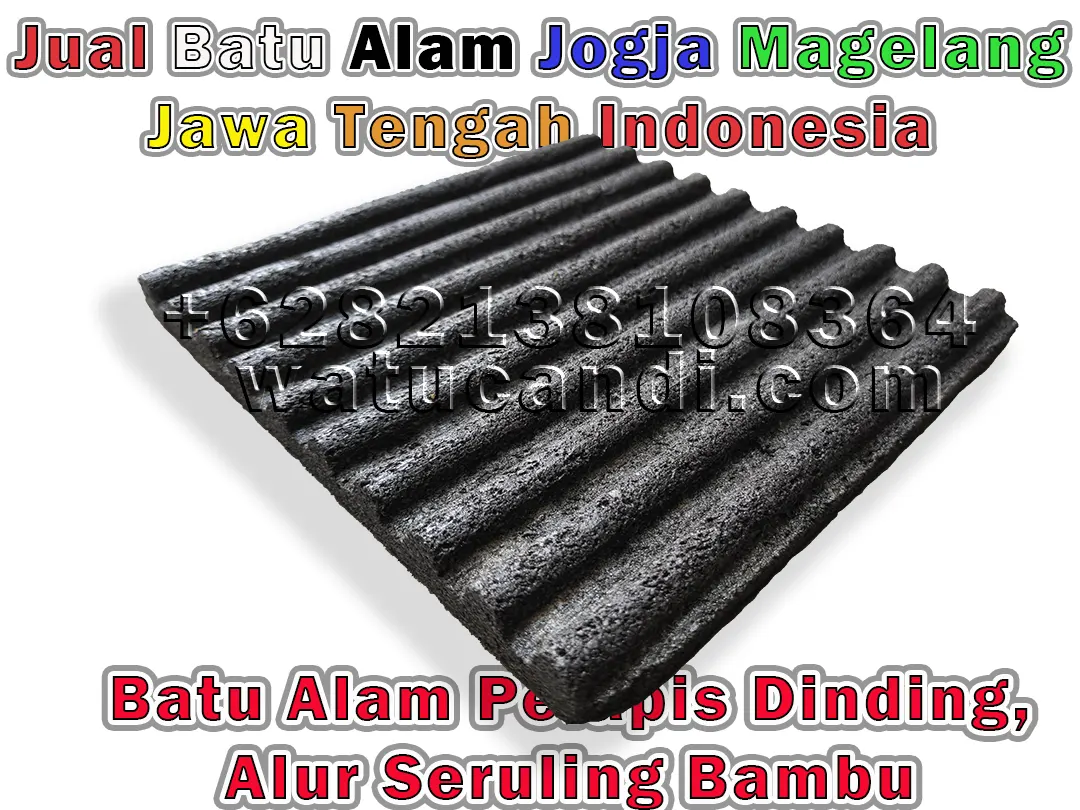
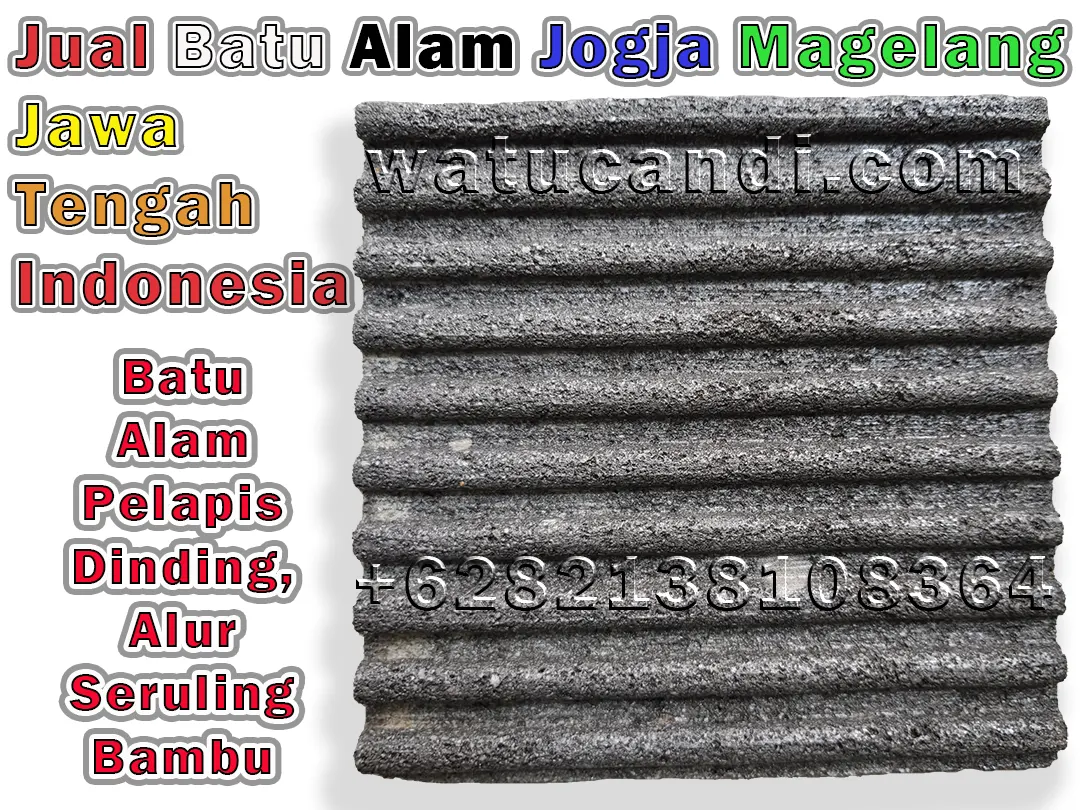
Merapi lava stone has a dark, dense, and heat resistant character. What makes this product special, however, is the handwork of artisans in the natural stone tile workshop in Jogja and Magelang. After the slab is cut with a saw, the surface is set with straight lines around 1 cm for the surface and around 1 cm for the groove, equally. The recess formed by the union of usually three saw blades produces a flat base, while the raised parts are reshaped until they curve like elongated half circles, resembling a bamboo flute. The result is not a random texture but a calm, repeating, and architectural visual rhythm.
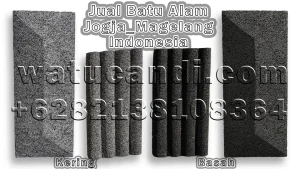
The difference between the flat recess and the rounded raised parts determines how light works on the wall. When morning sun falls at an angle, the raised parts catch light first while the flat recess holds a thin shadow. The result is a soft gradient that moves through the day. At night under spotlights, the effect becomes crisp vertical or horizontal lines depending on installation direction. This is why the texture feels alive without any added ornament.
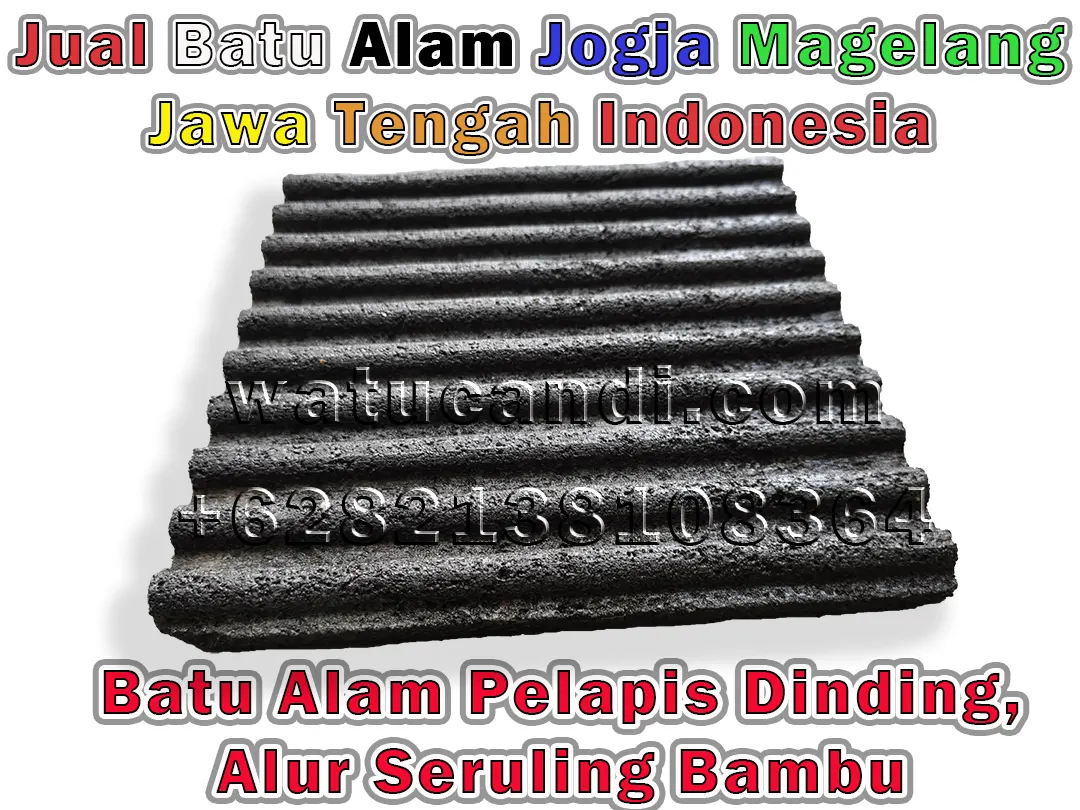
This side profile matters during installation. Consistent thickness keeps joints between slabs tight, while uniform groove depth keeps the shadow rhythm straight from near and far. If you want to understand more about the difference between saw cut results and bush hammer surfaces, read the comparison of saw cut and bush hammer on lava stone.
Geological Context: Why Merapi Lava Stone Is Special
Mount Merapi is one of the most active volcanoes in Indonesia. Its lava material forms from the cooling of mineral rich magma, producing stone with a dark color, dense texture, and high density. This character makes Merapi lava stone resistant to heat, low in water absorption, and stable against tropical weather changes. These properties are why it has long been trusted as material for temples, fences, and building foundations in Java.
Before becoming tiles, the material goes through selection, cutting, and shaping done by hand in the artisan workshop. Not every lava block can become a 1.2 cm thin slab; only dense parts with minimal cracks pass selection. That is why every slab carries the trace of human selection, not merely a machine result. For those who want to explore this material further, there is the ultimate guide to Indonesian natural lava stone tiles and the complete guide to black Merapi lava candi stone.
Technical Specifications of Bamboo Flute Groove Lava Stone
| Aspect | Description |
|---|---|
| Material | Temple lava stone from Mount Merapi, Jogja and Magelang |
| Main size | 20x20x1.2 cm plus or minus |
| Alternative sizes | 20×40 cm, 20×30 cm, 15×30 cm, 10×20 cm |
| Surface face | Saw cut with surface lines of about 1 cm |
| Groove | Saw groove of about 1 cm; flat recess formed by the union of usually three saw blades |
| Raised parts | Shaped into elongated half circles, resembling a bamboo flute |
| Character | Dark, dense, heat resistant, weather resistant |
| Function | Decorative wall cladding for interior and exterior, dry and wet areas |
| Production origin | Natural stone tile artisan workshop in Jogja and Magelang, Indonesia |
| Service | Local and international purchase |
Flexible Sizes for Various Wall Areas
The main size of 20x20x1.2 cm plus or minus can be ordered in other variations such as 20×40 cm, 20×30 cm, 15×30 cm, and 10×20 cm. This flexibility makes it easy to adjust patterns on interior and exterior walls, in dry and wet areas. For technical guidance and inspiration on installing lava stone on walls, you can read the complete guide to Merapi black lava candi stone wall cladding and the ultimate guide to volcanic elegance and natural stone cladding.
- 20×20 cm gives a balanced square pattern for accent walls and small areas.
- 20×40 cm strengthens horizontal lines on facades and long walls.
- 20×30 cm is a versatile compromise for interiors and terraces.
- 15×30 cm suits narrow areas, columns, and partition walls.
- 10×20 cm gives a dense detail effect on limited areas.
Beyond size, consider installation direction. Grooves installed horizontally reinforce a calm impression and visually widen the space, while vertical grooves give height and formality, suitable for industrial minimalist facades. On large areas, combining several sizes with a random pattern can prevent monotony.
Function: Decorative Wall Cladding Indoors and Outdoors
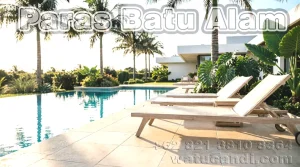
This bamboo flute groove natural lava stone functions as decorative cladding on interior or exterior walls, including dry and wet areas. The rhythm of flat recesses and half circle raised parts catches shadow and creates depth, while the heat and weather resistant nature of Merapi lava stone makes it a sensible choice for facades, garden walls, pool areas, and living room accent walls. For wet areas and pools, see the guide to lava stone tiles for swimming pools and the complete guide to black lava, green zeolite, and limestone pool stone tiles.
Interior: Accent Walls, Living Rooms, and Hospitality Areas
Indoors, elongated grooves give a calm and rhythmic impression. This product is often used for TV backdrop walls, reception walls, and restaurant areas. Its dark color absorbs light so the room feels deeper, while the raised parts hold lamp reflections and create a texture that is never flat. See inspiration in modern luxury home design and restaurant design with natural stone.
Exterior: Facades, Gardens, and Pool Areas
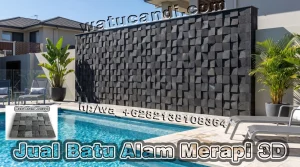
Outdoors, Merapi lava stone resists heat and tropical rain. For garden and facade planning, read lava stone exterior design and the ultimate guide to garden walls and foundation stone borders. On facades, vertical grooves are often chosen because they help drain rainwater and reduce visible water marks.
Why Choose Bamboo Flute Grooves Over Ordinary Textures
- Distinct visual value. The rounded half circle raised parts give soft shadows that ordinary rough face textures do not have.
- Consistent and measured. Surface lines and grooves are set to equal width, with a flat recess from three saw blades, so the pattern stays neat when installed in rows.
- Flexible. Various sizes are available to match the scale of the wall area.
- Rooted in local material. Made from Merapi lava stone by Jogja and Magelang artisans, not generic imported material.
- Wet area friendly. The dense character of lava stone makes it sensible for pool and garden walls.
- Narrative. The bamboo flute texture brings Nusantara cultural story into modern architecture without feeling overly decorative.
Brief Installation Tips
Arrange slabs with a uniform groove direction so the line rhythm reads straight. Use thin joints to highlight groove continuity, and consider a random pattern on large areas so the wall feels more alive. For installation and care techniques, read natural stone installation for interior and exterior, natural stone installation patterns, and the complete guide to natural stone care.
Care in Wet Areas and Pools
In wet areas, clean the surface regularly with a soft brush and clean water to prevent moss buildup in the groove gaps. Avoid harsh chemicals that can change the natural color of the stone. For pool specific guidance, see the ultimate guide to green stone tiles for swimming pools and the complete guide to pool coping stone tile materials and wet area maintenance.
A Unique Product Direct from the Jogja and Magelang Artisan Workshop
Every slab is made directly in the natural stone tile artisan workshop in Jogja and Magelang, Indonesia, with hand control at the stage of shaping the raised parts. We serve local and international purchases. To see other natural stone product collections, visit the Watucandi natural stone shop page, explore the Watucandi homepage, or read the profile of natural stone tile artisans bringing natural beauty to modern homes. You can also contact us through the Watucandi contact page.
FAQ on Bamboo Flute Groove Merapi Lava Stone
Can this bamboo flute groove be used for outdoor walls?
Yes. Merapi lava stone resists heat and weather, so it suits facades, garden walls, and pool areas. Make sure installation follows lava stone exterior guidance.
Are sizes other than 20x20x1.2 cm available?
Yes, variations of 20×40 cm, 20×30 cm, 15×30 cm, and 10×20 cm are available to suit wall area needs.
What is the actual surface profile?
The recess is flat because it is formed by the union of usually three saw blades, while the raised parts are shaped to curve like elongated half circles, which is what gives the bamboo flute groove impression.
Can it be shipped abroad?
Yes. We serve local and international purchases directly from the artisan workshop in Jogja and Magelang, Indonesia.
Conclusion
The bamboo flute groove natural lava stone of Merapi temple is the answer for those who want a characterful wall without losing visual calm. Its profile is distinctive: a flat recess formed by the union of usually three saw blades, with raised parts shaped into elongated half circles. With a main size of 20x20x1.2 cm and variations up to 20×40 cm, this product suits interiors and exteriors, dry and wet areas. Made directly by artisans in Jogja and Magelang from Merapi volcanic material, every slab carries the story of the mountain, the hand of the artisan, and a line precision rarely found in ordinary natural stone. Explore the full collection at the Watucandi natural stone store and discuss your project needs with our team.