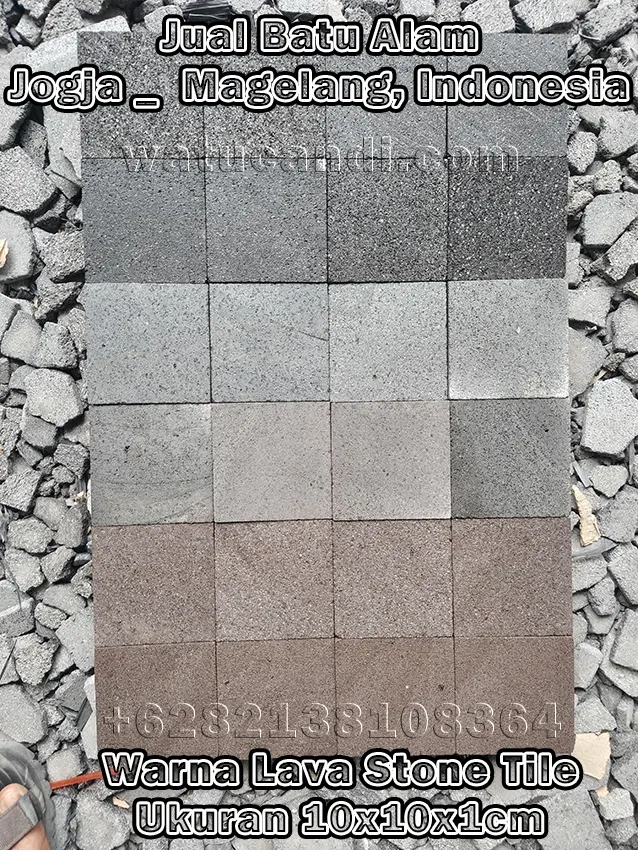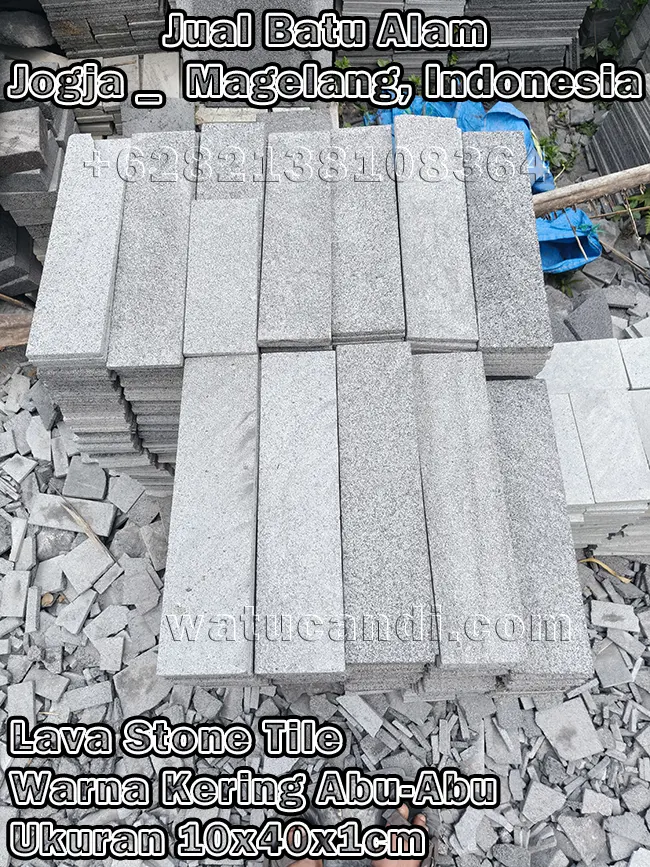
Explore the ultimate guide to 10x10x1cm Black Lava Stone Tiles. Discover the geological beauty of Mount Merapi volcanic stone, expert installation tips for swimming pools and walls, maintenance secrets, and design inspiration for Balinese-style architecture. Premium Candi Black Lava quality for global projects.
Table of Contents
- 1. Introduction: The Allure of Volcanic Elegance
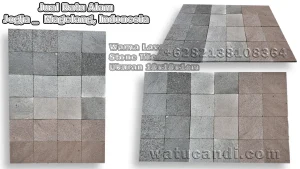
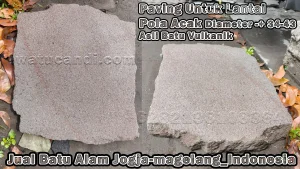
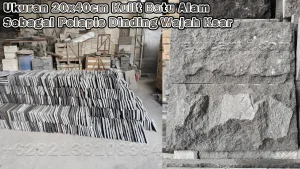
- 2. Geological Origins: The Power of Mount Merapi
- 3. Product Specifications: Why 10x10x1cm Matters
- 4. Aesthetic Versatility: From Rustic to Modern Minimalist
- 5. Wall Cladding Mastery: Interior and Exterior Applications
- 6. Flooring Solutions: Durability, Safety, and Comfort
- 7. Swimming Pool Integration: Iconic Bali Style
- 8. Comprehensive Installation Guide: Step by Step
- 9. Maintenance and Care: Ensuring Longevity
- 10. Global Naming Conventions and Market Variations
- 11. Comparative Analysis: Lava Stone vs Ceramic, Granite, and Concrete
- 12. Environmental Sustainability and Impact
- 13. Creative Design Pattern Ideas and Layouts
- 14. Procurement Tips and Project Management
- 15. Advanced Applications: Furniture and Decor
- 16. Technical Properties: The Science Behind the Stone
- 17. Regional Availability and Sourcing from Indonesia
- 18. Common Installation Mistakes to Avoid
- 19. Future Trends in Natural Stone Architecture
- 20. Conclusion: Investing in Timeless Beauty
1. Introduction: The Allure of Volcanic Elegance
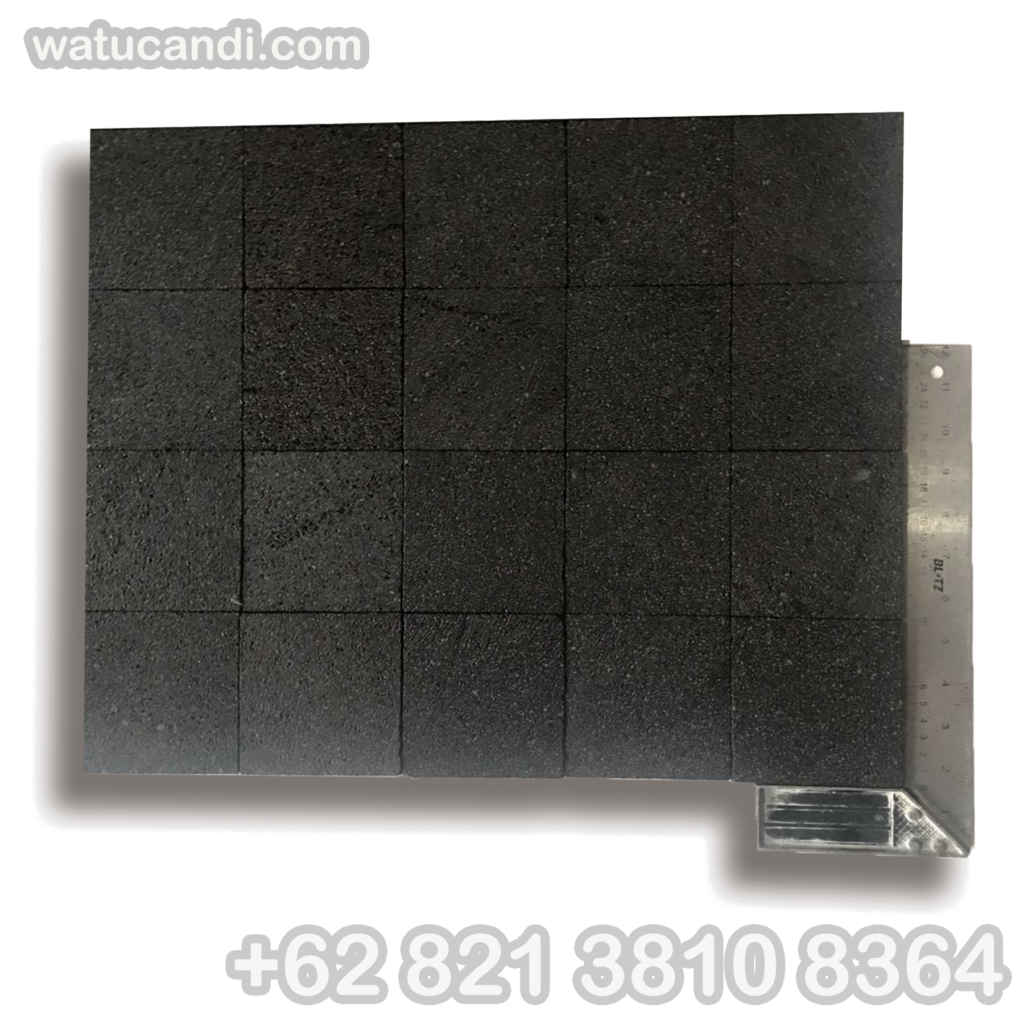
In the ever-evolving landscape of architectural design and interior decoration, the quest for materials that offer both aesthetic depth and structural integrity never ceases. Among the myriad options available, the 10x10x1cm Black Lava Stone Tile has emerged as a cornerstone of luxury tropical design and modern minimalism. Sourced from the fertile volcanic soils of Indonesia, specifically from the slopes of Mount Merapi, this particular dimension of natural stone tile offers a unique proposition: the raw power of nature refined into a precise, versatile building material.
The terminology “Candi” in the Indonesian stone context refers to the anthracite-gray to deep-black color nuances that resemble the ancient stone temples scattered across Java and Bali. These temples, built centuries ago, have stood the test of time, weather, and seismic activity, a testament to the resilience of the volcanic rock used in their construction. Today, the very same material is quarried, cut, and finished to meet the rigorous standards of contemporary global architecture.
This article serves as the definitive guide to 10x10x1cm Black Lava Stone Tiles. We will explore every facet of this material, from its geological origins and physical properties to its diverse applications in wall cladding, flooring, and swimming pool construction. Whether you are an architect specifying materials for a high-end resort, a contractor managing a residential renovation, or a homeowner seeking to elevate your living space, understanding the nuances of this volcanic stone is essential. For a broader overview of our natural stone collection, visit our main category page at Batu Alam.
2. Geological Origins: The Power of Mount Merapi
To truly appreciate the value and character of Black Lava Stone, one must understand its dramatic origins. Unlike sedimentary stones like limestone, sandstone, or travertine, which form through the slow accumulation and compression of mineral particles over millions of years, volcanic stone is born from fire, pressure, and rapid cooling. Mount Merapi, located in Central Java, Indonesia, is one of the most active volcanoes in the world and a key part of the Pacific Ring of Fire. Its frequent eruptions deposit vast layers of andesitic basaltic lava, ash, and pyroclastic material.
When this molten lava flows down the volcano’s slopes and comes into contact with the cooler air and ground, it solidifies rapidly. This rapid cooling process prevents the formation of large crystals, resulting in a fine-grained, dense, and hard rock structure. It is this density that gives Black Lava Stone its remarkable strength and durability. The stone is primarily composed of plagioclase feldspar, pyroxene, and olivine, minerals that contribute to its dark color and toughness.
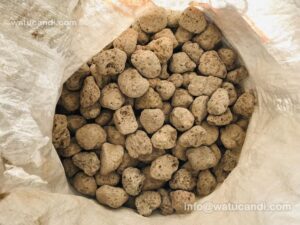
The terminology “Candi” is often used interchangeably with “Batu Lava” in the Indonesian market, yet it specifically denotes the dark gray to black variety resembling the stone used in ancient Javanese temples. Batu Alam Lava Candi is quarried from these ancient lava flows. The extraction process is labor-intensive and requires skilled workers who carefully extract large blocks from the earth. These blocks are then transported to processing facilities where they are cut into slabs and eventually into tiles of various dimensions, including the popular 10x10x1cm size.
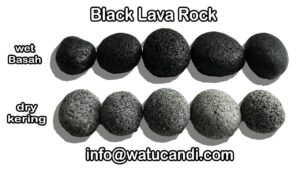
The geological history of Mount Merapi also endows the stone with a unique micro-porosity. Although dense, it retains tiny pores that allow it to “breathe.” This characteristic is beneficial for regulating humidity within buildings and provides a natural texture that enhances slip resistance. For those interested in the pure geological aspects, you can explore more about Batu Lava and its various geological forms.
3. Product Specifications: Why 10x10x1cm Matters
The specific dimensions of 10x10x1cm (10 centimeters wide, 10 centimeters long, and 1 centimeter thick) are not arbitrary. This size has become an industry standard for several practical and aesthetic reasons. Let’s delve into the technical specifications and why this format is so highly valued.
- Geometric Precision: The 10x10cm square format is geometrically simple, allowing for easy alignment and pattern creation. It fits seamlessly into grid-based designs, herringbone patterns, basketweave layouts, or random mosaic arrangements. This versatility makes it a favorite among designers seeking to create visual interest without complex cutting.
- Optimal Thickness (1cm): The 1cm thickness strikes a perfect balance between durability and weight. It is thick enough to withstand foot traffic and environmental stress, yet thin enough to be lightweight, reducing structural load on walls and floors. This makes it ideal for vertical cladding where heavier stone might require additional structural support. It also allows for easier cutting and shaping during installation, reducing labor time and waste.
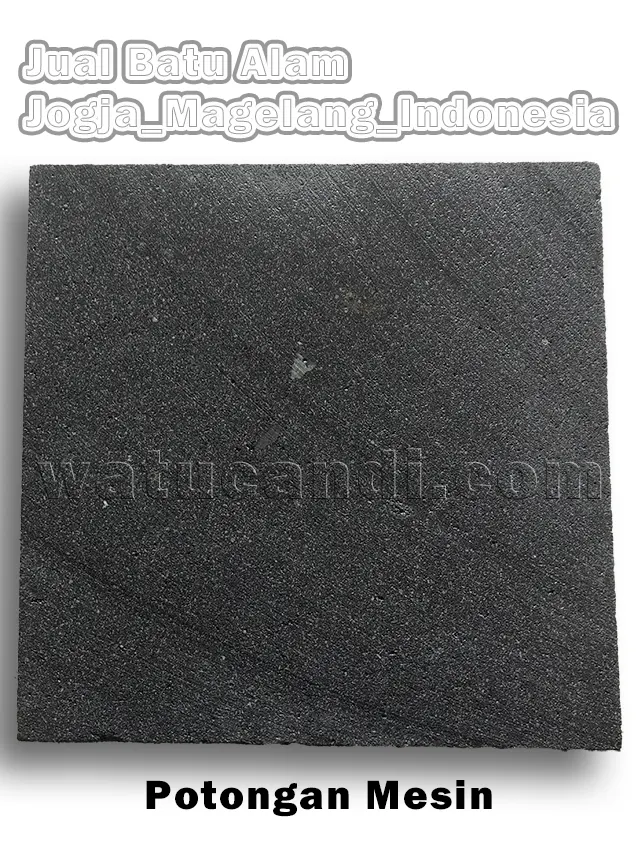
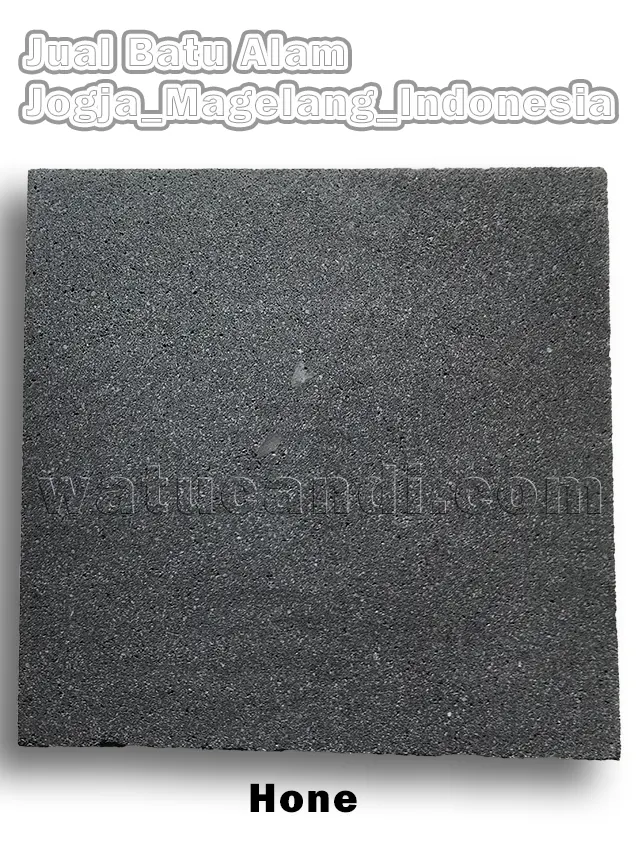
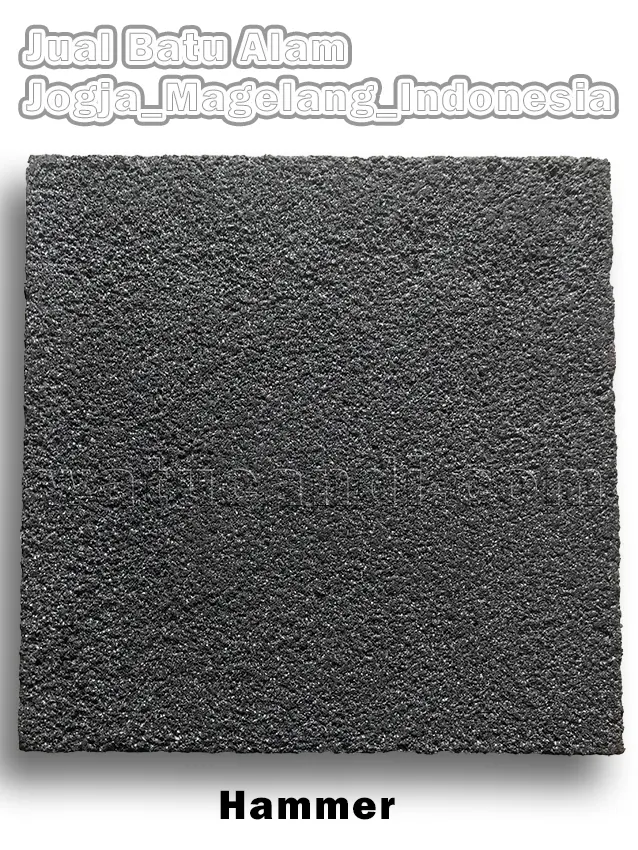
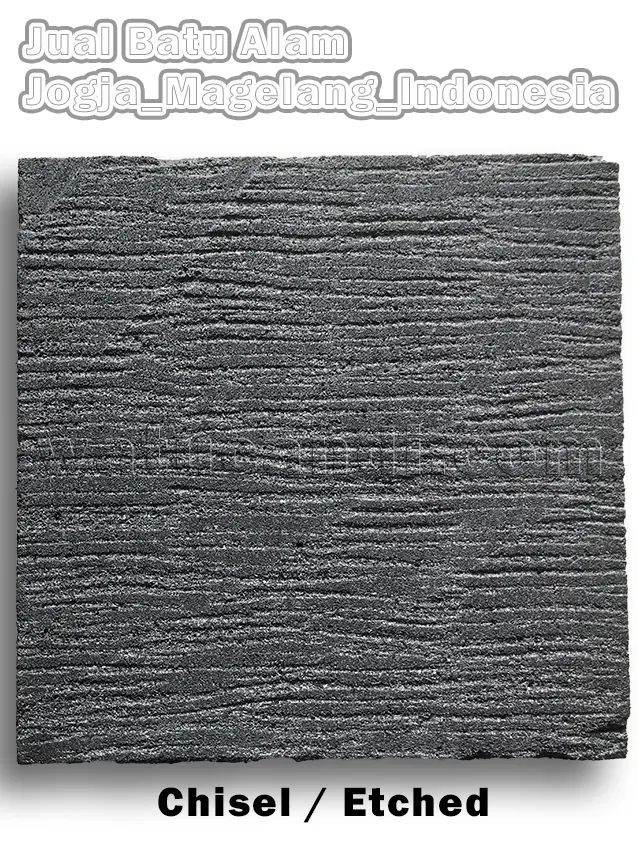
- Surface Texture and Finishing: Black Lava Stone typically features a naturally slightly porous surface. This texture can be finished in various ways depending on the desired application. Common finishes include:
- Natural Split Face: Rough and rugged, ideal for exterior walls and rustic designs.
- Honed: Smooth and matte, suitable for floors and interior walls.
- Tumbled: Edges are softened for an aged, antique look. For more details on finishes, see Batu Alam Finishing Tumbled.
- Flamed: Surface is heated to create a rough, anti-slip texture, perfect for pool decks.
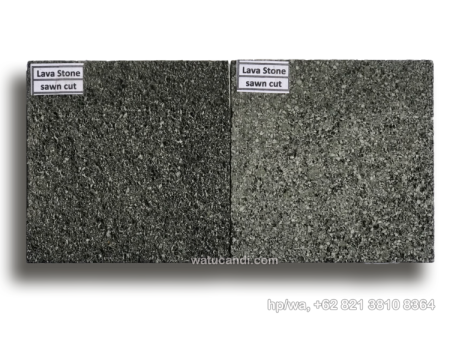
- Color Consistency and Variation: While natural stone always features slight variations, high-quality Black Candi Lava Stone offers a consistent dark gray-to-black color palette. This consistency is crucial for creating a uniform look in large installations. However, the subtle tonal variations add depth and character, preventing the surface from appearing flat or artificial.
- Weight and Density: The density of Black Lava Stone is approximately 2.9 g/cm³. A 10x10x1cm tile weighs roughly 0.29 kg. This manageable weight facilitates easier handling and transportation, reducing logistics costs compared to larger, thicker slabs.
These tiles are not limited to standard black. There are variations within the volcanic stone family, such as Batu Pasir Coklat (Brown Sandstone) for warmer tones, yet black lava remains the most sought-after for its modern, elegant, and dramatic appeal. The stone’s density ensures that it does not easily crack under normal traffic conditions, provided it is installed correctly on a stable substrate.
4. Aesthetic Versatility: From Rustic to Modern Minimalist
The aesthetic appeal of Black Lava Stone lies in its chameleon-like ability to blend seamlessly into various design styles. Its dark matte finish absorbs light rather than reflecting it, creating a sense of depth, tranquility, and sophistication in any space. This characteristic is particularly beneficial in bright tropical climates, as it reduces glare and helps maintain a cooler visual temperature.
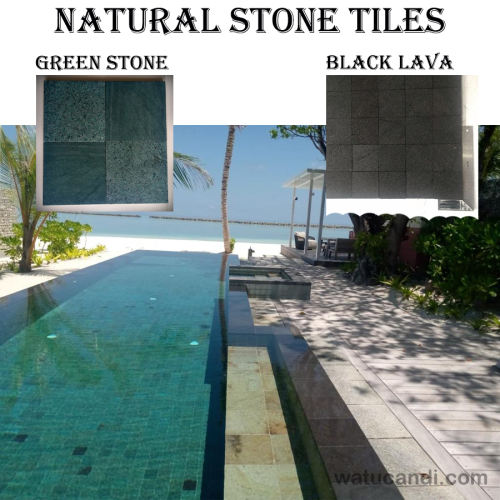
Tropical and Bali Style: In Balinese architecture, black lava stone is a staple. It is used to create a harmonious relationship between the built environment and the natural landscape. The stone’s rough texture contrasts beautifully with smooth teak wood, lush greenery, bamboo elements, and flowing water features. This harmony is evident in many luxury villas, resorts, and spas across Indonesia and Southeast Asia. The stone grounds the space, providing a solid, earthy foundation for the open, airy structures typical of tropical design. For inspiration on how to integrate these stones into exterior designs, see our guide on Desain Eksterior Batu Lava (Lava Stone Exterior Design).
Modern Minimalist: In contemporary minimalist design, Black Lava Stone adds texture and visual interest without clutter. A feature wall clad in black lava stone can serve as a dramatic focal point in a living room or bedroom. The monochromatic black palette aligns perfectly with minimalist principles, while the natural texture prevents the space from feeling sterile or cold. The stone pairs exceptionally well with white walls, glass elements, and metal fixtures.
Industrial Chic: The raw, unpolished nature of lava stone complements industrial design aesthetics. Paired with exposed brick, concrete floors, and steel beams, black lava stone adds a touch of organic warmth to an otherwise hard industrial look. It softens the harshness of metal and concrete, creating a more inviting atmosphere.
Furthermore, the natural imperfections of the stone add character. No two tiles are exactly alike, ensuring that each installation is unique. This organic quality is highly valued in contemporary design, which often seeks to move away from the sterile perfection of manufactured materials. The stone can be combined with other natural materials such as Ubin Batu Paras Palimanan (Palimanan Paras Stone) for a layered, multi-textured look, or with Ubin Batu Alam Hijau Sukabumi Asli (Authentic Sukabumi Green Natural Stone) for a striking color contrast between black and green.
5. Wall Cladding Mastery: Interior and Exterior Applications
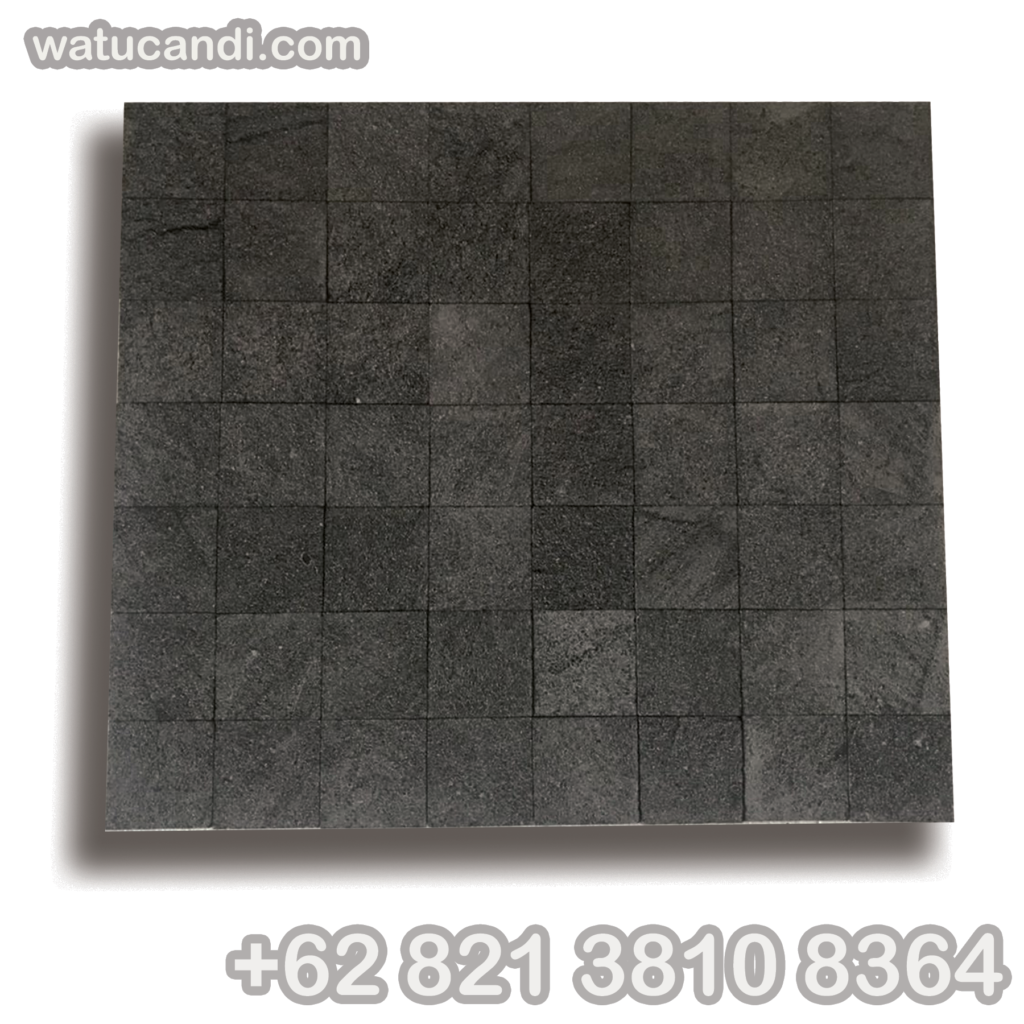
One of the most popular and impactful uses for 10x10x1cm Black Lava Stone tiles is wall cladding. As a replacement for traditional paint, wallpaper, ceramic tiles, or even wooden panels, natural stone walls offer superior durability, acoustic benefits, and timeless aesthetics. Here is how to use them effectively:
Interior Wall Cladding
Inside the home, black lava stone can transform an ordinary wall into a stunning statement piece. In a living room, a feature wall clad in black lava stone adds drama, sophistication, and a grounding presence. The stone pairs exceptionally well with neutral-colored furniture (white, beige, gray), warm lighting, and natural fiber rugs. The dark background makes artwork and decorative objects stand out.
In a bedroom, it can create a soothing, spa-like atmosphere, promoting relaxation and rest. The thermal mass of the stone helps regulate indoor temperatures, keeping the room cooler in summer and warmer in winter. In bathrooms, the stone’s water-resistant properties make it an ideal choice for shower walls, vanity backsplashes, and accent walls. The dark color hides water spots, soap scum, and minor stains better than lighter stones, making maintenance easier. For a cohesive luxury look, consider pairing it with Wastafel Batu Merapi Asli (Authentic Merapi Stone Sink) or Wastafel Batu Basalt Hitam (Black Basalt Stone Sink).
Exterior Wall Cladding
Externally, black lava stone provides robust protection against the elements. The stone is highly resistant to UV radiation, meaning it will not fade or change color over time, unlike some painted surfaces or composite materials. It also withstands extreme temperature fluctuations, rain, wind, and humidity without cracking, warping, or deteriorating. Facades clad in this stone exude strength, permanence, and elegance.
For garden walls, boundary walls, entrance pillars, and gates, the stone adds a touch of rustic sophistication. The rough texture helps break up large, flat surfaces, adding visual interest and shadow play throughout the day as the sun moves. You can see examples of such applications in our Kulit Batu Candi Acak Lava Pelapis Dinding collection, featuring random pattern cladding for a more organic look.
Moreover, the stone does not reflect excessive sunlight, which helps keep the building’s interior cooler. This is a significant advantage in tropical climates, reducing the need for air conditioning. The stone’s natural pores also allow for air circulation, preventing moisture buildup within the wall structure, which can lead to mold and mildew. For more ideas on external applications and 3D textures, visit Batu Gunung Merapi 3D (Mount Merapi 3D Stone).
6. Flooring Solutions: Durability, Safety, and Comfort
Although the 1cm thickness is relatively thin for heavy-duty industrial flooring, it is exceptionally well-suited for residential and light commercial flooring applications, provided the subfloor is solid and level. The key to successful floor installation is proper preparation and the use of high-quality adhesives.
Garage and Driveway Areas
For garage floors, the anti-slip texture of black lava stone is a primary safety benefit. The stone provides excellent traction for vehicle tires and pedestrian feet, even when wet or oily. The hardness of the stone ensures it can withstand the weight of cars without cracking, provided the base is properly prepared with reinforced concrete screed. For heavy-duty paving, consider thicker Batu Andesit Paving (Andesite Paving Stone), yet for aesthetic garage interiors and carports, the 10x10cm tiles work exceptionally well, offering a cleaner, more refined look than traditional pavers.
Outdoor Patios, Terraces, and Pathways
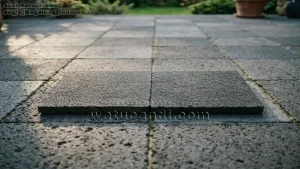
Patios and terraces greatly benefit from the cool-to-the-touch nature of lava stone. Unlike concrete, ceramics, or dark composite decking, which can become scorching hot under direct sunlight, natural stone remains relatively cool due to its thermal mass and porosity. This makes it comfortable for barefoot walking, even during the hottest parts of the day. The dark color also complements outdoor furniture, wooden decks, and lush greenery. For larger outdoor areas, you might also consider Lantai Outdoor Batu Alam Merapi (Merapi Natural Stone Outdoor Flooring) in larger formats for a more expansive, seamless look.
The stone’s durability ensures it can withstand foot traffic, outdoor furniture, and occasional spills without showing wear. It is also resistant to stains from food, beverages, and organic matter, provided it is regularly sealed. For more flooring inspiration, explore Lantai Batu Lava Stone Floor.
Interior Flooring
Inside the home, black lava stone flooring creates a grounded, natural feel. It is particularly effective in entryways, kitchens, dining rooms, and hallways. The stone is easy to clean and resistant to scratches. However, it is important to seal the stone to prevent liquid absorption and staining. For a seamless look, ensure the grout lines are kept narrow (2-3mm) and matched to the stone color. Dark gray or black grout is recommended to create a continuous, monolithic appearance. For specific indoor flooring needs, see Lantai Batu Candi Lahar Merapi (Merapi Lahar Temple Stone Flooring).
7. Swimming Pool Integration: Iconic Bali Style
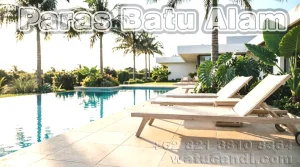
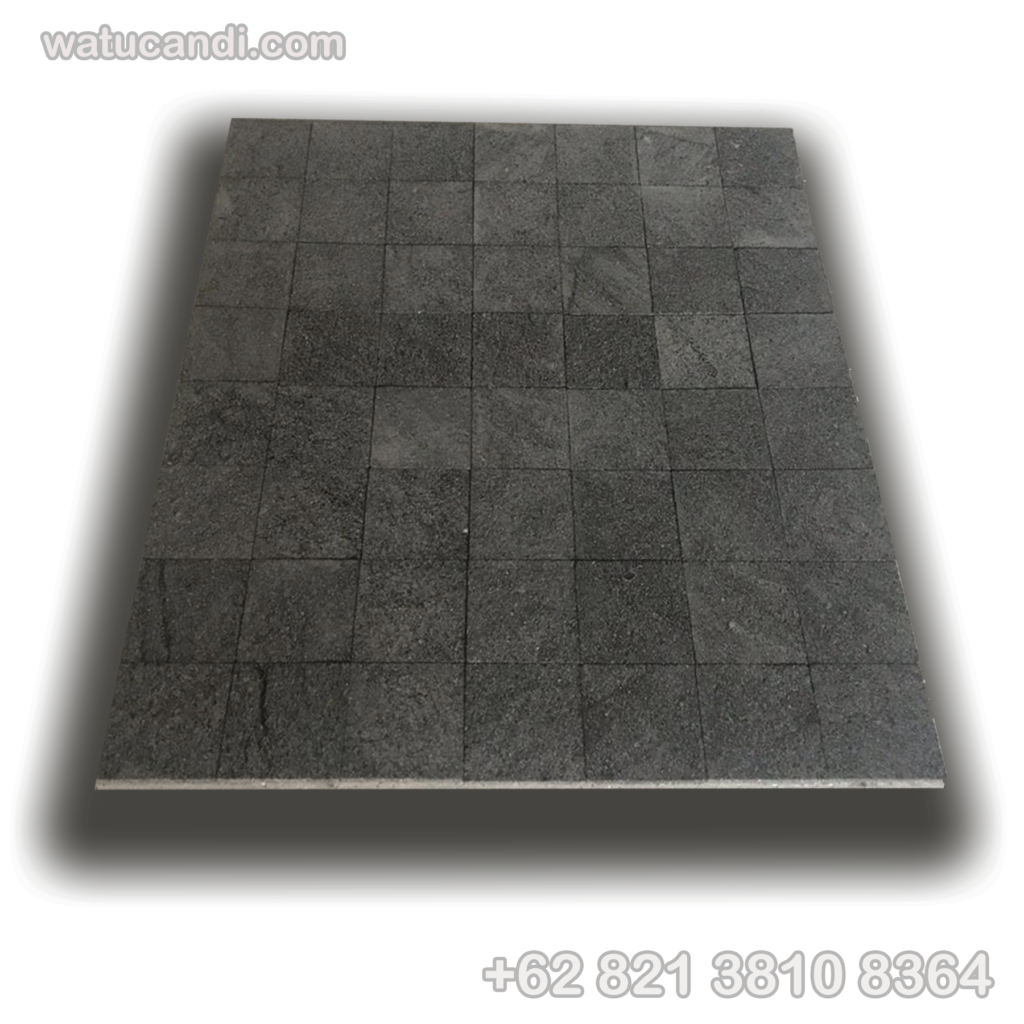
Perhaps the most iconic and sought-after application of Black Lava Stone is in swimming pool construction. “Bali Style” pools are renowned worldwide for their use of natural materials, and black lava stone is a cornerstone of this aesthetic. The stone transforms a simple pool into a tropical sanctuary.
Why Black Lava Stone is Ideal for Pools:
- Superior Slip Resistance: The stone’s natural texture provides excellent traction, making it safe for barefoot walking in wet areas.
- Water and Chemical Resistant: It is resistant to chlorine, saltwater, and other pool chemicals without degrading.
- Luxurious Aesthetics: Its dark color creates a stunning contrast with blue water, creating a luxurious, serene look.
- Natural Cooling Properties: The stone stays cool under the sun, making it comfortable for swimmers.
When installing in a pool, it is critical to use epoxy-based grout that is resistant to chemical erosion and water penetration. This ensures the joints remain intact, do not become a breeding ground for bacteria or algae, and maintain their color. The stone’s natural pores must be sealed with a penetrating sealant designed for submerged applications to prevent water absorption, staining, and algae growth. For a complete guide on alternative pool stones, see Panduan Lengkap Ubin Batu Hijau untuk Kolam Renang (Complete Guide to Green Stone Tiles for Swimming Pools), although black remains the classic and most popular choice.
8. Comprehensive Installation Guide: Step by Step
Proper installation is crucial for the longevity, safety, and appearance of your black lava stone tiles. Poor installation can lead to cracking, loosening, water damage, and aesthetic issues. Here is a detailed professional guide to installing 10x10x1cm tiles on walls and floors.
Phase 1: Preparation
1. Surface Assessment: Ensure the substrate (wall or floor) is clean, dry, level, structurally sound, and free of dust, oil, grease, or loose particles. For walls, cement plastering or backing boards may be required to create a flat, stable surface. For floors, a concrete screed should be leveled and cured. Use a spirit level to check for flatness.
2. Material Inspection: Check all tiles for cracks, chips, or significant color variations. Mix tiles from different boxes to ensure color consistency and spread any natural variations evenly across the installation. Soak the tiles in clean water for 10-15 minutes before installation if using cement-based adhesives, to prevent them from absorbing moisture from the mortar too quickly, which can weaken the bond.
3. Tool Preparation: Gather the necessary tools: notched trowel (6mm notch for 10x10cm tiles), rubber mallet, spirit level, tile spacers (2-3mm), wet saw with diamond blade, sponge, bucket, and safety gear (gloves, goggles).
Phase 2: Installation Process
4. Adhesive Application: Use a high-quality, flexible tile adhesive suitable for natural stone and the specific substrate (interior/exterior, wet/dry). Apply the adhesive to the substrate using the notched trowel, holding it at a 45-degree angle to create uniform ridges. Work in small sections (1 square meter at a time) to prevent the adhesive from drying on the surface.
5. Tile Placement: Press the tile firmly into the adhesive, giving it a slight twist to ensure full contact and eliminate air pockets. Use tile spacers to maintain consistent joint width (2-3mm is standard for 10x10cm tiles). Use a spirit level frequently to check that each tile is flush with its neighbors and the overall surface is flat. For walls, start from the bottom and work up. For floors, start from the center of the room and work outwards towards the edges.
6. Cutting and Adjustment: Use a wet saw with a diamond blade to cut tiles for edges, corners, and around obstacles (pipes, outlets). Wear appropriate safety gear. Smooth rough cut edges with a stone file or sandpaper. For intricate cuts, consider using an angle grinder with caution.
Phase 3: Grouting and Finishing
7. Drying Time: Allow the adhesive to dry completely before grouting. This typically takes 24-48 hours, depending on temperature and humidity. Do not walk on or disturb the tiles during this time.
8. Grouting: Choose a grout color that complements the stone; dark gray or black grout is often preferred for black lava stone to create a seamless, monolithic look. Mix the grout according to manufacturer instructions. Use a rubber float to press the grout firmly into the joints, ensuring they are fully filled. Remove excess grout with the edge of the float.
9. Cleaning: After the grout has set slightly (15-20 minutes), remove excess grout from the tile surface with a damp sponge. Rinse the sponge frequently. Avoid using too much water, as it can weaken the grout. Once the grout is fully dry (24-48 hours), buff the tiles with a dry cloth to remove grout haze.
10. Sealing: Apply a high-quality penetrating stone sealant. This step is crucial to protect the stone from stains, water absorption, efflorescence, and UV damage. Follow manufacturer instructions for application and drying time. Reapply sealant annually or as recommended. For more on surface treatment, see Permukaan Palu Semak Hitam Lava (Black Lava Bush Hammered Surface).
For complex installations, especially those involving patterns like Batu Susun Sirih Asli (Authentic Sirih Stack Stone) or 3D effects, it is highly recommended to hire a professional installer experienced with natural stone. Proper installation ensures the beauty and durability of your investment.
9. Maintenance and Care: Ensuring Longevity
Black Lava Stone is relatively low-maintenance, yet regular care will keep it looking its best and extend its lifespan. Here are essential care tips:
- Regular Cleaning: Sweep or vacuum regularly to remove dirt, dust, and debris that can scratch the surface. Mop with a pH-neutral cleaner and warm water. Avoid acid-based cleaners (like vinegar, lemon juice, or toilet cleaners) and alkaline cleaners (like bleach) as they can etch the stone surface, dull the finish, and damage the sealant.
- Stain Removal: Blot spills immediately to prevent staining. For oil-based stains, use a paste made from baking soda and water. For organic stains (wine, coffee), a mild hydrogen peroxide solution can be used. Always test any cleaning agent on a small, inconspicuous area first. For stubborn stains, consult a professional stone care specialist.
- Sealant Maintenance: Re-seal the stone periodically. A simple water test can determine if it needs resealing: sprinkle a few drops of water on the stone. If the water beads up, the sealant is still intact. If it soaks in and darkens the stone, it is time to reseal. Frequency depends on traffic and exposure; high-traffic areas may need annual sealing, while low-traffic areas can last 2-3 years.
- Avoid Abrasives: Do not use abrasive scrubbers, steel wool, or harsh scouring powders, as they can scratch the stone surface and remove the sealant. Use soft cloths or sponges.
- Outdoor Care: For outdoor areas, occasional pressure washing can help remove accumulated dirt, moss, and algae. Use a low-pressure setting (under 1500 psi) and a wide-angle nozzle to avoid damaging the grout lines and stone surface. Apply a moss and algae inhibitor if necessary.
For indoor furniture made from similar stone, see Batu Alam dan Furnitur (Natural Stone and Furniture) for specific care tips. Proper maintenance ensures your black lava stone remains beautiful and functional for decades.
10. Global Naming Conventions and Market Variations
Black Lava Stone from Indonesia is known by various names globally and locally. Understanding these terms can aid in sourcing the right product and communicating with suppliers and designers.
- Batu Alam Candi: General Indonesian term for temple natural stone.
- Batu Alam Candi Hitam: Specific reference to black temple stone.
- Candi Hitam: Short form for Black Candi.
- Black Lava: Common international term.
- Black Lava Stone: More specific international term.
- Black Lava Stone Tiles: Refers to the cut and finished product.
- Candi RTM / Candi RTA: Industry codes for specific grades, finishes, or quarry sources.
- Pedra Hitam: A Portuguese/Indonesian hybrid term often used in the Bali export market (“Pedra” means stone in Portuguese).
- Volcanic Stone: Broad geological term.
- Black Basalt: Scientifically, some lava stones are basaltic, though Candi stone is often andesitic. Used interchangeably in marketing.
- Pietra Negra / Pietra Hitam: Italian/Spanish-influenced terms used in design circles.
- Lahar Hitam: Refers to black lahar deposits (volcanic mudflows), sometimes used for specific textures. See Lahar Hitam.
These variations reflect the stone’s global appeal and the diverse markets it serves. Whether you are looking for Lava Stone Batu Candi Hitam or Panduan Ubin Batu Lava Alam Indonesia Terbaik (Best Indonesian Natural Lava Stone Tile Guide), you are most likely referring to the same high-quality material. Understanding these terms helps in navigating the global stone market.
11. Comparative Analysis: Lava Stone vs Ceramic, Granite, and Concrete
How does Black Lava Stone compare to other common building materials? Choosing the right material depends on your specific needs, budget, and design goals.
| Feature | Black Lava Stone | Ceramic/Porcelain Tiles | Concrete | Granite |
|---|---|---|---|---|
| Aesthetics | Natural, unique, organic, textured | Uniform, manufactured, glossy/matte | Industrial, plain, customizable | Polished, speckled, crystalline |
| Durability | High, weather-resistant, hard | Medium, can crack/chip | High, but can stain/crack | Very High, hardest natural stone |
| Slip Resistance | Excellent (natural texture) | Poor (when wet, unless textured) | Medium (depends on finish) | Poor (when polished) |
| Heat Absorption | Low to Medium (stays cool) | High (gets hot in sun) | High (gets hot in sun) | Medium |
| Maintenance | Low (requires periodic sealing) | Very Low | Medium (requires sealing) | Low |
| Cost | Medium to High | Low to Medium | Low | High to Very High |
| Eco-Friendly | High (natural, local) | Low (energy-intensive manufacturing) | Medium (high CO2 in production) | Medium (mining impact) |
Comparison of Black Lava Stone with other common flooring and cladding materials.
As seen, Black Lava Stone offers a superior balance of aesthetics, safety, and durability. While granite is harder, it lacks the unique porous texture, organic feel, and cool-to-the-touch properties of lava stone. Ceramic tiles are cheaper and lower maintenance but lack the natural beauty, slip resistance, and thermal comfort. Concrete is utilitarian and cheap but requires significant finishing and sealing to look appealing and perform well. For those considering other natural stones, Ubin Batu Alam Breksi (Breksi Natural Stone Tiles) offers a different, more colorful textural experience, while Ubin Batu Kapur Indonesia (Indonesian Limestone Tiles) provides a lighter, softer, more porous alternative.
12. Environmental Sustainability and Impact
In an era of increasing environmental awareness, choosing sustainable building materials is crucial. Black Lava Stone is an eco-friendly option for several reasons:
- Natural and Abundant: Quarried directly from the earth, requiring minimal processing compared to manufactured materials like ceramics, vinyl, or composite decking. No harmful chemicals are used in its formation.
- Longevity and Durability: Its exceptional durability means it does not need frequent replacement, reducing waste and the environmental impact of manufacturing and transporting replacement materials over the building’s lifespan.
- Recyclable and Reusable: At the end of its life, natural stone can be crushed and used as aggregate for road construction, landscaping, or other applications, minimizing landfill waste. Old tiles can also be reclaimed and reused in new projects.
- Local Sourcing and Reduced Carbon Footprint: For projects in Indonesia, Southeast Asia, and nearby regions, sourcing local lava stone reduces transportation emissions compared to importing stone from other continents. Supporting local quarries also boosts local economies.
- Thermal Efficiency: The stone’s thermal mass helps regulate indoor temperatures, reducing the need for air conditioning and heating, thus lowering energy consumption and carbon emissions.
Supporting quarries that practice responsible extraction methods, reforestation, and community support initiatives further enhances the material’s sustainability profile. Look for suppliers who adhere to environmental regulations. For more on sustainable stone options, explore Batu Alam Hijau Sukabumi (Sukabumi Green Natural Stone) which is also a popular eco-friendly option.
13. Creative Design Pattern Ideas and Layouts
The 10x10cm size of Black Lava Stone tiles opens up a world of creative possibilities. Here are some pattern ideas to inspire your next project:
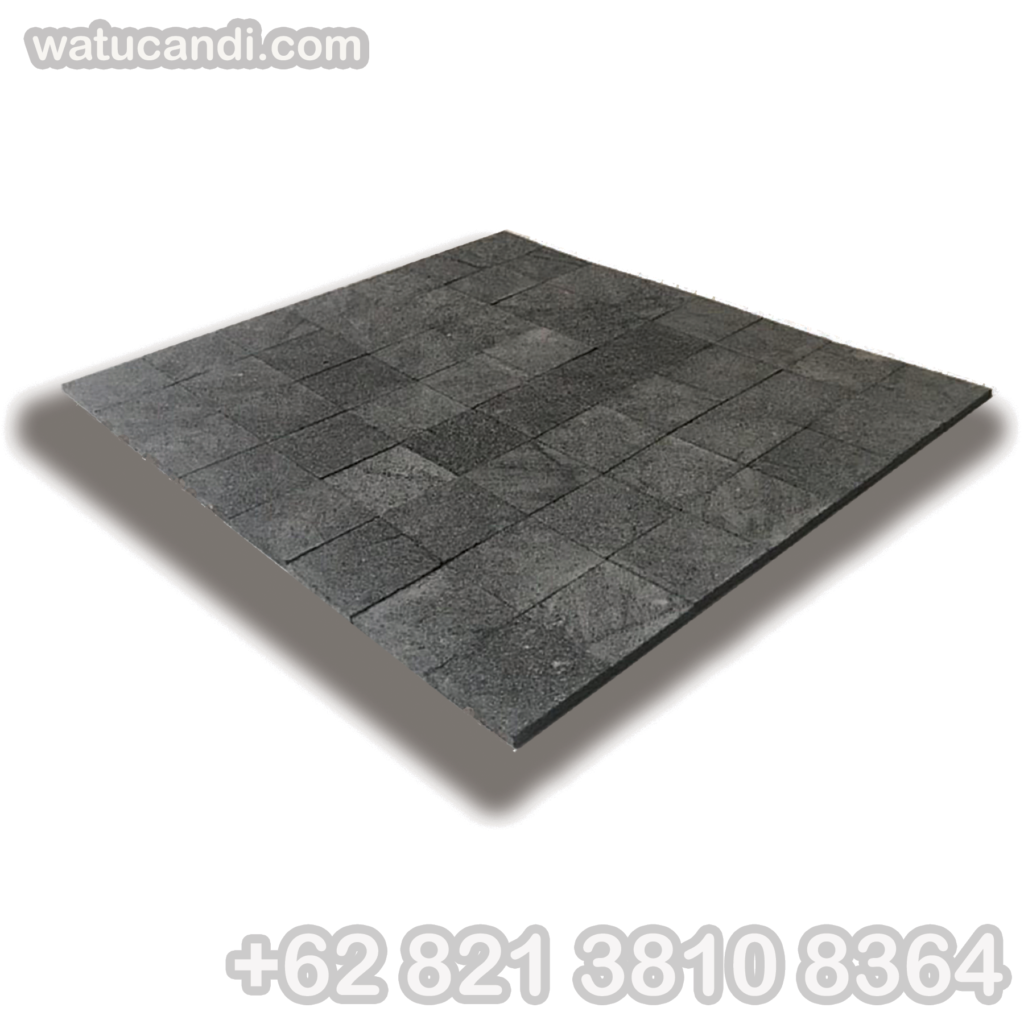
- Classic Grid Pattern: The simplest and most common layout. Tiles are aligned in straight rows and columns. This creates a clean, modern, and orderly look. Ideal for minimalist designs and large areas. Use narrow grout lines for a seamless appearance.
- Herringbone Pattern: Arranging square tiles in a zigzag pattern (45-degree angle) adds dynamic movement, visual interest, and a sense of luxury. It works well for feature walls, floors, and pool decks. It requires more cutting and skill to install.
- Basketweave Pattern: Alternating pairs of tiles horizontally and vertically creates a woven effect. This pattern adds texture and sophistication, suitable for traditional and transitional styles.
- Random Mosaic: Mixing 10x10cm tiles with other sizes (e.g., 5x5cm, 15x15cm) or shapes can create a unique, artistic mosaic effect. This is great for feature walls, backsplashes, and artistic installations. See Mosaik Batu Alam Candi Lava (Candi Lava Natural Stone Mosaic) for examples.
- Border and Inlay Accents: Use black lava tiles to create borders, frames, or inlays around lighter-colored floors or walls. This defines spaces, adds definition, and creates visual contrast.
- Combination with Wood and Metal: Alternate rows of black lava stone with wooden planks or metal strips for a warm, textured, industrial look. This is popular in modern tropical and industrial chic designs.
- Diagonal Layout: Laying the square tiles at a 45-degree angle to the walls creates a dynamic and spacious feel, making small rooms appear larger.
For more complex patterns, consider the techniques in Pola Pemasangan Batu Alam Pahat (Chiseled Natural Stone Installation Patterns). You can also integrate these tiles with handmade stone furniture such as Meja dan Kursi Batu Buatan Tangan (Handmade Stone Tables and Chairs) for a cohesive, artisanal look.
14. Procurement Tips and Project Management
When ordering Black Lava Stone Tiles for a major project, careful planning and procurement are essential to ensure success.
- Accurate Quantity Calculation: Calculate the total area to be covered (length x width). Add 10-15% extra for waste due to cutting, breakage, and future repairs. For complex patterns (herringbone, mosaic), add 20% extra. It is better to have a slight surplus than to run out mid-project.
- Batch Consistency: Order all required tiles from the same production batch to ensure color and texture consistency. Natural stone can vary between batches due to geological differences. Request the batch number from your supplier.
- Sample Request: Always request physical samples before placing a large order. This allows you to verify the color, texture, finish, and quality in person, under your specific lighting conditions.
- Lead Time and Production: Natural stone production can take time, especially for custom sizes or large quantities. Place orders well in advance (4-8 weeks) to avoid project delays. For urgent needs, check stock availability for items like Ubin Batu Alam Lava Hitam (Black Lava Natural Stone Tiles).
- Shipping and Handling: Ensure proper packaging (wooden crates, pallets) to prevent damage during transit. Use a reputable logistics provider experienced with handling heavy and fragile materials. Inspect goods upon arrival for damage.
- Supplier Reputation: Choose a reputable supplier with a proven track record of quality and reliability. Check reviews, ask for references, and visit the quarry or showroom if possible. For specialty items like Batu Candi Borobudur (Borobudur Temple Stone) or Lantai Batu Paving Candi (Temple Stone Paving Floor), consult with the supplier for specific lead times and customization options.
For comprehensive project material needs, Jual Bahan Material Batu Pelinggih (Sale of Pelinggih Stone Material) offers a wide range. If you require paving solutions, Paving Batu Lava Slabs (Lava Stone Paving Slabs) may be a relevant alternative for larger areas.
15. Advanced Applications: Furniture and Decor
Beyond walls and floors, Black Lava Stone is increasingly being used in furniture and decorative elements, adding a touch of natural luxury to interiors.
- Stone Sinks and Basins: Hand-carved stone sinks are stunning focal points in bathrooms and kitchens. They are durable, hygienic, and unique. Explore Wastafel Batu Merapi Asli (Authentic Merapi Stone Sink) and Wastafel Batu Basalt Hitam (Black Basalt Stone Sink).
- Table Tops: Lava stone tabletops are heat-resistant, scratch-resistant, and elegant. They are perfect for dining tables, coffee tables, and outdoor furniture. See Top Table Black Lava Stone.
- Decorative Objects: Stone sculptures, vases, and ornaments add an artistic flair to spaces. Bak Batu Buatan Tangan (Handmade Stone Tubs) is another unique application.
- Fireplaces and Hearths: The heat resistance of lava stone makes it ideal for fireplace surrounds and hearths, adding a rustic and cozy element to living spaces.
For more ideas on integrating stone into your decor, visit Batu Alam dan Furnitur (Natural Stone and Furniture).
16. Technical Properties: The Science Behind the Stone
Understanding the technical properties of Black Lava Stone helps in making informed decisions about its use.
- Compressive Strength: High (typically >100 MPa), making it suitable for load-bearing applications and heavy traffic.
- Water Absorption: Low to Medium (typically 1-3%), depending on finish and porosity. Sealing reduces absorption significantly.
- Density: Approximately 2.9 g/cm³, indicating a dense, hard material.
- Hardness: Mohs hardness of 6-7, making it resistant to scratches and abrasion.
- Thermal Conductivity: Low, meaning it stays cool in summer and retains heat in winter, contributing to energy efficiency.
- Chemical Resistance: Good resistance to most chemicals, but acidic substances can etch the surface if not sealed.
For detailed technical data on specific products, consult your supplier. For insights into hidden crystal structures, see Kristal Tersembunyi Lava Merapi (Hidden Crystals of Merapi Lava).
17. Regional Availability and Sourcing from Indonesia
Indonesia, particularly Java and Bali, is the primary global source of high-quality Black Lava Stone. The proximity to Mount Merapi and other volcanic regions ensures a steady supply. Sourcing directly from Indonesian suppliers offers several advantages:
- Competitive Pricing: Lower labor and extraction costs result in competitive pricing compared to stone sourced from Europe or North America.
- Wide Variety: Access to a wide range of finishes, sizes, and customizations.
- Expertise: Indonesian craftsmen and suppliers have centuries of experience working with volcanic stone.
For international buyers, working with reputable exporters who handle logistics, documentation, and quality control is essential. Explore our export-quality offerings at Black Lava Stone Tile Walls The Ultimate Guide and Lava Rock Tiles Premium Volcanic Stone Cladding.
18. Common Installation Mistakes to Avoid
Awareness of common pitfalls can save time, money, and frustration.
- Inadequate Surface Preparation: Installing on an uneven, dirty, or unstable substrate leads to cracking and loosening.
- Wrong Adhesive: Using a rigid adhesive instead of a flexible one can cause tiles to debond due to thermal expansion.
- Skipping Sealing: Unsealed stone is vulnerable to stains, water damage, and efflorescence.
- Using Acidic Cleaners: These damage the stone surface and sealant.
- Ignoring Expansion Joints: In large areas, expansion joints are necessary to prevent cracking due to thermal movement.
19. Future Trends in Natural Stone Architecture
The demand for natural, sustainable, and authentic materials is growing. Black Lava Stone is well-positioned to meet these trends. Future applications may include:
- Biophilic Design: Integrating natural elements to enhance well-being.
- Smart Stone: Integrating technology into stone surfaces (e.g., heated flooring).
- Recycled Stone Composites: Using stone waste to create new materials.
- Custom Textures: Advanced machining for unique surface finishes.
20. Conclusion: Investing in Timeless Beauty
The 10x10x1cm Black Lava Stone Tile represents the perfect fusion of natural beauty, geological strength, and architectural versatility. From the fiery depths of Mount Merapi to the serene surfaces of a Balinese-style pool and modern homes, this material brings a touch of timeless elegance to any space. Its durability, slip resistance, and low maintenance requirements make it a practical choice, while its unique texture and deep color provide an aesthetic appeal that is unmatched.
Whether you are a homeowner looking to renovate a bathroom, an architect designing a luxury resort, or a contractor working on a large-scale commercial project, Black Lava Stone offers a reliable and stunning solution. By understanding its properties, installation requirements, and care needs, you can ensure that your investment in natural stone yields lasting beauty and value. Embrace the power of the volcanic earth and transform your spaces with the timeless allure of Candi Black Lava Stone.
For more information on our products and services, please visit our main website or contact our sales team. We are committed to providing high-quality natural stone solutions for all your architectural needs. Explore our full range from Paving Batu Alam Lava Stone Merapi Yogyakarta Magelang Jual Batu Vulkanik Terbaik (Best Volcanic Stone Paving Merapi Yogyakarta Magelang) and other premium offerings. For green stone alternatives, see Ubin Batu Hijau Lokal vs Presisi (Local vs Precision Green Stone Tiles) and Lantai Batu Pahat Manual Asli (Authentic Manual Chiseled Stone Flooring). For gravel options, see Kerikil Batu Lava Hitam Panduan Batu Vulkanik (Black Lava Gravel Volcanic Stone Guide). For limestone guide, see Panduan Batu Kapur Alami dan Travertin (Natural Limestone and Travertine Guide). For Sukabumi stone, visit Batu Alam Hijau Sukabumi Pedra Hijau (Sukabumi Green Natural Stone Pedra Hijau).
Tags: indonesian natural stone, natural stone supplier, lava stone, merapi stone, temple stone, black lava stone, volcanic stone tiles, natural stone wall cladding, pool stone, bali style stone, black temple stone, pedra hitam, stone tile installation, outdoor flooring, wall cladding, stone supplier, indonesian stone, volcanic rock, black basalt, andesite stone, luxury stone, sustainable building, architectural stone, stone mosaic, pool deck, stone furniture, hand carved stone, stone sink, black lava tiles, temple stone, merapi lava, export quality stone, stone maintenance, stone sealing, natural stone design, stone interior design, stone exterior design, landscape stone, garden stone, patio stone, terrace stone, garage flooring, bathroom stone, kitchen stone, living room stone, bedroom stone, spa stone, resort stone, villa stone, hotel stone, commercial stone, residential stone