


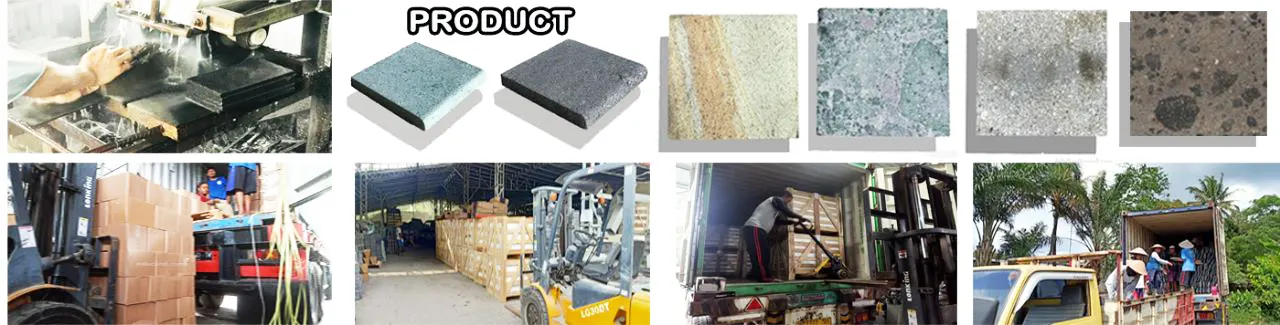
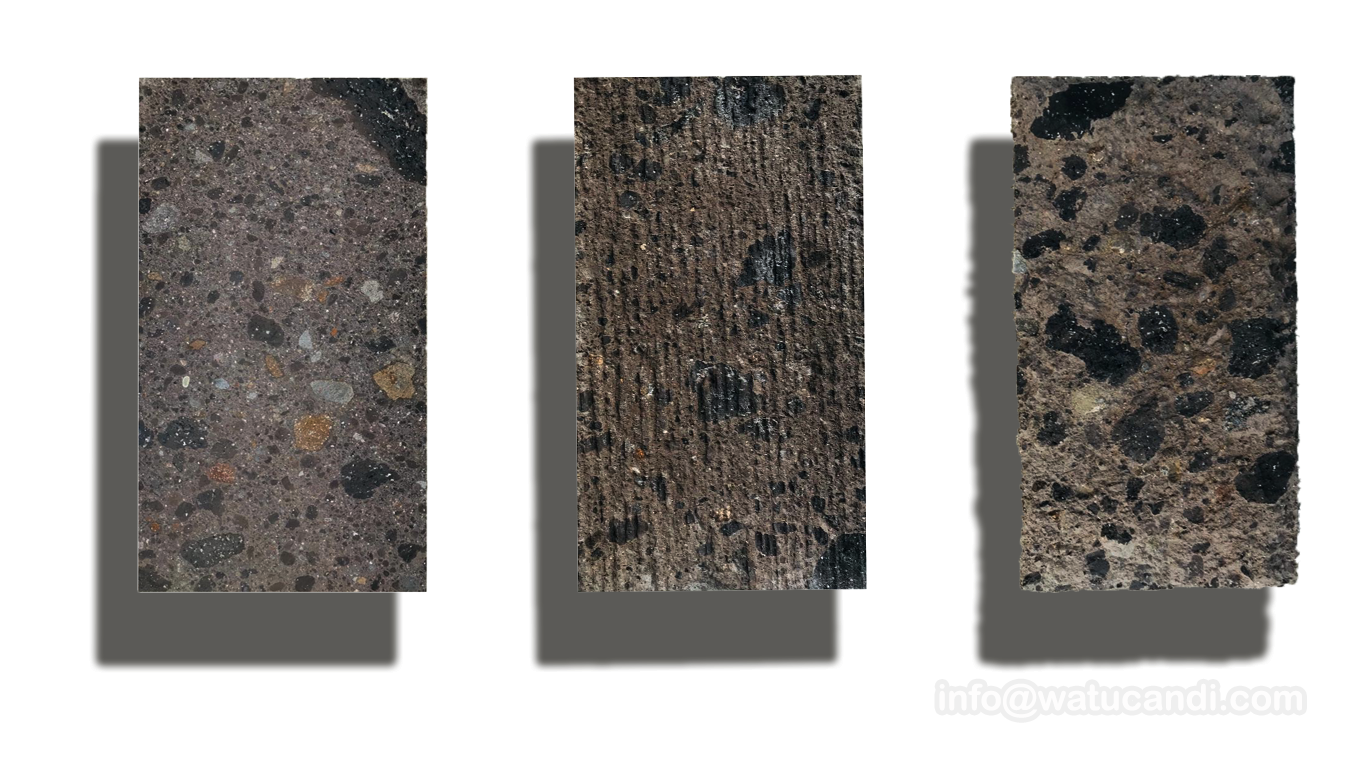
“Bring rustic warmth to your project with Brown Sandstone. Its rich amber hues and organic texture create inviting, timeless interiors and exteriors.”
Brown Sandstone: The Ultimate, Comprehensive Master Guide to Java Brown Paras Kerobokan Bali Tiger Stone
Java Brown sandstone, universally recognized in the global architectural and interior design communities as Paras Kerobokan Bali or Tiger Stone, represents one of the most visually striking, historically significant, and geologically fascinating natural stone materials available in contemporary architecture. This exhaustive, definitive, and encyclopedic guide explores every conceivable aspect of this remarkable sedimentary rock. From its deep geological origins in the volcanic archipelago of Indonesia to its unique physical properties, its distinctive abrasive texture, its complex installation requirements, its meticulous maintenance protocols, and its profound impact on sustainable design, this document serves as the ultimate resource for architects, interior designers, landscape architects, contractors, stonemasons, and homeowners. Unlike harder igneous rocks like basalt or granite, Java Brown sandstone possesses a unique character defined by its sedimentary nature, offering unparalleled aesthetic warmth, acoustic benefits, and organic elegance while requiring specific handling due to its inherent abrasiveness and moderate porosity.
The moniker “Tiger Stone” is derived directly from the stone’s most defining visual characteristic: a striking pattern of dark, linear striations that traverse its warm brown-gray base color, closely resembling the majestic stripes of a tiger. This unique visual pattern, combined with its naturally gritty and slightly abrasive surface texture, has made it one of the most coveted natural stones in the global market, particularly for feature wall cladding, interior flooring, exterior facades, and decorative architectural elements where a touch of raw, natural elegance is desired. For those looking to integrate the raw power of volcanic rock alongside the warmth of sandstone, exploring the 3D Merapi stone collections provides a stunning contrast in texture and depth.
Comprehensive Table of Contents
- 1. Introduction to Java Brown Sandstone
- 2. Deep Geological Formation and Sedimentary Origins
- 3. Physical Properties, Mineralogy, and the Physics of Sandstone
- 4. Visual Characteristics: The Tiger Stripe Phenomenon and Color Psychology
- 5. Surface Finishes: Enhancing the Sandstone Texture
- 6. Extensive Applications in Residential, Commercial, and Landscape Design
- 7. Installation Masterclass: Substrate Preparation and Mortar Selection
- 8. Comprehensive Maintenance, Cleaning, and Scratch Repair Protocols
- 9. Detailed Comparisons with Global and Local Natural Stones
- 10. Environmental Sustainability, LEED, and Quarrying Practices
- 11. Sourcing, Quality Control, and Global Export Logistics
- 12. Extensive Frequently Asked Questions (FAQ)
- 13. Conclusion: Embracing the Timeless Beauty of Sedimentary Stone
1. Introduction to Java Brown Sandstone
Java Brown sandstone, paras Kerobokan Bali, or Tiger Stone is a distinguished type of natural sedimentary rock that has gained massive international recognition for its exceptional aesthetic qualities, warm color palette, and unique textural properties. Unlike the hard, dense volcanic stones that dominate much of the modern architectural landscape, this sandstone offers a softer, more organic, and deeply historical aesthetic. Originating from the rich geological deposits of Indonesia, particularly the Kerobokan area in Bali and the broader Java region, this stone has been utilized for centuries in traditional Balinese and Javanese architecture, adorning ancient temples, royal palaces, and sacred spaces.
As a sedimentary rock, Java Brown sandstone belongs to a completely different geological family than igneous rocks like basalt or granite. It is formed through the deposition, compaction, and cementation of mineral and organic particles over millions of years. The stone’s composition primarily consists of sand-sized mineral particles, rock fragments, and organic material, all bound together by natural cementing agents such as silica, calcium carbonate, or iron oxide. This sedimentary origin gives the stone its unique porosity, its warm acoustic properties, and its characteristic surface abrasiveness, which provides excellent tactile feedback and natural slip resistance.

The geological history of Java Brown sandstone dates back millions of years to periods of significant geological activity in the Indonesian archipelago. The region’s unique conditions, characterized by ancient river systems, volcanic ash falls, and extensive sedimentary processes, created the perfect environment for the formation of this exceptional building material. Today, Java Brown Paras Kerobokan Bali stone is extracted from carefully managed quarries that employ sustainable mining practices. The stone’s popularity has grown exponentially in recent decades, with architects, designers, and homeowners worldwide recognizing its exceptional qualities for both interior and exterior applications, provided its specific physical properties are respected and properly maintained.
2. Deep Geological Formation and Sedimentary Origins
Understanding the deep geological formation of Java Brown sandstone provides invaluable insights into its unique properties, its porosity, and its characteristic abrasive nature. The formation process began millions of years ago during complex geological epochs in the Indonesian region. Unlike igneous rocks that form from cooling magma, sedimentary rocks like sandstone form through a process known as diagenesis, which involves the weathering, erosion, deposition, compaction, and cementation of pre-existing rocks and minerals.
The Sedimentary Process and Diagenesis
The Indonesian archipelago, situated on the Pacific Ring of Fire, has experienced intense volcanic activity, tectonic plate movements, and massive sedimentary processes over millions of years. Java Brown sandstone formed through a complex process involving the accumulation of sand-sized particles, volcanic ash, and organic debris. Ancient river systems and coastal environments acted as massive basins where these materials settled in thick layers. Over time, the weight of overlying sediments created immense pressure, compacting the loose sand into a solid mass.
Simultaneously, mineral-rich groundwater percolated through these compacted layers. This groundwater acted as a natural cement, depositing minerals like silica (quartz), calcium carbonate (calcite), and iron oxides into the microscopic spaces between the sand grains. This cementation process, known as lithification, transformed the loose sediment into the solid, cohesive rock we now quarry as Java Brown sandstone. The specific type of cement and the size of the sand grains determine the stone’s final hardness, porosity, and abrasive characteristics.
Mineral Composition and the “Tiger Stripe” Formation
The distinctive brown-gray color with black striations characteristic of Java Brown sandstone results directly from its unique mineral composition and the specific conditions during its formation. The stone primarily consists of quartz and feldspar grains, which provide the base brown-gray color. However, it is the presence of secondary minerals that creates the dramatic “tiger stripes.”
- Quartz and Feldspar: The primary framework grains, providing the stone’s structural integrity and base color.
- Iron Oxide (Hematite and Limonite): Responsible for the warm brown, reddish, and rust-colored hues. Iron oxide also plays a crucial role in the formation of the dark, linear striations.
- Manganese Oxide and Organic Matter: These minerals and ancient organic materials concentrated in linear patterns during the sedimentary deposition, creating the bold, dark black stripes that give Tiger Stone its name.
- Clay Minerals: Present in the matrix between the sand grains, contributing to the stone’s workability, its slightly softer feel, and its natural abrasiveness.
The black striations are not merely surface stains; they are integral to the stone’s geological structure, representing ancient flow lines, sedimentary bedding planes, or mineral-rich veins that formed millions of years ago. Because these patterns are formed by natural geological processes, no two slabs of Java Brown sandstone are exactly alike, ensuring that every installation is a unique work of natural art.
Primary Quarrying Locations
Java Brown sandstone is primarily quarried in specific regions of Indonesia known for their rich, ancient geological deposits. The most notable quarrying locations include:
Kerobokan, Bali: This specific area has become synonymous with high-quality brown sandstone production. The geological conditions in Kerobokan have produced some of the finest examples of Tiger Stone, characterized by consistent color, optimal density, and highly attractive, well-defined striation patterns.
Central Java and East Java: Various locations throughout Java also produce brown sandstone with similar characteristics. The extensive volcanic and sedimentary history of this region has created massive deposits of high-quality sedimentary rock suitable for both construction and decorative purposes.
3. Physical Properties, Mineralogy, and the Physics of Sandstone
Java Brown Paras Kerobokan Bali stone possesses a unique combination of physical properties that distinguish it sharply from harder igneous rocks like basalt or granite. Understanding these properties, particularly its sedimentary nature, its porosity, and its inherent abrasiveness, is absolutely critical for architects, builders, and homeowners to make informed decisions about its application, installation, and long-term maintenance.
Density, Weight, and Structural Integrity
Java Brown sandstone typically has a density ranging from 2,000 to 2,400 kg/m³ (125 to 150 lbs/ft³). This makes it a moderately dense natural stone, slightly lighter than dense volcanic basalts but heavier than some highly porous limestones. This density provides several advantages:
- Structural Stability: The stone’s density contributes to its ability to bear weight, making it suitable for wall cladding, flooring, and structural veneers.
- Acoustic Insulation: The sedimentary structure and moderate density help dampen sound transmission, making it an excellent choice for interior walls where acoustic comfort is desired.
- Thermal Mass: The stone can absorb and store heat, helping to regulate indoor temperatures, keeping spaces cool during the day and releasing warmth at night.
Hardness, Compressive Strength, and the Abrasive Nature
This is the most crucial section for understanding the true nature of Java Brown sandstone. Unlike lava stone or granite, which are igneous rocks with high quartz and feldspar content locked in a hard crystalline matrix, sandstone is a sedimentary rock. On the Mohs hardness scale, Java Brown sandstone typically rates between 3 and 5, depending on the specific silica cementation of the batch. This means it is significantly softer than granite (which is 6-7) or basalt.
The Abrasive Characteristic: Because it is a sandstone, the surface of the stone feels naturally gritty and slightly abrasive to the touch. This natural abrasiveness is highly beneficial for providing excellent slip resistance, making it ideal for certain flooring and wall applications. However, this same abrasive nature means that the surface of the stone is susceptible to being scratched or abraded by harder materials. If sharp, hard objects (like steel, hard plastics, or coarse quartz sand) are dragged across the surface, or if it is cleaned with harsh, abrasive wire brushes, the surface can be scratched, dulling the finish or altering the texture.
Its compressive strength typically ranges from 30 to 60 MPa (megapascals). While this is more than sufficient for wall cladding, interior flooring, and most residential exterior applications, it is lower than that of igneous rocks. Therefore, while it is a durable and long-lasting material, it requires a different level of care and respect in high-traffic commercial flooring areas compared to harder stones.
Porosity and Water Absorption
As a sedimentary rock, Java Brown sandstone exhibits moderate to high porosity, with water absorption rates typically ranging from 5% to 12% by weight. This is significantly higher than dense basalts or granites. This characteristic has profound implications:
- Breathability: The stone’s porosity allows moisture vapor to pass through, preventing trapped moisture that could cause damage in interior wall applications.
- Sealing Requirements: Due to its higher porosity, Java Brown sandstone must be sealed thoroughly before and after installation, especially in exterior applications, wet areas, or kitchens. The sealant penetrates the porous matrix, protecting the stone from water ingress, staining, and biological growth.
- Stain Susceptibility: Unsealed sandstone can easily absorb oil, grease, and colored liquids. Proper sealing is non-negotiable for maintaining the stone’s beauty.
- Frost Resistance: In freezing climates, if the porous stone absorbs water and the water freezes, the expansion can cause spalling (surface flaking). Therefore, in cold climates, it is highly recommended for interior use or protected exterior use with high-quality, breathable impregnating sealers.
4. Visual Characteristics: The Tiger Stripe Phenomenon and Color Psychology
One of the most distinctive and celebrated features of Java Brown Paras Kerobokan Bali stone is its remarkable visual character. The interplay of warm earth tones with dramatic, dark linear patterns creates a visual depth and organic beauty that synthetic materials simply cannot replicate. These natural variations make each piece of stone a unique canvas of geological history.
The Base Color Spectrum and Color Psychology
The base color of Java Brown sandstone typically falls within a warm, inviting spectrum of earth tones. The exact shade can vary depending on the specific quarry batch and the depth of the geological deposit. In the realm of interior design, color psychology plays a massive role. The warm, earthy browns of this sandstone evoke feelings of stability, reliability, and connection to the earth. They create environments that feel grounded, welcoming, and organic.
- Light Sandy Brown: Warm, pale tones that create a bright, welcoming atmosphere, often used in contemporary and coastal designs to evoke a sense of airy openness.
- Medium Earthy Brown: Rich, grounded tones that provide depth, warmth, and a strong connection to nature, ideal for traditional, rustic, and tropical aesthetics.
- Deep Brown-Gray: Sophisticated, muted tones that offer a more contemporary, subdued elegance, allowing the dark tiger striations to stand out prominently against the muted background.
The “Tiger Striations” and Visual Flow
The characteristic “tiger stripes” are the defining hallmark of this stone. These striations are not painted on; they are deep, mineral-rich veins that run through the stone. Their visual impact is profound. The stripes often follow the natural bedding planes of the sedimentary rock, creating a sense of movement and flow across the surface. The stark contrast between the warm brown base and the dark black or dark brown stripes creates a dramatic, eye-catching visual effect. No two pieces have identical striation patterns, ensuring that every wall or floor installation is a completely unique, one-of-a-kind artwork.

5. Surface Finishes: Enhancing the Sandstone Texture
Kerobokan sandstone tiles can be finished in a variety of ways to create different textures, looks, and functional properties. The finish you choose significantly impacts the stone’s appearance, its level of abrasiveness, and its suitable applications. Because sandstone is softer than volcanic stone, the choice of finish also affects how the stone will age and wear over time.
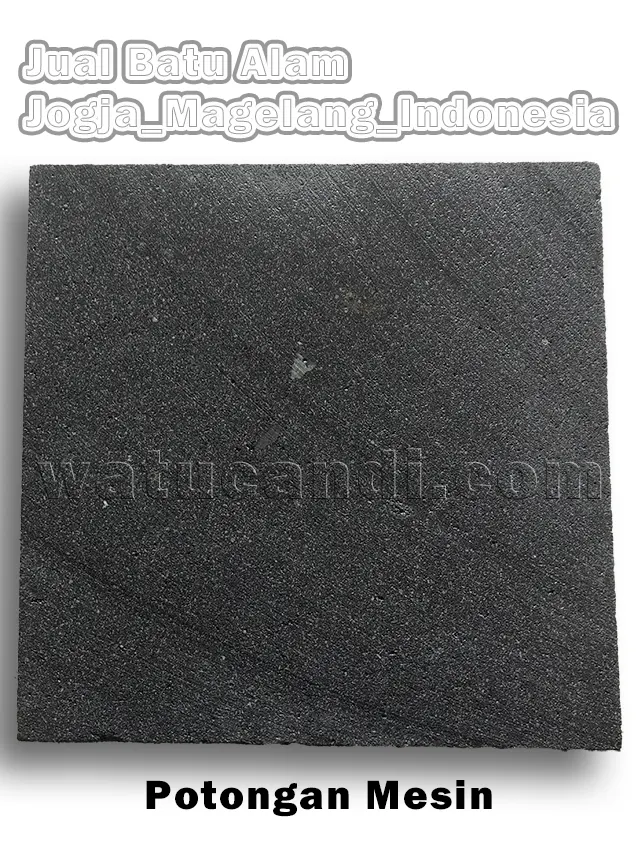
Sawn Cut Finish

This finishing option creates a relatively smooth and flat surface on the tiles, achieved by cutting the stone with diamond saws. While smoother than a rough face, a sawn cut sandstone still retains a slight microscopic granular feel. Saw-cut tiles have clean edges and are uniform in size and thickness. This finish is often used for modern and contemporary interior designs where a refined appearance is desired, but the natural warmth of the sandstone is still wanted.
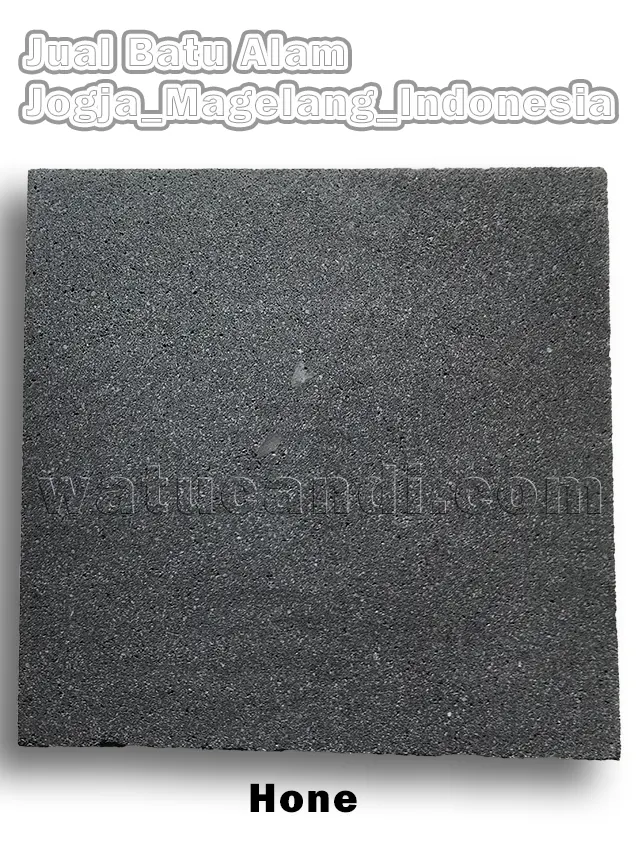
Honed Finish

Honed tiles have a smooth, matte finish achieved by grinding the tile surface with fine abrasive materials. This process removes the natural granular texture, creating a velvety, matte surface. This finish is less reflective than a polished finish and is often used for indoor flooring, elegant interior wall cladding, and vanity tops.
Note: Honed sandstone is the most susceptible to surface scratching and etching from acids. It requires careful maintenance, immediate cleanup of spills, and regular sealing to maintain its pristine appearance.
Chiseled Finish
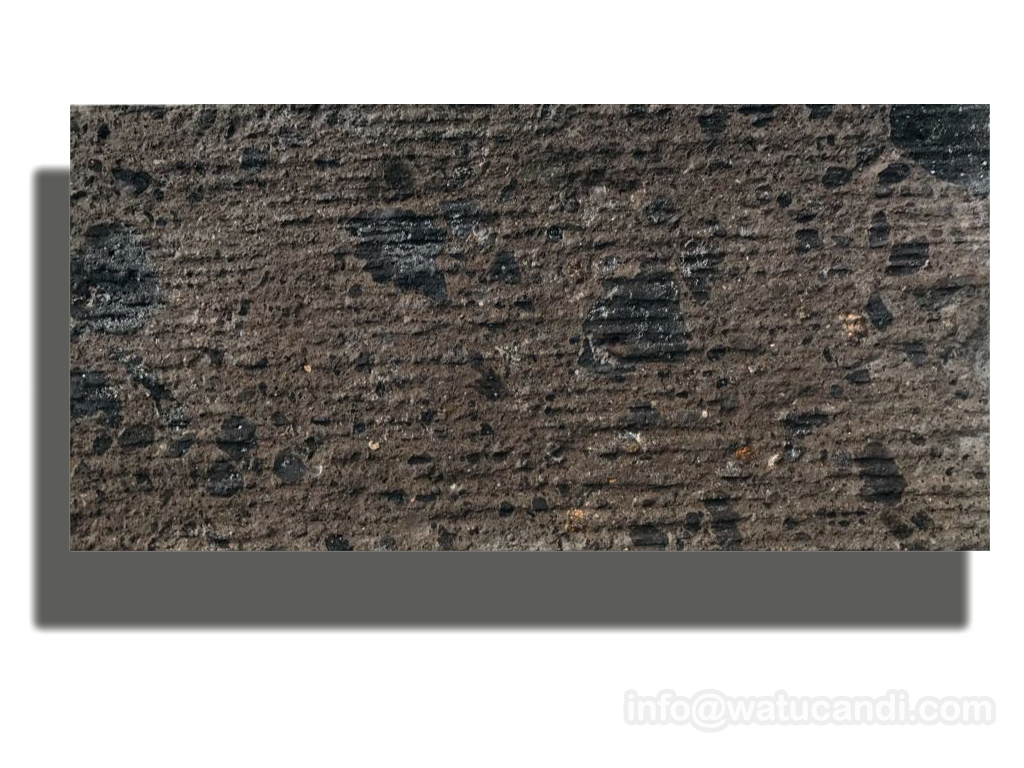
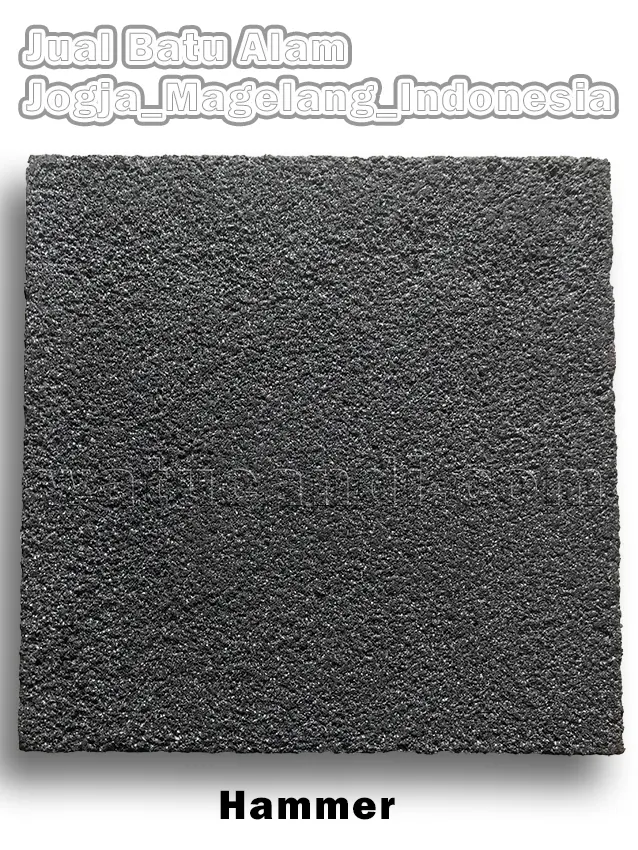
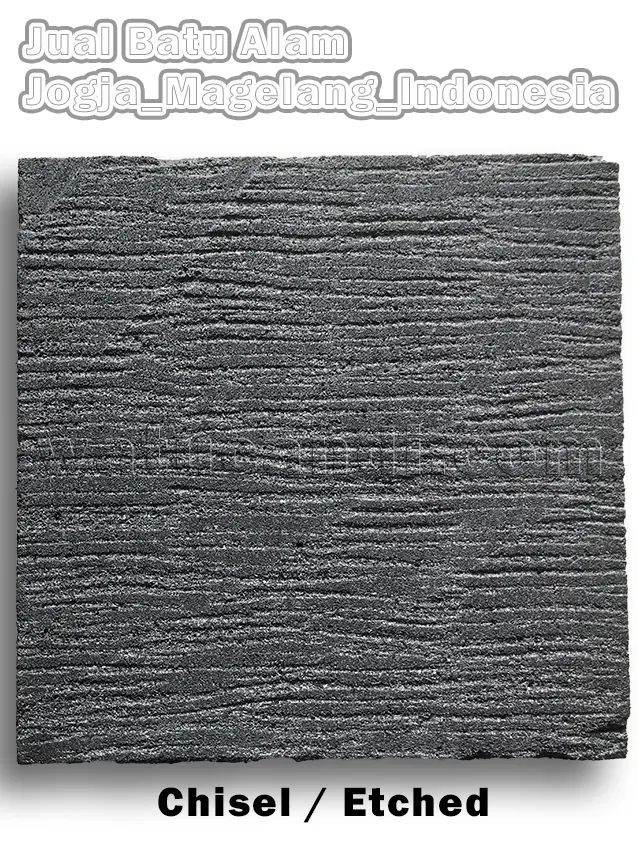
Chiseled tiles have rough, natural edges and surfaces that are created by manually sculpting and chiseling the edges and faces of the tiles. This finish emphasizes the raw, organic nature of the sandstone. It is often used for rustic or natural designs, such as exterior feature walls, garden features, and traditional architectural elements. The heavy texture hides minor surface scratches and wear very well, making it highly durable in terms of visual appearance over time.
Rough Face Finish

Rough face tiles have a textured surface created by leaving the natural, uncut surface of the stone exposed as it was split from the quarry block. This finish showcases the raw, abrasive, and granular nature of the sandstone in its purest form. This finish is often used for outdoor applications, such as garden trails, retaining walls, and exterior cladding. The extreme texture makes it virtually impossible to scratch the surface in a way that is visually noticeable, making it the most forgiving finish for high-wear exterior applications.
Split Face Finish
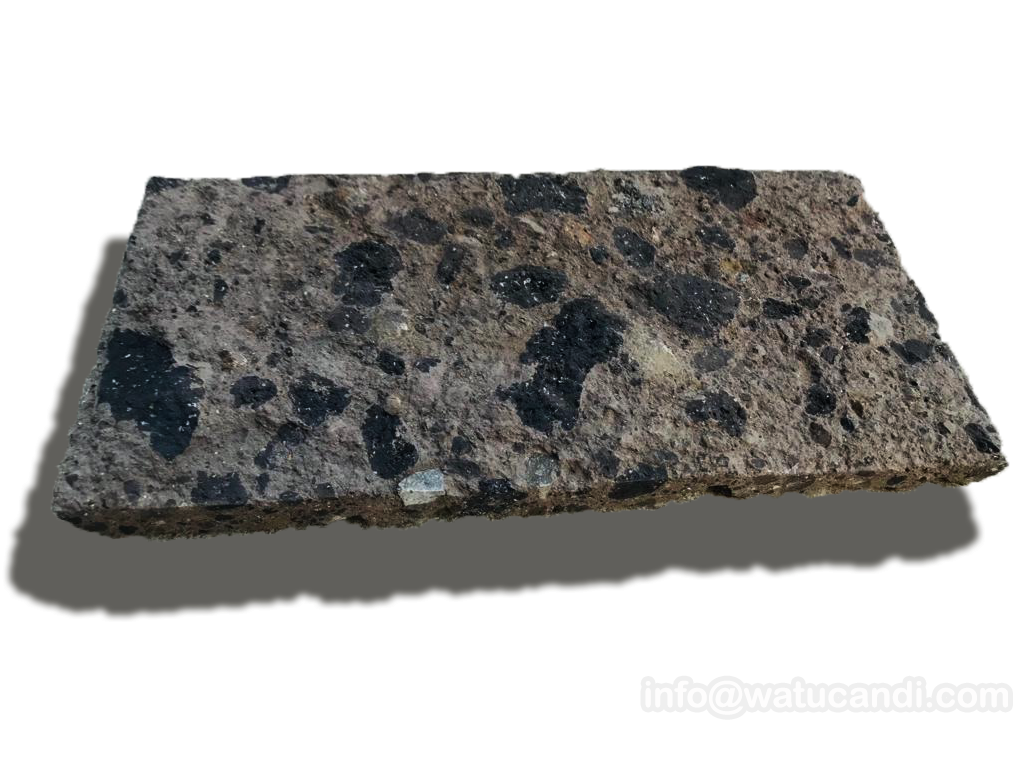
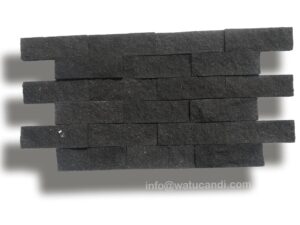
Split face finish is achieved by mechanically splitting the stone along its natural sedimentary bedding planes. Unlike the rough face which follows the natural quarry split, the split face is created by machine splitting to create a highly textured, three-dimensional surface with a more uniform back thickness for easier installation. This finish showcases the stone’s natural layering and creates dramatic light and shadow play, making it the ultimate choice for dramatic feature walls and exterior facades.
Tumbled Finish
For applications requiring a heavily weathered, antique, or soft-edged appearance, the batu alam finishing tumbled process is utilized. In this process, the cut tiles are placed in a large rotating drum with abrasive materials and water. The tumbling action rounds off the sharp edges and corners, and slightly distresses the face of the stone, giving it an old-world, antique charm. This finish is highly popular in rustic, Mediterranean, and traditional tropical designs where a soft, time-worn aesthetic is desired. It also eliminates the sharp edges, making it incredibly safe for pool coping and barefoot areas.
6. Extensive Applications in Residential, Commercial, and Landscape Design
Java Brown Paras Kerobokan Bali sandstone’s unique aesthetic warmth, workability, and textural diversity make it suitable for a vast array of applications. However, because it is a sandstone with moderate hardness and higher porosity, its applications must be carefully considered based on the environment and expected wear.
Interior Feature Walls and Cladding
This is arguably the most popular and stunning application for Java Brown sandstone. The warm brown tones and dramatic tiger stripes create an immediate focal point in any room. Whether used in a grand living room, a luxurious hotel lobby, or a serene spa reception area, split face or chiseled sandstone walls add immense depth, texture, and organic luxury. Because interior walls are protected from the elements and heavy abrasion, the stone’s porosity and softer nature are easily managed with proper sealing.
Interior and Exterior Flooring
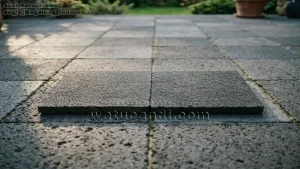
Java Brown sandstone can be used for interior flooring, providing a warm, earthy alternative to cold ceramic tiles or polished marble. Sawn cut or honed finishes are typically used for interiors to provide a smoother walking surface. For exterior applications, the stone weathers beautifully, developing a rich patina over time. When designing outdoor spaces, integrating lantai outdoor batu alam Merapi techniques ensures that the flooring can withstand the elements while providing exceptional slip resistance. The thermal mass of the sandstone helps keep outdoor areas cool during the day, making it a favorite for tropical patios and terraces.
For those seeking a more rugged, heavy-duty outdoor flooring option, exploring lantai batu lava stone floor options provides a contrasting igneous rock that is harder and more abrasive, ideal for high-traffic commercial exteriors. Alternatively, the lantai batu candi lahar Merapi offers a unique, textured lahar stone that bridges the gap between the warmth of sandstone and the durability of volcanic rock.
Landscaping, Edging, and Hardscaping
The workability of sandstone makes it a favorite among landscape architects. It can be easily cut into custom shapes for garden borders, retaining walls, stepping stones, and decorative boulders. The warm brown color blends seamlessly with natural soil, mulch, and greenery. Utilizing specialized tepian batu alam allows designers to create clean, defined borders between lawns, flower beds, and walkways. The stone’s natural texture provides excellent grip for garden paths, even when wet from irrigation or rain.
For landscapes requiring a highly textured, slip-resistant surface that mimics the raw beauty of nature, the lantai batu alam permukaan kasar is the ultimate choice. Its rugged profile prevents slipping and hides dirt and debris, making it perfect for rustic garden trails and waterfall surrounds.
Pool Surrounds and Wet Areas
Java Brown sandstone can be used around pools and in wet areas, provided the correct finish and sealing protocols are followed. A rough face, chiseled, or tumbled finish is mandatory to ensure maximum slip resistance when the stone is wet. Because sandstone is porous, it must be sealed with a high-quality, penetrating, non-slip sealer designed for wet areas to prevent the absorption of pool chemicals, oils, and organic stains. For those looking to combine the warm tones of sandstone with the ultimate pool-grade durability, exploring batu lava kolam renang provides an excellent alternative that is highly resistant to chlorine and salt.
Custom Carvings, Furniture, and Architectural Details
Unlike harder igneous rocks, Java Brown sandstone can be intricately carved by skilled artisans. It is frequently used for custom window surrounds, door frames, ornate moldings, decorative screens, and bespoke sculptures. Its sedimentary nature allows masons to carve deep, detailed reliefs. This workability extends to functional art; the integration of batu alam dan furnitur allows for the creation of stunning, heavy-duty stone tables, benches, and planters that anchor outdoor living spaces with a sense of permanence and luxury.
Bathrooms, Vanities, and Sinks
While sandstone requires careful sealing in wet areas, its visual warmth makes it a stunning choice for bathroom vanities and accent walls. For a striking contrast in the bathroom, designers often pair the warm brown tones of Java Brown sandstone with the deep, moody aesthetics of a wastafel batu basalt hitam. Alternatively, for a more traditional, earthy spa-like bathroom, a hand-carved wastafel batu Merapi asli 49x49x13cm serves as a breathtaking focal point, bringing the raw beauty of Indonesian volcanoes directly into the home.
Exterior Facades and Architectural Cladding
When used for exterior cladding, Java Brown sandstone weathers beautifully. Rough face, split face, and chiseled finishes are ideal for exteriors. The natural abrasiveness and texture of these finishes hide any minor surface wear from wind-blown sand or debris. The concept of desain eksterior batu lava can be adapted to sandstone, utilizing large-format lempengan batuan alami to create bold, monolithic facades that command attention. The stone’s thermal mass helps insulate the building, and its porosity allows the building to “breathe,” preventing trapped moisture.
Decking, Parquet, and Outdoor Living
For outdoor living spaces, patios, and pool decks that require the aesthetic of wood but the permanence of stone, the decking parquet batu lava Merapi offers a stunning solution. While technically a volcanic stone, the parquet cut mimics the warmth of wooden decking while providing the fire resistance, termite resistance, and weather durability of stone. This can be beautifully integrated with Java Brown sandstone feature walls to create a cohesive, tropical modern aesthetic.
Artistic Expressions and Decorative Tiles
For designers looking to infuse cultural heritage and artistic flair into their projects, the batik ubin batu hijau Yogyakarta represents a pinnacle of Indonesian craftsmanship. These green stone tiles, intricately carved with traditional batik motifs, serve as breathtaking accent pieces in luxury resorts, cultural centers, and high-end residential interiors, showcasing the intersection of geology and human artistry.
7. Installation Masterclass: Substrate Preparation and Mortar Selection for Sandstone
Installing Java Brown sandstone requires specific techniques and materials that differ from installing harder, less porous stones like granite or basalt. Because sandstone is highly porous and moderately soft, improper installation can lead to staining, efflorescence, or even structural failure. This masterclass outlines the critical steps for a flawless installation.
Pre-Installation: Sealing and Preparation
Step 1: Pre-Sealing (Mandatory for Sandstone). Before the stone even touches the mortar, it must be pre-sealed. Because sandstone is highly porous, it will rapidly absorb water and minerals from the mortar and grout, leading to severe, irreversible staining and efflorescence (white powder deposits). Apply a high-quality, breathable, impregnating sealer to all six sides of the stone tiles. Allow the sealer to cure completely according to the manufacturer’s instructions before proceeding.
Substrate Preparation
The substrate must be structurally sound, clean, flat, and free of any contaminants. For interior walls, ensure the drywall or concrete block is properly primed and sealed. For exterior applications or wet areas, a waterproof membrane must be installed over the substrate to prevent moisture migration. For flooring, the concrete subfloor must be fully cured, level, and free of curing compounds or sealers that could prevent mortar adhesion.
Mortar and Adhesive Selection
Crucial Rule: Never use standard cementitious mortar or mastic for sandstone. The high porosity of the stone will suck the water out of the mortar too quickly, preventing proper curing and leading to bond failure. You must use a polymer-modified, white thin-set mortar specifically designed for porous, natural stones. The white mortar is essential to prevent any gray discoloration from bleeding through the porous sandstone, which could alter the warm brown colors of the stone. The polymer modifiers provide superior adhesion and flexibility, accommodating the slight natural variations in the stone.
Installation Technique and Pattern Layout
Apply the white, polymer-modified thin-set mortar to the substrate using the appropriate notched trowel. For larger format tiles, “back-buttering” (applying a thin layer of mortar to the back of the stone tile) is highly recommended to ensure 100% coverage and maximum adhesion. Press the stone firmly into place, using spacers to maintain consistent joint widths.
When designing the layout, the pattern you choose drastically affects the visual impact. For a classic, dynamic look that draws the eye, the permukaan batu lempengan susun sirih (herringbone pattern) is a timeless choice that adds immense movement and elegance to both floors and walls. For a more traditional, rustic Indonesian aesthetic, the batu susun sirih asli technique utilizes irregular, natural edges stacked in a traditional interlocking pattern, celebrating the raw, organic nature of the sedimentary rock.
Because sandstone can have slight variations in thickness, use a leveling system to ensure a perfectly flat surface. Clean any mortar squeeze-out from the joints immediately with a damp sponge; if it dries on the porous surface, it will be extremely difficult to remove without damaging the stone’s finish.
Grouting and Final Sealing
Once the mortar has fully cured (usually 24-48 hours), apply a high-quality, polymer-modified, sanded grout. Again, ensure the grout color complements the stone without being so dark that it stains the porous edges. After the grout has cured, perform a thorough cleaning of the entire surface using a pH-neutral stone cleaner. Once the stone is completely bone-dry, apply a final coat of the impregnating sealer to the face of the stone and the grout lines to protect against stains, water, and biological growth.
8. Comprehensive Maintenance, Cleaning, and Scratch Repair Protocols
Because Java Brown sandstone is a sedimentary rock with a softer surface profile and natural abrasiveness, its maintenance protocol is distinctly different from that of harder igneous stones. Proper care is essential to preserve its beauty, prevent scratching, and manage its porosity.
Daily and Routine Cleaning
For daily maintenance, sweep or vacuum the floor regularly using a soft-bristle broom or a vacuum with a hard-floor setting (ensure the beater bar is turned off to prevent scratching). For mopping, use only a pH-neutral stone cleaner diluted in warm water. Never use acidic cleaners (vinegar, lemon, bathroom cleaners), alkaline cleaners (bleach, ammonia), or abrasive scouring powders. Acids will etch the calcium carbonate matrix, dulling the finish, while abrasives will scratch the softer sandstone surface. Always rinse thoroughly with clean water and dry with a soft microfiber cloth to prevent water spots.
Managing the Abrasive Nature and Preventing Scratches
As established, the surface of sandstone is softer than granite and can be scratched by harder materials. To prevent surface scratching and abrasion damage:
- Entrance Mats: Place high-quality walk-off mats at all entrances. These mats trap coarse, abrasive dirt, sand, and grit from shoes before it reaches the sandstone floor. This grit is the primary cause of surface scratching in high-traffic areas.
- Furniture Protectors: Attach soft felt pads to the bottom of all furniture legs. Never drag heavy furniture or appliances across the stone; always lift and carry them.
- Avoid Harsh Tools: When cleaning exterior or rough-face sandstone, never use stiff wire brushes or metal scrapers, as they will leave permanent metal marks and scratch the stone. Use stiff nylon brushes and plastic scrapers instead.
Stain Removal Protocols
Due to its porosity, sandstone can stain if spills are not addressed immediately. Always blot spills immediately; never wipe, as wiping spreads the spill and pushes it deeper into the pores.
Organic Stains (Food, Leaves, Coffee, Tea): Create a poultice using hydrogen peroxide and a powdered absorbent material (like diatomaceous earth or baking soda). Apply the paste to the stain, cover with plastic wrap, and tape the edges. Let it sit for 24-48 hours. The poultice will draw the stain out of the pores. Remove the dried poultice and rinse.
Oil and Grease Stains: Use a poultice made with acetone or mineral spirits instead of hydrogen peroxide. Follow the same application process. Oil stains are particularly stubborn in porous sandstone and may require multiple poultice applications.
Rust Stains: Use a commercial, pH-neutral rust remover specifically formulated for natural stone. Do not use acidic rust removers, as they will etch the stone. Apply according to the manufacturer’s instructions, rinse thoroughly, and reseal the area.
Repairing Scratches and Surface Abrasion
If the surface of honed or sawn-cut Java Brown sandstone becomes scratched or dulled due to abrasion over time, it can be repaired. Because the stone is relatively soft, a professional stone restoration contractor can easily hone and re-polish the surface. They will use progressively finer diamond abrasive pads to grind away the microscopic layer of scratched stone, restoring the original, smooth, matte finish. For deep scratches, the process may take more steps, but the restorability of the stone is a significant advantage over materials that cannot be refinished.
The Sealing Schedule
Sealing is the most critical aspect of sandstone maintenance. The frequency of resealing depends on the location, traffic, and the type of sealer used. As a general rule:
- Interior Walls: Every 3 to 5 years.
- Interior Flooring (Low Traffic): Every 1 to 2 years.
- Interior Flooring (High Traffic): Every 6 to 12 months.
- Exterior Cladding: Every 1 to 2 years, depending on weather exposure.
- Pool Surrounds and Wet Areas: Every 6 to 12 months.
The Water Drop Test: To determine if it is time to reseal, sprinkle a few drops of water on the stone surface. If the water beads up on the surface, the sealer is still effective. If the water immediately soaks into the stone and darkens it, the sealer has worn off, and it is time to apply a fresh coat.
9. Detailed Comparisons with Global and Local Natural Stones
Understanding how Java Brown sandstone compares to other popular natural stones is essential for selecting the right material for your specific project. Each stone has unique properties, and the “best” choice depends entirely on the application, desired aesthetic, and maintenance commitment.
Java Brown Sandstone vs. Palimanan Stone
Geology & Aesthetics: Both are sedimentary stones quarried in Indonesia. However, Palimanan stone is a limestone composed almost entirely of calcium carbonate, giving it a very uniform, smooth texture and light colors (creams, beiges, whites). Java Brown sandstone contains sand-sized quartz and feldspar grains, giving it a distinctly granular, slightly abrasive texture and its characteristic brown colors with dark tiger stripes. Palimanan is often chosen for its light, airy aesthetic and ease of carving, as seen in ubin batu paras Palimanan. Sandstone is chosen for its dramatic striations, earthy warmth, and superior slip resistance.
Java Brown Sandstone vs. Breccia Stone
Visual Impact: Breccia is a sedimentary rock composed of fragmented, angular fragments cemented together, creating a bold, mosaic-like appearance. As seen in ubin batu alam breksi, it offers a dramatic, high-contrast, and highly energetic visual. Java Brown sandstone, conversely, offers flowing, linear tiger stripes and a more grounded, earthy aesthetic. Breccia is chosen for maximum visual drama and accent features; sandstone is chosen for large-scale cladding, flooring, and organic warmth.
Java Brown Sandstone vs. Green Sukabumi Stone
Application & Properties: Green Sukabumi stone is a volcanic stone famous for its unique green color and natural antibacterial/antifungal properties, making it the ultimate pool stone (see ubin batu alam hijau Sukabumi asli). Java Brown sandstone lacks these antibacterial properties and requires careful sealing for pool use. However, sandstone offers a much warmer, earthier color palette that complements tropical wood and soil, whereas Sukabumi provides a cool, vibrant, aquatic contrast. They are often used together in luxury tropical resorts to create a balanced, harmonious palette.
Java Brown Sandstone vs. Lava Stone (Basalt)
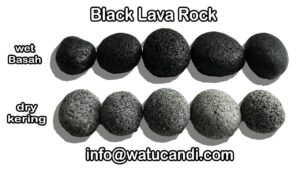
Geology & Hardness: Lava stone is an igneous rock (basalt) with a Mohs hardness of 6-7. Java Brown is a sedimentary rock (sandstone) with a hardness of 3-5. Lava stone is significantly harder, denser, and more resistant to scratching and abrasion than sandstone. Lava stone is typically uniform dark gray or black with a highly abrasive, pumice-like texture. Java Brown sandstone offers warm brown tones with dramatic tiger stripes and a granular, earthy texture. Lava stone is chosen for dark, modern, industrial looks; sandstone is chosen for warm, organic, traditional, or rustic looks.
Java Brown Sandstone vs. Granite
Hardness & Durability: Granite is an igneous rock with a Mohs hardness of 6-7. It is extremely hard, dense, and highly resistant to scratching, abrasion, and heat. Java Brown sandstone is much softer and more susceptible to scratching and etching from acids. Because granite is so hard, it is difficult to carve and shape on-site. Sandstone is highly workable and can be easily carved into intricate details by masons. Granite features a crystalline, speckled pattern and can be polished to a mirror-like, high-gloss shine. Sandstone has a matte, earthy, granular appearance and cannot be polished to a high gloss. Granite is chosen for high-traffic commercial floors and kitchen countertops; sandstone is chosen for feature walls, low-traffic floors, and decorative carving.
10. Environmental Sustainability, LEED, and Quarrying Practices
Java Brown Paras Kerobokan Bali stone offers numerous environmental benefits that make it an excellent choice for sustainable construction and design. In an era where the environmental impact of building materials is heavily scrutinized, natural sandstone stands out as a responsible choice.
Natural and Minimally Processed
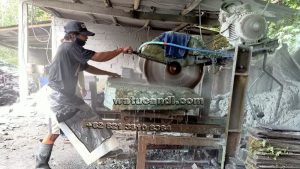
Unlike manufactured building materials such as concrete, ceramic tiles, or engineered stone, which require massive amounts of energy to mine, process, fire in kilns, and synthesize, natural sandstone requires minimal processing. The stone is simply extracted from the earth, cut to size using diamond wire saws (which use water for cooling, minimizing dust and energy use), and finished. There are no synthetic resins, chemical binders, or high-temperature firing processes involved, resulting in a significantly lower embodied energy and carbon footprint.
Sustainable Quarrying and Land Rehabilitation
Reputable quarries in Indonesia that supply Java Brown sandstone employ sustainable extraction practices. Modern quarrying techniques maximize the yield from each block, minimizing waste. Furthermore, responsible quarry operators implement land rehabilitation programs. Once a section of the quarry is exhausted, the land is graded, topsoil is replaced, and native vegetation is replanted, restoring the ecological balance. Many exhausted quarries are successfully converted into productive agricultural land, forests, or even recreational lakes.
LEED Certification and Green Building
Java Brown sandstone can contribute significantly to LEED (Leadership in Energy and Environmental Design) certification points. Its low embodied energy, lack of VOCs (Volatile Organic Compounds), and potential for local sourcing (if the project is within a certain radius of the port of entry) make it a highly favorable material for green building projects. Furthermore, its thermal mass properties contribute to passive heating and cooling strategies, reducing the building’s reliance on HVAC systems and further enhancing its sustainability profile.
11. Sourcing, Quality Control, and Global Export Logistics
Sourcing high-quality Java Brown Paras Kerobokan Bali stone directly from Indonesia ensures you receive the best material, the most accurate colors, and the most competitive terms. Whether you are a local buyer or an international importer, understanding the sourcing process is crucial.
Selecting a Reputable Supplier
When choosing a supplier, look for established companies with a proven track record in the natural stone industry. A reputable supplier, such as Watu Candi, will offer a wide selection of Java Brown sandstone products, multiple finish options, and custom cutting capabilities. They should have strict quality control processes in place at the quarry and the processing factory to ensure consistency in color, thickness, and finish. Always ask for physical samples before placing a large order to verify the color, texture, and quality of the specific batch.
Quality Control and Batch Consistency
Because Java Brown sandstone is a natural product, there will always be some variation in color and pattern between different blocks and batches. This variation is part of the stone’s natural charm. However, for a single project, consistency is key. A good supplier will pull all the stone for your order from the same quarry block or batch to ensure the colors and tiger stripe patterns are as consistent as possible. Always order 10-15% extra material to account for cutting waste, breakage, and to have spare tiles for future repairs.
International Shipping and Importing
For international buyers, importing natural stone requires careful logistics. The stone is heavy and fragile, so proper packaging is essential. The supplier should pack the tiles in strong, fumigated wooden crates, with each layer of stone separated by foam or styrofoam to prevent chipping and cracking during transit. Understand your local import duties, taxes, and customs regulations. Work with an experienced freight forwarder who can handle the logistics, customs clearance, and delivery to your site or warehouse. Ensure all documentation, including the commercial invoice, packing list, and certificate of origin, is accurate and complete.
12. Extensive Frequently Asked Questions (FAQ)
To provide the most comprehensive resource possible, we have compiled an extensive list of frequently asked questions regarding Java Brown sandstone, covering its properties, installation, maintenance, and design applications.
General Properties and Characteristics
Q: Is Java Brown sandstone a hard stone like granite?
A: No. Java Brown sandstone is a sedimentary rock with a Mohs hardness of 3 to 5. It is significantly softer than igneous rocks like granite or basalt (which are 6-7). While it is durable enough for most architectural applications, its softer nature means it is more susceptible to scratching and abrasion than harder stones, and it requires specific care and maintenance.
Q: Why is the stone called “Tiger Stone”?
A: The name “Tiger Stone” comes from the stone’s most distinctive visual feature: dark, linear striations that run through its warm brown-gray base color. These natural mineral deposits closely resemble the stripes of a tiger, giving the stone its dramatic and unique appearance.
Q: Is the surface of the stone abrasive?
A: Yes, due to its sedimentary nature and granular texture, the surface of Java Brown sandstone has a natural, slight abrasiveness. This provides excellent tactile feedback and natural slip resistance. However, this also means the surface can be scratched by harder, sharper materials (like coarse sand, steel, or hard plastics), so it must be cleaned with soft tools and protected from abrasive dirt.
Q: How porous is Java Brown sandstone?
A: It has moderate to high porosity, with water absorption rates typically ranging from 5% to 12%. Because of this high porosity, it is absolutely mandatory to seal the stone before and after installation to prevent staining, water ingress, and efflorescence.
Q: Can Java Brown sandstone be used outdoors in freezing climates?
A: It can be used outdoors, but caution is required in freeze-thaw climates. Because the stone is porous, if it absorbs water and that water freezes, the expansion can cause the surface to spall or flake. If used in a freezing climate, it must be installed with proper drainage and sealed with a high-quality, breathable, impregnating sealer to minimize water absorption. For extreme freeze-thaw areas, interior use or protected exterior use is recommended.
Installation and Application
Q: What type of mortar should I use to install sandstone?
A: You must use a polymer-modified, white thin-set mortar specifically designed for porous, natural stones. Never use standard gray mortar or mastic. The white mortar prevents discoloration from bleeding through the porous stone, and the polymer modifiers ensure proper adhesion and flexibility.
Q: Do I need to seal the stone before installation?
A: Yes, pre-sealing is absolutely mandatory for sandstone. Because it is highly porous, unsealed stone will rapidly absorb water and minerals from the mortar and grout, causing severe, irreversible staining and efflorescence. Apply a breathable impregnating sealer to all six sides of the tile before installation.
Q: Can I use Java Brown sandstone for kitchen countertops?
A: While it can be used, it is not generally recommended for busy kitchen countertops. Because it is a softer sandstone, it is susceptible to scratching from knives and etching from acidic foods like lemon juice, vinegar, and wine. If you choose to use it in a kitchen, you must be diligent about using cutting boards, cleaning up spills immediately, and maintaining a rigorous sealing schedule. For kitchens, harder stones like granite or quartzite are usually preferred.
Q: Is it suitable for pool decks?
A: Yes, provided you select the correct finish and maintain it properly. A rough face, chiseled, or tumbled finish is essential for maximum slip resistance when wet. It must be sealed with a high-quality, penetrating sealer designed for wet areas to prevent the absorption of pool chemicals and organic stains. Regular resealing is required.
Maintenance and Care
Q: How do I clean Java Brown sandstone without scratching it?
A: For daily cleaning, sweep with a soft-bristle broom or vacuum with a hard-floor setting (beater bar off). Mop using only a pH-neutral stone cleaner and warm water. Never use acidic cleaners (vinegar, bleach) or abrasive scouring powders. For rough exterior finishes, use a stiff nylon brush, never a wire brush, to avoid leaving metal marks and scratching the stone.
Q: How do I remove a stain from the porous sandstone?
A: For organic stains, use a poultice made of hydrogen peroxide and an absorbent powder. For oil stains, use a poultice made with acetone or mineral spirits. Apply the poultice, cover with plastic wrap, and let it sit for 24-48 hours to draw the stain out of the pores. For rust stains, use a commercial, pH-neutral rust remover designed for natural stone.
Q: How often do I need to reseal the stone?
A: It depends on the location and traffic. Interior walls may only need resealing every 3-5 years. Interior flooring in low-traffic areas needs it every 1-2 years, while high-traffic floors or pool surrounds may need it every 6-12 months. Perform the “water drop test” regularly: if water no longer beads up on the surface and instead darkens the stone, it is time to reseal.
Q: Can scratches on the honed surface be repaired?
A: Yes. Because sandstone is relatively soft compared to igneous rocks, a professional stone restoration contractor can easily hone and refinish the surface. They will use diamond abrasive pads to grind away the microscopic layer of scratched stone, restoring the original smooth, matte finish.
Q: What is efflorescence, and how do I prevent it on sandstone?
A: Efflorescence is the white, powdery salt deposit that can appear on the surface of porous masonry materials. It occurs when water moves through the stone, carrying soluble salts to the surface, where the water evaporates and leaves the salts behind. To prevent it on sandstone, ensure proper drainage, use a polymer-modified mortar, and most importantly, pre-seal the stone with a high-quality, breathable impregnating sealer before installation to block water migration.
Design and Aesthetics
Q: Will the color and tiger stripe pattern be consistent across all tiles?
A: Because it is a natural product, there will always be some variation in color and pattern between different blocks and batches. This natural variation is part of the stone’s unique charm. A good supplier will pull all the stone for your order from the same batch to ensure maximum consistency, but expect some natural variation. It is recommended to blend tiles from multiple crates during installation to distribute the variation evenly.
Q: Can the stone be carved or sculpted?
A: Yes, absolutely. One of the greatest advantages of Java Brown sandstone over harder stones like granite is its workability. Its moderate hardness makes it an excellent material for intricate carving, sculpting, and custom architectural details by skilled stonemasons.
Q: What design styles work best with this stone?
A: It is incredibly versatile. Its warm, earthy tones and organic texture make it perfect for Tropical Resort, Balinese, Rustic, and Traditional styles. When used in a honed or sawn cut finish with large formats, it also integrates beautifully into Contemporary and Modern Organic designs, providing a warm, natural contrast to cold, hard modern materials.
13. Conclusion: Embracing the Timeless Beauty of Sedimentary Stone
Java Brown Paras Kerobokan Bali stone, universally celebrated as Tiger Stone, represents an exceptional choice for architects, designers, and homeowners seeking a natural stone that offers unparalleled aesthetic warmth, organic texture, and historical character. Its distinctive brown-gray color, dramatic black tiger striations, and unique granular texture create a visual and tactile experience that cannot be replicated by synthetic materials or harder, colder igneous stones.
Throughout this comprehensive guide, we have explored the many facets of this remarkable sedimentary rock. We have delved into its deep geological formation, understanding how millions of years of sedimentary deposition and mineral cementation created its unique properties. We have thoroughly examined its physical characteristics, explicitly noting its moderate hardness, its porosity, and its inherent abrasive nature. Understanding that it is a sandstone softer and more susceptible to scratching than granite or basalt is the key to successfully specifying, installing, and maintaining this beautiful material.
We have detailed the extensive applications of Java Brown sandstone, from stunning interior feature walls and elegant flooring to robust exterior cladding and intricate landscape features. We have provided a masterclass in installation, emphasizing the critical need for pre-sealing and the use of white, polymer-modified mortars to protect the porous stone. We have outlined comprehensive maintenance protocols, detailing how to clean the stone without scratching its surface, how to remove stains using poultices, and how to manage its sealing schedule to ensure its longevity.
Whether you are designing a luxurious tropical resort, a warm and inviting rustic home, a serene Zen sanctuary, or a contemporary space that requires an organic touch, Java Brown sandstone offers the perfect combination of aesthetic appeal and natural character. Its workability allows for intricate carvings, while its natural slip resistance and acoustic properties make it a highly functional building material.
The stone’s natural beauty, combined with its environmental sustainability and minimal processing requirements, makes it an intelligent and responsible investment. Its ability to weather gracefully, developing a rich patina over time, ensures that your installation will remain relevant, beautiful, and deeply connected to the natural world for generations to come.
For those seeking to incorporate Java Brown Paras Kerobokan Bali stone into their projects, we highly recommend working with reputable, experienced suppliers like Watu Candi, who can provide premium quality materials, expert guidance on finish selection, and professional support throughout your project. By respecting the unique nature of this sedimentary stone and following the proper installation and maintenance protocols outlined in this guide, you will transform your architectural vision into a stunning, timeless reality that celebrates the profound beauty of the natural earth.
Post Tags; java brown sandstone, paras kerobokan bali, tiger stone, brown sandstone tiles, indonesian natural stone, sedimentary rock cladding, tiger stripe stone, brown gray sandstone, natural stone feature wall, sandstone flooring, exterior sandstone cladding, interior sandstone tiles, rough face sandstone, split face sandstone, chiseled sandstone, honed sandstone, tumbled sandstone, sandstone pool coping, sandstone landscaping, sandstone edging, sandstone paving, sandstone stairs, sandstone vanity, sandstone carving, sandstone maintenance, sealing sandstone, sandstone scratch repair, sandstone stain removal, efflorescence prevention, polymer modified mortar sandstone, white thin-set mortar sandstone, sandstone thermal mass, acoustic insulation stone, sustainable building materials, leed certification stone, indonesian stone exporter, jogja sandstone, bali stone supplier, tropical resort stone, rustic architecture stone, contemporary sandstone design, organic architecture stone, balinese architecture stone, javanese temple stone, sandstone color variation, natural stone batch consistency, sandstone water absorption, sandstone porosity, sandstone hardness mohs, sandstone compressive strength, sandstone abrasion resistance, sandstone slip resistance, sandstone thermal properties, sandstone acoustic properties, sandstone workability, sandstone sculpting, sandstone moldings, sandstone window surrounds, sandstone door frames, sandstone furniture, sandstone tables, sandstone benches, sandstone planters, sandstone water features, sandstone waterfall, sandstone retaining wall, sandstone stepping stones, sandstone garden borders, sandstone pathway, sandstone driveway, sandstone patio, sandstone terrace, sandstone balcony, sandstone rooftop, sandstone bathroom, sandstone shower, sandstone wet area, sandstone pool deck, sandstone spa, sandstone wellness center, sandstone hotel lobby, sandstone restaurant, sandstone retail store, sandstone office building, sandstone museum, sandstone gallery, sandstone cultural center, sandstone religious building, sandstone memorial, sandstone monument, sandstone sculpture, sandstone art, sandstone mosaic, sandstone inlay, sandstone parquet, sandstone herringbone, sandstone susun sirih, sandstone batik, sandstone green stone, sandstone palimanan, sandstone breccia, sandstone sukabumi, sandstone lava stone, sandstone basalt, sandstone granite, sandstone marble, sandstone limestone, sandstone comparison, natural stone comparison, indonesian stone comparison, sandstone vs granite, sandstone vs marble, sandstone vs limestone, sandstone vs lava stone, sandstone vs palimanan, sandstone vs breccia, sandstone vs sukabumi, sandstone installation guide, sandstone substrate preparation, sandstone waterproofing, sandstone sealing schedule, sandstone water drop test, sandstone poultice, sandstone organic stain removal, sandstone oil stain removal, sandstone rust stain removal, sandstone daily cleaning, sandstone deep cleaning, sandstone professional restoration, sandstone honing, sandstone polishing, sandstone refinishing, sandstone efflorescence removal, sandstone biological growth removal, sandstone moss removal, sandstone algae removal, sandstone lichen removal, sandstone sealing types, impregnating sealer sandstone, breathable sealer sandstone, penetrating sealer sandstone, sandstone maintenance schedule, sandstone care guide, sandstone protection, sandstone preservation, sandstone restoration, sandstone repair, sandstone chip repair, sandstone crack repair, sandstone structural repair, sandstone aesthetic repair, sandstone color matching, sandstone texture matching, sandstone finish matching, sandstone batch matching, sandstone quality control, sandstone inspection, sandstone grading, sandstone sorting, sandstone packaging, sandstone crating, sandstone shipping, sandstone logistics, sandstone export, sandstone import, sandstone customs, sandstone duties, sandstone taxes, sandstone freight, sandstone delivery, sandstone installation, sandstone application, sandstone design, sandstone architecture, sandstone interior design, sandstone landscape design, sandstone exterior design, sandstone residential, sandstone commercial, sandstone hospitality, sandstone resort, sandstone hotel, sandstone villa, sandstone public, sandstone institutional, sandstone religious, sandstone cultural, sandstone historical, sandstone conservation, sandstone cleaning, sandstone sealing, sandstone grinding, sandstone sanding, sandstone buffing, sandstone waxing, sandstone coating, sandstone impregnation, sandstone densification, sandstone crystallization, sandstone fluoridation, sandstone silication, sandstone fluorosilicate, sandstone silicate, sandstone siloxane, sandstone silicone, sandstone fluorosiloxane, sandstone fluoropolymer, sandstone fluorosilane, sandstone silane, natural stone indonesia, watu candi, batu alam indonesia, brown tiger stone, paras kerobokan, java brown stone, tiger stripe sandstone, natural stone cladding, sedimentary rock tiles, indonesian sandstone, bali stone, jogja stone, tropical stone, rustic stone, contemporary stone, organic stone, balinese stone, javanese stone, temple stone, candi stone, lava stone, basalt stone, andesite stone, palimanan stone, breccia stone, sukabumi stone, green stone, blue stone, black stone, white stone, cream stone, beige stone, gray stone, brown stone, red stone, yellow stone, orange stone, pink stone, purple stone,

One thought on “Brown Sandstone”