Discover +62 Lava Rock Tiles, the definitive guide to Indonesian volcanic stone cladding. Explore the geological origins of Mount Merapi lava, the intricate art of rock face finishing, and comprehensive applications for luxury pools, sustainable architecture, and modern interior design. Learn why black lava stone is the superior choice for durability, aesthetics, and environmental harmony.
- 1. Introduction to +62 Lava Rock Tiles
- 2. Geological Origins: The Power of Mount Merapi
- 3. Product Characteristics: Split Face & Pedra Bruta
- 4. The Artisan Manufacturing Process
- 5. Technical Specifications & Durability
- 6. Architectural Applications & Design Versatility
- 7. Comprehensive Installation Guide
- 8. Maintenance & Long-Term Care
- 9. Sustainability & Environmental Impact
- 10. Global Market & Export Standards
- 11. Related Natural Stone Products
1. Introduction to +62 Lava Rock Tiles
In the evolving landscape of modern architecture and interior design, the demand for authentic, sustainable, and visually striking materials has never been higher. +62 Lava Rock Tiles emerges as a premier manufacturer and supplier of natural stone tiles, specializing in volcanic rock cladding that redefines the standard for wall decor. Unlike mass-produced ceramics or synthetic composites, our products harness the raw, untamed beauty of Indonesian natural stone, offering a unique aesthetic that seamlessly blends classical elegance with modern ruggedness.
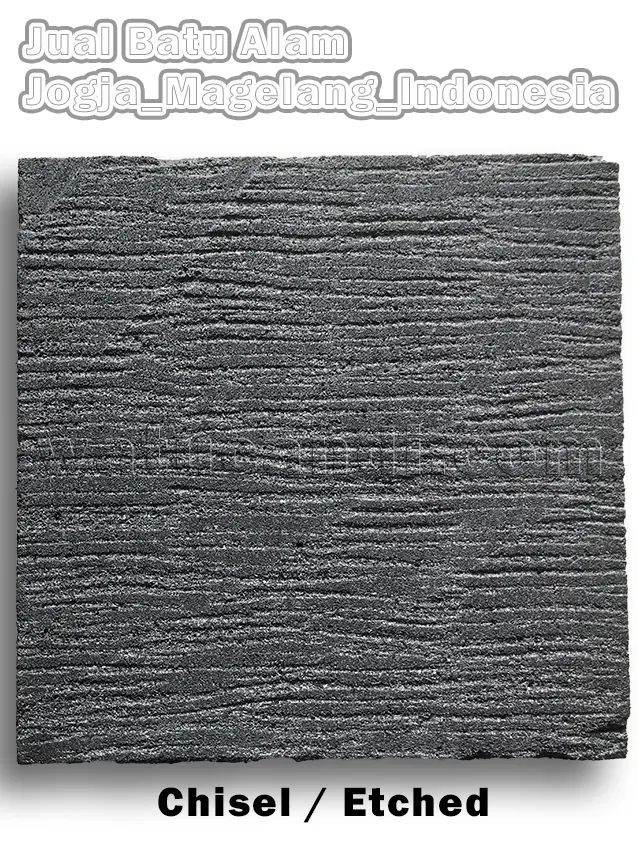
The term “Lava Rock Tiles” encompasses a wide range of volcanic stones, but our specific focus is on the high-quality basalt and andesite sourced from the fertile slopes of Mount Merapi in Central Java. This region is renowned globally for producing some of the finest natural stone in the world. Our signature product, the Lava Stone Batu Candi Hitam, features a distinctive “Rock Face” finish. This texture is not merely a surface treatment; it is a testament to the geological history of the stone itself. Achieved through a meticulous process of abstract chiseling and edge leveling after the initial square cutting, the resulting surface mimics the untouched beauty of nature while providing the structural integrity required for modern construction.

Choosing +62 Lava Rock Tiles means choosing a material that tells a story. Each tile carries the memory of volcanic eruptions that shaped the Indonesian archipelago thousands of years ago. For architects, designers, and homeowners, this translates into a design element that offers depth, character, and a connection to the earth that synthetic materials simply cannot replicate. Whether you are designing a luxury resort in Bali, a minimalist home in Jakarta, or a commercial space in Europe, our volcanic stone provides the foundational elegance needed to create truly memorable environments.
2. Geological Origins: The Power of Mount Merapi
To understand the quality of +62 Lava Rock Tiles, one must understand their origin. Mount Merapi, located in Central Java, is one of the most active volcanoes in Indonesia and arguably the world. Its frequent eruptions have deposited layers upon layers of volcanic material—ash, tephra, and lava flows—that have cooled and solidified into dense, mineral-rich stone over millennia. This geological activity is the secret behind the superior properties of our stone.
The stone we harvest is primarily composed of basalt and andesite. Basalt is an extrusive igneous rock formed from the rapid cooling of low-viscosity lava rich in magnesium and iron. It is known for its fine-grained texture, dark color, and exceptional hardness. Andesite, on the other hand, is an intermediate volcanic rock that offers a slightly different texture and color palette, often ranging from grey to black. The specific combination of minerals in Merapi stone gives it a unique density and porosity balance that makes it ideal for both structural and decorative applications.
The volcanic soil surrounding Mount Merapi is also incredibly fertile, supporting a lush ecosystem that coexists with the stone quarries. This symbiotic relationship between nature and industry is something we take pride in. Our quarrying practices are designed to minimize environmental impact, ensuring that the extraction of this precious resource does not compromise the surrounding landscape. When you purchase Black Lahar Stone from us, you are acquiring a piece of this dynamic geological heritage.
Furthermore, the volcanic origin of the stone imbues it with natural thermal properties. Lava stone has excellent heat retention capabilities, making it cool to the touch in hot climates and capable of retaining warmth in cooler environments. This makes it an exceptionally comfortable material for flooring and wall cladding in tropical regions like Indonesia, as well as in temperate zones abroad. The stone’s ability to regulate temperature naturally contributes to the energy efficiency of buildings, aligning with modern green building standards.
3. Product Characteristics: Split Face & Pedra Bruta
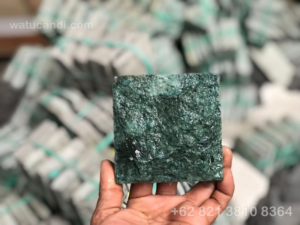
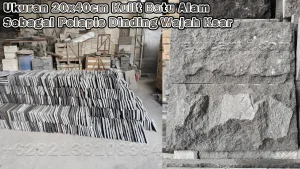
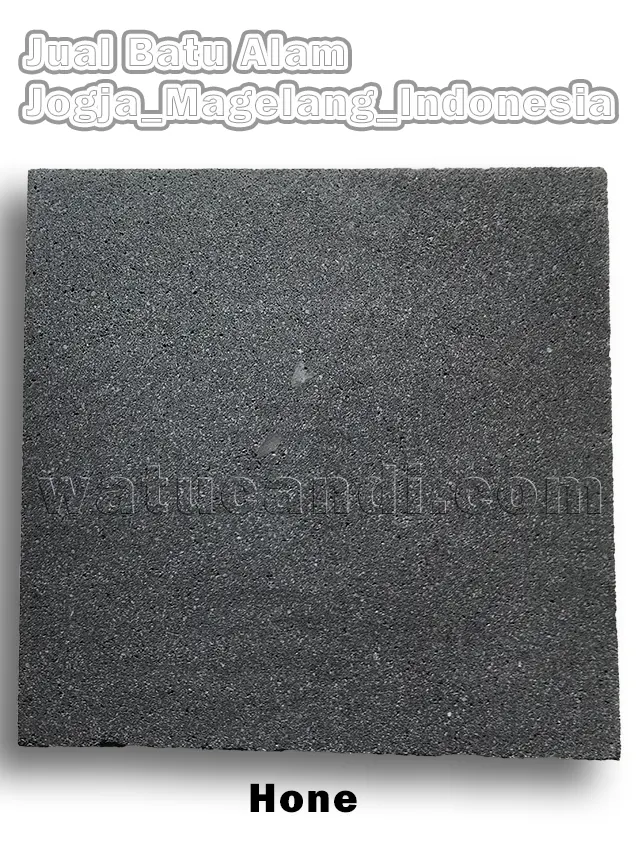
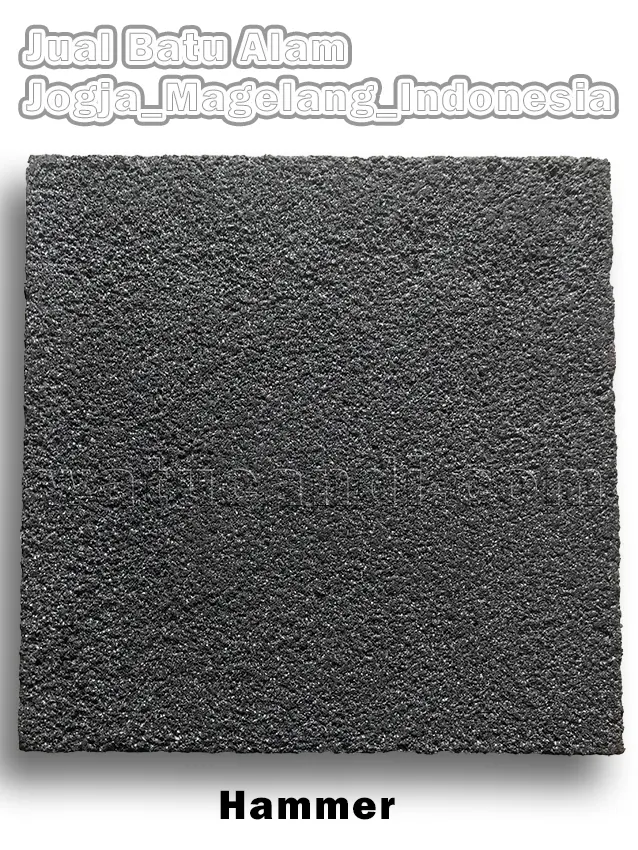
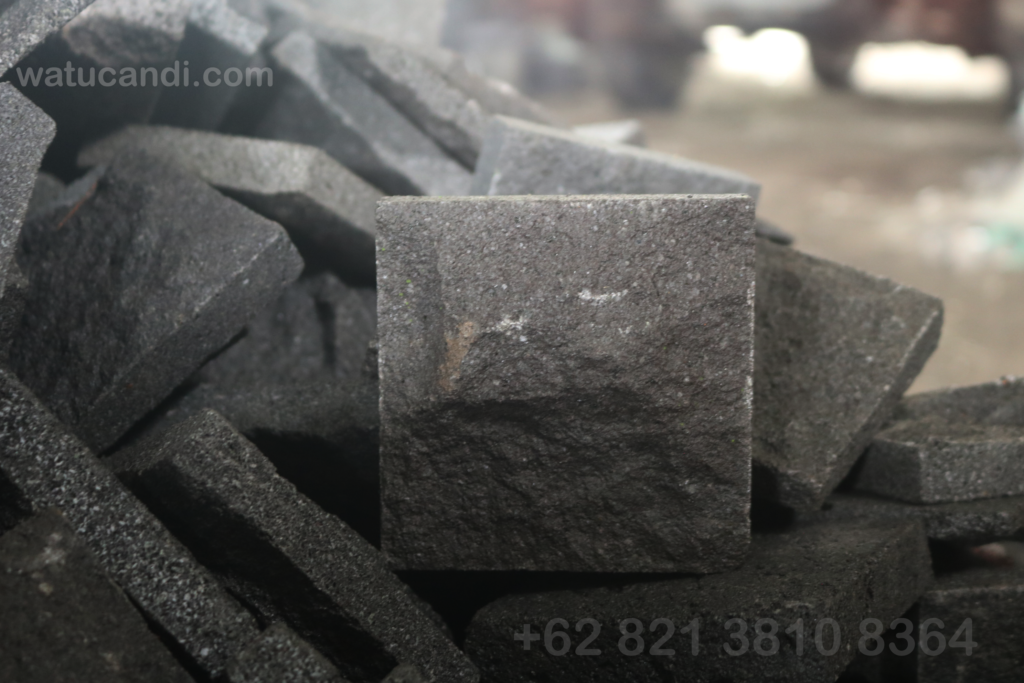
The defining feature of +62 Lava Rock Tiles is the “Split Face” or “Rock Face” finish. In the industry, this is sometimes referred to as Pedra Hitam Bruta (Black Rough Stone). This finish is characterized by a rough, uneven surface that contrasts sharply with the smooth, precise edges of the tile. This juxtaposition creates a visual tension that is both rustic and refined.
Unlike polished stone, which reflects light and can appear cold or sterile, split face stone absorbs light, creating deep shadows and highlights that emphasize its three-dimensional texture. This makes it an excellent choice for feature walls where you want to create a sense of depth and drama. The irregularities in the surface are not flaws; they are the hallmark of authenticity. They prove that the stone has been worked by human hands and has not been artificially manufactured.
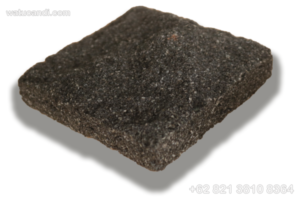
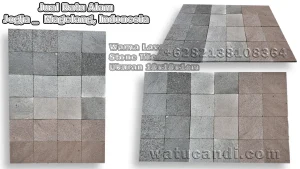
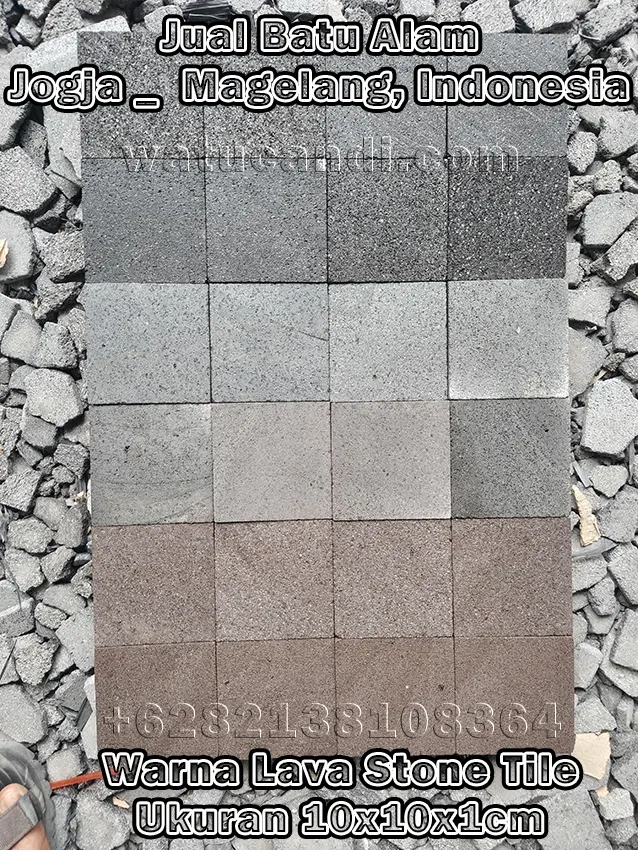
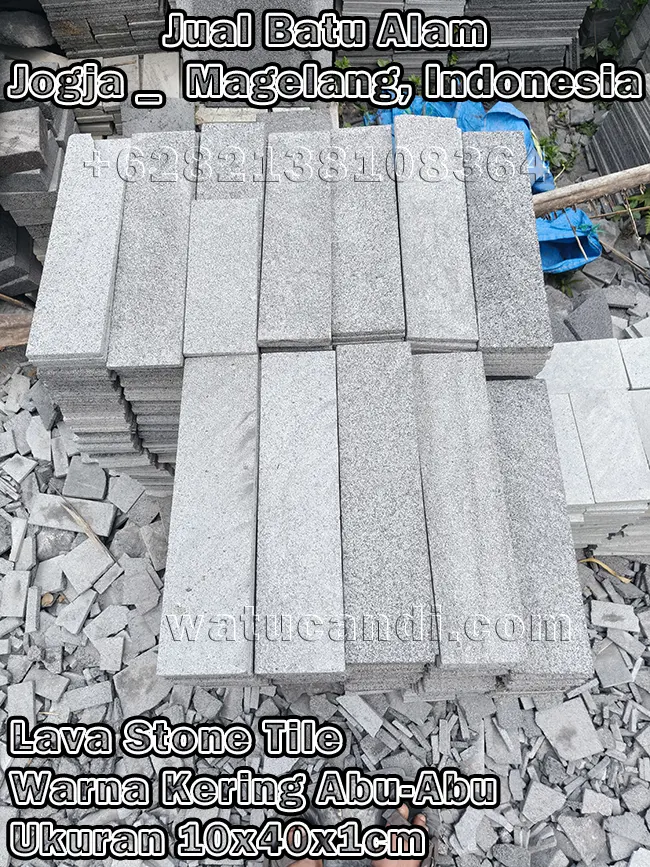
We offer a variety of sizes and thicknesses to suit different applications. Standard wall cladding tiles typically range from 10cm x 10cm to 30cm x 60cm, with thicknesses varying from 2cm to 5cm depending on the desired projection and structural requirements. For flooring applications, we recommend thicker slabs to withstand foot traffic and load-bearing stresses. Our Black Lava Stone Tiles are available in custom cuts upon request, allowing for bespoke designs that fit unique architectural visions.
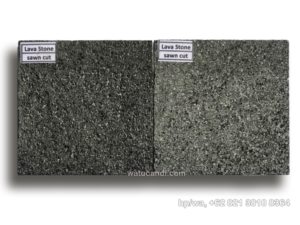
Another key characteristic is the color consistency. While natural stone always exhibits some variation, Merapi lava stone is renowned for its consistent deep black to charcoal grey hue. This makes it easier to match batches for large-scale projects compared to other natural stones like sandstone or limestone, which can vary significantly in color. However, we still embrace the subtle nuances that make each tile unique, viewing them as part of the stone’s natural charm.
4. The Artisan Manufacturing Process
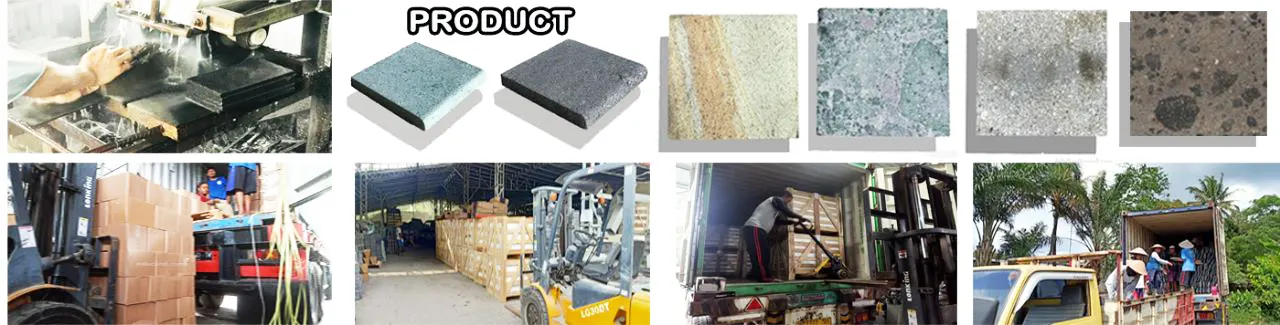
The transformation of raw volcanic rock into premium +62 Lava Rock Tiles is a journey that combines modern technology with traditional craftsmanship. It is a process that cannot be fully automated, requiring the skilled hands of artisans who have inherited their techniques from generations of stone workers in the Magelang and Yogyakarta regions.
Step 1: Quarrying and Selection
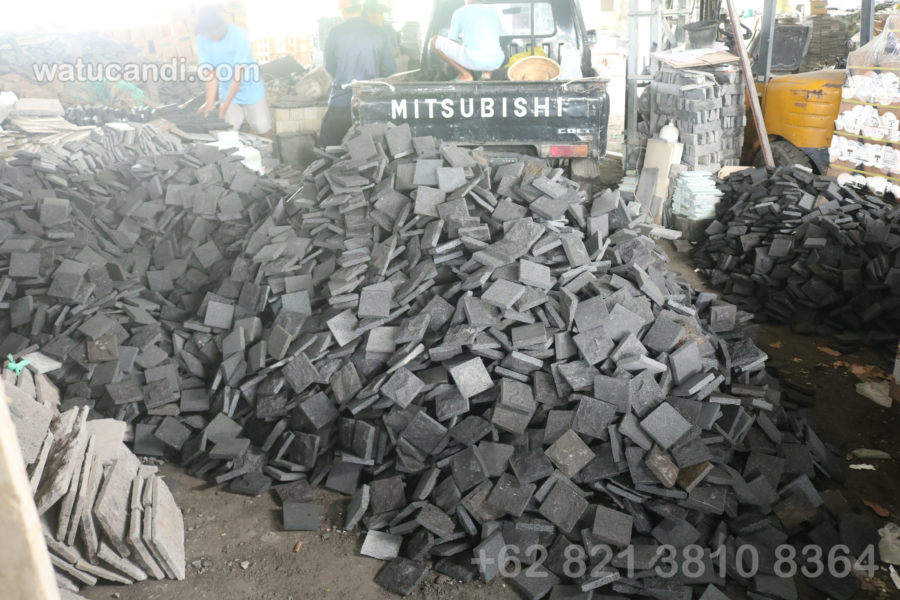
The process begins at the quarry, where large blocks of stone are extracted. Only the highest quality blocks are selected for processing. These blocks are inspected for cracks, impurities, and color consistency. The “skin” or outer crust of the block is often set aside, as it contains the most interesting textures for rock face tiles. This material is carefully stored and sorted, rather than discarded, ensuring zero waste in our production cycle.
Step 2: Primary Cutting
The selected blocks are transported to our workshop where they undergo primary cutting using large gang saws or wire saws. This step reduces the massive blocks into manageable slabs of specific thicknesses. Precision is key here to ensure that the final tiles will have uniform thickness, which is crucial for installation. The offcuts from this process are often repurposed for smaller mosaic tiles or aggregate.
Step 3: Sizing and Shaping
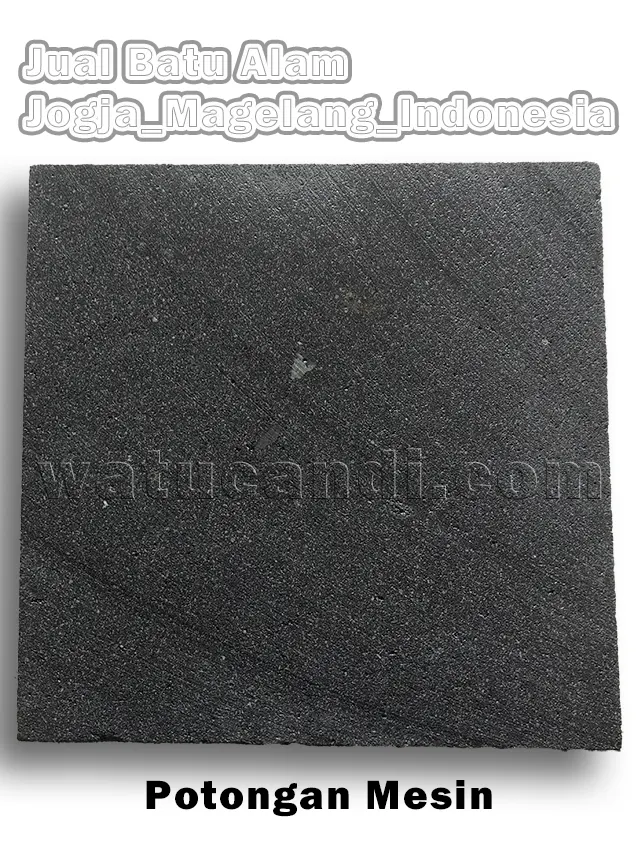
The slabs are then moved to smaller, more precise bridge saws where they are cut into the final dimensions required by the customer. This could be standard sizes like 20x20cm or custom sizes for specific projects. At this stage, the stone still has a relatively smooth, sawn surface. The magic happens in the next step.
Step 4: Hand Chiseling (The Rock Face Finish)
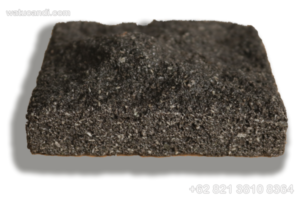
This is the most labor-intensive and critical step. Skilled craftsmen use specialized chisels and hammers to manually chip away at the surface of the tile. They work along the natural grain of the stone, creating a rough, uneven texture that reveals the stone’s inner structure. This process requires immense skill; too much force can break the tile, while too little will result in a flat, uninteresting surface. The goal is to create a “natural” look that appears as if the stone was broken by nature itself.
After chiseling, the edges of the tile are often leveled or “dressed” to ensure they are straight and square. This allows for neat grout lines during installation while maintaining the rough face. The contrast between the precise edge and the chaotic face is what gives the tile its architectural appeal. For those interested in other finishes, we also offer tumbled stone finishing which provides a softer, more aged look.

5. Technical Specifications & Durability
Beyond its aesthetic appeal, +62 Lava Rock Tiles is engineered by nature to perform under demanding conditions. Understanding the technical properties of the stone is essential for architects and engineers specifying it for projects.
- Compressive Strength: Merapi lava stone boasts a compressive strength typically exceeding 100 MPa (Megapascals), making it stronger than many types of concrete and brick. This allows it to bear significant loads, suitable for paving and heavy-traffic areas.
- Water Absorption: The stone has a moderate water absorption rate (typically 3-8%). This porosity is beneficial for outdoor applications as it allows the stone to “breathe” and prevents water from pooling on the surface, reducing slip hazards. However, for indoor wet areas, sealing is recommended.
- Frost Resistance: Due to its volcanic origin, the stone is highly resistant to freeze-thaw cycles. This makes it an excellent choice for outdoor cladding in colder climates where temperatures drop below freezing. The internal structure of the stone does not expand excessively when water freezes within its pores.
- Chemical Resistance: Basalt is generally resistant to acids and alkalis, making it suitable for kitchen backsplashes and industrial environments. However, prolonged exposure to strong chemicals should be avoided.
- Thermal Conductivity: As mentioned earlier, the stone has low thermal conductivity, acting as a natural insulator. This helps maintain stable indoor temperatures.
These technical properties make +62 Lava Rock Tiles a versatile material that can be used in a wide range of environments, from tropical resorts to alpine chalets. Its durability ensures that installations will last for decades, if not centuries, with minimal maintenance.
6. Architectural Applications & Design Versatility
The versatility of +62 Lava Rock Tiles allows it to be integrated into virtually any design style, from ultra-modern minimalism to traditional rustic. Here are some of the most popular applications:
Swimming Pools and Water Features
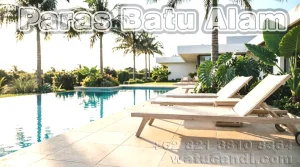
One of the most iconic uses of black lava stone is in swimming pool cladding. The dark color creates a stunning mirror effect, reflecting the sky and surroundings while making the water appear deeper and more inviting. The rough texture provides essential slip resistance for pool decks and coping. Furthermore, the stone’s natural filtration properties can help maintain water clarity in infinity pools and water walls. Explore our dedicated collection of swimming pool stone tiles for specific pool-grade options.
Exterior Wall Cladding
Using lava stone for exterior facades adds instant curb appeal and protection against the elements. The stone acts as a rainscreen, protecting the underlying structure from moisture while allowing ventilation. It is particularly effective in tropical architecture where airflow and heat reduction are priorities. The dark color absorbs heat during the day and releases it slowly at night, helping to regulate the building’s thermal mass. For inspiration, check out our exterior stone design gallery.
Interior Feature Walls
Inside the home, a wall clad in rock face lava stone becomes an immediate focal point. It works beautifully behind fireplaces, in entryways, or as an accent wall in living rooms. The texture adds warmth and acoustic dampening to the space, reducing echo in hard-surfaced rooms. Pairing it with warm wood tones and soft lighting creates a cozy, sanctuary-like atmosphere.
Landscaping and Hardscaping
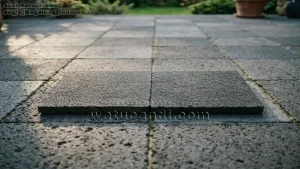
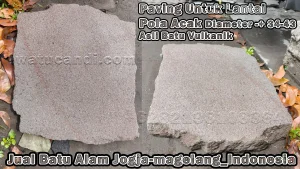
Beyond vertical surfaces, lava stone is excellent for horizontal applications. Garden pathways, patio pavers, and retaining walls all benefit from the stone’s durability and natural look. The irregular shapes of random ashlar patterns blend seamlessly with planting beds and natural landscapes. We also offer stepping stone options specifically designed for garden paths.
7. Comprehensive Installation Guide
Proper installation is crucial to realizing the full potential of +62 Lava Rock Tiles. While the stone is durable, incorrect installation can lead to issues like efflorescence, detachment, or cracking. Here is a general guide for professional installers:
- Surface Preparation: Ensure the substrate (wall or floor) is clean, dry, and structurally sound. For exterior walls, a waterproof membrane may be required behind the stone to prevent moisture ingress.
- Adhesive Selection: Use a high-quality, polymer-modified thin-set mortar suitable for natural stone. For heavy exterior cladding, mechanical anchors may be necessary in addition to adhesive. Avoid using white cement for dark stones unless specified, as it can cause staining.
- Dry Layout: Before applying adhesive, dry lay the tiles to plan the pattern and minimize cuts. Mix tiles from different boxes to ensure color and texture variation is evenly distributed.
- Grouting: Use a sanded grout for wider joints (typical for rock face tiles). The grout color should complement the stone; dark grey or black grout often works best with lava stone to create a seamless look. Seal the grout lines after curing to prevent staining.
- Sealing: While lava stone is dense, sealing is recommended for indoor applications or areas prone to staining (like kitchens). Use a penetrating sealer that enhances the natural color without creating a glossy film. Test the sealer on a sample piece first.
For complex installations or large-scale projects, we recommend consulting with our technical team or hiring experienced stone masons. Proper installation ensures the longevity and beauty of your investment.
8. Maintenance & Long-Term Care
One of the greatest advantages of natural lava stone is its low maintenance requirement. Unlike wood that needs varnishing or metal that needs painting, stone essentially maintains itself. However, basic care will keep it looking its best for generations.
Cleaning: Regular cleaning with water and a mild pH-neutral soap is usually sufficient. Avoid harsh acidic cleaners (like vinegar or muriatic acid) as they can etch the surface or damage the sealer. For outdoor pools, occasional pressure washing can remove algae or mineral deposits, but use a wide-angle tip to avoid damaging the stone surface.
Sealing: Reapply penetrating sealer every 2-3 years for indoor surfaces or high-traffic outdoor areas. This replenishes the protective barrier against stains and moisture. You can test if resealing is needed by sprinkling water on the stone; if it beads up, the seal is good; if it soaks in immediately, it’s time to reseal.
Repair: In the rare event of damage, individual tiles can be replaced. Because natural stone varies, it is advisable to keep a small surplus of tiles from the original batch for future repairs. Minor chips can sometimes be repaired with color-matched epoxy fillers.
9. Sustainability & Environmental Impact
In an era of climate consciousness, choosing sustainable building materials is more important than ever. +62 Lava Rock Tiles scores highly on sustainability metrics:
- Natural & Abundant: Volcanic stone is a naturally occurring material that does not require energy-intensive manufacturing processes like firing ceramics or smelting metals. The primary energy input is mechanical cutting and shaping.
- Low VOC: Unlike paints, carpets, and synthetic adhesives, natural stone emits no volatile organic compounds (VOCs), contributing to healthier indoor air quality.
- Durability: The long lifespan of stone means it does not need to be replaced frequently, reducing the demand for new materials and the waste associated with renovation.
- Recyclability: At the end of its life, stone can be crushed and used as aggregate for road base or landscaping, returning to the earth without toxicity.
- Local Sourcing: By sourcing from local quarries in Indonesia, we reduce the carbon footprint associated with transportation for domestic projects. For international exports, we optimize logistics to minimize emissions.
Choosing +62 Lava Rock Tiles is a choice for sustainable luxury. It aligns with green building certifications like LEED and Green Building Council Indonesia standards.
10. Global Market & Export Standards
+62 Lava Rock Tiles serves a global clientele, exporting premium volcanic stone to Europe, North America, Australia, and Asia. We understand that international markets have specific requirements regarding quality, packaging, and documentation.
Quality Control: Every shipment undergoes rigorous quality control. We check for dimensional tolerance, color consistency, and finish quality. Defective pieces are culled before packing to ensure our clients receive only the best.
Packaging: We offer various packaging options to suit different logistics needs:
- Wooden Crates: Strong, fumigated wooden crates for sea freight, providing maximum protection against impact and moisture.
- Pallets: Standard export pallets wrapped in shrink film and strapped for stability. Ideal for container loading.
- Carton Boxes: For smaller orders or retail distribution, we pack tiles in sturdy cardboard boxes with foam protection.
- Custom Labeling: We can customize labels with your brand name, project details, or handling instructions.
Documentation: We provide all necessary export documentation including Commercial Invoice, Packing List, Certificate of Origin, and Fumigation Certificate. Our team is experienced in navigating customs regulations to ensure smooth delivery to your destination.
11. Explore More Natural Stone Products
While +62 Lava Rock Tiles specializes in volcanic stone, our catalog extends to a wide array of Indonesian natural stones to complete your project. Whether you need contrasting textures, different colors, or functional stone furniture, we have the solution.
- Sandstone & Limestone: For warmer tones and softer textures, explore our Brown Sandstone (Batu Pasir Coklat) and Palimanan Paras Stone Tiles. These are excellent for creating contrast with black lava.
- Green Stone: Sukabumi stone is famous for its vibrant green color and anti-slip properties. Check out our Authentic Sukabumi Green Stone Tiles and Sukabumi Green Natural Stone.
- Andesite & Paving: For driveways and heavy-duty flooring, our Andesite Paving Stone and Candi Stone Paving offer unmatched durability.
- 3D & Textured Panels: Create dynamic walls with our 3D Mount Merapi Stone panels and Authentic Sirih Stack Stone.
- Stone Furniture: Complete the look with handcrafted stone furniture. Browse our Handmade Stone Tables & Chairs, Natural Stone Sinks, and Carved Motif Vanity Tables.
- Specialty Finishes: Discover unique textures like Black Lava Hammered Surface and Tumbled Stone Finishing.
- Mosaics & Inlays: Add intricate detail with Lava Stone Mosaics and Yogyakarta Green Stone Batik Tiles.
- Outdoor Living: Enhance your garden with Lava Stone Decking and Handmade Stone Tubs.
- International Guides: Read our comprehensive guides for global buyers: Ultimate Guide to Volcanic Elegance and Premium Volcanic Stone Table Tops.
- More Varieties: Breccia Natural Stone Tiles, Natural Stone Slabs, Sirih Stack Stone Slabs, Natural Stone Edging, Black Basalt Stone Sink, 100x100x10 Black Lava Stone, Borobudur Candi Stone, Natural Black Lava Stone Tiles, Hand-Chiseled Paving Stone, General Natural Stone Tiles, Hidden Crystals of Merapi Lava, Chiseled Stone Installation Patterns, Pelinggih Stone Materials, Candi Lahar Stone Flooring, 75x230mm Lava Stone Tiles, Merapi Lava Stone Products, Alkali Lava Stone, General Lava Stone, Candi Lava Natural Stone, Natural Andesite Stone, Local vs Precision Green Stone Tiles, Authentic Hand-Chiseled Stone Flooring, Black Lava Gravel & Volcanic Stone Guide, Natural Limestone & Travertine Guide, Sukabumi Green Stone Pedra Hijau, Random Candi Lava Stone Skin Wall Cladding, Indonesian Limestone Tiles for Wall & Floor, Lava Stone Paving Slabs, Best Volcanic Stone Paving from Merapi/Yogyakarta/Magelang, Green Stone Split Face Tiles.
Tags: +62 Lava Rock Tiles, Natural Stone Indonesia, Volcanic Stone Cladding, Black Lava Stone, Rock Face Tiles, Split Face Stone, Batu Alam Candi, Mount Merapi Stone, Swimming Pool Stone, Exterior Wall Cladding, Indonesian Basalt, Natural Stone Supplier, Stone Masonry, Sustainable Building Materials, Luxury Interior Design, Outdoor Stone Paving, Stone Furniture, Handcrafted Stone, Volcanic Rock Decor, Batu Lava Hitam, Stone Tile Manufacturer, Export Quality Stone, Architectural Stone, Rustic Stone Walls, Modern Stone Design,