“Tired of flat, monotonous walls? Discover how Raised and Recessed Natural Stone Cladding transforms ordinary walls into living 3D relief art! This comprehensive guide reveals the secrets of precision installation techniques, the combination of 1cm and 3cm thicknesses that creates dramatic shadow play, and anti-moss natural stone maintenance tips. Far more than just cladding, this is a timeless aesthetic investment that skyrockets your property value. Read before you renovate!”
In the world of modern and classical architecture, the search for materials that can give a building a soul never ends. One of the most captivating innovations in wall cladding art is Raised and Recessed Natural Stone Cladding. This technique is not merely about attaching stone to a wall; it is an art of arranging dimensions that creates a dynamic interplay of light and shadow. Selling three-dimensional Raised and Recessed Natural Stone Tiles has now become a top choice for decorative wall ornaments, terrace wall cladding, garden features, and fences for those who desire a home with strong character.
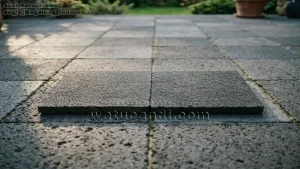
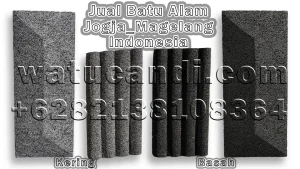
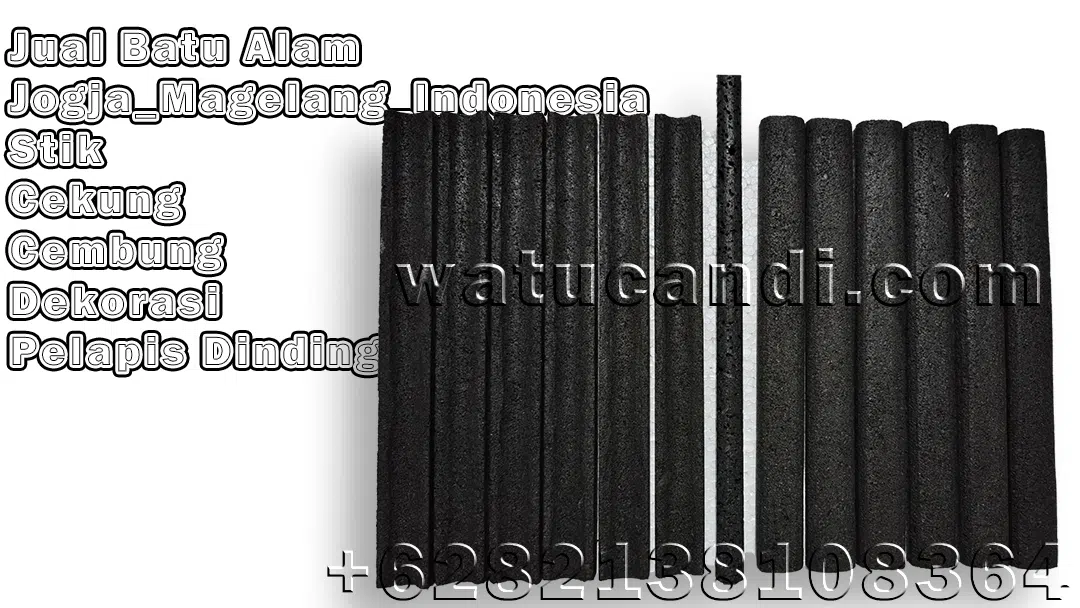
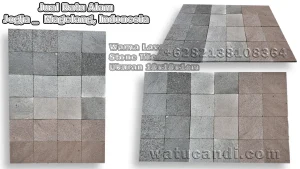
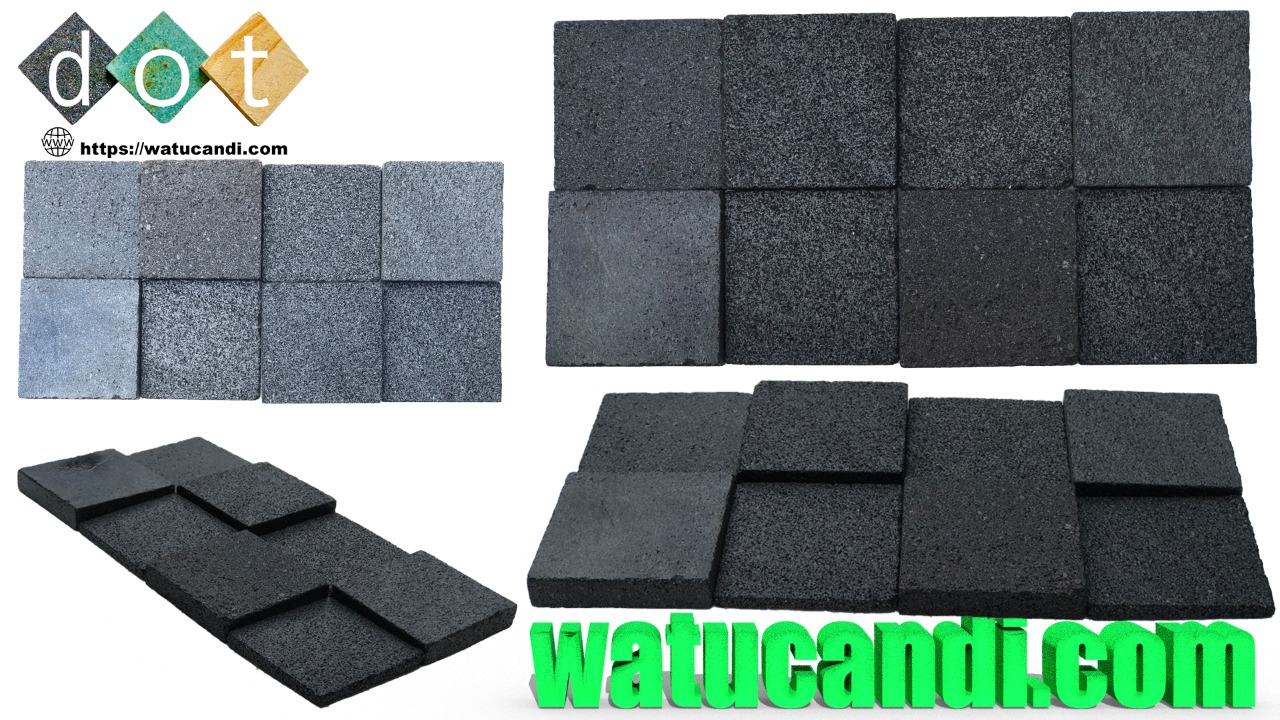
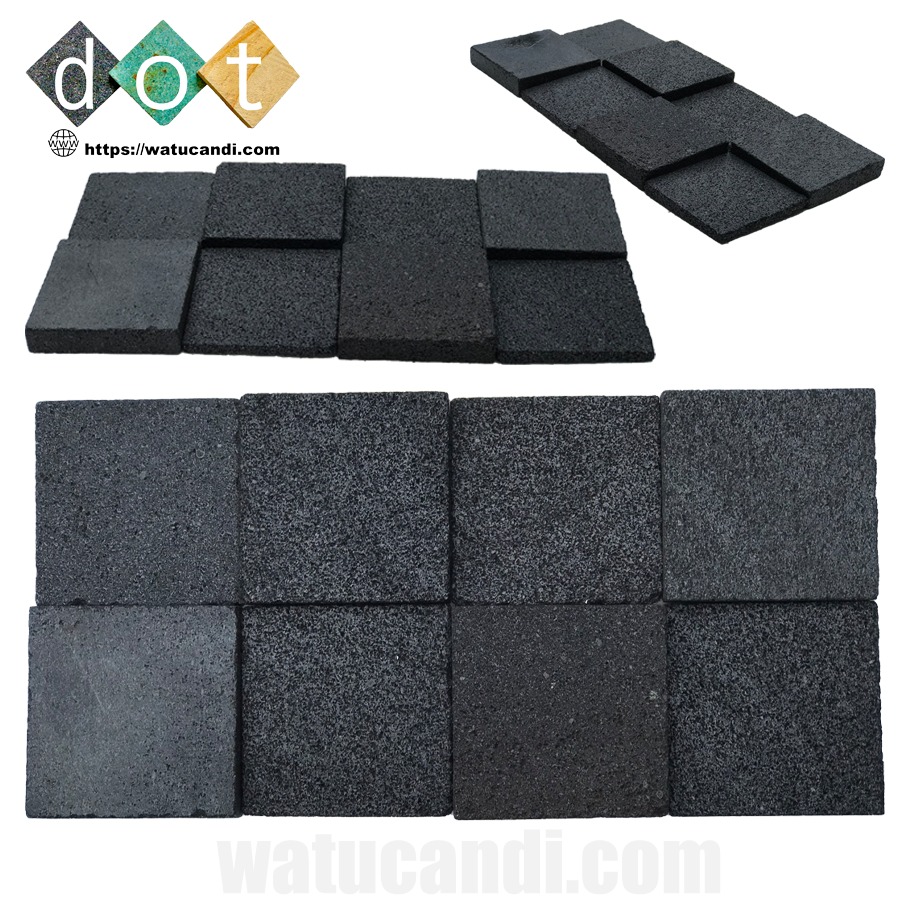
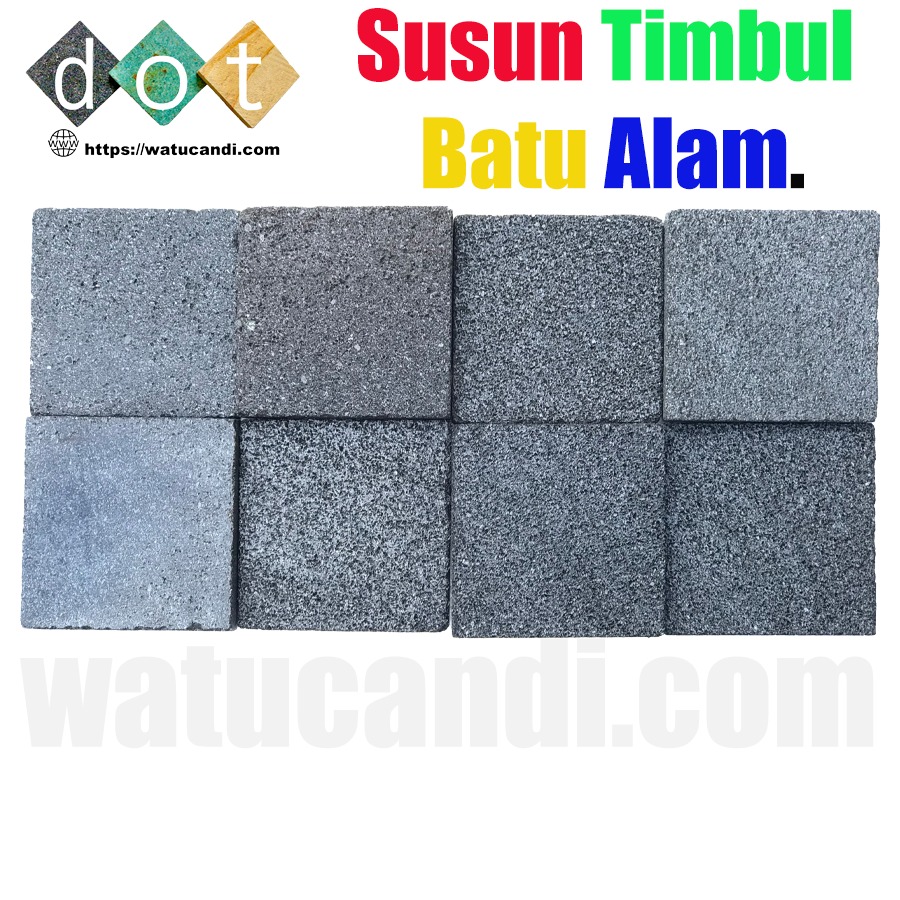
Initial visualization of this product is essential to understand the depth of texture offered. Observe how sunlight interaction creates dramatic contrast on this uneven stone surface.
Natural stone is the best design material idea to beautify a building, functioning as a timeless wall cladding finishing material. Unlike paint or wallpaper which tend to be flat and static, raised and recessed natural stone offers a visual experience that changes with the movement of the sun and the observer’s angle. This material can be applied to outdoor walls (exterior) exposed to extreme weather, and is also stunning as indoor wall cladding (interior) to create a dramatic focal point.
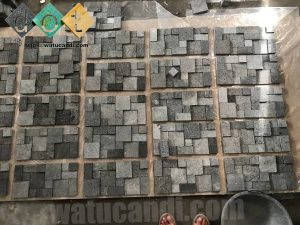
The key to the beauty of this technique lies in precision and variation. It uses standard 10×10 cm square sizes with two different thickness variations, namely 1 cm and 3 cm, combined randomly yet measurably. This difference in depth produces the iconic raised and recessed effect. This combination results in a beautiful and elegant stone tile installation, producing a gorgeous collaboration of natural stone colors due to different light reflections on protruding surfaces and those recessed inward.
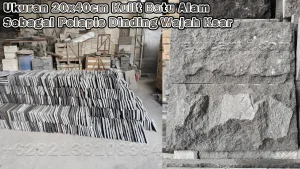
Purchase flexibility is also an added value for contractors and homeowners alike. Natural stone purchases can be made separately or in bulk for those who want to create custom patterns, or for ease and speed of installation, purchases can be made in pre-assembled form. This pre-assembled method uses special adhesive glue to bond stones together with a standard mesh size resulting in 20×40 cm panels, making installation at the project site much more efficient and neat.
It is important to note that due to its handcrafted nature and dependence on natural raw material availability, you are advised to confirm stock availability first. You can also place orders with work estimates adjusted to your project volume needs. This ensures that every piece of stone you receive has consistent quality and character.
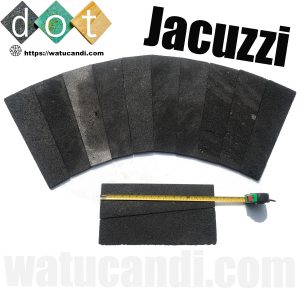
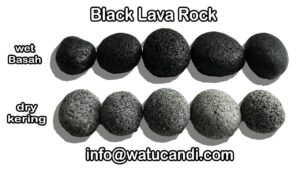
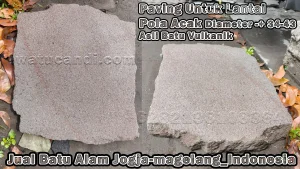
Product Photo Gallery for Raised and Recessed Natural Stone Cladding: The following is comprehensive visual documentation showcasing various angles, lighting conditions, and real-world applications of this material for your design reference.


Philosophy and Aesthetic Advantages of 3D Stone Arrangement
Why is the raised and recessed technique so popular? The answer lies in this material’s ability to manipulate spatial perception. In architecture, walls are often considered rigid boundaries. However, with raised and recessed natural stone application, walls transform into art canvases. The resulting three-dimensional effect provides an illusion of depth, making rooms feel more alive and less monotonous. For those exploring various volcanic materials for similar projects, understanding the characteristics of black Merapi lava candi stone is crucial as this material often serves as the primary base for this arrangement technique thanks to its unique pores and exotic color.
Another advantage of this method is its ability to hide imperfections in the base wall. Due to its high and low textured surface, small waves or hairline cracks in the original plaster will not be visible. This makes raised and recessed stone arrangement a smart yet aesthetic renovation solution. Additionally, this rough and dimensional texture also functions as natural acoustic dampening, reducing echo in large spaces such as halls, hotel lobbies, or open-concept family rooms.
In terms of property investment, using genuine natural stone always increases building resale value. Unlike factory-made ceramics whose prices tend to decline or stagnate, natural stone possesses rarity and unique motifs that cannot be duplicated. If you are interested in comparing this material with other cladding options, you can learn more about black lava candi stone cladding which offers similar nuances but with different installation patterns, providing valuable comparative insight before making design decisions.
DIY Raised and Recessed Installation: Art and Technique
Raised and Recessed Natural Stone is one type of natural stone installation that produces attractive and aesthetic visual effects on walls or applied surfaces. Although it looks complicated, this technique can actually be learned as long as you understand the basic principles. This installation technique creates different niche effects on stones embedded in the wall, requiring high levels of patience and precision.
Correct Process for Installing Raised and Recessed Natural Stone
The success of 3D natural stone installation depends not only on stone quality but also on installer expertise. Here is an in-depth guide regarding critical steps in the installation process that guarantee long-term durability and beauty:
- Thorough Surface Preparation: The wall surface or area to be clad with natural stone must be completely clean, flat, and dry before installation begins. Remove dust, oil, peeling old paint, or moss. If the wall is too smooth (for example, very fine cement rendering), it is recommended to create a scratch coat for maximum adhesive or mortar bonding. Wall moisture must also be controlled; wet walls will cause efflorescence (white salt crystallization) later which can damage stone aesthetics.
- Pattern and Layout Design Determination: Determine the desired pattern and design for natural stone installation. Usually, natural stones are arranged randomly or according to specific grid patterns to create attractive visual effects. For raised and recessed techniques, layout planning is crucial. You must determine the ratio between thick stones (2cm) and thin stones (1cm). Common aesthetic ratios are 60:40 or 50:50. Avoid clustering thick stones in one spot as it will look heavy and unbalanced. Perform a dry layout (arrange without glue) on the floor first to check color harmony.
- Stone Arrangement Technique: Natural stones are arranged on the surface with specific spacing between stones (grout lines). Some stones are placed more prominently (raised) from the wall surface, while others are embedded deeper (recessed). Ensure transitions between raised and recessed levels occur naturally, not too sharply unless designing strict geometric patterns. Also pay attention to color harmony; natural stone has shade variations, ensure color gradation is evenly distributed so there are no blocks of color that are too dark or too bright in one area.
- Strong Stone Adhesion System: After natural stones are arranged, they are attached to the wall surface using appropriate adhesive (stone adhesive or special instant cement for natural stone). Do not use regular cement as its bonding power is insufficient to hold stones of different thicknesses. Apply glue using the buttering method (spread on stone back) and combing (notched trowel on wall) to ensure full contact without air cavities. Ensure adhesion is done strongly and neatly so stones stick properly to the wall, especially for raised stones which have greater gravitational torque.
- Grout Finishing and Final Cleaning: After installation is complete and glue has dried perfectly (usually 24-48 hours), ensure gaps between stones are filled with special flexible and waterproof grout for a neater appearance and to prevent water entry into gaps behind stones. Choose grout color matching the stone for a seamless look, or contrasting if you want to highlight the arrangement pattern. Clean remaining adhesive and grout from stone surfaces before they fully dry using a damp cloth or soft brush. Avoid using harsh acids when cleaning as they can change lava/candi stone color to faded or yellowish.
The Raised and Recessed Natural Stone effect creates different appearances from various viewing angles, providing interesting dimensions and textures to walls or applied areas. Shadow play created during morning, noon, and evening makes these walls seem to breathe and change character.
This installation is often used in exterior or interior wall designs aiming to create unique and attractive visual effects. For paving or flooring projects requiring similar texture concepts but safe for foot traffic, references regarding Merapi lava candi stone paving can serve as complementary alternatives to harmonize wall and floor designs within a single volcanic material theme.
Suitable locations for Raised and Recessed Stone installation include house walls, building facades, gardens, terraces, and other spaces wanting distinctive natural stone aesthetic touches. Integration between vertical walls and horizontal elements creates solid design cohesion.
Best Application Areas for Premium Raised and Recessed Wall Cladding
Raised and Recessed Natural Stone can be applied as wall cladding in various interior and exterior areas to create attractive and aesthetic appearances. Its application flexibility makes it a favorite among landscape architects and interior designers.
Recommended Best Application Areas
- Main Building Facades: Raised and Recessed Natural Stone is highly suitable as wall cladding for building facades, especially on front sections or main pillars. This installation provides striking visual effects, significantly enhancing building curb appeal. To complement lower facade areas or surrounding retaining walls, using Merapi mountain talud stone material can create visual continuity that is sturdy and natural from upper walls to lower foundations.
- Interior Living Space Walls: Raised and Recessed Natural Stone can be applied to interior walls of various rooms such as living rooms, family rooms, bedrooms, or dining rooms, particularly as TV backdrops or bed headboards. Its use creates unique and artistic atmospheres inside rooms, providing warm and grounded impressions unmatched by synthetic materials.
- Bathroom Dry Area Walls: Raised and Recessed Natural Stone is also suitable for bathroom wall cladding, but recommended for dry areas such as vanity walls or changing areas. Its use creates exotic and natural appearances in resort-style bathrooms. Avoid installation in direct shower areas continuously exposed to soap and shampoo as chemical residues can get trapped in 3D texture crevices that are difficult to clean.
- Swimming Pool and Gazebo Walls: Raised and Recessed Natural Stone can be applied to walls around swimming pools or garden gazebo walls, creating attractive and aesthetic appearances in recreational areas. Combinations with water elements are very harmonious. If planning these wet areas, consider reading guides about natural stone swimming pool gutter covers to keep pool drainage systems functional yet aesthetically integrated with surrounding raised stone walls.
- Terrace, Veranda, and Carport Walls: Raised and Recessed Natural Stone can be applied to outdoor terrace or veranda walls as well as carports. Its use provides natural and attractive appearances for outdoor areas while protecting structural walls from rain splashes and direct sunlight. As matching terrace floor accents, irregular garden stepping stones can be arranged in front of these arranged walls to strengthen tropical garden nuances.
- Fence and Boundary Walls: Raised and Recessed Natural Stone can be applied as cladding on fence walls, creating modern and artistic appearances on property boundary walls. Natural stone fences provide privacy plus security with high aesthetics. For neat and non-sharp fence edge finishing details, using natural stone edge profiles is highly recommended as frames bordering raised and recessed fields.
- Commercial and Hospitality Interior Walls: Raised and Recessed Natural Stone is also suitable for commercial building interior walls such as restaurants, hotels, cafes, shopping centers, and office buildings. Its use creates unique and memorable atmospheres for visitors, becoming free instagrammable photo spots promoting your business. More commercial design inspiration can be found in the restaurant interior design collection which extensively utilizes natural stone textures to build intimate and classy dining atmospheres.
Installing Raised and Recessed Natural Stone on walls creates interesting dimensions and textures, providing different appearances from various viewing angles. Installation location choices depend on desired design concepts and functional wall requirements.
Ensure installation is performed by expert workers or masons experienced specifically in natural stone to guarantee maximum results matching design expectations. Errors in glue mixing or leveling can be fatal such as stones detaching later.
Natural Stone Material Variations for Raised and Recessed Techniques
Although lava stone (andesite/lava stone) is the most popular material for this technique due to its hardness and neutral color, many other stone types can actually be applied with raised and recessed methods. Understanding each stone’s characteristics helps you choose the right material according to location and budget.
Black Lava Stone
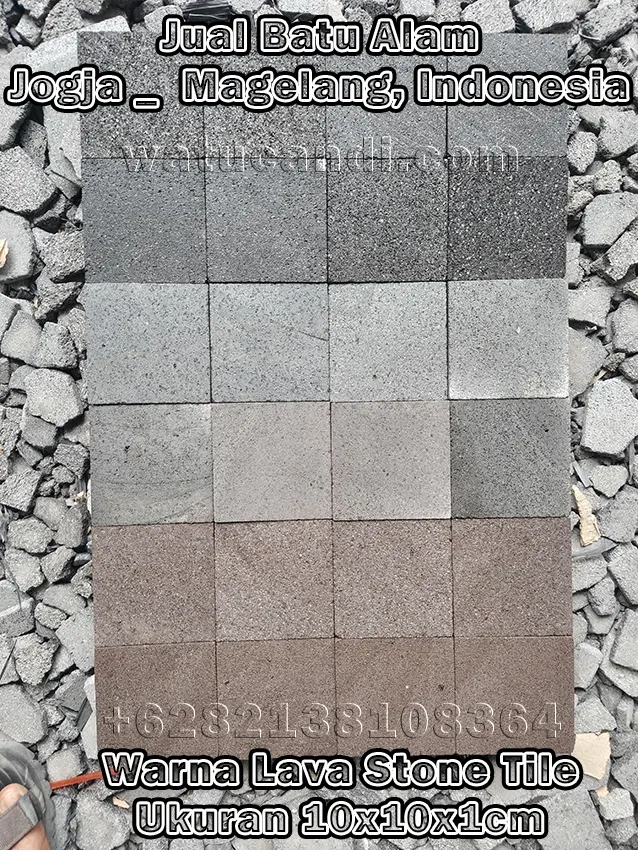
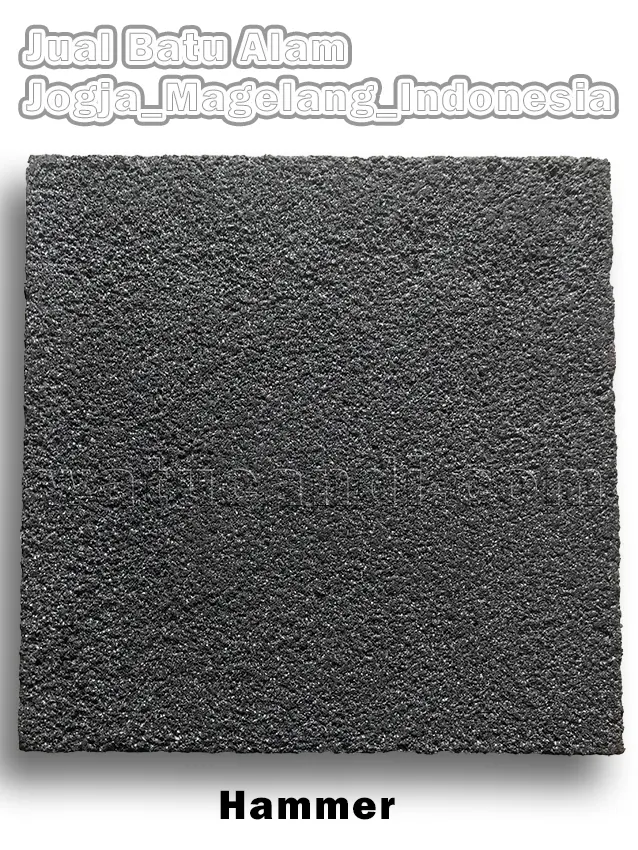
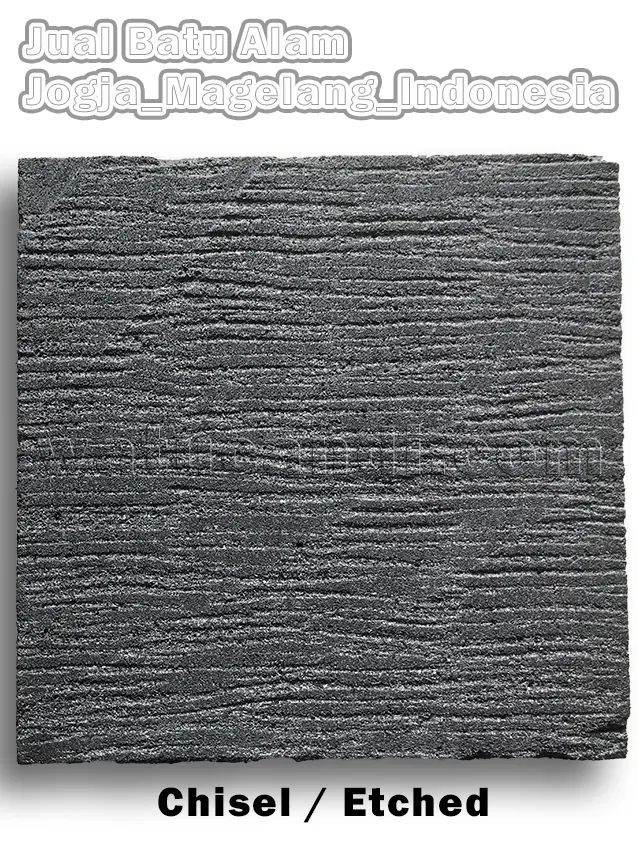
Black lava stone is the prima donna for 3D arrangement techniques. Its jet black or dark gray color creates the most dramatic shadow contrasts. Its porous yet hard texture makes it weather-resistant. Finishing variations like bush hammered or split face on lava stone can add texture complexity. For in-depth specifications, you must read the 10×10 black lava stone tile guide explaining modular size details perfect for raised and recessed patterns. Additionally, articles about black lava stone tile walls provide relevant wall cladding application inspiration.
Palimanan and White Paras Stone
If you desire brighter, warmer, and classic nuances, Palimanan or White Paras stone is the right choice. Cream to yellowish-white colors provide clean and elegant impressions. Shadows formed on lighter colored stones appear softer compared to black stones. Complete references are available on the Palimanan paras stone tile page. For more premium and pure white variants, super white palimo limestone offers distinct luxury, although note that limestone is softer than lava so handling during cutting and installation must be more careful to prevent breakage.
Sukabumi Green Stone
For wet areas or tropical forest concepts, Sukabumi green stone is the champion. Its natural green color is very soothing. Although generally used for pool floors, green stone is also beautiful as arranged walls in indoor or outdoor garden areas. Learn more about Sukabumi green natural stone tiles and variants like other green natural stones. Split face finish variants on green stone are also available and very suitable for raised and recessed combinations, details available at green stone split face tiles.
Brecci and Batik Stone
Want something truly unique with high artistic value? Brecci stone with ancient fossil motifs or Yogyakarta Batik stone with intricate natural fiber patterns can be exclusive options. Each piece is irreplaceable natural art. Explore the beauty of brecci natural stone tiles and Yogyakarta batik green stone tiles for out-of-the-box combination ideas. Remember, because these stones are rare and expensive, their use as arranged walls should be limited to small accent wall areas to avoid overwhelming and remain cost-effective.
Design Integration: Harmonizing Walls with Other Elements
Raised and recessed stone walls do not stand alone. They must dialogue with surrounding architectural elements. Material harmony is the key to successful design.
Combinations with Floors and Paving
If walls use arranged lava stone, floors in front should use matching or complementary materials. Using lava stone floors or garden stone floors unifies the material palette. For large outdoor areas, lava stone paving slabs provide grand impressions. For more rustic and irregular nuances, irregular natural stone paving pairs beautifully with 3D walls that also play with irregularity.
For larger landscaping projects, consider Merapi outdoor stone flooring known for durability. Or for classic temple touches, temple stone paving floors and candi stone paving examples below can serve as valid visual references.
Decorative Elements and Natural Stone Furniture
3D walls are perfect backgrounds for natural stone furniture. A black lava stone top table placed in front of arranged walls creates stunning texture dialogues. Sets of handmade stone tables and chairs also add artisanal value to spaces.
In garden areas, presence of Merapi lava temple stone balls or stone pedestals at the base of arranged walls strengthens elegant traditional Javanese impressions. For functional elements, original Merapi stone sinks or black basalt stone sinks mounted on arranged walls (with extra waterproofing) become extraordinary statement pieces. Even soap dispensers can match themes through natural stone liquid soap dispensers.
Long-Term Care and Maintenance Guide
One of the biggest myths about natural stone is that it is difficult to maintain. In fact, with correct knowledge, caring for raised and recessed natural stone is actually very simple. The key is prevention and proper routine cleaning methods.
Coating and Initial Protection
After installation is complete and grout has fully dried (minimum 7-14 days), coating application (natural stone varnish/sealer) is mandatory. Coating functions to seal stone pores, preventing absorption of water, dirt, and moss. For raised and recessed walls, use spray methods or small brushes to reach recessed crevices. Choose matte or doff coating types to maintain natural stone impressions, or glossy for more dramatic wet look effects. Re-coating is recommended every 1-2 years depending on weather exposure.
Routine Cleaning and Deep Cleaning
Dust accumulating in recessed crevices is the main enemy of 3D aesthetics. Perform weekly dusting using dry paint brushes or vacuum cleaners with soft brush nozzles. For monthly cleaning, use clean water and soft nylon brushes. Avoid high-pressure washers (jet washers) with excessive pressure as they can erode grout and coating layers.
If stubborn stains or moss appear, use pH-neutral special natural stone cleaners. Never use regular household floor cleaners, vinegar, or HCL as they damage stone mineral structures. For efflorescence (white salt) stains, use specialized efflorescence removers. More technical information regarding lava stone maintenance can be read in the complete black Merapi lava candi stone guide.
Technical Specifications and Structural Considerations
Before deciding to install raised and recessed stone, structural technical aspects must not be ignored. Natural stone has significant weight. Andesite/lava stone density ranges from 2,600 to 2,800 kg/m³. With average thickness of 1.5 cm (combination of 1 and 2 cm) plus glue and grout weight, additional load on walls can reach 40-50 kg/m².
Ensure supporting walls are red brick, quality lightweight concrete, or healthy concrete. Thin gypsum or GRC partition walls MUST NOT be directly clad with arranged natural stone without reinforcing frames (backing systems). If forced to install on lightweight partitions, use mechanical anchoring systems or wire mesh bolted to main structures behind partitions to resist shear loads.
For applications exceeding 3 meters height, consult structural engineers. Gravity and earthquake vibrations become risk factors. Resin-based epoxy glue may be required instead of instant cement for overhead or high-rise areas. Details regarding large slab specifications relevant to load calculations can be seen at natural stone slabs and black natural stone slabs.
Current Design Trends and Global Inspiration
Raised and recessed natural stone trends continue evolving. Currently, global trends lean toward Biophilic Design and Wabi-Sabi where natural imperfections and connections with nature are valued. 3D natural stone walls are perfect manifestations of this trend.
Mixed-media material combinations are also rising. For example, inserting brass metal strips or ulin wood between raised and recessed stone arrangements to provide modern industrial accents. Or integrating warm white LED strips behind certain stone protrusions to create dramatic lighting effects at night. More luxury modern home design inspiration can be accessed through modern luxury home design and unique beautiful product models.
For hospitality projects, integrating natural stone with branding elements is increasingly popular. Hotel or resort lobby walls using raised and recessed techniques are now often customized by inserting brand-specific logos or geometric patterns, making walls not just decoration but identity media. See application examples in hospitality design and commercial design.
Comparison with Other Cladding Techniques
To make your decision more confident, here is an objective comparison between Raised and Recessed techniques and other popular natural stone cladding techniques:
| Parameter | Raised and Recessed | Stacked (Susun Sirih) | Split Face / Rock Face | Random Mosaic |
|---|---|---|---|---|
| Visual Dimension | Very Strong 3D | 2D Linear / Lines | 3D Rough / Rustic | 2D Random / Puzzle |
| Installation Difficulty | High (Requires Special Skill) | Medium | Medium | High (Requires Artistry) |
| Glue Consumption | High (Due to Different Thickness) | Standard | High (Uneven Surface) | Medium |
| Maintenance | Needs Extra (Dust Crevices) | Easy | Medium | Easy |
| Material + Labor Cost | Premium | Medium | Medium to Premium | Premium |
| Suitable For | Accent Wall, Facade, Feature | Pillars, Trim, Minimalist | Exterior, Garden, Industrial | Interior, Backdrop, Artistic |
For references on stacked techniques as closest comparisons, please read genuine stacked slate. Meanwhile for mosaic techniques that are also artistic, lava candi stone mosaic offers alternatives with smaller module scales. And for those preferring natural roughness, rough split face temple stone and lava rock face cladding are worthy options to consider.
Sustainability and Eco-Friendly Material Aspects
In the green architecture era, material selection is not just about aesthetics but also environmental impact. Natural stone, especially responsibly quarried stone like Merapi, is sustainable material. It comes from earth, contains no VOCs (Volatile Organic Compounds), releases no toxins, and can be recycled or returned to nature without pollution.
Merapi lava stone itself is a product of volcanic activity that continuously renews itself. Controlled mining actually helps mitigate cold lahar disasters. By choosing local Indonesian natural stone, you also reduce transportation carbon footprints compared to importing marble from Europe or granite from China. Supporting local artisans also preserves stonemasonry cultural heritage existing since Borobudur times. This history and heritage can be traced through articles on Borobudur temple stone and carved temple lava stone.
Besides stone, other natural supporting materials like pumice stone and black lava rock pebbles are also eco-friendly materials combinable in landscaping around your arranged stone walls to create sustainable garden ecosystems.
Tips for Buying Raised and Recessed Natural Stone Without Loss
Buying natural stone requires extra thoroughness due to its non-uniform nature unlike factory ceramics. Here are practical tips to avoid wrong purchases:
- Request Physical Samples: Do not rely solely on catalog photos. Photos are often edited or taken with special lighting. Request physical samples sized 10×10 in both 1cm and 2cm thicknesses to check texture, color, and density.
- Check Size Tolerances: Because cut manually or semi-mechanically, size tolerances of ±1-2mm are normal. However if exceeding that, installation becomes difficult and grout lines look messy. Ask supplier QC standards.
- Calculate Reserve (Waste Factor): Always order minimum 10-15% more than net area. This anticipates broken stones during shipping, cutting, or production defects. Buying additions later risks different batches (different colors).
- Ask Quarry Origin: Merapi, Tulungagung, or Cirebon lava stones have different characters. Ensure suppliers are transparent about stone sources. Merapi stone is generally darker with fine pores, suitable for raised and recessed. Read Bali Indonesia black lava stone to understand regional variations.
- Clarify Pricing: Ensure quoted prices are per m² or per piece, and whether including shipping, wooden packing, or not. Natural stone is heavy, shipping can be significant.
For price references and related product specifications you might need as complements, here are useful links: black lava stone 100x100x10, 5 black lava stone surfaces, black lava general info, and lava stone overview. Also check lava candi natural stone and black candi lava stone.
Video Detail of Raised and Recessed Natural Stone Product
The video above provides real visual overview of texture, depth, and beauty of raised and recessed natural stone that cannot be fully captured by still photos. Observe how light interacts with stone surfaces and how installers handle material thickness differences.
Conclusion: Timeless Aesthetic Investment
Raised and Recessed Natural Stone is more than just wall covering material; it is a style statement, appreciation for craftsmanship, and long-term aesthetic investment. With mature planning, right material selection, professional installation, and consistent maintenance, these 3D walls will continue radiating charm for decades, even becoming more characterized with natural aging.
Whether for residential renovations, resort villa construction, or large-scale commercial projects, this technique offers unmatched design flexibility. From minimalist modern nuances with black lava stone to warm classic with Palimanan, creative possibilities are limitless.
Do not hesitate to consult trusted suppliers and experienced applicator teams. Discuss your design vision, field conditions, and available budget. With good collaboration, your dream living walls will soon materialize. Happy creating with Indonesian natural stone!
As closing and additional reference to enrich your natural stone material knowledge, here is a comprehensive link collection covering various natural stone aspects potentially relevant to your current or future projects:
Learn about ultimate Indonesian lava stone tile guide, natural travertine limestone guide, and swimming pool green stone tile guide. For quality comparisons, read local vs precision green stone tiles and authentic manually chiseled stone floor.
Explore finishing and pattern variants: surface types comb, surface types 3×1, line types 2×1, line types rolling, line types broken regularly, straight line type, stone types gc, and stone type gc broken.
Specific application references: lava stone exterior design, floor paving stone chisels, swimming pool coping stone tiles, swimming pool stone tiles lava zeolite limestone, lava stone tiles for swimming pool, lava rock stepping stone pavers, garden wall foundation stone borders, Indonesian green stone tile crafts, and stone fence and foundation walls.
Limestone and sandstone materials: sandstone limestone from Indonesia, Indonesian limestone tiles, limestone tile bushhammer, hard cream limestone, Jogja limestone, brown Java tiger stone black paras sandstone, brown sandstone, brown spotted paras stone, white palimo Palimanan, brown Java sandstone paras Kerobokan, and large natural limestone slabs.
Natural stone furniture and sanitary products: natural stone furniture, rough surface marble stone sink, handmade stone tub, monolithic Merapi stone furniture sink, and Merapi tombstones kijing plisir.
Special finishing and texture techniques: tumbled natural stone finish, 3D stone slabs, black lava bush hammer surface, lava stone rough face, rough face stone floor, rough natural stone floor, slate stacked betel leaf slab, flat random riverstone, semi-carved lava stone, hand-carved temple stone paving, natural stone edge wall, Merapi lava temple stone floor, lava paving stepping stones, solid split stone 100x200mm, andesite natural stone slabs, chiseled lava stone surface 300x300mm, chiseled natural stone installation patterns, chiseled temple natural stone, chiseled natural stone paving, chisel lava natural stone, manual chiseled candi stone paving 30×30, split face candi lava stone specs, Merapi black sand split face, stacked wall cladding comparison, black white wall cladding combination, pool coping stone tile materials, garden natural stone stepping stones, natural stone tactile paving sidewalks, Sukabumi green stone 20×40, lava alkali sawncut vs bushhammer, lava stone 75x230mm, lava stone products, Merapi lava stone decking parquet, temple lava stone floor, hidden crystals of Merapi lava, black lava natural stone tile, black lava natural stonetile, pelinggih stone materials, random candi skin lava cladding, green Sukabumi natural stone, wavy carved natural stone tiles, natural andesite stone, enterprise design, industrial design, latest styles, decorate comfort design, natural stone tiles, premium natural stone flooring collection Watucandi, Merapi lava stone paving Yogyakarta Magelang, and andesite stone paving Indonesia.
Indonesian Natural Stone, Raised and Recessed Natural Stone, 3D Lava Stone Wall, Three Dimensional Wall Cladding, Raised Stone Installation Technique, Merapi Lava Stone 10×10, Stone Relief Wall Decoration, Exterior 3D Wall Cladding, Thick Thin Stone Combination, Volcanic Stone House Facade, Natural Stone TV Backdrop, Pre-Assembled Stone Panel 20×40, Textured Stone Interior Wall, Black Raised Lava Stone, 3D Garden Stone Wall, Shadow Effect Stone Cladding, Natural Stone Wall Renovation, Watucandi Natural Stone, Modern Arranged Stone Fence, Volcanic Accent Wall, Lava Stone Coating Maintenance, Resort Interior Natural Stone, Raised Stone Carport Wall, Professional 3D Stone Installation, Tropical Facade Material, Split Face Lava Stone Combo