


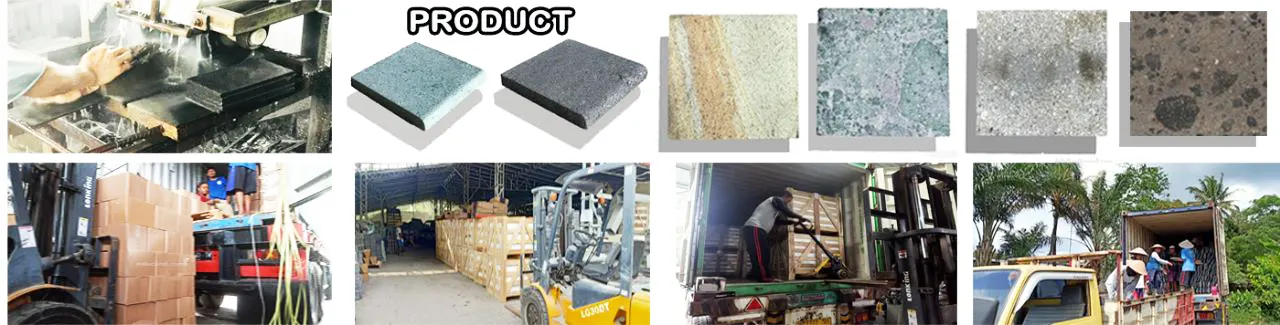
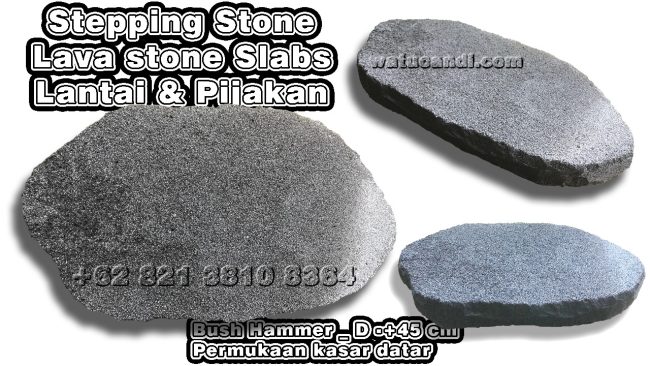
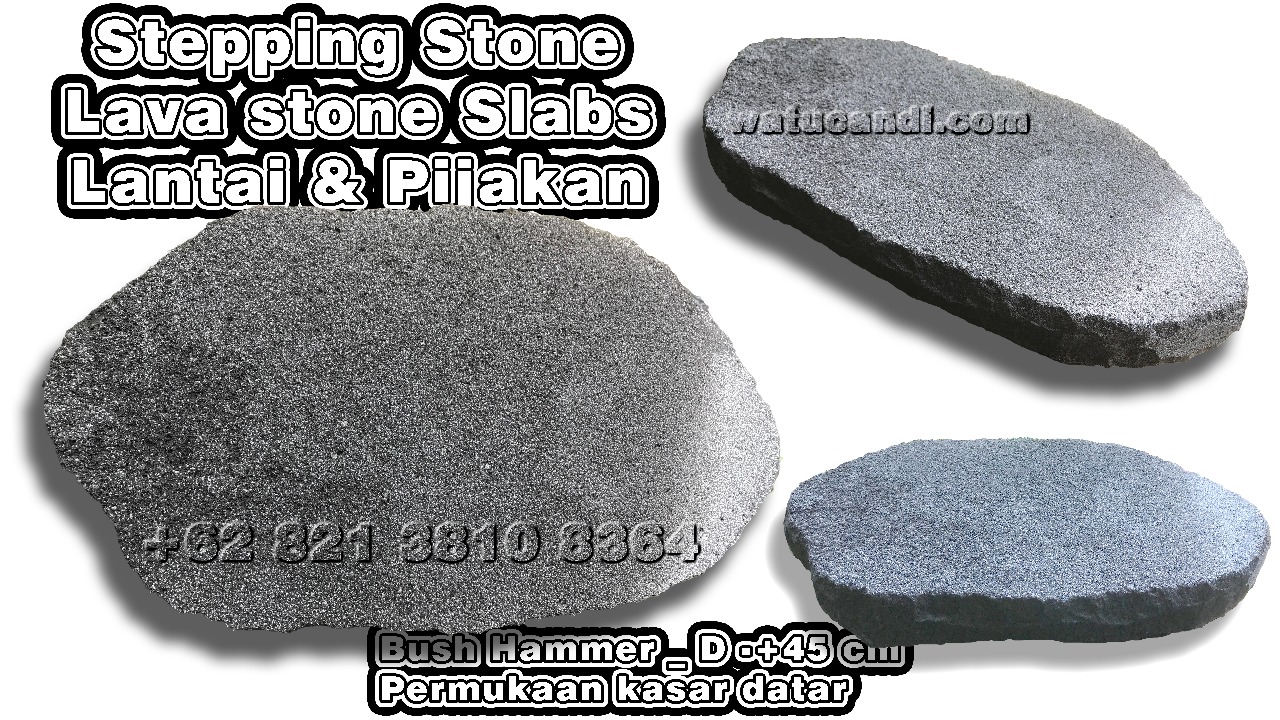
When you want to give a strong and authentic natural touch to your home’s exterior, lava stone slab paving can be the main choice. This material is also known as stepping stones that are perfect for creating garden path stones that are aesthetic. As garden flooring that is functional, this material can also serve as garden pathway directional flooring that guides visitors. See also lava stone exterior design for further inspiration.
This material comes from cooling volcanic rock, giving it a sturdy character and unique appearance. As Merapi natural stone, this paving offers high-quality stepping stones that are durable. You can also explore other lava stone for various garden flooring applications.
With its dark color, porous texture, and distinct shape, this stone can transform outdoor areas to be more aesthetic. This type of garden ornamental stone is very popular for garden stepping stones applications. For an alternative, also consider paras palimanan stone tiles as garden pathway directional flooring.
More than just a floor covering, lava stone paving offers a perfect blend of beauty and function. For those looking to buy stepping stones with the best quality, this material is the right choice. Explore Merapi natural stone outdoor flooring for other garden flooring options.
You will get a classic yet modern nuance that blends with nature. This type of Borobudur temple stone gives a strong character to your home and functions optimally as garden pathway directional flooring.
One of its main advantages is its non-slip surface, making it very safe for wet areas. This choice is a design element that gives a strong character to your home. For wet areas, also check out swimming pool lava stone which can be part of a comprehensive garden flooring.
Origin of Lava Stone Slabs from Mount Merapi
The lava stone you know as paving material comes from one of the most active volcanoes in Indonesia, namely Mount Merapi. These Merapi lava candi stone have their own uniqueness compared to river stepping stones or andesite stepping stones from other regions. Learn more about hidden crystals of Merapi lava which is the basic material for quality garden flooring.
Its location is on the border of Central Java and Yogyakarta, making these Yogyakarta stepping stones very easily accessible. This material is formed from glowing lava that cools and hardens after a massive eruption. For reference, see black lahar which is similar for garden pathway directional flooring applications.
This natural process is what gives lava stone its distinctive texture and strength that other materials do not have. Lava stone mining is carried out on the slopes of Mount Merapi, where cold lahar deposits have accumulated for years. Explore Merapi lahar candi stone flooring for similar garden flooring applications.
You might also often hear it referred to as temple stone. This term emerged because since ancient times, this volcanic material has been used to build magnificent temples like Borobudur and Prambanan, which are not far from the mountain.
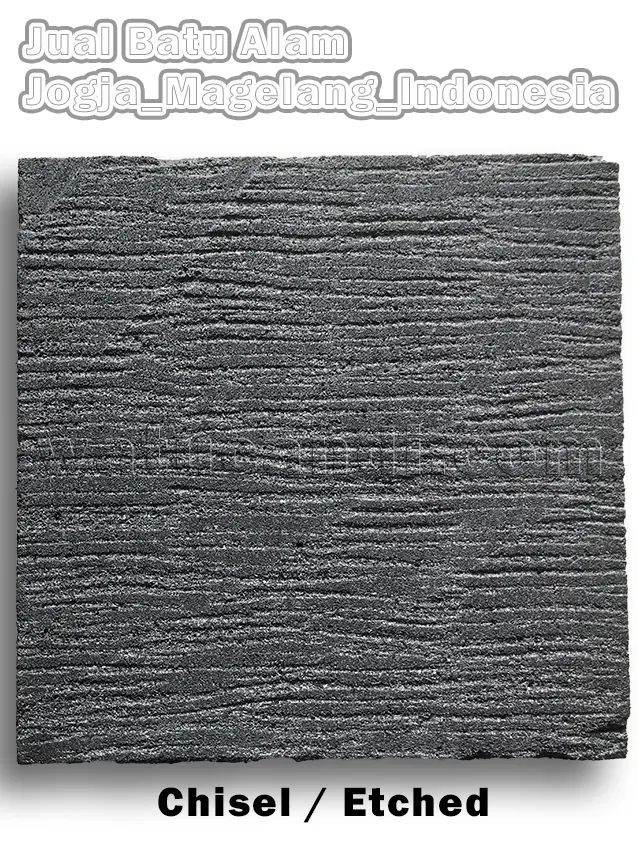
Raw chunks of lava stone obtained from nature are then processed by skilled local artisans. They cut and shape the stone into paving slabs with certain sizes according to market needs. This process is similar to the making of traditional chiseled stone paving floors for garden flooring.
Through this process, volcanic material that was initially rough and irregular is transformed into a functional product ready to beautify your garden or outdoor area. If you are looking for the best Indonesian natural lava stone tiles guide that are affordable stepping stones but high quality for garden pathway directional flooring, products from Merapi offer the best value.
Definition and Identification of Lava Stone Slabs
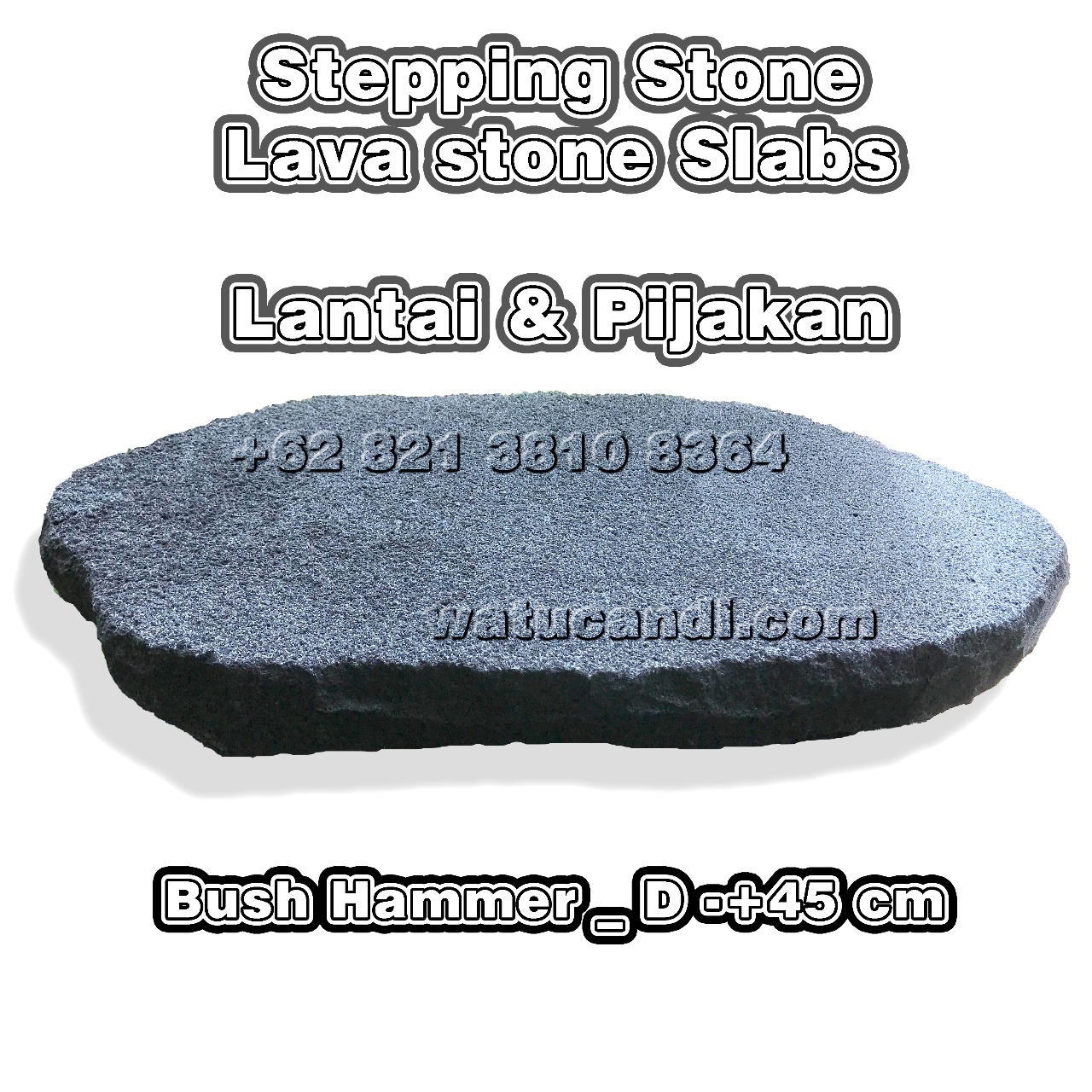
Lava stone slabs paving, or what you often hear as temple stone, is a floor covering material made from volcanic igneous rock. This material is different from andesite paving stone which is denser and less porous. Compare it with lava stone floor for a better understanding of garden flooring.
This material is formed from hot lava that freezes after a volcanic eruption. Its main identity lies in its natural origins, making it a strong and authentic choice for various exterior applications, especially outdoors as candi stone paving floors or stepping stones that function as garden pathway directional flooring.
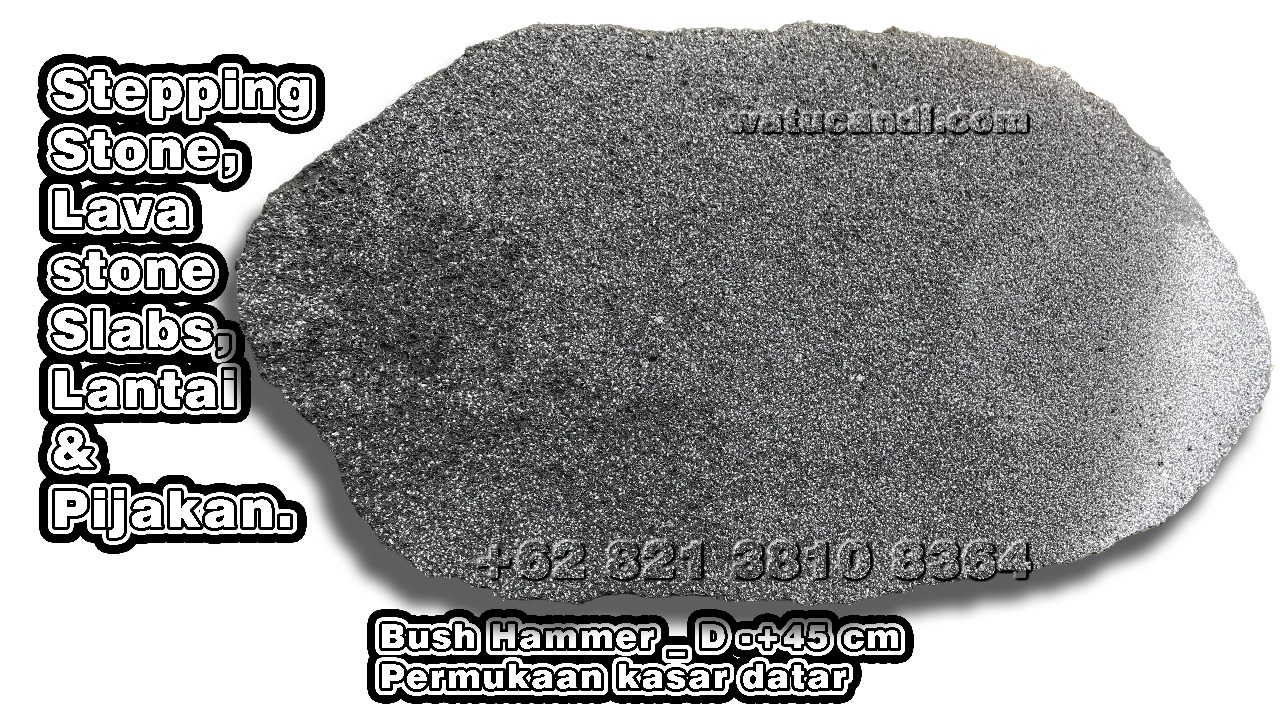
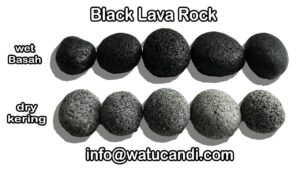
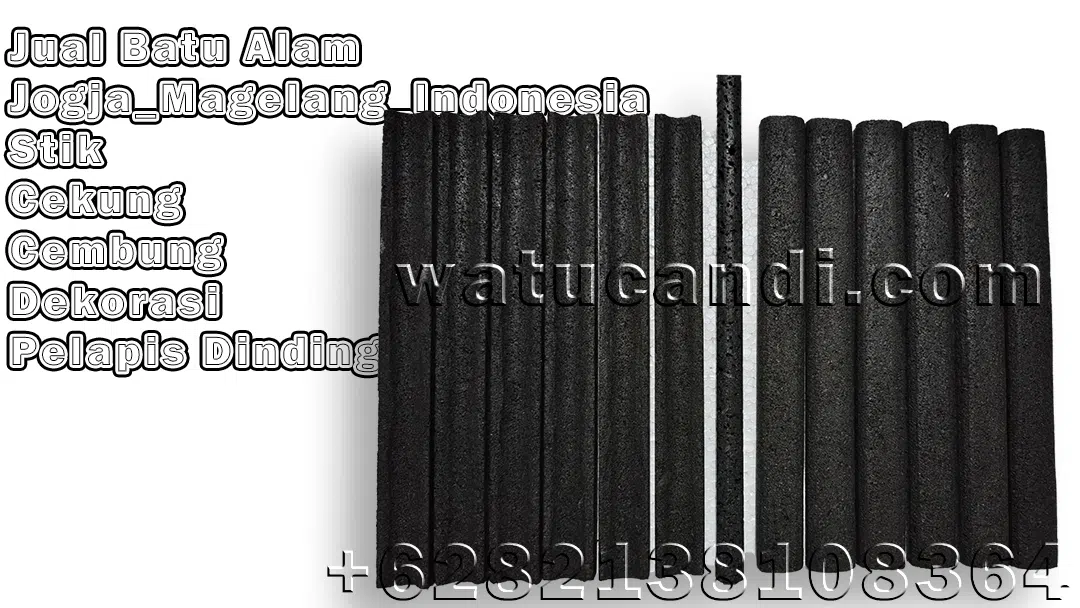
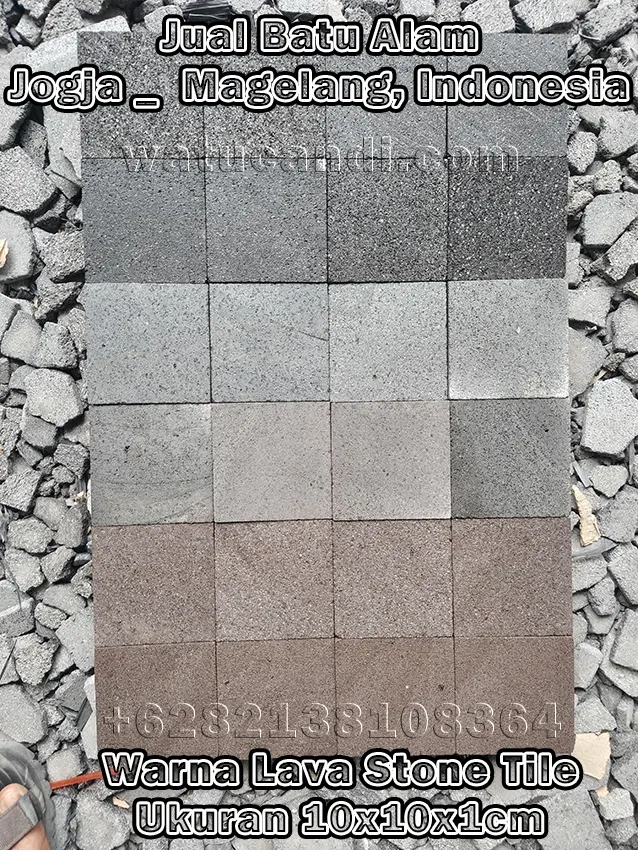
You can identify lava stone from its generally dark color, usually dark gray to blackish. The most distinct feature is its porous surface, with many small holes. For comparison, see black lava stone 100x100x10 which is larger for different garden flooring applications.
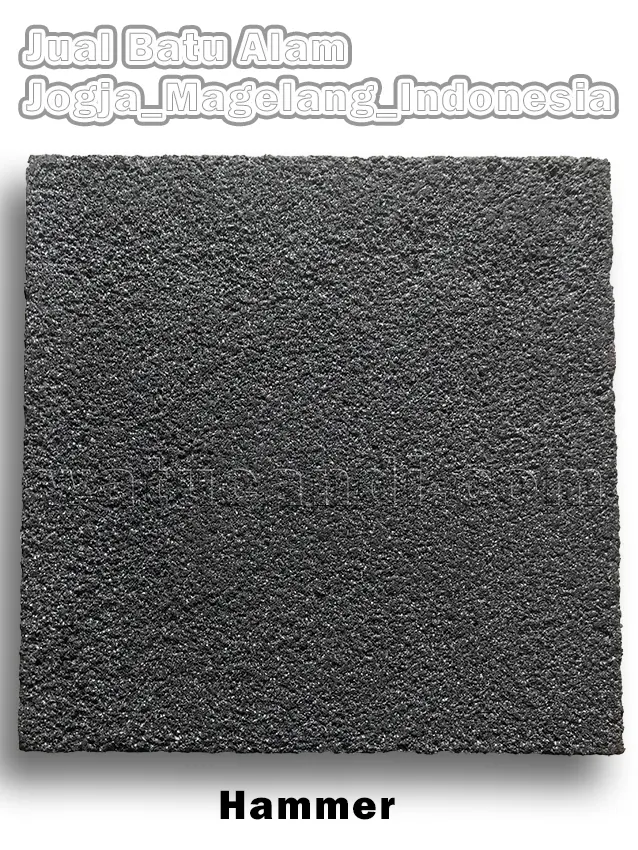
This texture is formed due to gas trapped while the lava cools. Many describe it as looking like orange peel but feeling much rougher when you touch it with your hands. A similar texture can be found on black lava bush hammer surface for garden pathway directional flooring.
To distinguish it from other natural stones, pay attention to its high porosity level. Unlike andesite stone which is denser, lava stone feels lighter for the same size. Learn about this difference in local vs precision green stone tiles to choose the right garden flooring.
This porous nature not only provides a unique visual appearance but also affects its ability to absorb heat, making it not too hot when exposed to direct sunlight. This is what makes lava stone 75x230mm this type of garden ornamental stone highly sought after as garden pathway directional flooring.
Characteristics of Natural Oval Round Shapes Made by Hand
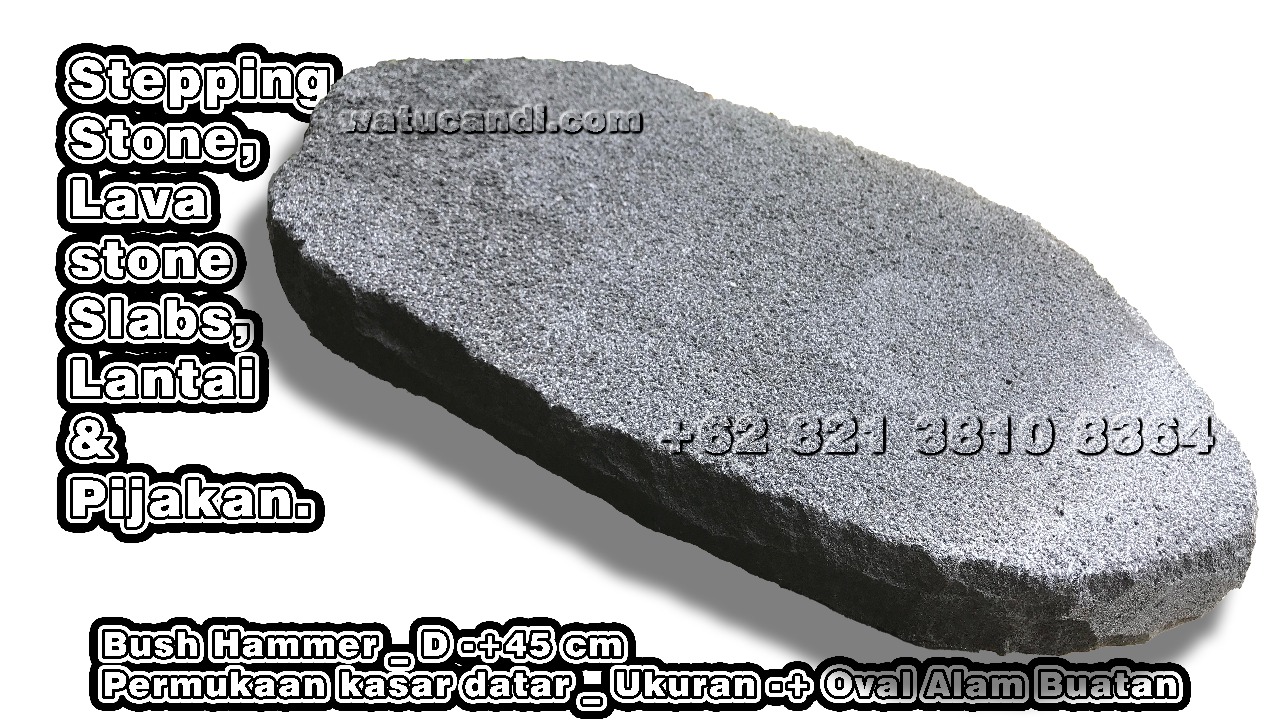
One of the main attractions of irregular natural stone paving is its irregular oval round shape. This shape is very ideal for garden stepping stones applications that want a natural look. Another alternative is tumbled finish natural stone for garden flooring with a different character.
This shape is not the result of machine molding, but is made manually to mimic the appearance of natural stone you find in rivers, similar to river stepping stones. Each piece is intentionally made different, giving a very strong organic impression and distinguishing it from conventional paving blocks that are uniform and rigid. See also natural rock slabs for variations in garden pathway directional flooring.
The process of making this shape involves the expertise of stone artisans’ hands. They carefully carve and hit the edges of the lava stone chunks until they form a soft round or oval silhouette. This process is similar to genuine manually chiseled stone floors for quality garden flooring.
Because it does not use molds, there will be no two identical pieces of stone. This is what is meant by handmade natural, where human intervention actually aims to create beautiful imperfections. Compare with random lava candi stone skin for wall cladding for inspiration on garden pathway directional flooring.
This unique shape characteristic is very ideal when you apply it as stepping stones in the garden. Its arrangement will look more flowing and blend with the surrounding green landscape. For inspiration, see chiseled natural stone installation patterns for artistic garden flooring.
Instead of creating a straight and formal path, its oval shape allows you to make a dynamic winding path, adding natural aesthetic value to your home’s exterior design. Garden path stones like this create a more enjoyable walking experience as garden pathway directional flooring.
Specifications of Lava Stone Paving Diameter
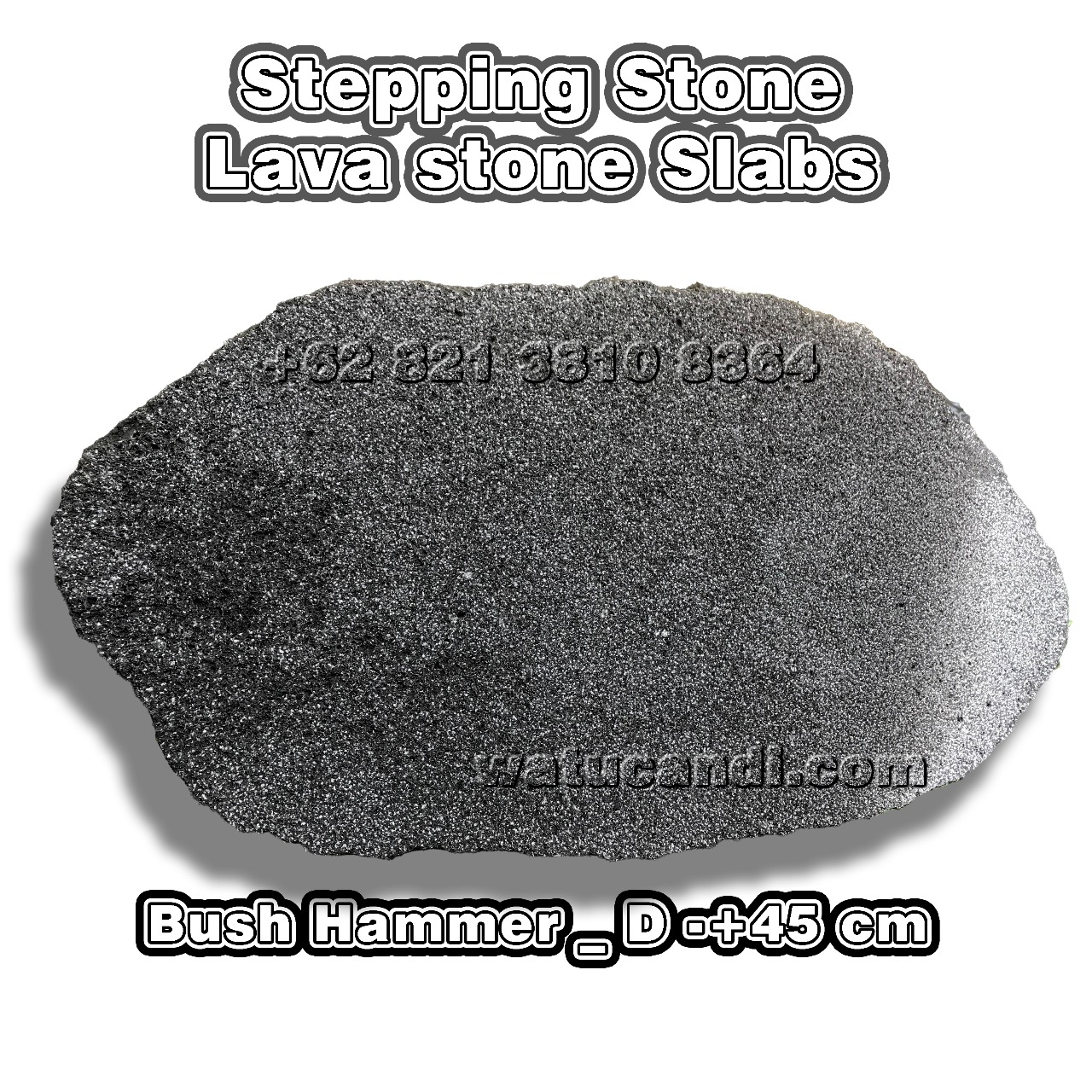
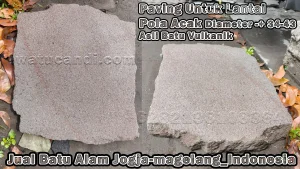
Lava stone paving generally has varying diameter specifications, but the size you often find on the market is around 45 cm. This size is ideal for stepping stones that are comfortable to step on as garden flooring. For different sizes, check other lava natural stone products.
This size is not a precise number because its oval shape is intentionally made irregular. This diameter variation is actually its main attraction, providing flexibility when you arrange it as garden pathway directional flooring or other outdoor areas. See also black lava stone tiles for more uniform garden flooring options.
Because of its manual manufacturing nature, you will not find a uniform diameter size for each piece. Usually, sellers offer this paving in a certain size range, for example between 40 to 50 cm for garden pathway directional flooring.
The diversity of natural stone diameter is intentionally maintained so that when installed, the arrangement does not look monotonous and rigid like factory paving blocks, but rather more natural and blends with nature as aesthetic garden flooring.
When choosing, you need to consider the scale of the installation area. For comfortable main stepping, choose a larger diameter so the sole of the foot can step stably. For size reference, see genuine Merapi stone washbasin 49x49x13cm which has similar dimensions for garden flooring applications.
However, for more decorative or narrow paths, a combination of several diameter sizes can create a more dynamic and visually interesting pattern as garden pathway directional flooring, adjusting to the size of your garden or home yard.
Standard Thickness of Lava Stone Slabs Paving
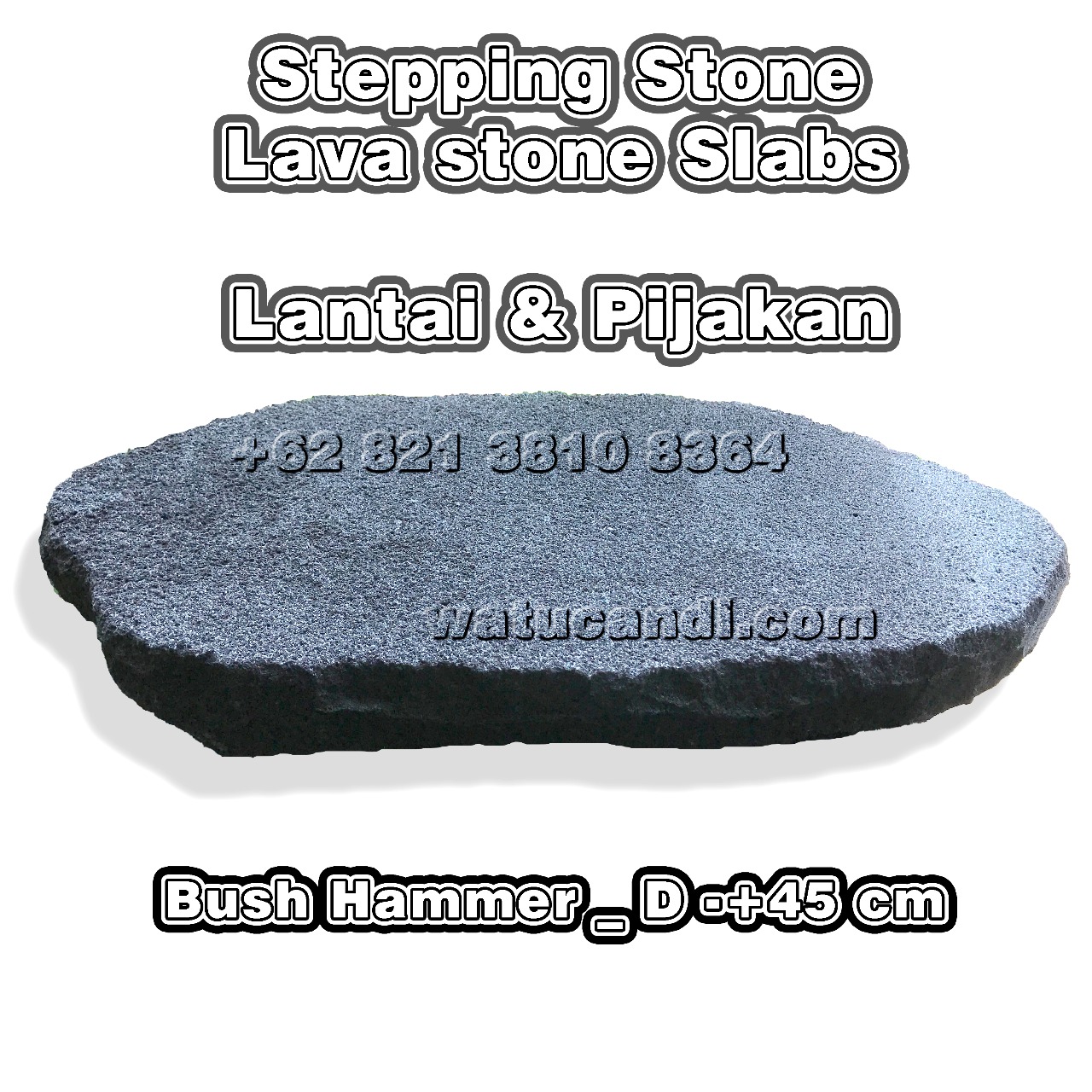
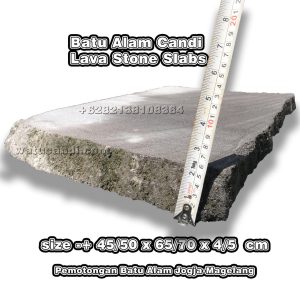
The standard thickness for lava stone slabs paving commonly found on the market is around 4 cm. This size is considered ideal because it provides the right balance between strength and material weight for garden flooring. For different thicknesses, explore alkali lava natural stone.
With that thickness, this stone is already sturdy enough to withstand continuous human stepping loads, making it a durable choice for pedestrian paths in the garden as garden pathway directional flooring. High-quality stepping stones must have adequate thickness like this.
You need to understand that as a product of natural stone processed semi-manually, the thickness may not be perfectly uniform. There will be slight variations on each piece, but this actually adds a natural impression to the garden flooring.
Nevertheless, this thickness deviation is not significant so it will not reduce the overall structural strength of the paving once properly installed in outdoor areas as garden pathway directional flooring.
A thickness of around 4 cm is very adequate for various exterior applications such as stepping stones or paths in pedestrian areas. This stone is not designed to withstand heavy vehicle loads, but it is very strong for human traffic as garden flooring. For heavier applications, consider Merapi lava stone parquet decking.
Its manageable weight at this thickness also makes the installation process easier, not requiring special heavy equipment for installing garden pathway directional flooring.
Rough Flat Surface Texture (Bush Hammer) Lava Stone Slabs Paving
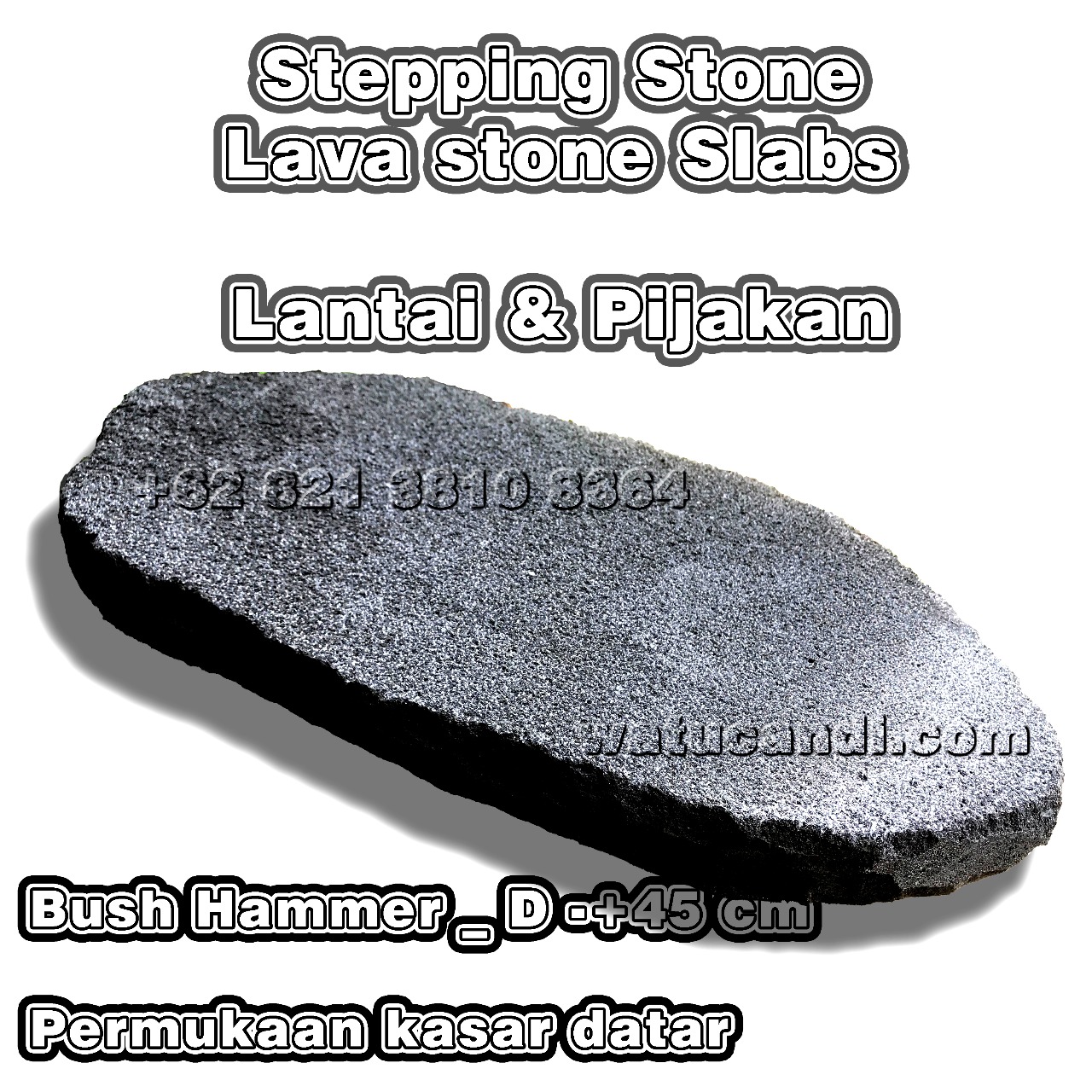
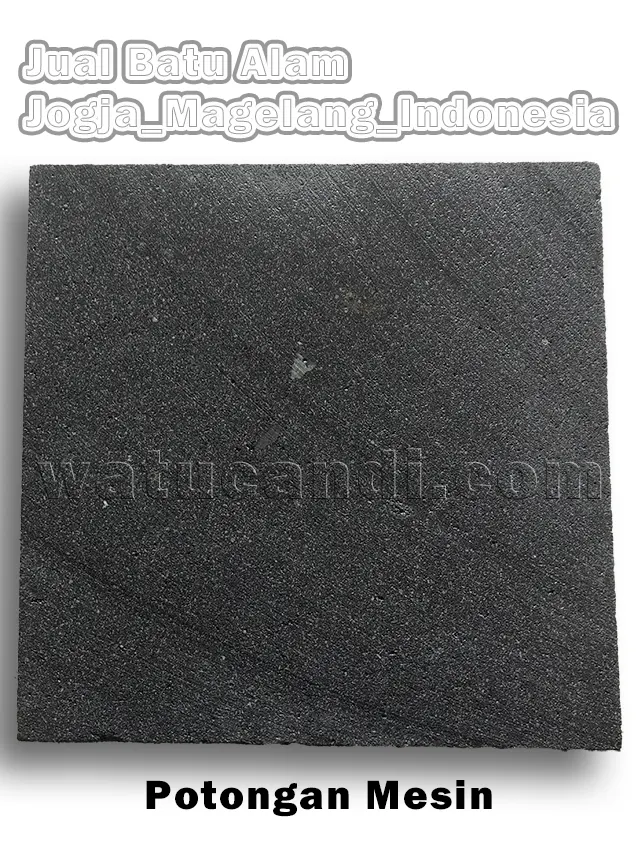
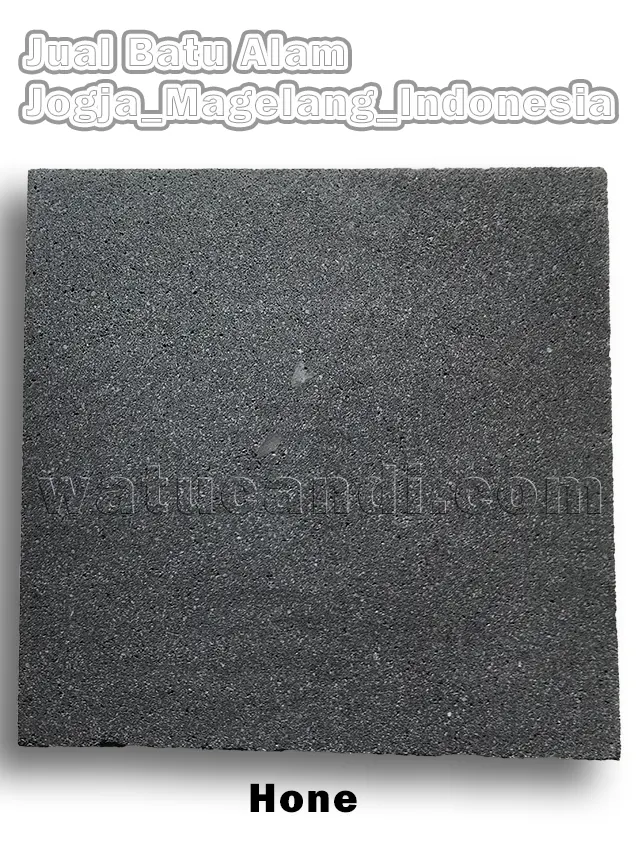
One of the main characteristics of lava stone paving is its surface texture known as bush hammer. This finish is created using a special tool in the form of a bush hammer that produces a rough surface but still feels flat when you step on it. For texture variations, see rough surface natural stone floors for garden flooring.
Unlike natural split stone surfaces that are uneven, this technique provides a more regular and controlled texture for safety. This makes natural stone edges this type of garden stone very safe for wet areas as garden pathway directional flooring.
The result of this bush hammer process is a surface full of pores or small holes evenly distributed. You might find its appearance similar to orange peel, but with a much rougher texture when touched.
This texture is what gives lava stone its distinct character, making it unique compared to natural stone with smooth or polished finishes. Compare with stacked stone slab surfaces for garden flooring variations.
This rough flat texture is not just about aesthetics, but also has an important function for your safety. Its textured surface provides excellent grip, so it is not slippery even when wet from rain or pool splashes. For pool applications, see the complete guide to green stone tiles for swimming pools which can be combined with garden pathway directional flooring.
This makes it a very safe material choice to be applied as stepping stones in the garden or pedestrian paths. Garden stepping stones with texture like this are the right security investment for garden flooring.
Bush Hammer Finishing Process on Lava Stone
Bush hammer finishing is a manual technique that requires special expertise to create texture on the lava stone surface. This process uses a bush hammer, which is a hammer with a head that has many small pointed ends. This technique is also used on black basalt stone washbasin and other garden flooring applications.
This hammer is repeatedly and evenly struck over the entire surface of the stone slab, creating a distinct and controlled rough effect on each paving piece for garden pathway directional flooring.
Every strike from the bush hammer will micro-break the stone surface, producing uniform small holes. This is what then forms the texture you know like orange peel but rougher.
This process is done very carefully by artisans to ensure a consistent level of roughness throughout the area, so the surface remains flat and comfortable to step on as garden flooring. A similar process is applied to genuine stacked sirih stone.
The main goal of this process is functionality, especially creating an anti-slip surface. The resulting texture provides excellent grip, making it safe to use in outdoor areas that are often wet as garden pathway directional flooring.
In addition, bush hammer finishing also effectively highlights the natural and rustic character of lava stone, adding aesthetic value to your home’s exterior design. For design inspiration, see Yogyakarta green stone batik tiles for garden flooring combinations.
Distinctive Pores and Small Holes on the Surface
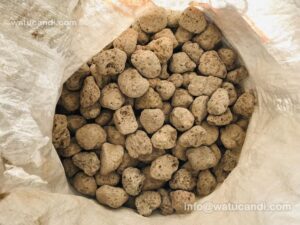
The most prominent feature you will find on lava stone paving is the presence of pores and small holes. This feature is formed naturally when volcanic gases are trapped in hot lava during the cooling process. This characteristic is also seen in black lava gravel guide to volcanic stone for garden flooring.
Millions of these gas bubbles leave a permanent trace, giving each piece of lava stone a unique identity that cannot be mimicked by artificial materials for garden pathway directional flooring.
These small holes are scattered randomly across the surface, creating a distinct texture that feels when you touch it. The size also varies, from very fine to slightly larger.
You do not need to worry because this is not a production defect, but authentic proof of its volcanic origins which actually adds beauty and natural character to the material as garden flooring.
Besides providing aesthetic value, these pores also have a very useful practical function. The porous surface makes the stone non-slip, very ideal for wet areas like pool edges. For this application, consider green Sukabumi natural stone as an alternative for garden pathway directional flooring.
This characteristic also helps the stone absorb heat better, so its surface will not feel too hot under the scorching sun, making it comfortable for you to step on anytime as garden flooring.
Texture Comparison with Natural Split Stone
The main difference between the two lies in the flatness of the surface. Although both are rough, lava stone paving with bush hammer finishing has a flat and controlled surface. This makes it comfortable and safe to step on as garden flooring. Compare with brown sandstone which has a different texture for garden pathway directional flooring.
Conversely, the texture of natural split stone is formed from irregular stone fractures, so its surface is often wavy, with unexpected bumps and depressions.
You will also find differences in the origin of the texture. The roughness on lava stone paving is the result of intentional handcrafting, creating a pattern of uniform small dots for garden flooring.
Meanwhile, the texture on split stone comes purely from the rock breaking process, producing a random, rough surface, and sometimes sharper according to its natural fracture lines when forcibly split.
Aesthetically, both offer a very different nuance for your design. Lava stone paving gives a neater and more modern rustic impression, feeling more organized as garden pathway directional flooring.
On the other hand, natural split stone presents a much rawer, more dramatic, and truly wild look, suitable for those who want a very strong and authentic natural atmosphere. For this nuance, explore genuine green Sukabumi natural stone tiles for garden flooring.
Natural Nuance and Aesthetics of Lava Stone Slabs
Lava stone slabs paving brings a strong natural nuance into your home’s exterior design. Its distinct dark color, ranging from dark gray to blackish, creates an elegant contrast with the green of the plants. For color combinations, see green Sukabumi natural stone pedra hijau for garden flooring.
The porous texture and its generally irregular shape seem to bring a piece of authentic volcanic landscape directly to the garden, giving a raw yet charming impression. This type of garden ornamental stone is highly sought after to create a natural atmosphere as garden pathway directional flooring.
The aesthetics of lava stone lie not only in its appearance but also in the atmosphere it creates. You will feel a classic and timeless impression, as if connected to ancient temples that also use similar materials for garden flooring.
Its presence is able to bring tranquility and harmony, making the outdoor area feel more grounded and blend with the surrounding natural environment, far from a rigid impression as garden pathway directional flooring.
The beauty of lava stone also shines from its ability to blend harmoniously with other natural elements. When you combine it with wood, water, and lush vegetation, its aesthetics will be even more pronounced. For complementary furniture, see handmade stone tables and chairs to complement the garden flooring.
This material is able to provide a solid yet organic visual foundation for various design styles, from wild tropical gardens to modern minimalist yards that need a warm touch as garden pathway directional flooring.
Uniqueness and Visual Appeal of Lava Stone
The dark monochromatic color from gray to pitch black becomes the main visual appeal of lava stone. You will see how this solid color creates a strong foundation, allowing other elements like green plants or brightly colored furniture to stand out. For color variations, explore carved motif dressing table as a contrast for garden flooring.
Unlike other materials, its porous surface provides rich visual details, breaking the monotony with subtle shadow play as garden pathway directional flooring.
Its visual uniqueness also comes from the imperfections of each piece that you will never find identical. Minor variations in color, shape, and pore distribution tell the story of its volcanic origins for garden flooring.
This provides an honest and authentic appeal, very different from factory-made paving that is uniform, making the landscape feel more alive and soulful as garden pathway directional flooring.
The visual appeal of lava stone is dynamic and changes with conditions. When dry, its color is brighter and its texture is very visible.
But when wet from rain, its color becomes a dramatic pitch black, highlighting its beauty differently. This visual effect provides a continuously changing experience, making your garden or outdoor area never look boring with this garden flooring.
Durability of Lava Stone Paving Against Weather
Lava stone, born from the extreme heat of the earth’s belly, has extraordinary durability against weather. You do not need to worry about this material cracking or its color fading even though it is exposed to tropical sun every day. This durability is also possessed by guide to natural limestone and travertine for garden flooring.
Its natural properties formed at very high temperatures make it very tough, making it an ideal choice for climates that often change as garden pathway directional flooring.
When the rainy season arrives, lava stone paving also shows its extraordinary toughness. Its porous structure allows water to seep and evaporate quickly, preventing water puddles from forming on its surface for garden flooring.
Because it does not hold moisture for long, you will find this stone more resistant to moss and fungal growth compared to other materials, keeping its appearance clean and non-slip as garden pathway directional flooring.
Its durability is also tested in facing extreme temperature changes between day and night. This material does not easily expand or contract, preventing long-term structural cracking that often occurs in other materials for garden flooring.
Its natural strength formed from the volcanic process ensures this paving remains solid and intact, making it a very durable investment for your home’s exterior as garden pathway directional flooring.
Main Benefit: Non-Slip for Wet Areas
The most main benefit of lava stone paving is its non-slip surface, making it the safest choice for wet areas. This characteristic comes from its natural porous texture and the intentionally rough bush hammer finishing. This safety is also offered by candi lahar stone floor for garden flooring.
The combination of the two creates excellent grip for your feet, so the risk of slipping when crossing it can be significantly minimized as garden pathway directional flooring.
Because of its anti-slip nature, this material is highly relied on for areas like swimming pool edges, where water splashes often occur. Besides, lava stone is also ideal for garden paths that are often wet by rain or plant watering as garden flooring.
This extra security provides peace of mind, especially if there are children or elderly at home. Unlike other materials like ceramics or polished concrete that can be very dangerous when wet, lava stone actually maintains its grip for garden pathway directional flooring.
Its rough surface effectively breaks the water layer, ensuring your feet remain firmly stepped. This proves that lava stone paving is not just an aesthetic choice, but a very smart functional choice for garden flooring.
Function as Outdoor Flooring Tiles or Lava Stone Slabs Paving
The main function of lava stone paving is as a very tough and reliable outdoor flooring material. Unlike other materials that are easily damaged, this stone is designed by nature to withstand exposure to sunlight, heavy rain, and human stepping traffic. For an alternative, see black lava natural stone tiles for garden flooring.
You can use it to cover terrace areas, patios, or backyards with a guarantee of long-term strength as garden pathway directional flooring.
As exterior flooring, lava stone is able to transform ordinary areas into aesthetic open spaces that blend with nature. Its organic and rustic appearance creates the perfect visual foundation for your garden or home terrace as garden flooring.
Its use provides a smooth transition between the building and the green landscape, producing a calming natural nuance that does not feel rigid or artificial as garden pathway directional flooring.
Besides being strong, its practical function as outdoor flooring is very prominent. Its rough textured surface ensures your safety because it is not slippery when wet for garden flooring.
Its porous characteristics also make this stone not store excess heat, so it remains comfortable on the feet even though it is under the scorching sun. This makes it an ideal choice for relaxing areas outside the house as garden pathway directional flooring.
Utilization as Stepping Stones in the Garden
The utilization of lava stone as stepping stones is very ideal for creating a natural path in your garden. Its oval and not perfectly uniform shape makes it seem as if placed by nature, not by human hands. For shape variations, explore sell pelinggih stone material for garden flooring.
This will avoid the garden from a rigid and formal impression, and create a more dynamic and inviting path to explore. Garden stepping stones like this are very popular among natural garden lovers as garden pathway directional flooring.
When installing it, you can place these stepping stones on grass or small gravel spreads to highlight their color. Arrange the distance between stones according to normal walking steps so it is comfortable to cross as garden flooring.
Its arrangement that does not have to be straight allows you to make a beautiful winding path, following the garden contours and guiding the view to other interesting corners as garden pathway directional flooring.
Besides the aesthetic function, these lava stone stepping stones are also very functional to protect the grass from damage due to repeated stepping. This path effectively connects various areas in your garden, such as from the terrace to the gazebo or fish pond as garden flooring.
Its presence becomes a strong decorative element as well as functional, adding texture and character to the overall landscape design as garden pathway directional flooring.
Application as Stepping Stones in the Garden
The application of lava stone as stepping stones in the garden is very popular because of its ability to blend with the surrounding green environment. You can arrange it randomly on grass spreads to create a path that looks natural and not rigid as garden flooring.
Besides beautifying the garden, these stepping stones also function to protect the grass so it is not stepped on directly, so the green area remains beautiful as garden pathway directional flooring.
When applying it, you have creative freedom to arrange the stepping patterns. Do not hesitate to make a dynamic winding path following the garden contours, not just monotonous straight lines for garden flooring.
You can also combine it with gravel stones or ground cover plants around it to strengthen the natural impression and provide richer visual texture to your garden design as garden pathway directional flooring.
Besides beauty, the application as stepping stones also offers an important safety function for you. Its naturally rough surface makes it not slippery, even when wet after rain or watering for garden flooring.
This provides a sense of security when you walk in the garden. Its flat surface also ensures every step feels stable, providing comfort and safety at once in one simple application as garden pathway directional flooring.
Use for Pedestrian Paths
Lava stone paving is very ideal for pedestrian paths because of its extraordinary durability against friction and pressure. You will find this material does not easily wear out even though it is passed by many people every day as garden flooring.
Its natural appearance is also able to beautify sidewalks or paths in city parks, providing a cooler atmosphere and blending with the surrounding environment as garden pathway directional flooring.
The safety factor is the main reason why you should consider lava stone for pedestrian paths. Its naturally rough surface provides maximum grip, so it is not slippery when wet by rainwater for garden flooring.
This is very important for public areas, reducing the risk of pedestrians slipping and making it a safer choice compared to paving materials with smooth surfaces as garden pathway directional flooring.
In its installation, the irregular shape of the paving allows you to create artistic and non-monotonous path patterns. For the long term, lava stone is very cost-effective in maintenance because it does not require special cleaning for garden flooring.
Its natural strength makes it not easily cracked or damaged, making it an efficient and durable solution for pedestrian projects in public areas as garden pathway directional flooring.
Stepping Stone Design in Garden Landscape
Stepping stone design using lava slabs paving allows you to create a flowing and non-rigid flow in the garden. Instead of making a straight path, you can arrange it winding, as if mimicking a natural path in the wild as garden flooring.
A design like this is not only functional but also visually guides the eye to explore the entire garden area slowly and pleasantly as garden pathway directional flooring.
In designing it, pay attention to the distance between stones to match the normal walking steps of adults, so it is comfortable to cross. You can plant grass or spread gravel stones between the stepping stones to fill empty spaces for garden flooring.
This combination of materials will enrich the garden landscape texture, creating a beautiful contrast between the dark color of lava stone and the surrounding elements as garden pathway directional flooring.
Do not stick to a monotonous one-row pattern. You can create by placing two or three stones side by side to create a wider stepping area for garden flooring.
This pattern can be a focal point or transition area between garden sections. Its irregular shape allows you to arrange it like a unique and artistic natural mosaic in your yard as garden pathway directional flooring.
Installation in Swimming Pool Edge Areas
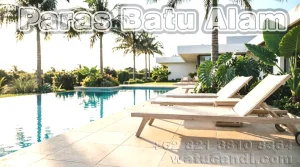
Choosing lava stone paving for swimming pool edges is a very smart decision because of its safety factor. The rough surface thanks to bush hammer finishing provides maximum grip when you walk. For an alternative, see swimming pool lava stone specifically which can be combined with garden flooring.
You no longer need to worry about slipping due to pool water splashes that make the surrounding area wet, thus providing peace of mind especially if there are children playing as garden pathway directional flooring in the pool area.
Besides being safe, installing lava stone at the pool edge also provides high aesthetic value that pleases the eye. Its exotic dark color creates a charming contrast with the blue of the pool water for garden flooring that is comprehensive.
Its porous nature makes this stone not absorb excess heat, so its surface remains comfortable when you step on with bare feet even under the midday sun as garden pathway directional flooring.
The durability of lava stone is also an advantage when installed in your swimming pool area. This material is resistant to exposure to chemicals like chlorine commonly used for pool water treatment for garden flooring.
Its color will not easily fade and its structure is not easily damaged even though it is continuously exposed to water, making it a long-term investment with minimal maintenance for wet areas as garden pathway directional flooring.
Creating a Classic and Classy Nuance
The use of lava stone will instantly bring a classic and magnificent nuance to your home yard. This material has a strong historical trace, reminding of the magnificence of ancient temples in the past for garden flooring.
By choosing this paving, you are not just installing stone, but also bringing an eternal architectural touch that has been tested by time, creating an elegant impression that is timeless as garden pathway directional flooring.
Its solid dark color becomes a classy visual foundation for your exterior design. Unlike common bright colors, the black or dark gray nuance gives a luxurious and exclusive impression for garden flooring.
Its unique texture also adds visual dimension, showing a careful and characterful material choice, thus able to elevate the overall image of the property to be more premium and authoritative as garden pathway directional flooring.
The classy nuance presented by lava stone is not just about appearance, but also about perception. Its use gives a signal that you pay great attention to detail and quality in design for garden flooring.
This authentic and uncommon material choice subtly creates a calm aura of luxury, making the outdoor area feel more personal, special, and of course has a higher value as garden pathway directional flooring.
Integration in Modern Nature-Nuanced Design
Lava stone becomes the perfect bridge between minimalist modern design and warm natural nuance. Its solid and clean dark color is very in line with the firm lines of modern architecture for garden flooring.
However, its rough organic texture provides the raw touch you need to prevent the look from becoming too rigid, creating a harmonious balance between man-made and natural beauty as garden pathway directional flooring.
For strong integration, you can combine lava stone paving with other modern materials like exposed concrete, steel, or glass. The contrast between the rough surface of lava stone and the smoothness of concrete or the transparency of glass will create a very interesting visual dynamic for garden flooring.
This combination produces a sophisticated yet grounded look, in accordance with the essence of modern nature-nuanced design as garden pathway directional flooring.
In a modern landscape, you can use lava stone to create neat geometric patterns, such as straight paths or grid-shaped stepping arrangements for garden flooring.
This structured arrangement is then balanced by placing lush green plants that grow freely around it. The result is a visual harmony where the order of modern design blends beautifully with the wildness of natural elements as garden pathway directional flooring.
Maintenance and Cleaning of Lava Stone Paving
Maintaining lava stone paving is actually quite easy and does not bother you. To keep it clean daily, just sweep regularly to remove dry leaves, dust, and other dirt for garden flooring.
This simple action is very important to prevent dirt from accumulating and entering the stone pores. Occasionally, you can also spray it with clean water from a hose to refresh its appearance as garden pathway directional flooring.
If you find stubborn stains or the beginning of moss growth, more intensive cleaning is needed. Use a mixture of water and mild soap, then brush slowly using a soft-bristled brush for garden flooring.
Avoid using harsh chemicals like acid-based cleaners, because they can damage the structure and natural color of the stone. After brushing, make sure you rinse the surface until it is completely clean for garden pathway directional flooring.
For long-term protection, you can consider applying a protective layer or special coating for natural stone. This layer will help close the stone pores, making it more resistant to stubborn stains and inhibiting moss growth in the future for garden flooring.
Although this step is optional, it is highly recommended for areas that are frequently passed or have high humidity levels as garden pathway directional flooring.
Tips for Installing Lava Stone Slabs Paving
Before you start the installation, land preparation is the main key that must not be ignored. Dig the installation area to a sufficient depth, then compact the base soil well for garden flooring.
Layer with coarse sand or split stone a few centimeters thick as a foundation. This crucial step aims to prevent the paving from sinking or shifting over time, ensuring a flat and stable final result as garden pathway directional flooring.
During the laying process, place each piece of stone on a not too wet mixture of cement and sand. You need to press it slowly and tap it with a rubber mallet to get the same height for garden flooring.
Give a joint distance of about 2 to 3 centimeters between stones as a filler space. Use a waterpass tool to ensure every stone surface is truly level and not tilted as garden pathway directional flooring.
The last step is filling the gaps or joints between the paving stones. You can use a cement mixture for the strongest result, or spread small gravel for a more natural look for garden flooring.
Another option is to plant grass between the stones. After the joint filler dries, immediately clean the remaining cement from the stone surface before it really hardens permanently for garden pathway directional flooring.
Long-Term Advantages of Lava Stone Paving
One of the biggest advantages of lava stone paving is its investment for the future. This material is very strong because it is formed from a volcanic process, so it does not easily crack or wear out from weather and stepping. You do not need to worry about having to replace it often for garden flooring.
With its superior natural durability, long-term maintenance costs become very minimal, making it an economically efficient choice as garden pathway directional flooring.
The beauty of lava stone paving will not fade with time, providing long-term aesthetic advantages for you. Unlike trending materials that quickly look outdated, its natural appearance remains relevant and classy from year to year for garden flooring.
Its solid color does not easily fade even though it is continuously exposed to sunlight, so your garden or home exterior will maintain its authentic charm as garden pathway directional flooring.
The use of premium materials like lava stone can increase the selling value of your property significantly. Its presence gives a luxurious and sturdy impression sought by many prospective buyers for garden flooring.
Besides, as a natural product with minimal chemical processing, lava stone is a more environmentally friendly choice. This advantage becomes an added value along with the increasing awareness of the importance of sustainable materials as garden pathway directional flooring.
Design Variations with Lava Stone Paving
You are not limited to only using lava stone in your design. Try combining it with other materials like wooden decks to create a warm contrast, or fill the joints between stones with mini elephant grass for a refreshing green touch for garden flooring.
This combination of textures and colors will provide very rich visual dynamics to your garden or outdoor area as garden pathway directional flooring.
Besides a single path, you can create by arranging lava stone paving into a mosaic pattern for terrace or patio areas. Its irregular shape actually becomes an advantage when you arrange it randomly but still tightly for garden flooring.
This design will produce a unique, artistic stepping area, and far from the usual monotonous impression as garden pathway directional flooring.
Do not hesitate to play with variations of different paving sizes in one installation area. You can use larger stones as the main focal point and smaller ones as fillers for garden flooring.
A little play of elevation or height between stones can also create an interesting three-dimensional effect, mimicking the contours of a natural surface that is never truly flat as garden pathway directional flooring.
Conclusion: Potential and Beauty of Lava Stone Slabs Paving
Lava stone slabs paving is not just an ordinary floor covering material, but a natural masterpiece from Mount Merapi that is rich in character. You have seen how its distinct dark color, irregular oval shape, and rough porous texture from bush hammer finishing combine to create a unique identity for garden flooring.
All these characteristics make it a strong, functional, and authentic material choice. Its potential for use is very wide, ranging from simple stepping stones in the garden to elegant flooring at the pool edge as garden pathway directional flooring.
Its main benefit that you must not forget is its non-slip surface, providing a guarantee of safety in wet areas. Supported by its extraordinary durability against extreme weather, lava stone proves itself as a very reliable exterior solution for garden flooring.
Ultimately, the beauty of lava stone lies in its ability to adapt, both to create a classy classic nuance or to integrate in modern design. This choice is not just a passing trend, but a smart long-term investment as garden pathway directional flooring.
This material promises eternal beauty, minimal maintenance, as well as a significant increase in aesthetic and selling value of your property in the future. For those looking to buy stepping stones with the best quality, affordable stepping stones but high quality, or authentic Yogyakarta stepping stones, lava stone slabs paving is the right choice for your dream garden stepping stones as perfect garden flooring and garden pathway directional flooring.


3 thoughts on “Lava Stone Paving Slabs – The Natural Aesthetics of Volcanic Rock – Durable Natural Stone for Outdoor Flooring”