A complete guide comparing Local vs Precision Black Lava Candi Stone. Learn the differences in dimensional tolerance (±1.5mm vs ±4mm), cutting methods, finishing variations, as well as installation and maintenance tips for your interior and exterior projects. Discover the right Merapi volcanic stone to match your budget and building aesthetics.
Introduction: The Geological Heritage of Merapi in Modern Architecture
In the landscape of Indonesian tropical architecture, few materials can match the eternal serenity and monumental strength of black lava candi natural stone. This material is not merely a construction element; it is a frozen fragment of geological history, carrying the memory of Mount Merapi’s eruptions that have shaped Javanese civilization for centuries. When we discuss Local vs Precision Black Lava Candi Stone, we are not comparing two entirely different products, but rather exploring the spectrum of human processing applied to the same natural gift.
Candi stone, scientifically known as basaltic volcanic andesite, has been the backbone of Nusantara architecture since the Hindu-Buddhist kingdom era. From the majesty of Borobudur Temple to modern earthquake-resistant structures, this stone has proven itself to be a material that transcends trends. However, in the modern market, consumers are often faced with a technical dilemma: choosing the more economical local variant with looser dimensional tolerances, or investing in the precision variant that offers perfect uniformity for contemporary designs.
This comprehensive guide is compiled to answer every layer of these questions. We will dissect the anatomy of black lava stone from the microscopic level of its pores to the macroscopic application on skyscraper facades or private villas in Bali. Understanding the difference between local and precision is just the entry point; true understanding lies in the ability to match the unique characteristics of this stone with the specific needs of your project, whether for luxury interior flooring, garden paving that withstands vehicle loads, or wall cladding that must endure decades of tropical rain.
Geological and Petrological Characteristics of Black Lava Stone
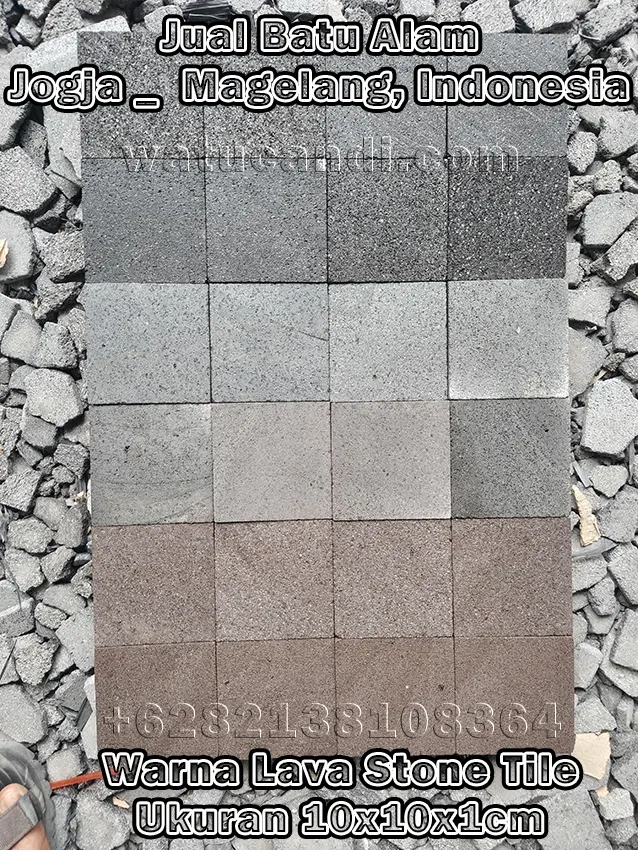
Before delving into the technical aspects of cutting, it is crucial to understand the “soul” of this material. Merapi black lava candi stone is formed from basaltic magma that cools rapidly on the earth’s surface. This rapid cooling process creates its distinctive texture: fine crystal grains (aphanitic) with a uniform distribution of vesicular pores. Unlike granite which crystallizes slowly underground resulting in coarse grains, Merapi lava stone possesses consistent density and homogeneous deep black color.
Mineral Composition and Structural Strength
Petrologically, this stone is dominated by plagioclase, pyroxene, and olivine minerals, with moderate silica content. This composition gives black lava candi stone a Mohs hardness rating of approximately 6-7, making it highly resistant to abrasion and scratches. These mechanical properties are crucial for outdoor paving stone applications that must withstand dynamic vehicle loads as well as static loads from heavy furniture.
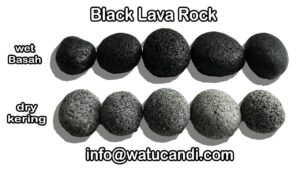
Additionally, the microstructure of Merapi lava stone features unique open porosity. Although it sounds contradictory for a strong material, these pores actually function as a micro-drainage system that prevents water accumulation on the surface, reducing the risk of slipping when wet. This is why this stone is a top choice for wet areas and swimming pool tiles. However, this porosity also means the stone requires proper coating treatment to prevent the penetration of oil stains or organic dyes.
Thermal Stability and Weather Resistance
One of the undeniable advantages of black lava candi stone is its thermal stability. As a product of extreme temperatures (>1000°C), this stone is inherently resistant to daily temperature fluctuations experienced in tropical climates. It will not crack due to thermal expansion like synthetic ceramics or certain marbles. Its black color comes from stable iron and magnesium minerals, not artificial pigments, ensuring the color will not fade even when exposed to direct UV rays for decades. This characteristic makes it an ideal material for building facade exterior design in both hot and humid climates.
In-Depth Analysis: Local vs Precision Candi Stone
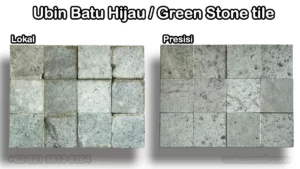
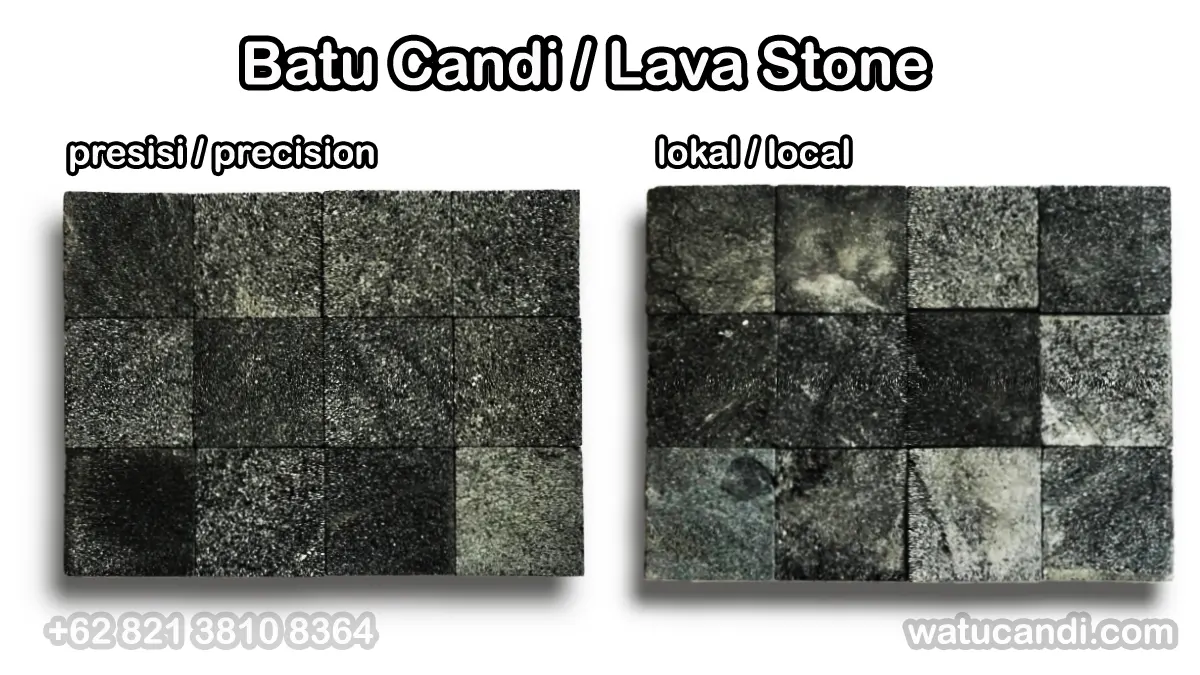
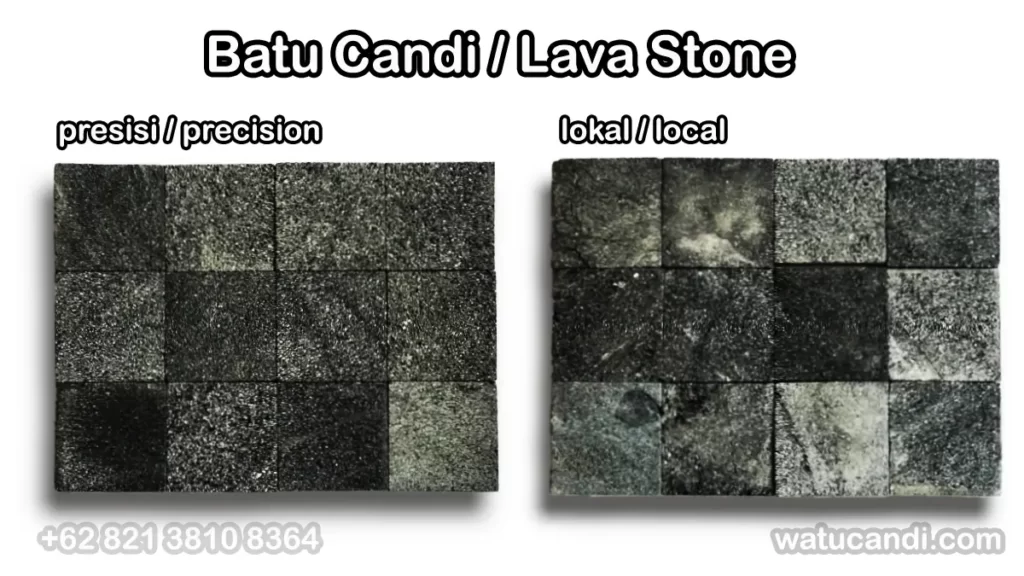
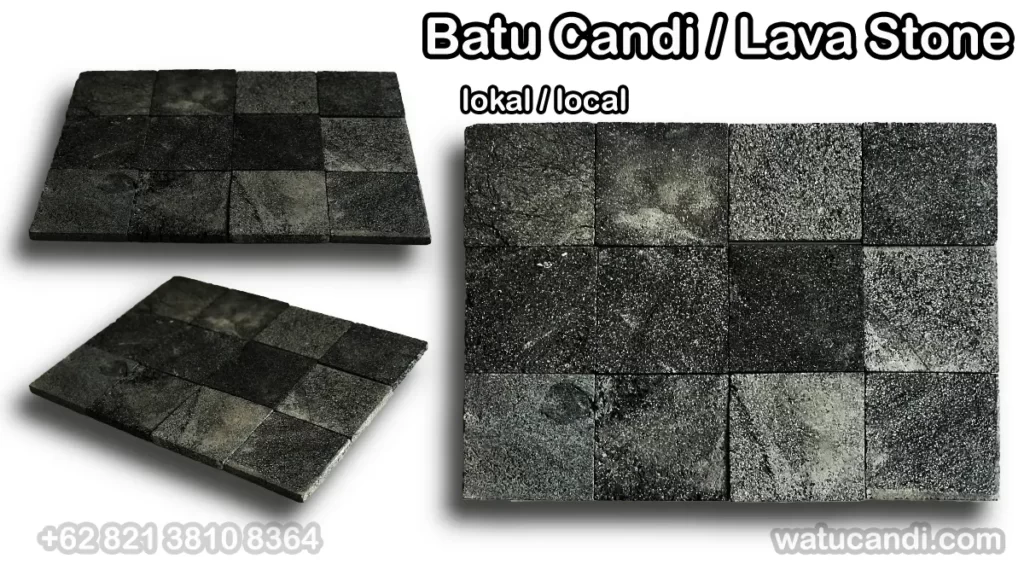
This is the core of the discussion that is often misunderstood. Many assume that “Local” means poor stone quality, whereas the term actually refers to the cutting method and dimensional tolerance, not the raw material quality. Both originate from the same quarry, the same stone blocks, and possess identical physicochemical properties. The difference lies purely in manufacturing precision.
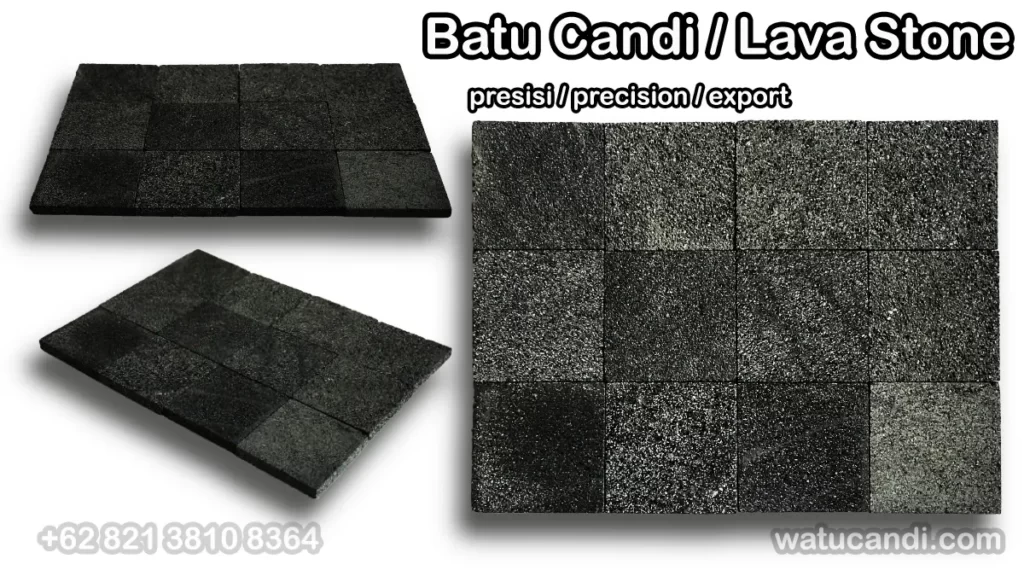
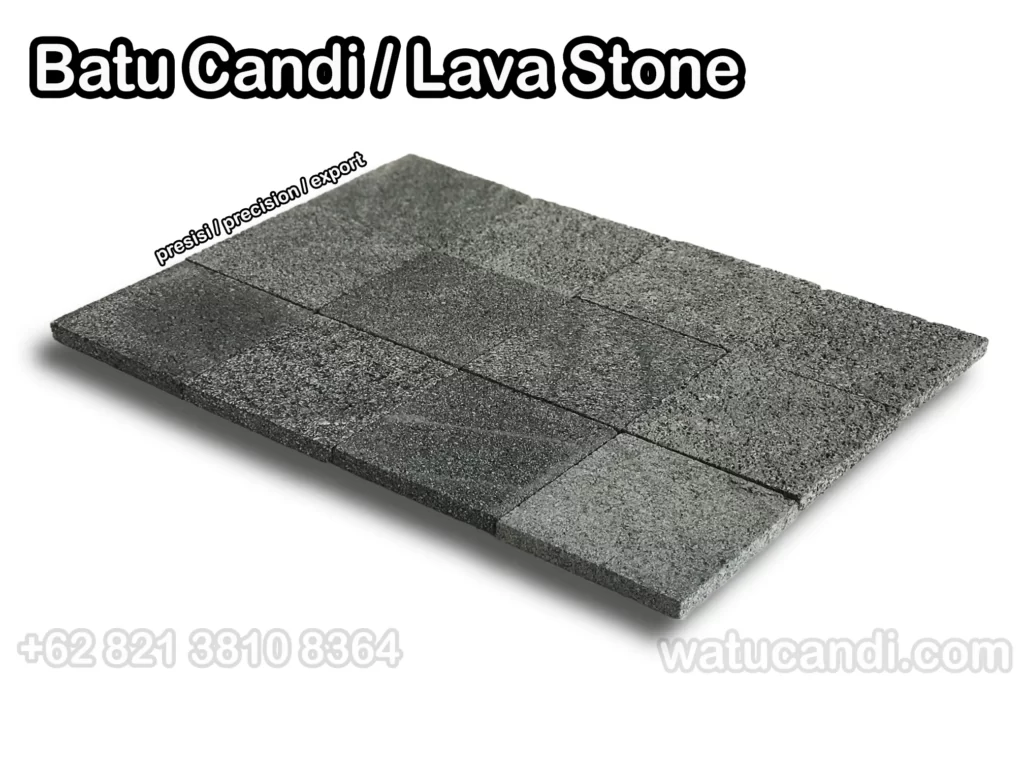
Precision Black Lava Candi Stone (Premium/Export Quality)
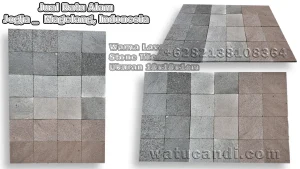
The precision category is the natural stone industry’s answer to the demands of modern architecture that prioritizes minimalism, clean lines, and seamless installation. Tiles in this category are processed using automatic multi-blade cutting machines with laser or digital calibration.
- Dimensional Tolerance: Very tight, ranging between ±0.5 mm to ±1 mm. For 30×30 cm tiles, the maximum deviation is only 1 mm from specifications.
- Corner Quality: Tile corners are perfectly square (90 degrees) with high precision. This allows installation with minimalist grout lines (1-2 mm) without the risk of “lippage” or unevenness between tiles.
- Thickness Consistency: Tile thickness is uniform across the entire production batch, eliminating the need for excessive cement leveling during installation.
- Ideal Applications: Living room interior floors, bathroom walls, kitchen backsplashes, commercial building facades, and export projects requiring international quality standards. See our premium flooring collection for reference.
- Aesthetics: Produces a neat, modern, and structured look. Thin grout lines make floor areas appear wider and cleaner.
Local Black Lava Candi Stone (Standard/Rustic Quality)
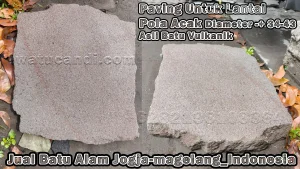
The local variant is produced using conventional cutting machines (single blade or manual feed) that emphasize production speed and cost efficiency over micrometric accuracy. This is not about “defects,” but about “character.”
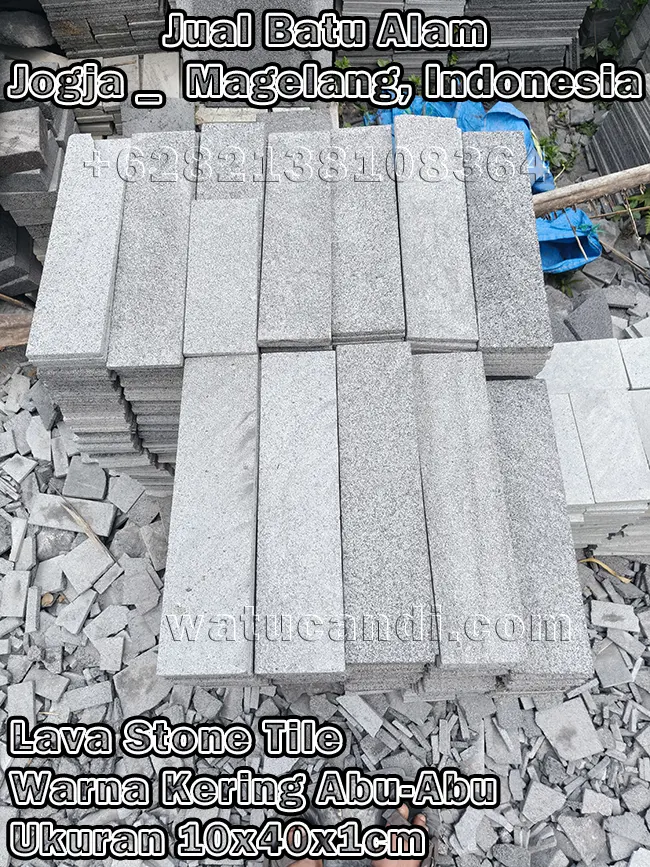
- Dimensional Tolerance: Looser, ranging between ±3 mm to ±4 mm. A 30×30 cm tile could measure anywhere from 29.6 cm to 30.4 cm.
- Shape Variation: There may be slight imperfections in corners or edges, which actually provide an authentic handcrafted or rustic nuance.
- Cost Efficiency: Price per square meter can be 20-30% cheaper than the precision variant due to faster production processes and higher raw material yield (minimal waste from precision rejects).
- Ideal Applications: Garden paving, carports, pathways, fence walls, service areas, and projects with traditional or industrial concepts that tolerate dimensional variation. Suitable for combining with irregular paving patterns or brick bond layouts.
- Installation Challenges: Requires experienced installers capable of “reading” the stone and adjusting cement mortar thickness to level the final surface. Grout lines are typically wider (3-5 mm) to accommodate dimensional variations.
Comprehensive Comparison Table
| Parameter | Precision Candi Stone (Premium) | Local Candi Stone (Standard) |
|---|---|---|
| Dimensional Tolerance | ±0.5 mm to ±1 mm | ±3 mm to ±4 mm |
| Corner Quality | Perfectly Square (90°) | Variable, may have natural chamfer |
| Recommended Grout Width | 1-2 mm | 3-5 mm |
| Installation Speed | Fast, minimal adjustment | Slower, requires manual leveling |
| Material Price | Premium | Economical |
| Design Suitability | Modern, Minimalist, Contemporary | Rustic, Traditional, Industrial, Tropical |
| Installation Waste Risk | Low | Moderate (requires sorting) |
Cutting Technology and Natural Stone Manufacturing
Understanding what happens at the factory helps you appreciate the price and quality differential. The transformation from raw stone blocks to ready-to-install tiles involves a series of processes that determine the final fate of the product.
Precision Variant Production Flow
- Raw Block Selection: Only blocks with the highest density and minimal natural cracks are selected for the precision line. Blocks are inspected using tap tests and strict visual inspection.
- Initial Cutting (Block Cutting): Uses water-cooled multi-blade gang saws to cut blocks into thick slabs with initial tolerance.
- Sizing (Cross Cutting): Slabs are cut into tile sizes using automatic bridge cutters with laser guides. Machine calibration plays a vital role here.
- Edge Calibration: Tiles pass through edge calibration machines that grind all four sides simultaneously to guarantee squareness and final dimensional uniformity of ±1mm.
- Surface Finishing: Surfaces are processed according to order (honed, polished, bushhammer, etc.) using automatic machines with consistent pressure.
- Tiered Quality Control (QC): Every tile is checked individually. Tiles passing QC are packed with corner protectors; failures are downgraded or reprocessed.
Local Variant Production Flow
For the local variant, the process is more streamlined. Blocks are cut directly to target sizes using conventional single-blade or double-blade cutting machines. There is no separate edge calibration stage. Saw feed speeds are higher to maximize output. Because there is no strict sorting based on millimetric tolerance, almost all cut results enter the saleable category as “local,” except for those that are broken or fatally defective. This efficiency makes the price competitive for large-scale projects such as public area outdoor flooring.
Exploring Surface Variations (Finishing) of Lava Stone
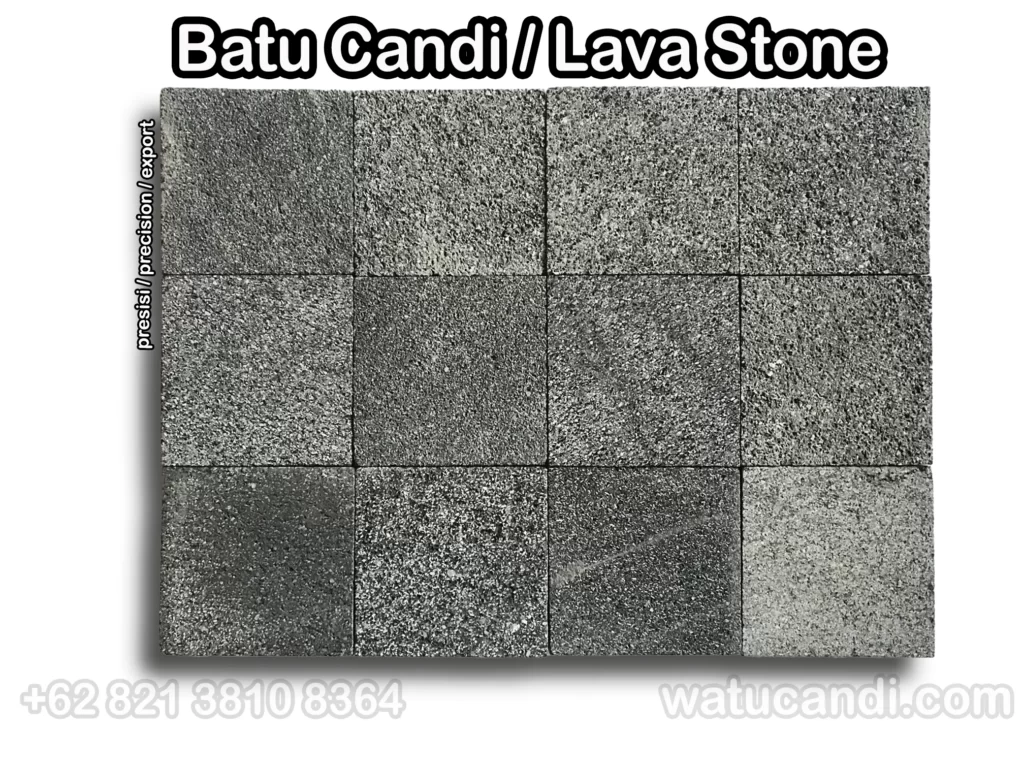
Black lava candi stone is a canvas that accepts various types of finishing exceptionally well. The choice of finishing affects not only aesthetics but also safety functions and ease of maintenance. Both local and precision variants are available in these surface options:
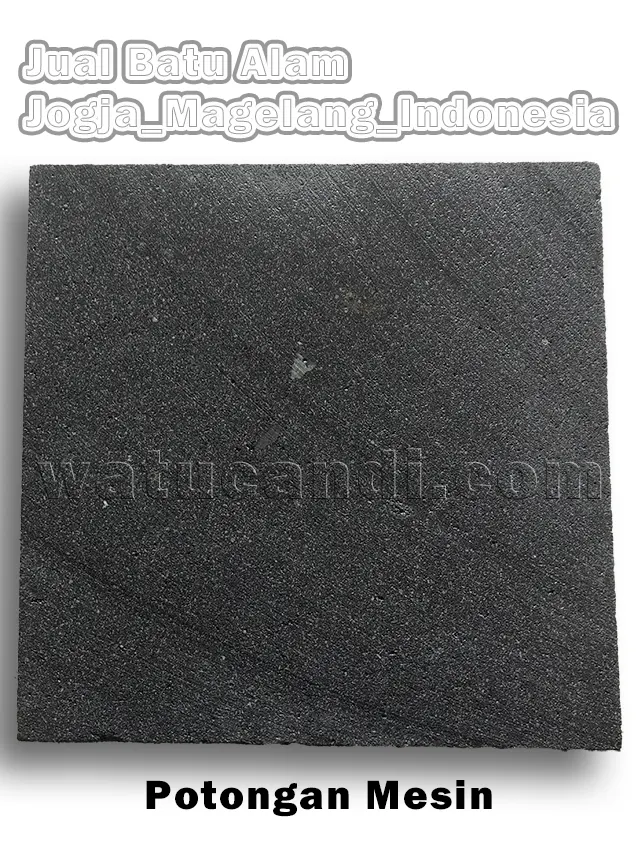
Sawncut (Machine Cut / RTM)
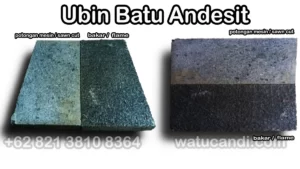
Surface resulting directly from machine saw cuts without further smoothing processes. Displays fine parallel line textures from saw blades and the stone’s original color which tends to be dark grey (not yet revealing deep black). Often used as raw material for other finishes, or left natural for industrial applications and service areas. In legal trade, this variant is often associated with RTM documents as proof of primary processed stone/wood origin.
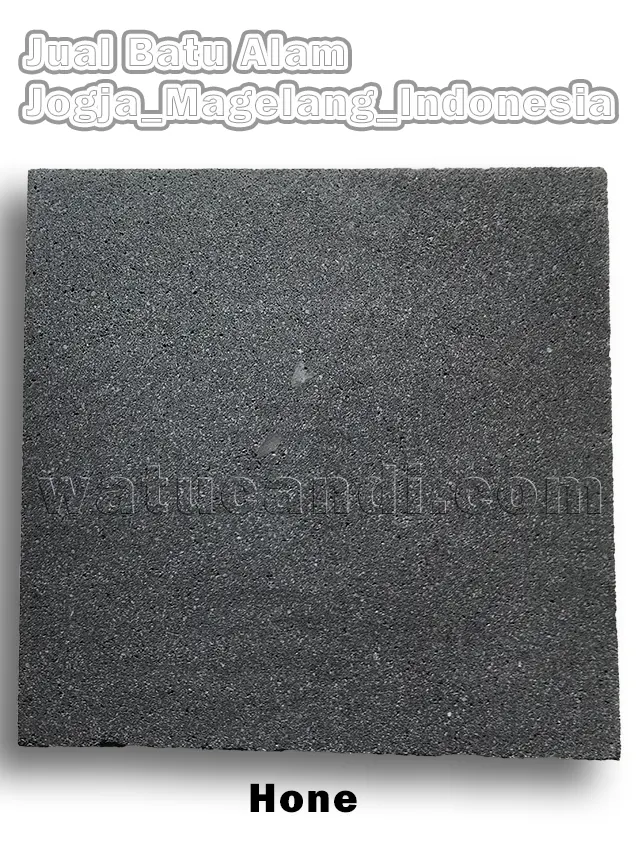
Honed Finish (Smooth Matte)
Surface is rubbed with abrasive pads until smooth but not shiny. Displays elegant deep black color and soft texture to the touch. Very popular for interior flooring and accent walls. Easy to clean but requires anti-stain coating because stone pores are open.
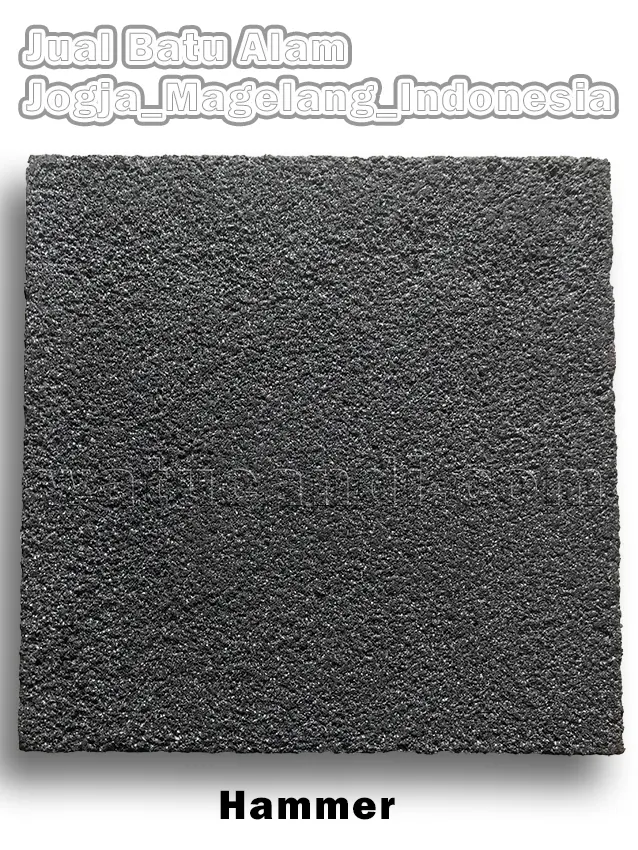
Bushhammered Finish (Rough Texture)
Hammered with a bush hammer tool creating regular rough points. Provides maximum anti-slip effect and very natural appearance. Ideal for pool deck areas, outdoor stairs, and pedestrian paths. Color appears lighter/greyer due to light reflection on the rough texture breaking the black color bias.
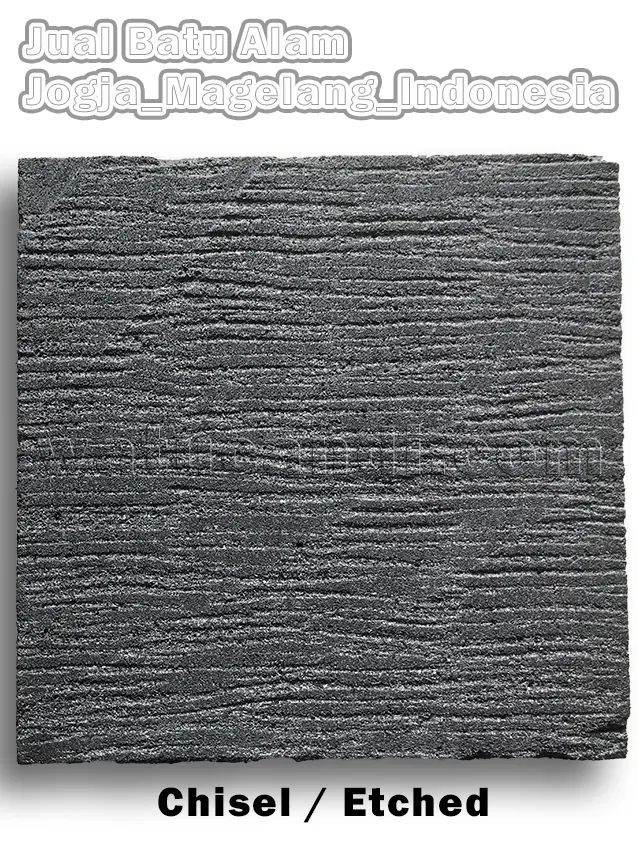
Chiseled / Manual Hand Carved
Handcrafted by artisans using special hammers and chisels. Creates unique line, random, or geometric motifs with high artistic value. Each piece is an individual work of art. Perfect for manually chiseled stone flooring in Joglo-style villas or tropical resorts. Can be applied to both local and precision variants, though precision provides a flatter base canvas.
Rough Face / Split Face
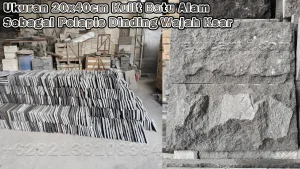
Surface left naturally rough from stone splitting or mechanically/manually rough-chiseled. Provides dimension and dramatic shadows when hit by grazing light. A top choice for exterior wall cladding and interior accent walls. Hides dust and dirt well and is highly weather-resistant.
Polished (Shiny Polish) – Optional/Limited
Although less common than honed, some high-quality candi stones can be polished to a shine. However, the result is not as maximal as granite/marble due to andesite mineral density. More prone to scratches and slippery when wet, so its use is limited to vertical interior areas or countertops with extra care.
Interior Applications: Aesthetics and Indoor Functionality
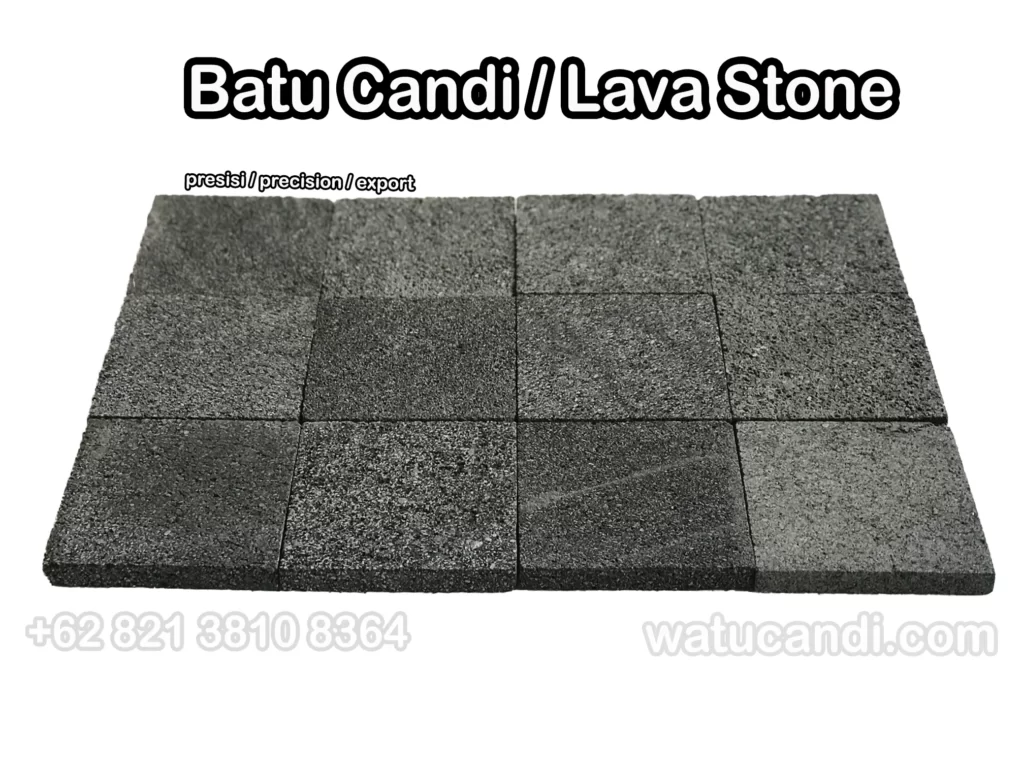
Using black lava candi stone in interiors is a bold design statement. Its dark color creates depth, drama, and a calming grounding effect. Here is an in-depth application guide for various spaces:
Living Room and Living Area Flooring
For main home areas, precision variant with honed finish is the best choice. Dimensional uniformity creates a seamless floor plane, expanding the visual perception of the room. Combine with warm white lighting to highlight the stone’s smooth texture. Ensure application of high-quality impregnating sealer to protect against beverage or food spills. For a more artistic concept, consider herringbone or chevron installation patterns using rectangular precision tiles.
Accent Walls and Feature Walls
TV back walls, bed headboards, or foyer entrances are perfect canvases for lava stone. Here, you can experiment with texture. Use random skin cladding for an organic effect, or chiseled panels for a luxurious impression. Local variants can also be used on walls as gravity does not affect functionality, and dimensional variations can be manipulated into dynamic patterns. Wall washer lighting from above will enhance the stone’s texture relief.
Bathrooms and Spas
Black lava stone is excellent for bathrooms due to its non-slip nature when wet (especially bushhammer/honed finish). Use for shower floors, wet area walls, and even sink countertops. Its natural porosity helps regulate humidity. However, it is mandatory to use penetrating sealer resistant to alkalis and soap. Avoid topical sealers that may peel in wet areas. For bathtubs, consider a handmade natural stone tub from lava black as a statement piece.
Kitchen and Backsplash
As a backsplash, black lava stone provides beautiful contrast with wood cabinets or stainless steel. Choose honed or leathered finish for easy wiping. As a countertop, ensure stone is sealed with food-safe sealer and maintained regularly. Heat from pans will not damage this stone, but acids from citrus/vinegar can cause etching if the sealer wears off. For dining tables, lava stone table tops are furniture investments that last generations.
Exterior Applications: Weather Resistance and Landscaping
This is where black lava candi stone truly shines. Its resistance to UV, acid rain, and freeze-thaw cycles (in subtropical climates) makes it superior to marble or limestone. Exterior applications are generally more flexible regarding dimensional tolerance, making local variants a smart economical choice.
Terrace Paving, Carports, and Pathways
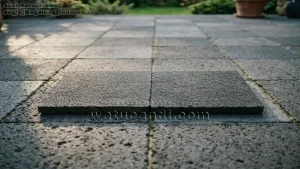
For load-bearing areas, use minimum 3cm thickness for pedestrians and 5cm for vehicles. Bushhammer or flamed finish is mandatory for anti-slip safety. Local variants are very suitable here as wider grout lines facilitate rainwater drainage and provide additional grip. Installation patterns like running bond, stack bond, or classic candi patterns can be adapted to architectural style. For garden stepping stones, lava rock stepping stones with natural edges create soft transitions between hardscape and softscape.
Building Facades and Fence Walls
Exterior cladding with black lava stone creates a timeless and low-maintenance facade. Use panels with split face or rough face finish for light and shadow play. Precision variants are recommended for modern facades with minimalist joints, while local variants or split face temple stone suit rustic styles. Always use mechanical fixing systems (anchors/stainless steel clips) for heights above 3 meters; do not rely solely on cement adhesive. For fences and foundations, stone fence craftsmanship from Merapi provides privacy alongside beauty.
Landscape Elements and Hardscape
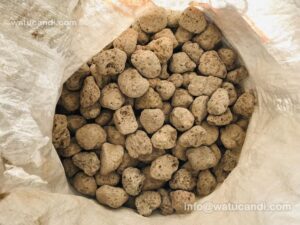
Black lava stone is not just for tiles. It can be shaped into bollards, plant pots, fountains, garden benches, and even stone soap dispensers for garden gazebos. Black lava gravel (black lava pebbles) serves as decorative mulch preventing weeds and retaining soil moisture. Candi stone garden edging provides firm definition between planting areas and pathways.
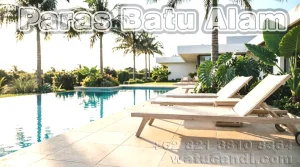
Specialized Lava Stone for Swimming Pools and Wet Areas
Black lava candi stone is one of the few natural stones universally recommended for submerged applications. Reasons include:
- Non-Slip: Natural texture provides high friction coefficient even when fully wet.
- Pool Chemical Resistant: Good resistance to chlorine, salt (saltwater pools), and pH balance chemicals, provided it is properly sealed.
- Color Stable: Does not fade or yellow due to continuous chlorine and UV exposure.
- Water Aesthetics: Black color makes pool water look clearer, deeper, and reflective like a mirror.
For swimming pools, always use precision variants to minimize grout lines that can harbor algae. Recommended finishes are honed (for pool walls) and bushhammer/flamed (for pool decks and coping). Ensure use of specialized pool adhesive and grout that is flexible and chemical resistant. For complete guides, read ultimate guide swimming pool stone tiles and swimming pool coping stone guide.
Technical Guide for Professional Installation
Premium material quality can be ruined by amateur installation. Here are installation protocols your contractor must follow:
Substrate Preparation
Base surface must be flat, clean, dry, and structurally sound. For floors, screed must cure for minimum 28 days. For walls, ensure plaster is flat and dust-free. Apply primer bonding agent if substrate is too porous or dusty.
Layout and Dry Lay
Never skip dry lay! Open several boxes of tiles and arrange on floor without adhesive to check color variation, texture, and (for local variants) dimensional variation. Mix tiles from multiple boxes for even color distribution. Mark accurate layout lines and starting points. For local variants, pre-sorting by size is highly recommended to group tiles with similar dimensions.
Adhesive and Grouting
Use thin-set mortar/adhesive specifically for natural stone (not regular cement). For black stone, use grey/dark colored adhesive to prevent efflorescence (white residue) showing through grout. Apply using buttering-floating method (apply to substrate AND back of tile) for 100% coverage, especially in wet areas and exteriors. For grout, use sanded grout for widths >3mm and unsanded for <3mm. Consider epoxy grout for pool areas or kitchens due to stain and chemical resistance.
Cutting and Handling
Cut lava stone with wet saw diamond blade specifically for granite/basalt. Do not use ceramic/marble blades as they wear quickly and produce chipped edges. For pipe/outlet holes, use diamond core drill. Always cut from back side (back cut) to prevent chipping on front surface. For precision variants, handle carefully as sharp corners are prone to chipping if bumped.
Maintenance, Coating, and Natural Stone Restoration
Black lava candi stone is relatively low maintenance, but not no maintenance. Proper maintenance protocols will preserve its beauty for a lifetime.
Types of Coating/Sealer
- Penetrating/Impregnating Sealer: Enters stone pores without changing surface appearance. Protects against liquid and oil stains. Mandatory for all interior applications and wet areas. Water-based or solvent-based depending on conditions.
- Enhancing Sealer: Penetrating type that also enriches black color and highlights texture. Gives permanent “wet look” effect without gloss. Ideal for exteriors wanting more dramatic appearance.
- Topical Coating (Varnish/Epoxy): Forms film layer on surface. Provides high gloss and maximum protection, but can peel, yellow, and make floors slippery. Not recommended for exterior floors or wet areas. Only for decorative interior walls.
Frequency and Application Method
First sealer application is done after installation is complete and stone is completely dry (minimum 7-14 days). Re-application depends on traffic and exposure: interior 2-3 years, exterior 1-2 years. Test sealer effectiveness by dripping water: if absorbed in <5 minutes, time to re-seal. Clean surface thoroughly before application. Apply with roller, brush, or sprayer evenly, avoid pooling.
Routine Cleaning and Stain Treatment
Sweep/vacuum regularly to remove abrasive grit. Mop with pH-neutral cleaner specifically for natural stone. DO NOT use acidic cleaners (vinegar, HCL), strong alkalis (bleach, ammonia), or abrasive scrubbers. For oil stains, use poultice powder. For moss/crust on exteriors, use alkaline cleaner and low-pressure washer (<1500 PSI). For restoration of dull or scratched stone, consult professional stone restoration services.
Cost Analysis, Budgeting, and Long-Term Investment Value
The decision between local and precision often boils down to budget. However, wise cost analysis should look at Total Cost of Ownership (TCO), not just material price per meter.
Cost Component Breakdown
- Stone Material: Precision is 20-30% more expensive than local.
- Installation Cost: Precision installation can be 10-20% cheaper due to speed and minimal corrections. Local installation takes longer and requires special skills.
- Supporting Materials: Adhesive, grout, sealer. Adhesive needs for local may be higher due to leveling. Grout for wide joints (local) requires more volume.
- Waste Factor: Buy 5-7% spare for precision, 10-15% for local (due to sorting needs and potentially higher cutting loss).
- Maintenance: Periodic coating costs are same for both.
ROI and Value Proposition
For high resale value projects (villas, hotels, luxury homes), precision investment almost always pays off through premium aesthetics increasing appraisal value. For long-term personal projects where you love rustic character, local provides aesthetic satisfaction on lighter budget. For purely functional areas (carports, warehouses, roads), local is rational choice without compromising durability. Remember: natural stone is appreciating investment, unlike depreciating ceramics.
Material Combinations: Harmonizing Lava Stone with Other Natural Stones
Black lava candi stone is highly collaborative material. Its dark neutral color serves as anchor allowing other stones to shine. Here are time-tested combinations:
- Lava Black + Green Sukabumi: Iconic combination for swimming pools. Black on coping/deck, green in basin. Refreshing cool-warm contrast. See Green Sukabumi Stone.
- Lava Black + Palimanan Cream: Classic Javanese. Black as accent/frame, cream as main field. Warm and elegant. Reference Palimanan Stone.
- Lava Black + Andesite Grey: Sophisticated monochromatic. Different tone but same family. Modern industrial. Check Natural Andesite.
- Lava Black + Wood/Timber: Warm tropical. Coolness of stone balanced by warmth of wood. Must-have combo for Bali/Joglo villas.
- Lava Black + White Marble/Limestone: High contrast luxury. Dramatic and bold. Ensure marble is extra sealed due to sensitivity. Read Limestone Travertine Guide.
Common Mistakes in Selecting and Installing Candi Stone
Avoid these pitfalls to ensure project success:
- Ignoring Sample Approval: Don’t order based on website photos. Request actual physical samples from current production batch. Natural stone is natural product, variation always exists.
- Mixing Different Batches: Ensure all material for one visual area comes from same production batch to avoid color banding.
- Skipping Dry Lay: This is cheapest quality insurance. Skipping dry lay = inviting expensive surprises during installation.
- Using Wrong Adhesive: Regular portland cement insufficient for natural stone. Use polymer-modified thinset specifically for stone.
- Sealing Before Stone Dries: Trapping moisture = efflorescence, blotchy sealer, potential delamination. Be patient waiting for curing time.
- Assuming Local = Bad: Match choice to design intent. Rustic design with precision stone feels wrong. Match material to vision.
- DIY Without Research: Natural stone installation ≠ ceramic installation. If inexperienced, hire professional. Repair costs far exceed professional installation fees.
Frequently Asked Questions About Black Lava Candi Stone
Can black candi stone change color to white/grey?
No, if genuine Merapi and properly sealed. Color changes usually caused by efflorescence (mineral salts migrating to surface), mold/moss, or cement/grout residue. All treatable with proper cleaning and re-sealing.
What is ideal thickness for carport?
Minimum 5 cm for passenger cars, 7-8 cm for SUVs/light trucks. Ensure sub-base (foundation below) adequate: compacted gravel + reinforced concrete slab.
Can it be installed over existing ceramic?
Yes, provided old ceramic not hollow/damaged, surface roughened (scarified), and flexible tile-on-tile adhesive used. However, increases floor height. Consult installer.
How to distinguish genuine Merapi lava stone from imitation?
Genuine stone has irregular natural pores, dense specific gravity, consistent color throughout (not just surface). Imitation/molded stone usually too uniform, lightweight, color only on surface. Buy from trusted suppliers like Watucandi guaranteeing material authenticity.
Is coating necessary for exterior applications?
Highly recommended, especially enhancing sealer. Besides protecting from stains and pollution, coating facilitates moss cleaning and maintains deep black color. Without coating, stone naturally weathers to greyer tone—which some desire for aged look.
Conclusion and Final Recommendations
Choosing between Local vs Precision Black Lava Candi Stone is not about which is absolutely “better,” but which is “more appropriate” for your specific project context. Precision variant offers engineering accuracy for modern architecture demanding visual perfection and installation efficiency. Local variant offers authentic character and economic value for applications celebrating imperfection as beauty.
Both share same DNA: Merapi volcanic strength tested over thousands of years. Whatever your choice, ensure supported by appropriate supporting materials, professional installation, and periodic maintenance. Natural stone is investment living with your building, aging gracefully, telling increasingly valuable stories over time.
Watucandi committed to providing genuine Merapi black lava candi stone in both variants, with quality guarantee, supply consistency, technical support from expert team. Explore complete collection from natural stone tiles, lava stone collection, to various other natural stone types. Contact us for free consultation, sample requests, best quotes for dream project.
Disclaimer: Information in this guide is general educational. Field conditions, project specifications, material availability may vary. Always consult licensed professionals request physical samples visit before ordering installation.
Tags: black lava candi stone, local vs precision candi stone, merapi natural stone, lava stone tiles, black lava stone, natural stone dimensional tolerance, bushhammer finish, natural stone flooring, exterior wall cladding, outdoor paving stone, swimming pool stone, andesite stone, indonesian volcanic stone, natural stone tiles,