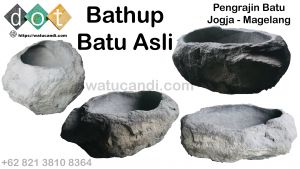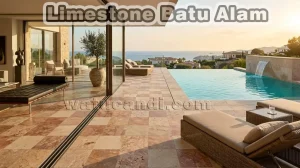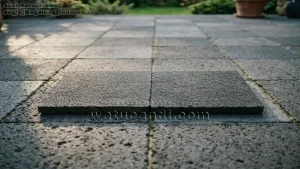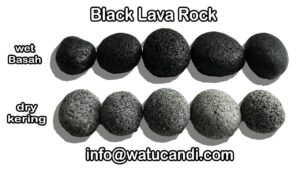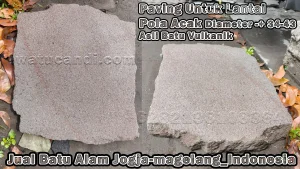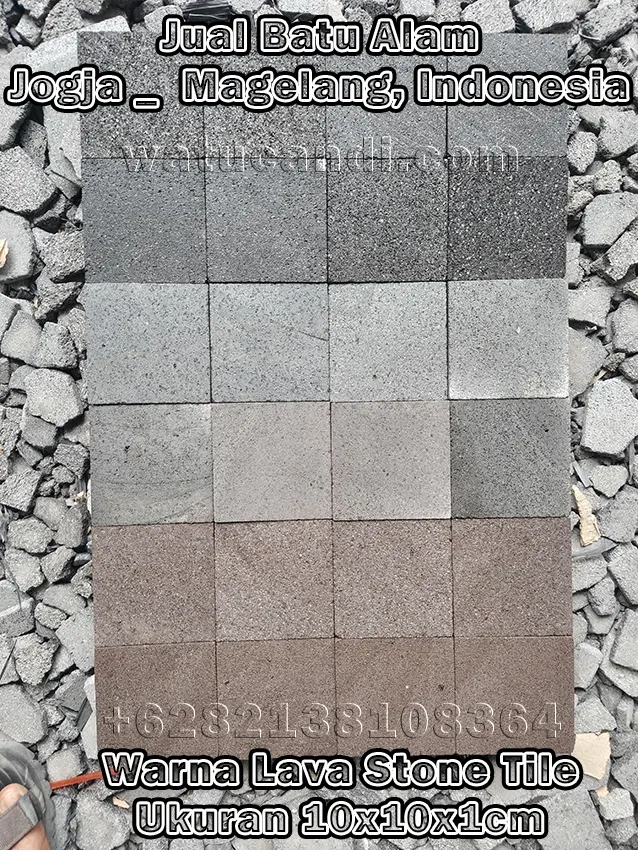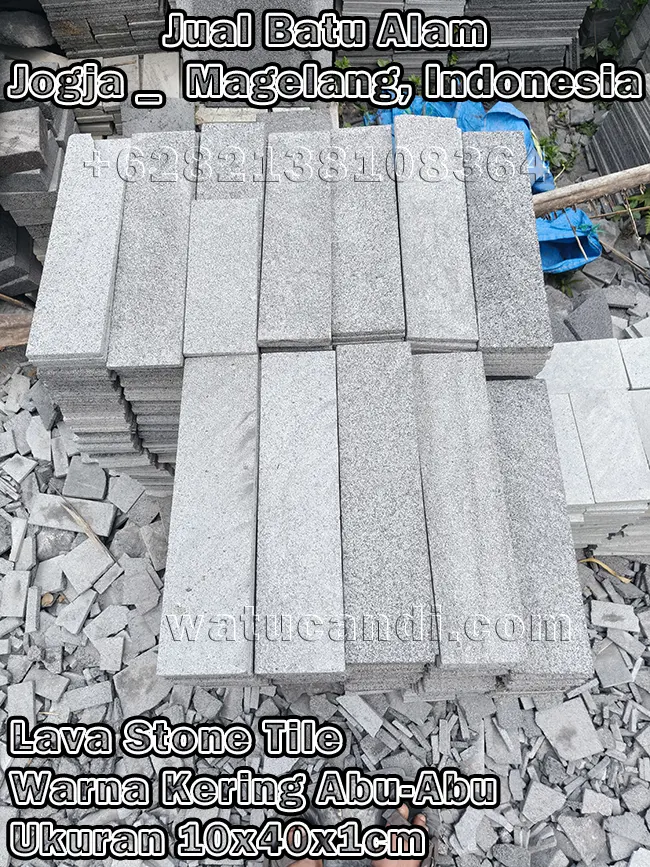
“Bring the beauty of mountain nature into your space. Merapi natural stone flooring offers exterior durability along with timeless natural aesthetics, featuring distinctive texture and volcanic gray color that never fades with time.”
Comprehensive Guide to Merapi Natural Stone: Art, Science, and Transformation of Your Outdoor Space
Finding the perfect material to complete your outdoor space is not an easy task. Amidst the many synthetic material options offering practicality, we often forget the warmth, character, and eternity that only nature can offer. Merapi natural stone, born from Mount Merapi in Yogyakarta and Magelang, comes as an answer to humanity’s longing for an authentic connection with nature. This comprehensive article is not just a guide to buying natural stone; it is a complete encyclopedia that thoroughly explores the geology, aesthetics, installation techniques, maintenance, and philosophy behind using Merapi natural stone to create stunning, functional, and high-investment-value outdoor spaces.
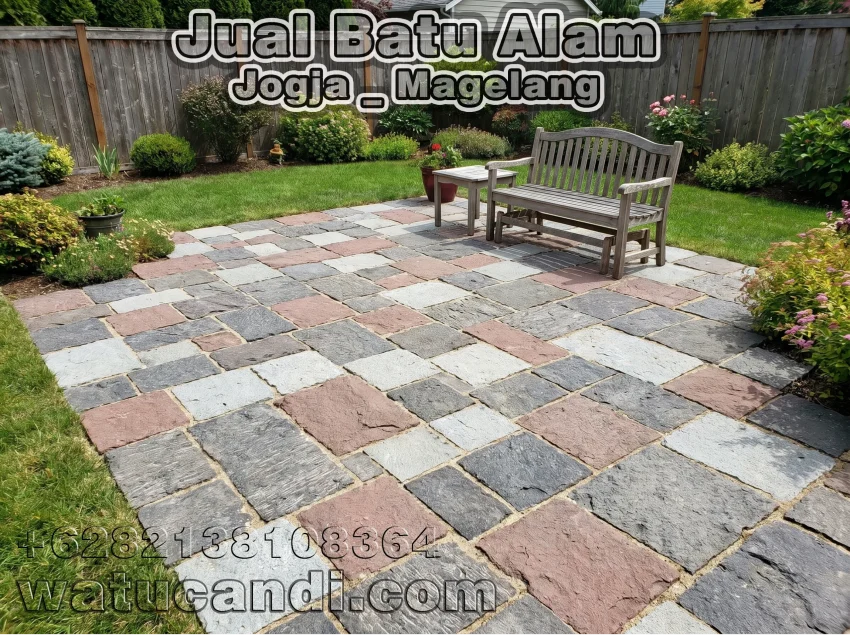
Table of Contents
- 1. Geological Wonder: Understanding the Origin of Merapi Natural Stone
- 2. Merapi Stone vs Other Natural Stones: An In-Depth Comparison
- 3. From Quarry to Artwork: Natural Stone Production Process
- 4. Natural Stone Anatomy: Types, Finishing, and Quality Grades
- 5. Landscape Design Principles Using Natural Stone
- 6. Ideal Installation Areas: Inspiring Space Transformation
- 7. Natural Stone Installation Masterclass: Professional Techniques
- 8. Advanced Maintenance and Troubleshooting Natural Stone Problems
- 9. Natural Stone and Environmental Sustainability
- 10. The Appeal of Indonesian Natural Stone in the Global Market
- 11. Complete FAQ and Problem Solutions
- 12. Conclusion and Next Steps
1. Geological Wonder: Understanding the Origin of Merapi Natural Stone
To truly appreciate Merapi natural stone, we must understand the epic journey it has taken over thousands, even millions of years. This stone is not merely material mined from the earth; it is frozen geological history. Mount Merapi, one of the most active volcanoes in the world, has become a natural “factory” producing rocks with very unique physical and chemical characteristics.
Volcanic Formation Process
Merapi natural stone falls into the category of extrusive igneous rocks or volcanic rocks. The process begins with magma formed deep within the earth’s mantle due to extremely high pressure and temperature. This magma, rich in silica, minerals, and dissolved gases, finds its way to the surface through volcanic channels. When an eruption occurs, the magma that emerges is called lava. Lava from Mount Merapi is generally andesitic to basaltic in type.
As lava flows down the mountainside, it interacts with the surrounding air and water. This cooling process occurs relatively quickly compared to intrusive igneous rocks (like granite) that cool slowly deep within the earth. This rapid cooling prevents the formation of large mineral crystals, resulting in a very fine, dense rock structure with controlled micro-porosity. This is what gives Merapi stone its extraordinary compressive strength while remaining manageable in weight for construction applications.
Mineral Composition and Color Variation
The stunning colors we see in Merapi natural stone, ranging from light gray, dark gray (charcoal), brown, to brick red, are not the result of artificial coloring. These colors are a direct reflection of the mineral composition within. The main components of Merapi stone include plagioclase (feldspar), pyroxene, hornblende, and magnetite.
Color variation occurs due to different conditions during lava cooling. Dark gray to black stones usually have higher mafic mineral content (such as pyroxene and magnetite) and experienced very rapid cooling. Meanwhile, brown to brick red colors are caused by the oxidation process of iron minerals (hematite and limonite) contained in the rock as it interacts with oxygen and water on the surface over thousands of years. This natural process creates a warm earthy color palette that will never fade, unlike paint or synthetic dyes that will fade when exposed to UV light.
Superior Physical Characteristics
The density of Merapi stone ranges from 2.3 to 2.7 tons per cubic meter. Its Mohs hardness level reaches 6 to 7, meaning this stone is hard enough to scratch glass and highly resistant to abrasion. Its compressive strength ranges from 100 to 250 MPa (Mega Pascal). For comparison, standard concrete used for house foundations typically has a compressive strength of about 20 to 30 MPa. This means Merapi stone is structurally much stronger than ordinary concrete, making it a very safe choice for heavy-load areas such as carports or public plazas.
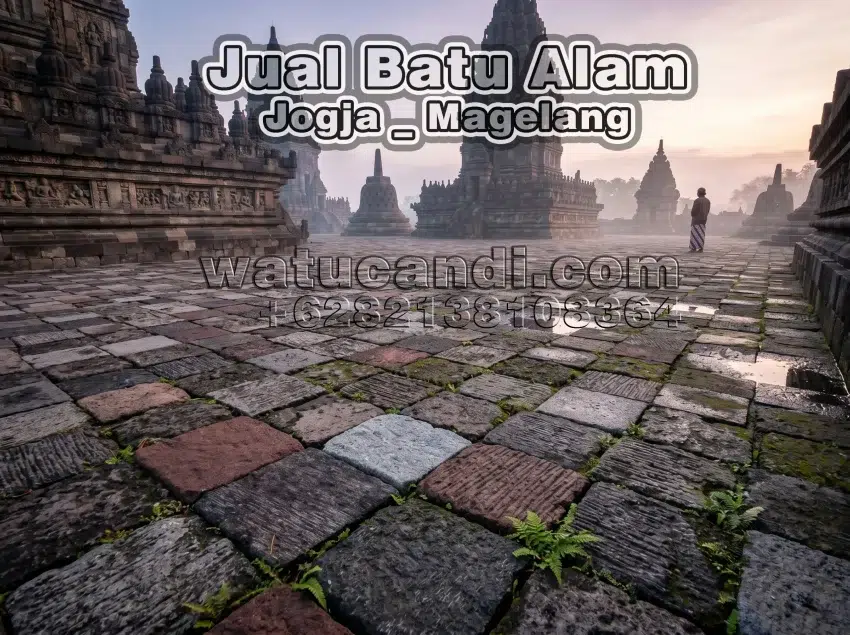
Additionally, Merapi stone has excellent resistance to extreme weather cycles. In Indonesia’s tropical climate, this stone must face high rainfall, extreme humidity, and scorching sunlight. Its stable mineral structure allows it to withstand thermal expansion and contraction without cracking or delamination. This property is what makes 9th-century temples like Borobudur and Prambanan, built using andesite/Merapi stone, still stand strong to this day.
2. Merapi Stone vs Other Natural Stones: An In-Depth Comparison
Choosing the right natural stone requires understanding the fundamental differences between various types of rocks available on the market. Each type of stone has its own personality, strengths, and weaknesses. The following is an in-depth comparative analysis between Merapi stone and other popular natural stones.
Merapi Stone vs Jogja Paras Stone
Jogja Paras Stone is a sedimentary rock (limestone) that is very popular for carvings and decorative walls. Its base color is yellowish-white or cream. The main difference lies in hardness. Paras stone is much softer (Mohs hardness 3-4) compared to Merapi. This makes Paras very easy to carve for creating intricate reliefs or carvings, but less ideal for outdoor floor areas with high traffic because it is easily scratched and worn. Merapi stone, with its high hardness, is the king for flooring and paving applications. If you need carved walls, choose Paras. If you need tough flooring, choose Merapi.
Merapi Stone vs Granite
Granite is an intrusive igneous rock that cools very slowly deep within the earth, producing large and clearly visible mineral crystals (speckled). Granite is very hard and has very small pores, making it almost waterproof. However, granite often feels “cold” and too formal for landscape designs that prioritize natural and rustic nuances. Merapi stone, with its finer volcanic texture yet still maintaining natural character, gives a warmer, earthy impression that blends with the tropical environment. Additionally, granite is usually more expensive and more difficult to carve manually compared to Merapi.
Merapi Stone vs Andesite from Other Regions
Geologically, Merapi stone is a type of andesite. However, not all andesite is created equal. Andesite mined from non-volcanic areas or from mountain slopes that have been inactive for millions of years has often undergone deep weathering. This can reduce its structural strength and make it more porous. Merapi stone mined from relatively younger lahar deposits or lava flows (in geological terms) retains its original density and strength. Craftsmen in Jogja-Magelang have also developed very specific cutting and finishing techniques to handle the unique characteristics of Merapi stone, producing more precise end products.
Merapi Stone vs Sandstone
Sandstone like Palimanan stone has clearly visible layers and a sandy texture. Sandstone is very beautiful for wall cladding as it provides a layered and warm visual effect. However, sandstone has high porosity and large water absorption capacity. If used for outdoor flooring in areas with frequent rain, sandstone can become very slippery when wet and is prone to moss and fungal growth. Merapi stone, with its lower porosity and texture that can be made anti-slip, is a much safer and more durable choice for exterior floor applications.
3. From Quarry to Artwork: Natural Stone Production Process
The journey of a giant stone block from the earth’s belly to becoming beautiful floor tiles in your garden is a symphony between modern machine power and the finesse of human touch. Understanding this process will make you appreciate every piece of stone you install even more.
Stage 1: Exploration and Quarrying
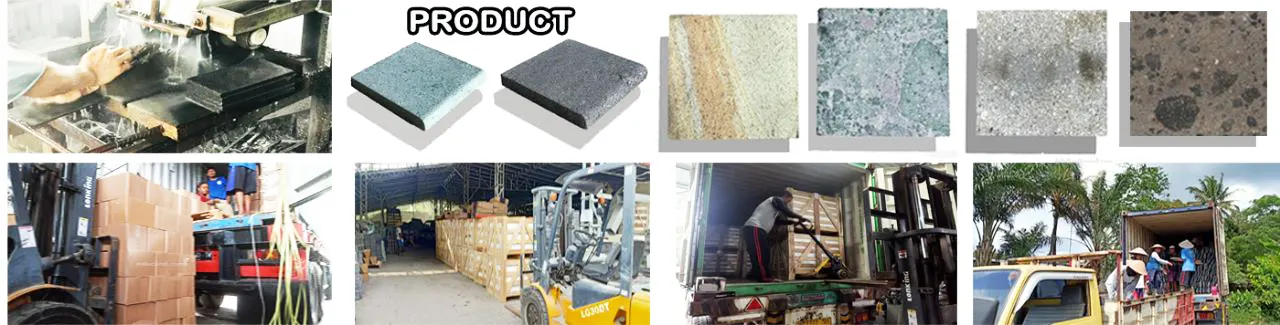
The process begins with geological surveys to find rock layers (veins) of the best quality. Experienced miners look for layers that are dense, with minimal natural fractures, and have consistent color. Mining is done carefully to minimize waste. Large blocks (boulders) weighing several tons are separated from the cliff using heavy equipment and precise splitting techniques. These blocks are then transported to the workshop using special trucks.
Stage 2: Primary Cutting (Block Cutting)
In the workshop, giant stone blocks are cut into more manageable slabs. The machines used are usually Diamond Wire Saw or Multi-Wire Saw. These machines use steel cables coated with industrial diamond powder, rotating at high speed while being watered to cool and reduce dust. This cutting must be done with millimeter precision to ensure consistent slab thickness, which will greatly affect the ease of installation later.
Stage 3: Secondary Cutting (Sizing and Trimming)
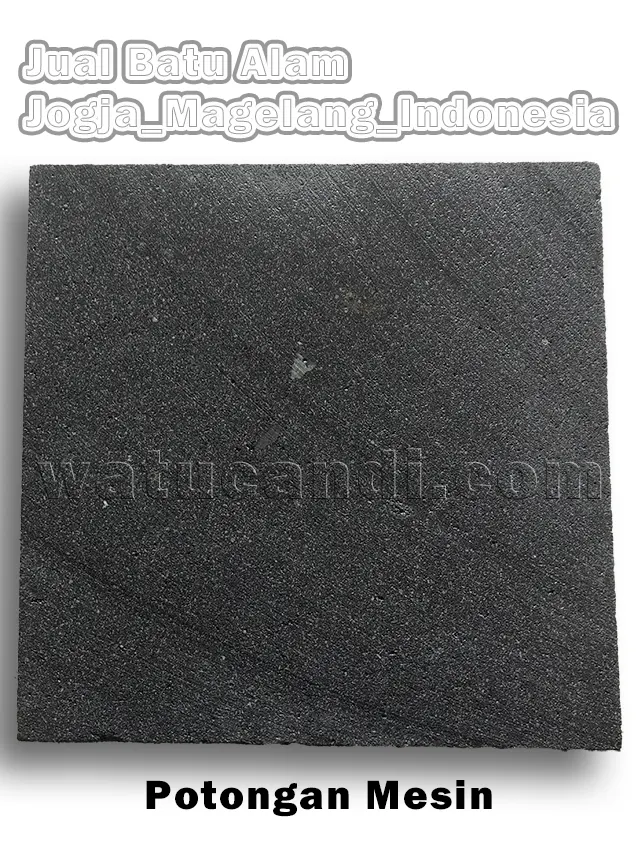
Stone slabs are then cut again into specific sizes (tiles/pavers) using a Bridge Saw or automatic stone cutting machine. At this stage, the stone is cut into standard sizes like 20×20 cm, 30×30 cm, 40×40 cm, or 60×60 cm. The stone corners must be cut at exactly 90 degrees (square) so that when installed, the joints between stones can be tight and straight. Stones that have structural defects or colors that deviate significantly are separated at this stage.
Stage 4: The Magical Touch of Craftsmen (Hand Finishing)
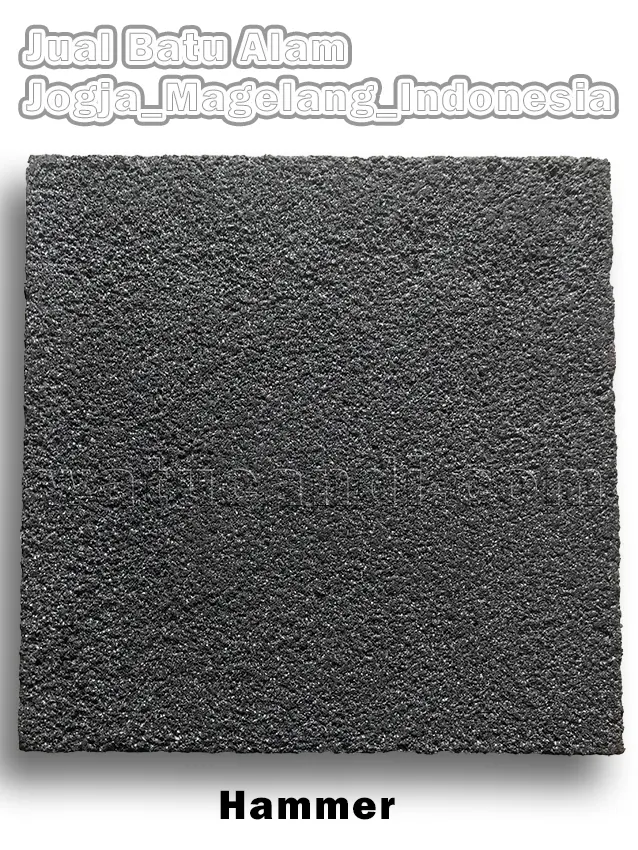
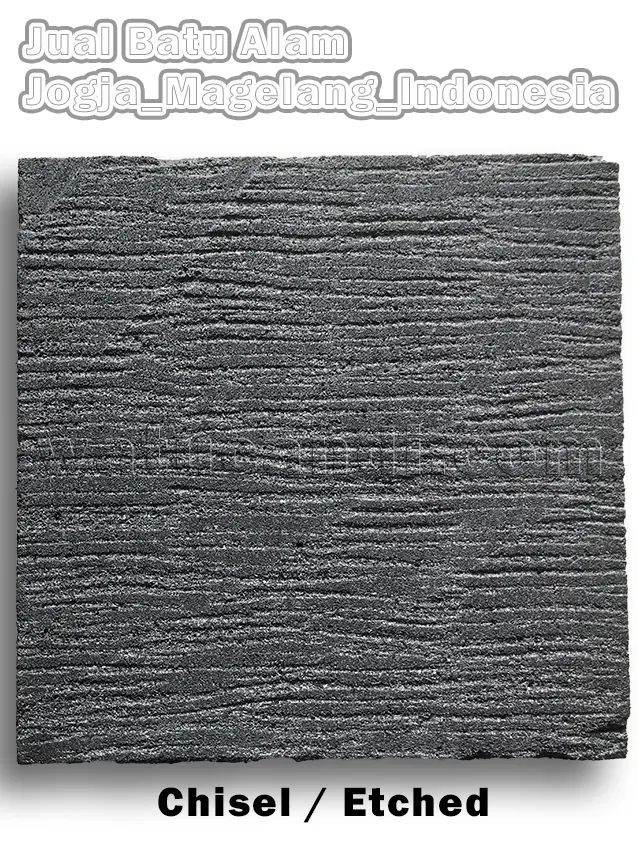
This is the stage that distinguishes premium natural stone from ordinary machine-cut stone. After being machine-cut, the stone surface still feels stiff and too flat. Expert craftsmen then take over. Using iron hammers, special chisels, and bush hammer tools, they rhythmically and measuredly strike the stone surface. This process is called “hand-carving” or “hand-texturing”.
The purpose of this process is not only to create an anti-slip texture but also to “bring the stone to life”. The chisel strikes release the stiff surface layer, revealing the natural character of the rock beneath. Craftsmen create micro-bumps and indentations that reflect sunlight differently, creating visual depth that cannot be achieved by machines. A 40×40 cm stone piece can take 15 to 30 minutes of hand carving to achieve perfect texture.
Stage 5: Quality Control and Packaging
Every piece of finished carved stone passes through a quality control table. Inspectors check dimensions – length, width, thickness, angle straightness, texture consistency, and structural integrity – ensuring there are no hairline cracks (adjusting to requests, affecting costs). Stones that pass QC are then stacked neatly on strong wooden pallets (according to Export request standards). Each layer of stone is separated by wooden slats or foam to prevent friction and damage during shipping. Pallets are then wrapped tightly with shrink wrap plastic to protect them from rain and dust during the journey.
4. Natural Stone Anatomy: Types, Finishing, and Quality Grades
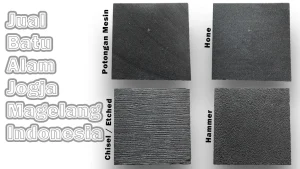
Choosing the right finishing is as important as choosing the stone color. Finishing determines how the stone feels underfoot, how it reflects light, and how safe it is when wet. The following is a complete guide regarding the types of Merapi natural stone finishing.
1. Natural Split Face
Characteristics: The stone surface is left as is according to the natural cleavage plane of the rock. The texture is very rough, irregular, and maximally highlights the geological character of the stone.
Advantages: Maximum anti-slip, very rustic, relatively more economical price due to minimal finishing process.
Disadvantages: Very uneven surface can make cleaning difficult, uncomfortable for walking barefoot for long periods.
Ideal Application: Fence walls (cladding), retaining walls, waterfall features, and very natural rustic garden paths.
2. Hand-Carved / Bush Hammered
Characteristics: The stone surface is carved manually or using a bush hammer machine to create a pattern of small bumps that are uniform yet still look natural. This is the most popular finishing for Merapi stone.
Advantages: Perfect balance between natural aesthetics and functionality. Very good anti-slip, comfortable to walk on, and easy to clean.
Disadvantages: Requires longer production time, slightly higher price than split face.
Ideal Application: Terrace floors, garden pathways, pool areas, carports, and outdoor plazas.
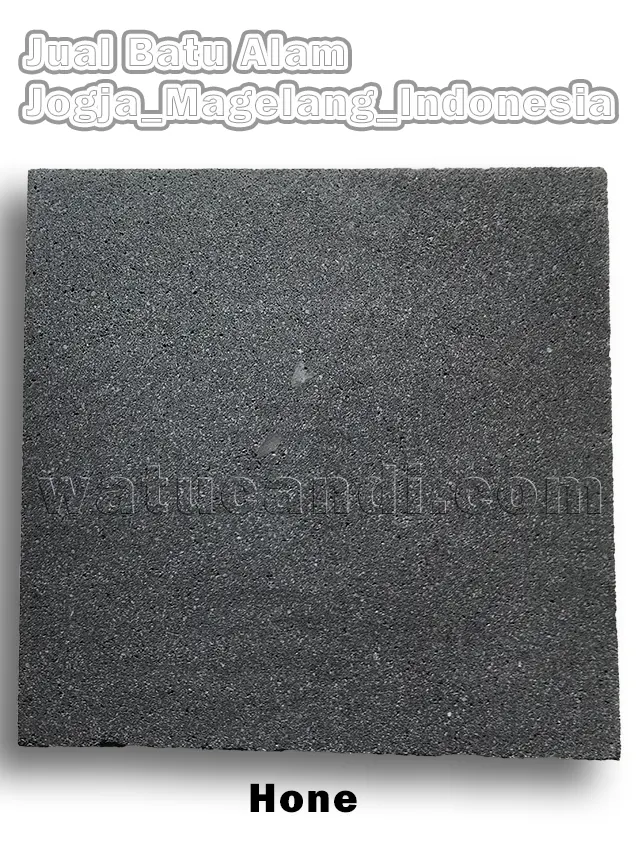
3. Honed / Smooth Finish (Matte Smooth)
Characteristics: The stone surface is polished using abrasives until flat and smooth, but not glossy (matte). The stone pores are open, displaying the original stone color very clearly.
Advantages: Feels very smooth and cool on the skin, displays stone color and patterns with high detail, easy to clean.
Disadvantages: Less anti-slip when wet, easily shows scratches or stains if not sealed.
Ideal Application: Indoor-outdoor transition areas, indoor feature walls, outdoor tables, and dry areas rarely exposed to rain.
4. Flamed (Burned)
Characteristics: The stone surface is passed through a very high-temperature torch flame, causing the stone’s surface layer to flake off (spalling) microscopically, leaving a rough and porous texture (can only be done on certain types of Andesite stone).
Advantages: Extreme anti-slip, gives an artistic weathered impression.
Disadvantages: Stone color can change slightly to become more faded or reddish due to rapid oxidation by heat.
Ideal Application: Public areas with very high traffic, ramps (sloped paths) for wheelchairs, and commercial outdoor areas.
5. Tumbled / River Washed
Characteristics: Small to medium-sized stones are put into a large rotating machine with water and abrasives, mimicking the natural erosion process in rivers. The edges and surface of the stone become very smooth and rounded.
Advantages: Very comfortable for bare feet, safe for children, gives a calming beach or river nuance.
Disadvantages: Not suitable for areas requiring a perfectly flat surface (like tables or chairs).
Ideal Application: Swimming pool bottoms, spas, outdoor shower areas, and garden decorations (stone mulch).
Understanding Quality Grades
Professional suppliers usually classify natural stone into several grades for quality transparency:
- Grade A (Premium/Export Quality): Very consistent color (from nature) in one batch, precise thickness (tolerance ± 2mm), no cracks, defects, or disturbing mineral spots. Suitable for high-end projects, 5-star hotels, and luxury villas.
- Grade B (Commercial Quality): Slight color variation (still within a harmonious spectrum), thickness tolerance ± 3mm, may have small mineral spots or more visible natural pores. Very suitable for housing, restaurants, and public parks.
- Grade C (Rustic/Standard Quality): High color variation, larger thickness tolerance, more irregular texture. Suitable for projects with limited budgets, secondary areas, or designs that indeed prioritize a rustic and irregular impression.
5. Landscape Design Principles Using Natural Stone
Using natural stone is not just about arranging stone pieces on the ground. It is the art of arranging hardscape elements to dialogue with softscape (plants) and building architecture. The following are fundamental design principles to maximize the potential of Merapi natural stone.
1. Color Theory and Visual Temperature
Merapi natural stone offers a wide earthy color palette. Understanding color “temperature” is very important for creating the desired mood.
Cool Colors (Gray, Charcoal, Grayish Green): These colors create a modern, minimalist, calm, and spacious impression. They are very suitable combined with contemporary style architecture, white walls, glass, and dark green or silver-leaved plants (like Sansevieria or Calathea). Cool colors also help camouflage dust and dirt.
Warm Colors (Brown, Brick Red, Golden Cream): These colors bring energy, warmth, and an inviting impression. They are perfect for tropical, rustic, Mediterranean, or traditional styles. Combine warm colors with wood materials (decking, furniture), bright flowering plants, or exposed brick walls to create a cozy and embracing space.
2. Psychology of Installation patterns
How you arrange the stone can dramatically change the perception of space:
- Stack Bond (Straight Stack): Stones are arranged in a straight grid. Gives a formal, modern, clean, and structured impression. Suitable for minimalist areas.
- Running Bond (Brick Stack): Stone rows are shifted half from the row below. Gives a classic, sturdy, and traditional impression. Very good for resisting lateral loads (suitable for driveways).
- Herringbone (Fish Bone): Stones are arranged in a V or zigzag pattern. Gives a dynamic, luxurious, and structurally very strong impression. Suitable for focal point areas or formal terraces.
- Basket Weave: Rectangular stone pairs are arranged perpendicular to each other. Gives an elegant, European classic, and detailed impression.
- Random / Crazy Paving: Using stone pieces with irregular sizes and shapes. Gives a very natural, rustic, and organic impression. Perfect for winding garden paths.
3. Scale and Proportion
Stone size must be proportional to the room size. For small yards or narrow garden paths, use small-sized stones (20×20 cm or 30×30 cm) so the space doesn’t feel chopped up. For spacious terraces, plazas, or carports, use large-sized stones (60×60 cm or larger) to create a spacious, grand impression with minimal distracting joint lines.
4. Integration with Other Elements
Natural stone should not stand alone. Integrate with:
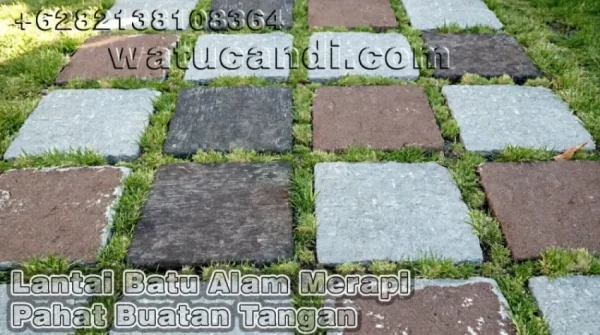
- Plants: Let climbing plants (like Creeping Jenny or Thyme) grow in the gaps between stones to soften the hard lines of hardscape.
- Water: Natural stone and water are eternal partners. Use stone for pool edges, water feature bases, or paths leading to water sources.
- Light: Install uplight lamps at the base of plants directing toward stone walls, or plant in-ground lights between pathway stones for dramatic nighttime effects.
- Wood: The texture contrast between cold/hard stone and warm/soft wood creates perfect visual balance.
6. Ideal Installation Areas: Inspiring Space Transformation
Merapi natural stone has a magical ability to transform ordinary spaces into destinations that pamper the senses. The following is an in-depth exploration of ideal areas for natural stone installation, complete with sensory descriptions to awaken your inspiration.
Front Yard & Grand Entryway
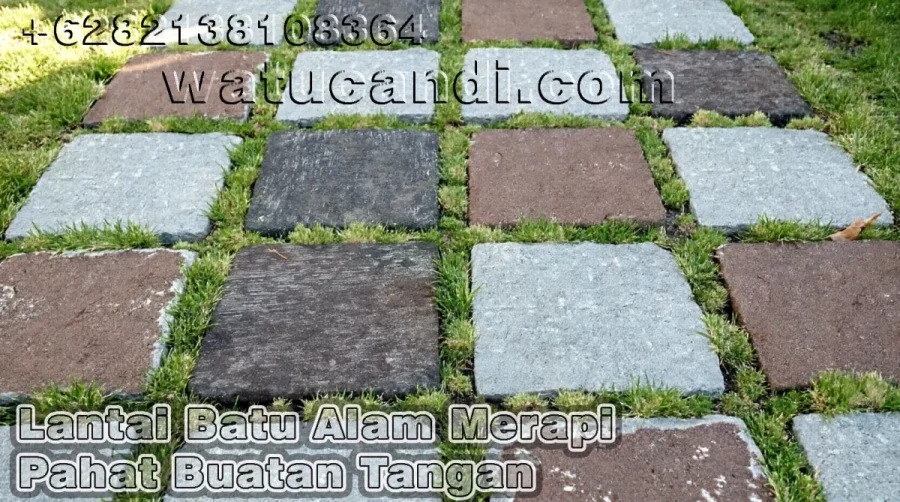
The front yard is the visual business card of your property. This is the first transition space between the busy public world and your private sanctuary. Imagine a path of dark gray Merapi natural stone with hand-carved finishing stretching gracefully from the wrought iron gate toward your main door. The stones are installed in a running bond pattern, flanked by a carpet of elephant grass mini thriving in the gaps (grass joint).
As you step out in the morning, morning dew still clings to the stone texture, giving a cool and fresh sensation on the soles of your feet. The earthy stone color blends perfectly with pots of monstera and cycad plants placed symmetrically on both sides of the path. At night, bollard garden lights installed among the plants emit warm light downward, highlighting the carved stone texture and creating dramatic shadows that make your yard look like a corridor leading to a five-star hotel. A front yard with natural stone is not just about aesthetics; it is a statement about taste, quality, and respect for nature. Does your front yard already reflect the quality of life you dream of? Let’s discuss how Merapi natural stone can drastically increase your property’s curb appeal. Contact us for free design consultation!
🌿 Backyard Oasis & Lounge
If the front yard is for impression, the backyard is for the soul. This is the private space where you remove your social mask and become yourself. Merapi natural stone in reddish-brown or milky brown color with split face finishing is the perfect choice for creating a warm and embracing backyard oasis.
Imagine a spacious patio area, its floor covered with natural stone installed with tight joints, providing a flat yet naturally textured surface. In the center, there is a solid teak outdoor dining table surrounded by comfortable chairs. In the garden corner, a wooden gazebo with an alang-alang roof stands sturdy on a natural stone foundation. In the afternoon, you sit here enjoying tea or wine, feeling the afternoon breeze carrying the scent of jasmine and frangipani plants.
The stone surface that doesn’t absorb heat excessively makes this area still comfortable for walking barefoot even in the scorching midday sun. Your children can run around safely because of the stone’s anti-slip texture. This area is not just a garden; it is a second family room, where beautiful memories are made, laughter is heard, and stress dissolves. Don’t let your backyard just become dusty empty ground. Transform it into a personal oasis that restores your energy. Merapi natural stone is the foundation of that transformation. Ask us about paving solutions for your backyard!
💧 Pool Deck & Aquatic Sanctuary
The area around the swimming pool is a challenging zone for flooring materials. It must be resistant to constant water splashes, chemical exposure (chlorine), UV rays reflecting from the water, and most importantly: must be safe when wet. Merapi natural stone is the champion in this category.
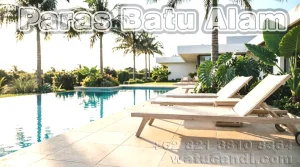
Imagine an infinity pool with crystal clear blue water that seems to merge with the sky. Surrounding it, stretches a spacious pool deck using light gray Merapi natural stone with coarse bush-hammered finishing. This stone texture provides extraordinary traction, ensuring you, your children, or your guests will not slip even when their feet are soaking wet. The light gray stone color reflects sunlight, so the deck surface remains cool and comfortable to walk on, unlike dark concrete or black ceramic that can burn the soles of your feet.
As you exit the pool, water drips from your body onto the stone, immediately absorbing or evaporating quickly without leaving slippery puddles. Stone that has been sealed with special waterproofing will not absorb chlorinated pool water, maintaining its integrity and color prime for years. This area feels like a spa resort in Bali or the Maldives, right in your own backyard. Safety and luxury at your pool don’t have to compromise each other. Merapi natural stone offers both. Get technical specifications for pool deck applications from our expert team now!
🚗 Driveway of Distinction
Carports are often neglected in landscape design, even though this is the area where you spend time every day when arriving home. Replacing the boring and easily cracked concrete carport floor with Merapi natural stone is an upgrade that will make you proud every time you come home from work.
Imagine turning your car into the yard, and your car tires roll over the surface of sturdy charcoal-colored Merapi natural stone grade A. Large-sized stones (60×60 cm) with 7 cm thickness are installed with precision on top of reinforced concrete base. There is no noisy sound or strange vibration when the car passes, only the sound of admiring clicks from neighbors passing your house.
The extraordinary compressive strength of Merapi stone ensures this floor will not subside or crack even when passed by heavy SUVs every day. Gaps between stones (if using a grass joint system) allow rainwater from car washing or heavy rain to seep directly into the ground, preventing flooding or water pooling in the carport. Oil or grease stains that may fall can be cleaned easily if the stone has been properly sealed. Your carport transforms from merely a parking place into an exterior gallery showcasing high taste. Your car deserves a worthy parking place. Enhance the prestige and function of your carport with load-resistant Merapi natural stone. Consult your carport structural needs with us!
Culinary Landscape
The outdoor living trend has brought cooking activities outdoors. BBQ areas and outdoor kitchens require materials that are not only beautiful but also tough against food spills, fire sparks, and traffic of people carrying plates and drinks.
Imagine an outdoor kitchen complete with built-in grill, stone bar counter, and spacious dining area. The floor uses brown Merapi natural stone with honed (smooth matte) finishing that gives an elegant yet rustic impression. When you grill steak, fire sparks or charcoal falling on the floor will not burn or damage the stone. BBQ sauce or wine spills that fall can be wiped quickly without leaving permanent stains, thanks to the food-grade sealant layer applied to the stone.
The flat yet non-slip stone surface provides safe footing for you who are busy moving back and forth carrying food. At night, this area becomes the center of crowds. Your friends sit at the bar counter, enjoying cocktails, while you cook comfortably on the cool stone floor. The atmosphere created is a perfect blend of professional kitchen functionality and backyard garden hospitality. Make your BBQ event more classy with a floor as beautiful as your dishes. Merapi natural stone is stain-resistant, heat-resistant, and durable. Ask about anti-stain treatment for your outdoor kitchen!
🧘 Mindfulness Path
In a world that is fast-paced and full of noise, homes must provide space to slow down the heartbeat and calm the mind. Zen gardens or meditation paths using Merapi natural stone are an investment in your mental health.
Imagine a quiet garden corner, far from the view of the main road. The floor is covered with white river gravel raked in wave patterns using a bamboo broom. Above this gravel bed, there is a stepping stone path made of Merapi natural stone with organic shapes (irregular). These stones are placed at distances adjusted to the steps of humans walking slowly and mindfully.
Every time you step from one stone to another, you are forced to slow down your steps, take deep breaths, and focus on the present moment. The natural stone texture gives a grounding sensation, as if your feet are connected directly to the earth’s energy. Around the path, bamboo plants, moss, and Japanese maple provide shade and the soothing sound of rustling leaves. This area is not for running; it is for walking, reflecting, and rediscovering self-balance. Create a space of tranquility in the midst of your busyness. Merapi stepping stones with organic shapes are the perfect choice for Zen gardens. Let’s design your meditation path with us!
🏰 Vertical Elegance
Natural stone is not only for floors. Applying it vertically can add dimension, texture, and dramatic focal points to your architecture.
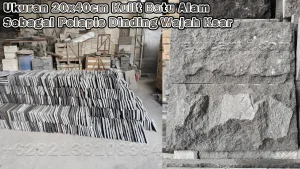
Imagine your living room wall that is usually just painted plain white, now coated with Merapi natural stone split face with variations of gray and brown colors. The stone texture protruding out catches the light from spotlights installed on the ceiling, creating lively and dynamic shadow play. This wall becomes the perfect background for mounting TVs, paintings, or minimalist bookshelves.
Outdoors, natural stone can be used to make retaining walls on sloping land, transforming boring structural functions into stunning decorative elements. Or, use stone to wrap fence posts or gate pillars, giving a sturdy, safe, and luxurious impression from the first glance. Natural stone on walls also helps thermal insulation, keeping indoor temperatures stable. Transform boring walls into visual masterpieces. Merapi natural stone for wall cladding is available in various thicknesses and textures. Request our stone wall catalog now!
💦 Aquatic Harmony
Water and stone are two natural elements that inherently complement each other. Their combination creates visual and auditory harmony that soothes the soul.
Imagine a koi fish pond in the garden corner. The pond edge does not use stiff concrete, but is coated with Merapi natural stone that protrudes slightly into the water, creating a natural effect as if the pond formed naturally in the wild. Clear water flows slowly through arrangements of Merapi stones creating a mini waterfall. The sound of trickling water hitting the stone surface creates white noise that masks traffic noise from outside the fence.
Natural stone used in and around water must have low porosity and be sealed with special epoxy waterproofing so it doesn’t become a moss nest and is easy to clean. The dark color of Merapi stone provides beautiful contrast with the bright colors of koi fish and the green of aquatic plants like lotus. Bring your garden to life with the sound and view of water. Merapi natural stone is water-resistant and perfect for water features. Discuss your pond design with our team!
Corporate Prestige
For commercial properties like hotels, resorts, restaurants, offices, or clubhouses, the chosen material speaks directly about brand image and quality standards offered to clients or guests.
Imagine the lobby of a boutique hotel whose floor uses Merapi natural stone grade A with very precise honed finishing. The stones are installed with intricate herringbone patterns, showing attention to detail and luxury. Every guest who enters will immediately be greeted by an aura of elegance and tranquility radiated by this natural material. In outdoor resort areas, pathways connecting villas use Merapi stone with grass joints, blending perfectly with the lush tropical landscape, giving the “back to nature” experience sought by tourists.
For business owners, using Merapi natural stone means investing in durability. This material is capable of withstanding foot traffic of thousands of people every day without losing its beauty. Long-term maintenance costs are much lower compared to carpets or synthetic wood floors that must be replaced every few years. Enhance your commercial property image with material that radiates quality and eternity. Merapi natural stone is the choice of famous hotel and resort developers. Contact our commercial project division!
The Journey Through Nature
Pathways or pedestrian paths are the lifeline of a landscape. They guide movement, connect various functional zones, and offer an immersive walking experience.
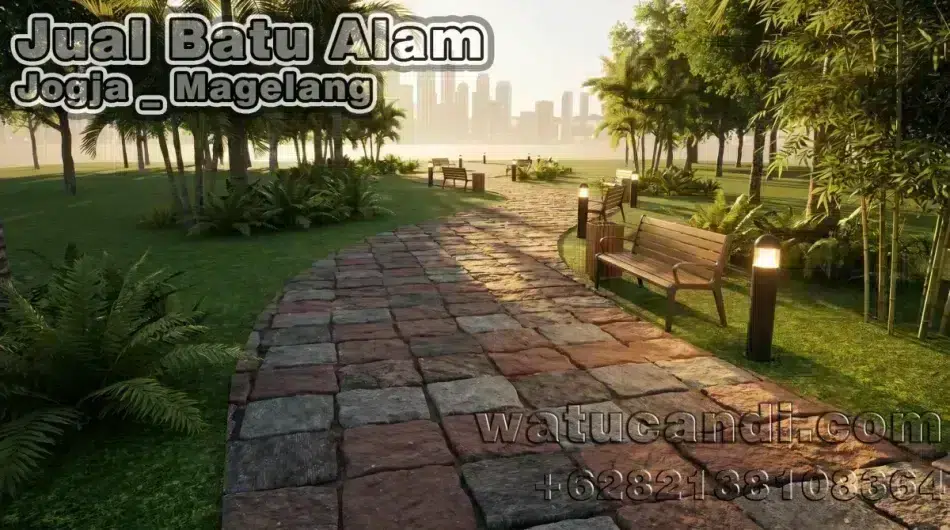
Imagine a garden path that is not stiffly straight, but winds gently following the natural contours of the land. This path is made using Merapi natural stone sized 30×30 cm, installed with quite wide spacing, and in every gap grass or groundcover plants like Dichondra are planted. As you walk on this path, your feet step on sturdy stone, then step on soft grass, creating an enjoyable step rhythm.
On the sides of the path, colorful flowering plants and ornamental shrubs are planted, creating a green tunnel that pampers the eyes. At night, small lights embedded in the ground (in-ground light) illuminate the stone from below, making this path look like a runway for fireflies. Pathways with natural stone transform the boring activity of walking into an enjoyable sensory journey. Make every step in your garden meaningful. Design beautiful and functional pathways with Merapi natural stone. We are ready to help realize your dream garden layout!
The Art of Outdoor Living
Terraces and patios are an extension of your indoor living space. This is the transition zone where the boundary between inside and outside the house becomes blurred, allowing you to enjoy nature without sacrificing comfort.
Imagine a back terrace that merges seamlessly with the family room through wide sliding glass doors. The terrace floor uses Merapi natural stone with colors and textures matching the indoor floor, creating the illusion of a more spacious and flowing space (indoor-outdoor flow). This terrace is equipped with comfortable outdoor sofas, earthy-colored cushions, and a fire pit in the center.
On a cold night, you light the fire pit. Dancing flames reflect warm light on the surrounding natural stone surface. You sit here, enjoying a cup of coffee or wine, listening to the sound of crickets, and gazing at the stars. The natural stone under your feet provides the remaining warmth from the afternoon sunlight, making the atmosphere increasingly cozy. This terrace is where you celebrate weekends, welcome friends, or simply enjoy solitude. Erase the boundary between indoor and outdoor. Create a terrace that becomes the whole family’s favorite with comfortable and elegant natural stone flooring. Ask us about terrace installation systems!
🌆 Urban Oasis
For those living in urban areas with limited land, rooftops or upper floor terraces are the only chance to have a private green space. However, the main challenge here is the structural load (weight load) that the building can bear.
Merapi natural stone can be applied on rooftops intelligently. Instead of using 5 cm thick stone, you can use stone with 2-3 cm thickness installed using a pedestal system (raised floor) or thinned (veneer). The pedestal system allows rainwater to flow freely under the stone toward drainage channels, preventing leakage and water pooling. Imagine a rooftop garden with natural stone flooring, surrounded by planter boxes containing vertical plants, with a view of the city skyline in the distance. This is the perfect place to enjoy sunsets while relaxing. Have an empty rooftop? Transform it into a stunning urban oasis. We provide lightweight natural stone solutions and special installation systems for rooftops. Consult your structural load with us!
🎉 Memorable Gatherings
For wedding venues, event places, or outdoor gathering spaces, the floor is the largest canvas that will be seen and stepped on by hundreds of guests. The material must be photogenic, resistant to various types of shoes (from high heels to boots), and easy to clean after the event.
Imagine an outdoor wedding venue whose floor uses Merapi natural stone with an elegant basket weave pattern. As guests walk toward the wedding altar, the sound of their footsteps creates a solemn rhythm. Natural stone provides a natural background that doesn’t distract from the luxurious flower decorations. After the event is over, floor cleaning is very easy; just sweep and spray with water. There are no carpets that need washing or wood floors that fear wine spills. Realize unforgettable and easy-to-maintain event venues. Merapi natural stone is a smart choice for event spaces. Contact us for your venue project needs!
7. Natural Stone Installation Masterclass: Professional Techniques
Poor natural stone installation can ruin material of any quality. Cracking, subsidence, moss growth, and detached joints are often not due to stone quality, but rather due to errors in base preparation and installation techniques. The following is a masterclass guide to ensure your Merapi natural stone is installed perfectly and lasts a lifetime.
Phase 1: Planning and Land Preparation
Before a single stone is laid, thorough planning is key. Determine the installation pattern, calculate material needs (add 10-15% spare for cutting and waste), and ensure land slope (slope) is at least 1-2% away from the building for good drainage.
Cleaning and Excavation: Clean the area of all vegetation, garbage, and organic material. Dig the soil to the required depth. Standard depth for garden paths is 20-25 cm, while for carports or heavy-load areas it can reach 30-40 cm.
Phase 2: Building a Strong Sub-Base
The sub-base is the foundation that supports the stone. Mistakes here will have fatal consequences.
- Geotextile Layer (Optional but Recommended): Spread geotextile fabric at the bottom of the excavation. This prevents the base soil from mixing with the gravel layer above and inhibits weed growth from below.
- Coarse Aggregate Layer (Base Course): Spread a layer of crushed stone or gravel (split) size 1/2 or 3/4 with thickness 10-15 cm. Compact this layer using a compactor or stamper machine until truly solid and no longer shifts when stepped on.
- Fine Aggregate Layer (Bedding Course): Above the base course, spread a layer of sand or stone sand with thickness 3-5 cm. Level this layer using a screed (wooden or iron bar) pulled over guide rails. Ensure the slope for drainage has been formed in this layer.
Phase 3: Stone Installation Techniques
There are two main methods for outdoor natural stone installation:
Method A: Dry Lay / Grass Joint (Without Cement)
This method is ideal for garden paths and areas wanting maximum drainage and natural nuance.
- Start installation from the straightest corner or from the edge bordering the building.
- Place the stone on top of the sand layer. Press the stone down and shake it slightly so the stone “locks” into the sand.
- Use a rubber mallet to tap the stone until its surface is level with the stone beside it. Check flatness using a long level.
- Maintain spacing between stones (joint) around 5-10 cm, depending on design.
- After the entire area is installed, fill the gaps between stones with fertile soil mixed with grass seeds, or sand if you don’t want grass.
- Water the area gently to settle the soil in the gaps.
Method B: Wet Lay / Mortar Bed (With Cement Mixture)
This method is necessary for heavy-load areas (carports), terraces connected to indoor, or installation on concrete slabs.
- Ensure the concrete base (beam/slab) is clean, rough, and wet (SSD – Saturated Surface Dry).
- Mix cement and sand mixture with ratio 1:4 or 1:5. Add water sufficiently until the mixture is moist (not runny).
- Spread cement mixture on top of the concrete base with thickness 2-3 cm.
- Also apply a thin layer of pure cement (slurry) on the bottom of the natural stone pieces to increase adhesion.
- Place the stone on top of the mixture, press and tap with a rubber mallet until reaching the desired level. Use plastic spacers if you want very precise joints.
- Let the mortar dry and harden for a minimum of 3-7 days before being stepped on or loaded.
Phase 4: Grouting and Finishing
If using the wet lay method with narrow joints, fill the gaps between stones with grout (fine cement mixture or commercial grout). Use a rubber scraper to press grout into the gaps. Immediately clean excess grout on the stone surface with a damp sponge before the grout dries. After the grout dries completely (usually 24-48 hours), do curing by watering gently for several days to ensure maximum strength.
Fatal Mistakes to Avoid
- Uncompacted base: Causes stone subsidence and cracking later on.
- Not creating slope/gradient: Causes water pooling, leading to slippery stone, moss growth, and seepage into buildings.
- Using pure cement without sand: Mixture is too strong and stiff, will crack when soil movement or thermal expansion of stone occurs.
- Installing stone during rain: Disrupts the cement bonding process and can cause water stains on porous stone.
- Not doing sealing: Unsealed stone will absorb water, stains, and become a breeding ground for moss.
8. Advanced Maintenance and Troubleshooting Natural Stone Problems
Merapi natural stone is known for being tough, but that doesn’t mean it’s immune to time and environment. Proper maintenance will ensure your stone looks like new for decades. The following is an advanced maintenance guide and solutions for common problems.
Periodic Maintenance Routine
Daily/Weekly: Sweep the stone surface of leaves, dust, and coarse dirt. Rinse with clean water using a hose (normal pressure) to remove adhered dust.
Monthly: Do deep cleaning using pH-neutral soap (mild dish soap) and nylon bristle brush. Avoid harsh detergent soap or bleach. Rinse until clean.
Annual/Bi-annual: Check sealant condition. Do a water drop test: drip a few drops of water on the stone surface. If water forms beads (beading), the sealant is still good. If water absorbs and darkens the stone, it’s time to reseal.
Troubleshooting Common Problems
1. Moss & Algae Growth
Cause: Shaded areas, moisture, and poor drainage.
Solution: Don’t scrape with sharp objects that can damage stone texture. Use a mixture of water and white vinegar (ratio 1:1) or commercial moss cleaner safe for stone. Spray, let sit 15-20 minutes, brush with plastic brush, and rinse. For prevention, ensure surrounding trees are not too dense so sunlight can reach the floor, and improve the drainage system.
2. Oil & Grease Stains
Cause: Spills from vehicles in carports or BBQ areas.
Solution: Immediately sprinkle the affected area with baking soda, talcum powder, or cat litter to absorb oil. Let sit overnight. Sweep clean. If stains remain, make a paste from baking soda and water, apply, cover with plastic wrap, and let sit 24 hours. Scrub and rinse. For stubborn stains, use special natural stone degreaser.
3. Rust Stains
Cause: Rusted iron objects (flower pots, furniture) placed on stone for a long time when wet.
Solution: Use special natural stone rust remover that is mildly acidic. DO NOT use hydrochloric acid (HCl) or other strong acids as they can erode stone minerals and make stains worse. Apply according to product instructions, rinse until clean.
4. Efflorescence (White Crust)
Cause: Mineral salts from inside cement or soil rise to the stone surface through pores and crystallize when water evaporates.
Solution: Let efflorescence occur naturally and disappear by itself over time and rain. Don’t clean with water as it will draw more salts upward. If it must be cleaned immediately, dry brush with a hard brush. If stubborn, use special efflorescence cleaner.
5. Cracked or Broken Stone
Cause: Excessive load, subsided base, or hard impact.
Solution: Natural stone has modular advantages. You don’t need to dismantle the entire floor. Just remove the cracked stone using chisel and hammer (be careful not to damage the stone beside it). Clean the hole base, prepare new mortar, and insert replacement stone. This is why it’s very important to store leftover stone (spare) from the initial project.
Natural Stone Sealing Guide
Sealing is a mandatory step to protect your investment. Sealant works by filling the stone’s micro-pores, creating an invisible protective layer (or slightly glossy, depending on type) against water, stains, and UV.
- Choose the Right Sealant: For outdoor, use Penetrating Sealer (water-based or solvent-based) that allows the stone to still “breathe” (water vapor can escape, but liquid water cannot enter). Avoid Topical Sealer (like thick varnish or epoxy) for outdoor as it can make slippery, yellow from UV exposure, and peel off.
- Preparation: Stone must be truly clean and COMPLETELY DRY. Wait a minimum of 48-72 hours after rain or washing before doing sealing.
- Application: Use soft-bristled roller, brush, or sprayer. Apply evenly. Don’t let there be sealant pooling. Let it absorb for 10-15 minutes, then wipe excess sealant with a clean microfiber cloth.
- Curing: Don’t let the area get wet or be stepped on for a minimum of 24-48 hours until the sealant dries completely.
9. Natural Stone and Environmental Sustainability
In an era where awareness of climate change and environmental preservation is increasingly urgent, choosing sustainable construction materials is our responsibility. Merapi natural stone offers an environmental profile far superior to synthetic materials.
Low Carbon Footprint
Production of ceramic, porcelain, or concrete requires firing at very high temperatures (up to 1400°C) which consumes massive amounts of fossil fuel and releases CO2 in large volumes. In contrast, natural stone only requires mechanical cutting and finishing processes. The energy used is much less, and there are no chemical processes releasing greenhouse gases. Additionally, Merapi stone is mined locally in Indonesia, reducing the carbon footprint from long-distance transportation compared to imported materials.
Permeability and Rainwater Management
The use of waterproof materials like concrete or asphalt in urban areas causes rainwater to be unable to seep into the ground, resulting in flooding and groundwater level decline. Installing natural stone with grass joint systems or sandy joints allows rainwater to seep naturally into the ground. This is a form of Sponge City concept on a micro scale, which helps recharge groundwater, reduce drain load, and prevent local flooding.
Recycling and Longevity (Circular Economy)
Natural stone is an eternal material. If you renovate your house or dismantle your garden, natural stone that has been installed can be carefully removed, cleaned, and reused in a new location without losing its quality. This is very different from ceramic or vinyl that breaks when dismantled and ends up in landfills (TPA). Even, powder and small pieces from the stone production process can be recycled into filling material or concrete mixture.
No Harmful Chemicals (Non-Toxic)
Natural stone is 100% made from natural materials. It does not emit VOCs (Volatile Organic Compounds) harmful to indoor air quality, does not contain plastic resin, and is safe for the surrounding environment. This makes natural stone a healthy choice for your family and the ecosystem around your home.
10. The Appeal of Indonesian Natural Stone in the Global Market
Merapi natural stone from Jogja-Magelang is not only a favorite in the domestic market but has also penetrated the very competitive international market. From exclusive villas in Bali visited by foreign tourists, to architectural projects in Europe, America, and the Middle East, Indonesian natural stone is increasingly recognized for its quality.
What makes our natural stone so sought after on the global stage? First, geological uniqueness. Mount Merapi is a natural phenomenon not possessed by other countries, producing rocks with exotic color and texture character. Second, craftsmanship expertise. The heritage of stone carving since the Borobudur temple era provides artistic touch and precision difficult to replicate by mass production factories in developed countries. Third, “Wabi-Sabi” aesthetic value. Current global design trends highly value natural imperfection, warmth of organic materials, and connection with nature, all things offered by Merapi natural stone.
For those planning to export or use natural stone for international standard projects, Merapi stone meets various quality criteria sought by global architects: durability, sustainability, and unique aesthetic appeal. Are you working on an international project or looking for world-class material for your property? Merapi natural stone is ready to compete on the global stage. Contact our export team for further information!
11. Complete FAQ and Problem Solutions
We have compiled the most frequently asked questions by prospective clients, architects, and contractors regarding Merapi natural stone. If you have other questions, don’t hesitate to contact our team.
General Questions About the Product
Q: Will Merapi natural stone fade in color when exposed to sunlight?
A: No. The color of Merapi stone comes from the natural mineral composition within it, not from paint or surface dye. UV rays will not fade its color. In fact, over time, the stone will develop a natural “patina” that makes it look richer and more characterful.
Q: How much does Merapi natural stone weigh per square meter?
A: Weight varies depending on thickness. As an estimate, stone with 3 cm thickness weighs about 70-75 kg/m². Thickness of 5 cm is about 115-125 kg/m². Always consult with your structural engineer if installing on upper floors or rooftops.
Q: Is this stone suitable for cold or snowy climate areas?
A: Yes, Merapi stone has good resistance to freeze-thaw cycles due to its low porosity and strong mineral structure. However, ensure installation uses flexible mortar and good joints to accommodate expansion.
Q: Can I request custom sizes or shapes?
A: Of course! We have a workshop with precision cutting machines and expert craftsmen who can cut stone according to the size, shape (triangle, trapezoid, circle), and special thickness you need for your design project.
Questions About Installation and Application
Q: Is Merapi natural stone slippery when wet?
A: Depends on finishing. Hand-carved, bush-hammered, or split face finishing has a high friction coefficient and is very anti-slip, safe for wet areas like pool decks. Honed (smooth) finishing can be slightly slippery when wet, so avoid use in areas that are always flooded with water.
Q: Can natural stone be installed directly on the ground?
A: Not recommended. Natural soil can shift, expand, or contract. You must make a dense and flat sub-base layer (gravel and sand) to support the stone so it doesn’t crack or subside.
Q: What is the ideal joint spacing for grass joint systems?
A: The ideal distance is 5 cm to 10 cm. A 5 cm distance provides better stability for the stone, while 10 cm provides more space for grass to grow lushly and maximum drainage effect.
Q: Is it necessary to use chicken wire (wiremesh) when installing on concrete?
A: For areas with very heavy loads (like carports for SUV cars), using wiremesh on the concrete base layer is highly recommended to prevent concrete cracking that could propagate to the stone above it.
Questions About Maintenance and Long Term
Q: How often do I need to reseal?
A: Generally every 2 to 3 years for outdoor areas. However, this depends on the level of weather exposure and traffic. Do water drop tests periodically to know when it’s time to reseal.
Q: Can I paint Merapi natural stone if I’m bored with its color?
A: Technically possible, but highly not recommended. Painting stone will cover its natural pores, remove texture and beauty, and paint will quickly peel off outdoors. If you want a different color, it’s better to choose a type of stone with natural color you like from the beginning.
Q: How to prevent ants or insects from entering through stone gaps?
A: For grass joint systems, ensure the soil in the gaps is well compacted. You can also sprinkle silica sand or thin cement mixture in the gaps to deter insects. For cement joints, ensure grouting is fully filled without cavities.
Q: Is Merapi natural stone resistant to swimming pool chemicals (chlorine)?
A: Merapi stone is generally resistant to chlorine, especially if sealed with high-quality sealant that prevents chemical liquids from entering the stone pores. Rinse pool deck areas regularly with fresh water after pool use.
12. Conclusion and Next Steps
Merapi natural stone from Jogja-Magelang is more than just construction material; it is a perfect blend of ancient geological strength, timeless craftsman art expertise, and natural aesthetics capable of merging with the human soul. From stunning front yards, calming backyard oases, safe pool areas, to prestigious carports, this stone has the ability to transform every outdoor space into a functional and eternal masterpiece.
Investing in Merapi natural stone is an investment in sustainability, beauty, and long-term property value. Amidst the many synthetic material choices that quickly become obsolete, natural stone offers eternity that becomes increasingly beautiful over time.
Ready to Realize Your Dream Space?
Don’t let your outdoor space just become an unused empty area. It’s time to transform. Our expert team at Watu Candi is ready to accompany you from the initial design consultation stage, selecting the right material, calculating needs, to recommending installation techniques.
- Free Design Consultation: Discuss your vision with our landscape architect team.
- Request Material Sample: Feel the texture directly and see the original stone color at your project location.
- Location Survey: For large projects, we are ready to do measurements and land analysis.
- Competitive Offers: Get the best prices directly from craftsmen without intermediaries.
Contact Watu Candi Now:
Website: watucandi.com
📱 WhatsApp/Phone: +62 821-3810-8364
📍 Workshop & Showroom: Jogja – Magelang, Central Java, Indonesia
Every beautiful outdoor space starts with one decision: choosing the right material. Make your best decision today with Merapi Natural Stone from Watu Candi. We look forward to collaborating to create extraordinary spaces with you!
Tags
natural stone indonesia, merapi natural stone, candi stone, andesite stone, natural stone flooring, jogja natural stone, magelang natural stone, natural stone supplier, sell natural stone, garden natural stone, garden stepping, garden flooring, outdoor natural stone, volcanic stone, lava stone, natural stone, merapi stone, garden pavers, stone pavers, handmade stone, premium natural stone, quality natural stone, natural stone paving, stepping stone, pool natural stone, pool deck, carport natural stone, terrace natural stone, patio natural stone, water feature, feature wall, stone wall, landscape design, minimalist garden, tropical garden, zen garden, outdoor living, hardscape, grass joint, custom natural stone, export natural stone, indonesian stone, jogja stone, magelang stone, watucandi, handmade natural stone, hand carved natural stone, natural stone supplier, stone supplier indonesia, natural stone for garden, natural stone for yard, natural stone for terrace, natural stone for carport, natural stone for pool, natural stone for wall, sustainable stone, eco friendly stone, green building, biophilic design, outdoor kitchen, bbq area, rooftop garden, meditation path, reflexology path, stone walkway, garden pathway, driveway pavers, commercial stone, hospitality stone, resort stone, villa stone, luxury stone, premium stone, artisan stone, handcrafted stone, traditional craft, indonesian craft, javanese stone, candi stone, temple stone, heritage stone, cultural stone, architectural stone, design stone, modern stone, contemporary stone, rustic stone, natural look, organic design, timeless design, durable stone, weather resistant, anti slip stone, low maintenance, easy care, long lasting, investment stone, property value, curb appeal, home improvement, renovation, new construction, landscape architecture, exterior design, outdoor design, garden design, yard design, patio design, terrace design, pool design, water feature design, stone installation, paving installation, hardscape installation, landscape construction, stone maintenance, stone care, stone sealing, stone cleaning, stone repair, stone restoration,