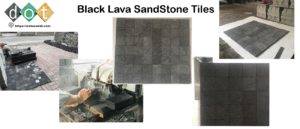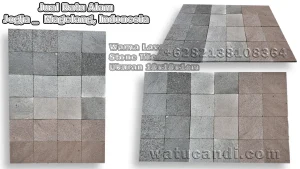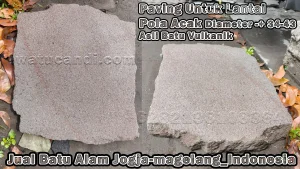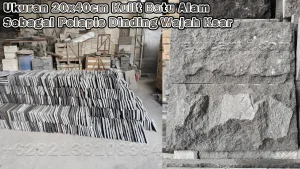
Discover the definitive guide to Swimming Pool Stone Tiles. Explore the benefits of Indonesian Black Lava Stone, Green Sukabumi Zeolite, and Limestone. Learn about slip resistance, water clarity enhancement, professional installation techniques, and maintenance secrets for a resort-style pool that lasts a lifetime.
Table of Contents
- 1. Introduction: The Renaissance of Natural Stone in Pool Design
- 2. Why Choose Natural Stone Over Ceramic or Mosaic?
- Safety & Slip Resistance
- Thermal Regulation
- Aesthetic Longevity
- 3. Black Lava Stone (Pedra Hitam): The Volcanic Standard
- Geological Origin & Properties
- Ideal Applications: Decking & Coping
- Design Pairings
- 4. Green Sukabumi Stone (Zeolite): The Secret to Crystal Clear Water
- The Science of Water Reflection
- Types: Honed vs. Natural Texture
- Maintenance Myths Debunked
- 5. Limestone & Sandstone: Timeless Elegance
- 6. Technical Specifications: Choosing the Right Thickness & Finish
- 7. Professional Installation Guide: Avoiding Common Mistakes
- 8. Comprehensive Maintenance Protocol
- 9. Global Design Trends: Bali Style, Modern Minimalist, & Tropical Luxury
- 10. Sustainability & Eco-Friendly Benefits
- 11. Frequently Asked Questions (FAQ)
- 12. Conclusion
1. Introduction: The Renaissance of Natural Stone in Pool Design
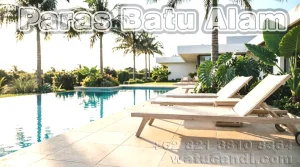
The swimming pool is no longer just a recreational facility; it has become the centerpiece of modern architectural luxury. In the quest for spaces that offer both visual splendor and tactile comfort, architects and homeowners are increasingly turning away from mass-produced ceramics and embracing the raw, organic beauty of Swimming Pool Stone Tiles. This shift represents more than just a trend; it is a return to biophilic design principles that connect human habitats with the natural world.
Indonesia, blessed with some of the world’s most unique geological formations, stands at the forefront of this movement. From the volcanic slopes of Mount Merapi to the sedimentary rich hills of Sukabumi, the archipelago produces stone varieties that are unrivaled in quality and character. Black Lava Stone, Green Sukabumi Stone (Zeolite), and premium Limestone have become the gold standards for high-end resorts in Bali, Phuket, Maldives, and private villas across Europe and the Americas.
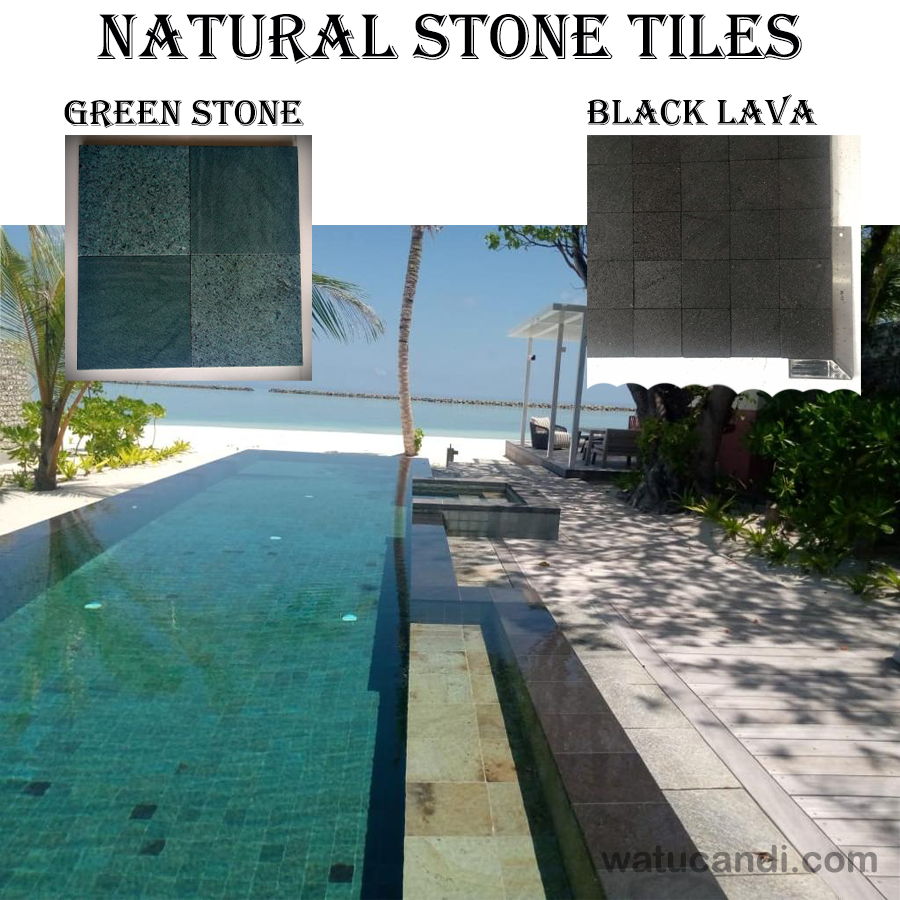
This comprehensive guide serves as your definitive resource for understanding, selecting, and maintaining natural stone for swimming pools. Whether you are designing an infinity pool overlooking the ocean, a lap pool in an urban courtyard, or a naturalistic lagoon, the insights provided here will ensure your project achieves both functional excellence and artistic brilliance.
2. Why Choose Natural Stone Over Ceramic or Mosaic?
While ceramic and glass mosaic tiles have their place in pool construction, natural stone offers distinct advantages that justify its premium status in luxury projects.
Unmatched Safety and Slip Resistance
Safety is the paramount concern in any wet environment. Glazed ceramic tiles can become dangerously slippery when wet, posing risks to children and the elderly. Natural stones like rough surface natural stone and volcanic lava possess inherent micro-textures that provide superior traction. The porous nature of stones like Pedra Hitam allows water to drain slightly into the surface matrix rather than pooling on top, significantly reducing hydroplaning effects underfoot.
Superior Thermal Regulation
Pool decks are often exposed to direct sunlight for hours. Dark ceramic tiles can absorb heat and become unbearable to walk on by midday. Natural stone, particularly porous varieties like lava stone and light-colored limestone, has excellent thermal properties. They absorb less radiant heat and dissipate it quickly, keeping the pool deck cool and comfortable even in tropical climates. This makes them ideal for barefoot walking areas.
Aesthetic Depth and Uniqueness
No two pieces of natural stone are identical. This variation creates a dynamic, living surface that changes with the light and water movement. Unlike the repetitive pattern of manufactured tiles, stone offers organic randomness that mimics nature. Over time, natural stone develops a patina that enhances its beauty, whereas ceramic tiles tend to look worn or dated as grout lines discolor and surfaces lose their glaze.
3. Black Lava Stone (Pedra Hitam): The Volcanic Standard
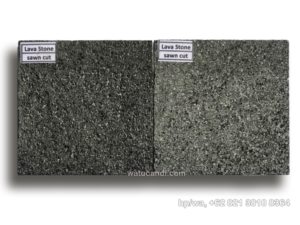
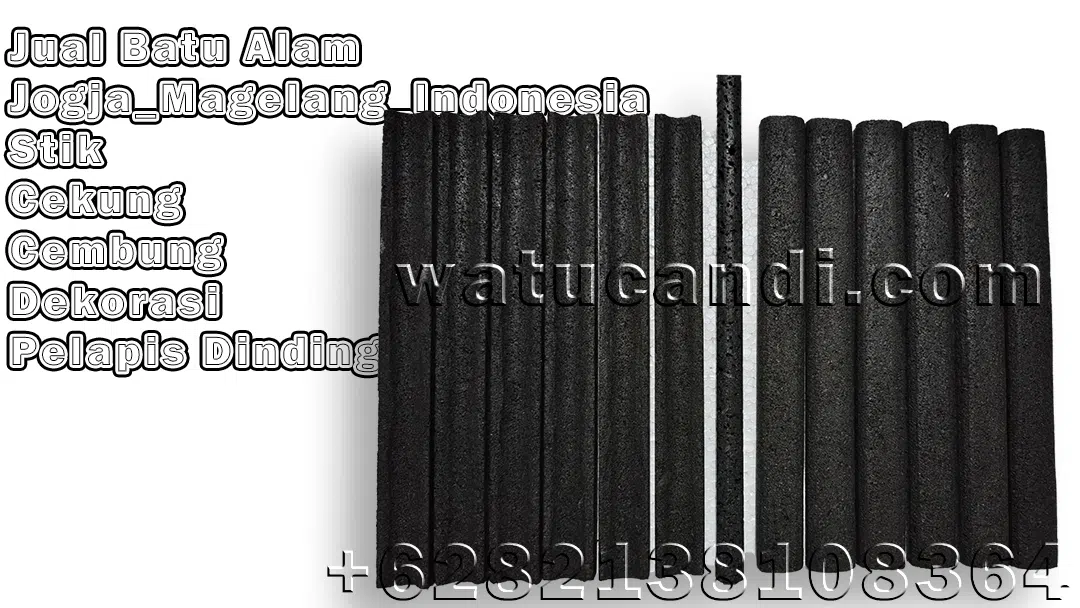
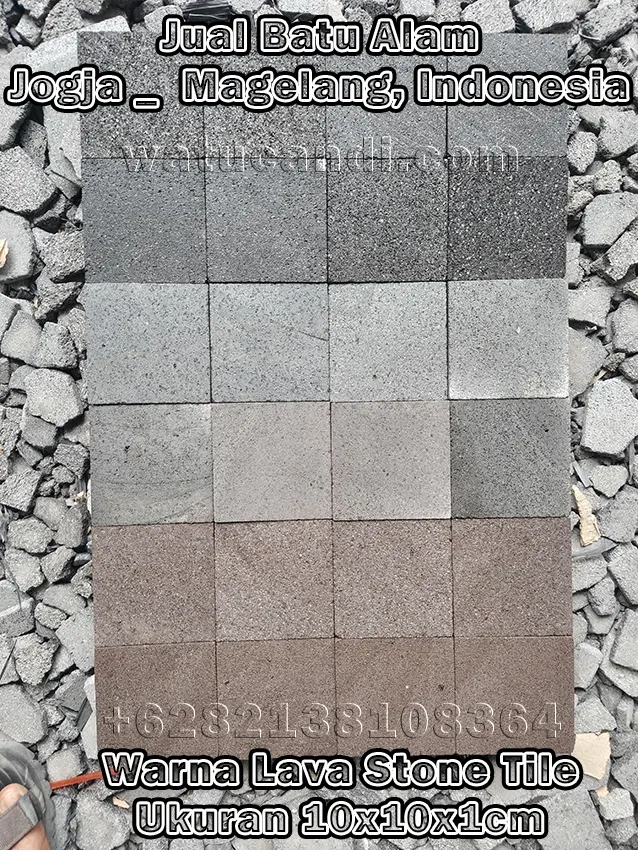
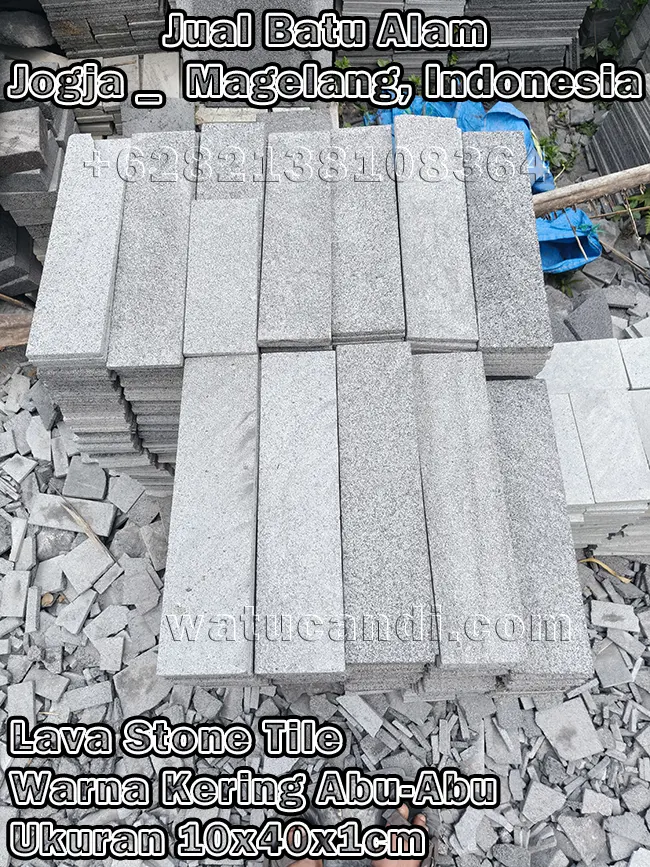
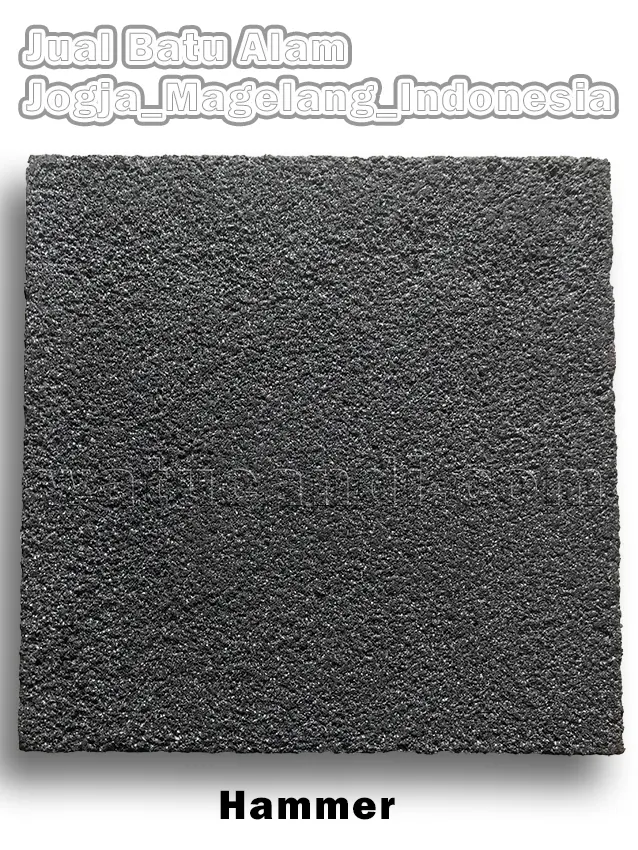
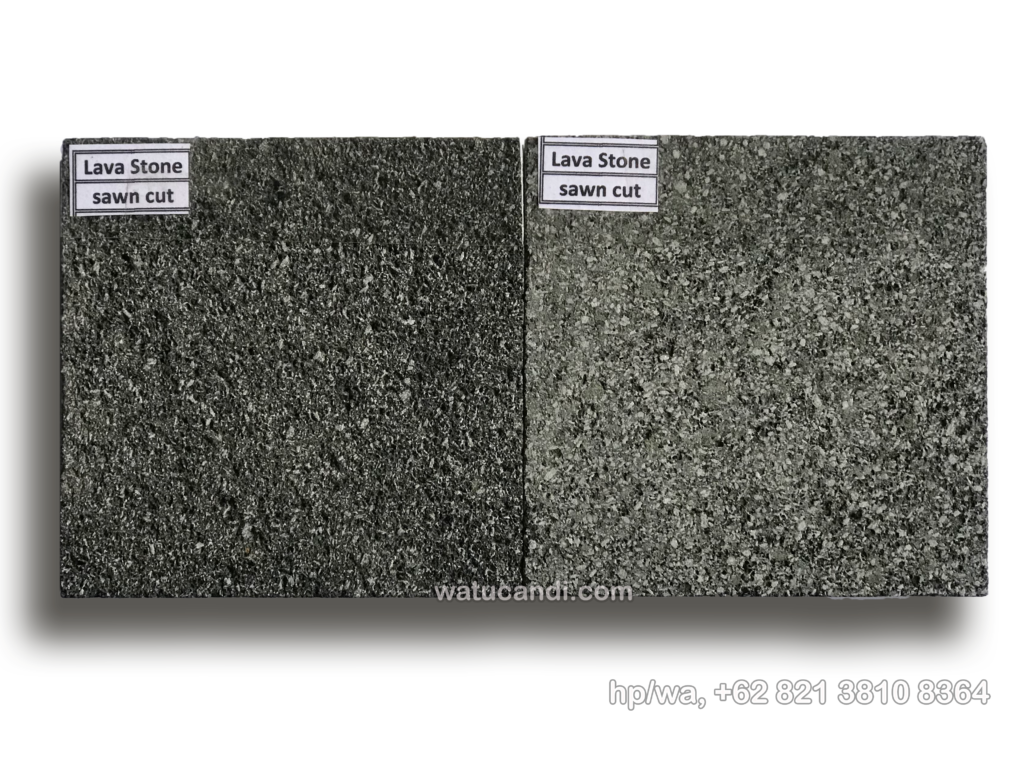
Black Lava Stone, known locally as Batu Candi, Pedra Hitam, or Merapi Stone, is arguably the most versatile and durable material for pool surroundings. Sourced from the active volcanoes of Central Java, this igneous rock is formed from cooled magma, giving it exceptional density and strength.
Geological Origin & Properties
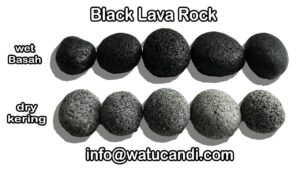
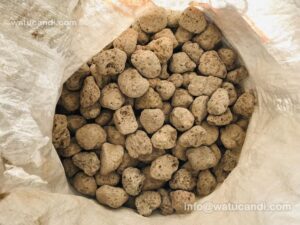
The unique characteristics of Black Lava Stone come from its formation process. Rapid cooling of lava traps gas bubbles, creating a network of microscopic pores. These pores are the secret to its functionality:
- High Friction: The textured surface provides grip even when submerged.
- Water Absorption: It absorbs splash water quickly, keeping the deck dry.
- Chemical Resistance: Being volcanic rock, it is highly resistant to chlorine and salt corrosion.
- Color Stability: The deep black/grey color is mineral-based and will not fade under UV exposure.
Ideal Applications: Decking & Coping
Due to its durability and cool-touch properties, Black Lava Stone is the premier choice for:
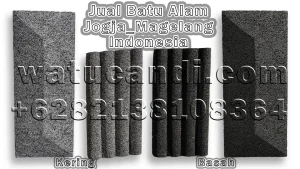
- Pool Coping: The edge stones that cap the pool wall. Its thickness options (up to 5cm+) make it structurally sound.
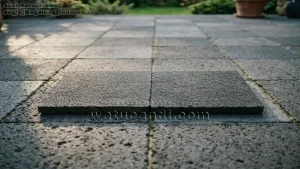
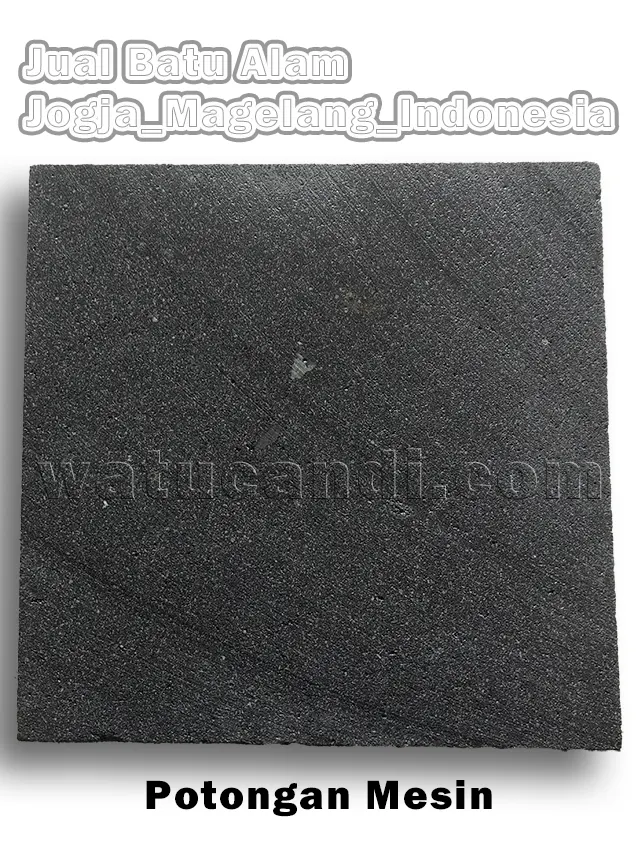
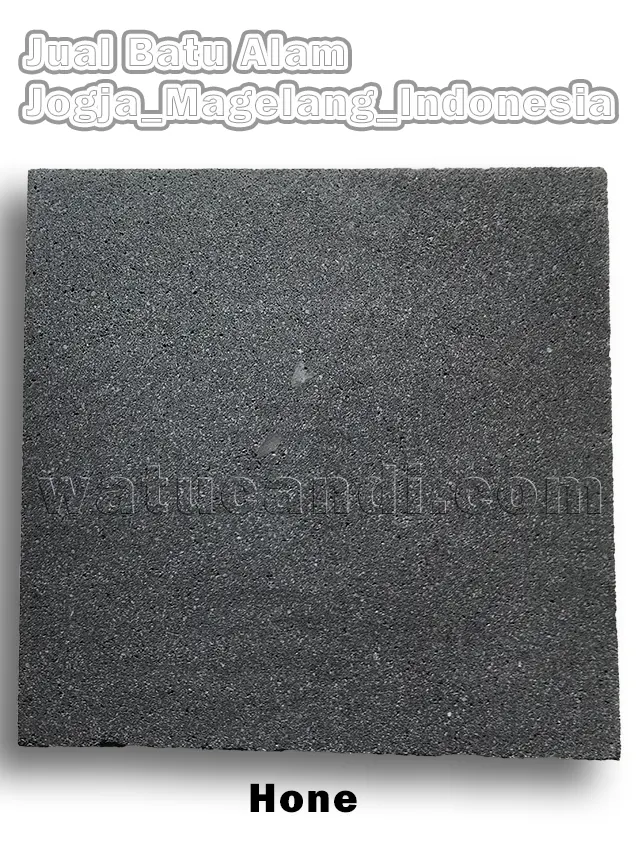
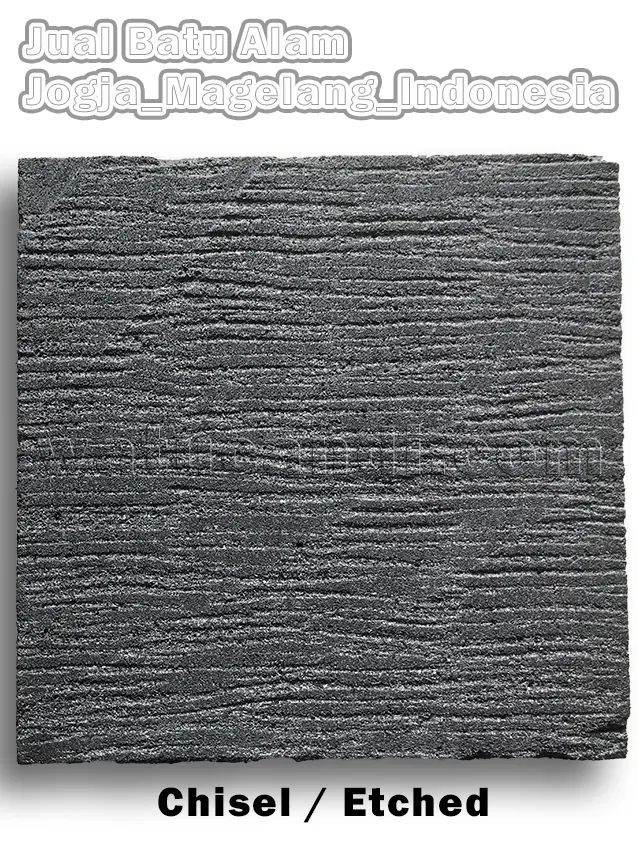
- Pool Decking: Available in various finishes like natural cleft, honed, or flamed.
- Water Features: The dark background makes falling water appear brighter and more dramatic.
- Outdoor Showers: Resists mold and soap scum buildup better than smooth tiles.
Design Pairings
Black Lava Stone pairs exceptionally well with tropical landscaping, teak wood furniture, and white-walled architecture. It creates a striking contrast with blue water or green stone interiors. For a cohesive look, consider using parquet-patterned lava stone to add visual interest to large deck areas.
4. Green Sukabumi Stone (Zeolite): The Secret to Crystal Clear Water
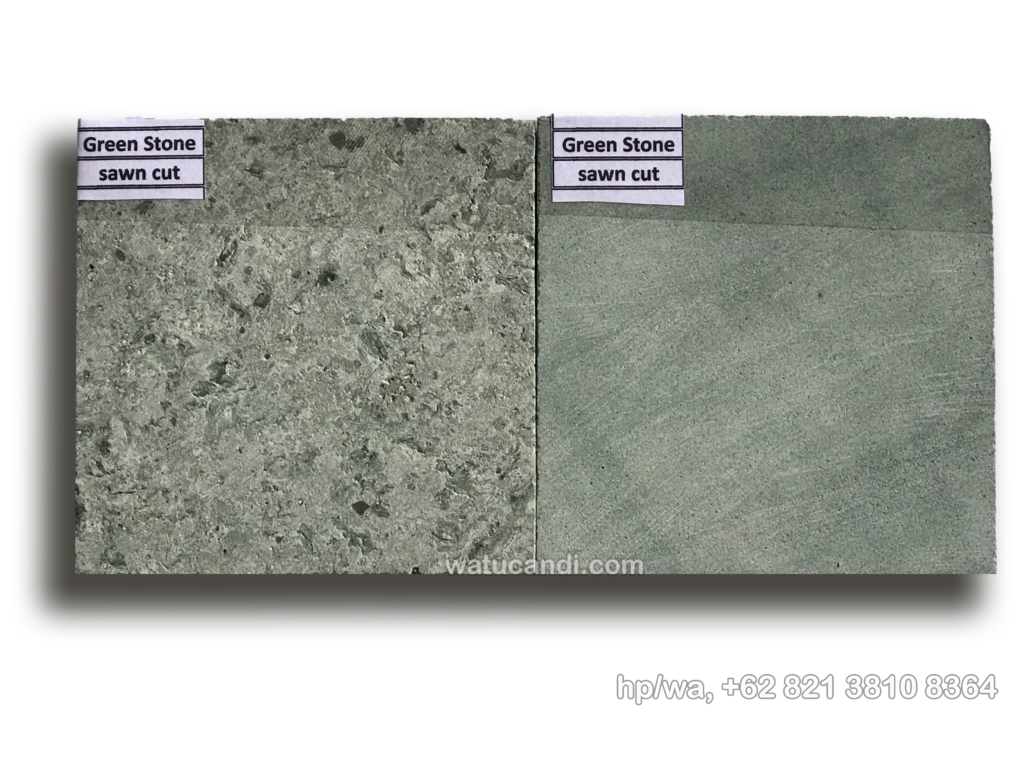
If Black Lava is the king of the deck, Green Sukabumi Stone is the queen of the pool basin. Often referred to as “Green Zeolite” or “Pedra Hijau,” this rare sedimentary-volcanic hybrid is found exclusively in the Sukabumi region of West Java. It is widely regarded as the best material in the world for lining swimming pools.
The Science of Water Reflection
Why does Green Stone make water look so good? It comes down to light physics. The specific mineral composition of Zeolite reflects light in the green-blue spectrum. When submerged, it filters out harsh yellow/red wavelengths and amplifies the calming blue-green tones. This creates the illusion of crystal-clear, tropical lagoon water, even if the water chemistry isn’t perfect. It transforms a standard concrete pool into a natural oasis.
Types: Honed vs. Natural Texture
Choosing the right finish is critical for safety and aesthetics:
- Natural/Cleft Face: Rougher texture with visible pores. Best for: Pool floors, steps, and shallow areas where slip resistance is vital. It hides algae and calcium deposits well.
- Honed/Semi-Polished: Smoother surface with richer color saturation. Best for: Vertical walls, waterlines, and spa benches where foot traffic is lower. It reflects more light, making the water sparkle.
For those interested in the technical differences, read our comparison of local vs. precision cut green stone.
Maintenance Myths Debunked
A common misconception is that green stone turns black or dirty easily. In reality, Green Sukabumi Stone is quite low maintenance if installed correctly. The key is using white thin-set mortar and white or light grey grout. Dark adhesives can show through the semi-translucent stone, causing discoloration. Regular brushing with a soft nylon brush prevents algae buildup without damaging the stone surface.
5. Limestone & Sandstone: Timeless Elegance
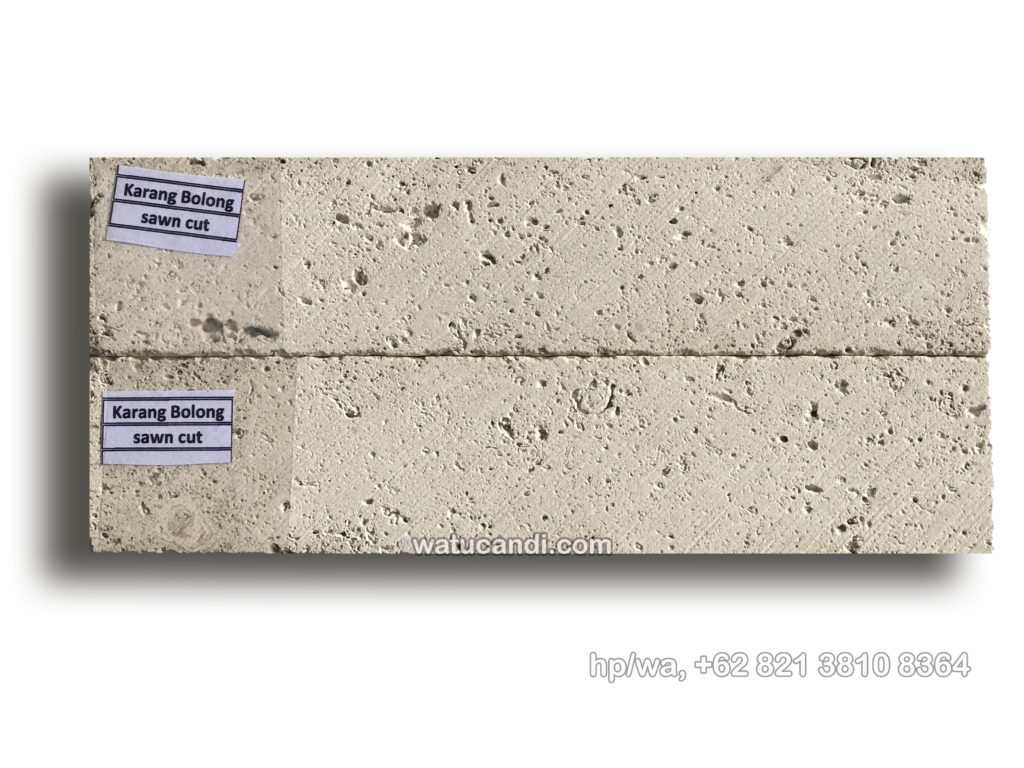
For projects seeking a Mediterranean, Colonial, or bright tropical aesthetic, Limestone and Sandstone are unparalleled. These sedimentary rocks offer warm beige, cream, and white tones that evoke the feeling of seaside villas in Greece or Italy.
Key Characteristics:
- Light Reflectivity: Keeps the pool area bright and cool.
- Classic Appeal: Never goes out of style; complements traditional and modern architecture alike.
- Variety: Available in Palimanan Sandstone (fine grain) or rougher Coral Limestone.
Note: Limestone is softer than lava stone. It requires sealing to prevent staining from oils or leaves. It is best used for coping, steps, and dry deck areas rather than the pool interior floor, unless a specific rustic look is desired.
6. Technical Specifications: Choosing the Right Thickness & Finish
| Application | Recommended Material | Thickness | Finish |
|---|---|---|---|
| Pool Interior Floor | Green Sukabumi / Lava | 2 cm (3/4″) | Natural / Honed |
| Pool Interior Walls | Green Sukabumi / Mosaic | 2 cm (3/4″) | Honed / Split Face |
| Pool Coping (Edge) | Black Lava / Limestone | 3 cm – 5 cm | Honed / Bullnose |
| Pool Deck (Wet Area) | Black Lava / Andesite | 2 cm – 3 cm | Flamed / Natural |
| Dry Deck / Patio | Limestone / Sandstone | 2 cm – 3 cm | Honed / Tumbled |
Always ensure your stone supplier provides consistent calibration (thickness tolerance). Variations greater than 1mm can cause lippage (uneven edges) which is both ugly and a tripping hazard. For large format tiles, consider tumbled finishes to soften edges and improve safety.
7. Professional Installation Guide: Avoiding Common Mistakes
The longevity of a stone pool depends 50% on the material and 50% on the installation. Here are the critical steps:
1. Waterproofing is Non-Negotiable
Never install stone directly onto concrete without a waterproofing membrane. Stone is porous; without a barrier, water will migrate into the shell, causing efflorescence (white salt deposits) and potential structural damage. Use a cementitious waterproofing coating compatible with stone adhesives.
2. Adhesive Selection
Use a high-quality, polymer-modified thin-set mortar rated for submerged applications. Crucial: For Green Sukabumi Stone, always use WHITE adhesive. Grey adhesive can darken the stone permanently. For Black Lava, grey or white is acceptable.
3. Grouting Strategy
Epoxy grout is highly recommended for stone pools. Unlike cement grout, epoxy is impermeable, stain-resistant, and doesn’t harbor bacteria. It prevents water from seeping behind the tiles. If using cement grout, ensure it is sealed after curing.
4. Expansion Joints
Stone expands and contracts with temperature changes. Install silicone expansion joints at all perimeter edges, corners, and every 3-4 meters of continuous tiling. Failure to do so will result in cracked tiles or debonding.
8. Comprehensive Maintenance Protocol
Natural stone pools are durable but require specific care routines:
- Brushing: Brush walls and floor weekly with a soft nylon brush to prevent algae biofilm. Do not use wire brushes.
- Chemical Balance: Keep pH between 7.2-7.6. Acidic water (low pH) eats calcium-based stones like limestone and green stone. High pH causes scaling.
- Sealing: Apply a penetrating siloxane/silane sealer to deck stones annually. This repels water and oils while allowing the stone to breathe. Re-test with a water drop test; if it soaks in, reseal.
- Cleaning Agents: Use pH-neutral stone cleaners. Avoid muriatic acid or vinegar near stone surfaces.
- Efflorescence Removal: If white salts appear, use a specialized efflorescence remover, not acid.
For detailed cleaning tips, refer to our guide on maintaining Indonesian lava stone.
9. Global Design Trends: Bali Style, Modern Minimalist, & Tropical Luxury
Natural stone is the backbone of several major design movements:
The “Bali Style” Resort Look
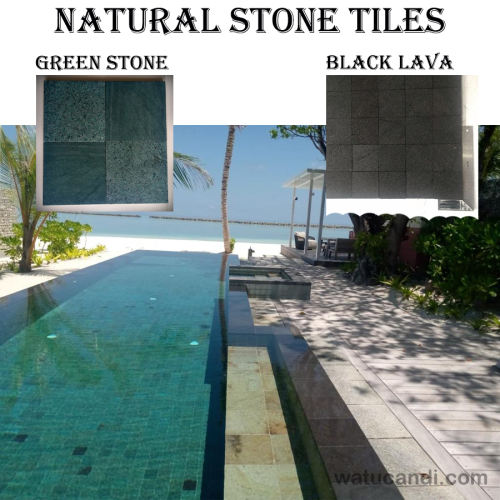
Characterized by open-air living, thatched roofs, and lush greenery. The signature look involves Green Sukabumi Stone pools with Black Lava Stone decking and copings. This combination creates a seamless transition from land to water, mimicking natural riverbeds.
Modern Minimalist
Clean lines, geometric shapes, and monochromatic palettes. Large-format Black Lava tiles (e.g., 60x60cm or larger) with minimal grout lines create a sleek, infinite look. Pair with frameless glass fencing and LED lighting.
Naturalistic / Freeform
Mimicking organic shapes like kidneys or lagoons. Uses irregular stone sizes, mixed textures (smooth vs. rough), and integrated rock features. Sirih stack stone is often used for retaining walls and waterfalls in these designs.
10. Sustainability & Eco-Friendly Benefits
Choosing natural stone is an environmentally responsible decision:
- Low Embodied Energy: Stone requires minimal processing compared to ceramics (no high-temp kiln firing).
- Durability: A stone pool lasts 50+ years, reducing renovation waste.
- Non-Toxic: Natural stone emits no VOCs (Volatile Organic Compounds).
- Recyclable: At end-of-life, stone can be crushed for aggregate or reused in landscaping.
- Local Sourcing: Using Indonesian stone for projects in Asia reduces carbon footprint from transportation.
11. Frequently Asked Questions (FAQ)
Does green stone make the water actually cleaner?
No, the stone itself does not purify water. However, its light-reflecting properties make impurities less visible to the naked eye, creating the perception of cleaner water. Proper filtration and chemistry are still required.
Can I use black lava stone inside the pool?
Yes, but be aware that black interiors absorb heat, warming the pool water faster (good for cold climates, bad for hot tropics). Also, black interiors make dirt and debris more visible than green or blue tiles.
How long does it take to install a stone pool?
Installation typically takes 2-4 weeks depending on pool size and complexity. Stone cutting and fitting take longer than laying uniform ceramic tiles. Allow extra time for adhesive curing before filling.
Is natural stone more expensive than tile?
Material costs vary. Basic lava stone can be comparable to mid-range ceramic. Premium Green Sukabumi and large-format limestone are generally more expensive. However, considering longevity and added property value, stone often offers better ROI.
12. Conclusion
Investing in Swimming Pool Stone Tiles is an investment in timeless beauty, safety, and sustainability. Whether you choose the dramatic allure of Black Lava, the serene clarity of Green Zeolite, or the classic warmth of Limestone, you are creating a space that resonates with the natural world.
At Watu Candi, we pride ourselves on supplying the finest Indonesian natural stone to the world. Our commitment to quality ensures that every tile, slab, and coping piece meets the rigorous demands of luxury pool construction. Explore our collection today and bring the essence of Indonesia to your backyard.
Ready to start your project? Browse our full catalog of natural stone products or contact us for a custom quote.
Related Products & Resources
- Brown Sandstone Tiles
- Tumbled Finish Natural Stone
- Merapi Stone Outdoor Flooring
- Merapi Lahar Candi Stone Floor
- Black Candi Lava Stone
- Natural Stone Slabs
- Breccia Natural Stone Tiles
- Lava Stone for Swimming Pools
- Sirih Stack Stone Surface
- Natural Stone Edging
- Merapi Stone Sink
- Black Basalt Stone Sink
- Handmade Stone Bathtubs
- Handmade Stone Tables and Chairs
- Carved Vanity Table
- Candi Stone Stepping Floor
- General Natural Stone Tiles
- Hidden Crystals in Merapi Lava
- Pelinggih Stone Materials
- Black Lava Bush-Hammered Surface
- Black Lahar Stone
- Candi Lahar Stone Floor
- Lava Stone 75x230mm
- Lava Natural Stone Products
- Alkali Lava Stone
- Lava Stone General
- Candi Lava Natural Stone
- Andesite Paving Stone
- Natural Andesite Stone
- Hand-Carved Stone Floor
- Black Lava Gravel Guide
- Random Candi Lava Wall Cladding
- Indonesian Limestone Tiles
- Lava Stone Paving Slabs
- Best Volcanic Stone Paving
- Black Lava Stone Table Tops
- Green Stone Split Face Tiles
- Premium Lava Rock Tiles
- Definitive Guide to Black Lava Tiles
Tags: swimming pool stone tiles, natural stone pool tiles, black lava stone, green sukabumi stone, zeolite pool tiles, pedra hitam, pedra hijau, limestone pool coping, volcanic stone tiles, indonesian natural stone, pool deck stone, non-slip pool tiles, luxury pool design, bali style pool, infinity pool stone, stone pool installation, pool stone maintenance, watucandi, andesite stone, sandstone pool tiles, natural stone supplier, export quality stone, sustainable pool materials, resort pool stone, villa pool stone, stone wall cladding, outdoor stone flooring, hand carved stone, stone water features, tropical pool design, modern pool stone, stone paving, pool renovation stone, eco-friendly pool, stone sealing, pool safety tiles, crystal clear pool, lagoon style pool, stone mosaic, custom stone pools,