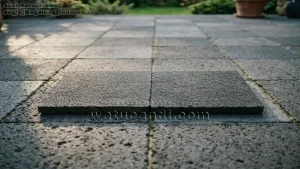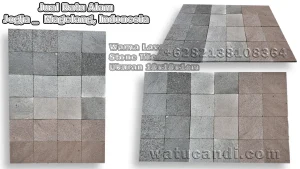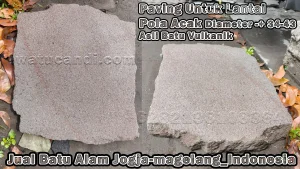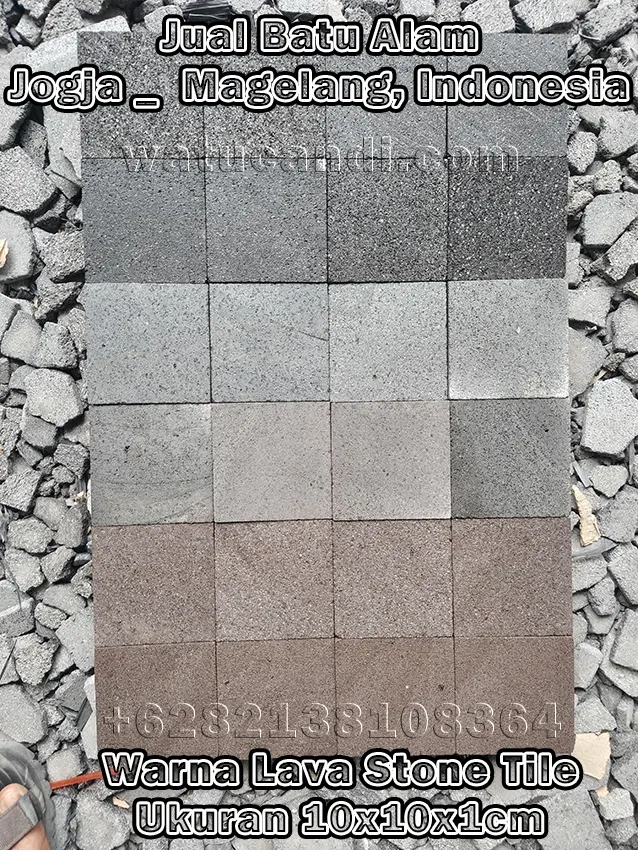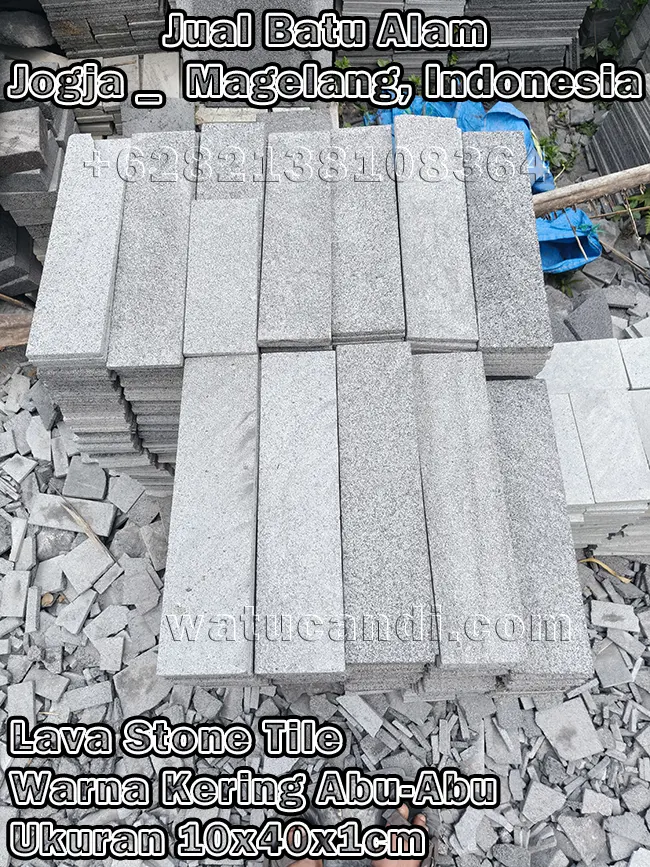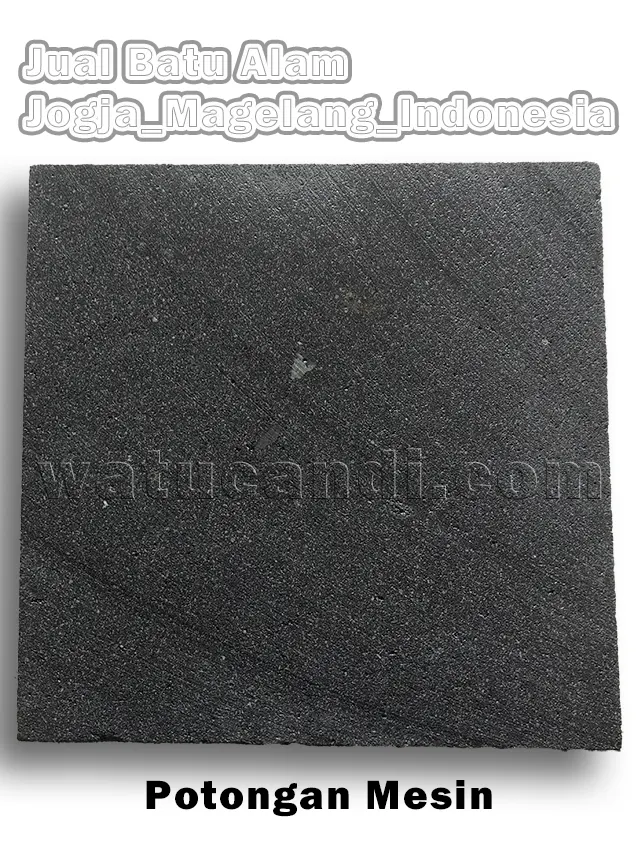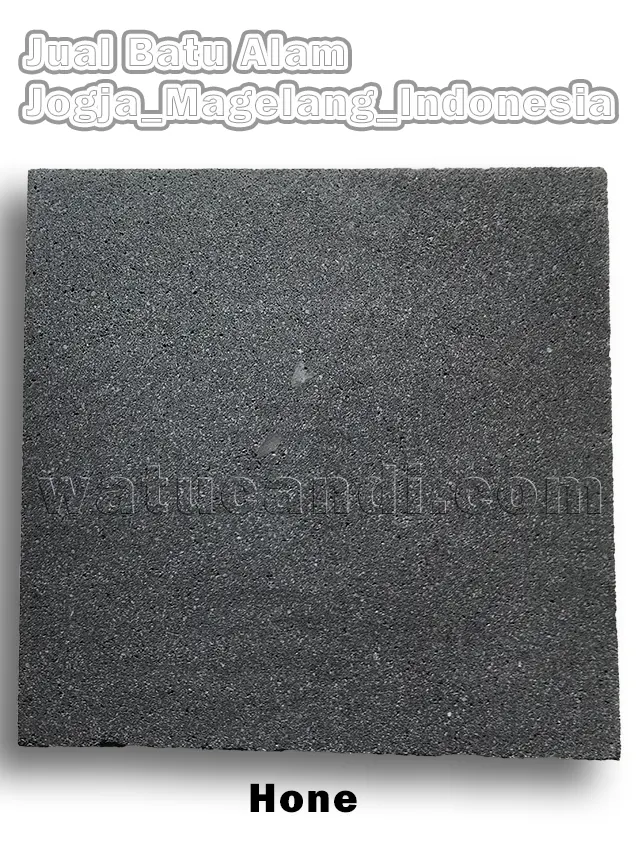
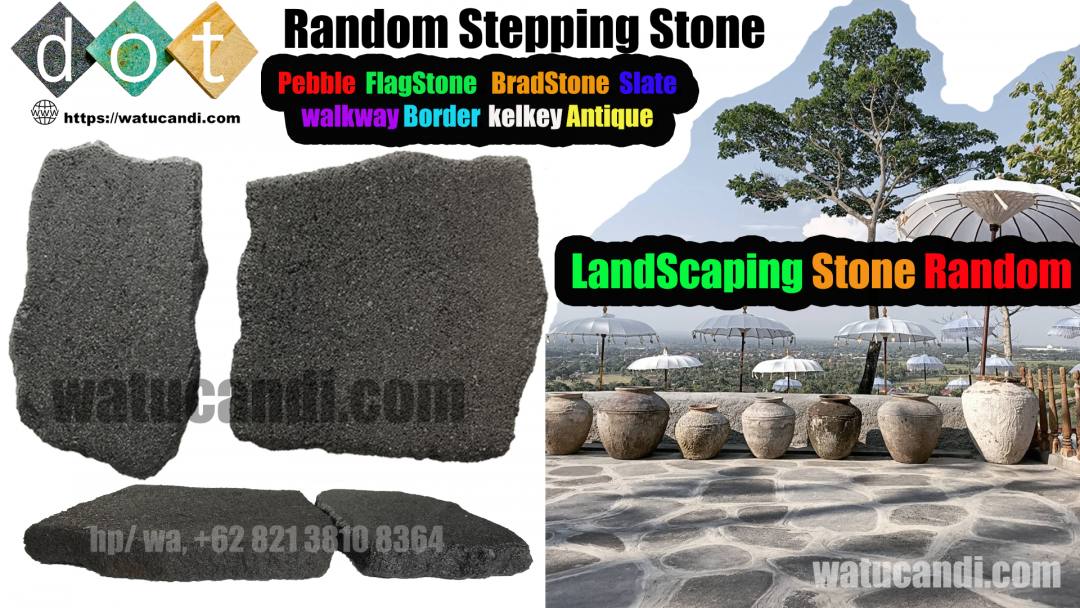
Footsteps in a garden are not merely a path, but a silent dialogue between humans and the earth. These Irregularly Shaped Merapi Temple Stone Slabs do not lead you to a destination, but invite you to be fully present with every step feeling the coolness of ancient volcanic rock that holds the memory of Merapi eruptions, transforming the routine of walking into a ritual of full awareness of nature.
Not an ordinary pathway, but an invitation to slow down. Every random lava temple stone slab is a pause from modern haste, restoring the rhythm of footsteps to the forgotten natural cadence of the earth.
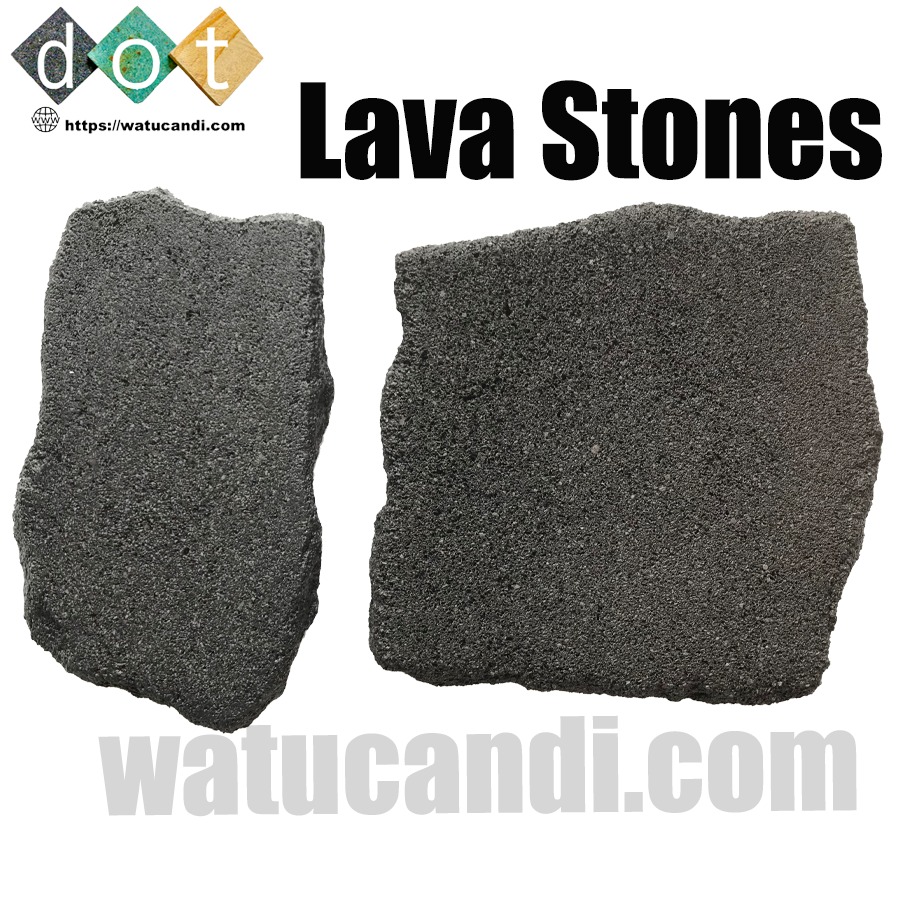
Creating a stunning garden or yard does not only depend on the selection of ornamental plants, but also on hardscape elements that form the foundation of landscape aesthetics. One of the most crucial and impactful elements is the use of garden floor yard assorted irregular random stepping stones temple stone (lava stone) thickness 1-3cm. This material is not just a functional ground cover, but an artistic statement that connects building architecture with the surrounding nature. The use of black temple stone or lava stone from Mount Merapi provides strong character, extraordinary durability, and an exotic nuance that is difficult to match by manufactured materials.
In the world of modern and traditional landscape architecture, trends are returning to authentic natural materials. Natural stone slab cuts with random sizes offer unlimited design flexibility. Their organic shapes break the rigidity of modern architectural lines, creating smooth transitions between built areas and green spaces. Thickness varying from 1 cm to 3 cm (or even more for heavy load areas) allows adaptation to various functions, from vertical decorative walls to pedestrian paths bearing daily foot traffic. As direct manufacturers in the heart of Indonesia’s natural stone industry, we understand that every project has a unique soul requiring the right material touch.
Craftsmanship of Random Sized Natural Stone Slab Cuts: The Art Behind Irregularity

The concept of “irregular random” in natural stone slab craftsmanship is not a result of production disorder, but a deliberate design approach to mimic natural patterns. In the wild, rocks are formed through geological processes over millions of years resulting in organic shapes that are never uniform. When we apply this concept to stepping stone landscaping, we are bringing the essence of nature into human living spaces. Every processed temple stone piece has different length, width, and edge contour dimensions, making it a unique individual Natural Stone Slab artwork.
The manufacturing process of these stone slabs involves precision machine cutting while maintaining natural edge character or split face. The result is thin or thick slabs customized to order, with surfaces that can be finished according to preference. For wall applications, thickness of 1-2 cm is recommended to avoid overloading wall structures. Conversely, for function as stepping stones in gardens or paving block replacements, thickness of 3 cm to 5 cm or more is recommended to guarantee structural strength against dynamic loads. This variation allows landscape designers to play with levels, textures, and rich visual rhythms.
Many natural stone designs serve as inspiration for building material decoration to make spaces look more beautiful according to arrangement and concept. These cut stones have random sized shapes with smooth flat machine cut thickness, and surface finishing can also be customized to your desires. Prices vary depending on thickness and desired large size. For further information please contact us to suit your needs, as every landscape project has specific topographical and aesthetic challenges.
Getting to Know Black Temple Stone and Merapi Lava Stone Deeper
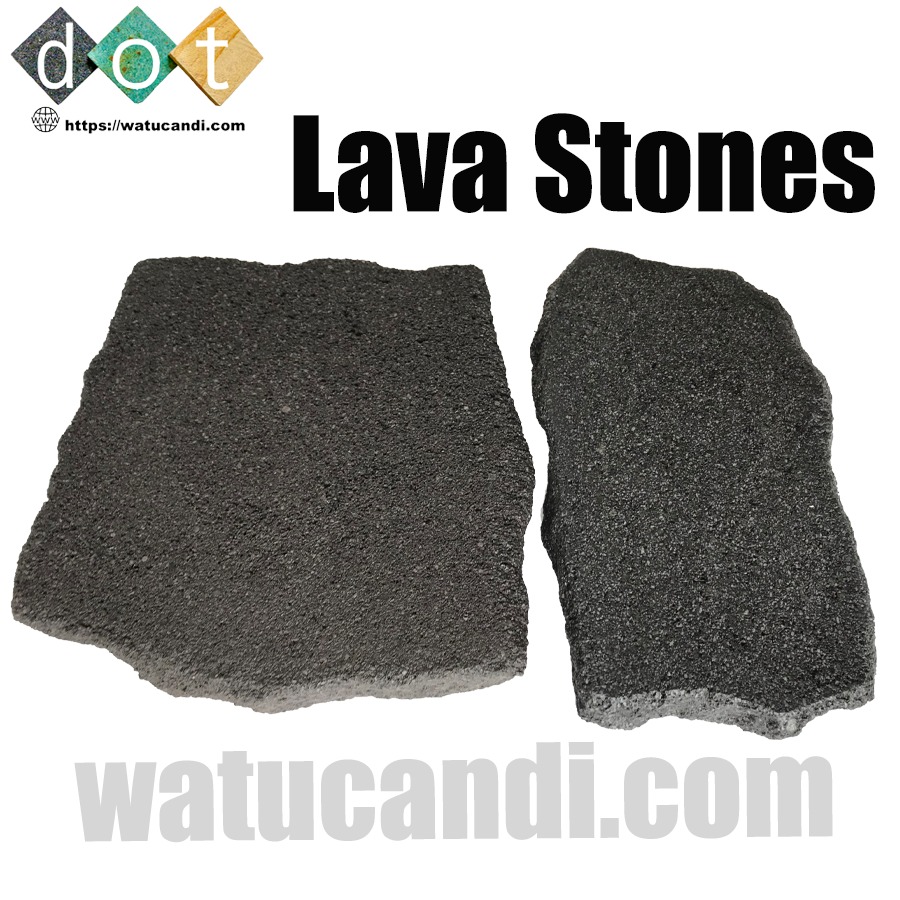
The main material used in this product is volcanic rock from Mount Merapi, known locally as black temple natural stone, black lava stone, or black sandstone. Geologically, this stone is formed from basaltic magma that cools rapidly, producing a dense and durable microcrystalline structure. This characteristic makes it a prima donna in the construction and landscape industry both in Indonesia and internationally. Unlike sedimentary rocks like limestone or sandstone which tend to be softer and more porous, Merapi lava stone has high density giving it significant advantages in terms of durability.
The deep black or dark gray color of this stone provides dramatic contrast against green garden vegetation. This color contrast is key in creating visual depth and focal points in landscape design. Additionally, iron and silica mineral content in temple stone gives it natural resistance to chemical and physical weathering. This means the stone will not easily change color, peel, or crack even when exposed to acid rain, tropical sun heat, or extreme temperature fluctuations for years. For in-depth understanding of this material, you can study the complete guide to Indonesian natural lava stone tiles which comprehensively outlines technical specifications and applications.
Beyond technical aspects, temple stone also has strong historical and cultural value. This material has been used for centuries in building great temples in Java, including Borobudur and Prambanan. Using temple stone in your home garden is not just about aesthetics, but also about connecting private space with the great archipelago architectural heritage. This provides spiritual and cultural dimensions that enrich the experience of garden inhabitants and visitors. Read more about Borobudur temple stone to understand the historical significance of this material.
Technical Specifications and Surface Finish Variations
Understanding technical specifications is key to ensuring long-term performance of natural stone garden floors. As mentioned previously, thickness is a critical parameter. For vertical applications such as random temple stone skin wall cladding, thickness of 1-2 cm is adequate because gravitational load working is relatively small. However, for horizontal applications receiving human foot traffic or even light vehicles, minimum thickness of 3 cm is absolute safety standard. For parking areas or vehicle access paths, thickness of 5 cm or above is highly recommended to prevent cracking from high point loads.
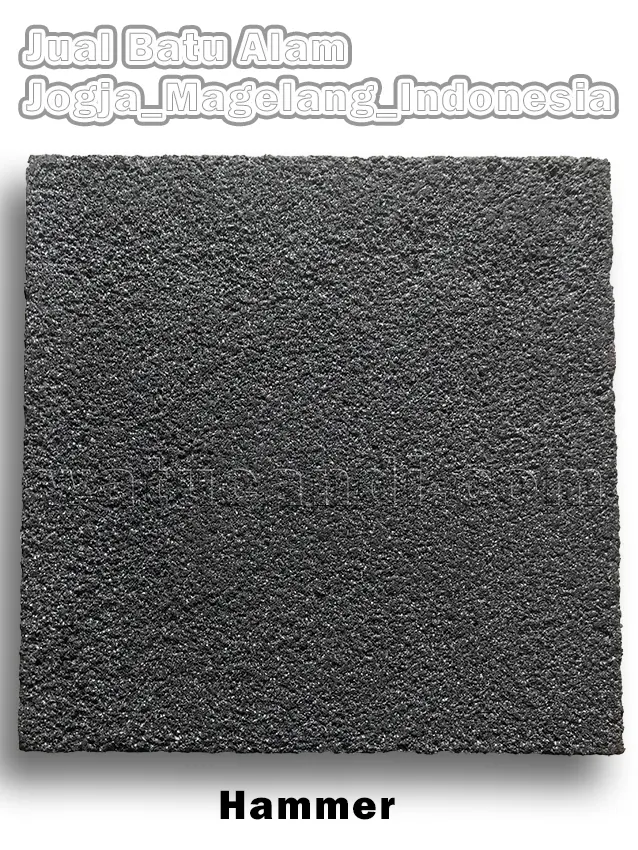
Surface finishing is another aspect determining function and aesthetics. For garden stepping stones, recommended finishing is one providing high friction coefficient to prevent slipping, especially when wet. Bushhammered or flamed finishing is the best choice for safety. Learn the difference between sawncut vs bushhammer on lava stone to choose the most appropriate one. Another alternative is tumbled finishing which gives aged appearance and non-sharp edges, suitable for classic or Mediterranean style gardens. See examples of tumbled natural stone finish for visual reference.
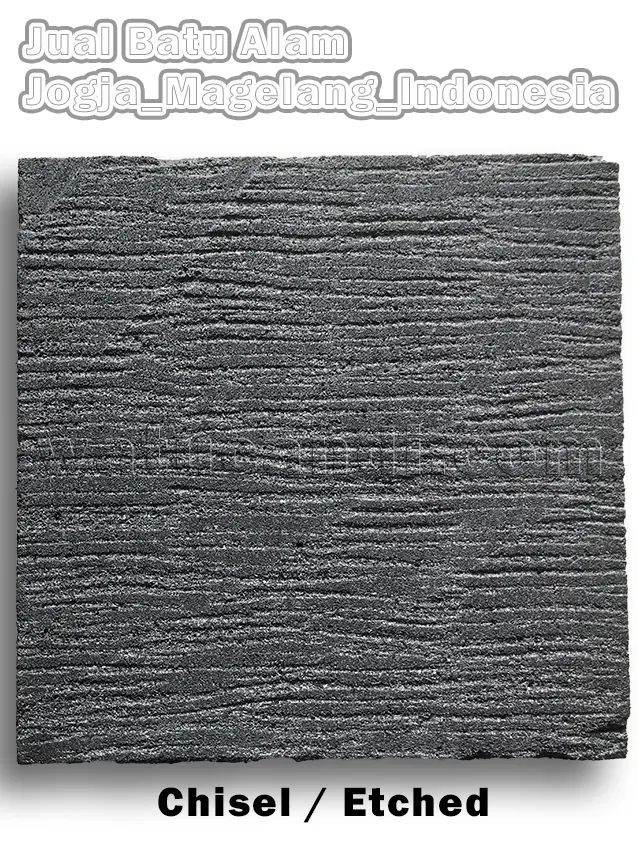
For more artistic Natural Stone applications, chiseled finishing or hand-chiseled Natural Stone offers high artistic value. Every chisel stroke tells a story of craftsmanship that cannot be replicated by machines. This finishing creates dynamic light and shadow play throughout the day, changing garden appearance with sun movement. Explore chiseled natural stone installation patterns to get creative layout ideas. For technical details about other surface types, consult the GC stone surface types guide covering complete spectrum of available finishing options.

Aesthetic and Functional Advantages of Lava Temple Stepping Stones
Garden or yard floors using Lava Temple Natural Stone Stepping Stones are excellent choices for creating natural appearance and attractive aesthetics. Below is in-depth elaboration regarding advantages and uses of Lava Temple Stepping Stone garden floors making them high-value investments for your property:
- Authentic Natural Aesthetics: Lava temple stone has unique natural texture and patterns, providing natural appearance and attractive aesthetics on garden floors. This creates warm and comfortable atmosphere in your garden or yard. No two stones are identical, guaranteeing your garden is original artwork owned by no one else. This authenticity is true luxury in era of synthetic material dominance.
- Extreme Resistance and Durability: Lava temple stone has long-lasting properties and resistance to extreme weather, making it suitable for garden or yard floors exposed to sunlight, rain, and temperature changes. This material does not rot, is not eaten by termites, and does not degrade by UV. Your initial investment will pay off with lifespan reaching decades or even centuries without significant replacement needs.
- Safe and Anti-slip Surface: Lava temple stone surface tends to be rough and non-slippery, providing safe surface for walking in garden, even when floor is wet from rain or watering. Safety is top priority in landscape design, especially for families with children or elderly. Natural stone texture functions as effective passive safety feature.
- Variative and Flexible Design: Lava temple Stepping Stones are available in various sizes and shapes, allowing you to arrange garden floor design with creative patterns and layouts according to your taste and design style. From modern linear patterns to organic river-like arrangements, random stone shape flexibility enables realization of any design vision without rigid module limitations.
- Easy and Economical Maintenance: Lava temple stone does not require complicated maintenance. Simply cleaning floor periodically from dust and dirt, you can keep garden floor appearance beautiful and well-maintained. No repainting, special annual coating, or routine damaged part replacement needed. Total cost of ownership is very low compared to alternative materials.
- Environmentally Friendly and Sustainable: Use of lava temple stone as garden floor is environmentally friendly choice because this natural stone does not require additional production processes like artificial stone. No carbon emissions from kiln firing, no plastic waste, and material is 100% returnable to nature without polluting soil. This is ethical choice for homeowners caring about ecological footprint.
- Adaptive Arrangement and Installation: Installation of Lava Temple Stepping Stones in garden or yard can be done easily. You can place these stones directly on flat ground surface or use simple mortar mix to support stones. Non-permanent installation system also allows future layout modification if garden layout changes, providing long-term flexibility.
Lava temple Stepping Stone garden floors will provide unique and natural appearance to your garden or yard. Additionally, this floor also has good durability, so it can be used for long periods. However, ensure choosing good quality lava temple stone and using experienced stonemason services for installation to get maximum results. Material quality and installation expertise are two sides of coin that cannot be separated to achieve perfect final results.
Professional Installation Guide for Maximum Results
Although stepping stone installation sounds simple, proper execution requires technical knowledge to ensure stability, drainage, and longevity. Sub-base preparation is most critical step. Base soil must be properly compacted to prevent differential settlement causing stones to tilt or break. Use coarse aggregate layer (gravel/split) 5-10 cm thick as drainage layer, followed by coarse sand layer 3-5 cm as leveling bed. Mechanical compaction with plate compactor is highly recommended for large areas.
Stone placement must consider user ergonomics. Center-to-center spacing between stones ideally 60-65 cm for comfortable adult stride. Adjust this distance to anthropometry of main garden users. Ensure each stone sits stably on bedding sand without wobbling. Use rubber mallet to tap stones until firmly embedded in sand layer. Check straightness and levelness with spirit level or straight edge to avoid trip hazards.
For areas requiring permanent bonding (e.g., on concrete slab), use special natural stone adhesive mortar with high flexibility to accommodate thermal expansion. Do not use pure Portland cement due to delamination risk. For vertical wall applications, ensure mechanical anchoring system is installed if height exceeds safe limit for adhesive-only installation. Consult technical specifications and installation methods of split face temple stone for detailed vertical application guidance. For more structured paving applications, study manual chiseled temple stone paving installation guide.
Supporting Material Integration for Holistic Landscape
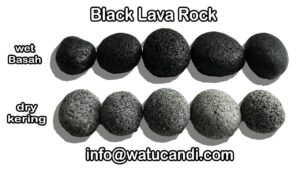
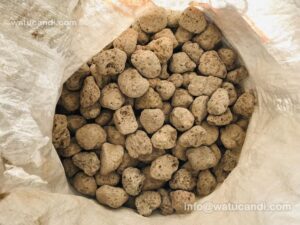
A successful garden is ecosystem of complementary materials. Lava temple stepping stones do not stand alone; they interact with other materials to create holistic spatial experience. Consider integration with black lava rock pebbles as filler between stepping stones for optimal drainage and interesting texture contrast. Pebbles also function as inorganic mulch suppressing weed growth and retaining soil moisture.
For areas requiring flat and continuous surface, combine random stepping stones with more regular Merapi lava stone paving. Transition from informal stepping stone zone to formal paving area creates clear spatial hierarchy. For wider premium flooring collection, explore premium andesite and lava stone flooring collection covering various options for courtyards and joglo villas.
Do not forget furniture and accessory elements reinforcing material theme. Handmade natural stone table and chairs from lava or andesite material will harmonize garden design language. For relaxation areas, consider handmade natural stone bathtub creating intimate outdoor spa experience. Even small details like natural stone liquid soap dispenser can strengthen thematic cohesion in outdoor shower or garden powder room areas.
Specific Applications Based on Garden Functional Zones
Every zone in garden has different functional and aesthetic demands. Deep understanding of this zoning enables selection of appropriate stone specifications for each context.
Entrance Zone and Main Pathways
Entrance areas and main pathways require stepping stones with larger dimensions and consistent thickness to provide welcoming feel and easy navigation. Use stones with minimum width 40 cm and thickness 3-4 cm. Honed or bushhammered finishing recommended for balance between aesthetics and safety. Installation pattern should be more regular to guide visitor movement. Integrate with lava paving stepping stones for smooth transition from parking area to garden.
Relaxation and Meditation Zone
Relaxation areas demand more intimate and organic approach. Use stepping stones with more random shapes and varied sizes to encourage slowing down and mindfulness. Thickness 2-3 cm is adequate due to low traffic load. Tumbled or natural split face finishing preferred for nuance closer to nature. Combine with flat random riverstone to create sensation of walking on natural riverbed.
Swimming Pool Zone and Wet Areas
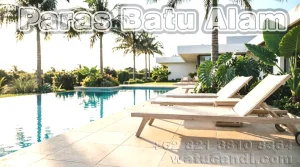
Areas around swimming pools require special specifications for safety and resistance to water and chemicals. Use stones with minimum thickness 3 cm and highly anti-slip finishing like coarse bushhammered or flamed. Ensure stones have undergone adequate sealing process to prevent chlorine absorption and efflorescence formation. For wider pool decking, consider Merapi lava parquet decking offering superior stability and thermal comfort. For pool edge details, consult complete swimming pool coping stone guide.
Wall Zone and Vertical Garden
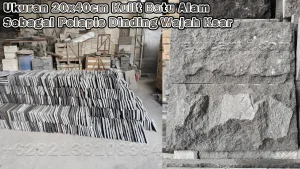
Vertical applications open new aesthetic dimension for temple stone. Use thin slabs 1-2 cm with split face or chiseled finishing to create dramatic wall texture. Lighter weight reduces structural load and eases installation. For bold accent walls, explore premium volcanic lava rock tile cladding. For color and texture variation, combine with green stone split face tiles or stacked betel leaf slate slabs for stunning contrast.
Material Comparison: Lava Stone vs Other Alternatives
Making right material decision requires comparative understanding. Below is comparative analysis of temple lava stone with popular alternative materials to help you make informed choices.
Lava Stone vs Andesite
Andesite is closest alternative with similar characteristics but lighter gray color and slightly lower density. Andesite is easier to obtain and generally more economical. However, lava stone offers deeper black color and lower porosity, making it more stain resistant and visually dramatic. For in-depth comparison, read natural andesite stone guide and Indonesian andesite stone paving.
Lava Stone vs Limestone
Limestone offers warm color palette (cream, beige, yellow) contrasting with coolness of lava stone. However, limestone is much softer, more porous, and susceptible to acid erosion. Limestone requires more intensive maintenance and is not recommended for high-traffic or wet areas without extensive sealing. To understand limestone characteristics, consult natural limestone travertine guide and Indonesian sandstone limestone guide. For premium limestone, see super white palimo limestone or white palimo natural stone.
Lava Stone vs Sukabumi Green Stone
Sukabumi Green Stone offers unique turquoise green color and superior natural cooling properties, making it favorite for swimming pool areas. However, green stone is more expensive and availability more limited than lava stone. For premium wet areas, green stone is superior choice. Study green stone tiles for swimming pools guide and green sukabumi natural stone. For other green variants, explore green natural stone varieties and Yogyakarta batik green stone tiles.
Design Inspiration Based on Architectural Styles
Lava temple stepping stone is highly versatile material adaptable to various architectural styles. Below is application guide based on specific design styles.
Modern Tropical and Contemporary Bali Style
This style emphasizes harmony between built environment and tropical nature. Use stepping stones with organic shapes and natural split face finishing. Combine with lush tropical vegetation, water features, and wood materials. Integrate with lava stone exterior design for facade and landscape cohesion. For traditional elements, incorporate traditional umpak batu or Balinese pelinggih stone materials as cultural accents.
Minimalist and Industrial Style
Minimalist style demands simplicity, clean geometry, and limited color palette. Use stepping stones with more geometric shapes (though still random) and uniform honed or bushhammered finishing. Black lava stone color perfectly complements concrete, steel, and glass typical of this style. For latest style references, see latest natural stone style trends and modern luxury home design. For industrial approach, explore raw stone materials for industrial design.
Classic and Mediterranean Style
Classic style appreciates proportion, symmetry, and ornamental detail. Use stepping stones with tumbled or antiqued finishing for aged nuance. Combine with classic elements like columns, terracotta pots, and fountains. For hospitality inspiration, see natural stone hospitality design and natural stone restaurant elements. For Javanese heritage touch, integrate carved temple lava stone or chiseled temple natural stone.
Sustainability Considerations and Ethical Sourcing
In era of environmental awareness, responsible material sourcing is ethical imperative. Choosing local Indonesian natural stone like Merapi lava temple is inherently more sustainable than importing stone from abroad, significantly reducing transportation carbon footprint. Additionally, supporting local natural stone industry means supporting livelihood of thousands miners and small artisans dependent on this sector.
However, sustainability is not just about geographic origin. Responsible mining practices, post-mining land rehabilitation, and fair working conditions are equally important criteria. As conscious consumer, ask supplier about their sustainability practices. Watucandi commits to ethical sourcing and production practices minimizing environmental impact. For broader understanding of sustainable materials, explore pumice stone as lightweight and eco-friendly landscaping material.
FAQ: Frequently Asked Questions About Lava Temple Stepping Stones
Are lava temple stepping stones suitable for high rainfall areas?
Yes, lava temple is very suitable for high rainfall areas due to low porosity and water erosion resistance. Ensure installation done with adequate sub-base drainage to prevent water pooling under stones causing instability.
What is ideal spacing between stepping stones for walking comfort?
Ideal center-to-center spacing is 60-65 cm for adults. Adjust to stride length of main users. For gardens used by children or elderly, reduce spacing to 50-55 cm for extra safety and comfort.
How to maintain lava temple stepping stones to stay durable?
Routine maintenance includes organic debris cleaning, washing with water and soft brush, and resealing every 1-2 years depending on exposure. Avoid high-pressure washer damaging surface. For wet areas, use pH-neutral natural stone cleaner.
Can I install stepping stones myself without professional?
For small non-structural areas, DIY installation may be feasible with adequate preparation. However, for large areas, heavy loads, or complex applications, hiring professional installer highly recommended to guarantee quality, safety, and installation longevity. Installation mistakes can be costly to fix and potentially dangerous.
What is estimated cost per square meter for lava temple stepping stone installation?
Cost varies significantly depending on stone thickness, finishing, pattern complexity, site condition, and project location. Contact us for specific quotation based on your project needs. We provide options for various budgets without compromising core material quality.
Conclusion: Timeless Investment in Natural Beauty
Choosing garden floor yard assorted irregular random stepping stones temple stone (lava stone) thickness 1-3cm is more than just material decision; it is commitment to beauty lasting beyond fleeting trends. In world increasingly dominated by synthetic and disposable materials, natural stone offers something rare and precious: authenticity, durability, and connection to earth sustaining us.
Every stepping stone you place in garden is invitation to slow down, to feel earth texture underfoot, to reconnect with natural rhythm often forgotten in hustle bustle of modern life. This is investment not only in property, but in quality of life, in psychological well-being, and in aesthetic legacy to be enjoyed by future generations.
With support from direct manufacturers in heart of Indonesian natural stone industry, you get access to highest quality material at fair price, accompanied by technical expertise and unmatched customer satisfaction commitment. Do not hesitate to consult regarding specific needs of your project. Our expert team ready to help realize your landscape vision into beautiful, functional, and timeless reality. Contact us today to start journey creating your dream garden.
Additional Material References and Inspiration
For further exploration, below is collection of material references and design inspiration relevant to your stepping stone and natural stone landscape projects:
- Garden and yard natural stone flooring for ground cover application inspiration.
- Irregular natural stone paving for organic random patterns.
- Lava stone paving slabs for areas requiring flatter surface.
- Lava stone floor guide for professional installation.
- Merapi outdoor natural stone flooring for high-traffic exterior areas.
- Black lava stone Bali Indonesia for premium material reference.
- Black lava stone catalog for complete product spectrum.
- Temple lava stone floor for heritage applications.
- Black candi lava stone for core project material.
- Black lava bush hammer surface for anti-slip finishing.
- 5 black lava stone surfaces for finishing options.
- Black lava stone 100x100x10 for small modular size.
- Rough face lava stone for maximum natural texture.
- Black natural stone slab for large-format applications.
- Merapi lava temple stone floor for sacred nuance.
- Natural stone edge wall for edge finishing details.
- Hand-carved temple stone paving for premium craftsmanship.
- Genuine susun sirih slate for layered texture.
- Semi-carved lava stone for machine-hand finish balance.
- Candi stone paving example for installation reference.
- Natural andesite slab for alternative material.
- Chiseled lava stone 300x300mm for medium modular size.
- Chisel lava natural stone for artisanal finishing.
- Chiseled natural stone paving for textured patterns.
- Hidden crystals of Merapi lava for interesting geological facts.
- Natural black lava stone tile for tiled applications.
- Brown spotted paras stone for warm color variation.
- Natural stone slabs for large-format applications.
- Natural stone edges for finishing details.
- Lava candi natural stone for material specification.
- Lava stone product range for complete catalog.
- Complete lava stone products for procurement reference.
- Lava stone 75x230mm for brick-format applications.
- Wavy carved natural stone tiles for decorative accents.
- Brown sandstone for warm-tone alternative.
- Natural stone tile catalog for comprehensive product overview.
- Decorate comfort design for wellness-oriented landscaping.
- Unique natural stone product models for exclusive design elements.
- Commercial natural stone design for large-scale projects.
- Enterprise natural stone design for corporate landscaping.
- Brown Java Paras Kerobokan sandstone tiles for warm-tone cladding.
- Natural stone as swimming pool gutter cover for pool details.
- Merapi black sand split face natural stone for vertical applications.
- Large natural limestone slabs for premium large-format stone.
- Semi-chiseled Merapi lava candi paving for textured paving option.
- Black lava candi stone cladding for vertical cladding guide.
- Complete Merapi black lava candi stone guide for technical reference.
- Merapi lava stone fence and foundation walls for structural landscaping.
- Indonesian green stone tile guide for green stone applications.
- Garden foundation stone borders for landscape edging.
- Lava rock stepping stone pavers guide for stepping stone specific guide.
- Brown Java tiger stone slabs guide for warm-tone cladding option.
- Black lava stone tiles variant 2 for additional tile option.
- Swimming pool stone tile guide for pool material selection.
- Black lava stone tiles 10x10x1cm for small-format luxury tile.
- Premium black lava stone table top for outdoor furniture.
- Lava stone tiles for swimming pool for pool-specific tile.
- Black basalt stone sink for outdoor wash station.
- Rough surface marble stone sink for textured sink option.
- Breccia natural stone tiles for exotic accent tile.
- Natural stone furniture for stone furniture collection.
- Original random natural stone slabs for random-format slab.
- Palimanan paras stone tiles for light-tone alternative.
- Candi lava natural stone mosaic for decorative mosaic application.
- Sukabumi green Pedra Hijau stone tiles for premium green stone.
- Local vs precision green stone tiles for quality comparison.
- Authentic manually chiseled stone floor for handcrafted floor option.
- 3D stone slabs for dimensional accent.
- Indonesian limestone tiles for limestone option.
- Bushhammer limestone tile for textured limestone.
- Natural black lava stone tile for black lava tile option.
- Temple stone paving floor for temple-style paving.
- Split face rough candi temple stone for rough-texture cladding.
- Solid split stone 100x200mm for small-format split stone.
- Rough face stone floor for textured floor option.
- Rough natural stone floor for rustic floor option.
- Straight line type 1×0.5 for linear profile detail.
- Line types 0.5×0.5 broken regularly for textured profile.
- Line types rooling2 for curved profile detail.
- Line types 2×1 for larger profile detail.
- Surface types 3×1 for grooved surface option.
- Surface types 05×05 comb for fine-textured surface.
- Stone type GCBroken for broken-texture option.
- Stone types GC for comprehensive surface guide.
- Floor paving stone chisels for installation tool reference.
Related Topics
random garden stepping stones, lava stone stepping stone, black temple stone, random natural stone slabs, natural stone garden floor, landscape stepping stones, merapi volcanic stone, zen garden indonesia, natural hardscape, irregular natural stone, minimalist garden design, garden pedestrian path, anti-slip natural stone, tropical landscape architecture, eco-friendly natural stone, outdoor meditation garden, bushhammer lava stone, organic natural stone paving, japanese garden indonesia, weather resistant stone, wabi sabi garden concept, mindful walking garden, natural stone 3cm thick, watucandi stepping stone, organic aesthetic natural stone,