'%3E%3Cpath%20stroke='%23000'%20stroke-width='4'%20d='m-35-37-13%2020m5%203%2013-20m5%203-13%2020m63%2042%206-9m1-2%206-9m5%203-6%209m-1%202-6%209m5%203%206-9m1-2%206-9m-96%200%2013%2020m5-3-6-9m-1-2-6-9m5-3%2013%2020m63-42-6-9m-1-2-6-9m5-3%2013%2020m5-3-6-9m-1-2-6-9'/%3E%3Ccircle%20r='24'%20fill='%23cd2e3a'/%3E%3Cpath%20fill='%230047a0'%20d='M0%200a12%2012%200%201%201%2020%2013%2024%2024%200%201%201-40-26A12%2012%200%201%200%200%200'/%3E%3C/g%3E%3C/svg%3E)


'/%3E%3Cpath%20fill='%23b2b2b2'%20d='M241%20382q0%2016%2017%2026%2017%2011%2042%2011t42-11q16-11%2017-26V269H241'/%3E%3Cpath%20fill='%239f7e00'%20d='M241%20379q0%2014%208%2023%209%209%2021%209%2014%200%2021-9%209-9%209-23V269h-59'/%3E%3Cpath%20d='M241%20339v-70h59v110q0%2014-9%2023l-6%205v-68h-15v72q-8%200-14-4v-68zm59%2040c0%2022%2015%2032%2029%2032%2021%200%2030-18%2030-32v-40h-59'/%3E%3Cpath%20fill='%239f7e00'%20d='M266%20277v5h2v12h-3v-5h2v-5h-9v5h2v5h-4v9h3v18h-5v10h34v-10h-5v-18h3v-9h-4v-5h2v-5h-9v5h2v5h-3v-12h2v-5zm42%20101q0%2010%206%2017%206%206%2015%207%2010-1%2016-7%206-7%206-17v-29h-43'/%3E%3Ccircle%20fill='%230044ad'%20cx='329.5'%20cy='372'%20r='6'/%3E%3Cellipse%20fill='%230044ad'%20cx='300'%20cy='340'%20rx='16'%20ry='21'/%3E%3C/svg%3E)


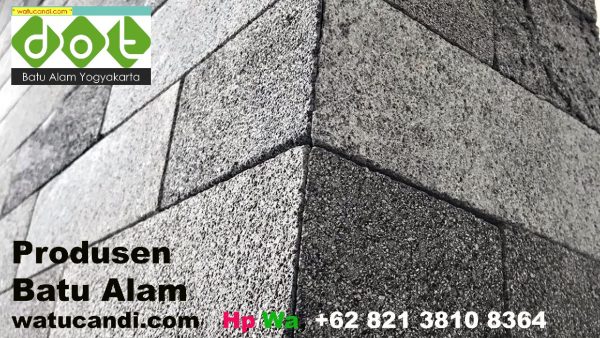
Imagine a stone wall that does not merely divide space but also narrates the story of a mighty eruption from thousands of years ago. In the midst of modern design trends that often feel cold and artificial, Black Lava Sand Stone emerges as an oasis of authenticity. It is not just a building material; it is a piece of Mount Merapi’s volcanic history carved into architectural art. For those tired of the uniformity of factory-made ceramics, this stone offers wild character, porous texture that “breathes,” and a deep black color that comes alive with the weather. This is the choice for souls seeking a balance between natural strength and visual luxury that withstands time.
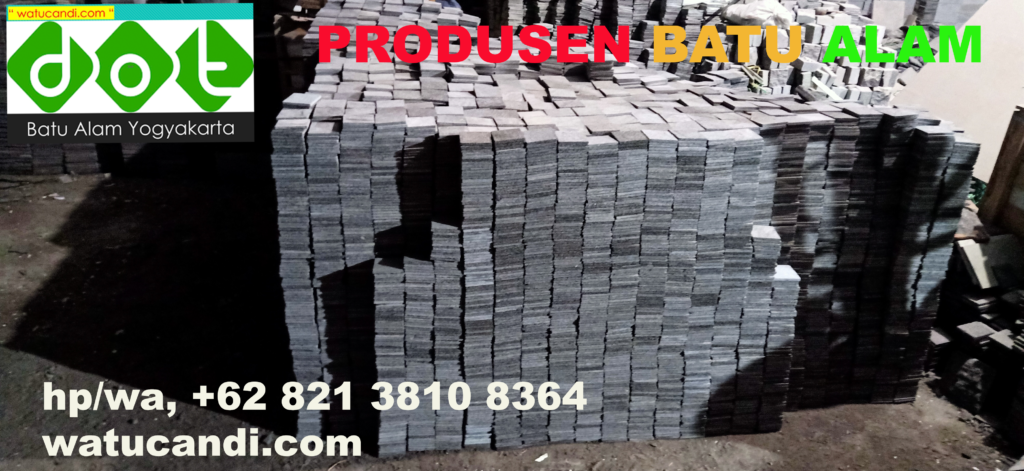
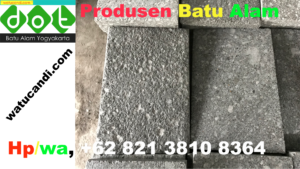
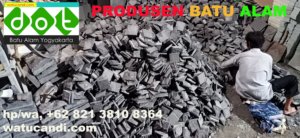
Black Lava Sand Stone, often known as Black Candi Stone, is a genuine natural stone formed from geological processes thousands of years ago on the slopes of Mount Merapi, stretching between Yogyakarta and Magelang, Central Java. Unlike artificial stone or concrete, this stone possesses unique natural porosity, high compressive strength, and a dynamic color palette that changes from pitch black when wet to elegant gray when dry. This article will thoroughly explore everything about black lava sand stone, from its geological characteristics and finishing types to architectural applications, maintenance guides, and purchasing through a trusted natural stone store.
Understanding the Origin and Formation Process of Black Lava Sand Stone
To understand why this stone is so special, we need to trace its geological origins. Black candi stone is a type of volcanic sedimentary rock. It is formed from deposits of volcanic eruption materials, such as volcanic ash, sand, and lava gravel, which then undergo lithification or compaction over tens to hundreds of years. Pressure from soil layers above and natural mineralization transform these loose deposits into solid rock while retaining micro-pores.
The name “Candi Stone” is not without reason. Historically, this material was widely used by the ancestors of the Indonesian people, particularly during the Hindu-Buddhist kingdoms in Java, as the main construction material for temples, stupas, and inscriptions. Its resistance to tropical weather and ease of carving made it the primary choice for ancient masters. Today, this cultural heritage is revived in modern forms through various premium natural stone flooring products suitable for Joglo villas and modern minimalist homes.
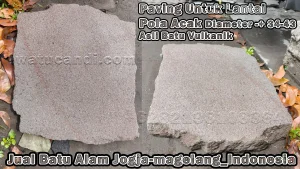
The main characteristic of black lava sand stone is its porous texture. These small pores allow the stone to “breathe,” absorb water, and regulate room temperature naturally. This is why rooms clad in natural stone tend to feel cooler than those using synthetic ceramics or granite. For those seeking high-quality paving solutions, the collection of Merapi lava paving stones offers extra durability for outdoor areas.
Unique Characteristics of Volcanic Black Lava Sand Stone
Before deciding to use this stone in your construction project, it is important to understand its physical and chemical traits. Below are the in-depth characteristics that distinguish Black Lava Sand Stone from other natural stone materials:
1. Hypnotic Color Dynamics
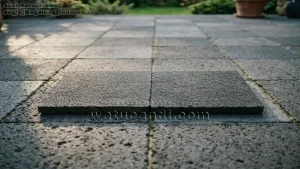
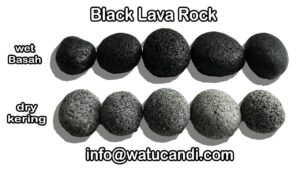
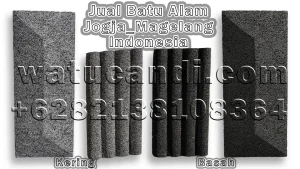
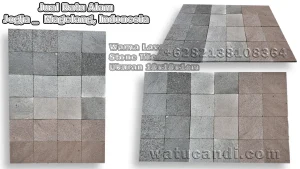
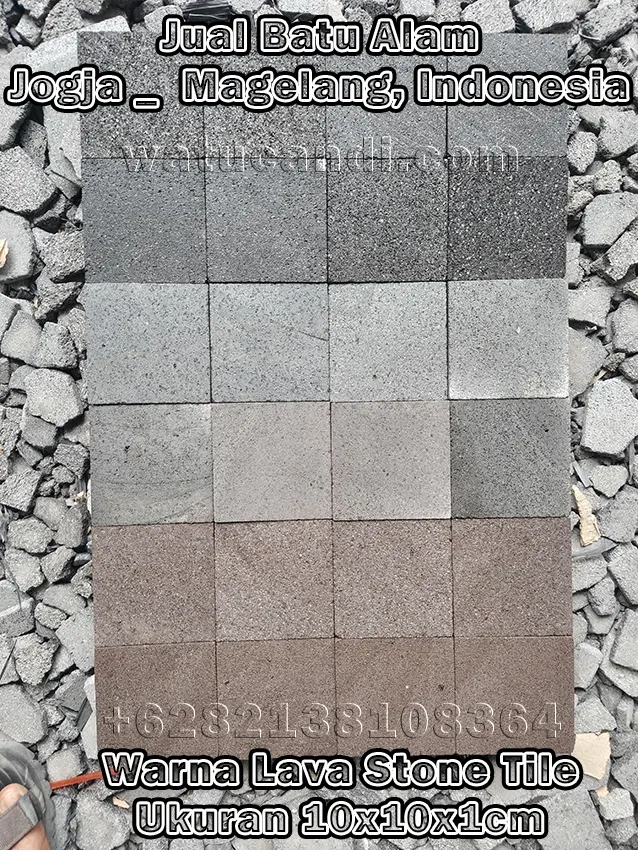
One of the biggest attractions of black lava sand stone is its ability to change color according to humidity conditions. When newly installed or after rain, this stone displays a jet-black color that is very elegant and mysterious. However, as the water evaporates and the stone dries, its color transforms into dark gray, light gray, or even brownish-gray nuances. This color change creates a lively and non-monotonous visual effect, making every corner of the building look different throughout the day.
Although the dominant colors are black and gray, natural variations can also be found, including cement-white and brick-red tonalities, depending on the mineral content in specific mining areas. It is important to note that color uniformity between stones cannot be 100% guaranteed because this is a natural product. Precisely, this irregularity provides artistic value and authenticity. To see other color and texture variations, you can explore the comparison of local vs precision natural stones.
2. Porous Texture and Water Absorption
The microscopic structure of black lava sand stone is full of small cavities. This porous property has two sides. On one hand, it allows air circulation and heat absorption, making the surrounding environment cooler. On the other hand, this property makes the stone susceptible to moss growth if left constantly damp without maintenance. However, with modern coating technology, this weakness can be minimized without removing the stone’s natural beauty. Read more about manually chiseled stone floors that maintain natural texture while remaining durable.
3. Hardness Level and Durability
Although classified as a sedimentary rock that is relatively softer than hard granite or marble, black lava sand stone has sufficient hardness for floor and wall applications. Its density varies depending on the geological age of the lava deposit. Stones from deeper and older layers tend to be harder and denser, while stones from newer eruptions might be slightly more fragile. However, generally, this stone is much stronger than ordinary paras limestone and does not easily crumble from minor impacts. For exterior applications requiring extra resilience, consider using black lava rock pebbles as additional decorative elements.
Types of Finishing for Black Lava Sand Stone
The finishing or surface treatment process greatly determines the final appearance and application of black lava sand stone. The choice of finishing type should be adjusted to the room’s function, design style, and budget. Below is a detailed explanation of the available finishing types:

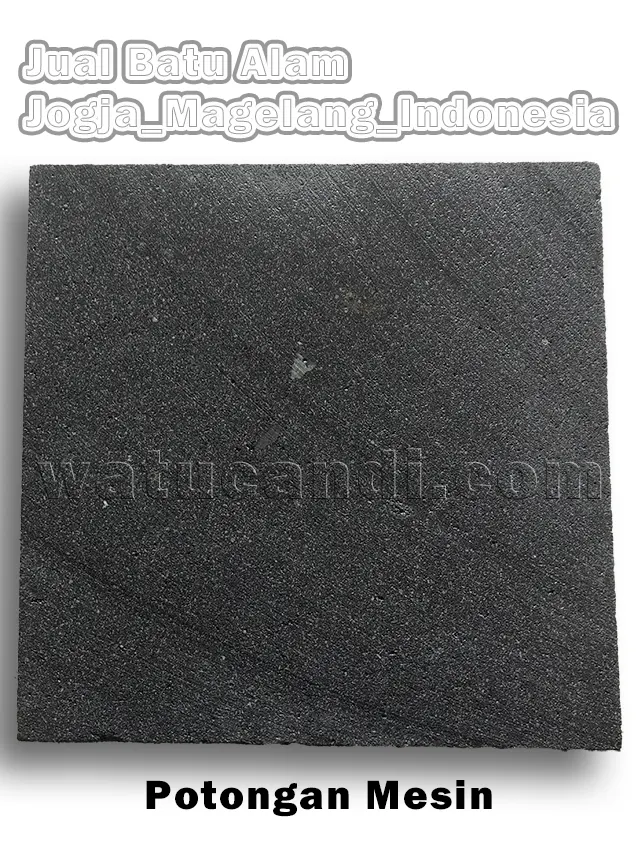
1. Candi Stone RTM (Machine Cut)
RTM stands for Rata Mesin (Machine Cut). In this process, the entire surface of the stone front, sides, and back is leveled using precision cutting machines. The result is a smooth, flat, and uniform surface. The edges of the stone are usually sharp and perfectly square.
Advantages of RTM:
- Easy Installation: Because the surface is flat, installation is faster and neater. The joints between stones can be made very thin (minimal grout), creating a solid and seamless wall or floor impression.
- Versatile: Suitable for modern minimalist applications, both for interior and exterior walls.
- Cost Efficient: The fast production process makes RTM stone prices generally more affordable compared to manual finishing.
Disadvantages of RTM:
- The “natural” or “rough” impression of volcanic stone is slightly reduced due to the overly smooth surface.
- If used in slippery areas like bathrooms, special attention is needed regarding the slip-resistance level.
For those who like neat geometric patterns, see inspiration from green stone tiles for swimming pools which are also available in flat finishing options.
2. Candi Stone RTA (Natural Cut / Split Face)
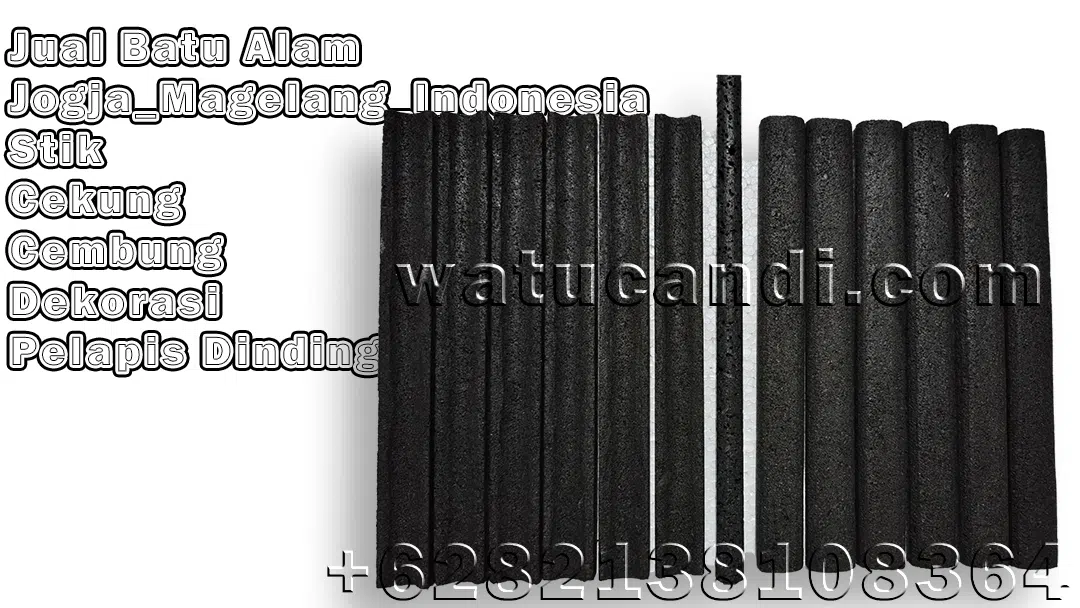
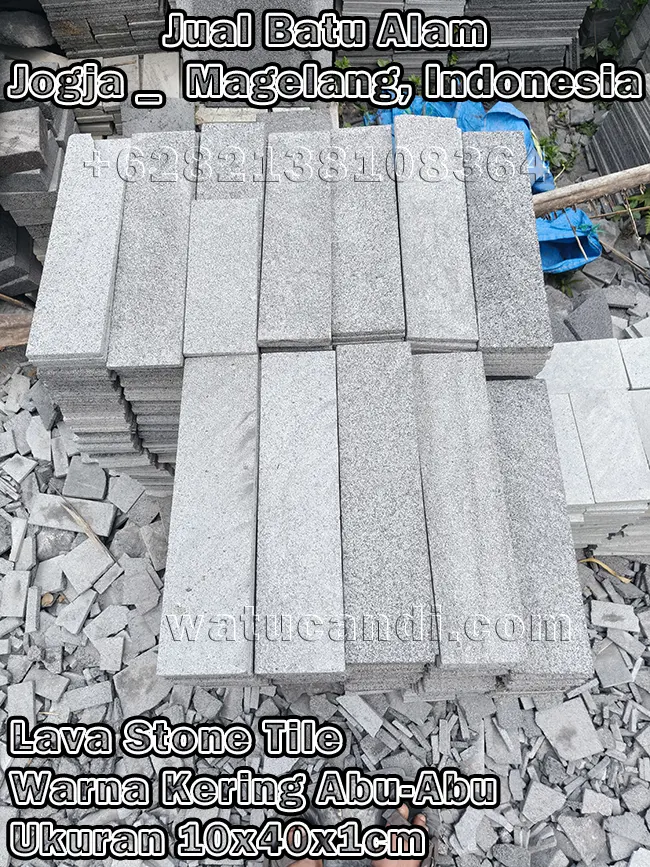
RTA or Rata Alam (Natural Cut), often called Split Face, is a type of finishing where one side of the stone (usually the front) is left in its natural, broken, or rough state. The other sides are leveled for easy installation on walls. This technique highlights the original texture of the rock, with irregular bumps and indentations.
Advantages of RTA:
- Strong Natural Impression: Provides a rustic, traditional nuance that blends with nature. Very suitable for tropical, Bali, or Joglo themes.
- Hides Dirt: The uneven texture makes small dust or stains less visible compared to smooth surfaces.
- Unique Aesthetics: Each stone piece has a unique fracture pattern, so no two walls are exactly the same.
Disadvantages of RTA:
- Limited Size: Due to the manual splitting process, it is difficult to produce RTA stone slabs of very large sizes without the risk of breaking. Common sizes range from 3×30 cm to 30×60 cm.
- More Complex Installation: Requires higher skilled labor to arrange the stones aesthetically despite the uneven surface.
To understand more about natural stone installation techniques, visit the guide on natural limestone and travertine which discusses similar principles.
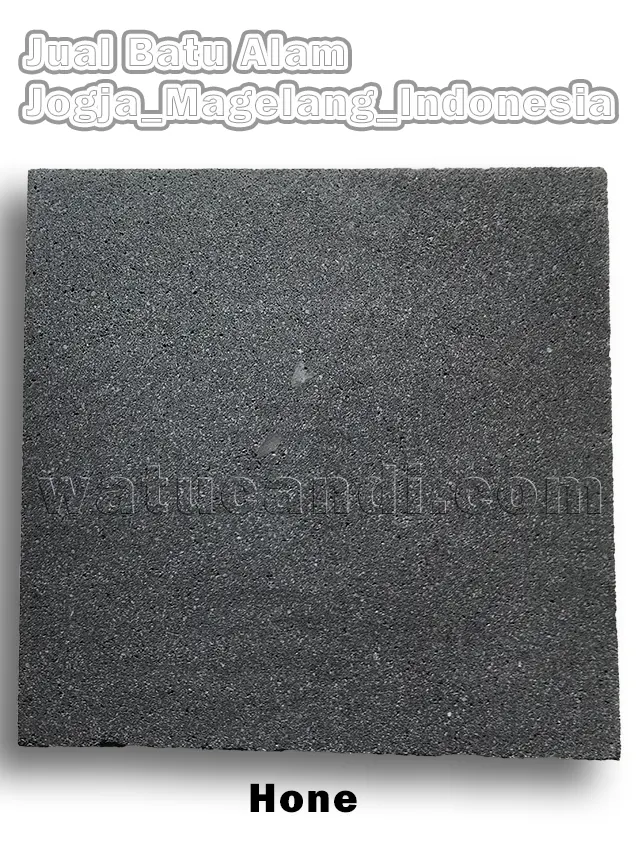
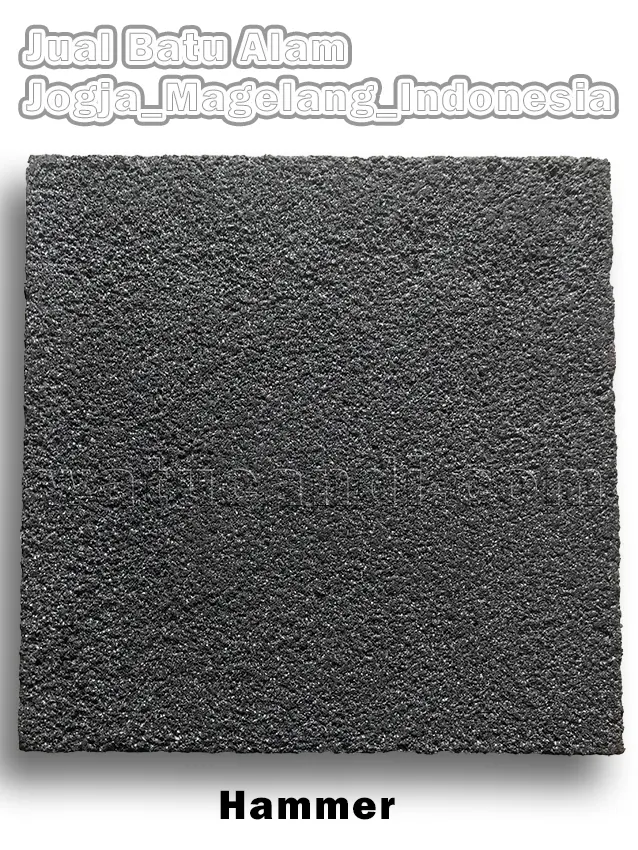
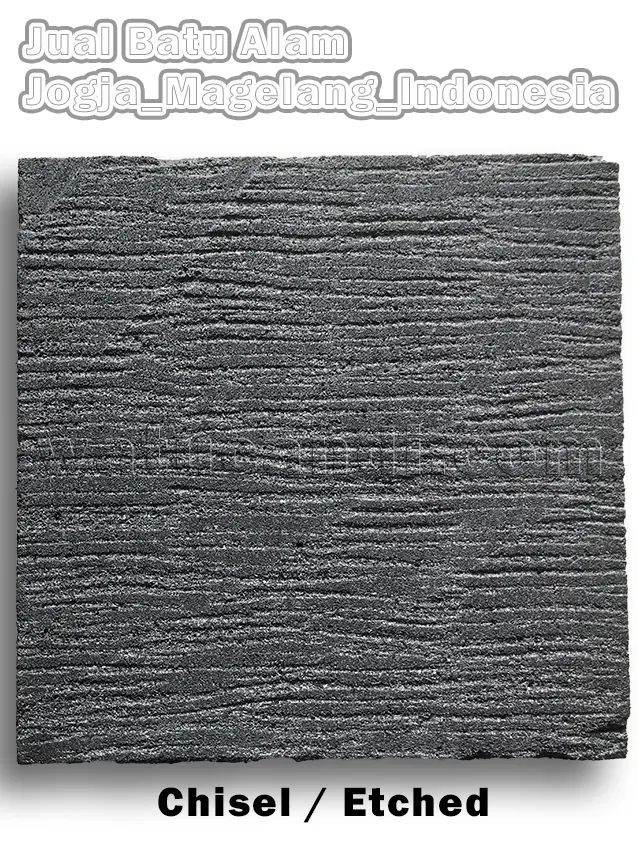
3. Other Finishes: Bushhammer, Chiseled, and Tumbled
Besides RTM and RTA, there are other finishing variations that are increasingly popular in luxury architecture:
- Bushhammer: The stone surface is pounded with a special tool until it has an orange-peel-like texture. This provides excellent anti-slip effects, suitable for pool areas. Learn more about Indonesian natural lava stone tiles.
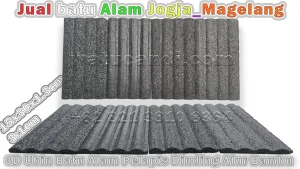
- Chiseled: The edges of the stone are manually chiseled to give an antique or vintage impression. Very suitable for classic styles. See examples of random candi stone skin lava wall cladding.
- Tumbled: The stone is tumbled in a large machine with water and abrasives to smooth the edges and surface, giving a soft “aged” impression.
Applications of Black Lava Sand Stone in Interior and Exterior Design
The flexibility of black lava sand stone allows it to be used in almost every part of a building. Below are creative application ideas that can enhance the aesthetic value of your property:
1. Facade Walls and Exterior Cladding
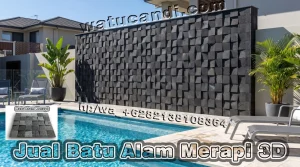
Using black stone on the outer walls of a house creates a stunning contrast with green garden elements or the blue sky. Black stone cladding walls give a sturdy, mysterious, and luxurious impression. For best results, use RTA or Split Face finishing to highlight the texture. Ensure to apply waterproofing or anti-moss coating to keep the walls clean. Wall design inspiration can be found in the article on Sukabumi green stone tiles which are often combined with black stone.
2. Wet Area Floors and Swimming Pools
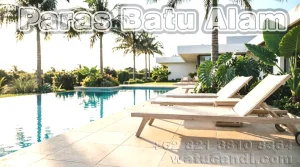
Due to its natural anti-slip properties (especially in bushhammer or RTA finishing), black lava sand stone is an ideal choice for floors around swimming pools, jacuzzi edges, or outdoor bathrooms. Its black color makes pool water look clearer and deeper. Additionally, this stone does not absorb excessive heat during the day, making it comfortable for bare feet. Explore the collection of candi lava natural stone mosaics for decorative details in pool areas.
3. Garden and Landscape
In the garden, black stone can be used as stepping stones, garden borders, or fence foundations. Combining black stone with tropical green plants like monstera or ferns creates a calming tropical forest atmosphere. You can also use black stone as a planting medium for cacti or succulents for an interesting color contrast. Read the guide on Palimanan paras stone tiles for ideas on combining bright and dark colors.
4. Furniture and Interior Accessories
Black lava sand stone is not limited to walls and floors. This material is also often processed into dining tables, coffee tables, sinks, and even bathtubs. Solid black stone tables provide a heavy and permanent impression that becomes a focal point in the living room. Black stone sinks give a luxurious spa nuance to the bathroom. See the collection of original random slabs stone for custom furniture projects.
Pros and Cons: An Honest Analysis
Every building material has pros and cons. Below is an objective analysis to help you make a decision:
Main Advantages
- Elegant and Timeless Aesthetics: Black is a neutral color that never goes out of style. It blends well with minimalist, industrial, classic, and tropical styles.
- Natural Cooling Effect: The ability to absorb water and open pores helps regulate room temperature, reducing the need for AC.
- Eco-Friendly: As a natural material taken directly from the earth with minimal processing (compared to fired ceramics), natural stone has a lower carbon footprint.
- Strong and Durable: If maintained properly, black lava sand stone can last for tens or even hundreds of years without losing its structural integrity.
- Increased Property Value: The use of genuine natural stone is often considered a premium feature that increases home resale value.
Disadvantages and Solutions
- Prone to Moss: Because it is porous, this stone is easily grown with moss in humid areas. Solution: Use high-quality anti-moss coating and clean regularly with a soft brush.
- Routine Maintenance Required: Unlike ceramics that are “install and forget,” natural stone needs attention. Solution: Reseal every 1-2 years depending on weather exposure.
- Color Variation: Color inconsistency can be a problem for those wanting perfect uniformity. Solution: View variation as natural beauty, or choose stone that has undergone strict sorting.
- Heavy: Natural stone is quite heavy, requiring strong wall or floor structures. Solution: Consult with a structural engineer before installation on upper floors.
For more information on maintenance, read the article about pumice stone and other volcanic materials.
Price Guide and Cost Determinants
The price of black lava sand stone varies greatly, influenced by several key factors. Understanding these factors will help you create a realistic budget.
Price Determining Factors
- Size: The larger the stone dimensions, the more expensive it is due to difficulties in mining and cutting without cracking. Standard sizes like 10×10 cm or 20×20 cm are more economical than large slabs of 60×60 cm or more.
- Finishing Type: RTM (machine) finishing is generally cheaper than RTA (natural) or Chiseled (manual) because the production process is faster and automated. Manual finishing requires skilled labor and more time.
- Sorting Quality: Stones with consistent pitch-black color and free from defects (hairline cracks) are valued higher than stones with gray variations or spots.
- Thickness: Stones with a thickness of 2 cm or 3 cm are certainly more expensive than 1 cm ones due to the greater volume of material.
- Shipping Location: Transportation costs from the quarry (usually in Magelang/Yogyakarta) to your project location also affect the final price.
Generally, the price range for black lava sand stone is between Rp80,000 and Rp195,000 per square meter, depending on the specifications above. However, this price can change over time and with stock availability. To get the latest and best price offers, it is recommended to contact a trusted natural stone and furniture supplier directly.
Tips for Maintaining Black Lava Sand Stone for Longevity
Investment in natural stone will be wasted if not maintained properly. Below is a simple yet effective maintenance protocol:
1. Routine Cleaning
Use clean water and a soft brush (nylon) to clean daily dust and dirt. Avoid using wire brushes that can scratch the stone surface. For stubborn stains, use pH-neutral soap. Avoid harsh acid-based cleaners (like commercial ceramic cleaners) as they can damage the stone’s pore structure and fade the color.
2. Coating/Sealer Application
This is the most crucial step. Apply liquid sealer or special natural stone coating every 1-2 years. Coating functions to microscopically close the stone’s pores, preventing water from penetrating too deeply, and inhibiting the growth of moss and fungi. Choose water-based coating so the stone can still “breathe” and not drastically change the stone’s original color. See the guide on Yogyakarta batik green stone tiles for coating tips on colored stones.
3. Moss Handling
If moss has already grown, do not scrape it with sharp objects. Soak the area with a mixture of water and vinegar or a special natural stone moss cleaner, let it sit for 15-30 minutes, then brush gently. Rinse until clean.
Why Choose WatuCandi as Your Natural Stone Partner?
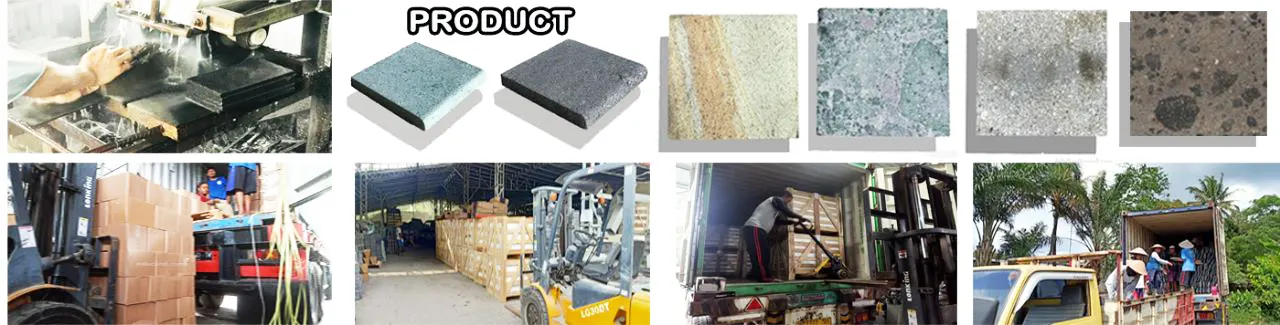
In choosing a natural stone supplier, credibility and product quality are absolute. WatuCandi has long been the main reference for architects and contractors looking for export-quality natural stone from Indonesia. With resources directly from quarries at the foot of Mount Merapi, WatuCandi guarantees material authenticity and quality consistency.
WatuCandi’s products are not limited to black stone. They offer a wide variety starting from unique brecciastone, natural stone liquid soap dispensers for bathroom accessories, to artistic rough surface marble stone sinks. Each product is crafted with high attention to detail, combining traditional techniques with modern quality standards.
For those seeking complete solutions for commercial or residential projects, WatuCandi provides various surface types such as lava stone tiles for swimming pools, handmade stone tables and chairs, as well as various line and pattern types like GC stone types and GC Broken stone types. This diversity allows you to create truly unique and personalized designs.
Advanced Design Inspiration and Current Trends
The world of natural stone design continues to evolve. Recent trends show an increased demand for material combinations. For example, combining black lava sand stone with solid teak wood to create a balance between cold (stone) and warm (wood) elements. Or, combining it with black steel for a strong industrial style.
Additionally, the use of natural stone for small functional elements is becoming increasingly popular. Such as 0.5×0.5 comb surface types for texture details, or 3×1 surface types for wall accents. Installation patterns are also evolving, from conventional straight patterns to more organic random patterns, as discussed in 2×1 line types and rolling line types.
For large-scale projects, efficiency considerations are very important. The use of 0.5×0.5 broken regular line patterns or 1×0.5 straight line types can speed up installation while maintaining aesthetics. Do not forget the potential of black stone for dramatic exterior designs, as reviewed in lava stone exterior design.
Conclusion: A Long-Term Investment for Eternal Beauty
Black Lava Sand Stone is not just a construction material; it is a style statement, a respect for nature, and a long-term investment. With its unique characteristics that change color, cooling porous texture, and volcanic toughness, this stone offers design solutions that are hard to match by synthetic materials. Although it requires special care, the visual satisfaction and comfort it provides far outweigh the effort.
Are you ready to transform your living space with the elegance of Merapi black stone? From majestic facade walls to calming pool details, the creative possibilities are endless. Visit chiseled floor paving stone to start your design journey. Remember that every piece of stone tells the story of the volcano that formed it, bringing natural energy directly into your home.
For further references on specific applications, do not hesitate to explore topics such as swimming pool coping stone tiles, black lava stone table tops, or green stone split face tiles. The right combination of materials will create perfect architectural harmony.
Do not miss the complete guide on premium lava rock tiles for cladding and 10x10x1cm black lava stone tiles for luxury projects. For pool enthusiasts, the ultimate guide to swimming pool stone tiles is a must-read. And of course, deeper exploration of black lava stone tiles and black lava stone tile walls will open new insights into the potential of this material.
End your inspiration search by looking at brown Java tiger stone slabs and black paras sandstone, lava rock stepping stone pavers, and garden wall foundation stone borders. Every element, no matter how small, contributes to your overall architectural masterpiece. Choose wisely, maintain with love, and enjoy the eternal beauty of Black Lava Sand Stone.
black lava sand stone, merapi black candi stone, volcanic natural stone, yogyakarta natural stone, magelang natural stone, exterior natural stone, interior natural stone, natural stone for walls, natural stone for floors, swimming pool natural stone, minimalist natural stone, traditional natural stone, split face natural stone, machine cut natural stone, natural cut natural stone, anti slip natural stone, premium natural stone, watucandi natural stone, indonesia natural stone, garden design natural stone, house facade natural stone, andesite natural stone, basalt natural stone, lava rock natural stone, wall cladding natural stone, flooring natural stone, pool coping natural stone, landscape natural stone, building material natural stone, home decor natural stone