'%3E%3Cpath%20stroke='%23000'%20stroke-width='4'%20d='m-35-37-13%2020m5%203%2013-20m5%203-13%2020m63%2042%206-9m1-2%206-9m5%203-6%209m-1%202-6%209m5%203%206-9m1-2%206-9m-96%200%2013%2020m5-3-6-9m-1-2-6-9m5-3%2013%2020m63-42-6-9m-1-2-6-9m5-3%2013%2020m5-3-6-9m-1-2-6-9'/%3E%3Ccircle%20r='24'%20fill='%23cd2e3a'/%3E%3Cpath%20fill='%230047a0'%20d='M0%200a12%2012%200%201%201%2020%2013%2024%2024%200%201%201-40-26A12%2012%200%201%200%200%200'/%3E%3C/g%3E%3C/svg%3E)


'/%3E%3Cpath%20fill='%23b2b2b2'%20d='M241%20382q0%2016%2017%2026%2017%2011%2042%2011t42-11q16-11%2017-26V269H241'/%3E%3Cpath%20fill='%239f7e00'%20d='M241%20379q0%2014%208%2023%209%209%2021%209%2014%200%2021-9%209-9%209-23V269h-59'/%3E%3Cpath%20d='M241%20339v-70h59v110q0%2014-9%2023l-6%205v-68h-15v72q-8%200-14-4v-68zm59%2040c0%2022%2015%2032%2029%2032%2021%200%2030-18%2030-32v-40h-59'/%3E%3Cpath%20fill='%239f7e00'%20d='M266%20277v5h2v12h-3v-5h2v-5h-9v5h2v5h-4v9h3v18h-5v10h34v-10h-5v-18h3v-9h-4v-5h2v-5h-9v5h2v5h-3v-12h2v-5zm42%20101q0%2010%206%2017%206%206%2015%207%2010-1%2016-7%206-7%206-17v-29h-43'/%3E%3Ccircle%20fill='%230044ad'%20cx='329.5'%20cy='372'%20r='6'/%3E%3Cellipse%20fill='%230044ad'%20cx='300'%20cy='340'%20rx='16'%20ry='21'/%3E%3C/svg%3E)



Natural stone materials are no longer merely a matter of structural function but rather a statement of identity and spatial philosophy. Among the vast array of natural materials available on the market, Black Basalt Granite Natural Stone holds a special position as a prima donna that combines volcanic strength with timeless visual elegance. This material is not just an ordinary stone; it is a manifestation of geological processes spanning millions of years that produce high density, dramatic deep black color, and extraordinary resistance to various extreme conditions. For architects, interior designers, or property owners who desire residences or commercial buildings with strong character, understanding the intricacies of Black Basalt Granite is a crucial first step.
This natural stone offers versatility rarely possessed by other materials. It can transform into stunning decorative wall elements, heavy-load bearing carport flooring, or hygienic and luxurious kitchen countertops. However, its popularity is often overshadowed by misconceptions regarding technical specifications, differences between local and export quality, and proper installation techniques. This article will comprehensively dissect every aspect of Black Basalt Granite Natural Stone, ranging from geological characteristics, finishing variations, spatial application guides, to long-term investment considerations. We will also include comprehensive references to various related products to provide holistic insights for those planning premium-scale construction or renovation projects.
Geological Characteristics and Physical Advantages of Black Basalt Granite
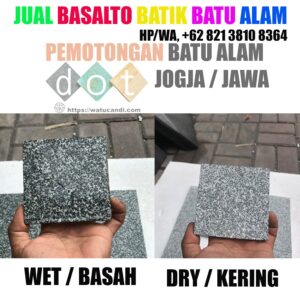
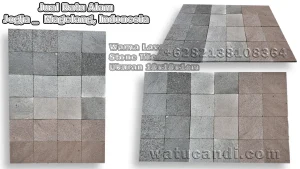
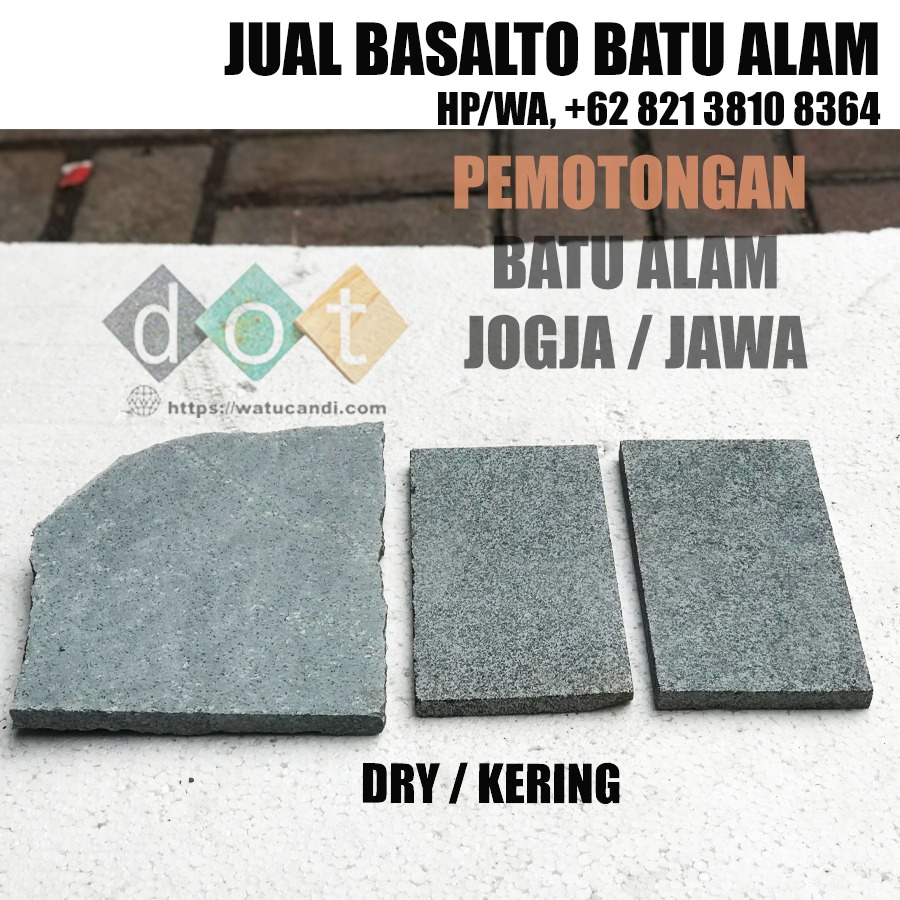
Geologically, Black Basalt Granite is a volcanic igneous rock formed from the cooling of lava rich in magnesium and iron. The relatively rapid cooling process on the earth’s surface creates a crystal structure that is fine yet extremely dense. Unlike intrusive granite which has large and clearly visible crystal grains, basalt has an aphanitic texture (fine grain) that provides a uniform and elegant surface appearance. This density is the primary key why this stone is categorized as a heavy-duty construction material. Its very low porosity makes it naturally almost waterproof, significantly minimizing the risk of weathering due to water seepage or moss growth compared to other types of natural stone such as paras stone or sandstone.
Another physical advantage lies in its surface hardness. On the Mohs scale, black basalt has a hardness level equivalent to or even exceeding some types of commercial granite. This makes it a highly resistant material against scratches, abrasion, and mechanical impact. This property is vital for applications in high-traffic areas such as hotel lobbies, airports, or residential carport floors. Furthermore, the thermal stability of black basalt is also commendable. This material does not easily expand or contract due to extreme temperature changes, making it an ideal choice for exterior applications in Indonesia’s tropical climate which has high solar intensity and rainfall. For a deeper understanding of the comparison between this volcanic material and other stone types, you can refer to the complete guide on technical specifications of Merapi black lava candi stone which discusses the detailed differences between candi stone and basalt.
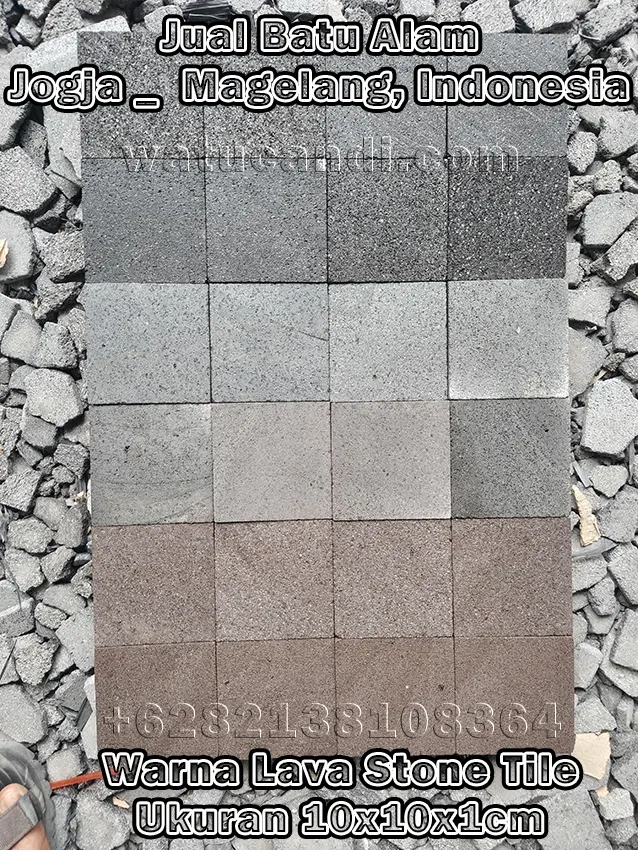
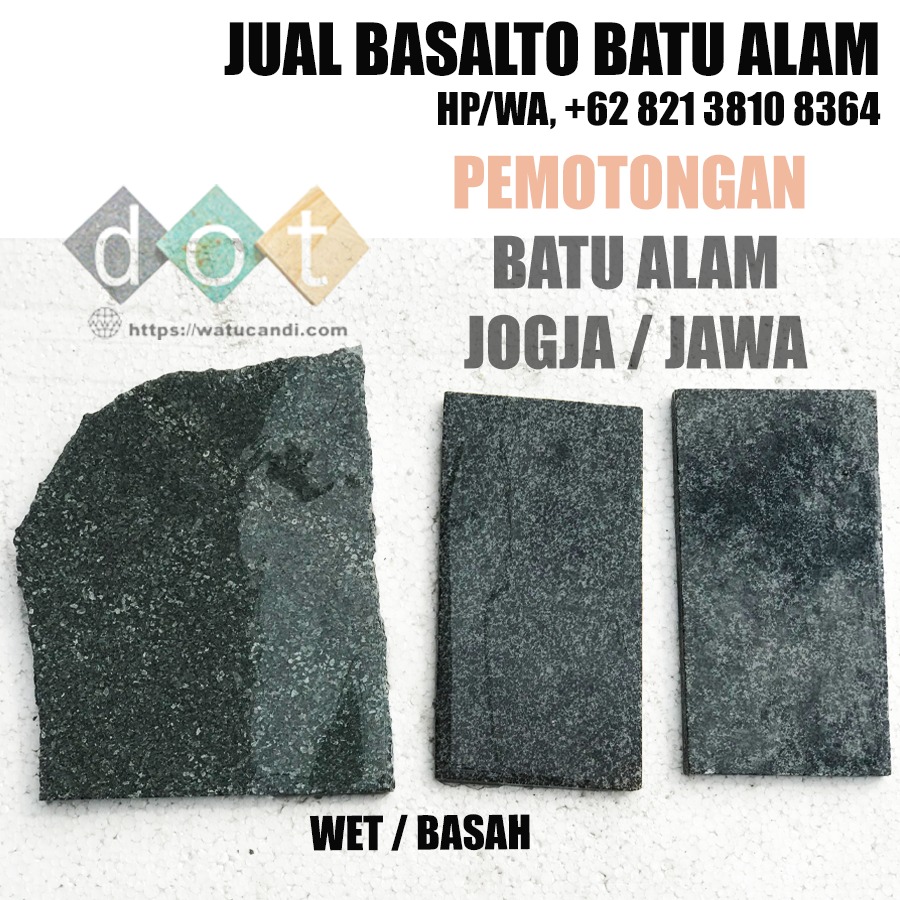
The black color produced by basalt is not the result of artificial coloring but rather natural mineral content such as pyroxene and olivine. This color is permanent and will not fade even after years of UV exposure. In fact, over time, the natural patina that forms will add depth to the stone’s character. In a design context, this deep black color functions as a visual anchor capable of highlighting other design elements. When combined with green plants, warm wood, or metal accents, black basalt creates a dynamic and sophisticated contrast. If you are interested in exploring other color variations within the volcanic stone spectrum, the collection of five black lava stone surfaces offers diverse texture alternatives.
The Art of Finishing: Unveiling Aesthetic Potential Through Texture
One of the most fascinating aspects of processing Black Basalt Granite Natural Stone is the material’s ability to accept various types of surface treatments or finishes. Each type of finish not only alters the visual appearance but also changes the function and tactile character of the stone. A good understanding of these finishing options is essential to ensure material specifications match the intended space. The wrong finish can reduce safety performance or even ruin the desired aesthetics.
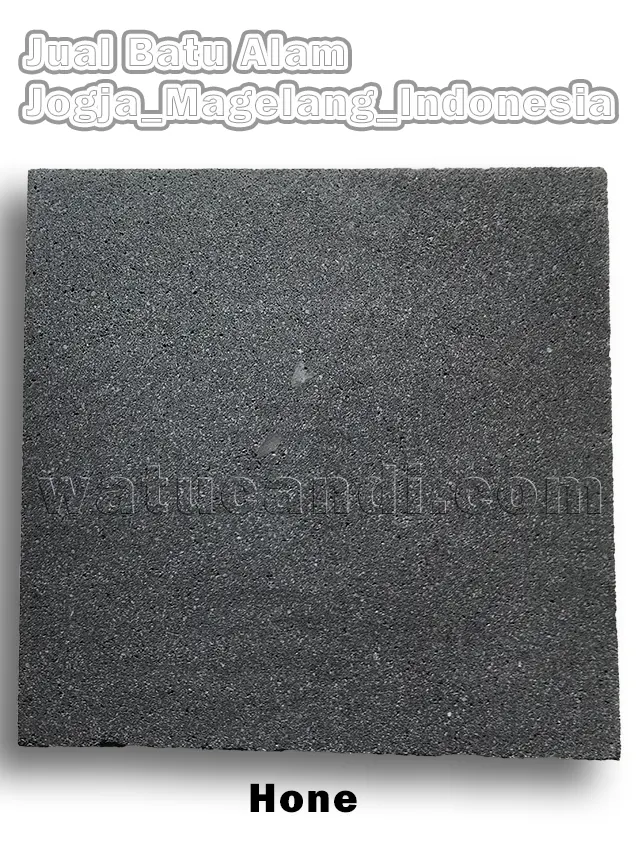
Honed finish is the most popular for interior applications and wet areas. The grinding process using diamond abrasive pads produces a flat, smooth, and matte surface. This surface feels soft to the touch and reflects light diffusely, creating a calm and luxurious impression. This finish is highly recommended for bathroom floors, interior walls, or countertops due to its ease of maintenance. However, it should be noted that honed surfaces can become slippery when wet if not given additional anti-slip treatment. For technical references regarding this grinding process, the article on selling honed sawn cut basalt stone provides a comprehensive guide.
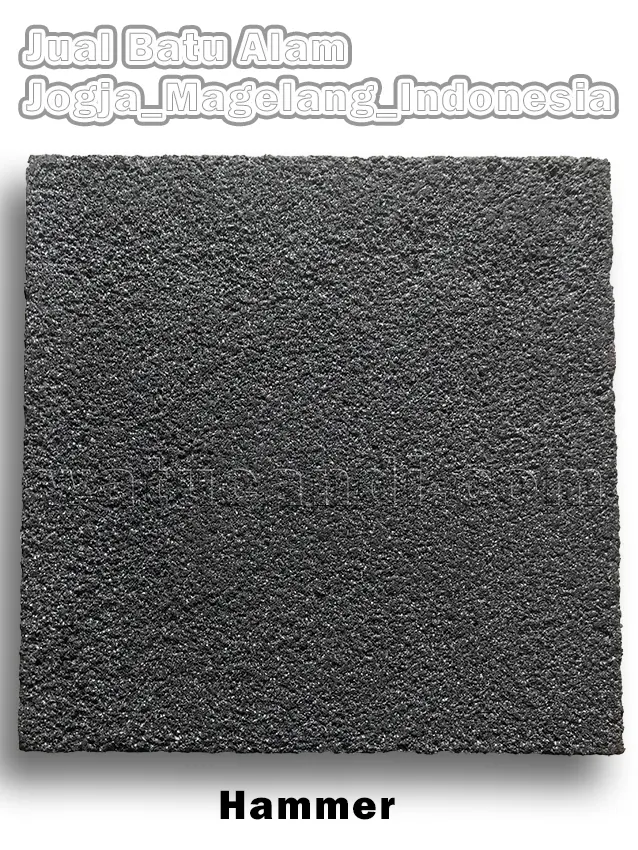
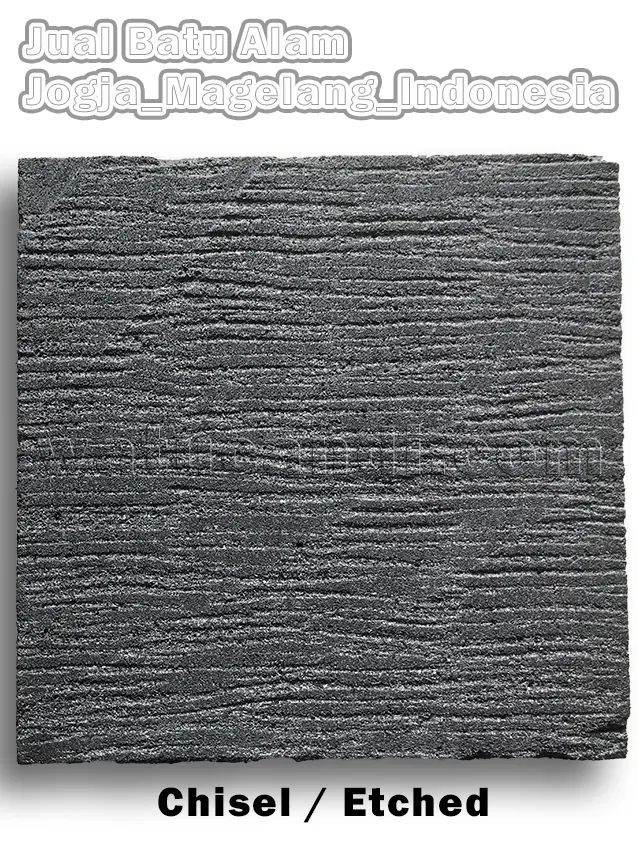
Meanwhile, for exterior areas or wet zones requiring a high coefficient of friction, Bush Hammer or Flamed finishes are absolute choices. Bush hammering involves striking the stone surface with special carbide-tipped tools that create a uniformly rough and pitted texture. This texture is very effective in preventing slips when wet and provides a masculine rustic nuance. On the other hand, Chiseled or hand-carved finish offers irreplaceable artistic value. Manual chisel marks create dramatic shadow play under lighting, giving three-dimensional dimension to flat planes. Variations such as 300x300mm chiseled lava surface demonstrate how traditional craftsmanship can be packaged in a precise modern format.
There is also Natural Face or Rock Face finishing that retains the original contour of the stone fracture. This is often used for exterior wall cladding to create an organic impression that blends with nature. Combining various finishes in a single project is also frequently done to create visual hierarchy. For example, using honed basalt for terrace floors and bush hammer basalt for swimming pool borders. Further exploration of texture variations can be found in the guide on four surface finishes for basalt granite andesite which explains the functional implications of each texture.

Technical Specifications and Material Thickness Considerations
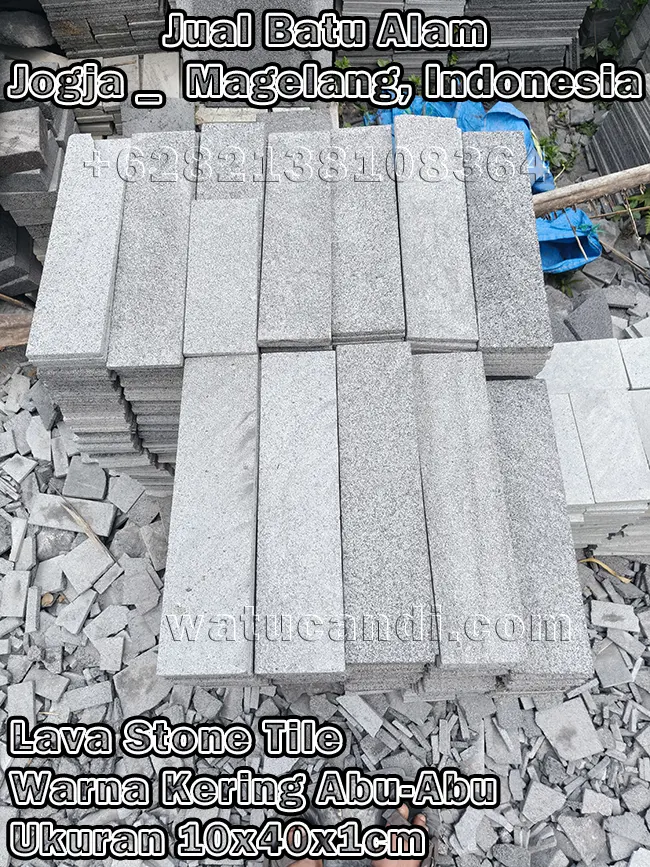
In the procurement specifications for Black Basalt Granite Natural Stone, thickness is a non-negotiable parameter for safety and durability reasons. Many installation failures occur due to errors in selecting thickness disproportionate to the load to be borne. Generally, the natural stone industry recognizes several standard thicknesses adjusted to their application. For vertical wall applications or cladding, a standard thickness ranging from 1 cm to 1.5 cm is sufficient. Lighter weight reduces the structural load of the building and facilitates the installation process without requiring overly complex anchor systems.
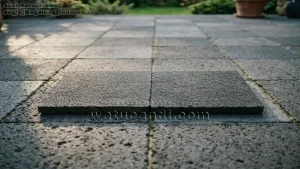
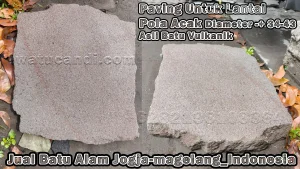
However, the situation changes drastically when this stone is applied as flooring. For pedestrian walkways or garden paths traversed only by humans, a thickness of 2 cm to 3 cm is generally considered safe. But for carport areas, garages, or motor vehicle access roads, the minimum recommended thickness is 3 cm to 5 cm. Dynamic vehicle loads, especially when maneuvering or braking, create significant shear and bending stress on the stone surface. Substandard thickness in these areas risks causing hairline cracks to total breakage. Investing in the right thickness upfront is far more economical than repair or replacement costs later. For references to heavy-load outdoor paving applications, see also Merapi natural stone outdoor flooring.
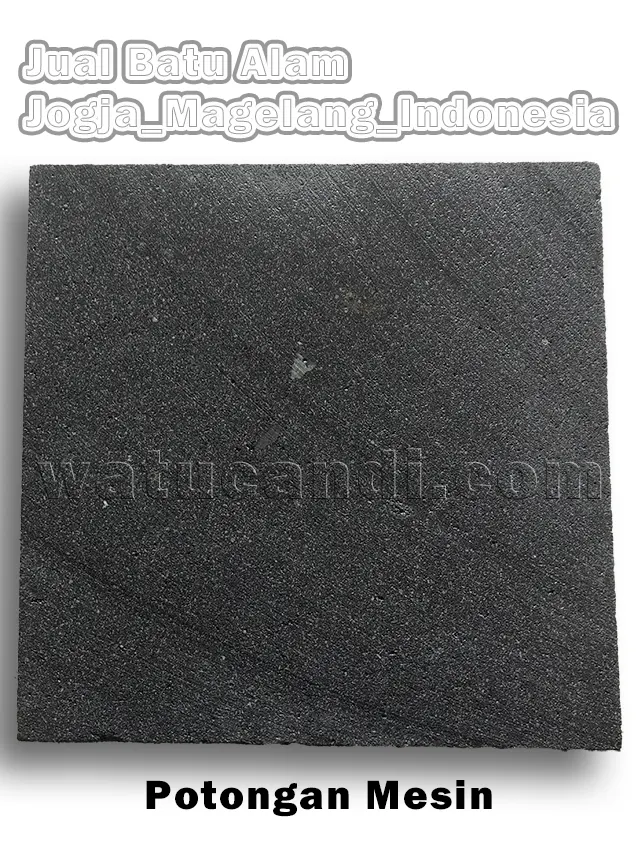
In addition to thickness, dimensional tolerance or calibration is also a determining factor of quality. Export-grade natural stone usually undergoes strict machine calibration processes to ensure uniform thickness and square corners. This is crucial for installation with thin joints (minimal joint) which is a trend in modern architecture. Non-uniform thickness in non-calibrated local stone often forces installers to use very thick cement mortar to level the surface, which ultimately weakens the bond and increases the risk of hollow spots. Information regarding these precision standards can be learned further in the article definitive guide to volcanic candi stone tiles for luxury architecture.
Interior Applications: Creating Luxurious and Contemplative Atmospheres
Indoors, Black Basalt Granite Natural Stone plays a role as a powerful atmosphere creator. Its light-absorbing nature makes rooms feel more intimate, calm, and focused. This is the antithesis of glossy white materials that reflect light and create a sterile atmosphere. Using black basalt on living room or master bedroom floors can serve as a soul-soothing design foundation, especially when combined with warm white lighting and natural furniture.
Kitchen and pantry areas are zones where black basalt truly shines both functionally and aesthetically. As a countertop or kitchen island, this material resists hot pans, knife scratches, and acidic food stains (provided it is properly sealed). Its dark color is also very practical in concealing daily usage stains, keeping the kitchen looking tidy. Integration with a monolithic sink of the same material will create a seamless look that is highly premium. Examples of solid stone furniture products like this can be seen in the catalog of monolithic natural stone furniture and sinks.
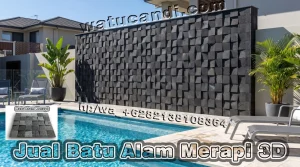
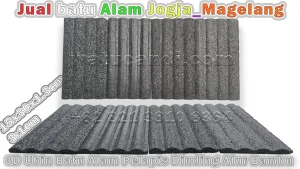
For interior walls, black basalt applications do not always have to dominate the entire plane. Using it as an accent wall behind a TV, bed headboard, or feature wall in a dining room is sufficient to make a bold statement. Installation patterns such as herringbone, brick layout, or modular random can break visual monotony. Combination with rough-textured materials like random candi stone skin lava wall cladding in adjacent areas can create a rich textural dialogue between smooth and rough, dark and natural.
Exterior and Landscape Applications: Resistance to Natural Elements
In exterior areas, Black Basalt Granite Natural Stone proves itself as a tough and resilient material. Direct sunlight exposure, heavy rain, and daily temperature fluctuations are the true tests for outdoor materials. Black basalt passes this test brilliantly thanks to its high density and low water absorption. Unlike limestone or sandstone which are susceptible to rainwater erosion and acid attack, basalt remains stable and intact for decades with minimal maintenance.
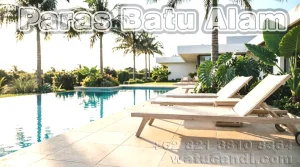
For swimming pool areas, black basalt is a smart choice but requires special attention to finishing. Surfaces that are too smooth are dangerous when wet, while surfaces that are too rough can injure feet. Fine bush hammer finish or leather finish is the best compromise providing adequate grip while remaining comfortable to walk on. Additionally, the black color of basalt at the bottom or edge of the pool can create a mirror effect reflecting the sky and trees, making the pool appear deeper and blending with the surrounding landscape. Specific guides regarding pool materials can be read in the ultimate guide to swimming pool stone tiles.
In garden landscapes, black basalt serves as a visual counterbalance to the dominance of green plants. Stepping stones made of basalt arranged on grass or white gravel create firm yet artistic circulation paths. Using crushed stone or basalt coral as garden mulch is also effective in retaining soil moisture and suppressing weed growth. For more massive decorative garden elements, Merapi lava temple stone balls or other natural stone ornaments can serve as focal points reinforcing modern tropical or zen garden themes.
Carport and driveway paving are the most structurally demanding exterior applications. As mentioned previously, a thickness of 3-5 cm is mandatory. Interlocking installation patterns or the use of strong epoxy grout are highly recommended to prevent stone displacement due to vehicle loads. Drainage beneath the paving must also be well designed; although the stone is water-resistant, standing water under the foundation can cause soil settlement triggering cracks. References for heavy-duty paving can be found at premium Merapi lava stone paving.
Material Integration and Holistic Design Harmony
Black Basalt Granite Natural Stone does not stand alone in a design vacuum. Its success depends heavily on how it is paired with other accompanying materials. Its neutral yet dominant nature makes it a perfect canvas for experimenting with material palettes. One of the most classic and proven successful pairings is Black Basalt combined with Teak or Ulin Wood. The warmth and organic grain of wood balance the coldness and hardness of stone, creating a harmonious Yin-Yang balance in tropical architecture.
For a fresher and more vibrant nuance, combine black basalt with Sukabumi green stone. The contrast between dark volcanic black and bright tosca green creates stunning visual dynamics, especially in indoor-outdoor transition areas or swimming pools. Read more about Sukabumi green natural stone tiles to understand its unique characteristics. Meanwhile, for projects desiring warmer earth tone gradations, pairing with brown Java tiger stone or brown spotted paras stone can provide rich color depth without losing the luxurious impression.
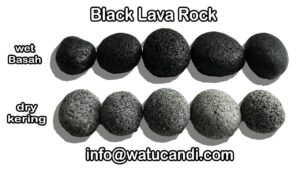
Do not forget the role of small accent materials like gravel or pebbles. Scattering black lava rock pebbles between basalt stepping stones or as garden borders creates coherent textural continuity. For functional elements like soap dispensers or amenity containers in bathrooms, using a natural stone liquid soap dispenser made of basalt will perfectly complete the design theme down to the details. Thoughtful integration like this is what distinguishes ordinary design from mature curatorial design.
Installation Guide and Best Practices
Premium material quality can collapse instantly if installation is done carelessly. Installing Black Basalt Granite Natural Stone requires specialized expertise different from conventional ceramic installation. The crucial first step is substrate preparation. Floor or wall surfaces must be clean, flat, dry, and free from dust, oil, or old paint. For carport floors, ensure the concrete slab underneath has cured perfectly (minimum 28 days) and has adequate drainage slope before stone installation.
Using specialized natural stone adhesive is mandatory. Never rely on ordinary cement sand mixtures for high-density natural stones like basalt, as adhesion is insufficient for minimally porous surfaces. Apply adhesive using the double buttering method (apply to floor and stone back) to guarantee 100% full contact and avoid air cavities (hollow spots). Hollow spots are the main enemy of natural stone flooring; a single hollow point can cause stone breakage under heavy point loads.
For wall applications with large or heavy slabs, mechanical systems such as stainless steel anchors or dry hanging systems are highly recommended as additional safety measures alongside adhesive. This prevents the risk of stone detachment due to future glue degradation. Joints between stones should be filled with flexible, mold-resistant natural stone specific grout. Joint width must be consistent; use spacers for precision. After installation is complete and grout is dry, perform thorough cleaning and apply quality penetrating sealant. This sealant protects stone from oil, coffee, or other staining agents without altering the stone’s original color. Technical details for specific pattern installations can be learned at chiseled natural stone installation patterns.

Maintenance, Care, and Myths About Black Stone
One of the main advantages of Black Basalt Granite is its low maintenance. However, “easy to maintain” does not mean “maintenance-free.” Simple cleaning routines with a soft broom and damp mop using pH-neutral cleaner are sufficient for daily cleanliness. Avoid using acid-based cleaners (like toilet bowl cleaners) or strong bases (like high-concentration bleach) as they can erode sealant and dull honed surfaces over the long term.
A common myth is that black stone easily looks dirty or dusty. In fact, black basalt with honed or textured finishes is actually very good at concealing dust and dirt compared to white marble floors or busy patterned granite. Stains only become visible if there are oil spills or sticky substances not cleaned immediately. For organic stains like moss or mold in outdoor areas, scrubbing with warm soapy water is usually effective. If necessary, use natural stone-specific fungicide, not laundry bleach.
Sealant re-application is recommended every 1-2 years depending on usage intensity and weather exposure. A simple test to check sealant effectiveness is dripping water on the stone surface; if water beads up, the sealant is still active. If water absorbs immediately and darkens the stone, it is time for resealing. This preventive maintenance is far cheaper than restoration due to permanent damage. For maintenance tips on similar volcanic materials, the guide on black lava candi stone wall cladding provides relevant protocols.
Price Analysis, Quality Grading, and Investment Transparency
Prices for Black Basalt Granite Natural Stone vary widely in the market, and this variation is not without reason. The main price determinants are quality grading, thickness, finish type, and quarry origin. Grade A or export quality has strict color selection (deep black without streaks), precise size calibration (+/- 1mm), and is free from hairline cracks or natural defects. Grade B or local quality may have looser color tolerance, thickness variation, and less uniform dimensions. Price differences between local and export grades can reach 50% to 100% or more.
It is important for consumers to be transparent about needs and budget from the initial consultation. Asking for “black stone prices” without specifications is a recipe for inaccurate quotes. Specify whether it is for showcase areas (needs Grade A) or service/back areas (Grade B suffices). Finishing costs also influence price; hand-chiseled finishes are usually more expensive than machine-honed due to intensive labor involved. However, remember that in natural stone, the rule “you get what you pay for” applies. Saving upfront by buying reject or non-calibrated goods often leads to inflated installer costs and material waste during installation.
As a manufacturer and supplier committed to transparency, we provide clear pricing information according to specifications. Visit the Watucandi natural stone shop page to view the latest product catalog and price estimates. We believe consumer education is part of service; understanding why a product is priced at a certain amount helps you make wise and sustainable investment decisions.
Exploration of Supporting Products and Volcanic Material Variations
Successful architectural projects rarely use only one type of material. Black Basalt Granite is often the main star, but it needs supporting cast members to complete the design narrative. Watucandi provides a comprehensive ecosystem of volcanic and sedimentary materials to meet this need. For instance, for wall areas desiring more artistic texture while maintaining dark nuances, natural rock face lava rock tiles cladding is a harmonious partner.
For projects needing bright color accents to break black dominance, white Palimanan natural stone or super white palimo limestone offer timeless classic contrast. Meanwhile, for unique Nusantara ethnic touches, Yogyakarta green batik stone or green batik stone tiles present exotic natural motifs. Do not forget transitional elements like natural stone edges or natural stone wall edges for neat and professional finishing.
For hospitality or commercial projects requiring statement furniture pieces, the collection of handmade stone tables and chairs or black lava stone table tops offers unmatched durability and aesthetics. Even for small details like black basalt sinks or original Merapi stone sinks, availability of matching material for floors or walls creates visually satisfying design cohesion. Explore also shape innovations like 3D stone slabs or candi lava natural stone mosaic for more detailed accents.
Specific Application Case Studies and Design Inspiration
To provide concrete illustrations, let us examine several Black Basalt Granite application scenarios across various building typologies. In a Modern Joglo villa project in Yogyakarta, using the premium natural stone flooring collection for Joglo villas combining basalt with andesite creates smooth transitions between tradition and modernity. Carport floors use 3cm thick bush hammer basalt, while semi-outdoor terraces use combinations of honed basalt and hand-carved temple stone paving to honor local architectural heritage.
In a boutique hotel project in Bali, black basalt dominates spa and pool deck areas. Its combination with Sukabumi green stone inside the pool and lava stone tiles for swimming pools on coping creates a soothing tropical oasis. Bathroom walls use split face green stone as accents, while floors use safe and luxurious leather finish basalt. Technical details regarding pool coping materials can be studied in complete guide to swimming pool coping stone tiles.
For minimalist urban residences, house facades use black lava candi stone cladding paired with large glass and corten steel. Indoors, main floors use large format black basalt slabs (black slab natural stone) to minimize joints and expand spatial perception. Stairs use andesite slabs or solid basalt, equipped with safety nosing. Even landscape elements like garden wall foundations and borders use matching materials to unify exterior design language.
Sustainability, Cultural Value, and Local Manufacturer Commitment
Choosing Black Basalt Granite Natural Stone from local Indonesian manufacturers is not just an economic decision but also support for cultural and environmental sustainability. Basalt quarries in Java (such as in Magelang, Yogyakarta, Lampung) are local resources reducing transportation carbon footprints compared to importing stone from Europe or China. This industry supports thousands of livelihoods of local craftsmen, miners, and logistics personnel who have inherited generations of expertise in processing Merapi volcanic stone and surroundings.
Environmentally, natural stone is the most sustainable material. It does not require high energy for firing like ceramics, releases no VOCs (Volatile Organic Compounds), and is fully recyclable at end of life. Stone cutting waste can be processed into coral, terrazzo, or concrete aggregate. Companion materials like pumice stone or flat random riverstone are also natural by-products whose utilization supports circular economy.
Watucandi as a Jogja-Magelang based manufacturer is fully committed to this ethics. We provide local to export quality stone with grading transparency. We understand every project has different budget constraints, and we are ready to provide value engineering solutions without compromising structural integrity. Consult your specific needs; specify whether for modern luxury home design, hospitality projects, or industrial spaces. Our team is ready to help calculate requirements, recommend appropriate finishes, and ensure material arriving on site is the best in its class. Visit also our inspiration gallery for latest styles or unique product models to spark creative ideas.
Conclusion: Smart Investment for Timeless Architecture
Black Basalt Granite Natural Stone is more than just a building material; it is an investment in quality of life, timeless aesthetics, and structural resilience. From its dense geological character, diverse finishing flexibility, to its adaptability across various architectural styles, this material proves itself a superior choice for projects prioritizing long-term quality. The key to success lies in proper specification understanding, grade selection matching budget, professional installation, and preventive maintenance.
Do not hesitate to explore the wealth of other Nusantara natural materials available in the Watucandi product ecosystem. From Indonesian lava stone tiles, swimming pool green stone, limestone travertine, to unique brecci natural stone. Each material has its own story and character waiting to be integrated into your architectural vision. By choosing the right material and trusted supplier, you are not just building physical structures but also building legacies lasting beyond generations. Contact us today for free consultation and get the best offer for your dream project.
The video above provides real visual documentation regarding character, texture, and finishing processes of Black Basalt Granite Natural Stone. Seeing material in motion via video often provides better understanding of scale, light reflection, and texture details compared to static photos alone. Use this visual reference as validation before making material procurement decisions for your project.
Black Basalt Granite Natural Stone, Black Basalt, Black Granite, Natural Stone Craftsmen, Natural Stone Tiles, Carport Natural Stone Flooring, Natural Stone Walls, Honed Finish, Bush Hammer Finish, Chiseled Finish, Watucandi, Natural Stone Price, Export Natural Stone, Local Natural Stone, Natural Stone Flooring, Natural Stone Cladding, Black Granite Countertop, Swimming Pool Natural Stone, Natural Stone Paving, Yogyakarta Natural Stone, Magelang Natural Stone, Modern Tropical Architecture, Luxury Interior Design, Volcanic Material, Natural Stone Maintenance, Natural Stone Sealant, Andesite Stone, Black Lava Stone, Candi Stone, Sukabumi Green Stone, Palimanan Stone, Paras Stone, Natural Stone Furniture, Natural Stone Sink, Stepping Stone, Merapi Natural Stone, Building Construction, Home Decoration, Premium Natural Stone