'%3E%3Cpath%20stroke='%23000'%20stroke-width='4'%20d='m-35-37-13%2020m5%203%2013-20m5%203-13%2020m63%2042%206-9m1-2%206-9m5%203-6%209m-1%202-6%209m5%203%206-9m1-2%206-9m-96%200%2013%2020m5-3-6-9m-1-2-6-9m5-3%2013%2020m63-42-6-9m-1-2-6-9m5-3%2013%2020m5-3-6-9m-1-2-6-9'/%3E%3Ccircle%20r='24'%20fill='%23cd2e3a'/%3E%3Cpath%20fill='%230047a0'%20d='M0%200a12%2012%200%201%201%2020%2013%2024%2024%200%201%201-40-26A12%2012%200%201%200%200%200'/%3E%3C/g%3E%3C/svg%3E)


'/%3E%3Cpath%20fill='%23b2b2b2'%20d='M241%20382q0%2016%2017%2026%2017%2011%2042%2011t42-11q16-11%2017-26V269H241'/%3E%3Cpath%20fill='%239f7e00'%20d='M241%20379q0%2014%208%2023%209%209%2021%209%2014%200%2021-9%209-9%209-23V269h-59'/%3E%3Cpath%20d='M241%20339v-70h59v110q0%2014-9%2023l-6%205v-68h-15v72q-8%200-14-4v-68zm59%2040c0%2022%2015%2032%2029%2032%2021%200%2030-18%2030-32v-40h-59'/%3E%3Cpath%20fill='%239f7e00'%20d='M266%20277v5h2v12h-3v-5h2v-5h-9v5h2v5h-4v9h3v18h-5v10h34v-10h-5v-18h3v-9h-4v-5h2v-5h-9v5h2v5h-3v-12h2v-5zm42%20101q0%2010%206%2017%206%206%2015%207%2010-1%2016-7%206-7%206-17v-29h-43'/%3E%3Ccircle%20fill='%230044ad'%20cx='329.5'%20cy='372'%20r='6'/%3E%3Cellipse%20fill='%230044ad'%20cx='300'%20cy='340'%20rx='16'%20ry='21'/%3E%3C/svg%3E)


In the world of modern architecture that increasingly emphasizes sustainability and cultural identity, the use of natural materials is no longer just a trend, but a lifestyle statement. One decorative element capable of elevating the aesthetic value of a building to the highest level is 3D Carved Relief Ornaments. Made from genuine stone material, specifically volcanic candi stone from the slopes of Mount Merapi, these ornaments are the handcrafted works of Yogyakarta natural stone artisans who have inherited ancestral skills for centuries.
The presence of 3D carved relief ornaments serves not only as wall decoration in empty spaces but also as a visual bridge connecting the present with the glory of past civilizations. Every carving stroke holds stories, philosophy, and high precision that make your building look more beautiful, characterful, and possessing invaluable architectural artistic value. In this article, we will explore in depth the beauty, manufacturing techniques, types of reliefs, and their applications in modern interior and exterior design.
Sell Premium Candi Lava Stone 3D Carved Relief Ornaments
We accept orders for 3D carved relief ornaments made from selected genuine stone material. The manufacturing process involves the art of stone carving, assembled and carved with high precision to create stunning wall decorations. The installation of these stone ornaments aims to perfect your building’s wall construction, fill visual voids, and provide an elegant nuance difficult to achieve with synthetic materials or factory molds.
Possessing architectural artistic value and historical characteristics of the olden days, this natural stone craft has very high meaning and artistic value. Unlike modern decorations that tend to be minimalist and flat, 3D relief offers depth dimensions that play with light and shadow, creating dynamic visuals that come alive throughout the day. To see our complete collection, please visit our store page and find the best inspiration for your project.

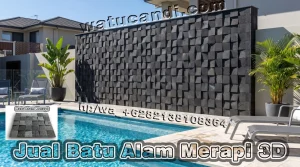
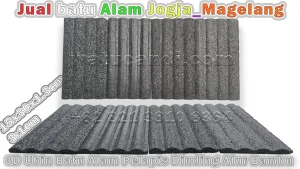
The visualization above shows the fine details of three-dimensional relief ornament craftsmanship. The characteristic dark gray-black color of dry Mount Merapi lava stone provides a strong and mysterious contrast, very suitable for creating a calm and contemplative atmosphere. Its natural texture combined with manual carving results in an authentic and exclusive work.

Every curve on this carved natural stone ornament is worked on with great care. Our artisans understand that candi stone has unique characteristics; it is hard but brittle if struck at the wrong point. Therefore, human skill remains the main element that cannot be fully replaced by machines, especially for intricate details such as character faces, fabric folds, or flora and fauna motifs.
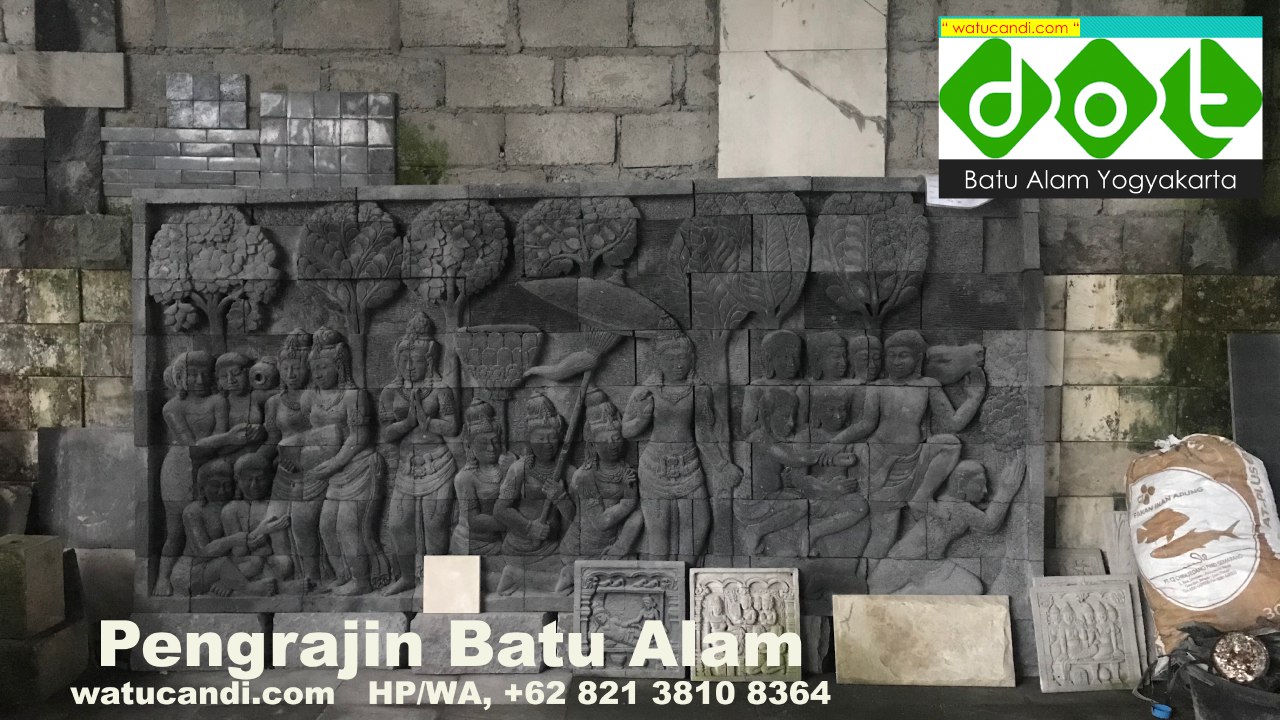
This genuine natural stone carved in three dimensions functions not only as a display ornament but can also serve as a mini historical monument in gardens or building lobbies. Using authentic candi stone from Mount Merapi guarantees material resistance to extreme weather, rain, and heat, so this artwork will last for tens or even hundreds of years, similar to ancient temples that still stand strong today.

We sell ornaments made of genuine stone from Mount Merapi carved in three dimensions, ideal as displays or historical inscription decorations with an old-fashioned nuance. Their presence in modern rooms creates an interesting contrast between current technology and past wisdom. If you are looking for flooring solutions that complement these relief-decorated walls, consider our collection of premium natural stone flooring for courtyards and Joglo villas.

This relief ornament is a real representation of Indonesian historical natural stone carving art craftsmanship. The techniques used are similar to those employed by our ancestors in building magnificent temples in Central Java. By ordering this work, you help preserve the nation’s cultural heritage while supporting the creative economy of local artisans in the Muntilan area and its surroundings.
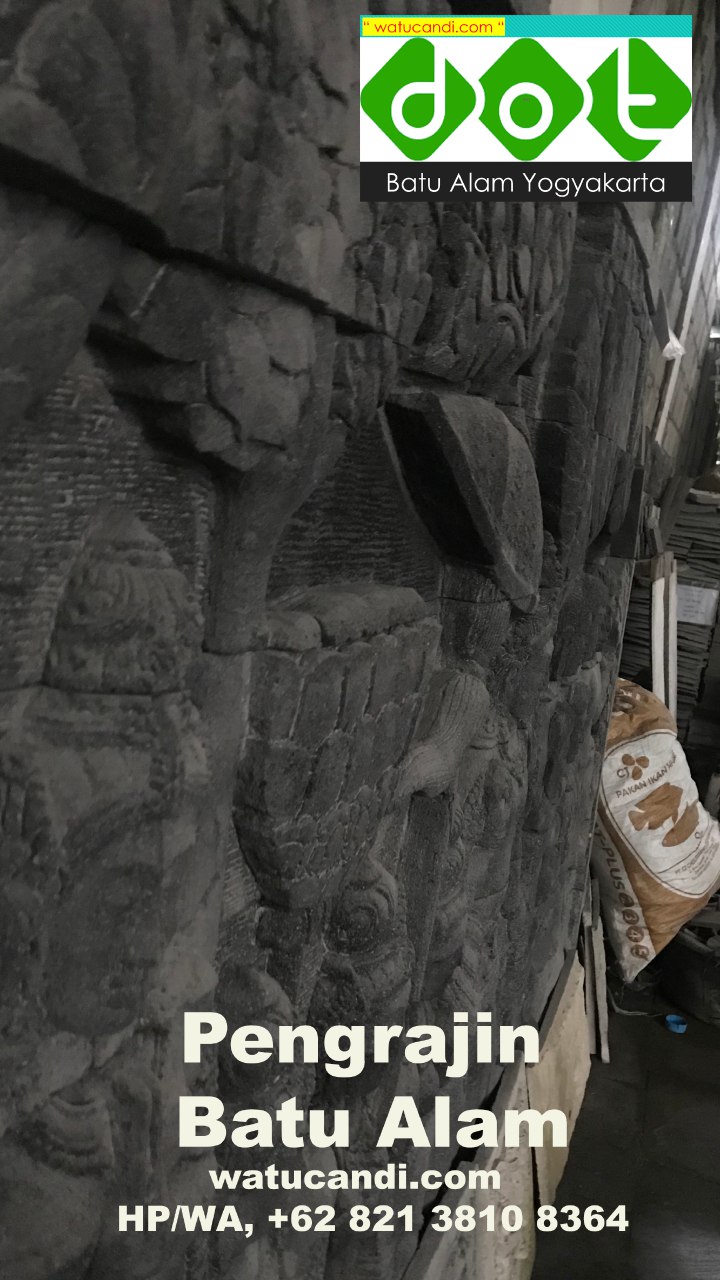
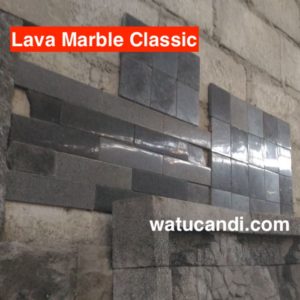
The black dark gray candi lava natural stone texture becomes the perfect medium for very beautiful and elegant display ornament crafts and decorations. The slightly porous stone surface allows for good coating absorption, so the black color can be made deeper and shiny, or left natural for a modest matte look. The elegance of this material is undeniable, making it the top choice for high-end interior designers.
Understanding the Art of Carving and 3D Relief
Carving is the activity of processing the surface of a trimatra (three-dimensional) object by creating height differences from that surface to obtain a specific image. Many people often equate carving with sculpting. However, the two have fundamental differences. Sculpting aims more to produce free-standing three-dimensional objects, such as Buddha statues or Deities. Meanwhile, relief carving is done on a flat field (usually a wall or stone panel) where the image rises from the background.
Relief is the art of 3-dimensional carving and sculpture usually made on stone. This form of carving is commonly found in temple buildings, shrines, monuments, and ancient historical sites. In Indonesia, the relief on the walls of Borobudur Temple is the most iconic example used to narratively depict the life of the Buddha and his teachings. In Europe, carvings on the ancient Parthenon temple can still be seen today as a majestic legacy of Ancient Greek history.
This relief can be a carving standing alone as a single whole panel, or as part of other relief panels forming a continuous series of stories or teachings. At Borobudur Temple itself, for example, there are more than 1400 relief panels used to tell all the teachings of Gautama Buddha, from birth to the attainment of Nirvana. The complexity and depth of this story show the level of advancement in art and literature of the Ancient Javanese society at that time.
Types of 3D Carved Relief Ornaments
In modern architectural applications, the choice of relief type greatly determines the final impression desired. Below is the classification of reliefs based on the depth of the carving:
1. High Relief
High relief, known in French as Haut-relief, Italian as Alto-rilievo, and English as High-relief, is a type of relief with carvings that protrude more outward with a dimensional depth appearance of more than 50 percent. This relief almost displays intact sculpture art attached to the base of the wall surface. Due to its significant protrusion, high relief is very dramatic when hit by side light, creating deep shadows. Examples of high relief are most Hindu-Buddhist period statues in Java leaning on statue backrest stelae, or the Lokapala deity reliefs at Prambanan Temple. This style was also popular in ancient Greek and Roman art.
2. Low Relief (Bas-Relief)
Low relief, or Bas-relief (French), Baso-rilievo (Italian), is a type of relief with carvings that slightly protrude from the base of the wall surface. The protrusion or depth of the carving varies and is usually only a few centimeters or less than 50 percent of the carving dimension depth. This type is smoother and suitable for long narratives because it does not take up much physical space. The most famous example of low relief is the reliefs on Borobudur Temple telling the stories of Jataka and Gandavyuha. The softness of the transition between background and figure makes it pleasant to view from both near and far distances.
3. Shallow Relief
Shallow relief, or shallow-relief (English) and rilievo schiacciato (Italian), is a type of relief shallower than low relief. The relief carving consists only of thin scratches to remove background material. This technique requires high skill because the artist must create the illusion of depth only with minimal changes in surface slope. It is often used for texture details such as animal fur, fabric patterns, or landscape backgrounds.
4. Sunken Relief
Sunken relief, or sunken-relief, is a type of relief where the background wall surface is left intact and flat, while the figure carvings are depicted sunken or chiseled into the wall surface. The contour lines of the figure are below the original stone surface. This type of relief is common in Ancient Egyptian art because it is resistant to sand erosion and provides a strong graphic impression under harsh sunlight.
History of Relief: From Ancient Greece to Rome
Ancient Greek artists usually created reliefs depicting military exploits through mythological allegories. For example, reliefs regarding the battle between the Athenians and the Centaur race symbolizing the conquest of civilized people over barbaric nations. Greeks also often made reliefs about their gods and heroes, emphasizing ideal and realistic human body anatomy proportions.
Compared to Greece, the Romans preferred a factual documentary style. Roman reliefs regarding battle scenes, for example, those on Trajan’s Column, were made to show the greatness of the Roman Empire, and also to accurately display their costumes and war equipment. Trajan’s Column tells the story of the Roman-Dacian War led by Emperor Trajan in the region now known as Romania. This relief is one of the most famous Roman reliefs and is a highly artistic heritage from the ancient world. Its length is about 650 feet winding around the pillar, and realistically shows more than 2,500 people, accompanied by other elements such as natural landscapes, animals, sea ships, and various decorations. The relief survived destruction because it was later made the center for Christian statues.
In the Christian era after 300 AD, relief decorations on church doors and sarcophagi (stone coffins) continued to be made, although the style changed to become more symbolic and less realistic compared to the Classical era.
Borobudur Temple Stone Wall Carved Relief
In Indonesia, the greatest heritage is the Borobudur Temple Stone Relief. This work was crafted by Muntilan carving artists using lava stone, candi stone, or andesite stone mined from the slopes of Mount Merapi. The placement of this Borobudur temple stone wall carved relief is by installing it directly on the temple wall structure. Currently, we accept orders for the manufacture of Borobudur temple stone wall carved relief replicas for various purposes such as luxury hotels, international airports, theme parks, viharas, private residences, and others. The installation of this Borobudur temple relief aims to beautify and embellish empty walls, both for interior and exterior areas.
The story design of this Borobudur temple relief is based on the original relief installed on the main temple. Borobudur relief has unique characteristics and very high artistic value. There are certain conventions in depicting characters in Borobudur relief stories. The depiction of flora, fauna, carved ornaments, building shapes, landscapes, and character gestures is truly fit and artistic. The artists who created this relief were truly brilliant; how they were able to depict an epic story into limited-sized stone with extraordinary detail.
This carved candi stone relief is very good and beautiful to install on walls to fill empty spaces in rooms. The aura of this candi stone is cool and creates a calm atmosphere in a room, very suitable for meditation or lounge areas. If you are still confused about what idea is right to fill your wall, try this Borobudur temple relief. You can order via WhatsApp and consult about which relief is suitable to fill that empty wall. We can redesign it according to needs, or if you have your own design, we can work on it with high precision.
Our candi stone relief works are carved by experienced carvers. The carving experts we have are professionals who have been experienced for decades. This can be seen from the sharpness of the carvings, the cleanliness of the chiseling, and the intricate details. If you want to order a Borobudur temple relief in Muntilan, do not order from the wrong person, as many parties claim to be able to carve Borobudur temple reliefs but the reality does not meet expectations. Rough carving quality will damage the aesthetics of the actually smooth andesite stone. If you want a special work, come to the experts. Indeed, some chiselers set cheap prices, but who guarantees the quality of their chiseling? Investment in stone carving art is a long-term investment.
Definition of Dimension in Carving Art
Speaking of dimensions in the context of 3D carving art, the first thing that might come to mind is 3D Cinema. Yes, 3D cinema is one of man-made products that have three dimensional elements so that what is displayed on the screen looks like real activity. For people who move or pursue the world of fine arts or architecture, dimensions are certainly not a foreign term. However, for most laypeople, the term dimension might be less familiar.
According to the Big Indonesian Dictionary, the definition of dimension is a measurement that includes: length, area, height, width, and so on. In ancient philosophy books, dimension is explained as a system that measures free movement. An object is said to be in zero dimension if the object cannot move at all in any direction, such as a point. One dimension has length (line), two dimensions have length and width (flat field), and three dimensions have length, width, and height (spatial building). Three-dimensional objects like blocks, cubes, or statues have volume and can be filled. In relief art, we manipulate the third dimension (depth/height) on a two-dimensional field to create the illusion of space and realism.
Stages of Professional Relief Ornament Carving Production
Broadly speaking, the production of high-quality relief goes through 4 (four) important stages that must not be skipped to guarantee a perfect final result:
- Concept and Sketch: The main artist or “priest” of art writes the story title and makes an initial sketch on paper or directly on the stone panel as a guide.
- Image Transfer: The artist draws detailed designs on the stone panel with special writing tools that are water-resistant and do not easily disappear when the chiseling process begins.
- Basic Chiseling (Roughing): The chiseler creates basic characters and general shapes on the panel by removing excess material to create initial depth.
- Finishing and Detailing: Refinement of fine details, facial expressions, textures, and characters by senior artists to ensure every element looks alive and proportional.
Reliefs on temples in Indonesia, especially in Java, have their own carving characteristics as well as the stories contained on the temple walls. Take Borobudur, the largest Buddhist temple in Indonesia, which has 1460 relief panels. Reliefs on Borobudur Temple, besides depicting the life teachings of the Buddha, also contain reliefs telling the life of the Ancient Mataram era. Reliefs on the walls of Borobudur Temple are divided into 4 main stories namely: Karmawibhangga, Lalitavistara, Jataka and Awadana, and Gandavyuha.
Meanwhile, Prambanan Temple contains 2 (two) main stories namely Ramayana and Krishnayana. Prambanan Temple has 3 (three) main temples. On the balustrade of Siwa Temple and Brahma Temple, the Ramayana story is carved, while on the balustrade of Wisnu Temple, the Krishnayana story is carved. To read the story on a temple relief, visitors must walk clockwise. This term of walking clockwise is known as Pradaksina, which comes from the Sanskrit word Daksina meaning east (The story starts from the east side and ends on the east side). However, some temples use the Prasawiya reading technique (counter-clockwise).
Getting to Know Borobudur Temple Relief in Depth
Borobudur Temple is a magnificent masterpiece! This is the largest Buddhist monument in the world recognized by UNESCO. It is a puzzle or lego of approximately 2 million giant volcanic stone blocks carved in such a way that they can interlock even without using cement or any adhesive. This dry construction technique proves the civil engineering intelligence of our ancestors.
However, as we know, Borobudur which took about 75 years to build is not just a pile of giant stone puzzles. Borobudur also stores the charm of high-value artistic works loaded with history, culture, and religion. The ten terraces of Borobudur are believed to be a representation of Mahayana sect philosophy, namely describing the ten levels of Bodhisattva that must be passed to achieve perfection becoming a Buddha.
Borobudur is like a Buddhist book carved in stone with quality and quantity of relief carvings and story types that are competent and equipped with statues and stupas that are no less amazing. Borobudur Temple has approximately 2672 relief panels which, if unfolded, would reach a length of 6 kilometers. UNESCO even recognizes it as the largest and most complete Buddhist relief ensemble in the world. Every scene and story carved is a complete work of art of extraordinarily high value.
Reliefs at Borobudur are carved at several levels. These reliefs depict scenes taken from several sutras, namely the stories of Karmawibhanga, Jatakamala, Awadana, Gandawyuha and Bhadracari. Karmawibhangga is a relief depicting the law of karma (cause and effect). In the Kamadhatu zone, this relief depicts human lust. Lalitavistara depicts the history of the Buddha. Jataka and Awadana tell the story of the Buddha’s goodness before being born as Prince Siddharta. Gandavyuha tells the story of Sudhana who wandered seeking the highest knowledge.
If you notice from the fifth to the seventh floor, there are no reliefs visible on the walls. The level symbolizing the upper realm is called Arupadhatu (which means formless or shapeless). At this level, humans are free from all desires and bonds of form and shape but have not yet reached nirvana. What is visible in Arupadhatu are perforated stupas containing Buddha statues. At the highest level, there is the largest stupa where an imperfect Buddha statue (Unfinished Buddha) was once found, which is now stored in the Karmawibhangga Museum.
Its basic structure is a stepped terrace foundation, which is the original architectural form from Indonesia’s prehistoric era. Due to the uniqueness, beauty, historical value, and high-quality artistic works manifested in Borobudur, this Buddhist temple certainly deserves the title as one of the high-level masterpieces of art from Nusantara civilization. Inspiration from this magnificence can be brought to your home by using supporting materials such as premium Merapi lava paving stone for your outdoor areas.
Other Supporting Temples in Central Java
Besides Borobudur, the richness of stone carving art is also found in other temples. Mendut Temple, for example, has alternating decorations adorned with carvings of heavenly creatures such as apsaras and apsaras, two monkeys and a garuda. This temple was established during the reign of King Indra of the Syailendra dynasty. Then there is Lumbung Temple which is a collection of one main temple surrounded by 16 small temples. And Banyunibo Temple which means “falling/dripping water”, has a condition that is still quite strong and intact with very clear kala-makara relief carvings.
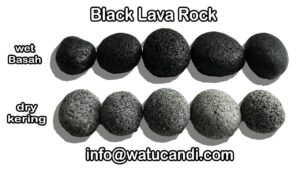
To complement the aesthetics of your building adopting a classical or modern tropical theme, we also provide various other natural stone variants. You can explore comparison of local vs precision green stone for fresher color options, or use manually chiseled stone floors which provide authentic texture underfoot. For those who love water elements, black lava rock pebbles are the right choice for zen garden decoration, while green stone tiles for swimming pools offer calming visual coolness.
Don’t forget, we also provide natural travertine limestone for a brighter and warmer nuance, as well as complete guide to Indonesian lava stone tiles. For more rustic walls, random candi skin lava wall cladding is an economical yet aesthetic solution. Color combinations can be created with Sukabumi green stone or candi lava natural stone mosaic. If you want a clean and modern look, Palimanan paras stone tiles are the answer.
We also offer original random slabs stone, pumice stone for filters, and natural stone furniture such as tables and chairs. For bathroom accessories, available are Yogyakarta batik green stone tiles, breksi natural stone tiles, natural stone liquid soap dispenser, natural rough surface marble stone sink, and black basalt stone sink. Also explore the guide for lava stone tiles for swimming pool and handmade stone table and chairs.
You can see updates of our latest products and follow our social media on Instagram to get the latest design inspiration. As a complement to your building design material ideas, trust your 3D relief ornament and natural stone needs to us, the heirs of the Nusantara stone carving tradition.
3d carved relief ornaments, merapi candi stone, natural stone carving art, borobudur temple relief, sell carved stone jogja, muntilan stone artisans, stone wall decoration, high low relief, carved andesite stone, classic stone ornaments, stone sculpture art, 3d relief wall, black lava stone, yogyakarta stone crafts, nusantara architecture