“Bring tropical warmth and timeless luxury with Yellow Vein Natural Stone. The perfect blend of calm cream colors and natural golden veins from Palimanan & Jogja limestone transforms your home’s walls and floors into living geological art. Durable, aesthetic, and chosen by world architects for luxury projects like Amanjiwo. Discover the natural finishing solution that enhances property value and visual comfort.”
In the world of architecture and interior design, the choice of finishing materials plays a crucial role in determining a building’s character. One material that continues to be a favorite due to its visual warmth and natural texture is Yellow Vein Natural Stone. This material is not just ordinary stone; it is a representation of geological beauty formed over millions of years, offering a blend of calm cream colors with elegant golden yellow vein patterns.
As a natural stone producer from Yogyakarta – Magelang – Central Java – Indonesia, we understand that every construction project has a different soul. Therefore, the availability of genuine limestone or what is often known as Jogja Paras and Palimanan stone becomes the right solution for those who want a modern tropical nuance but still classy. The natural cream base color of Jogja paras stone harmoniously blends with golden yellow veins, creating a pattern that is never the same between one sheet and another. This is the hallmark that makes every installation a unique work of art.
The quality and aesthetics of this Yellow Vein Natural Stone have been proven in prestigious world-class projects. As a concrete example, the installation of this material can be found at the Amanjiwo Hotel in Magelang, Central Java, Indonesia. This world-famous hotel chose yellow veined natural stone to create a calm, luxurious atmosphere that blends with its natural surroundings. If you want to realize similar luxury for your residence or commercial property, exploring our natural stone product catalog is the right first step.
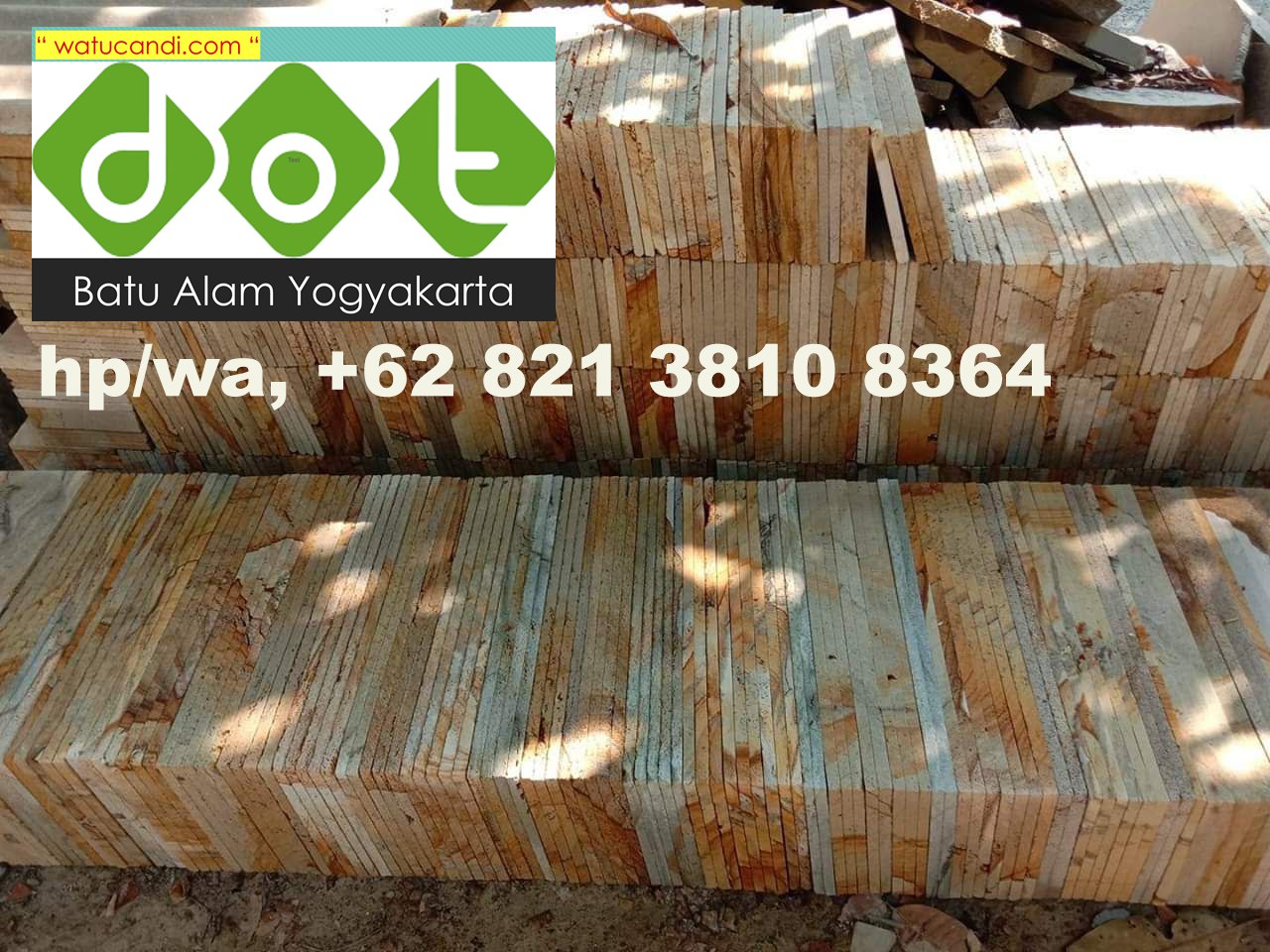
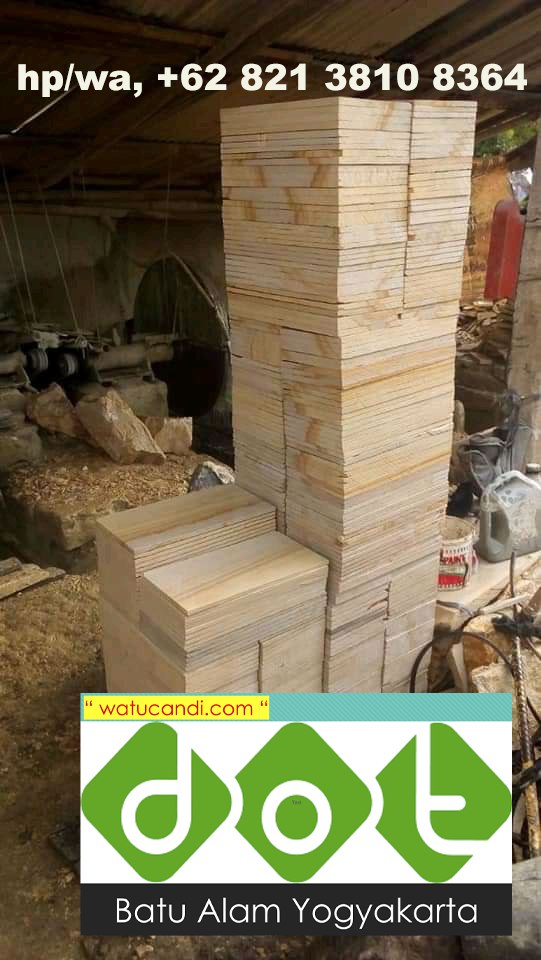
Visual Analysis of Material Stock: The image above shows a stack of yellow veined natural stone tiles that have undergone strict selection. Notice the consistency of the dominant cream color with accents of golden yellow veins spreading naturally. The uniform thickness indicates high machine cutting precision, ensuring ease during the installation process in the field. This material is proof of our commitment to providing building finishing materials that look more beautiful, durable, and have high investment value.
Why Choose Yellow Vein Natural Stone?
This type of natural stone, which geologically is often categorized in the travertine or limestone group, offers advantages that are difficult to match by artificial materials such as ceramics or synthetic granite. Its uniqueness lies in the “soul” possessed by the stone. The yellow veins crossing the stone surface are not prints, but natural mineralization traces that occur due to groundwater movement and calcium carbonate deposition over thousands of years.
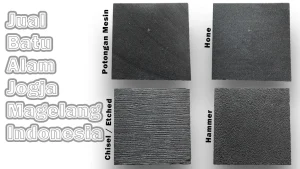
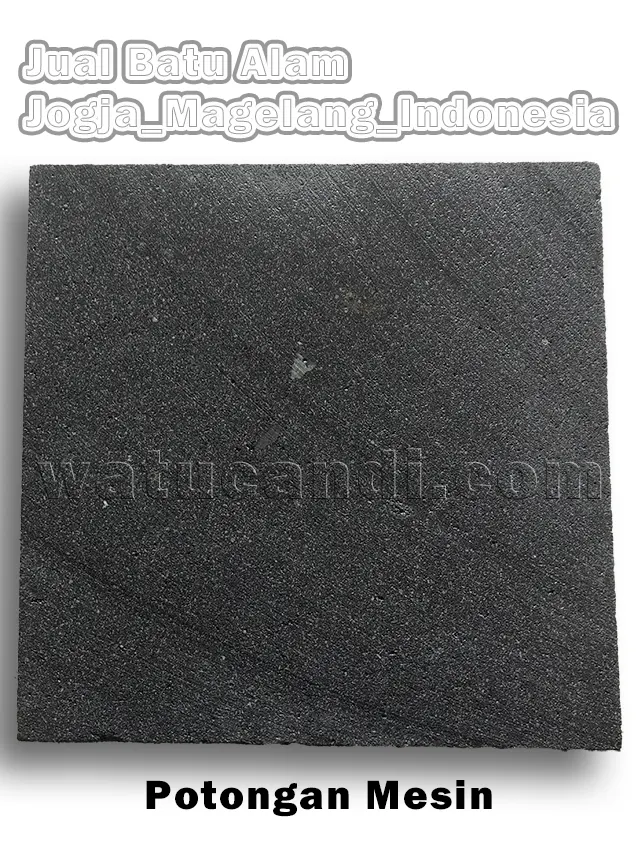
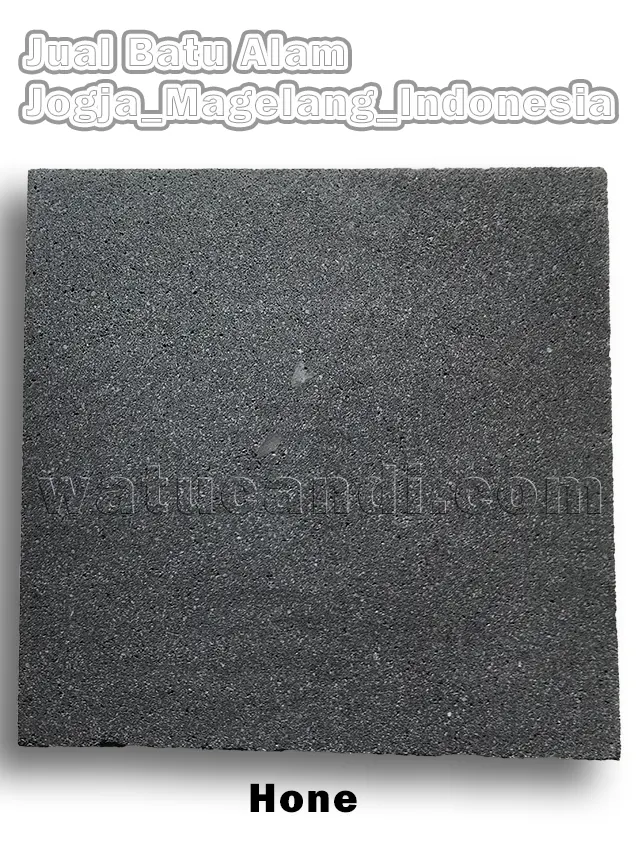
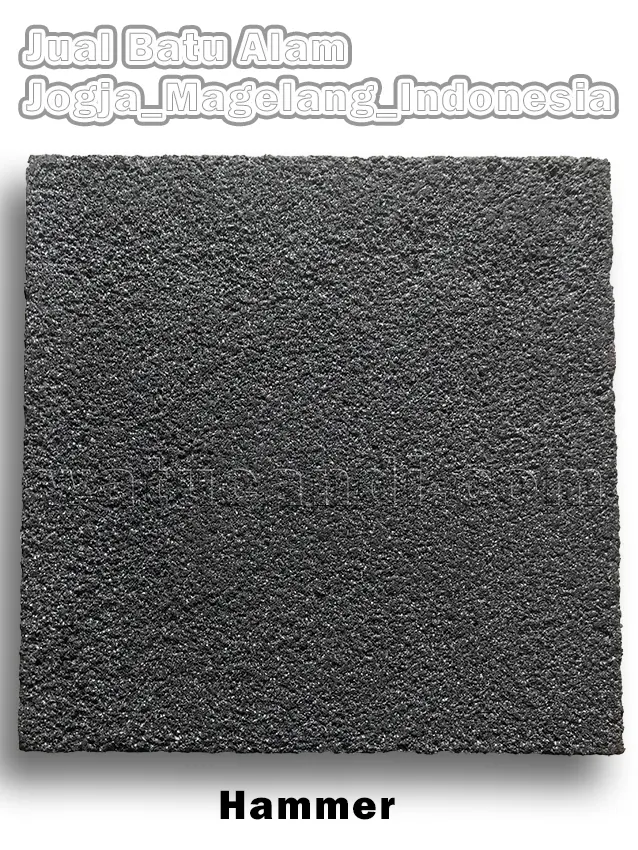
Besides aesthetics, this Jogja and Palimanan paras stone is also very flexible in terms of application. The face finish of the natural stone can be made according to your design needs, ranging from neat machine cuts (sawn cut), honed until smooth but not shiny (dof/honed), hammered with a special hammer for rough texture (bush hammer), to left with a natural rough face (natural face). All these options can be adjusted to specific sizes or custom according to the architect’s or homeowner’s request.
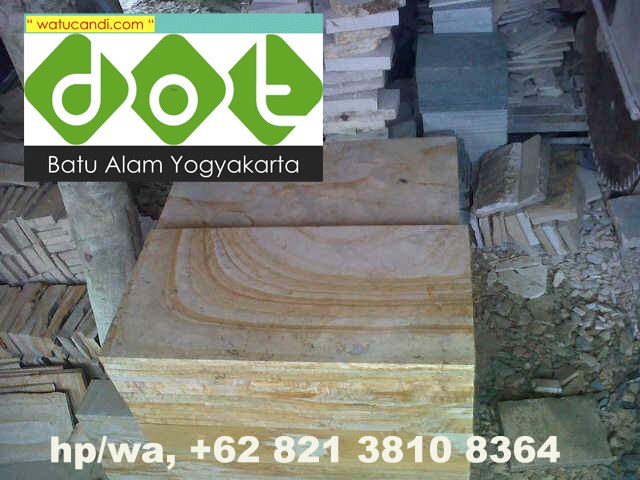
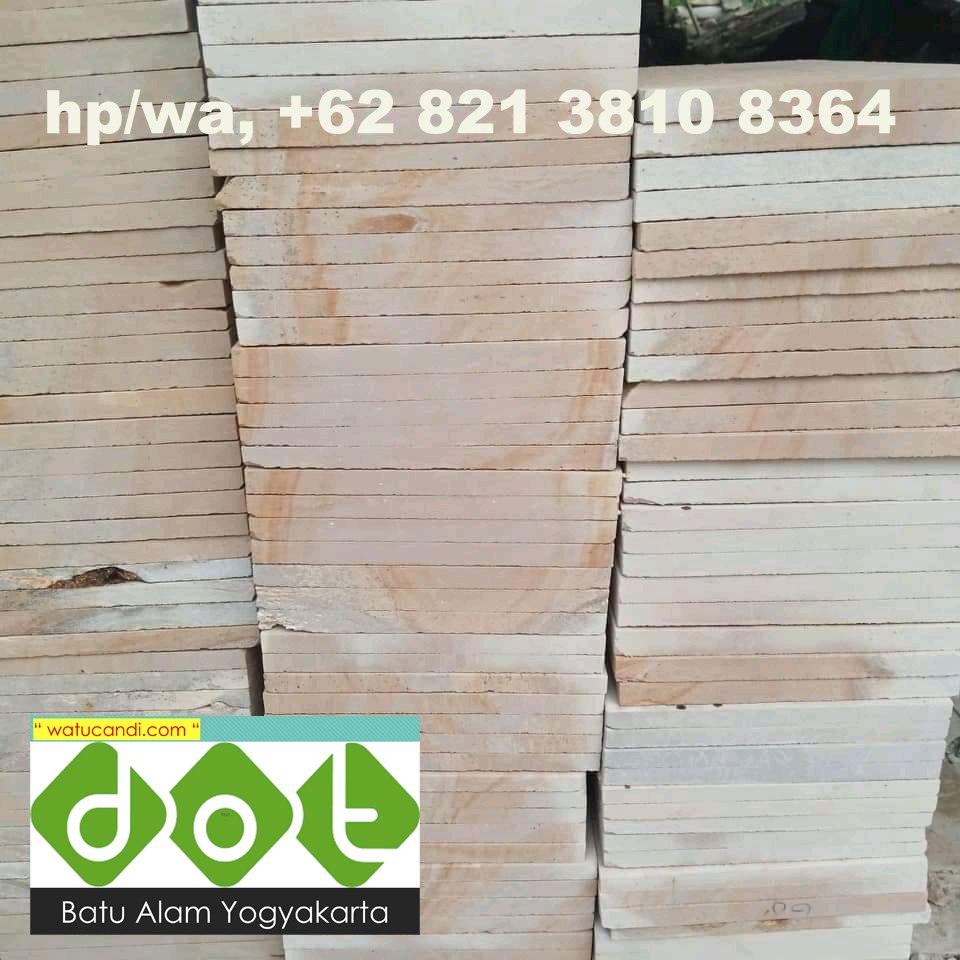
Microscopic Texture Detail: In this close-up image, you can see how the golden yellow veins blend with the cream-colored limestone matrix. This texture provides interesting visual depth when exposed to light, both natural sunlight and artificial lighting at night. For those interested in other color variations in the same tone, you might also want to see the collection of brown spotted paras stone which offers a warmer earthy nuance.
Wall Application: Creating a Charming Focal Point
The use of Yellow Vein Natural Stone as wall cladding is one of the most popular trends in modern and classic interior design. The combination of neutral cream colors and golden yellow accents can make rooms feel more spacious, bright, and welcoming. Installation techniques often used are random split face cuts or sawn cuts arranged with minimal grout lines.

Random Wall Design Inspiration: This image shows the application of natural stone with random cuts that create a 3D dimension on the wall. Shadows formed from the stone protrusions give a dynamic and non-monotonous impression. This technique is very effective for hiding structural wall imperfections while adding artistic value. For reference on other wall installation techniques, you can learn about the guide on random candi stone installation which, although using different material, has similar texture aesthetic principles.
The advantage of using paras stone for exterior or interior walls is its ability to absorb and reflect light in a soft way. Unlike marble which tends to be cold and formal, yellow paras stone gives a warm and friendly impression. This makes it very suitable for family rooms, hotel lobbies, tropical-themed restaurants, to residential facades.
Color Variations and Geological Character
Every block of stone mined from the earth has its own story. In the Jogja, Magelang, to Palimanan regions, soil layers produce rich color variations. Some are dominated by pure white, some by milk cream, to those with soft gray gradients. However, the common thread connecting them all is the presence of golden yellow veins which are the signature of this type of stone.
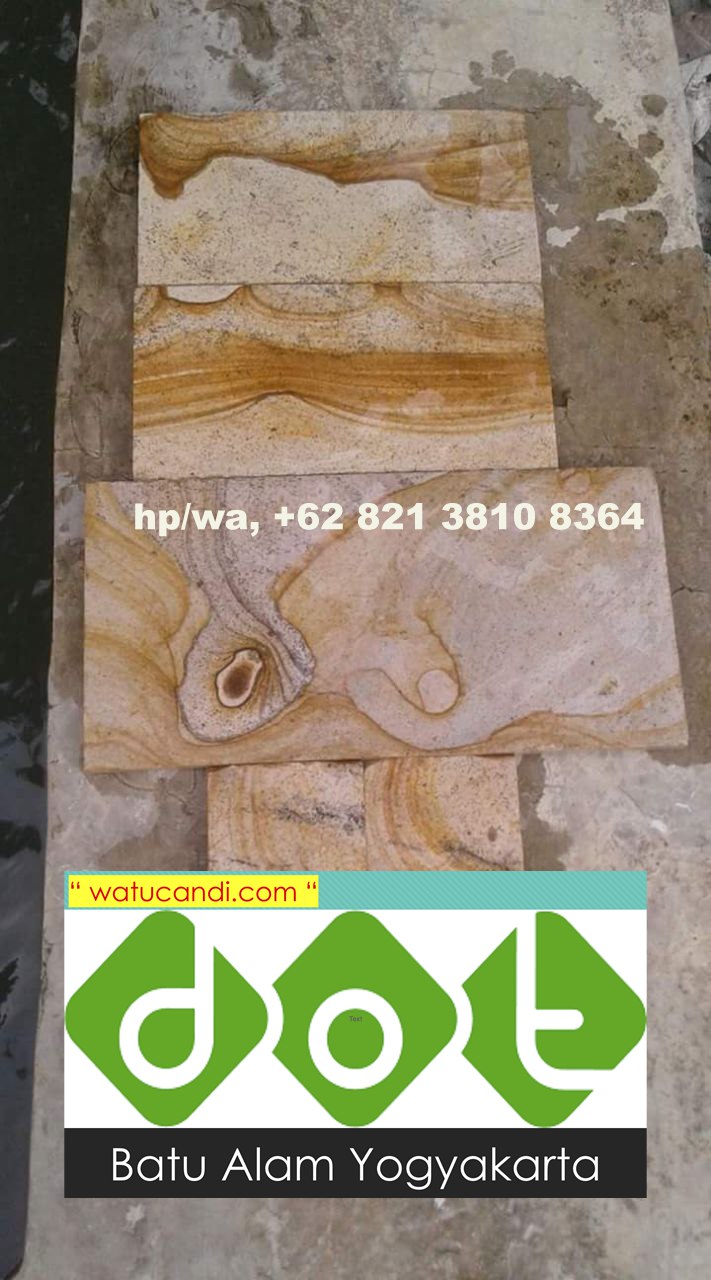
Natural Color Harmony: In this image, the blend of three main colors is clearly visible: golden yellow, bone white, and a touch of gray. This combination is very easy to pair with other interior elements such as teak wood, rattan, or even brass metal. If you are looking for an alternative with a calming green nuance for wet areas, consider also the option of Sukabumi green natural stone which is popular for swimming pools.
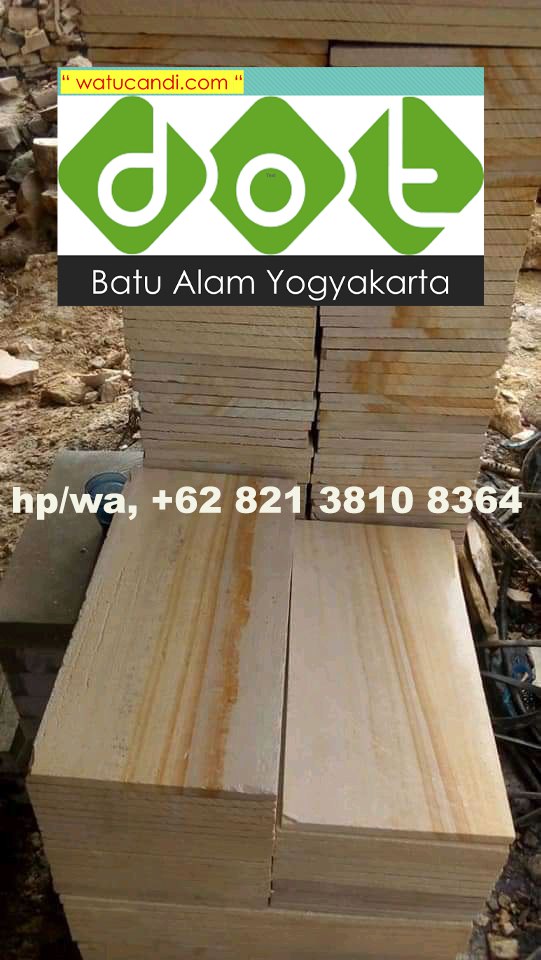
Aesthetic Irregular Patterns: The randomness of the vein pattern is a guarantee that no two walls will look exactly the same. This is the highest exclusivity value of natural stone. For designers who like minimalist styles but still want details, paras stone with fine veins like this is an ideal choice. You can also explore breksi stone if you want a more dramatic rock fracture texture.

Serayu and Palimanan Regional Characteristics: Stone from the Serayu and Palimanan regions often has slightly different density, affecting how easily the stone is shaped and how it absorbs water. Paras stone is generally softer than andesite or basalt, making it easier for craftsmen to shape it into carvings or cuts with special profiles. To understand more about soft vs hard stone characteristics, read our article on pumice stone and porous stone characteristics.
Stock Availability and Factory Quality
As a direct producer, we maintain stock availability to ensure the smoothness of our clients’ projects. Our factory warehouse is always filled with selected raw materials that have undergone adequate curing (drying) stages to prevent color changes after installation.
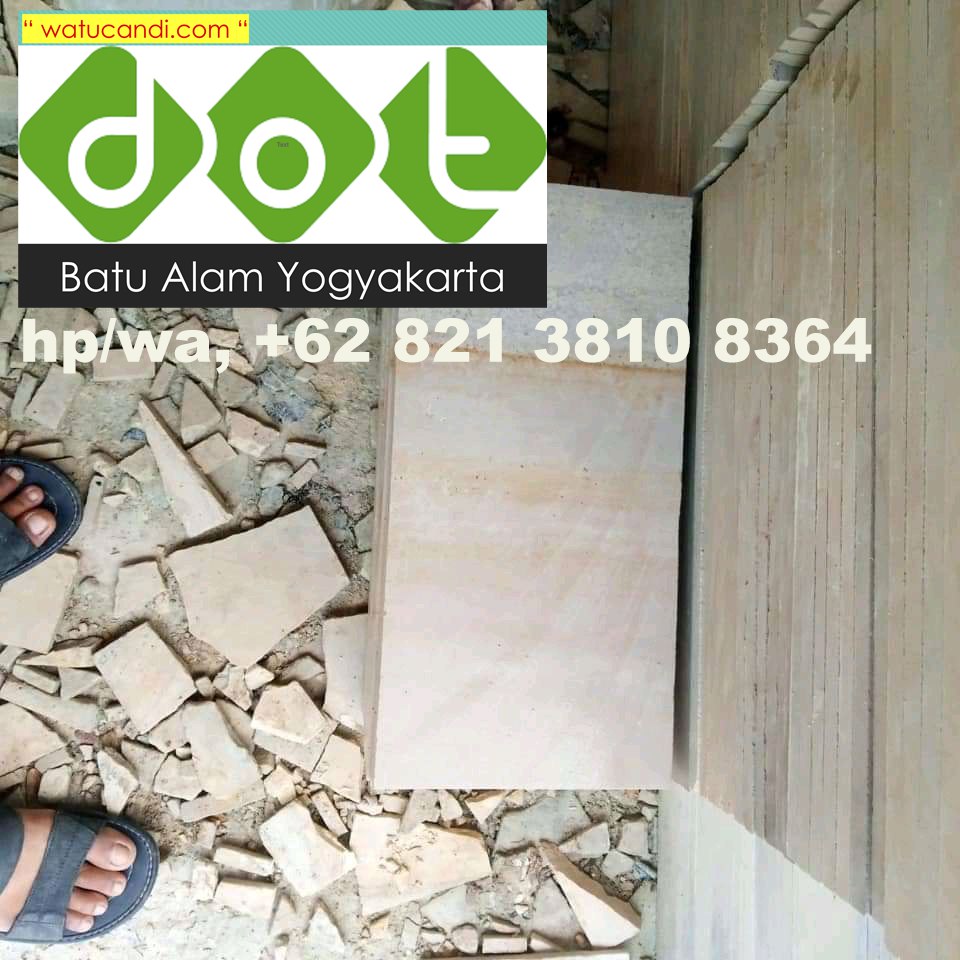
Supply Chain Guarantee: This warehouse photo shows our large production capacity. We are able to serve small orders for home renovations to large scales for hotel or government building projects. Consistency of quality is our priority, so each batch sent has high similarity in characteristics. For outdoor floor projects that require more strength, we also provide Merapi lava stone paving which is very resistant to heavy loads.
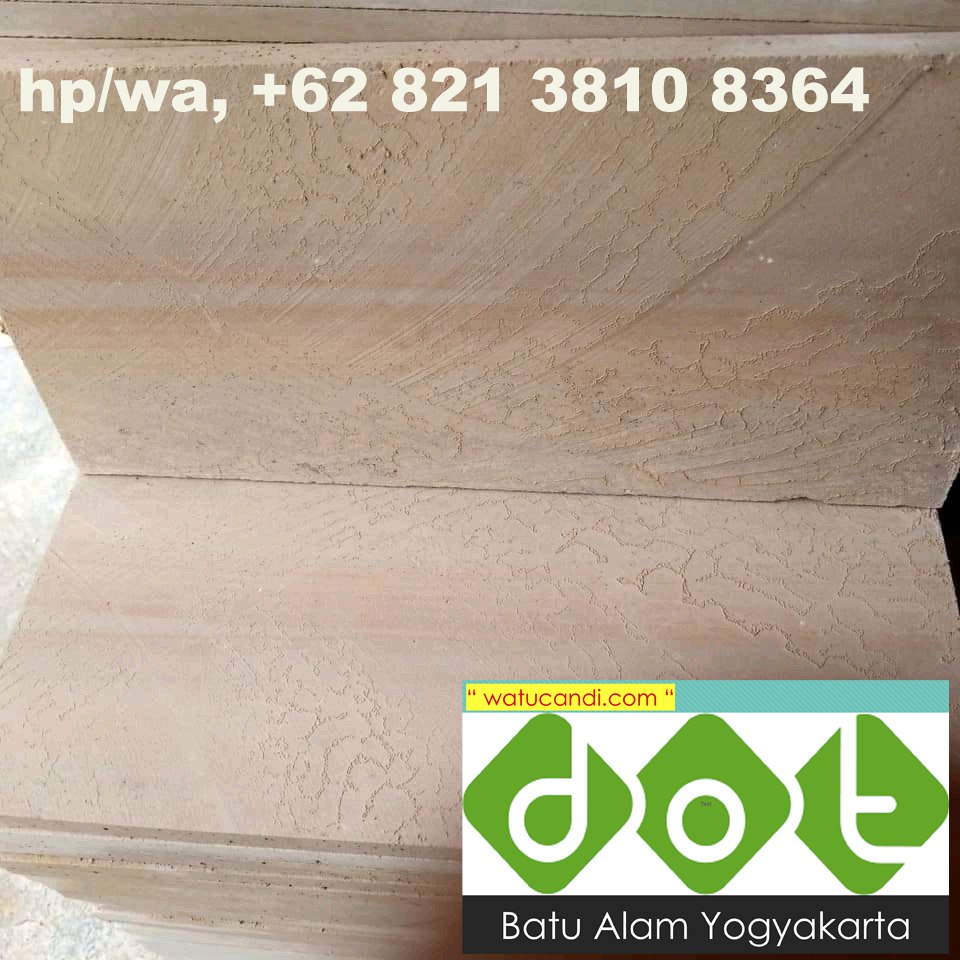
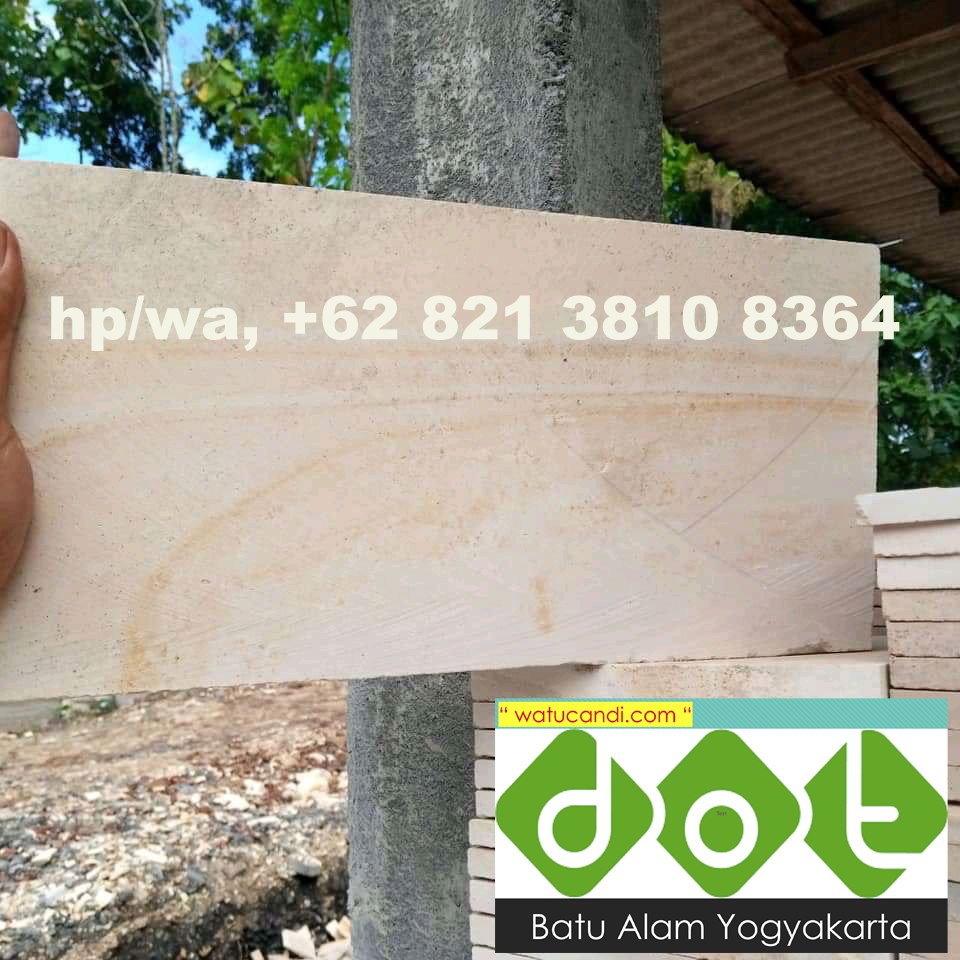
Softness and Elegance: The relatively soft nature of paras stone (soft stone) allows for very smooth finishing. Bright yellow veins mixed with creamy white create a charming contrast without looking striking. This is the definition of subconscious elegance—beautiful to look at but not disturbing the peace of the eye. If you are interested in natural stone with more complex motifs like batik, see our collection of batik basalto granite.
Floor Application and Pedestrian Areas
Besides walls, yellow vein paras stone is also very beautiful used as flooring, especially for semi-outdoor areas such as covered terraces, gazebos, or pedestrian paths in gardens. With the right finishing, this stone is safe to walk on and provides a natural cool sensation.
Wood-Like Veins: Notice how the veins on this stone resemble wood grain. This provides a psychological effect that connects residents with nature (biophilic design). For more rustic garden floor applications, you can consider lava rock stepping stones which offer high durability in open areas.
Quiet Luxury: The combination of golden yellow and creamy white creates a timeless color palette. Unlike paint color trends that change quickly, natural stone colors will remain relevant for decades. In fact, over time, paras stone can develop a natural patina that further enriches its character. For furniture inspiration that complements this stone wall, see our handmade stone tables and chairs.
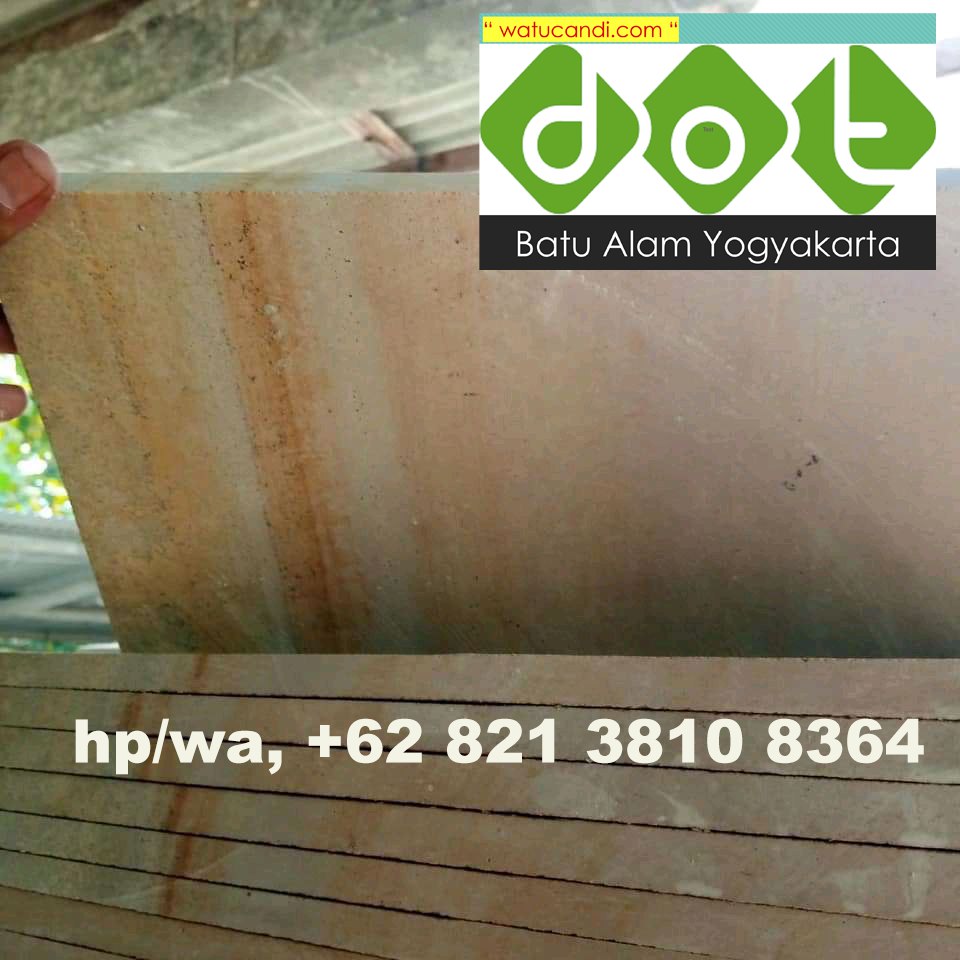
Wonder Behind the Surface: Every scratch and groove is a record of geological history. When this stone is cut, we see a cross-section of compressed earth layers. This is art created by nature, not machines. For detail lovers, we also provide natural stone bathroom accessories that match to create a cohesive theme.
New Building Face: The use of paras stone can completely change the face of an old building to look fresh and high in artistic value. Neat installation techniques are very important to maximize the beauty of these veins. Learn more about types of stone surfaces to choose the finish that best suits your design vision.
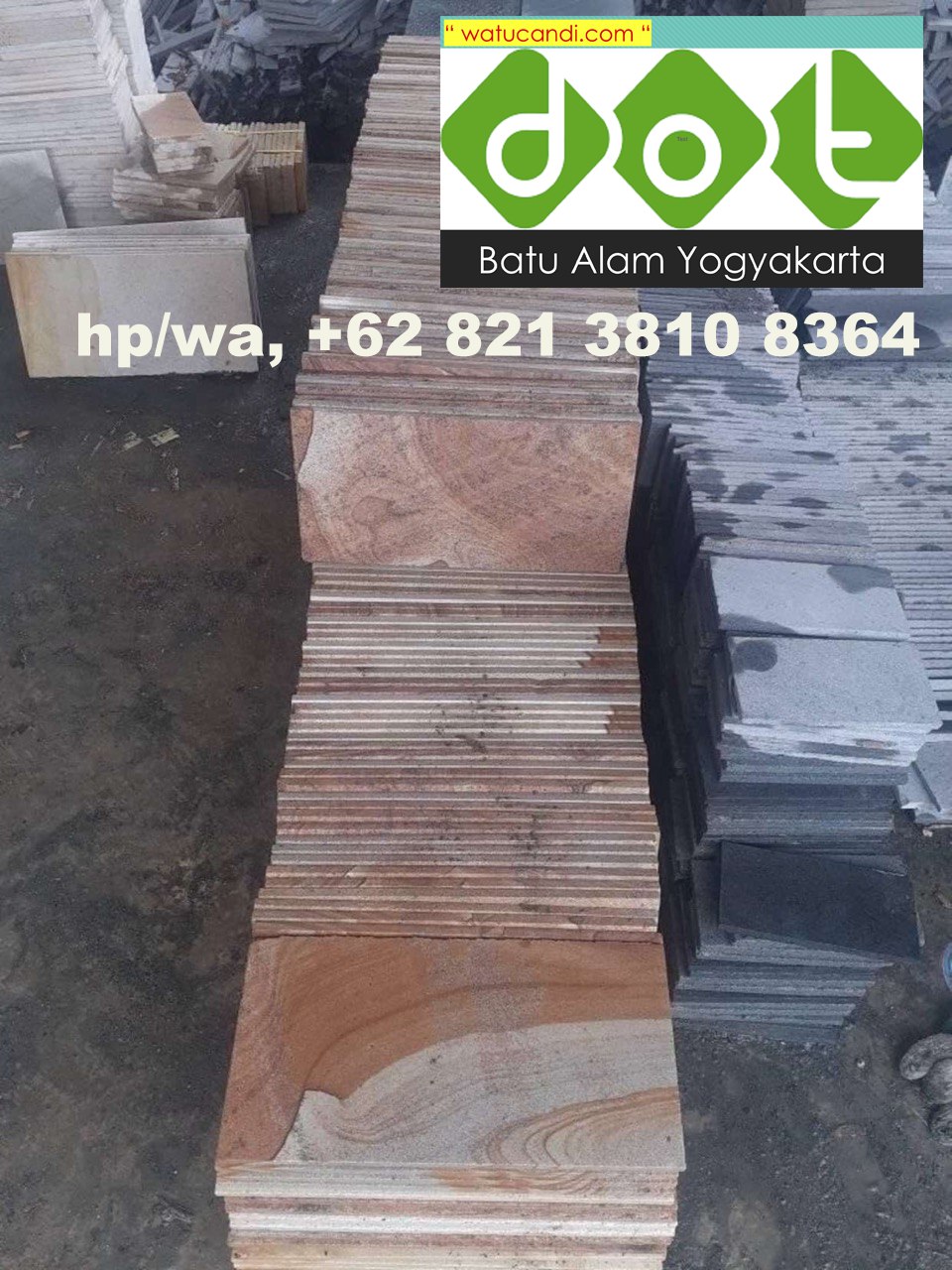
More Than Just Stone: This is a living decorative element. Its beauty is not static; it changes depending on the angle of view and lighting. For areas that require extra water resistance such as swimming pools, although paras stone can be used with proper sealing, many of our clients prefer special lava stone tiles for swimming pools due to their lower porosity.
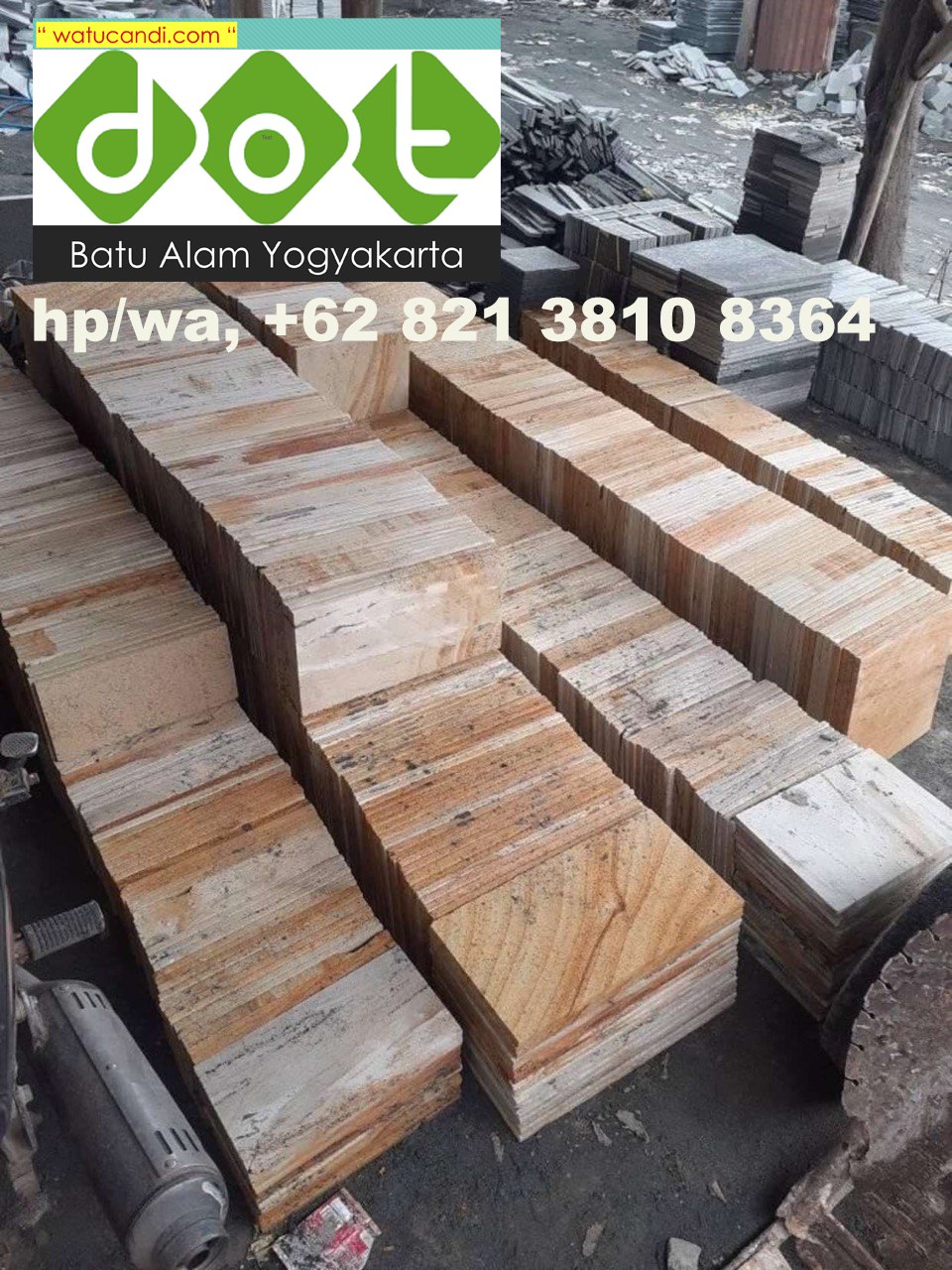
Natural Stone Craft Center: Behind every beautiful sheet of stone, there is the hard work of local craftsmen who maintain the tradition of Indonesian natural stone processing. Support for this local industry also means supporting the economic sustainability of communities around the mines. We are proud to be part of this ecosystem, providing various precise straight line installation patterns.

Unmatched Authenticity: No printing machine can replicate the complexity of these veins. That is why natural stone is always considered a premium material. To see how this stone is applied in intricate mosaic forms, visit our candi natural stone mosaic page.
Trusted Yellow Vein Natural Stone Producer
As an experienced Jogja natural stone factory, we do not just sell products, but also provide solutions. Our team consists of craftsmen suppliers of natural stone material needs who truly understand the characteristics of each type of stone. We serve various natural stone tile orders, where you can request special sizes and also desired surface finish results, whether it is smooth, rough, or uniquely textured.
Many motifs and also types of natural stone are available to meet the desired natural stone needs, one of which is this brown cream yellow vein stone. In addition, we also provide other variants such as super white Palimanan stone for a cleaner and brighter nuance.
You can see updates of our products regularly. Follow our social media on Instagram to get the latest natural stone product images, maintenance tips, and current design inspiration. We are committed to being a trusted partner in realizing your construction design ideas.
Limestone and the Geology Behind Yellow Vein
To appreciate the beauty of this stone, it is important to understand its origin. Limestone (CaCO3) is a sedimentary rock composed of calcite and aragonite minerals, which are two different variants of calcium carbonate (CaCO3). The main source of calcite is microscopic marine organisms. These organisms secrete shells which, when they die, fall to the sea floor and deposit as pelagic ooze. Over millions of years, pressure and heat transform these deposits into solid limestone.
Secondary calcite can also be deposited by supersaturated meteoric water, i.e., groundwater that deposits material in limestone caves. This process creates speleothems such as stalagmites and stalactites that we often admire. Another interesting form is Oolite (Oolitic Limestone) which has a granular appearance like fish grains. Globally, limestone makes up 10% of the total volume of sedimentary rocks in the earth’s crust, making it one of the most common building materials throughout human history.
Similar but softer and highly porous deposits formed from ambient temperature water are known as tufa. Meanwhile, travertine, which is a category close to our paras stone, is formed from hot springs. For technical comparison between various types of limestone and travertine, please read the complete guide to natural limestone and travertine.
Travertine: Close Relative of Paras Stone
Travertine is a form of limestone deposited by mineral springs, especially hot springs. Travertine often has a fibrous or concentric appearance and comes in white, brown, and cream-colored varieties, very similar to our yellow vein paras stone. It is formed by a rapid precipitation process of calcium carbonate, often found at the mouth of hot springs or in limestone caves. At both locations, travertine can form stalactites, stalagmites, and other speleothems.
This stone is often used in Italy and elsewhere as an iconic building material. Travertine is commonly used as a bathroom decoration component, flooring, and can also be used as a material for making monument statues. In Indonesia, Palimanan paras stone is often referred to as local travertine due to the similarity of its formation characteristics and appearance. If you are interested in green nuances that also come from volcanic and sedimentation processes, check our green natural stone.
Etymology and History of Use
The word ‘travertine’ comes from the Italian ‘travertino’, which itself is derived from the Latin ‘tiburtinus’ meaning ‘from Tibur’. Its name is also related to Tivoli, a district near Rome rich in this stone deposit. The history of the use of this type of stone is very long and noble.
The Romans mined travertine deposits to build temples, aqueducts, monuments, bath complexes, and amphitheaters such as the Colosseum, the largest building in the world largely built by travertine. Another interesting fact is that the Shroud of Turin, when examined by experts, was found to contain particles of travertine aragonite limestone. This shows how closely this stone is related to the history of human civilization.
In the modern era, travertine became popular again as a building material in the Middle Ages and onwards. The town of Bad Langensalza in central Germany has an existing medieval old town, built almost entirely of local travertine. 20th-century buildings widely used travertine including the Sacré-Cœur Basilica in Paris, the Getty Center in Los Angeles, California, and the Shell-Haus in Berlin. The travertine used in the Getty Center and Shell-Haus construction was imported from Tivoli and Guidonia, showing global quality standards that we also strive for in our paras stone products.
Geochemistry and Color Formation Process
Modern travertine is formed from super-saturated alkaline water heated geothermally, with increased pCO2. As it emerges to the surface, the water lowers CO2 due to lower atmospheric pCO2, resulting in increased pH. Because carbonate solubility decreases with increasing pH, precipitation is induced. Precipitation can be enhanced by factors leading to reduced pCO2, for example, increased water-air interaction in waterfalls may be important, as is photosynthesis by algae in springs.
Precipitation can also be enhanced by evaporation in some springs. Calcite and aragonite are found in hot spring travertine; aragonite is preferred to precipitate when temperatures are hot, while calcite dominates when temperatures are cooler. When pure and fine, travertine is white, but is often brown to yellow due to iron or organic impurities. This is what gives the golden yellow color to our paras stone. To see applications of stone with different mineral content, see classic black basalt granite.
Natural Events and Unique Formations
Throughout the world, travertine formations create breathtaking natural landscapes. Badab-e Surt in Iran forms red travertine terrace formations due to iron carbonate content. The Mausoleum submerged in a travertine pool in Hierapolis hot springs, Turkey, is a protected historical site. In Italy, famous travertine quarries are in Tivoli and Guidonia Montecelio, where the most important quarries since Ancient Roman times can be found.
The Guidonia quarry has great historical value, as it is one of the quarries where Gian Lorenzo Bernini chose material to build the famous St. Peter’s Supporting Columns in Rome (colonnato di Piazza S. Pietro) in 1656–1667. Michelangelo also chose travertine as material for the external ribs of the dome of St. Peter’s Basilica. Travertine gets its name from the former city, known as Tibur in ancient Roman times. The ancient name for the stone was lapis tiburtinus, meaning tibur stone, which gradually deteriorated into travertino (travertine).
Detailed study of Tivoli and Guidonia travertine deposits reveals daily and annual bands and laminae, which can potentially be used in geochronology to study past climates. Natural lakes formed behind travertine dams can be seen in Pamukkale, Turkey, which is a UNESCO World Heritage Site. Other places with such cascades include Huanglong in Sichuan Province China, Mammoth Hot Springs in the US, Egerszalok in Hungary, Mahallat, Abbass Abad, Atash Kooh, and Badab-e Surt in Iran, Band-i-Amir in Afghanistan, Lagunas de Ruidera, Spain, Hierve el Agua, Oaxaca, Mexico and Semuc Champey, Guatemala.
In the post-glacial optimum paleoclimate of Central Europe (Atlantic Age, 8000-5000 BC), large tufa deposits formed from karst springs. Important geotopes are found in the Swabian Alb, especially in the valleys on the northwest cuesta ridge backs, in many valleys on the edges of the eroded Franconian Jura Karst, at the foot of the northern Alps, and the Northern Limestone Alps. On a smaller scale, this karst process is still ongoing today, including in Indonesian karst areas such as in Sulawesi and Java.
Travertine has been an important building material since the Middle Ages.
Travertine has formed sixteen natural large dams in a valley in Croatia known as Plitvice Lakes National Park. Holding tight to moss and rocks in the water, travertine has piled up over several millennia to form waterfalls up to 70 m (230 feet) high. In the US, the most famous place for travertine formation is Yellowstone National Park, where geothermal areas are rich in travertine deposits. Wyoming also has travertine in Hot Springs State Park in Thermopolis.
Oklahoma has two parks dedicated to this natural wonder. Turner Falls, the highest waterfall in Oklahoma, is a 77-foot (23 m) waterfall flowing over a travertine cave. Honey Creek feeds this waterfall and makes miles of travertine racks both above and downstream. Many small waterfalls upstream in dense forests repeat the travertine formation effect. The city of Davis now has thousands of hectares of this land and makes it a tourist attraction.
Another travertine resource is in Sulphur, Oklahoma, 10 miles (16 km) east of Turner Falls. Travertine Creek flows through a spring nature reserve within the boundaries of the Chickasaw National Recreation Area. In Texas, the city of Austin and the surrounding “Hill Country” to the south are built on limestone. This area has many travertine formations, such as those found at Gorman Falls inside Colorado Bend State Park, a nature reserve known as Hamilton Pool, West Cave Preserve, and Krause Springs in Spicewood.
Hanging Lake in Glenwood Canyon in Colorado has travertine deposits and aqua blue water. Rifle Falls Park in Colorado has triple waterfalls over travertine dams. In Arizona, on the south side of the Grand Canyon is the Havasupai Reservation. The river flowing through Havasu Creek, which has extensive travertine deposits. Three main waterfalls, Navajo Falls, Havasu Falls, and Mooney Falls, are all located downstream from the town of Supai. There are many small cataracts formed by travertine dams. These features are located about 2 miles (3.2 km) from Supai Village (on the canyon floor), and can be accessed by walking or horseback riding.
In Iceland, the Hvanná river, located on the north side of Eyjafjallajökull, was heavily charged with CO2 after the 2010 eruption. Travertine was deposited along the river. In 2014, CO2 concentrations in the river decreased and travertine began to dissolve. However, in places, where the river changed its bed, rocks covered with travertine could still be seen. In Northeast Sulawesi, Indonesia is the Wawolesea Karst. An important feature of this area is pools a few meters from the coast, formed by salty and hot fountains that have existed since the Neogene age. This shows that Indonesia also has extraordinary geological wealth of travertine and limestone, which we utilize wisely.
Using Natural Stone in Modern Architecture
Travertine and paras stone are often used as building materials because of their ease of workmanship and beauty. Travertine is one of the few natural stones used to open terraces and garden paths. Sometimes known as travertine limestone or travertine marble, it is the same stone, although travertine is correctly classified as a type of limestone, not marble. The stone is characterized by pitted holes and troughs on its surface. Although these troughs occur naturally, they show signs of quite long wear. It can also be polished to a smooth, glossy finish, and is available in various colors from gray to coral red.
Travertine is most commonly available in tile sizes for floor installation. Travertine is one of the stones most frequently used in modern architecture. It is usually used for facades, wall cladding, and floors. The lobby walls of the modernist Willis Tower (1970) (formerly Sears Tower) in Chicago are made of travertine. Architect Welton Becket often incorporated travertine into many of his projects. The first floor of the UCLA Medical Center designed by Becket has thick travertine walls.
Architect Ludwig Mies van der Rohe used travertine in several of his masterpieces, including the Toronto-Dominion Centre, SR Crown Hall, Farnsworth House, and Barcelona Pavilion. Burghausen Castle, the longest castle in Europe, is 1,000 years old and built mainly of travertine. Travertine boats were found in El Tapesco del Diablo Cave in Ocozocoautla, Chiapas, Mexico (600-900 AD), showing the use of this stone by ancient Maya civilizations.
Global and Local Supply
Until the 1980s, Italy almost monopolized the world travertine market; now significant supplies are excavated mainly in Turkey, Iran, Mexico, and Peru. Two or three small travertine producers operate in the western United States. US demand for travertine is about 850,000 tons per year, almost all imported. However, Indonesia has very high quality local limestone and travertine resources, such as Jogja and Palimanan paras stone, which offer a closer and more environmentally friendly alternative for the Asian and Australian markets.
- Alabaster – Light-colored, translucent, and soft calcium mineral, usually gypsum – see variety called “onyx-marble”, actually a travertine
- Calcareous sinter – Freshwater calcium carbonate deposit
- Calthemite – Secondary calcium carbonate deposit growing under man-made structures
- Speleothem – A structure formed in caves by mineral deposition from water
- Karst Topography – Topography formed from the dissolution of soluble rocks
- Types of limestone – Limestone deposits listed by location
Maintenance Guide and Professional Installation Tips
To keep the beauty of Yellow Vein Natural Stone maintained for years, proper care is necessary. Although paras stone is relatively durable, its porous nature makes it susceptible to stains if not properly cared for. Here is a complete maintenance guide and installation tips from our experts.
1. Sealing Process (Anti-Stain Coating)
The most crucial step before or immediately after installation is the application of stone sealer. Because paras stone has micro pores, liquids such as coffee, tea, or oil can seep in and leave permanent stains. Use a water or solvent-based impregnating sealer that does not change the original color of the stone. Repeat the sealing process every 1-2 years depending on the usage level of the area. For wet areas such as bathrooms, make sure to use a special anti-water sealer.
2. Daily Cleaning Method
Avoid the use of harsh chemicals such as hydrochloric acid or abrasive floor cleaners that can erode the stone surface and remove its natural shine. Just use warm water mixed with pH-neutral liquid soap. Wipe with a soft microfiber cloth to lift dust. If there are stubborn stains, use a soft brush with slow circular motions. Never use coarse sponges or steel wool.
3. Installation Tips for Maximum Results
Ensure the wall or floor surface is flat and dry before installation. Use sand cement mortar with the right ratio for optimal adhesion. For exterior walls, consider using a dry hanging system or special natural stone glue if the wall height exceeds 3 meters for structural safety. Always leave consistent grout gaps, usually 3-5 mm, and use grout colors that match (such as light cream or bone white) so the stone appearance looks unified and spacious.
With proper care, Yellow Vein Natural Stone will not only last for decades, but will also become more beautiful over time due to the natural oxidation process that deepens its golden color. This is a long-term investment that provides return value in the form of aesthetics and housing comfort that is priceless.
We invite you to not only view this stone as a commodity, but as a natural heritage that must be appreciated. By choosing Yellow Vein Natural Stone from responsible local producers, you participate in preserving the beauty of Indonesian nature while creating healthy and aesthetic living spaces. For more information on other types of stone such as natural stone furniture or rough surface marble stone sinks, do not hesitate to contact our team.
Yellow Vein Natural Stone is a smart choice for those who want a balance between function, durability, and art. From storytelling walls to cooling floors, this stone is present to complement modern life with an eternal touch from nature. Explore more inspiration in our latest styles and discover the unlimited potential of Indonesian natural stone.
yellow vein natural stone, jogja paras stone, palimanan stone, indonesia travertine, limestone, yellow wall cladding, natural stone flooring, luxury wall decor, tropical natural stone, yogyakarta natural stone producer, golden vein stone, natural stone finishing, amanjiwo natural stone, cream paras stone, buy natural stone, exterior natural stone, interior natural stone, yellow travertine, affordable natural stone, minimalist house design,