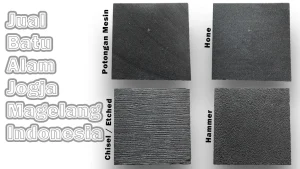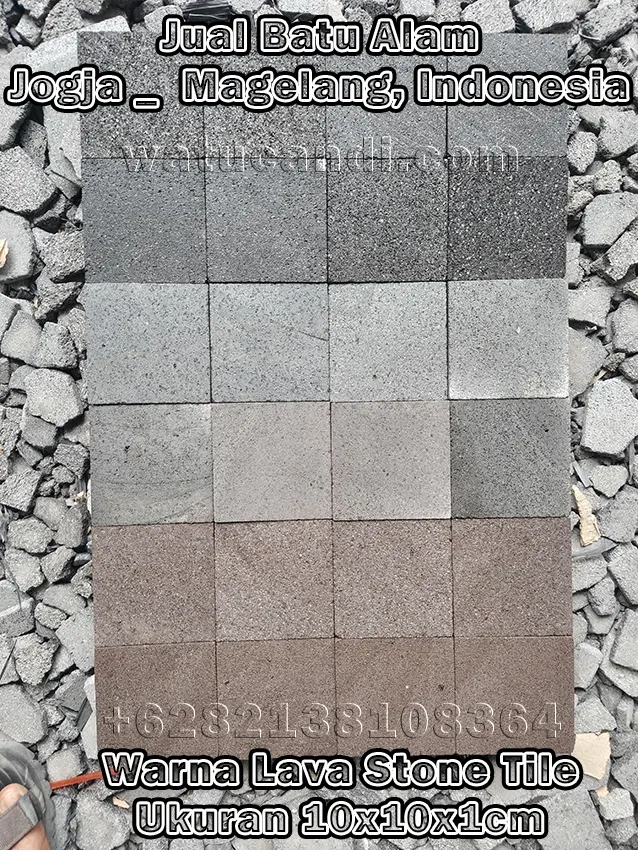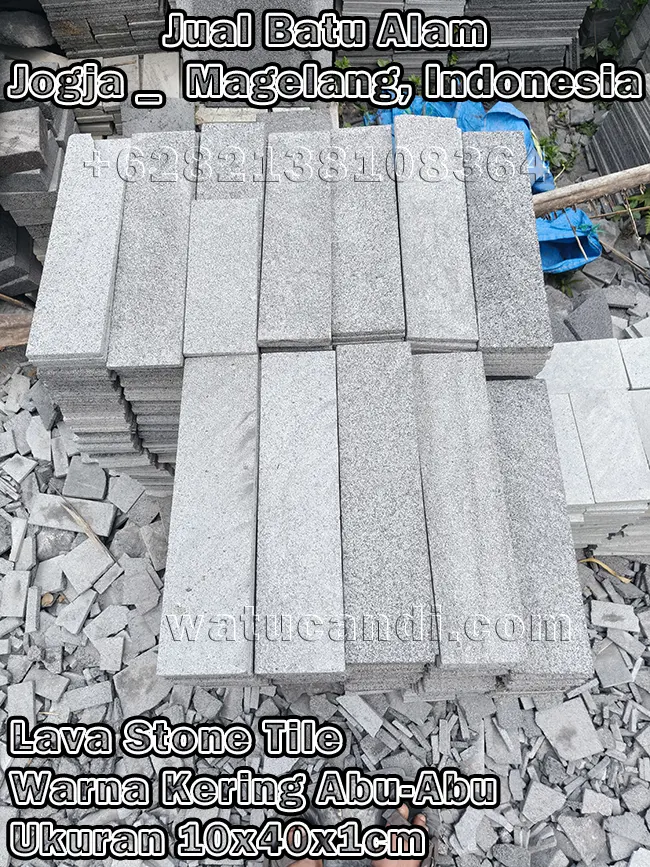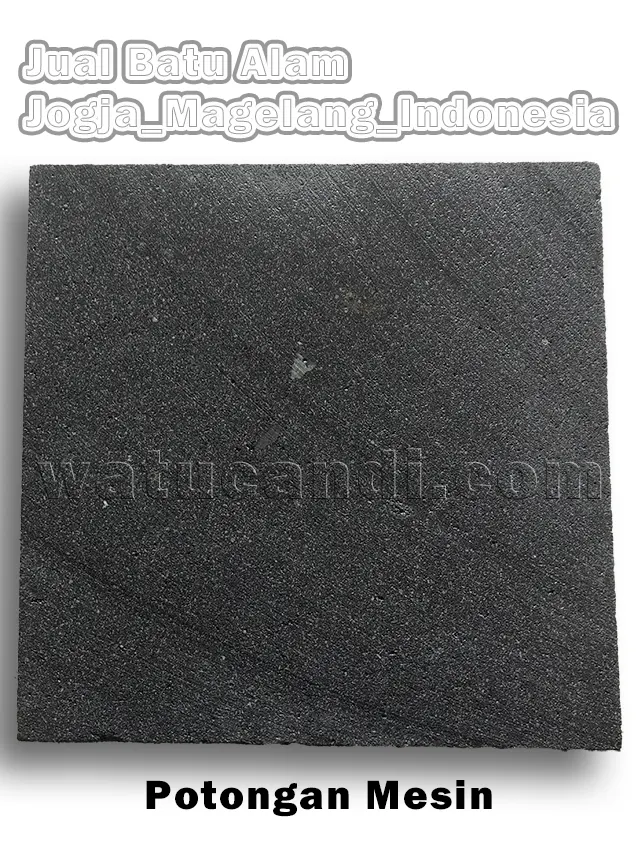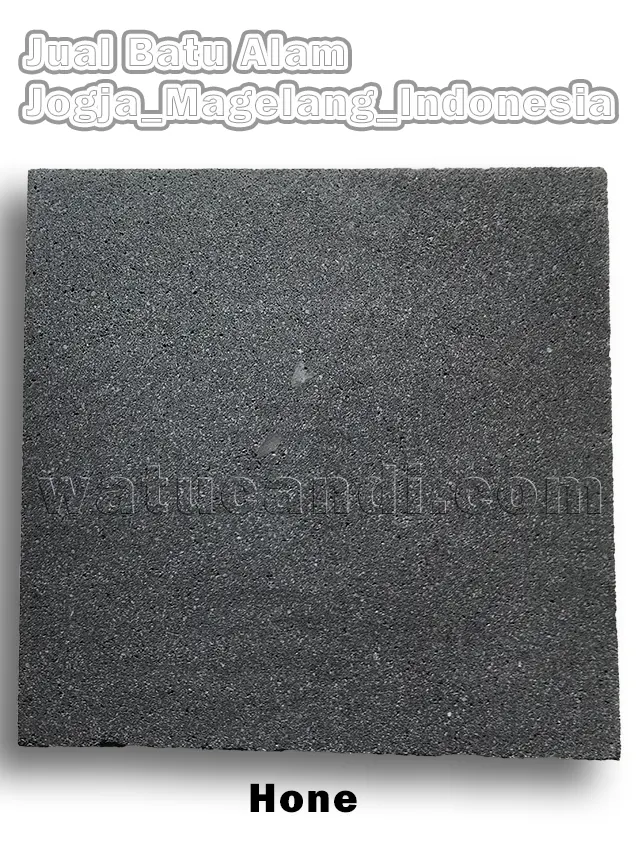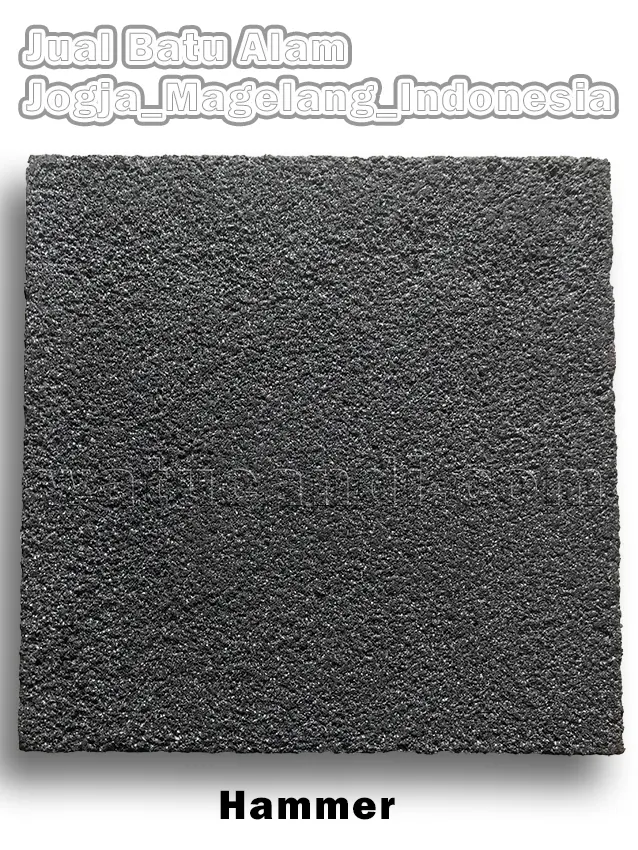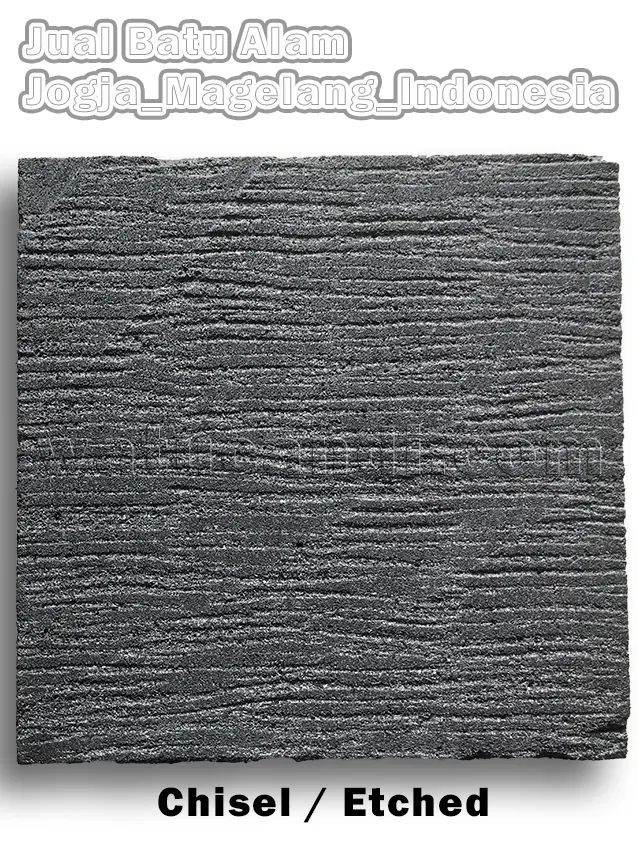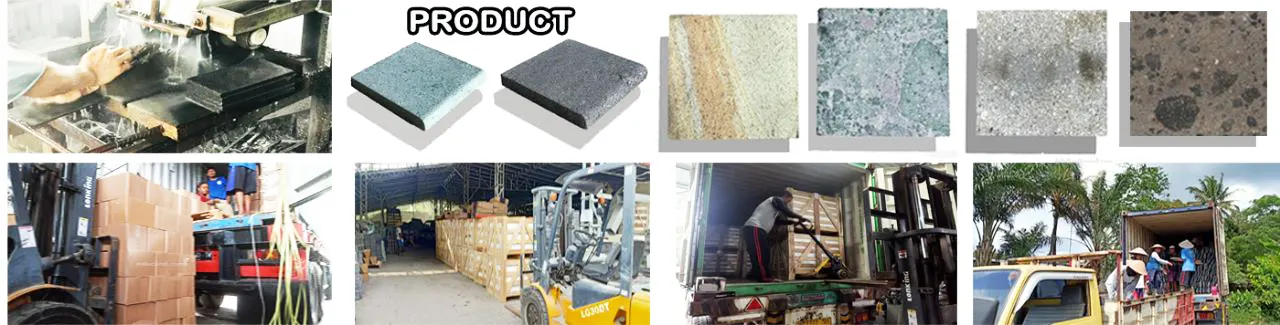
The concept of inclusivity is no longer just a trend, but a fundamental need. One of the most important aspects of inclusive design is accessibility for people with disabilities, particularly those with visual impairments or blindness. This is where the role of natural stone for the disabled becomes crucial. Natural stone for the disabled, often known as tactile paving or guiding blocks made from natural stone, serves as a tactile directional guide that allows visually impaired individuals to move safely, independently, and confidently in various environments, both inside homes and in public spaces.
Many people may assume that the main function of natural stone is merely as a decorative element to beautify house facades or terrace floors. However, this view is limited. Natural stone actually has great potential to become a disability-friendly material. With its distinctive surface texture and extraordinary durability, natural stone can be formed into guiding blocks that are not only functional but also aesthetic. Unlike mass-produced ceramic or concrete prints which often look monotonous, natural stone offers visual warmth and high artistic value, so its integration into disability-friendly housing does not reduce architectural beauty, but rather adds depth of character to the building.
In this contemporary era, most public infrastructure indeed uses guiding blocks made of steel, rubber, or special ceramics produced in factories. These materials are chosen because of the ease of mass production and relatively low costs. Consequently, the use of natural stone for the disabled may appear less common compared to these synthetic materials. However, this scarcity does not mean irrelevance. In fact, natural stone for the disabled offers advantages that manufactured materials do not possess, especially in terms of long-term durability, resistance to tropical weather, and timeless aesthetic value. For property owners who prioritize premium quality and environmental sustainability, natural stone remains a strong, high-quality, and high-artistic-value alternative option.

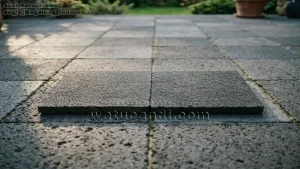
Visualization of tactile texture on natural stone flooring designed specifically to help navigation for visually impaired individuals.
Concept of Disability-Friendly Housing with Natural Stone Touches
A disability-friendly home is defined as a residence designed with special facilities and features to support the mobility and comfort of all its occupants, including those with physical limitations. This is not just about installing handrails or widening doors, but creating a living ecosystem that is safe and intuitive. One of the most vital elements in a disability-friendly home is a floor circulation system designed specifically so that people with disabilities, especially the blind, can move without obstacles and without needing to rely entirely on assistance from others.
This system does not only rely on spatial intuition, but utilizes the sense of touch (tactile) through feet or guide canes. This is where natural stone for the disabled plays a role as a “physical language” that communicates directly with the user. When someone steps on a stone surface that has a different texture, such as straight lines or round dots, their instinct translates these tactile signals into navigation information: “go straight” or “be careful, there is a change in direction”. The implementation of this simple yet effective technology shows the deep human side of the homeowner. Creating a disability-friendly home means you are not only building a physical structure, but also building an environment that respects the dignity and independence of every individual, regardless of their physical condition.
The application of natural stone in this context also aligns with biophilic architecture trends that connect humans with nature. The use of natural materials like volcanic stone provides a calming and organic atmosphere, which is very beneficial for mental health. For further inspiration on how natural stone can be applied broadly in various housing elements, you can explore our complete collection at WatuCandi Natural Stone Shop, which provides various high-quality material solutions for inclusive architectural projects.
Understanding Tactile Blocks or Guiding Blocks Based on Natural Stone

Difference in texture patterns between straight lines (safe path) and round dots (warning/change of direction) on natural stone tiles.
Guiding blocks, or technically often referred to as tactile paving, are floor elements made specifically with certain surface textures to provide navigation guidance for the blind. Universally, there are two main types of patterns used: linear bars and truncated domes (or spot dots). The straight line pattern instructs a safe path to continue walking forward, while the round dot pattern gives a warning signal to stop, be careful, or indicates a change in direction such as intersections, stairs, or platform edges.
The function of installing these elements is vital to facilitate accessibility and provide adequate facilities for the blind, allowing them to carry out daily activities with the same level of independence as other individuals. Although in modern times the making of tactile blocks mostly uses ceramic printing technology or iron/polymer molds, natural stone still holds a special place. The advantage of natural stone lies in its resistance to abrasion, color stability that does not easily fade under UV light, and its ability to blend with the surrounding natural landscape. Natural stone is not slippery when wet if the right type is chosen, making it a safer choice than some types of glazed ceramics which can become very slippery when exposed to rainwater.
Ideal Characteristics of Natural Stone for Disability Applications

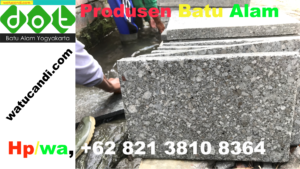
Application of andesite stone as a sturdy and durable guiding block for exterior areas.
Not all types of natural stone are suitable for use as guiding blocks. Besides having to fulfill the function of aiding navigation, the stone must also give an impression of beauty and safety. General characteristics of quality natural stone for the disabled include high compressive strength, resistance to extreme weather (heat, rain, humidity), and consistent surface texture. The stone surface must be rough enough to provide a clear tactile sensation through shoe soles or cane tips, but must not be too sharp or jagged which could damage footwear or cause injury.
This safety aspect is very necessary to ensure that people with disabilities feel safe and comfortable when accessing these facilities. The chosen natural stone must be solid stone with low porosity so it does not easily absorb water, which can trigger the growth of slippery moss. Moss is the main enemy of safety in wet areas. Therefore, the selection of stone types such as Andesite, Basalt, or Granite becomes a top priority due to their naturally hard and low-pore properties. To understand more deeply about durable stone characteristics suitable for flooring, you can read the guide on premium Andesite and Lava Stone natural stone flooring collection designed specifically for high durability.
Color Psychology and Visual Contrast on Natural Stone for the Disabled

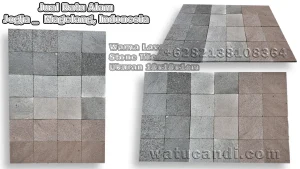
Color contrast between black granite guiding blocks and surrounding floors helps low-vision users.
Although guiding blocks are primarily intended for the totally blind through the sense of touch, the visual aspect remains important for those with residual vision (low-vision) or color blindness. International standards suggest using contrasting colors between the guiding block and the surrounding floor. Usually, bright yellow or orange colors are used for ceramic or polymer materials. However, in the context of natural stone, we work with a natural color palette. Natural stones like Black Granite, Basalt, or Candi Andesite which are dark in color can create excellent contrast if installed on light-colored floors like white or cream limestone.
The use of silver or metallic colors is usually associated with metal guiding blocks on city sidewalks. Meanwhile, for indoor applications such as homes, hotels, schools, or universities, natural stone offers elegant earth-tone variations. The combination of dark natural stone for guide paths and light natural stone for regular walkways is not only functional tactically, but also creates visually interesting aesthetic patterns. This proves that accessibility does not have to sacrifice design beauty. For those interested in natural stone color variations, the Palimanan and Paras stone collection offers warm cream nuances perfect for contrasting with dark lava stone.
Best Types of Natural Stone for Guiding Blocks
The selection of natural stone type determines the success of the guiding block application. The stone must have a strong mineral structure so that the texture pattern (lines or dots) does not quickly wear out from pedestrian traffic. Here are the superior types of natural stone recommended for making disability guiding blocks:
1. Granite Stone: Eternal Strength and Elegance

The advantage of Black Granite in forming precise and durable tactile textures.
Granite stone has long been known as the king of natural stones for floor and wall applications due to its superior hardness. Formed from magma cooling underground, granite has an interlocking crystal structure, making it highly resistant to scratches, heavy loads, and weather changes. For disability applications, granite can be processed with high precision to form sharp and clear line or dot patterns. Its resistance to wear makes granite an ideal choice for high-traffic areas such as stations, airports, or office building lobbies. Besides being functional, black granite gives a luxurious and professional impression. If you are looking for material that combines structural strength with premium aesthetics, consider looking at large natural stone slabs that can be cut to custom specifications.
2. Candi Lava Stone: Economical and Strong Volcanic Heritage

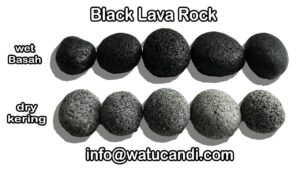
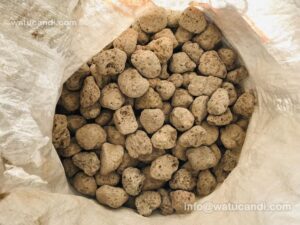
Natural texture of candi lava stone suitable for forming guiding blocks.
Candi Lava Stone, originating from ancient volcanic eruptions, has unique characteristics in the form of dark gray to black colors with small mineral spots. This stone is very popular in Indonesia due to its abundant availability and relatively more affordable price compared to imported granite. Although competitively priced, the quality of Candi Stone is unquestionable. It has good density and extraordinary weather resistance. This stone is easy to form into tiles with clear tactile textures. Its use is very widespread, ranging from city sidewalks to guide paths in home gardens. To know more details about its technical specifications and architectural applications, you can read the definitive guide to volcanic Candi stone.
3. Andesite Stone: Favorite of Tropical Architects

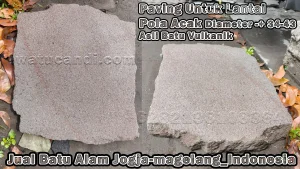
Natural appearance of andesite stone blending with garden and exterior environments.
Andesite Stone, especially that from the slopes of Mount Merapi, is a prime favorite in the local construction world. Its bright gray to dark color gives a neutral impression that is easy to combine with various design styles. Andesite has a naturally quite rough texture, which actually already provides a slight anti-slip effect, but for guiding blocks, its surface still needs special processing to highlight the tactile pattern. The main advantage of Andesite is its resistance to Indonesia’s humid tropical climate. It does not easily crack due to drastic temperature changes. Besides as a guiding block, this stone is also often used for other decorative elements. You can explore manually chiseled stone floors which offer similar artistic textures but with a more rustic style.
Besides these three main types, other natural stones like Basalt can also be used. The main principle is that the stone must have a sufficiently high Mohs hardness, dense structure, and be able to be formed with precision. Avoid using high-pore stones like soft limestone for outdoor areas because they are prone to weathering and moss growth which can cover the tactile texture, thereby reducing its function for the blind.
Standard Sizes and Dimensions of Disability Tiles
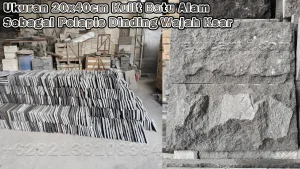
To ensure consistency and safety, the size of disability tiles should follow ergonomic and accessibility standards. Although there are no rigid mandatory rules for private residences, following general standards will help blind users who are already accustomed to certain patterns. Generally, disability tiles are square or rectangular. Common sizes circulating in the market include 20×40 cm, 30×30 cm, and 40×40 cm. Rectangular shapes (such as 20×40 cm) are often preferred because they facilitate the creation of continuous straight lines without many vertical joints that could be confusing.
In terms of thickness, natural stone disability tiles usually have a thickness between 2 cm to 5 cm. This thickness is important to guarantee structural strength so the stone does not easily break when stepped on or hit by heavy objects. Thickness also affects the installation method; thicker stones require a more stable cement mixture. It is important to note that natural stone disability tiles should use stone types that do not absorb water (low absorption rate). If the stone absorbs water, the risk of damage due to freeze-thaw cycles (in four-season countries) or growth of moss and algae (in tropical climates) will increase. Moss growing in texture crevices can make the surface slippery and cover the tactile pattern, which actually endangers the blind. Therefore, anti-water coating maintenance is highly recommended. For reference on water-resistant and anti-moss materials, Sukabumi Green Stone is an example of natural material that has unique anti-moss properties, although usually used for pools, its durability principle is similar to durability needs.
Price Analysis and Long-Term Investment
Many prospective buyers wonder about the price of natural stone disability tiles. Indeed, compared to mass-produced printed ceramics, the unit price of natural stone tends to be higher. Prices vary depending on the type of stone (Granite is more expensive than Andesite), level of difficulty in cutting texture, and finishing. Roughly, unit prices can range from Rp 25,000 to Rp 105,000 per sheet for small sizes, or calculated per square meter. For large quantity purchases (per box or per pallet), prices can range between Rp 650,000 to Rp 1,500,000 per m, depending on dimensions and thickness.
However, looking only at the initial price is a common mistake. We must calculate the “Total Cost of Ownership” (TCO). Ordinary ceramics may need to be replaced every 5-10 years because they break, fade, or become slippery. Quality natural stone, if properly maintained, can last for decades or even hundreds of years (real evidence is ancient temples). Its weather resistance means lower long-term maintenance costs. In addition, the aesthetic value of natural stone increases your property value. So, although the initial investment is higher, the value obtained is commensurate with the quality, durability, and prestige offered. Always conduct direct surveys to trusted suppliers like WatuCandi to get physical samples and best price consultations.
Philosophical and Social Meaning of Installing Disability Stone
Every step on the guiding block is a form of respect for the independence of people with disabilities.
The fundamental question that often arises is, “Why should we bother installing disability stone?” The answer goes beyond mere compliance with building regulations. It is about empathy, respect, and social inclusion.
1. Respecting the Rights and Dignity of the Blind
Losing sight is a major challenge, but not a barrier to living with dignity. The ability to see is a gift, and those who have it have a moral responsibility to ensure the surrounding environment is accessible to everyone. By installing guiding blocks, we provide a “second eye” for them through the sense of touch. This is a concrete form of respect that allows them to move without fear or excessive dependence on others.
2. Active Participation in Disability-Friendly Socialization
The government and various non-governmental organizations have vigorously campaigned for the rights of people with disabilities. By adopting disability-friendly designs in private homes, offices, or public facilities, you participate in this social movement. This sends a strong message to society that inclusivity is the norm, not the exception. This educates the public to be more sensitive to the needs of our brothers and sisters with different abilities.
3. Education and Character Building for Families
For families with children, the presence of guiding blocks at home or in the surrounding environment becomes a powerful educational tool. Parents can teach children about the function of those textured stones, why those stones exist, and who needs them. This instills values of empathy, care, and social awareness from an early age. Children learn that this world is inhabited by diverse individuals with different needs, and we are all responsible for making things easier for each other.
Strategic Locations for Installing Disability Stone Tiles
Installation of natural stone for the disabled requires mature layout planning. The goal is to create logical and safe paths. Some key locations highly recommended for installing guiding blocks include:
- Private Homes: Paths from the main entrance to the living room, kitchen, bedroom, and especially to the bathroom.
- Sidewalks and Footpaths: Connecting public transport stops with surrounding buildings.
- Parks and Recreation Areas: Paths leading to park benches, play areas, or public toilets.
- Public Facilities: Canteens, cafeterias, libraries, and community centers.
- Educational Institutions: Inclusive schools, universities, and campus areas to ensure blind students can move between buildings safely.
- Government Buildings and Offices: As a form of compliance with state building accessibility standards.
- Hospitality: Hotels, resorts, and villas that prioritize disability-friendly services.
- Pedestrian Bridges and Transit: Critical areas where navigation errors could be fatal.
For applications in parks or larger outdoor areas, you might also consider using stone flooring for gardens and yards that can be integrated with guiding block paths to create a cohesive landscape.
Reading the Language of Shapes: Meaning of Guiding Block Patterns
For guiding blocks to function effectively, users (the blind) and installers must understand the “language” of these patterns. There are two universal patterns used in natural stone for the disabled:
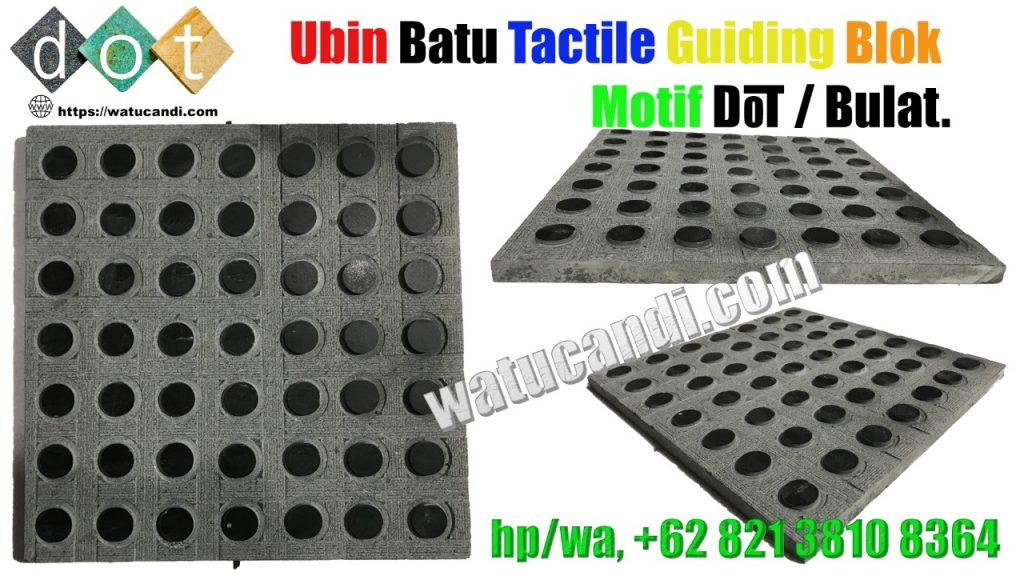
Round dot pattern signifies warning, change of direction, or danger area.
1. Round Spot Dots (Truncated Domes): This pattern consists of a series of regular round bumps. The meaning of this pattern is “Warning” or “Stop”. This pattern is usually placed at:
- Front of stairs going up or down.
- Edge of train platforms or bus platforms.
- Road intersections or crossings.
- Front of entrance or exit doors.
When the cane or foot touches this pattern, the blind person knows they must stop momentarily, check the environment, and be careful before stepping further.
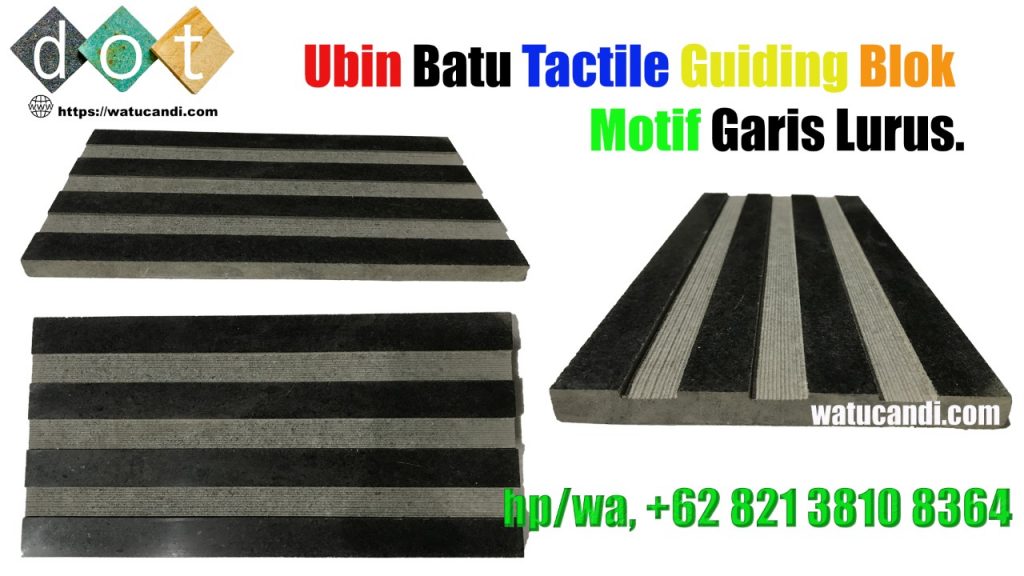
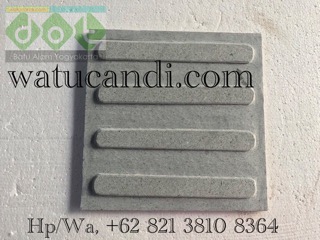
Straight line pattern signifies a safe path to continue traveling forward.
2. Straight Lines (Linear Bars): This pattern consists of parallel elongated lines. The meaning of this pattern is “Straight Path” or “Continue”. This pattern is placed along corridors, sidewalks, or pedestrian paths that are safe from obstacles. As long as the user feels straight lines parallel to their facing direction, they know the path is safe and they can continue moving forward without worrying about encountering sudden obstacles.
Understanding these patterns is very important for architects and contractors when designing layouts. Errors in pattern placement (for example placing straight lines in front of stairs) can be fatal. Therefore, consultation with experts or following national/international standards is highly recommended. For precise installation techniques to keep patterns intact, you can learn about proper natural stone installation patterns.
Integration of Natural Stone for the Disabled with Other Design Elements
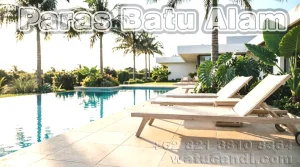
Natural stone for the disabled does not have to stand alone as a rigid element. It can be beautifully integrated with other design elements to create a holistic space. For example, in pool areas, safety is the top priority. The use of anti-slip natural stone is crucial. You can combine guiding block paths around the pool with lava stone tiles for swimming pools which are famous for their safe rough texture. This ensures that visually impaired individuals can enjoy recreational facilities safely.
In interior areas, such as bathrooms, the combination between floor guiding blocks with natural stone bathroom accessories can create a luxurious and inclusive spa experience. Imagine a bathroom with andesite guiding block flooring leading to a sturdy black basalt sink. Or the use of a natural stone liquid soap dispenser that is easily recognized through its texture and sound when touched. These small details show comprehensive attention to user needs.
For outdoor areas like gardens, guiding blocks can be paired with natural stone garden ornaments, such as handmade stone tables and chairs. Guide paths can direct blind visitors to this seating area, allowing them to feel the texture of the stone table and enjoy the garden atmosphere independently. Even, the use of Umpak Batu as a traditional structural element can be aligned with guiding block paths to create a strong cultural narrative that is also functional.
Additionally, for those wanting a unique wall appearance around accessibility areas, random candi stone cladding walls can provide interesting visual texture without disturbing the function of the guide path on the floor. This combination between vertical and horizontal elements creates complete architectural harmony.
If you are interested in natural stone applications for other wet areas requiring extra safety, the complete guide to green stone tiles for swimming pools can provide additional insight into safe and aesthetic materials. Safety and aesthetics are not two conflicting things, but can go hand in hand with the right material selection like natural stone.
Long-Term Maintenance and Care
To keep natural stone for the disabled functional and aesthetic, routine maintenance is necessary. Because of its protruding texture, dirt and dust tend to accumulate in the pattern crevices. Routine cleaning with a hard brush and clean water is highly recommended. Avoid using harsh acidic chemicals because they can erode the stone surface and change its texture to smooth, which will eliminate its tactile function.
In addition, applying anti-water coating or sealant every 1-2 years is very important, especially for natural stone in outdoor areas. This coating prevents water absorption which can cause freezing (in cold climates) or growth of moss and algae (in tropical climates). Moss is the main enemy because it makes it slippery and covers the pattern. Make sure to choose breathable coating (that can breathe) so water vapor from inside the stone can still escape. For more technical guidance on volcanic stone maintenance, please visit our article on the complete guide to Merapi lava stone cladding and its maintenance.
Maintenance also includes regular checks on the physical integrity of the stone. If there are cracked or loose stones, replace them immediately to avoid tripping hazards. Installation stability is the key to safety for people with disabilities. Using high-quality adhesives or mortar during initial installation will greatly reduce the risk of this problem in the future. For reference on strong mortar types or installation techniques, you can see Merapi lava stone paving designed for high structural durability.
Conclusion
The use of natural stone for the disabled is a progressive step towards a more inclusive and humane society. This is not just an architectural trend, but a statement of commitment to equal access and respect for human dignity. By choosing natural stone as material for guiding blocks, you get a perfect combination of function, durability, and aesthetics not offered by synthetic materials. From the volcanic strength of Andesite and Candi Lava to the elegance of Granite, every stone choice brings its own story and character.
Starting from proper layout planning, selection of stone types suitable for environmental conditions, to routine maintenance, every stage contributes to the successful implementation of this accessibility system. Do not hesitate to consult with experts and visit showrooms to see and feel the quality of natural stone directly. Explore our complete collection at WatuCandi Natural Stone Shop to find the best natural stone disability solutions that suit your design vision. Let us together create living spaces that are not only beautiful to look at, but also friendly and accessible to everyone, without exception.
By understanding the importance of Indonesian natural lava stone tiles in the context of accessibility, we are not only building infrastructure, but also building bridges of empathy. Every installed tile is a symbol that we care. In a world increasingly aware of disability rights, the presence of natural stone for the disabled becomes real proof that beauty and function can unite for humanity.
For further exploration of other types of natural stone that can support your inclusive design, such as the limestone and travertine guide or comparison of local vs precision green stone, do not hesitate to delve into our resources. We are committed to providing the best information and products to support sustainable and inclusive architecture.
Natural Stone Disabled, Natural Stone Guiding Block, Tactile Paving, Disability Friendly House, Blind Accessibility, Andesite Stone, Granite Stone, Candi Lava Stone, Tactile Tiles, Inclusive Design, Guiding Block Installation, Natural Stone Disabled Price, Natural Stone Specifications, Natural Stone Maintenance, Natural Stone Supplier, Anti Slip Natural Stone, Universal Architecture, Exterior Natural Stone, Interior Natural Stone, WatuCandi,