'%3E%3Cpath%20stroke='%23000'%20stroke-width='4'%20d='m-35-37-13%2020m5%203%2013-20m5%203-13%2020m63%2042%206-9m1-2%206-9m5%203-6%209m-1%202-6%209m5%203%206-9m1-2%206-9m-96%200%2013%2020m5-3-6-9m-1-2-6-9m5-3%2013%2020m63-42-6-9m-1-2-6-9m5-3%2013%2020m5-3-6-9m-1-2-6-9'/%3E%3Ccircle%20r='24'%20fill='%23cd2e3a'/%3E%3Cpath%20fill='%230047a0'%20d='M0%200a12%2012%200%201%201%2020%2013%2024%2024%200%201%201-40-26A12%2012%200%201%200%200%200'/%3E%3C/g%3E%3C/svg%3E)


'/%3E%3Cpath%20fill='%23b2b2b2'%20d='M241%20382q0%2016%2017%2026%2017%2011%2042%2011t42-11q16-11%2017-26V269H241'/%3E%3Cpath%20fill='%239f7e00'%20d='M241%20379q0%2014%208%2023%209%209%2021%209%2014%200%2021-9%209-9%209-23V269h-59'/%3E%3Cpath%20d='M241%20339v-70h59v110q0%2014-9%2023l-6%205v-68h-15v72q-8%200-14-4v-68zm59%2040c0%2022%2015%2032%2029%2032%2021%200%2030-18%2030-32v-40h-59'/%3E%3Cpath%20fill='%239f7e00'%20d='M266%20277v5h2v12h-3v-5h2v-5h-9v5h2v5h-4v9h3v18h-5v10h34v-10h-5v-18h3v-9h-4v-5h2v-5h-9v5h2v5h-3v-12h2v-5zm42%20101q0%2010%206%2017%206%206%2015%207%2010-1%2016-7%206-7%206-17v-29h-43'/%3E%3Ccircle%20fill='%230044ad'%20cx='329.5'%20cy='372'%20r='6'/%3E%3Cellipse%20fill='%230044ad'%20cx='300'%20cy='340'%20rx='16'%20ry='21'/%3E%3C/svg%3E)


“Selling authentic large natural stones from Mount Merapi with unique volcanic skin texture. Suitable for inscriptions, retaining walls, and luxurious garden decorations.”
Confused about creating a majestic yet natural garden look? The answer lies in large natural stones. From modern minimalist concepts to classic rustic styles, Merapi volcanic stone offers limitless design flexibility. Check out our complete guide on how to choose the right dimensions, combine them with water elements and plants, and transform raw stone boulders into architectural artworks that significantly increase your property value.
The presence of natural stone elements with authentic skin from Mount Merapi is no longer just an accessory, but becomes the soul of a space. Selling Large Stones is here as an answer for architects, contractors, and homeowners who want an authentic touch of natural luxury. Large-sized natural stones, especially those from the Mount Merapi area, offer strong visual character, high durability, and aesthetic value unmatched by synthetic materials.
Natural stone is not just a building material; it is a record of Earth’s geological history frozen in time. When we choose to use large stones, we are bringing the eternity of nature into our homes or commercial projects. With its rough stone skin texture, unique random patterns, and structural strength tested over thousands of years, Merapi volcanic stone becomes the primary choice for creating a calm, majestic atmosphere that blends with Indonesia’s tropical environment.
Aesthetic Potential of Raw Natural Stone Directly from the Source
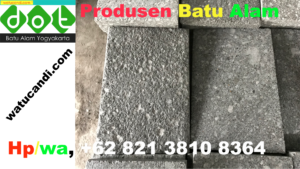
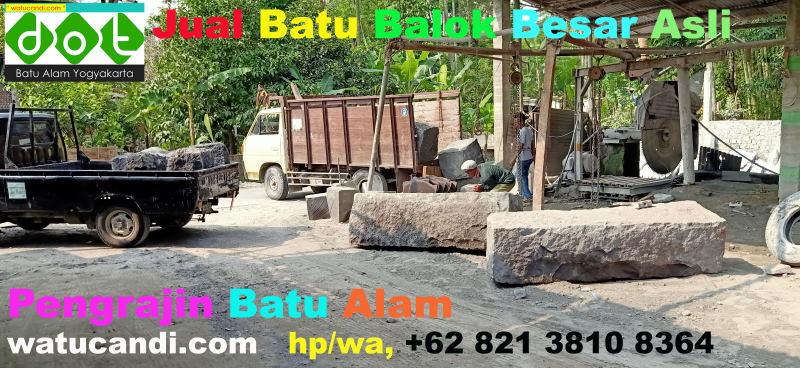
Before undergoing cutting or carving processes, large natural stones have a distinct primitive beauty. Their original surface shows traces of ancient volcanic eruptions, with mineral layers exposed naturally. For designers embracing “raw” or industrial rustic concepts, stones in this condition are often perfect enough to serve as a focal point without much human intervention.
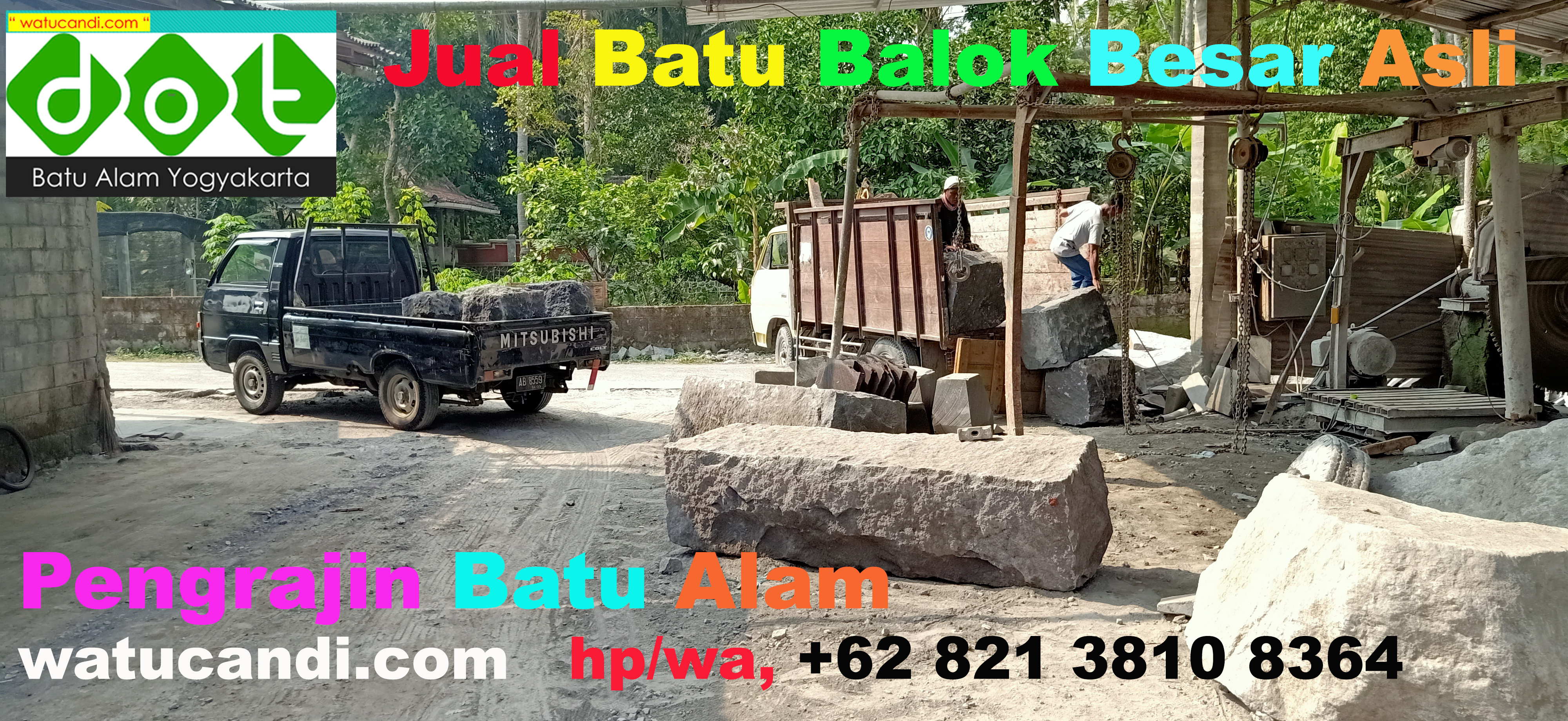
As seen in the image above, this stone block has massive dimensions that give a sturdy impression. The next process will determine whether this stone will be cut neatly for precision construction or left in its natural shape for a zen garden. If you are looking for materials with similar characteristics but in a smoother form for flooring, we also provide a premium natural stone flooring collection made from andesite and lava stone.
Application of Large Box Stones for Inscriptions and Monuments
One of the noblest applications of large stones is as a medium for inscriptions or monuments. The hardness of Merapi volcanic stone ensures that carved text, logos, or reliefs will last for decades or even centuries. The large surface area allows for spacious typographic expression, while the weight of the stone provides an aura of authority and eternity suitable for educational institutions, government buildings, or places of worship.
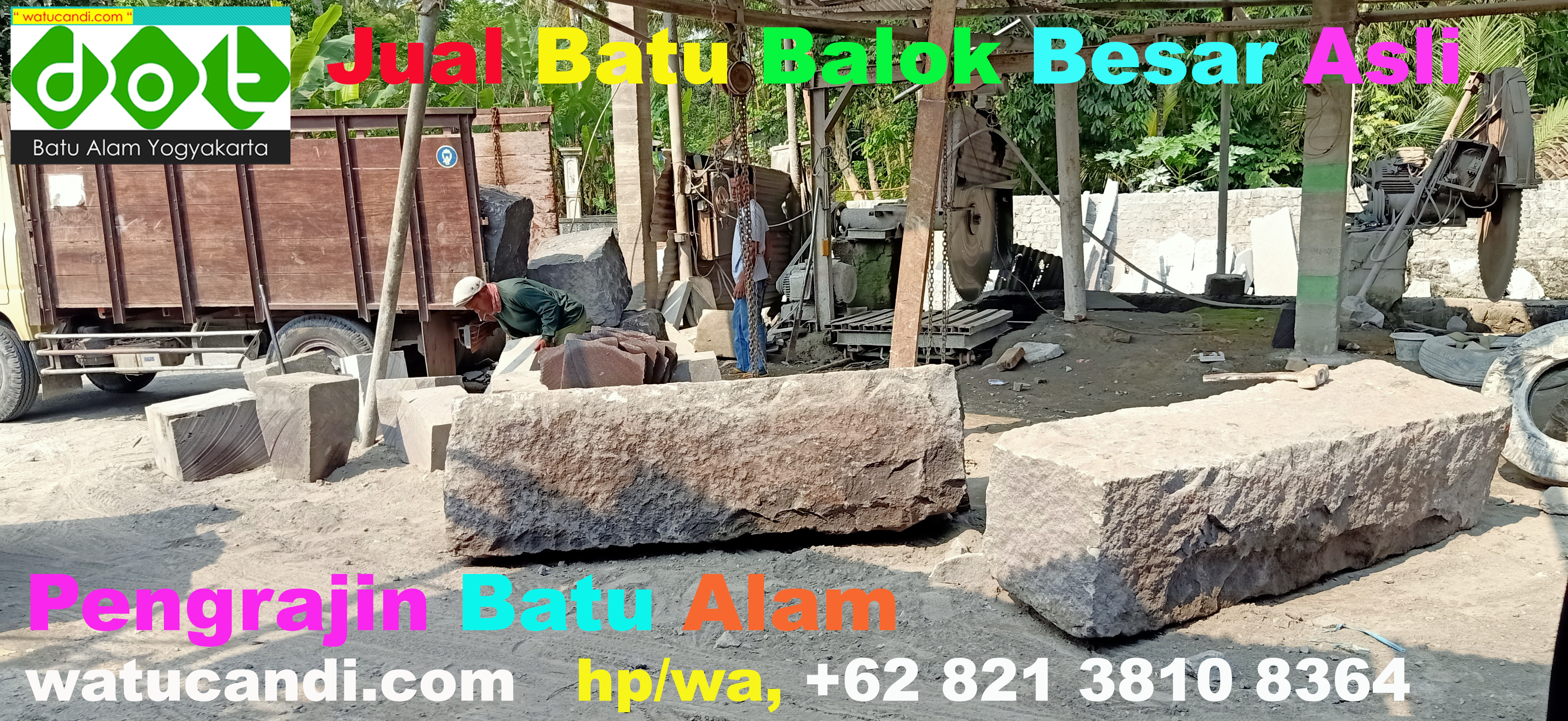
The image above shows how large box stones can become a blank canvas for sculptors. With a relatively flat surface that still retains a natural nuance, this stone is easy to integrate into various landscape styles. For inspiration on using stone on a monumental scale, you can see our guide on large garden ornamental stones which discusses the philosophy of placing giant stones in landscape design.
Construction Process and Craftsmanship by Expert Artisans
Transforming giant stone boulders into functional architectural elements requires special skills. Not all stones can be cut arbitrarily; the grain direction and weak points of the stone must be understood to prevent cracking during the cutting process. Our artisans use a combination of heavy equipment for initial cutting and hand tools for detailed finishing, ensuring every corner of the stone is precise yet structurally safe.

As shown in the work process photo above, precision is key. These stones are often requested to have specific dimensions, for example 50x180x50 cm, for retaining walls or gate pillars. The cutting and finishing techniques applied here are similar to the high standards we use to create authentic hand-chiseled stone floors, where every tool mark has an aesthetic and functional purpose.
The Beauty of Authentic Merapi Stone Skin (Natural Skin)
“Stone skin” refers to the outermost layer of stone formed due to direct contact with volcanic heat and pressure, as well as natural erosion over thousands of years. This layer has a very unique, rough texture and is darker or more contrasting in color compared to the inner part of the stone. Many interior designers love this stone skin because it provides a “rustic” texture that cannot be replicated by machines.

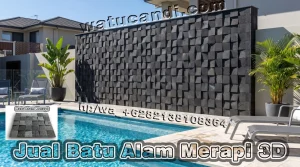
Observe the texture details in the image above. The unevenness of the surface creates dramatic plays of light and shadow when hit by sunlight. Applications of stone skin like this are very popular for random lava candi stone skin wall cladding, where the goal is to create the impression of an old, historical wall that blends with nature.
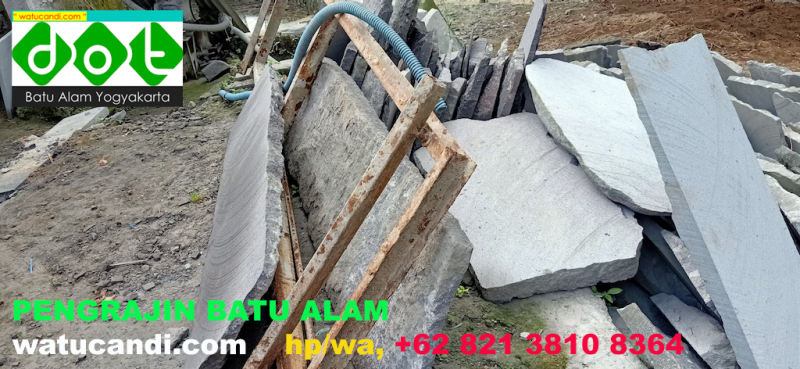
This image shows how pieces of stone skin can be arranged into a cohesive wall panel. Although derived from broken large stones, proper arrangement can create a harmonious pattern. This is a more economical yet aesthetic alternative to using whole stones, while still maintaining strong volcanic character.
Mass Production of Black Candi Stone Skin
For large-scale projects such as resorts, hotels, or housing complexes, stock availability is key. We produce black candi stone skin in large quantities while maintaining quality consistency. “Skin” here means stone taken from the edge of a large block, so one side is flat (machine-cut result) and the other side is rough (original skin).

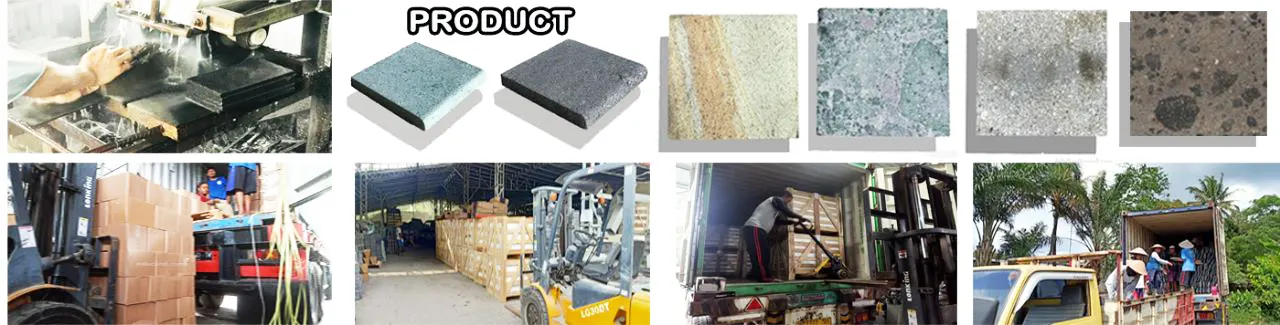
As seen in our production area, piles of ready-to-ship stone skin show our capacity to meet high-volume demands. These stones are ideal for boundary fences or outer walls that require a solid yet artistic appearance. If you are interested in darker and richer color variations, we also have a complete guide on black lava stone tile walls discussing the advantages of dark volcanic material.
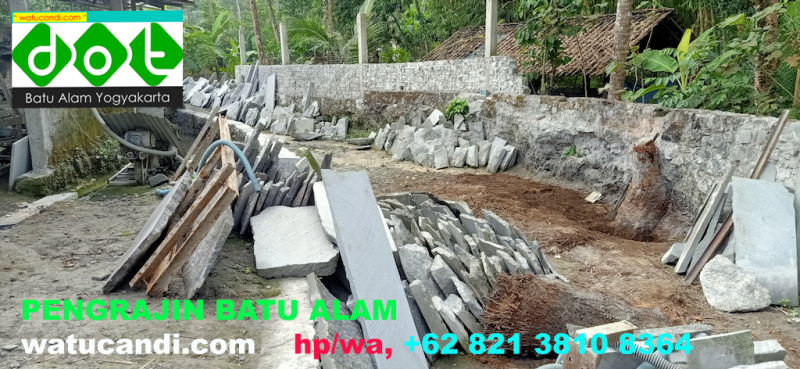
The detail in this image clarifies the texture difference between the machine-cut side and the natural skin side. Architects often utilize this contrast to create a “layered” visual effect on walls, providing visual depth not possessed by ordinary plaster walls.
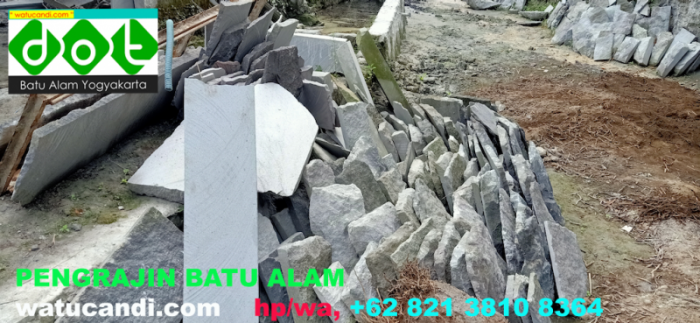
Stock availability is a guarantee for the smoothness of your project. Our warehouse always stores various sizes of stone skin, from small ones for accents to large ones for main structures. This ensures that delivery lead times can be minimized, which is very important for projects with tight deadlines.
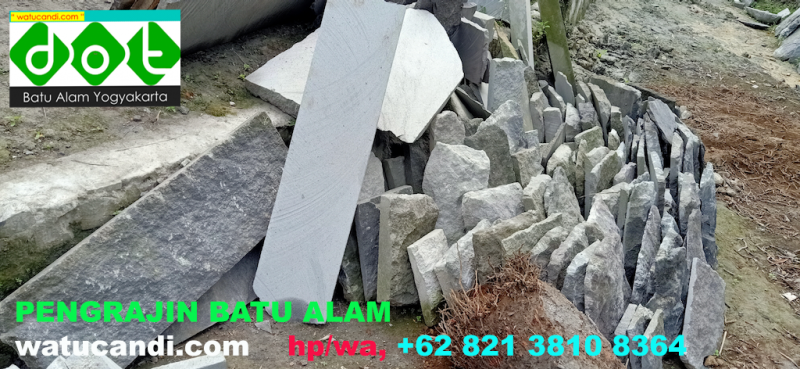
Not all designs require straight lines. Stones with irregular shapes like the one above are highly sought after for Japanese-style gardens or tropical gardens that want to avoid a rigid impression. Placing these stones requires good landscape arrangement art. For tips on arranging irregular elements, you can read our article on irregular natural stone paving which has similar arrangement principles to ornamental stone placement.
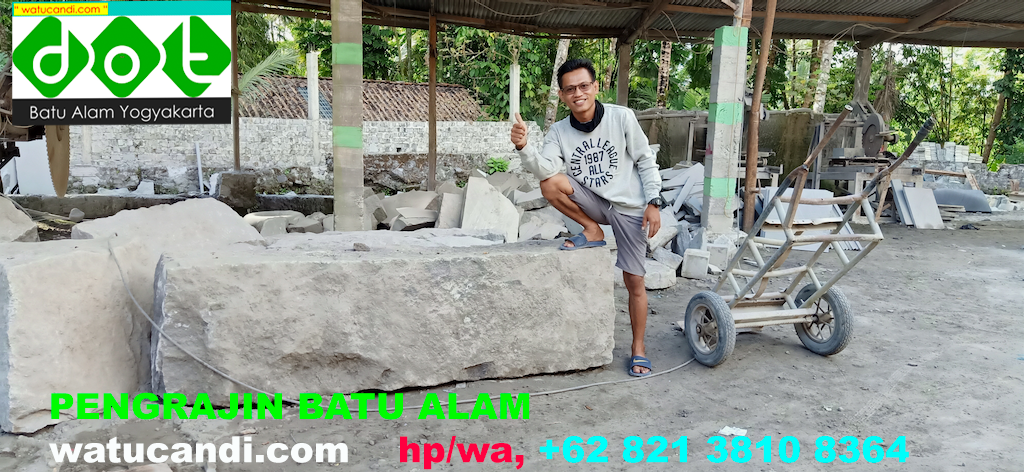
The last image displays a real implementation of our large stones. With dimensions of 50x180x50cm, this stone stands majestically as a single element in the garden. It functions as a calming visual anchor. Maintenance of such large stones is relatively easy, but choosing the right location is very important to maximize its visual impact. If you want to combine water elements with large stones like this, consider reading our black lava rock pebbles guide to create a contrasting and aesthetic base around the main stone.
Selling Large Stones from Around Mount Merapi
Large stones originating from around Mount Merapi are a perfect example of volcanic natural stone. Mount Merapi, located in Central Java and the Special Region of Yogyakarta, actively produces high-quality geological materials through eruption and lava cooling processes. Materials such as lava, pyroclastics, and pumice undergo slow cooling processes that form dense and hard crystal structures.
The main characteristic of Merapi stone is its high density, making it resistant to extreme weather, heavy loads, and erosion. This is why stone from this region becomes the primary choice for long-term construction. To understand more about the technical specifications of this volcanic stone, you can refer to the complete guide to Merapi black lava candi stone which covers technical details and architectural applications.
Applications in Building Construction
Large-sized volcanic stones are often used as main structural components, such as retaining walls, fence foundations, or gate pillars. Their strength is capable of withstanding lateral soil pressure and vertical loads very well, making them an engineering solution that is also aesthetic.
Paving and Exterior Flooring
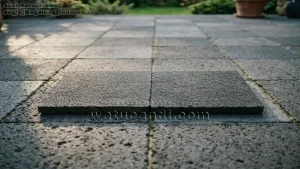
Although known as wall stone, large stones can also be cut into thick slabs for paving areas with heavy traffic, such as driveways or park parking areas. Their natural texture provides excellent grip, reducing the risk of slipping during rain.
Landscape and Garden Decoration
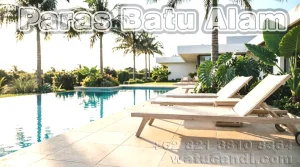
In landscape design, large stones function as a visual “anchor”. They can be placed as waterfall features, pool boundaries, or simply as single display elements in the middle of a grassy expanse. Their presence provides scale and proportion that makes the garden feel more mature and established.
Medium for Sculpture and Carving Art
The hardness and fine grain of Merapi stone make it a favorite medium for sculptors. Many public art works and cultural ornaments in Java are made from this material due to its ability to hold fine carving details without breaking easily.
Water Filtration System
Cut remnants or stones with certain porosity are also used in pond and aquarium water filtration systems. The natural properties of the stone help balance water pH and become a place for good bacteria to attach, cleaning the water biologically.
Process of Making Inscriptions and Decorative Elements
Premium Raw Material Selection
The process begins with strict selection. Only stones free from hairline cracks and having uniform density are selected. Stones like granite or hard limestone are often chosen for inscriptions due to their resistance to chemical and physical weathering.
Cutting and Shaping Techniques
Using wire saw technology and large diameter grinders, the stone is shaped according to the initial design. Precision in this stage determines the ease of the subsequent carving stage. A millimeter error can impact the symmetry of writing or images.
Carving Art and Final Finishing
Expert artisans then carve text or motifs using manual chisels and router machines. After carving is complete, the stone surface is smoothed (honed) or left rough depending on demand. Final finishing often involves applying a protective coating to highlight the stone’s original color and protect it from stains.
Strategies for Placing Large Stones in Garden Design
Placing large-sized stones is an art in itself. Incorrect placement can make the garden feel cramped or unbalanced. Here is a strategic guide to maximizing the aesthetic potential of large stones:
Principles of Scale and Proportion
Ensure the stone size is proportional to the garden area. Giant stones in a tiny garden will dominate the space, while small stones in a vast area will look submerged. Use the rule of thirds to place stones so that the visual composition remains dynamic.
Creating a Focal Point
Use the largest stone as the main focal point. Place it in an area easily visible from the main viewpoint of the house or terrace. Avoid covering the stone with too dense plants if the goal is to showcase its texture.
Integration with Pedestrian Paths
Large stones can function as natural bridges or path boundaries. Arrange stones sequentially to guide the eyes and steps of visitors through the garden. Combining with lava rock stepping stones can create an interesting texture transition underfoot.
Visual Grouping
Do not be afraid to group several large stones together. An arrangement of three stones of different sizes (large, medium, small) is often considered the most stable and aesthetic composition in Eastern garden philosophy. This creates a natural visual hierarchy.
Function as Zone Boundaries
Use rows of large stones to separate functional zones, for example separating children’s play areas from swimming pool areas, or limiting flower bed sections. This provides space definition without completely blocking the view like high walls.
Harmony with Vegetation
Plant climbing plants or low shrubs in between or behind large stones. The contrast between the hardness of the stone and the softness of leaves creates a calming yin-yang balance. Plants also help hide the base of the stone which might be less aesthetic.
Safety and Accessibility Considerations
Ensure the stone is embedded stably and does not wobble easily. Avoid placing stones with sharp ends in children’s traffic areas. If the stone is used as seating, ensure the surface is flat enough and comfortable.
By understanding these characteristics, processes, and placement strategies, you can maximize your investment in our Selling Large Stones. Stone is not just material, but a natural heritage that will enrich your living space for generations. Explore more inspiration and related products at WatuCandi online store to find the perfect match for your natural stone project.
selling large stones, merapi natural stone, large inscription stone, garden ornamental stone, volcanic stone, authentic stone skin, random natural stone, large box natural stone, natural stone construction, stone garden decoration, jogja natural stone, yogyakarta natural stone, natural stone supplier, large natural stone price, exterior natural stone, interior natural stone, premium natural stone, export natural stone, high quality natural stone, natural natural stone, rustic natural stone, modern natural stone, minimalist natural stone, villa natural stone, resort natural stone,