


'%3E%3Cpath%20stroke='%23000'%20stroke-width='4'%20d='m-35-37-13%2020m5%203%2013-20m5%203-13%2020m63%2042%206-9m1-2%206-9m5%203-6%209m-1%202-6%209m5%203%206-9m1-2%206-9m-96%200%2013%2020m5-3-6-9m-1-2-6-9m5-3%2013%2020m63-42-6-9m-1-2-6-9m5-3%2013%2020m5-3-6-9m-1-2-6-9'/%3E%3Ccircle%20r='24'%20fill='%23cd2e3a'/%3E%3Cpath%20fill='%230047a0'%20d='M0%200a12%2012%200%201%201%2020%2013%2024%2024%200%201%201-40-26A12%2012%200%201%200%200%200'/%3E%3C/g%3E%3C/svg%3E)


'/%3E%3Cpath%20fill='%23b2b2b2'%20d='M241%20382q0%2016%2017%2026%2017%2011%2042%2011t42-11q16-11%2017-26V269H241'/%3E%3Cpath%20fill='%239f7e00'%20d='M241%20379q0%2014%208%2023%209%209%2021%209%2014%200%2021-9%209-9%209-23V269h-59'/%3E%3Cpath%20d='M241%20339v-70h59v110q0%2014-9%2023l-6%205v-68h-15v72q-8%200-14-4v-68zm59%2040c0%2022%2015%2032%2029%2032%2021%200%2030-18%2030-32v-40h-59'/%3E%3Cpath%20fill='%239f7e00'%20d='M266%20277v5h2v12h-3v-5h2v-5h-9v5h2v5h-4v9h3v18h-5v10h34v-10h-5v-18h3v-9h-4v-5h2v-5h-9v5h2v5h-3v-12h2v-5zm42%20101q0%2010%206%2017%206%206%2015%207%2010-1%2016-7%206-7%206-17v-29h-43'/%3E%3Ccircle%20fill='%230044ad'%20cx='329.5'%20cy='372'%20r='6'/%3E%3Cellipse%20fill='%230044ad'%20cx='300'%20cy='340'%20rx='16'%20ry='21'/%3E%3C/svg%3E)



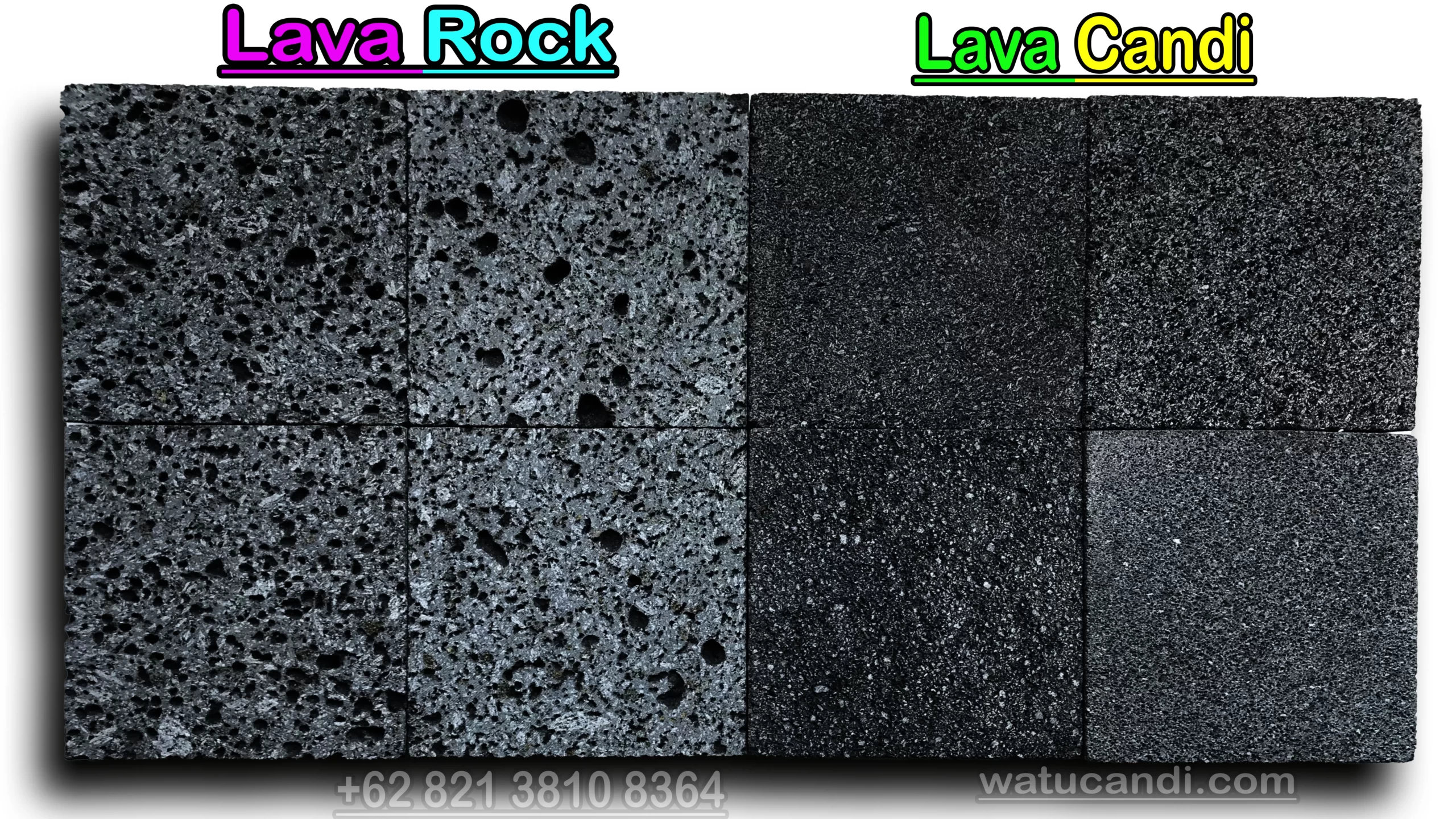
Discover the complete guide to lava vs candi natural stone. Learn the key differences between volcanic basalt and temple stone, including hardness, porosity, color, and best applications. Perfect for walls, floors, facades, and crafts. Get expert tips on selection, installation, and maintenance. Whether you need durable basalt for high-traffic areas or economical candi stone for decorative projects, this guide helps you choose the right material for your needs.
Getting to Know Lava & Candi Natural Stone on the Indonesian Market
Lava and candi natural stone are two types of natural rock formed from volcanic processes, yet they have very different characteristics. Although often mistaken for one another by the general public because both originate from volcanic eruptions, a detailed understanding of the two will help you choose the right material for construction, decoration, or craft projects. This article thoroughly explores the differences, similarities, uses, and tips for selecting lava and candi natural stone available on the Indonesian market.
Table of Contents
- Introduction to Lava & Candi Natural Stone
- Main Differences Between Lava Stone and Candi Stone
- Similarities Between Lava Stone and Candi Stone
- Getting to Know Lava Basalt Stone (Lava Stone)
- Getting to Know Candi Natural Stone (Lava Stone Temple)
- Similarities in Wall and Floor Applications
- Recommendations for Interior and Exterior Applications
- How to Choose the Right Lava or Candi Natural Stone
- Care and Maintenance
- Conclusion
Introduction to Lava & Candi Natural Stone
The Indonesian natural material market offers two volcanic stone prima donnas: Lava Stone (Basalt) and Candi Stone (Lava Stone Temple). Both are often called “lahar stone” because they are both products of volcanic eruptions. However, their physical properties, hardness, porosity, colour, and workability are very different. Understanding the differences and similarities between lava and candi natural stone will help you avoid application mistakes, maximise aesthetics, and ensure the durability of your building.
Lava basalt stone is known as an extrusive igneous rock that is dense, hard, and has irregular pores. Meanwhile, candi stone is characterised by being softer, having larger pores, and is often used as a raw material for crafts such as statues, reliefs, and even mortars. The popularity of both stones continues to rise along with the trend for natural and industrial designs that emphasise natural textures.
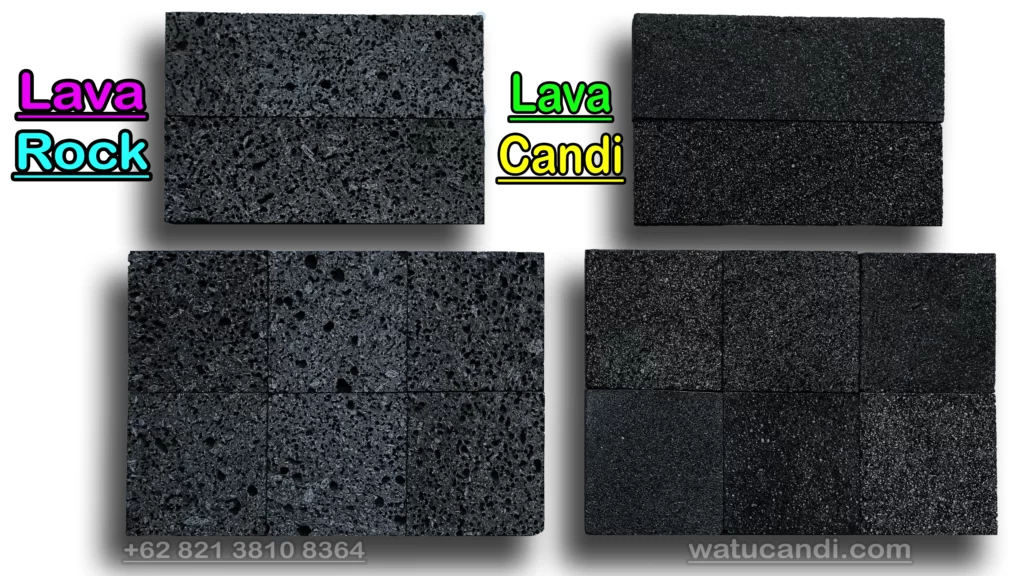
Main Differences Between Lava Stone and Candi Stone
Despite being formed from volcanic processes, lava stone and candi stone have significant differences that influence their use. Here are the details:
| Aspect | Lava Basalt Stone | Candi Stone (Lava Stone Temple) |
|---|---|---|
| Source | Solidified lava flows from active volcanoes, especially from modern volcanic areas | Lahar deposits from Mount Merapi (Magelang, Sleman) that settled over a long time |
| Hardness | Hardness level 6-7 on the Mohs scale, equivalent to andesite and granite | Varies from soft (like lightweight concrete) to hard, but on average softer |
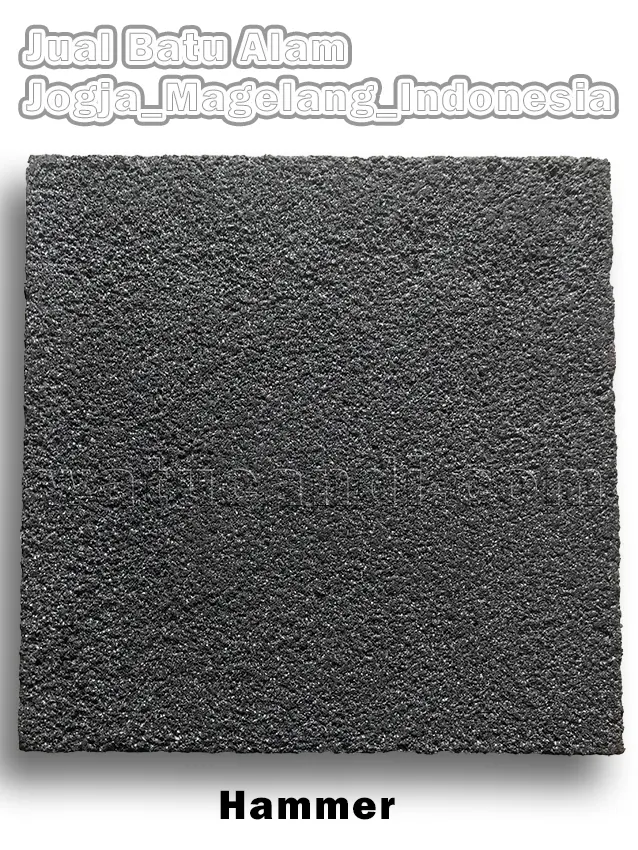
| Porosity | Small to large irregular pores, but tends to be dense | Large and coarse pores, some parts very hollow |
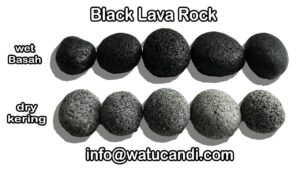
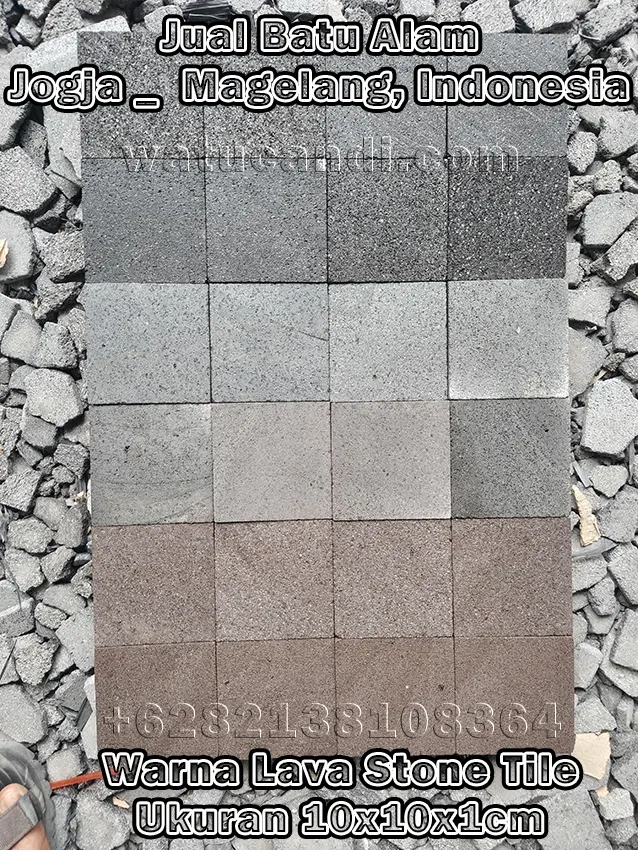
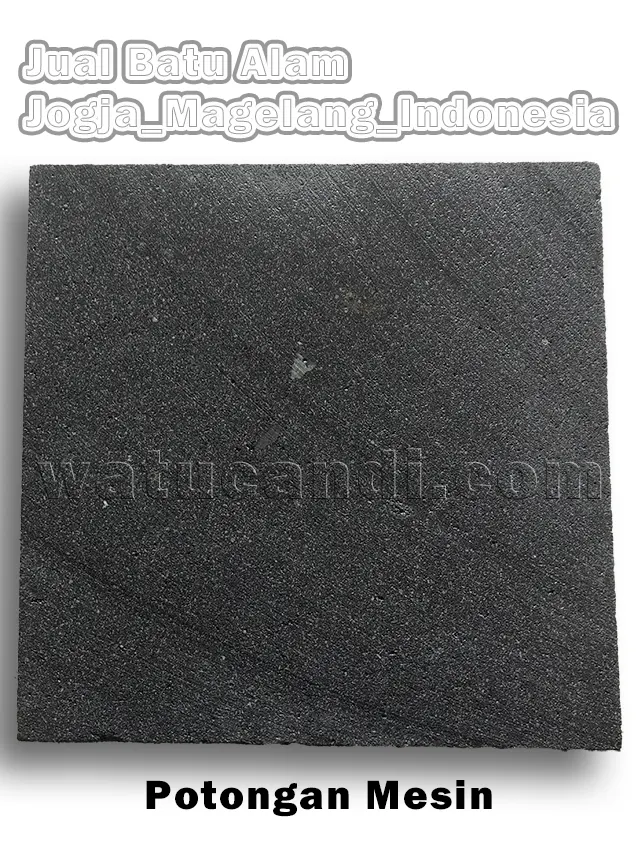
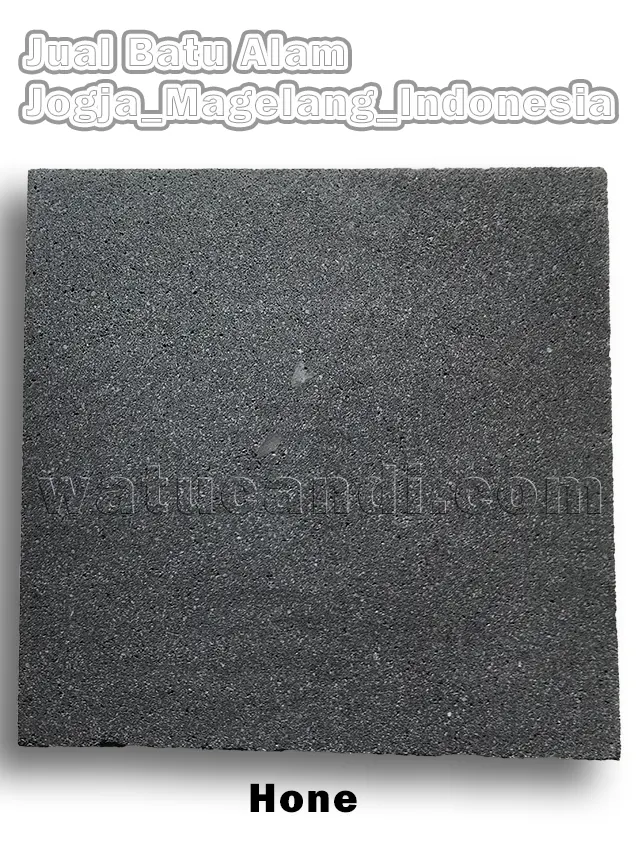
| Dominant Colour | Jet black, dark grey, sometimes reddish or brown with mineral specks | Black, grey, brownish, to brick red |
| Workability | Difficult to work manually, requires special tools | Easy to carve, cut, and shape, especially the soft type |
| Price | Relatively more expensive due to limited quarry locations | More affordable, abundant raw material |
These differences make lava basalt stone more ideal for structural applications and high-traffic areas, while candi stone is more suitable for decorative elements and handicrafts.
Similarities Between Lava Stone and Candi Stone
Apart from their differences, the two stones share several fundamental similarities:
- Volcanic Origin: Both are products of volcanic eruptions, whether from direct lava flows (basalt) or lahar deposits (candi stone).
- Natural Material: Both are natural stones without synthetic chemical additives, safe for the environment.
- Unique Texture: Each slab has a pore pattern and colour that cannot be duplicated, providing exclusive aesthetic value.
- Weather Resistance: Resistant to extreme weather changes, not easily weathered, and can be used outdoors.
- Versatile Applications: Can be used as flooring, wall cladding, fences, garden elements, and craft media.
It is these similarities that often confuse people. However, by looking at physical samples directly, the differences in texture and hardness will be immediately apparent.
Getting to Know Lava Basalt Stone (Lava Stone)
Lava basalt stone is an igneous rock formed from volcanic lava that cooled rapidly on the earth’s surface. Due to relatively rapid cooling, the minerals did not have time to form large crystals, resulting in a fine but dense texture. Basalt belongs to the extrusive igneous rock group with a silica (SiO₂) content of less than 53%.
The main mineral composition of basalt includes Ca-plagioclase, pyroxene (augite), magnetite, and sometimes olivine. Its dark colour comes from the predominance of mafic minerals (rich in magnesium and iron). Petrographically, basalt can be classified into two subtypes:
1. Alkali Basalt
Contains phenocrysts of olivine, titanium-augite, plagioclase, iron oxides, and nepheline. Alkali basalt is silica-undersaturated, so the mineral nepheline is present as a characteristic marker. Its texture is often porous due to the high gas content during eruption.
2. Tholeiitic Basalt
Contains Ca-plagioclase, subcalcic augite, pigeonite (Ca-poor pyroxene), and intergranular glass. Tholeiitic basalt is silica-oversaturated, with an intergrowth structure of quartz-feldspar. This type is more massive and widely used as construction aggregate.
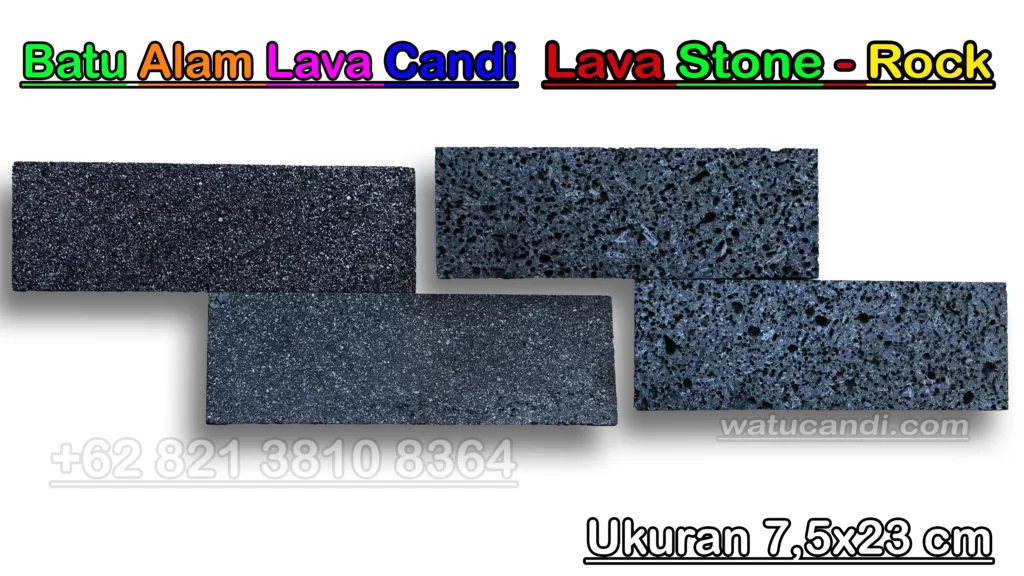
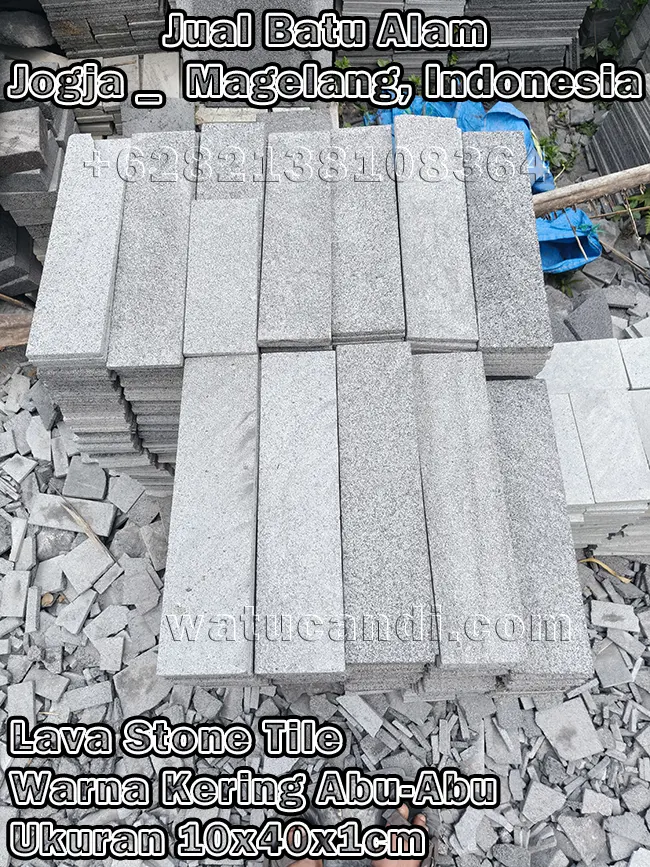
Lava basalt stone has high density even though it is porous, making it strong for load-bearing. Its resistance to abrasion, temperature changes, and chemicals makes it ideal for public area flooring, exterior walls, and fences. In Indonesia, basalt is found in several volcanic areas but not as abundantly as candi stone, so its price tends to be higher.
Getting to Know Candi Natural Stone (Lava Stone Temple)
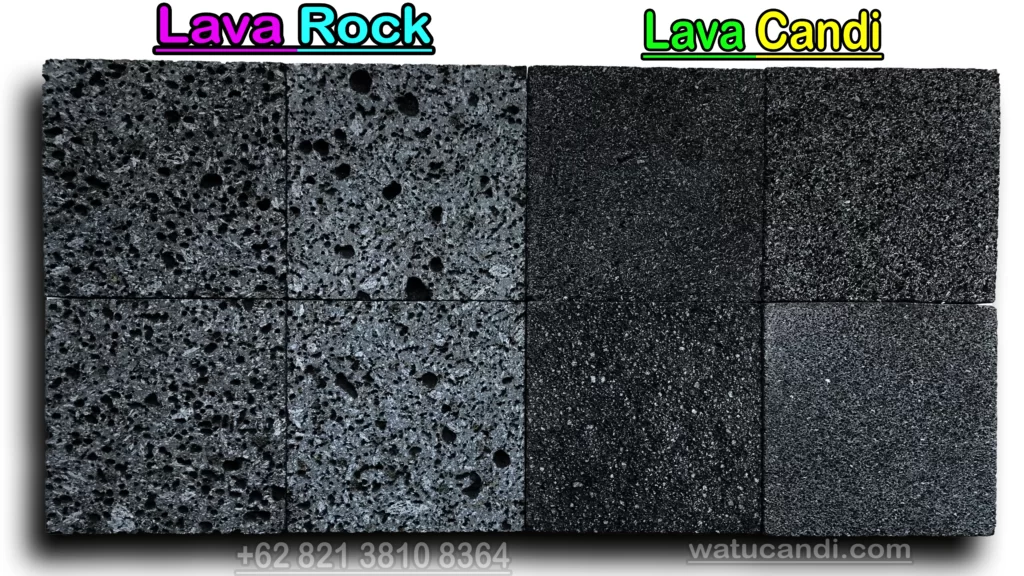
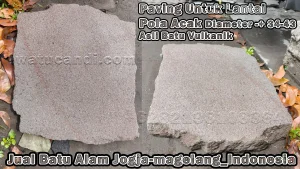
Candi stone is a type of natural stone originating from lahar deposits of Mount Merapi, especially in the Magelang, Central Java, and Sleman, Yogyakarta areas. This material is a mixture of volcanic material, sand, dust, and rocks ejected during eruptions, then deposited and petrified over hundreds to thousands of years.
Candi stone has a very wide range of characteristics. In one location, you can find very hard and dense stone, while just a few meters away in another location, the stone is soft resembling lightweight concrete. This variation is caused by differences in the original material composition, pressure, and natural cementation process.
During the Hindu-Buddhist kingdom era, candi stone was the main material for building magnificent temples such as Borobudur and Prambanan. Ancestors chose relatively soft candi stone so it could be easily carved into detailed narrative reliefs. To this day, candi stone remains a favourite for handicrafts: statues, effigies, mortars, pedestals, lanterns, stone mortars, and stone tables.
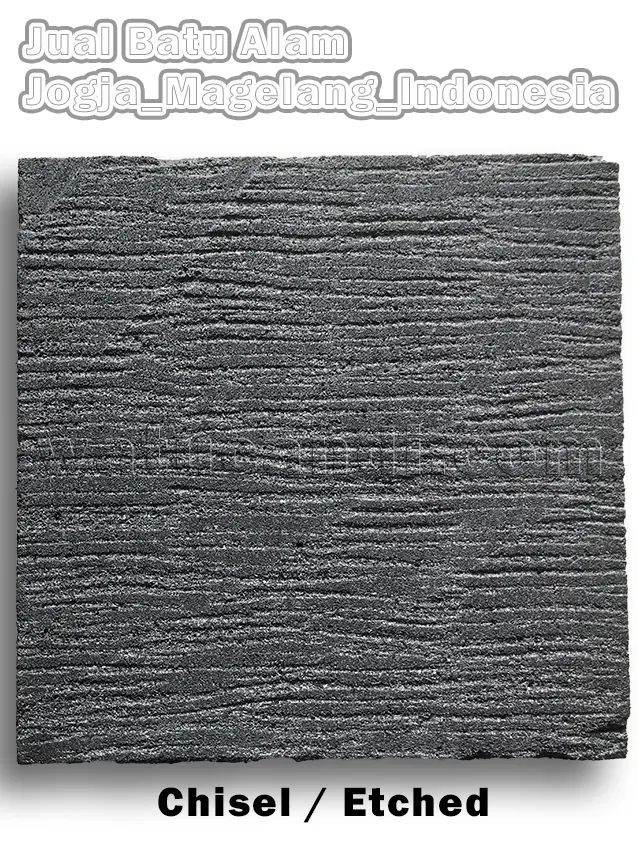
The colour of candi stone varies from black, grey, brownish, to brick red. Its large pores give it a rustic and natural feel. Because of its abundant availability, candi stone is much more affordable than lava basalt stone.
Similarities in Wall and Floor Applications
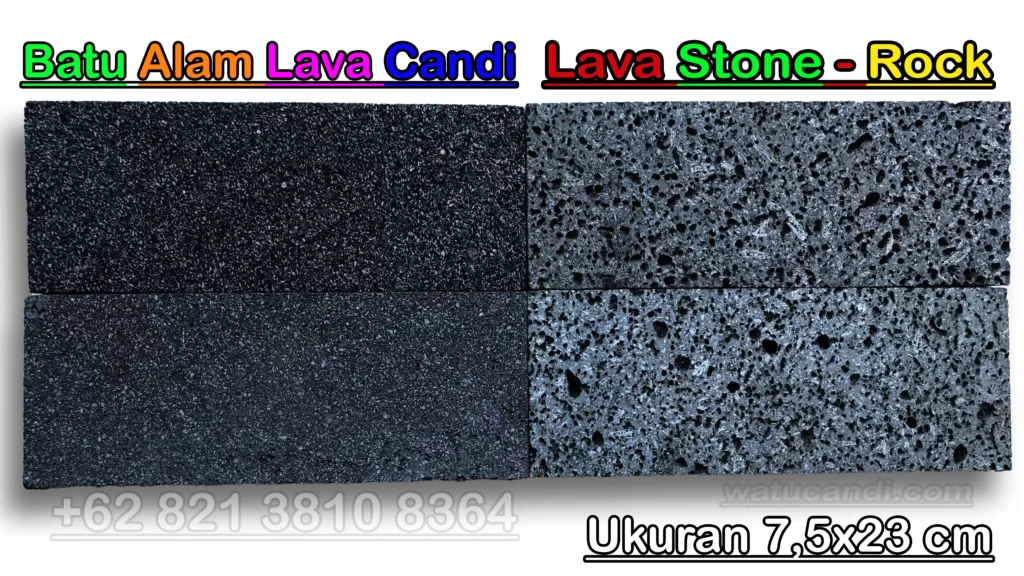
Despite their different characteristics, both lava basalt stone and candi stone can be applied as wall and floor cladding, both interior and exterior. Here are some similarities in their use:
- Natural Appearance: Both bring a natural feel and unique texture that cannot be imitated by artificial materials.
- Durability: The solid stone structure makes them resistant to impact, scratches, and extreme weather changes.
- Structural Strength: Able to be a sturdy covering layer, protecting walls or floors from moisture and abrasion.
- Design Flexibility: Suitable for various styles: traditional, minimalist, industrial, to modern contemporary.
- Colour and Texture Variety: Both types of stone come in a variety of shades, making it easier for designers to match the project theme.
- Easy Maintenance: Simply clean with water and a soft brush, without special chemicals.
However, it should be noted that lava basalt stone is superior in terms of hardness and water resistance. Meanwhile, candi stone is easier to cut and shape, giving more flexibility to the installation process.
Recommendations for Interior and Exterior Applications of Lava & Candi Natural Stone
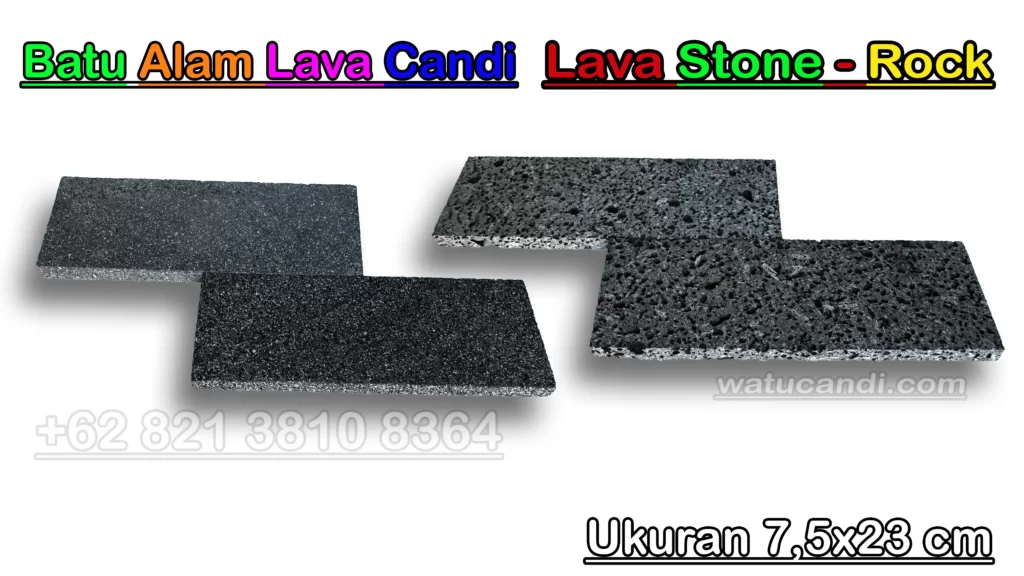
For Lava Basalt Stone
1. Interior Walls
Kitchen: backsplash or wall panel for a modern and heat-resistant look. Living room: wall accent with dramatic texture. Bathroom: moisture-proof shower wall.
2. Interior Floors
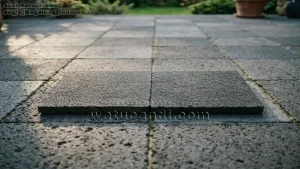
Living room, corridors, and commercial areas: elegant flooring, not slippery if the right finish is chosen. Bathroom: waterproof basalt floor provides safe footing.
3. Exterior Walls
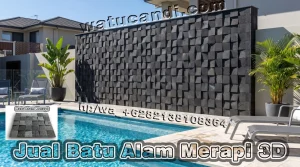
Garden, fence, or house facade: weather-resistant basalt stone, does not easily fade, and strengthens the building’s character.
4. Exterior Floors
Terrace, porch area, carport: basalt floor is not slippery when wet, and its colour does not quickly fade.
For Candi Natural Stone
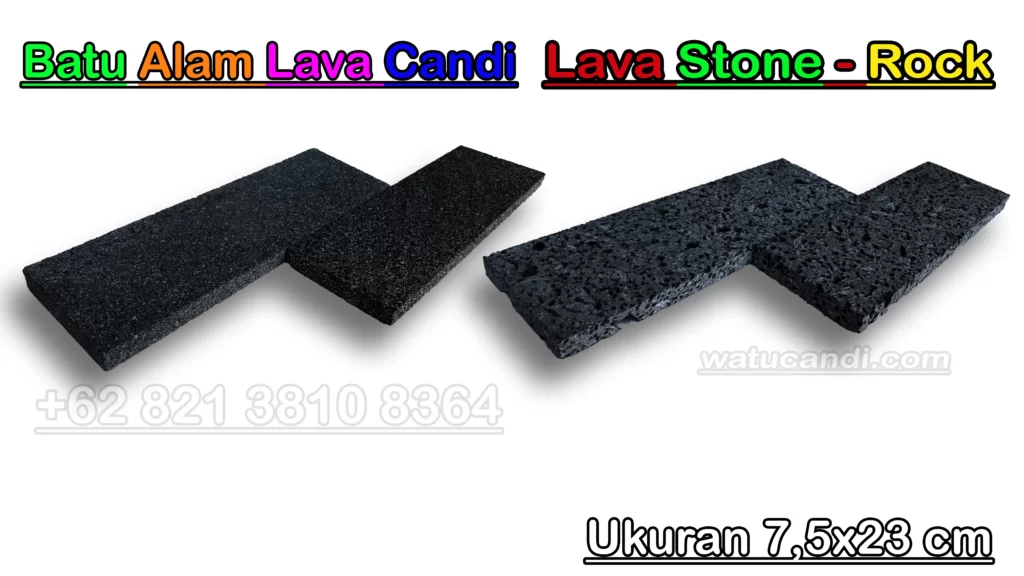
1. Interior Walls
Meditation room or place of worship: candi stone creates a calm and spiritual atmosphere. Dining room: warm and natural accent wall. Bedroom: gives a peaceful ethnic feel.
2. Interior Floors
Hall, meeting room, pavilion: candi stone floor gives a classic and artistic impression. Bedroom: floor that is cool underfoot.
3. Exterior Walls
House facade: exotic and timeless candi look. Fence or outer wall: sturdy and decorative at the same time.
4. Exterior Floors
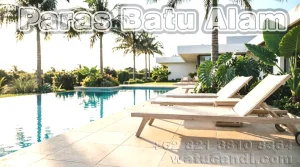
Swimming pool area, garden, walkways: porous texture prevents slipping, and the colour blends with nature.
How to Choose the Right Lava or Candi Natural Stone
Choosing between lava basalt stone and candi stone must consider several important factors:
- Purpose of Use: For high-traffic floors, choose basalt. For decorative walls or crafts, candi stone is more economical.
- Budget: Candi stone is much cheaper, suitable for large-scale projects with limited funds.
- Aesthetics: If you want jet black and a modern look, basalt is the answer. For a rustic and classic look, candi stone is more suitable.
- Availability: Candi stone is abundant on the market, while basalt may need to be ordered.
- Strength and Maintenance: Consider the level of humidity and potential impact. Basalt is stronger and waterproof; candi stone needs an additional coating if used in wet areas.
Do not hesitate to request physical samples and consult with natural stone experts before deciding.
Care and Maintenance of Lava & Candi Natural Stone
To maintain the beauty of the stone, perform the following maintenance:
- Clean dust and dirt regularly with a soft broom or vacuum cleaner.
- For stubborn stains, use warm water and a soft brush, avoid harsh detergents.
- Coat candi stone with a special natural stone sealer to reduce porosity and prevent stains.
- Lava basalt stone generally does not require a coating, but a sealer can enhance the colour.
- Check the grout and joints regularly, repair immediately if there is damage so water does not seep in.
With simple maintenance, natural lava stone and candi stone can last for decades without losing their charm.
Conclusion
Lava & Candi Natural Stone are two of Indonesia’s leading volcanic materials. Lava basalt stone offers strength, elegant black colour, and high durability, ideal for applications that prioritise durability. Candi stone offers ease of processing, economical price, and cultural value, suitable for decorative elements and crafts. By understanding the differences and similarities between the two, you can determine the best choice according to project needs, budget, and design taste.
Whatever your choice, make sure installation is carried out by professionals and use material from trusted suppliers for maximum results.
Tags: Lava & Candi Natural Stone, Lava Basalt Stone, Candi Stone, Lava Stone, Volcanic Natural Stone, Wall Material, Natural Stone Flooring, Stone Craft, Mount Merapi, Lahar Stone,
Home > Lava & Candi Natural Stone


2 thoughts on “Lava vs Candi Natural Stone: Complete Guide to Volcanic Basalt & Temple Stone Differences, Uses, and Selection Tips”