


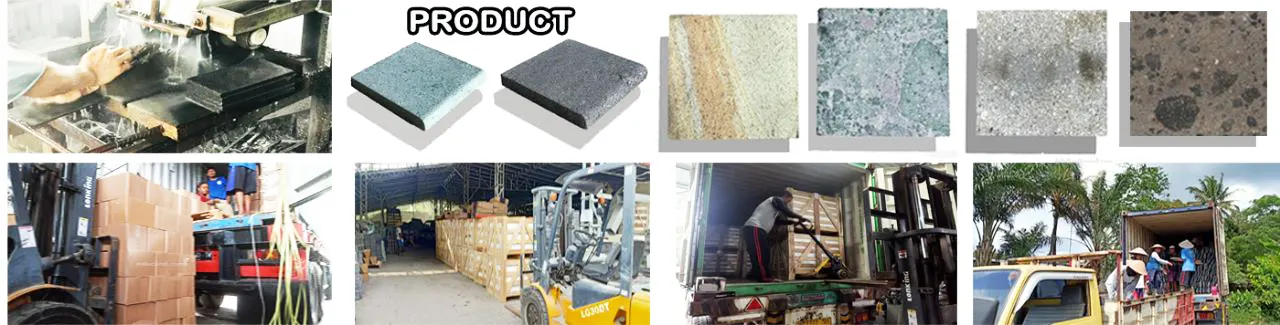
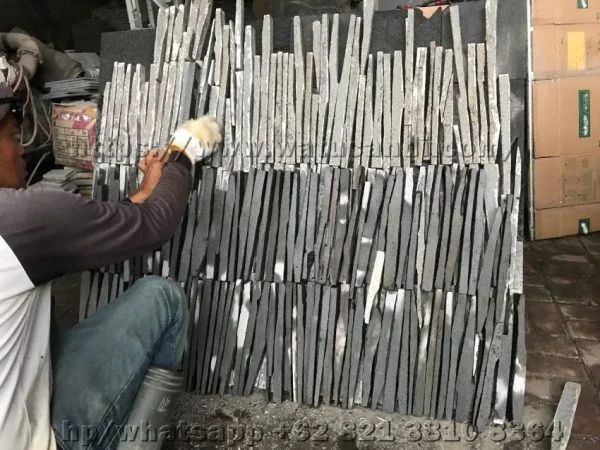
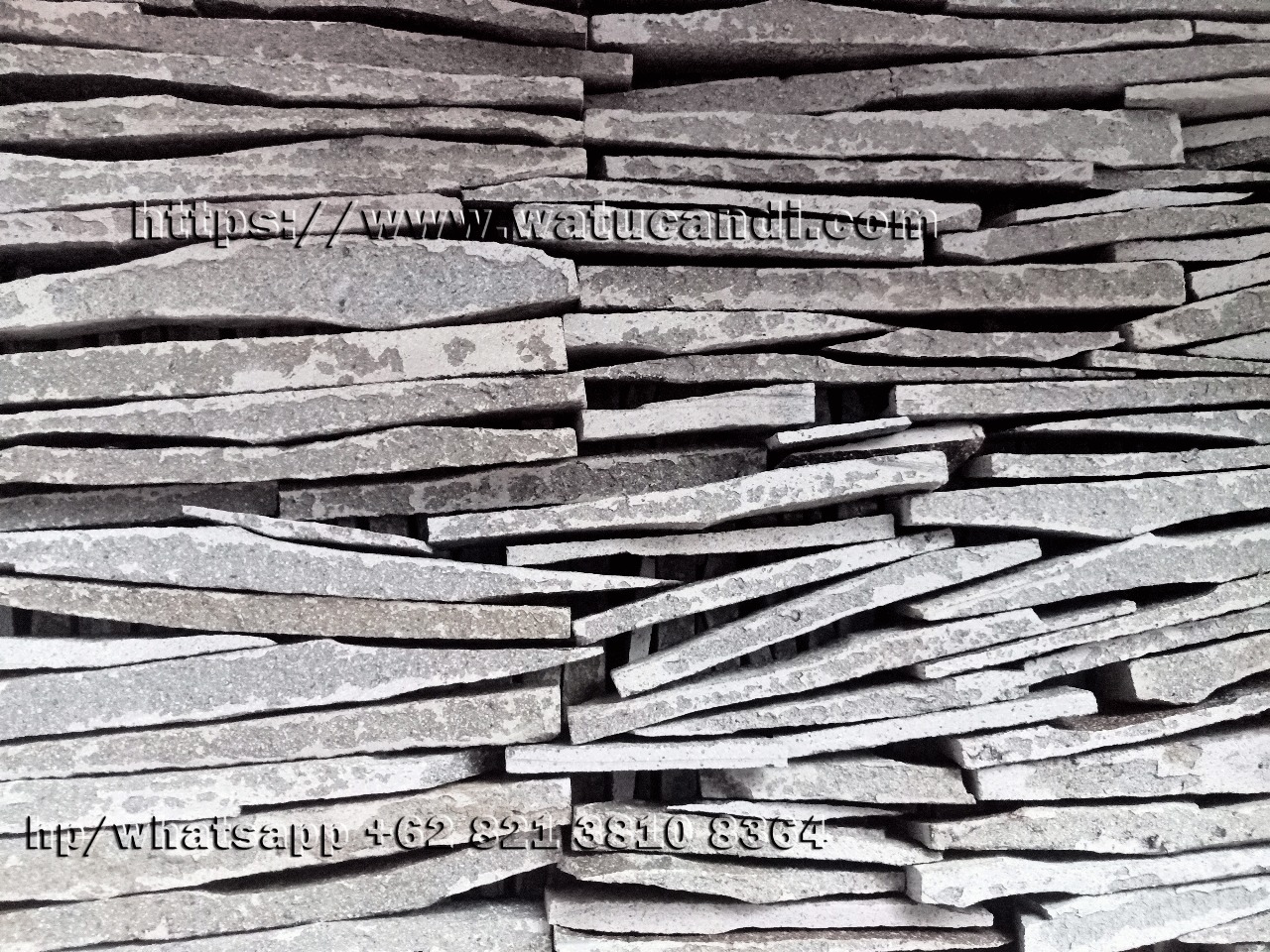
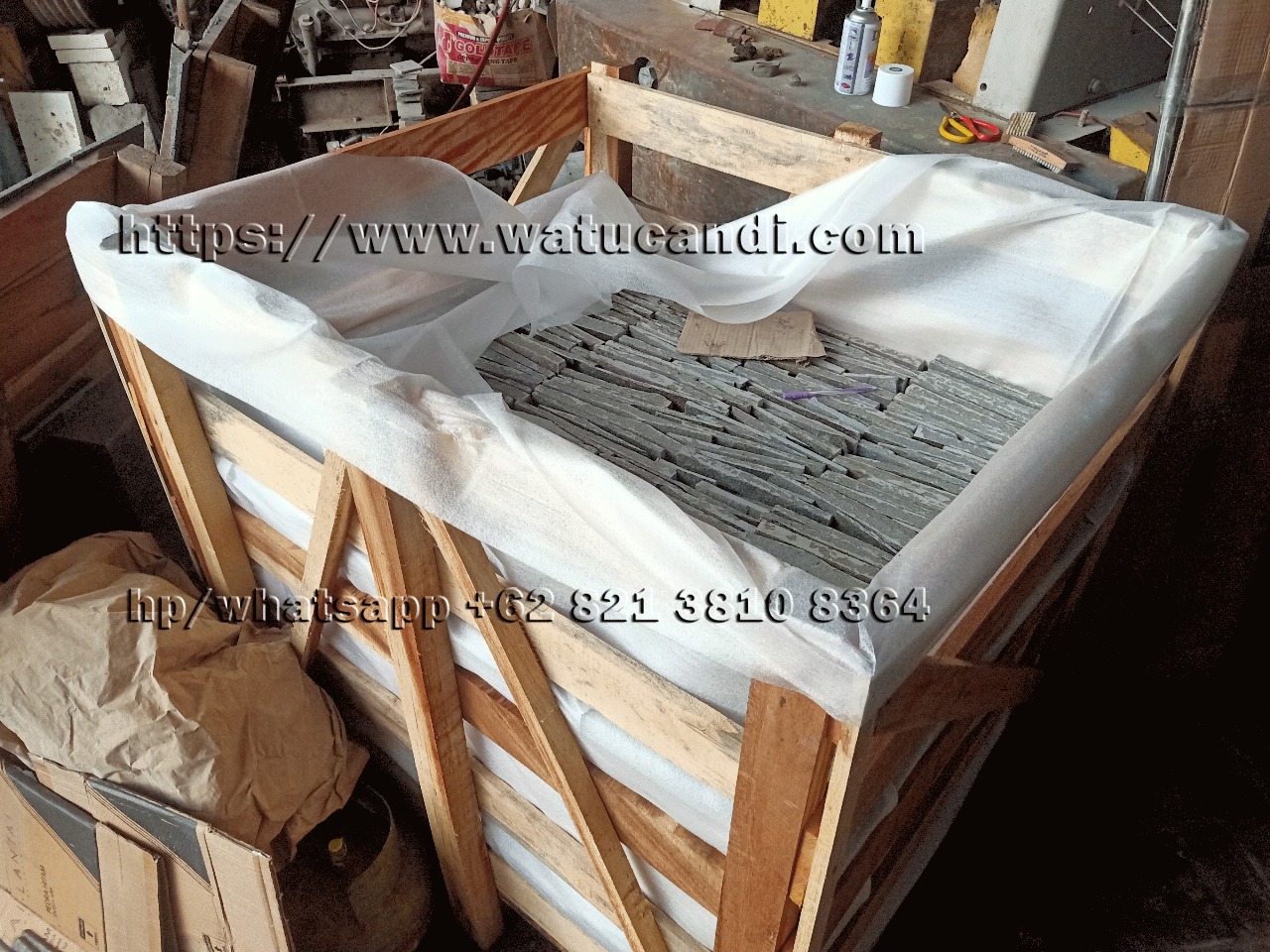
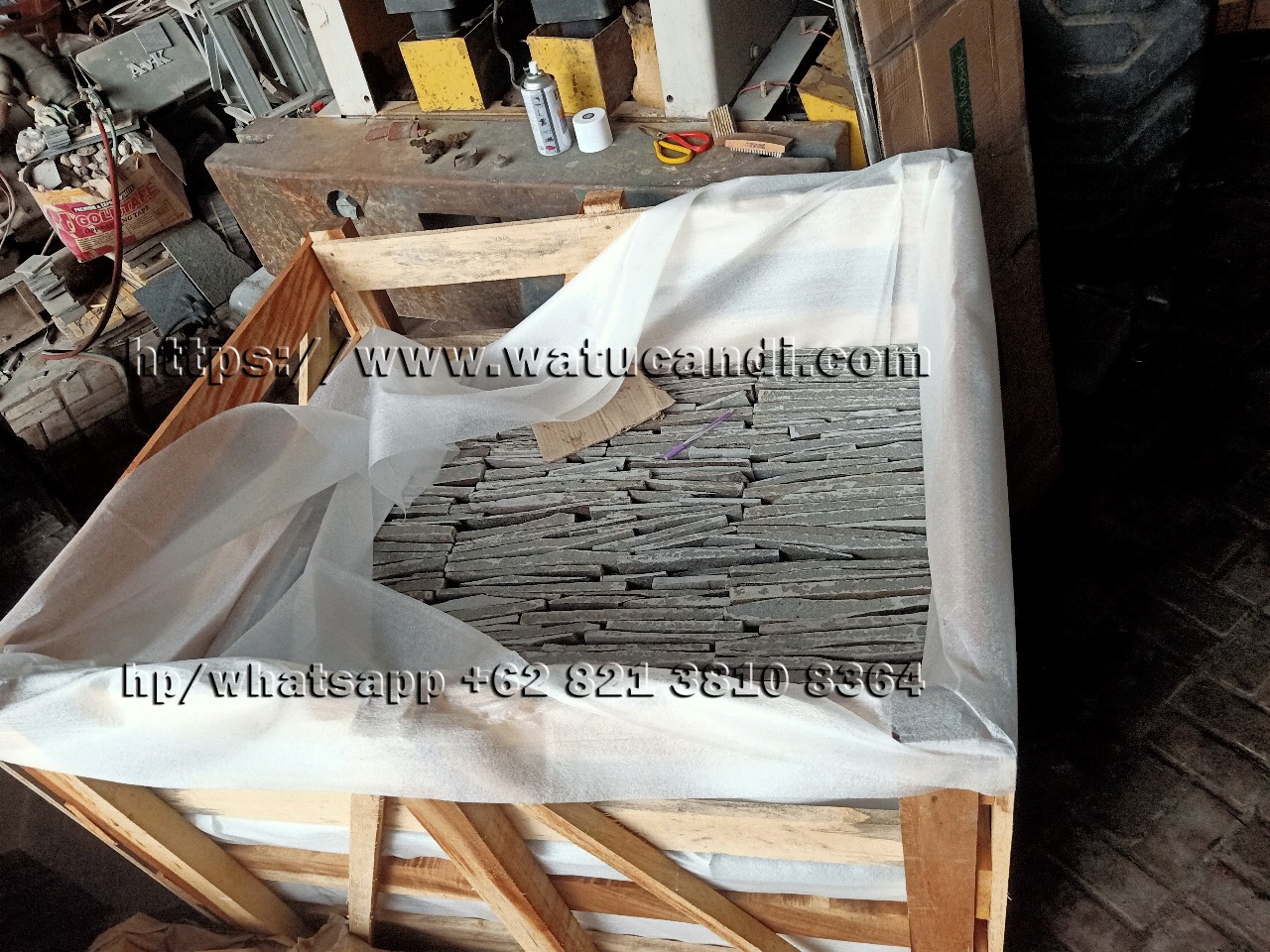
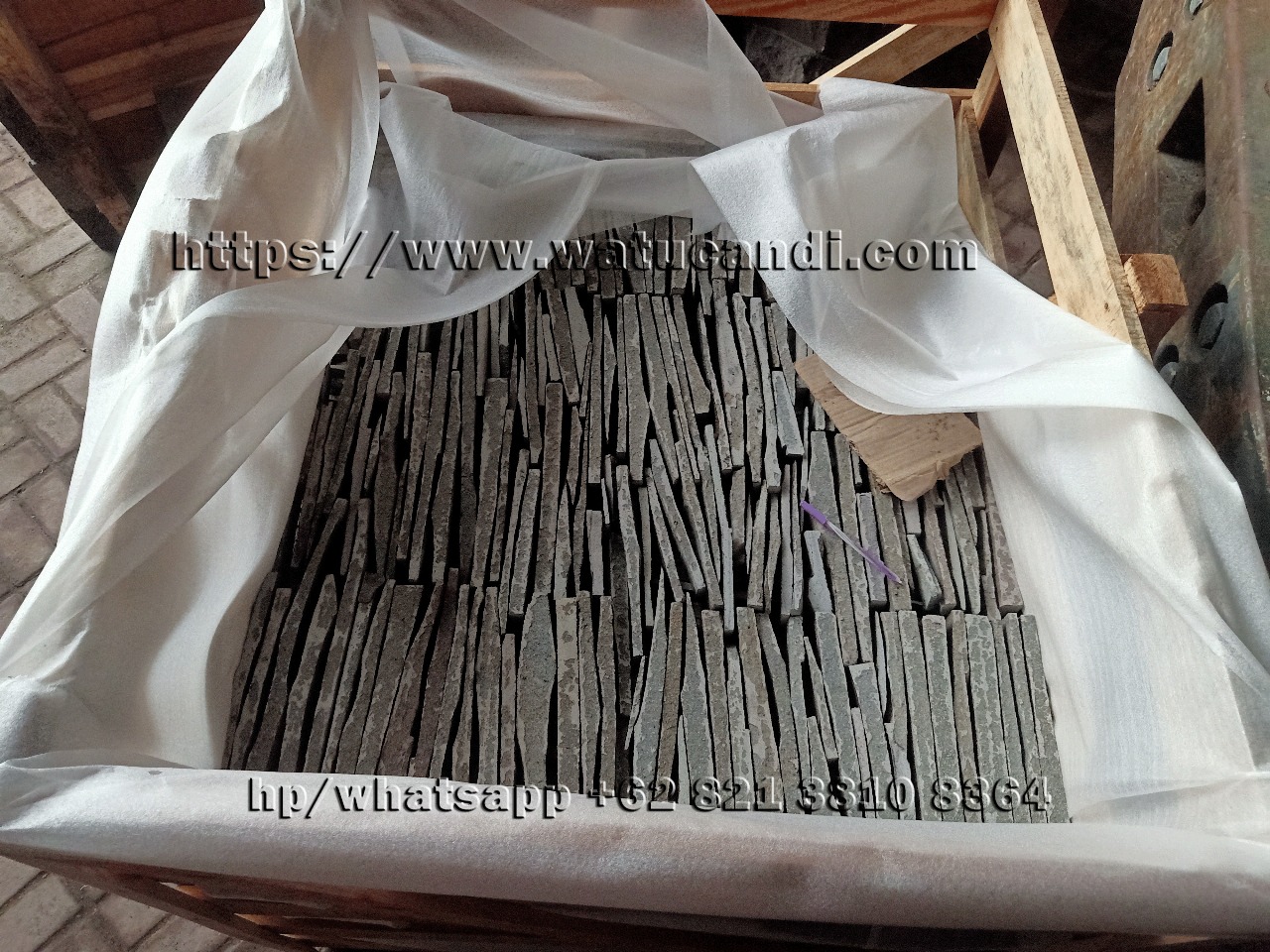
The natural beauty of genuine slate (batu serit) susun sirih slabs from nature. Rough cleft face, varied thickness, irregular lengths, creating a unique and aesthetic wall texture. Suitable for interior wall decoration, exterior facades, fences, pillars, and various architectural elements.
Table of Contents
- What Is Genuine Slate Batu Serit Susun Sirih?
- Origin and Formation Process of Slate
- Physical Characteristics of Susun Sirih Slate
- Dimensions, Thickness, and Slab Sizes
- Advantages of Genuine Susun Sirih Slate
- Applications and Installation Inspiration
- Proper Installation Method
- Long-Term Care and Protection
- Comparison with Other Wall Cladding Materials
- Price, Cost Factors, and Buying Tips
- Frequently Asked Questions (FAQ)
- Conclusion
1. What Is Genuine Slate Batu Serit Susun Sirih?
Genuine slate batu serit susun sirih is a natural stone slab formed over millions of years through geological processes. The term “batu serit” refers to slate (batu sabak), a stone that naturally splits along its foliation planes. “Susun sirih” describes the traditional installation technique where stone slabs are stacked in tiers resembling a betel leaf arrangement, creating an artistic and textured wall pattern.
These slabs are not factory-made products but are extracted directly from nature, utilizing the stone’s inherent cleavability. The rough and uneven face is the result of natural splitting, so each slab has a unique character that cannot be duplicated by synthetic materials. This authenticity makes Susun Sirih slate extremely valuable to architects, interior designers, and homeowners seeking a natural touch in their dwellings.
In the construction and decoration world, slate is also known as slat stone, slab stone, or split stone. However, “susun sirih” specifically describes the installation method and final wall appearance: a neatly stacked arrangement of thin slabs in horizontal or diagonal patterns, giving a lively and textured wall effect.
2. Origin and Formation Process of Slate
Slate belongs to the metamorphic rock group, formed from fine-grained sedimentary rocks such as shale or mudstone that have undergone low-grade metamorphism. This process takes millions of years under high pressure and temperature within the Earth’s crust, yet not enough to melt the rock. The result is a stone with excellent foliation (cleavage), allowing it to be split into thin slabs with relatively flat surfaces.
In Indonesia, slate is abundant in mountainous regions such as West Java, Central Java, Sumatra, Kalimantan, and Sulawesi. Quality slate-producing centers include Tasikmalaya, Banjarnegara, Kebumen, and Pacitan. Each area yields stone with slightly different color and texture characteristics, depending on mineral composition and local geological conditions.
Slate mining is traditionally carried out by local craftsmen. They exploit natural fissures in the rock to split it into slabs of desired thickness. This work demands skill and experience, as not all stone splits perfectly. The resulting slabs are then sorted by size, thickness, and surface quality before being ready for market.
3. Physical Characteristics of Susun Sirih Slate
Understanding the physical properties of slate is essential to appreciate its strengths and limitations. Here are the main features of genuine Susun Sirih slate:
3.1 Rich Natural Color Palette
Slate exhibits a wide range of natural colors. The most common hues are gray, greenish gray, bluish gray, brown, reddish, and black. These variations are influenced by minerals such as chlorite (green), hematite (red), carbon (black), and sericite (silvery). No two slabs are exactly identical, so every wall clad in slate will have a unique, organic appearance.
3.2 Rough Natural Cleft Surface
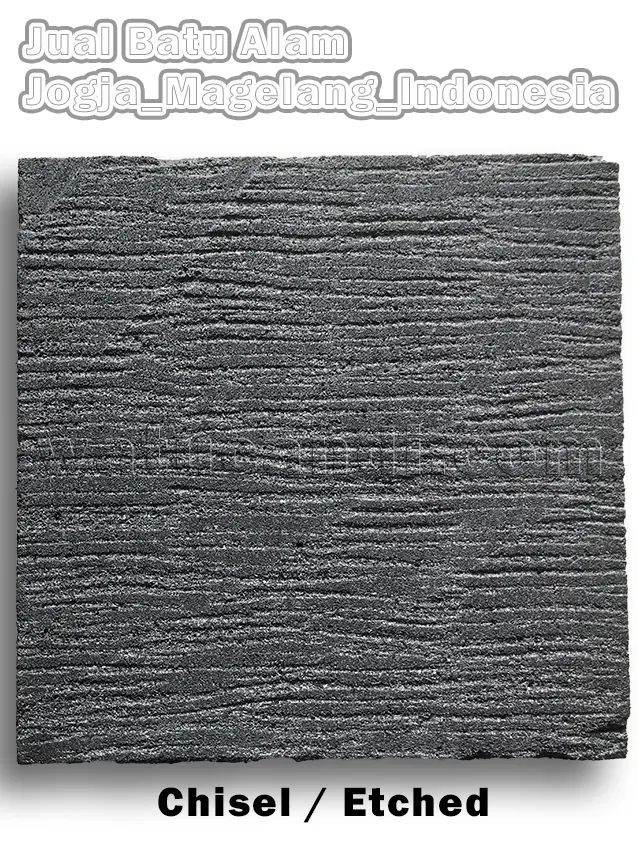
The hallmark of Susun Sirih slate is its rough and uneven surface. This surface is naturally formed when the stone is split along its foliation planes. The coarse texture provides a highly natural look, rustic and earthy feel, and good grip. The rough face also creates attractive shadow effects when illuminated by interior spotlights or sunlight on building facades.
3.3 Fissility (Easy Splitting)
Fissility is the ability of slate to split perfectly along its natural cleavage planes. This allows the stone to be processed into thin slabs without complicated cutting. Slab thickness can range from very thin, about 2 mm, up to 45 mm, depending on application needs. This property also makes slate relatively lightweight compared to other natural stones, facilitating transport and installation.
3.4 High Durability
Despite being thin, slate possesses good mechanical strength. It withstands extreme weather, does not easily weather, and is unreactive to temperature changes. Its low water absorption (low porosity) makes it an excellent choice for exterior applications in high rainfall areas. With proper maintenance, a Susun Sirih slate wall can last for decades without significant changes.
4. Dimensions, Thickness, and Slab Sizes
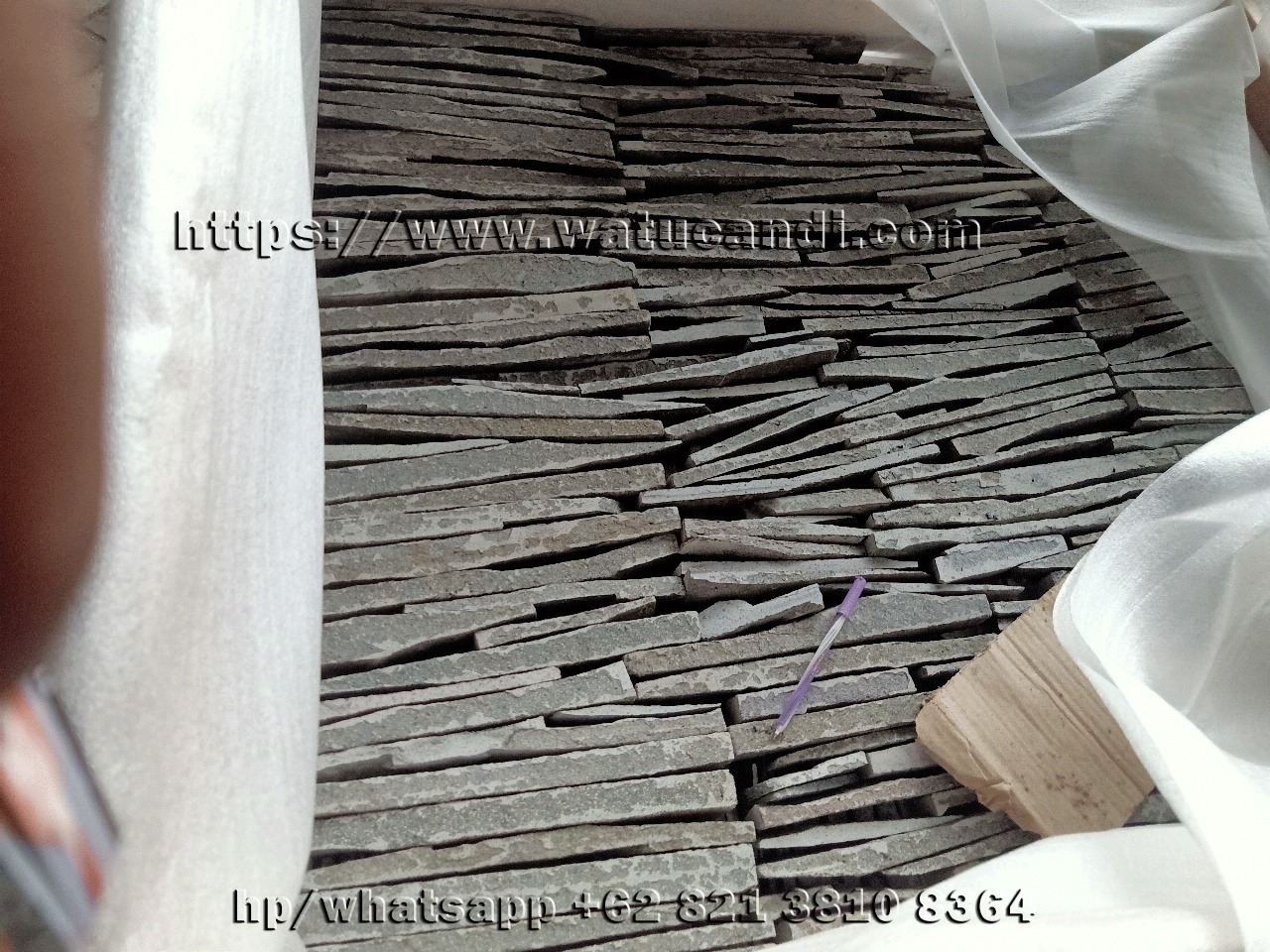
One unique aspect of Susun Sirih slate is its non-uniform dimensions. As it is taken directly from nature without precision cutting, each slab varies in length and width. Here are typical market specifications:
| Parameter | Specification |
|---|---|
| Slab length | ±15 cm to 25 cm (irregular) |
| Slab width | ±3 cm to 15 cm (follows natural cleavage) |
| Thickness | ±2 mm to 45 mm (varies) |
| Weight per m² (average) | ±25–45 kg (depending on thickness) |
| Slabs per m² | ±50–80 pieces (depending on stacking pattern) |
Varying thickness is part of Susun Sirih slate’s character. Thicker slabs give a solid, masculine impression, while thinner slabs create a lighter, dynamic look. For interior wall applications, a thickness of 2–15 mm is sufficient. For exterior facades requiring greater durability, a minimum thickness of 15 mm is recommended.
The irregular length of the slabs adds to their aesthetic value. The Susun Sirih pattern exploits this length variation to create a natural, non-monotonous wall composition. Installers arrange the slabs randomly yet harmoniously, much like assembling a giant puzzle on the wall.
5. Advantages of Genuine Susun Sirih Slate
Why is Susun Sirih slate a favorite choice for wall cladding? Here are its comprehensive advantages:
5.1 Unmatched Natural Aesthetics
No synthetic material can replicate the natural beauty of Susun Sirih slate. The rough cleft surface, organic color variations, and non-uniform dimensions create a lively, soulful wall texture. Each wall clad in this stone becomes a work of art, as no two walls will ever be identical. This uniqueness is highly valued in design, particularly for creating focal points or accents.
5.2 Environmentally Friendly
Slate is a completely natural material. Its quarrying requires no chemicals, and processing is limited to manual splitting without firing or synthetic coating. Waste is minimal; even small chips can be reused as mosaic material or pathway covers. The carbon footprint of slate production is far lower than that of manufactured wall materials like ceramic or composite panels.
5.3 High Design Flexibility
Susun Sirih slate can be applied to almost any architectural style. For traditional or ethnic concepts, it blends perfectly with wood and bamboo elements. In modern industrial design, the contrast between rough stone walls and steel and glass furniture creates an appealing harmony. Even for Scandinavian minimalist or Japandi styles, slate can serve as an accent providing organic warmth without appearing excessive.
5.4 Relatively Easy Installation
Compared to other heavy natural stones requiring special structures, Susun Sirih slate is relatively easy to install. Its light weight per slab allows direct installation onto plastered walls without additional reinforcement. The Susun Sirih installation technique is also quite simple: slabs are adhered one by one using mortar or special adhesive, stacked from bottom to top with slight overlapping or stepping. No special skills are required, though hiring experienced masons is recommended for the best results.
5.5 Low Maintenance
Once installed, a Susun Sirih slate wall requires almost no special maintenance. The rough surface naturally hides dust and light dirt. For cleaning, simply use a soft brush or low-pressure water spray. If desired, a natural stone sealer can be applied to enhance water and stain resistance, although slate already has naturally low porosity.
5.6 Long-Term Investment Value
Using genuine natural stone in a home is an investment that increases property value. A Susun Sirih slate wall conveys a luxurious, exclusive, high-quality impression that ordinary paint or wallpaper cannot provide. Potential buyers or tenants are more attracted to properties featuring unique, authentic natural elements.
6. Applications and Installation Inspiration
The flexibility of Susun Sirih slate allows it to be used in various areas, both interior and exterior. Here are some application ideas to inspire your project:
6.1 Living Room Accent Wall
One of the most popular applications is as an accent wall in the living room. Choose one wall—typically behind the sofa or television—to be fully clad with Susun Sirih slate. Add spot lighting from above or the side to highlight the stone surface texture. Combine with wood or marble flooring for an elegant contrast.
6.2 Building Facade
For exteriors, Susun Sirih slate can be applied to the entire building facade or only to certain parts such as entrance areas, pillars, or fascias. Natural stone walls on the facade give a solid, natural, and dignified impression. The dark gray or reddish-brown colors of slate pair beautifully with tropical gardens and wooden elements.
6.3 Fence and Gate Walls
Fences clad in Susun Sirih slate create an exclusive impression at first glance. The textured Susun Sirih pattern prevents the fence from looking monotonous and massive. For a more modern look, combine with hollow steel frames or wood panels on the upper part of the fence.
6.4 Bathroom Walls
Although often considered an exterior material, slate can also be applied in bathrooms, especially in areas not directly exposed to water, such as the wall behind the toilet or vanity. For wet areas like showers, ensure the stone is thoroughly coated with a waterproof sealer and installed with moisture-resistant adhesive and grout.
6.5 Kitchen Backsplash
The wall behind the stove or kitchen sink can be given a Susun Sirih slate touch to create a unique rustic accent. However, note that the backsplash area is prone to oil splashes and steam. It is advisable to apply a safe, easy-to-clean food-grade sealer and ensure the stone surface is not too rough to facilitate cleaning.
6.6 Pillars and Columns
Cladding pillars or columns with Susun Sirih slate is an effective way to transform ordinary structural elements into striking decorative features. Pillars on the terrace, carport, or even inside will appear more solid and full of character.
7. Proper Installation Method
Installing Susun Sirih slate requires precision for a neat and durable result. Here is a step-by-step guide:
7.1 Tools and Materials Preparation
- Susun Sirih slate slabs sorted by size
- Good quality natural stone mortar or adhesive (thinbed mortar)
- Clean water
- Bucket and mixer
- Trowel
- Spirit level and chalk line
- Rubber mallet
- Angle grinder with masonry blade (if cutting is required)
- Brush for cleaning dust
- Natural stone sealer (optional)
7.2 Wall Surface Preparation
The wall surface must be clean, dry, and even. If the wall has just been plastered, wait at least 7–14 days until it is completely dry. Remove any adhering dust, oil, or dirt. For very smooth walls, make light scratches using wire or a grinder so the mortar can adhere well. On previously painted walls, it is best to strip or sand the paint first.
7.3 Installation Process
- Start from the bottom: Set a horizontal chalk line as a guide for the first row. Begin from a corner or the bottom of the wall. Apply sufficient mortar to the back of the stone slab.
- Press onto the wall: Press the slab firmly enough that mortar slightly squeezes out from the sides. Tap gently with a rubber mallet to ensure an even position. Clean excess mortar with a brush or damp cloth before it dries.
- Stack gradually: Continue with the next slab, arranging from left to right, then move up to the next row. The Susun Sirih pattern can be created by leaving a gap between slabs (open joint) of about 1–3 cm, or by placing them tightly without gaps (dry stack). For a traditional look, leave a gap and fill it with contrasting mortar.
- Cut if necessary: For corners or narrow areas, cut the slabs using an angle grinder. Smooth the cut edges with a sharpening stone.
- Allow to set: Once the entire area is installed, leave it for 24–48 hours until the mortar is completely dry. Avoid touching or loading the wall during the drying process.
7.4 Finishing and Sealer Application
After the mortar is completely dry, clean the entire wall surface of mortar residue or dust using a soft brush or dry cloth. If desired, apply a natural stone sealer to provide extra protection against water and stains. Sealer can be applied with a brush, roller, or spray. Choose a water-based sealer for interior use and a solvent-based sealer with UV protection for exterior use. Repeat the sealing every 1–2 years to maintain optimal performance.
8. Long-Term Care and Protection
Susun Sirih slate walls are relatively easy to maintain. Here are maintenance tips to keep their beauty intact:
8.1 Routine Cleaning
- Use a soft-bristled brush or a vacuum cleaner with a brush attachment to remove dust from the stone surface.
- For exterior walls, spray with low to medium pressure water to remove accumulated dust and dirt. Avoid excessive pressure that could damage the stone surface.
- Do not use acidic or abrasive soaps or detergents, as they can damage the natural stone color.
8.2 Treating Stains and Moss
If oil or food stains appear, immediately clean them with an absorbent cloth and warm water. For stubborn stains, use a commercial natural stone cleaner. Moss growing on exterior walls can be removed with an eco-friendly anti-moss solution. After cleaning, rinse with clean water and allow to dry naturally.
8.3 Periodic Inspection
Check the wall condition every 6–12 months. Look for any slabs that are becoming loose, cracked, or detached. If minor damage is found, repair immediately with fresh mortar to prevent the damage from spreading. For exterior walls, ensure the drainage system around the wall functions properly so water does not pool and seep into the wall.
9. Comparison with Other Wall Cladding Materials
To provide a clearer picture, here is a comparison between Susun Sirih slate and some commonly used wall cladding materials:
| Aspect | Susun Sirih Slate | Wall Ceramic | Textured Paint / Wallpaper | Wood Panels |
|---|---|---|---|---|
| Material | Genuine natural stone | Fired clay | Synthetic / chemical | Processed wood |
| Uniqueness | No two pieces identical | Mass-produced, uniform | Repeating patterns | Natural grain, limited variation |
| Durability | Decades | 10–20 years | 3–7 years | 5–15 years (susceptible to termites) |
| Maintenance | Very low | Low | Moderate | High (needs refinishing) |
| Weight | Light–medium | Medium–heavy | Very light | Light–medium |
| Visual Impression | Natural, luxurious, organic | Modern, clean | Can imitate texture | Warm, natural |
| Price | Mid-range | Affordable | Cheap | Mid–high |
From the table above, it is clear that Susun Sirih slate offers a unique combination of authentic natural material, long-term durability, and very low maintenance. Although the initial price may be slightly higher than ceramic or paint, this investment is well worth the aesthetic value and longevity it provides.
10. Price, Cost Factors, and Buying Tips
The price of genuine Susun Sirih slate varies depending on several factors:
- Origin and stone quality: Stone from certain regions with rare colors and textures is typically priced higher.
- Average thickness: The thicker the slab, the higher the price per square meter.
- Purchase volume: Bulk purchases generally receive lower wholesale prices.
- Shipping costs: Project location far from the stone source will add transportation costs.
- Installation costs: If using mason services, installation costs are calculated separately per square meter.
As a general guideline, the market price of Susun Sirih slate ranges from approximately IDR 85,000 to IDR 185,000 per square meter for material only, depending on quality and thickness. This price does not include shipping and installation services. For budget-constrained projects, you can choose thinner slabs or buy directly from craftsmen in producing areas to get more competitive prices.
Tips for buying genuine Susun Sirih slate:
- Ensure you buy from reliable sellers providing genuine stone, not cast concrete imitations.
- Request samples or actual product photos before purchasing in bulk.
- Pay attention to the minimum thickness suitable for your application.
- Ask about the stone’s origin and quarrying process to confirm authenticity.
- Calculate needs carefully, adding approximately 10–15% for cutting and breakage reserve.
11. Frequently Asked Questions (FAQ)
Q: Is Susun Sirih slate suitable for all wall types?
A: Yes, it can be installed on brick, concrete, or plastered walls. Ensure the wall is strong and even. For gypsum or lightweight partition walls, additional reinforcement is required.
Q: Is this stone resistant to rain and sunlight?
A: Very resistant. Slate is a metamorphic rock with low porosity and high weather resistance. However, for maximum protection in exterior areas, it is advisable to use a waterproof and UV sealer.
Q: Can slate be repainted?
A: Technically possible, but highly discouraged as it will remove the natural beauty of the stone texture and color. If you wish to change the appearance, it is better to replace with new stone or use another wall covering.
Q: How long does Susun Sirih slate wall installation take?
A: Installation time depends on the area and pattern complexity. For a 10 m² area with two experienced masons, installation can be completed in 1–2 days.
Q: Is Susun Sirih slate safe for pool areas?
A: Yes, provided it is properly installed using waterproof adhesive and grout, and sealed periodically. The rough surface also provides good anti-slip grip.
12. Conclusion
Genuine Susun Sirih slate is the perfect choice for those seeking a wall cladding with natural character, strength, and aesthetics. The uniqueness of each slab, authentic rough surface texture, and ease of installation and maintenance make it a high-value investment for homes and commercial buildings alike. By understanding its characteristics, advantages, and proper care, your Susun Sirih slate wall will remain stunning for years to come.
Whether you are an architect, interior designer, contractor, or homeowner seeking inspiration, Susun Sirih slate deserves consideration as a design element that brings natural beauty into your living space. Choose quality genuine stone, install it with the correct technique, and enjoy its timeless natural charm.
genuine susun sirih slate, susun sirih stone, natural slate, stone wall slabs, interior stone wall, exterior stone wall, stone facade, genuine slate, stone slab cladding, natural stone slabs, affordable natural stone, stone wall decoration, rustic stone, minimalist stone, industrial stone, unique stone wall, rough stone texture, slate installation, susun sirih price, buy slate, natural stone fence, stone pillars, bathroom stone wall, kitchen backsplash stone, weatherproof stone, eco-friendly stone, Indonesian natural stone, sustainable stone, slate wall, organic stone, traditional stone, modern stone, elegant stone, investment stone, easy-care stone, durable stone, waterproof stone, non-slip stone, stone for homes, stone for villas, stone for hotels, stone for restaurants, stone for offices,

One thought on “Genuine Susun Sirih Slate – Natural Stone Slabs for Interior & Exterior Walls”