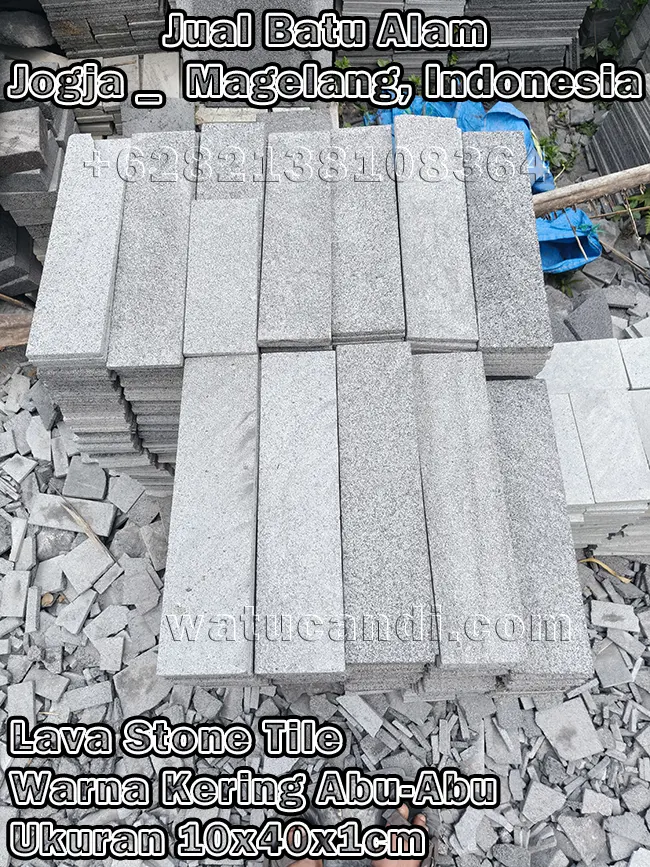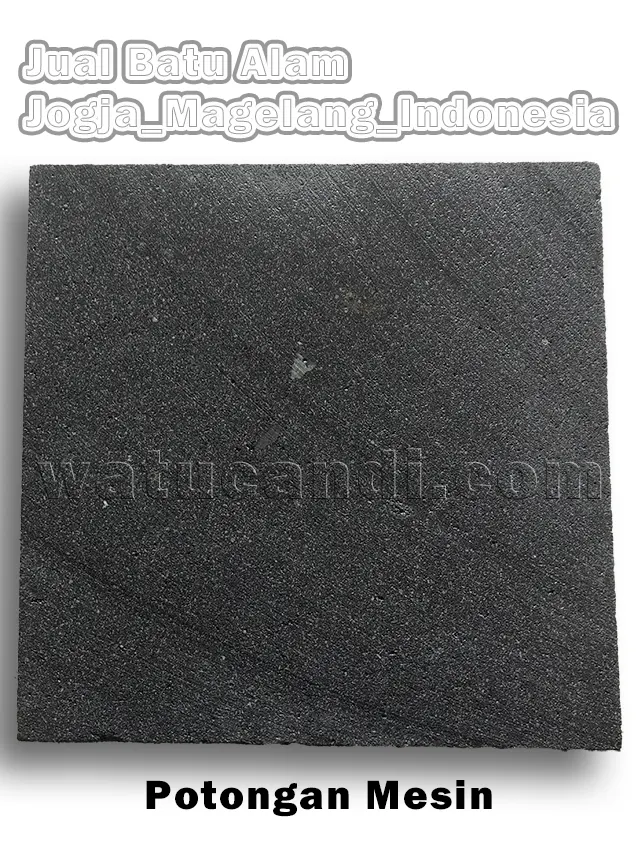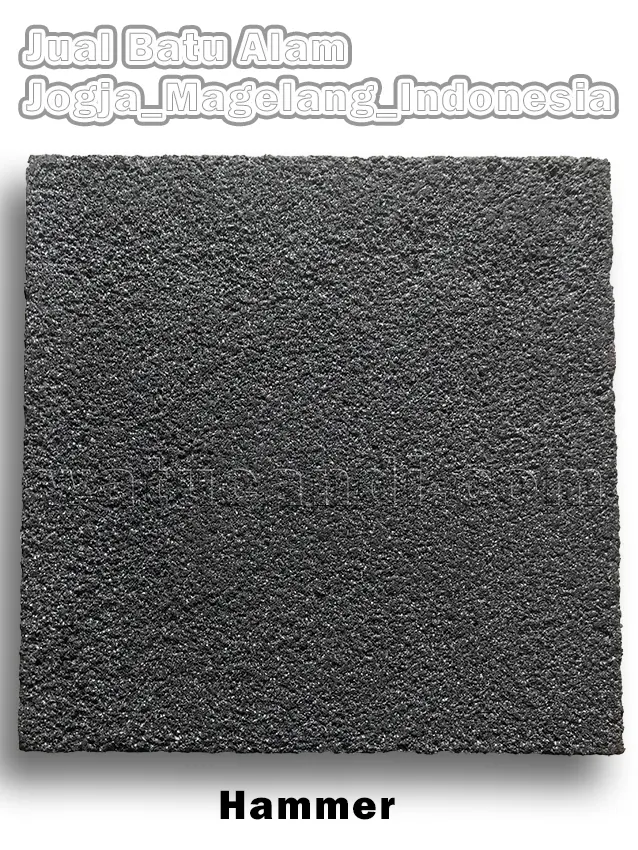

The existence of tactile paving blocks, often referred to as guiding blocks, is a crucial element in modern inclusive architecture. More than just floor tiles or directional ceramics, tactile paving blocks are a tangible manifestation of care for people with disabilities, particularly the visually impaired, enabling them to navigate public spaces independently and safely. A tactile paving block manufacturer plays a vital role in bringing these products to life, combining skilled craftsmanship with the robust and enduring character of natural stone. This article will thoroughly explore the world of natural stone tactile paving production, covering technical specifications, material advantages, manufacturing processes, installation guides, and their applications in various projects.
In the context of public facility construction, the demand for materials that are not only functional but also aesthetic and durable is increasing. Here, natural stone, specifically grey andesite and black basalt, emerges as the primary choice. Its advantages are undeniable; this material offers a perfect combination of strength, natural beauty, and long lifespan. An experienced craftsman or tactile paving block manufacturer understands precisely how to transform the hardness of stone into precise directional textures, producing products that meet accessibility standards while enriching the visual landscape.
This article is compiled to provide deep insights for you, whether you are an architect, contractor, property developer, government agency, or a member of the general public concerned with inclusive facilities. We will explore every aspect of natural stone tactile paving, focusing on products from Watu Candi, a trusted natural stone producer from Yogyakarta-Magelang, Central Java. By understanding product details and processes, you can make informed decisions for your project, ensuring a sustainable investment that delivers positive impact for all users.
What Are Tactile Paving Blocks and Why Are They So Important?
Guiding blocks, or tactile paving blocks, are textured floor elements that serve as path markers for pedestrians with visual impairments. Through the sense of touch via feet or a cane, the texture on these blocks provides clear navigation signals. There are two main types of tactile blocks: directional line blocks which indicate a safe direction to follow, and warning dot blocks which signal caution, such as at intersections, entrances, or platform edges. Their presence is an international standard adopted to create cities that are friendly for everyone.
The importance of tactile paving blocks cannot be underestimated. For the visually impaired, these blocks are “eyes” that guide them through the hustle and bustle of stations, sidewalks, airports, or city parks. Without effective tactile guidance, their independent mobility would be severely limited and risky. Therefore, material selection and manufacturing quality are critical. Paving blocks must withstand friction, weather changes, and heavy loads. This is where the vital role of a natural stone tactile paving block manufacturer becomes the superior solution, as their products offer durability and texture clarity unmatched by other materials like regular ceramics or concrete.
Types of Textural Patterns on Tactile Blocks
To fulfill their navigational function, tactile paving blocks come in specific patterns. The most common pattern is the straight line motif, such as those produced by Watu Candi with specifications of 4 raised lines and 5 recessed lines. This pattern provides instructions to continue walking straight. Conversely, dot or warning patterns indicate a need to stop or be cautious. A tactile paving block craftsman must be able to create these patterns with consistent depth and width so they are easily recognizable by users. Inaccuracy in pattern creation can confuse or even endanger users.
In addition to standard patterns, some manufacturers also offer custom carvings to meet specific design needs. However, the essence of tactile functionality must always be maintained. A deep understanding of accessibility standards, such as SNI or international guidelines, is part of the expertise of a professional tactile paving block manufacturer. They do not just make textured stones; they create effective and safe navigation aids.
Advantages of Andesite and Basalt Natural Stone for Tactile Paving
The choice of natural stone as the raw material for tactile paving blocks is not without reason. Compared to synthetic materials, natural stone offers a series of unparalleled advantages, making it a smart long-term investment for public facilities. Natural stone, particularly andesite and basalt, has physical characteristics ideal for this application.
- Hardness and Abrasion Resistance: Andesite and basalt are very hard and dense volcanic rocks. They will not easily wear out, crack, or deform even when traversed by thousands of footsteps daily, rolled over by trolleys, or exposed to mechanical friction. This ensures the tactile texture remains clear and functions optimally for years.
- Weather Resistance: Natural stone will not rot, corrode, or fade in color due to rain, scorching sun, or extreme seasonal changes. Unlike ceramics that can crack due to temperature differences or concrete that can erode from water, andesite and basalt remain stable and maintain their integrity.
- Cost-Effective Maintenance: Due to their extraordinary durability, natural stone tactile paving blocks require almost no special maintenance. Regular cleaning with water and a brush is sufficient to keep them looking good. This significantly reduces long-term operational costs for building managers or public facility administrators.
- Natural and Elegant Aesthetics: The grey color of andesite or black of basalt gives a luxurious, professional impression that harmonizes with the environment. Natural stone paving blocks do not look like mere functional “patches,” but rather an integral part of a classy landscape or interior design.
- Safety and Anti-Slip: Although a honed finish produces a smooth surface, natural stone naturally has micro-pores that provide good grip, making it non-slip when wet. This is a very important safety aspect for public areas.
With all its advantages, it is no wonder that government projects, airports, stations, and modern shopping centers are now switching to natural stone tactile paving blocks. The higher initial investment will be repaid by durability, beauty, and minimal maintenance costs.
Technical Specifications of Natural Stone Guiding Block Products
To ensure the product meets your project needs, it is important to understand the technical specifications offered by the manufacturer. Watu Candi as a tactile guiding block producer provides products with standard specifications that can be customized (custom) upon request. Here are the general specification details:
- Unit: Square Meter (m²).
- Standard Size: 30 x 30 cm with a thickness between 1.3 to 1.5 cm. This size is an industry standard ideal for heavy pedestrian traffic and facilitates the installation process. Custom sizes are also available to meet specific designs.
- Raw Material: Andesite Natural Stone with grey color. Andesite is chosen for its perfect balance between hardness and ease of carving.
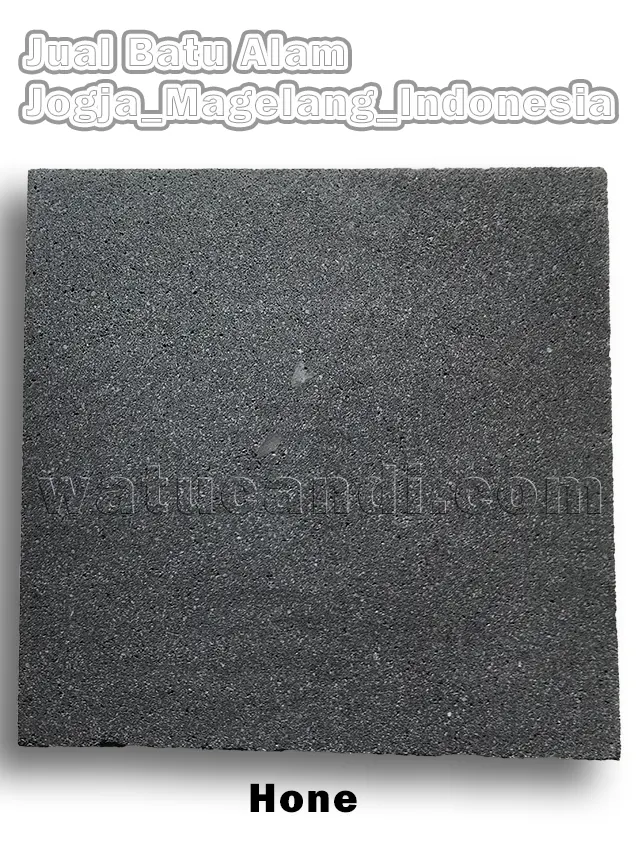
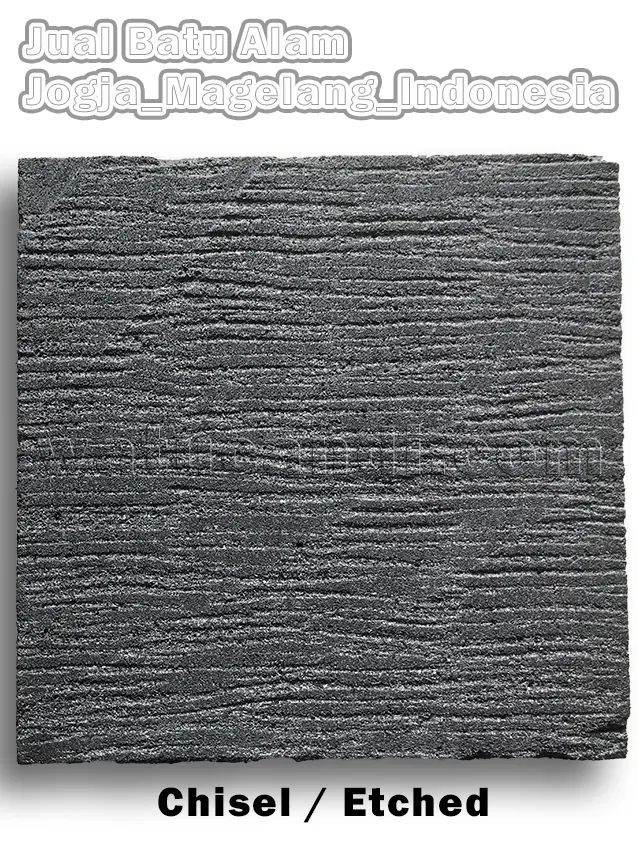
- Finishing: Honed. This smooth honing process results in a surface that is soft to the touch yet still anti-slip. This finish also highlights the natural color of the stone and makes it easier to clean.
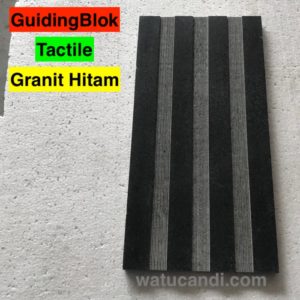
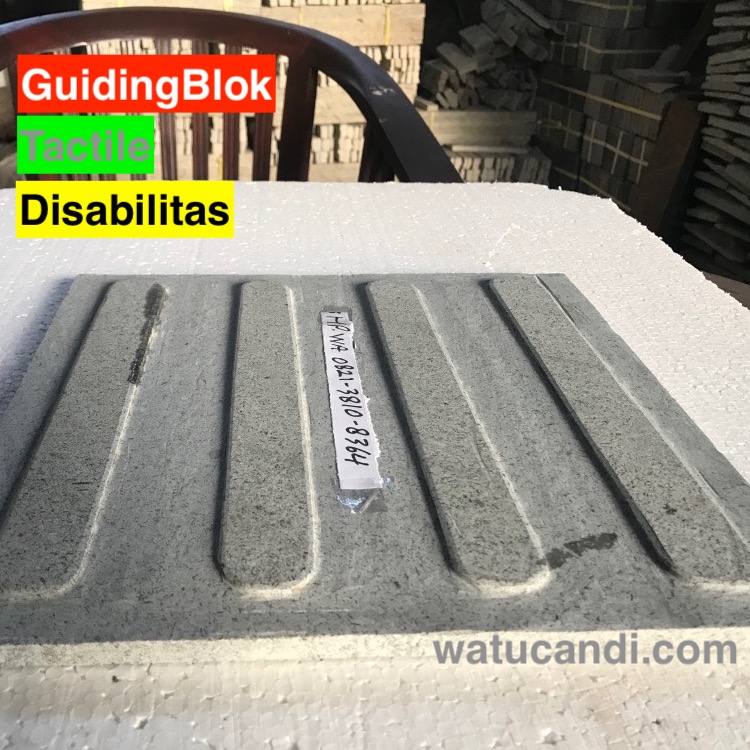
- Motif: Straight Line (Directional). This pattern consists of 4 raised lines and 5 recessed lines, providing clear directional guidance. Other motifs like dots can also be produced upon order.
- Packing: No Packaging / Bulk. This is an efficient and economical shipping method for large-scale projects.
Product Visualization: Grey Andesite Tactile Guiding Block
The image below displays the beauty and precision of tactile paving blocks produced by Watu Candi. Its firm and clean line texture provides very clear visual and tactile guidance. The natural grey color of the andesite gives a modern and professional impression, suitable for various applications, from city sidewalks to airport interiors.
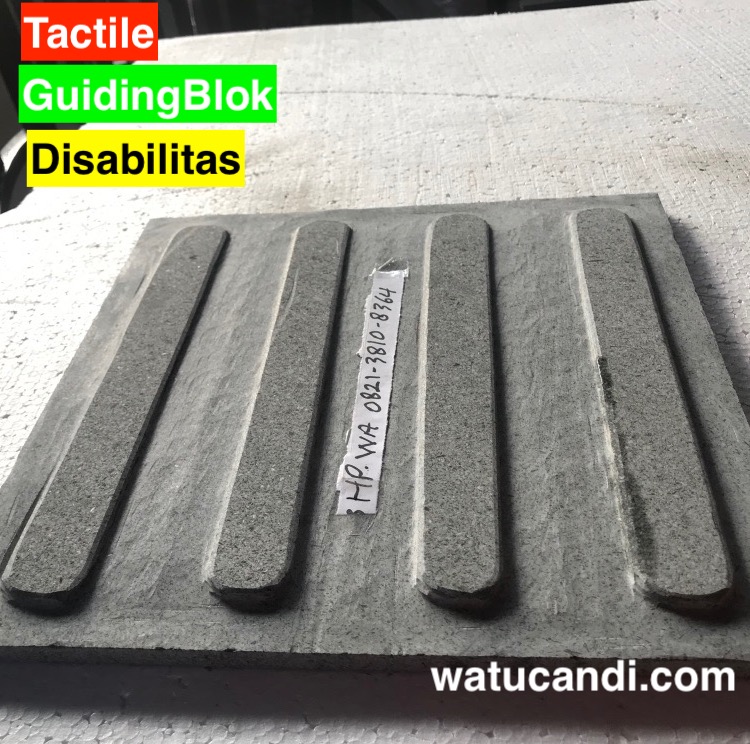
The details in the image show how a tactile paving block manufacturer carefully shapes every groove and line. The resulting honed finish provides a surface that is smooth yet non-slip, ensuring safety and comfort for all users. This product is not just an aid, but also a decorative element that strengthens the character of public spaces.
Production Process: From Raw Stone to Directional Guide
Behind every precise tactile paving block lies a long production process full of expertise. The craftsmen or tactile paving block manufacturers at Watu Candi combine traditional techniques and modern machinery to achieve optimal results. This process begins with the selection of high-quality andesite raw material from mines around Magelang and Yogyakarta, famous for Mount Merapi as the source of the best volcanic material.
Here are the general stages in the production of natural stone tactile paving blocks:
- Selection and Cutting of Raw Material (Slab Cutting): Large andesite stones are cut into slabs of specific thickness using advanced cutting machines. This ensures uniformity of the base size.
- Pattern Formation (Patterning): This is the most critical stage. Line or dot patterns are formed on the slab surface. In modern production, this process can use CNC machines for high precision. However, the touch of skilled stonemasons is still needed, especially for custom products or to ensure perfect final details.
- Surface Finishing: After the pattern is formed, the stone surface is smoothed. For a honed finish, the stone is sanded with special machines to remove rough scratches and produce a smooth but non-glossy surface. This process also brings out the natural color of the stone.
- Final Cutting and Quality Control: The slab is then cut into final sizes, for example, 30×30 cm. Each tile is then manually inspected by the tactile paving block manufacturer to ensure dimensions, pattern neatness, and surface quality meet standards.
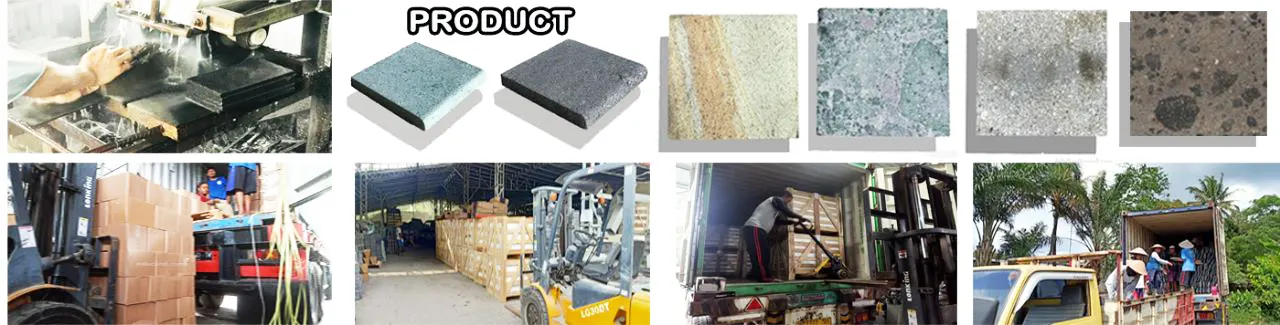
This meticulous process guarantees that every block reaching your hands is a high-quality product ready to be installed and used for years. You can see various types of processes and final results of other natural stones in the Watu Candi product catalog.
Installation Applications in Various Sectors
The use of natural stone tactile paving blocks is very widespread. Here are some of the most common applications:
- Public Transportation: Train stations, bus terminals, airports, and ports are the primary users. These blocks guide passengers from entrances to platforms, waiting rooms, or exits.
- Government & Public Facilities: Government office buildings, hospitals, city libraries, and city parks are required to provide accessibility. Tactile paving ensures people with disabilities can access public services independently.
- Commercial and Tourism: Modern shopping malls, hotels, restaurants, and tourist attractions are increasingly aware of the importance of inclusive facilities. The use of natural stone blocks adds aesthetic value as well as functionality.
- Pedestrian Areas: Sidewalks, pedestrian paths, and footbridges are vital areas where these blocks must be installed for the safety of visually impaired pedestrians.
To learn more about natural stone applications for outdoor areas, you can read the complete guide on outdoor natural stone flooring.
Guide to Proper Guiding Block Installation
The method of installing guiding blocks or tactile blocks as path indicators for the visually impaired is basically the same as installing ceramic tiles or stone slabs in general. However, there are several important details that must be observed to ensure optimal function and long lifespan. The expertise of the installer greatly determines the final result.
- Floor Media Preparation: Ensure the base floor surface is flat, strong, and clean from dirt or oil. If necessary, create a screed or leveling layer first.
- Determination of Installation Pattern: Determine the path or route guide before starting installation. Ensure the straight line pattern directs according to the planned safe path, and dot patterns are placed at warning points.
- Adhesive Application: Use special natural stone adhesive or high-quality thinbed mortar. Apply adhesive to the floor media and the back of the stone tile (back-buttering method) to ensure perfect adhesion.
- Installation and Leveling: Place tiles one by one carefully, adjusting to the pattern. Use a rubber mallet to press the tile so it adheres perfectly. Check the levelness of the surface between tiles using a waterpass or leveling system.
- Grouting: After the adhesive dries, fill the gaps between tiles with grout. For outdoor areas, choose grout that is flexible and weather-resistant.
- Final Cleaning: Clean remaining grout or adhesive on the stone surface using water and a sponge. Ensure no residue hardens and interferes with the tactile texture.
Correct installation not only guarantees visual beauty but also safety. Grout that is too high or low can interfere with the tactile sensation for the visually impaired. Therefore, using the services of an installer experienced with natural stone is highly recommended.
Gallery: Applications and Installation Process
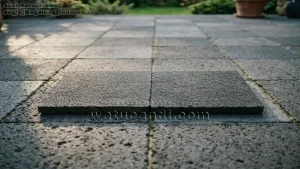
The following images illustrate how tactile paving blocks from andesite stone are installed. Their neat arrangement and continuous line pattern create a clear and easy-to-follow guidance path. The quality of the sturdy stone is visible from its flat surface that does not easily break during the installation process.
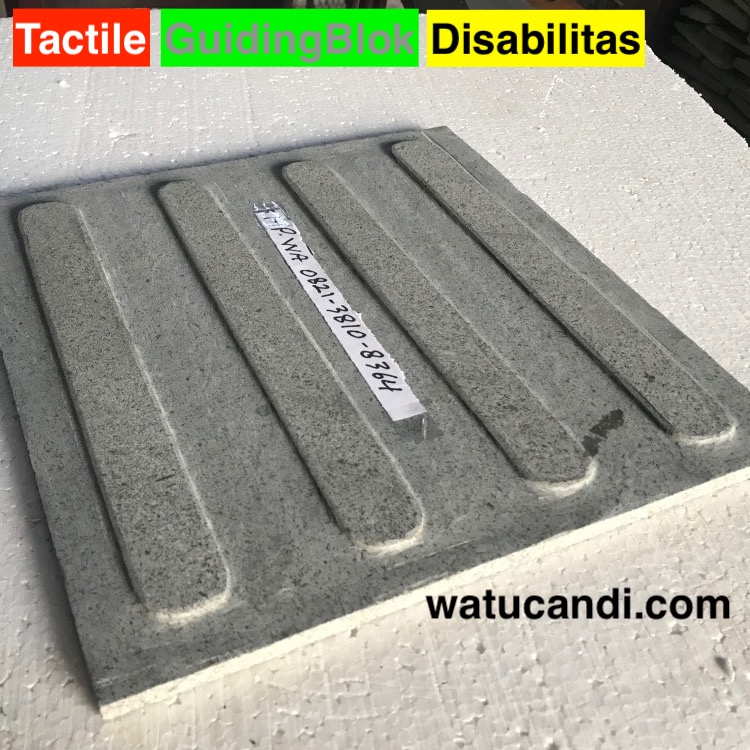
From these images, we can see how tactile paving blocks from granite or andesite stone blend aesthetically with the surrounding floor, creating an integrated and professional impression.
Why Choose Watu Candi as Your Tactile Paving Block Manufacturer?
As a natural stone producer based in Yogyakarta-Magelang, Watu Candi has a long reputation for providing high-quality natural stone products for various architectural needs. When you choose Watu Candi as your tactile paving block supplier, you not only get a product, but also a guarantee of quality and comprehensive service.
- Guaranteed Raw Materials: We only use selected natural stones, such as andesite from volcanic mountains, known for their strength and durability.
- Craftsman Expertise: Our tactile paving block manufacturers are experienced craftsmen who inherit generational skills, ensuring every product detail is worked on with high precision and thoroughness.
- Tender Project Support: We are ready to assist you in the price quotation submission process and other technical support required as prerequisites for government or private project tenders.
- Flexible Customization: We serve custom orders according to your desired specifications, ranging from size, thickness, to pattern motifs.
- Competitive Pricing: As a direct producer, we offer the best prices for premium quality products. Get the best price offer from us by contacting our team.
We understand that every project has unique needs. Therefore, we always prioritize communication and solutions tailored to your needs. See for yourself how the beauty and strength of natural stone can transform your project by exploring our complete guide to black Merapi lava candi stone.
Expanding Horizons: Natural Stone for Other Applications
The expertise of Watu Candi stone craftsmen is not limited to tactile paving blocks. We produce various other natural stone products that can complement and beautify your project. From natural stone paving for outdoor areas, luxurious hand-carved stone bathtubs, to monolithic stone furniture for premium interiors.
For those looking for pool area flooring solutions, we also provide anti-slip and beautiful swimming pool stone tiles, such as the legendary Sukabumi green stone. For walls, various options of dramatic and elegant lava candi stone wall cladding are available.
All our products are designed to answer the needs of modern and classic architectural design. With natural stone, you are not just building structures, but also creating timeless works of art. Learn more about various types of natural stone and their applications in our guide to natural stone types for wall and floor decoration.
Conclusion: Long-Term Investment for Accessibility and Aesthetics
Tactile paving blocks are an important component in creating an inclusive and friendly environment for everyone. Choosing the right material is key to functionality and sustainability. Andesite natural stone tactile paving blocks from Watu Candi offer the best solution: unmatched strength, eternal natural aesthetics, and minimal maintenance. Behind these quality products are the skilled hands of tactile paving block manufacturers dedicated to precision and quality.
As a direct producer, Watu Candi is committed to being your best partner in providing natural stone materials for any project. Whether for large-scale government projects or private property development, we are ready to provide the best offers and full support. Do not hesitate to contact us to get the best tactile guiding block prices and free consultation regarding your natural stone needs.
Investing in natural stone tactile paving is an investment in safety, beauty, and the future. With products from Watu Candi, you ensure that the facilities you build will benefit many people for decades to come.
For those who want to see more applications and products, do not miss the video from our channel:
This article is also available with related tags to help you find relevant information:
tactile paving block manufacturer, Tactile Paving Block Maker, guiding block producer, buy tactile paving, blind path guide tile, disability ceramics, andesite stone for disabled, station guide floor, disability friendly pedestrian path, magelang natural stone craftsman, natural stone guiding block price, tactile block installation, yogyakarta guiding block, stone road guide tile,