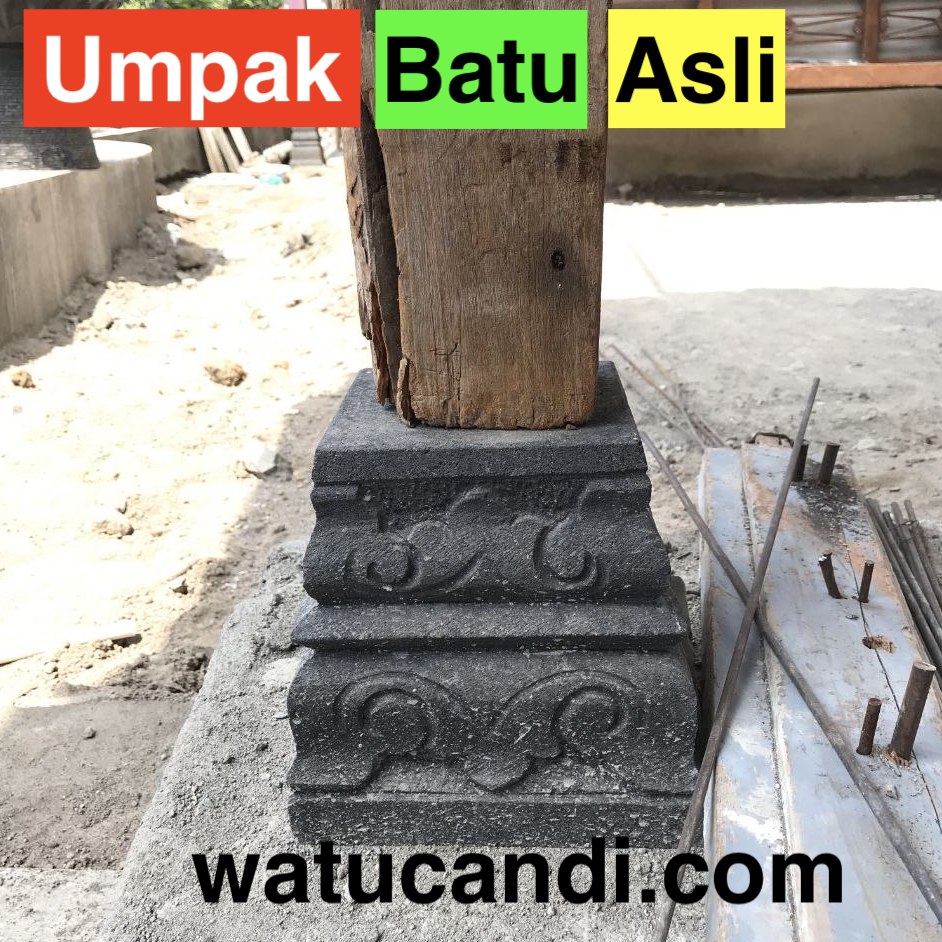
Authentic Natural Stone Umpak from Mount Merapi. In the rich tradition of Indonesian architecture, particularly on the island of Java, there is a fundamental element that often escapes the attention of laypeople yet plays a vital role in the strength and beauty of a building. This element is the umpak. An umpak is the base or pedestal supporting the main pillar, known in Javanese as ‘Soko’. Like ancestral traditions that are deeply rooted, traditional Javanese houses generally have four main sokos or pillars standing firmly on authentic stone umpaks. These four pillars are known as Soko Guru, located in the center of the building, accompanied by twelve other supporting pillars. This configuration is not merely a structural choice, but a Javanese cosmological philosophy that continues to be preserved to this day.
The presence of natural stone umpaks serves not only as a support for vertical loads but also as an aesthetic bridge between warm wood materials and cool earth. In an era where the dominance of concrete and steel is increasingly common, the use of authentic stone umpaks becomes a bold style statement. It brings a nuance of tranquility, authority, and a deep connection with nature. This article will comprehensively review authentic stone umpaks, starting from material types, manufacturing processes, structural functions, to how this small element can transform the face of your home into one with more character while maintaining Indonesian cultural traditions. Let us delve deeper into the world of this eternal natural stone.
In-Depth Description of Natural Stone Umpak
Authentic stone umpaks are often a key element in every Joglo house, Limasan house, or pendopo. Their function as a base to strengthen and reinforce the building’s foundation cannot be fully replaced by modern materials without losing their traditional essence. These umpaks are made using selected natural stones, shaped through carving and smoothing processes to reflect a love for ancestral civilization. Unlike concrete foundations embedded in the ground, stone umpaks feature a “dry joint” connection that allows for flexibility of movement during shocks, a local wisdom in earthquake mitigation.
Besides being applied to majestic Joglo houses, authentic stone umpaks are very versatile and can be used to complement Limasan house architecture, garden gazebos, saungs, or even as reinforcement for column bases or pillars inside modern tropical-style homes. If one only uses processed cement cast into round shapes, the result will look rigid and less attractive. It can be said that cement umpaks are very mainstream and have lost their artistic soul. However, if house pillars rest on umpaks made and carved from authentic natural stone, the final result will look far more valuable, elegant, and possess historical depth.
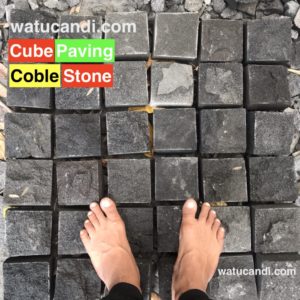
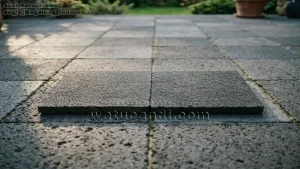
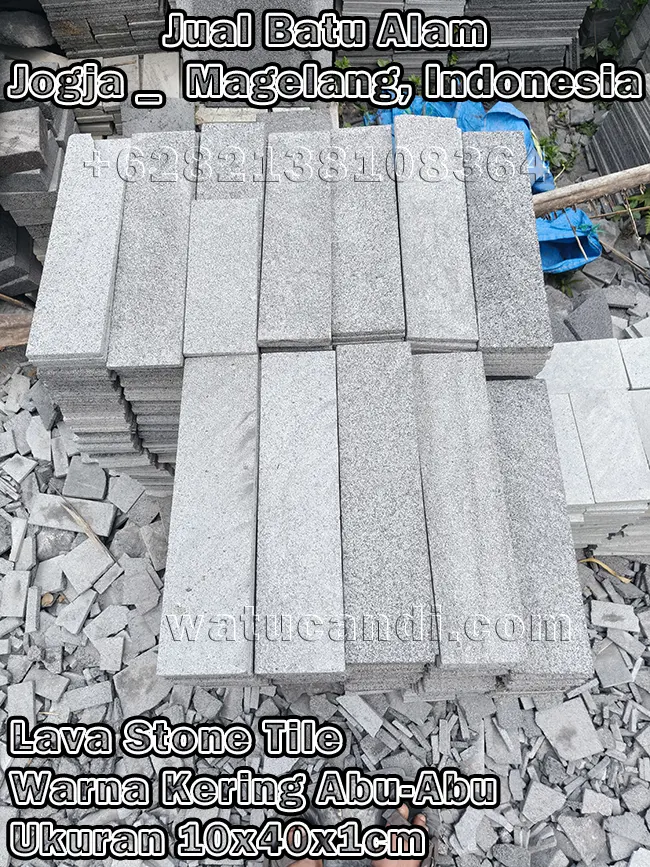
The selection of stone material for umpaks is also crucial. Not all stones are suitable for umpaks as they must withstand large static loads and weather changes if placed in semi-outdoor areas. Volcanic andesite stone, especially from the foothills of Mount Merapi, is the favorite due to its high molecular density, making it resistant to weathering and extreme pressure. To see premium material collections suitable for exterior and interior applications, you can explore the premium Andesite and Lava natural stone flooring collection which offers high durability.
Characteristics of Stone Umpak Colors
Stone umpaks used as supports for traditional house legs generally have a massive shape and are dominated by black or dark gray colors. This color is certainly not artificial or painted using modern tools, but the original color of the minerals composing the stone. The dominance of dark colors in natural stones, especially Andesite and Basalt types, is caused by high mafic mineral content such as pyroxene and hornblende.
The reason black was chosen as the main color for stone umpaks is aesthetic and the strong traditional impression. In the Javanese architectural color palette, black symbolizes firmness, stability, and grounding. In nature, volcanic rocks are almost always dark-colored. Therefore, authentic stone umpaks are also identical to dark black or dark gray colors. However, with the development of modern interior design, color variations have been introduced to match room themes.
Nevertheless, you have the freedom to choose other colors that suit your taste and design concept. Some natural stone color variations that can be applied to umpaks include:
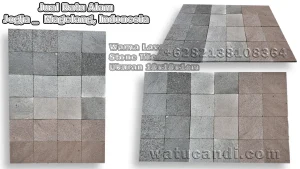
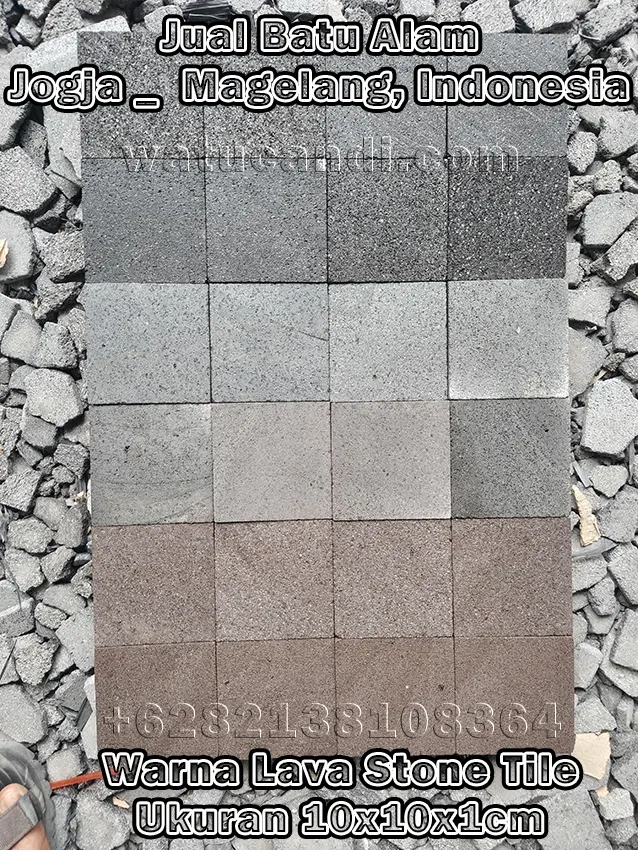
- Black Gray: The classic color of Merapi Andesite stone, most common and easy to pair with teak or mahogany wood.
- Reddish Brown: Obtained from certain types of Jogja Paras stone or Sandstone, giving a warm and earthy impression.
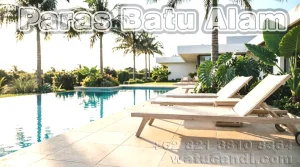
- White Gray/Cream: From Palimanan stone or Limestone, suitable for modern minimalist or bright colonial-style homes.
- Green Zeolite: Unique color from Sukabumi stone or green Breccia, providing a fresh and natural nuance.
It should be noted that there are special finishing techniques or coatings for authentic stone designed to highlight the natural stone color without damaging its pores. This coating also functions to protect the umpak from moss and fungi, making it suitable for the texture of authentic stone umpaks often exposed to moisture. For those interested in exotic green variants, you can learn more about the comparison of local vs precision green stone for broader applications.
Variants of Stone Umpak Motifs and Carvings
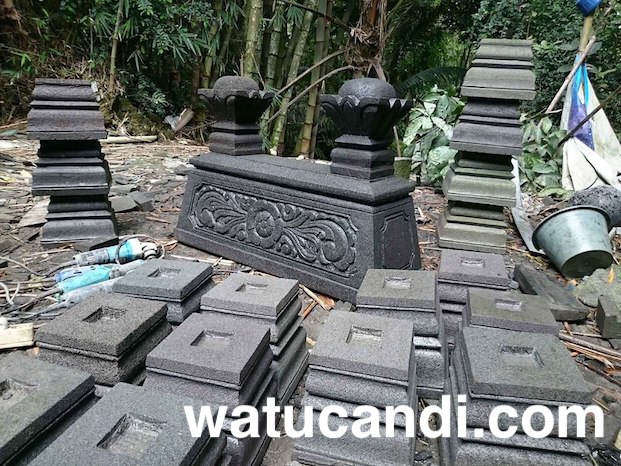
If you want to know what motifs of authentic stone umpaks are available in the market, the answer is very diverse. From simple geometric patterns to intricate temple-style carvings, everything is available depending on demand and budget. Why? Because natural stone is a medium very responsive to sculptural art. You can order authentic stone umpaks carved skillfully by the hands of Muntilan or Yogyakarta craftsmen, forming stylish umpaks that still appear traditional.
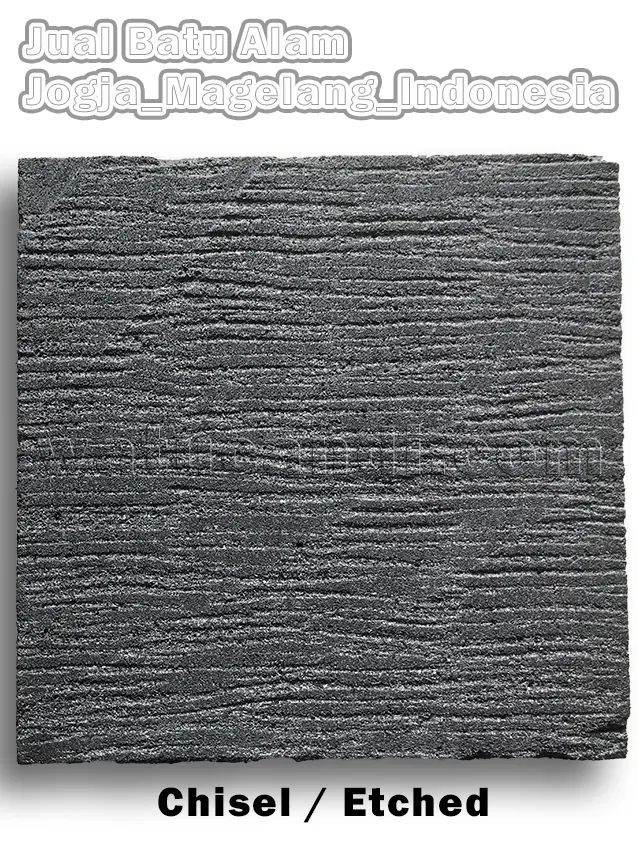
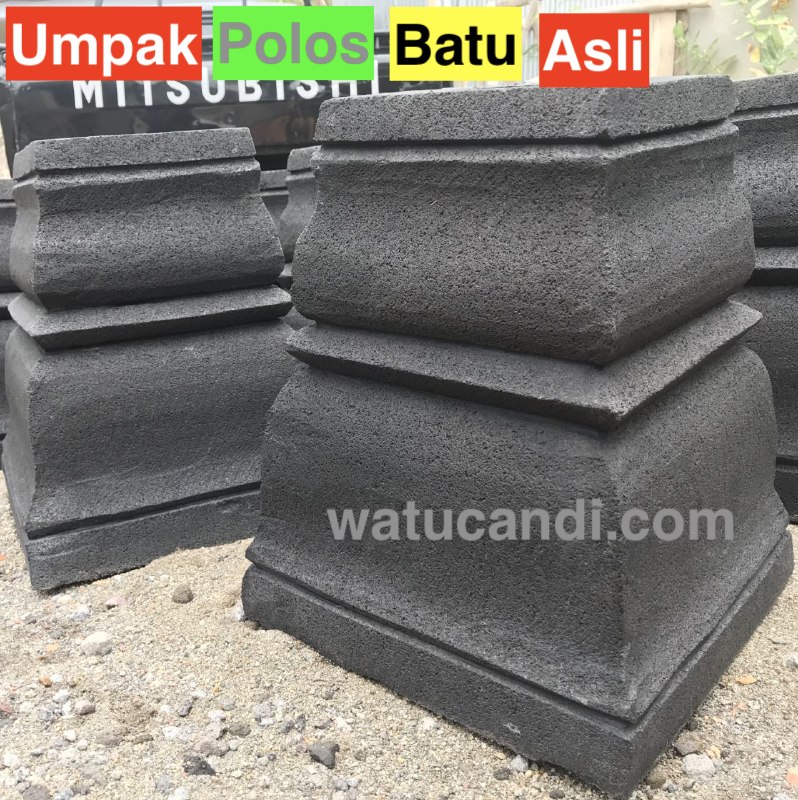
If you do not want prices to swell due to carving complexity, you can order plain authentic stone umpaks. Plain umpaks have their own beauty; the simplicity of cylindrical or cubic shapes with smooth or chiseled textured surfaces radiates a strong minimalist aura. Plain motifs are basically cool, especially since their traditional impression remains clearly visible through the material. However, for those wanting more artistic touch, lotus flower carvings, vine patterns, or kawung patterns can be added to the sides or top of the umpak.
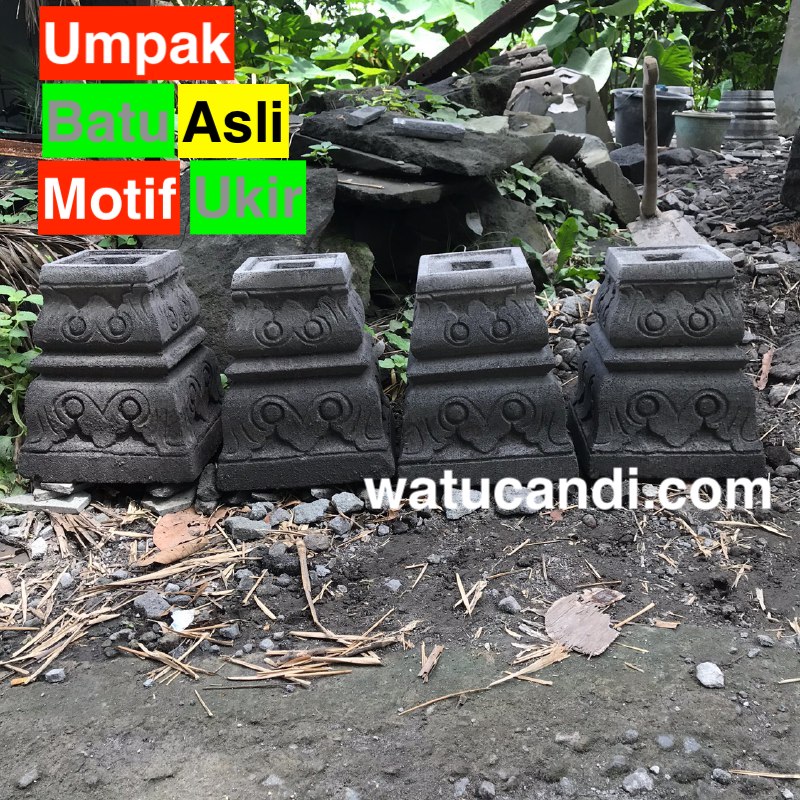
This carving process requires high precision. Craftsmen must understand the direction of stone grain so it does not crack when chiseled. Manual carving results provide texture that cannot be mimicked by casting machines, giving each umpak a unique character. For inspiration on more complex motifs, you can see examples of manually chiseled stone floors applying similar techniques on horizontal fields, which can be adapted for the side panels of umpaks.
Strategic Functions of Stone Umpaks in Architecture
Umpak, support, or stone foundation is often referred to as natural stone umpak. This means stone umpaks derived from pure natural rock, not mixed with cement or other aggregates as in conventional concrete. The existence of these umpaks has multi-functions beyond just aesthetics. Here is a detailed explanation of these functions:
1. Sturdy Base for Joglo House Legs
You must have seen a Joglo house, an iconic Javanese building structure with a high pointed roof. Inside, there are large wooden pillars (Soko Guru) supporting the entire roof load. Wood, although strong, is vulnerable to soil moisture if in direct contact. Well, stone umpaks are certainly very suitable for you to use as the base for your Joglo house legs. The stone acts as a capillary isolator, preventing groundwater from rising into wood fibers which could cause rotting.
You can build them in front of the house as a terrace, behind the house next to a swimming pool, or in a garden corner. The foundation base will be far more aesthetic and cool if using authentic stone umpaks made with a natural stone base. The combination of reddish-brown teak wood with black andesite stone creates a very harmonious and calming visual contrast. For reference on wall materials compatible with the Joglo concept, you might consider random candi stone wall cladding which provides rustic texture.
2. Aesthetic Reinforcement for Limasan Pillar Legs
Limasan is a type of traditional Javanese house and surrounding areas which essentially has a roof with four sloping sides and is usually supported by 8 main pillars or more. At the bottom of these main pillars, stone umpaks can be installed to strengthen and beautify the appearance of your limasan pillars. The lower structure of limasan compared to Joglo requires a stable base to keep the building proportions balanced.
Even if the pillars are natural brown, white, or even painted, you can still use stone umpaks that are black or match the theme. Because dark-colored umpaks tend to fit well with other colors, providing an “anchoring” or visual grounding effect. What you must ensure is balance of proportion; do not let the umpak size be too small so it looks fragile, or too large so it dominates the pillar. In terms of strength, stone umpaks definitely provide a strong and sturdy pillar foundation for your limasan, distributing point loads to a wider area above the ground.
3. Artistic Foundation for Gazebo Pillar Legs
A good and durable gazebo, of course, uses hardwood or bamboo as its main pillars. Why? Because the traditional and natural impression will appear very good and comfortable to the eye, especially in a garden environment. Especially when the color combination matches the surrounding vegetation. However, wooden pillars planted directly into the ground will rot quickly.
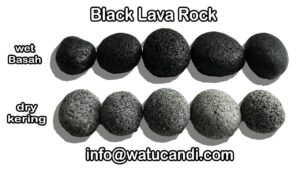
Well, at the base of gazebo pillars, there must certainly be a sturdy base to support the gazebo’s strength while protecting the wood from direct contact with wet soil. Stone umpaks can be your best solution here. Your gazebo base can be made with stone umpaks so it looks beautiful and integrated with the landscape. The use of porous lava stone can also help air circulation around the pillar base, reducing moisture accumulation. You can find similar material inspiration in Merapi lava stone paving famous for its durability.
4. Classic Touch for Porch Pillar Legs
Who says when you install stone umpaks in front of the house it will look ugly or old-fashioned? If installed correctly with the right pillar collaboration, it will certainly provide architectural beauty different from others. Many modern tropical or industrial style homes actually adopt this umpak element to give character to their terraces or porches.
Most indeed do not give stone umpaks to modern house porch or terrace pillars, because there are already iron plates or concrete casts that look simpler and stylish. But this is not always the case, not always traditional things will lose to modern ones. Including this authentic stone umpak. With a little detailed stone umpak carving, or even just with a rough chisel finish, your porch pillar legs will look much better, weighted, and exclusive. This shows the homeowner’s attention to detail regarding material quality.
Advantages of Investing in Authentic Stone Umpaks
Turns out, there are many long-term benefits you can feel when using authentic stone umpaks for the construction of buildings you own, compared to using cement alternatives or direct wood. The initial investment might be slightly higher, but the added value is very significant.
1. Preservation of Traditional and Cultural Values
Why can it be said to preserve traditional values? Because authentic stone umpaks are a Javanese culture that has existed for hundreds of years. Umpaks have been used since the kingdom era as a characteristic of noble and common people’s buildings that make structures in Java unique. Each region has a slightly different umpak style, reflecting local identity.
Well, by using authentic stone umpaks as a construction choice, you are already participating in preserving traditional values that have almost faded due to modernization. How cool it is if you still hold on to original culture when almost everyone has switched to instant modern buildings. This is a form of appreciation for ancestral heritage manifested in a functional physical form.
2. Increasing Construction Strength and Earthquake Resistance
Stone that is original from nature, especially volcanic stone, certainly has a stronger, harder, denser, and more durable texture. Especially when installation is combined with modern technology such as the use of elastic mortar or precise dry-stack systems. Thus it will be far stronger in holding static loads.
More importantly, the traditional umpak system is actually ancient anti-earthquake technology. When an earthquake shock occurs, stone umpaks allow wooden pillars to “sway” slightly without breaking, because they are not tied dead (like welded or bolted) to the underlying foundation. Earthquake energy is absorbed by friction between stone and wood, and between stone and ground. So, authentic stone umpaks can still maintain the sturdiness of house construction, especially limasan and joglo houses. Do not mistakenly assume authentic stone umpaks have no construction function; they are our ancestors’ engineering solution.
3. Natural Protection Against Termites and Pests
What is the biggest consequence when using wood as house pillars in direct contact with the ground?
Exactly. Damaged by termites. This one animal seems to be the big enemy of traditional wooden houses. The presence of termites will certainly disrupt structural integrity especially when they have damaged the strength of the house pillars made of wood from the inside, which is often undetected until it is too late.
Well, these stone umpaks can make your house pillars sturdy and not eaten by termites. Termites will have difficulty reaching the wood, because it is already protected by umpaks made of strong natural stone that does not contain cellulose. The distance between the ground and wood created by the height of the umpak also breaks the access route of ground termites. This is a very effective and environmentally friendly preventive solution because it does not require chemical pesticides.
4. High Aesthetic and Economic Value
Do not mistakenly assume stone umpaks make house buildings look bad or old-fashioned. Quite the opposite. Stone umpaks will make the construction of a building’s pillars more aesthetic, weighted, and characterful. Natural stone material has veining and texture that is never the same from one to another, making each umpak a unique work of art.
So when viewed by people, a sense of admiration and a traditional yet elegant impression sticks strongly. The more aesthetic your building, the more expensive its value in the property market. So it is not always that modern is expensive, but traditional done well certainly has its own value as an antique or art item. Especially if the authentic stone-based umpak/support/foundation you own is already carved with manual carvings by expert craftsmen. That will certainly be far more impressive and become a focal point of the room.
Choice Materials: Types of Stone for Umpaks
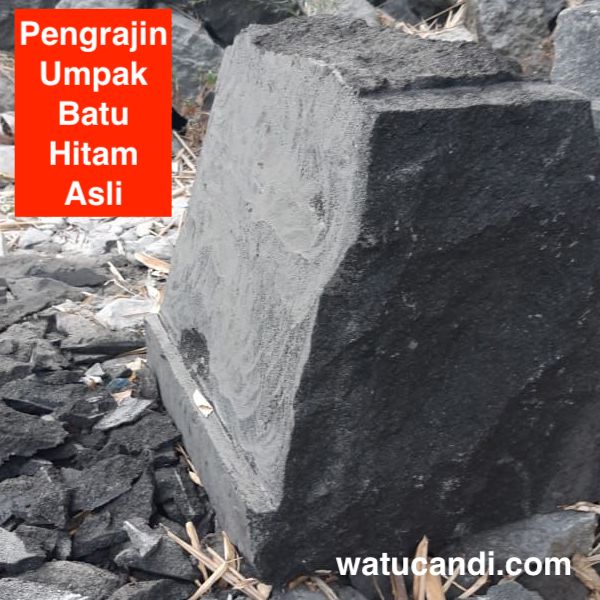
For the material of stone umpak production, industry standards use hard stones sought from nature. Especially those originating from volcanoes, better from Mount Merapi which produces high-quality Andesite stone. Merapi Andesite stone is known for its high density, low porosity, and resistance to abrasion and extreme weather.
Besides Andesite, Basalt stone is also often used for large-sized umpaks due to its extraordinary strength. For applications requiring lighter colors, Limestone or Palimanan stone can be used, although it requires extra care against moss. To make umpaks basically can use modern methods with molds, however, if wanting the best quality, then what is used must be authentic stone taken from nature and chiseled. No matter how sophisticated modern mold-making tools are, they certainly cannot match the quality of authentic umpaks having natural geological character.
Material selection must also consider local availability to reduce transportation carbon footprint. In Indonesia, besides Merapi, Tulungagung provides Marble and Onyx, while Cirebon provides Palimanan Stone. However, for structural umpak functions, volcanic stone remains the champion due to its optimal strength-to-weight ratio. You can explore various other rock types through our complete guide on limestone and travertine or Indonesian natural lava stone tiles.
Natural Stone Umpak Production Process
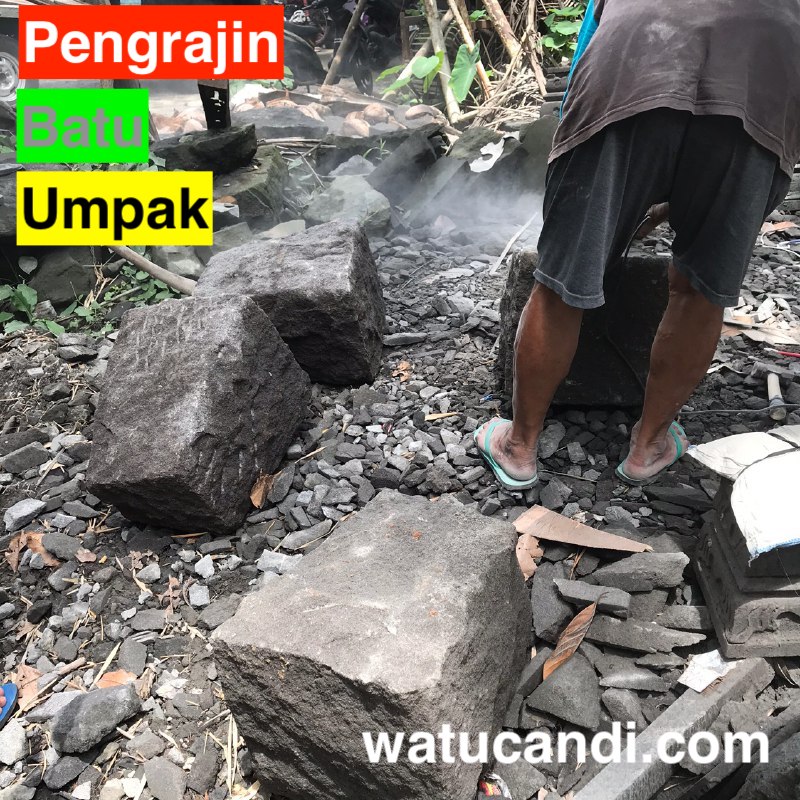
For the process of making umpaks from authentic stone is indeed done by professionals. People who are truly experts and have dealt with stone umpaks for a long time, often inheriting this skill generationally. This process is not just cutting stone, but an art of shaping mass.
The rough stages of making authentic stone umpaks/supports/foundations are as follows:
- Material Selection: Finding natural stone suitable for umpaks, free from hairline cracks and weak inclusions. Stone must be tapped to ensure its density.
- Initial Shaping (Roughing): Creating the base shape of the stone umpak with special tools like large hammers and coarse chisels, or cutting machines to get basic dimensions.
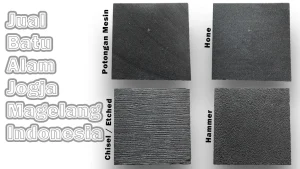
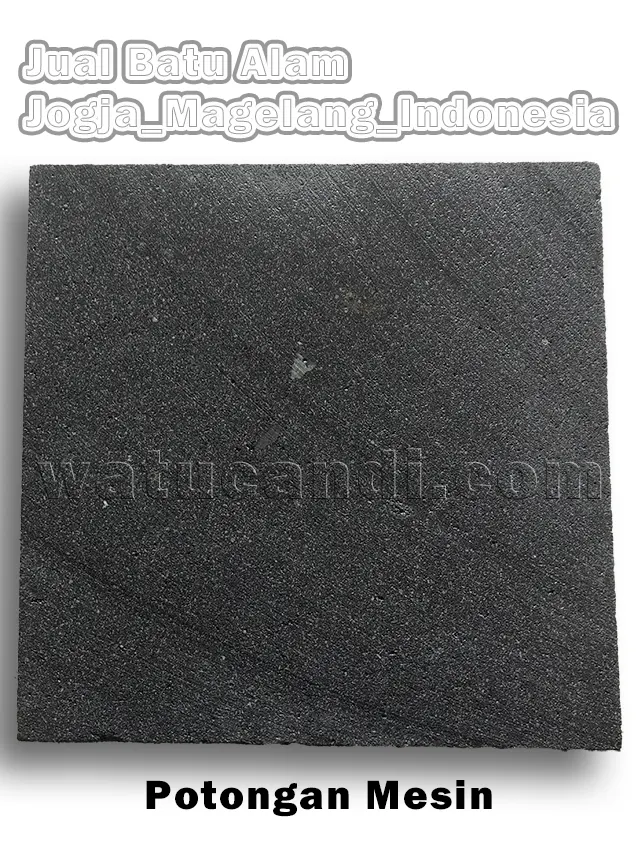
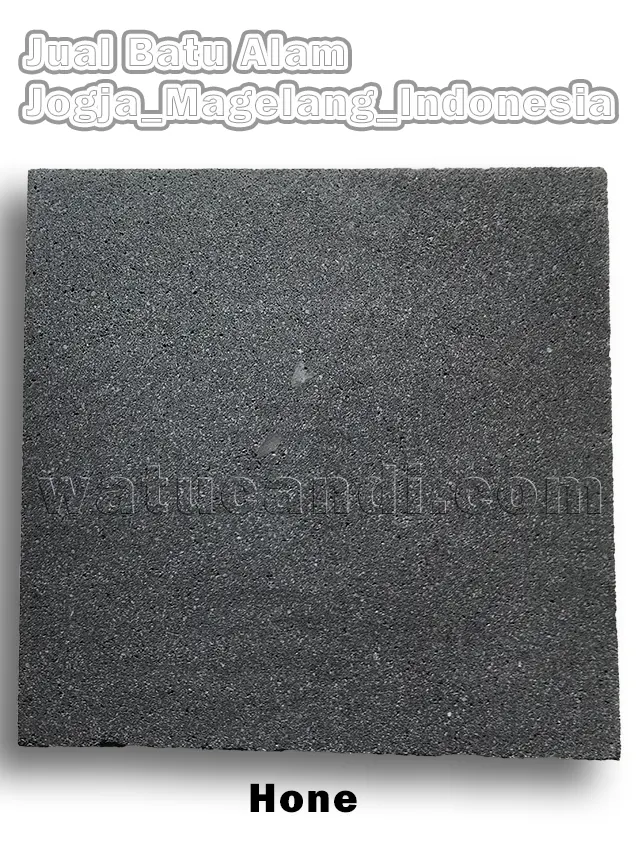
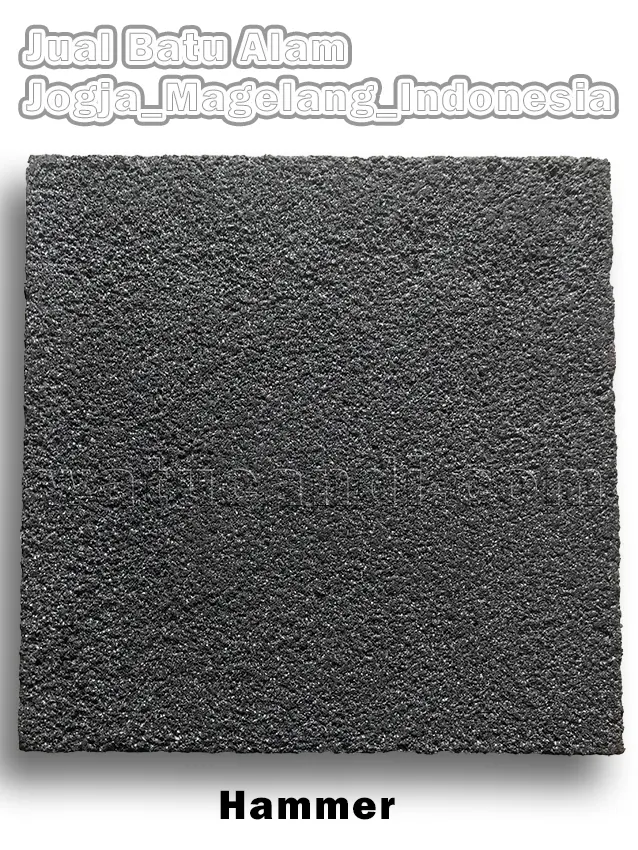
- Surface Smoothing: Smoothing surfaces that are too rough using grinders or fine chisels, creating the desired texture (plain, chiseled, or bushhammered).
- Detail Carving: Providing decorations or motifs in the form of carvings if requested. This stage requires high precision and more time.
- Finishing and Quality Control: Final polishing for maximum results, cleaning stone dust, and checking balance so the umpak does not wobble when installed.
Each craftsman certainly has different ways and their own trade secrets. However, the general outline is like the steps above. Each craftsman’s hand has different experience, thus causing specific different ways, making each umpak have the “soul” of its maker. To see variations of finishing techniques that can be applied to umpaks, you can read about tumbled natural stone finish or chiseled natural stone installation patterns.
Variations of Stone Umpak Support Sizes
For the size of stone umpaks it certainly varies greatly, adjusting to the building load and diameter of the pillar to be given an umpak. The size of the stone umpak will be matched with the size of its soko pillar. The general rule in traditional architecture is that the umpak diameter must be larger than the pillar diameter to ensure even load distribution.
There are small sizes of 12 cm up to standard sizes of 35 cm for ordinary residential houses. However sometimes there are also special request umpaks for public buildings or large pendopos with heights of 20 cm to 50 cm. Besides that sometimes there are orders up to dimensions of 60 x 60 cm and more (Can reach 1 meter for monuments or main mosque pillars). The shape is also not always square or having sharp corners. There are also perfectly round, oval, or other organic shapes. So, the shape of authentic stone umpaks/supports/foundations is not always like usual, but can be customized according to design needs.
Umpak is a foundation stone used for traditional house buildings in the old days. Especially in houses in Java, namely Joglo houses and Limasan houses. As for the material, it uses hard stones, especially stone from Mount Merapi famous for its volcanic quality. The availability of custom sizes makes it easier for modern architects to integrate traditional elements into contemporary designs without being constrained by standard norms.
Price Analysis of Building Support Stone Umpaks
Speaking about price, then it will also speak about quality, size, and level of processing difficulty. The better the quality of authentic stone umpaks, the more expensive the price. Umpaks made from ordinary stone raw materials or river stones will certainly have different prices from those whose raw material is premium black Candi stone or selected Merapi Andesite.
The price range in the current market varies widely. There are prices starting from Rp 350,000.00 per piece for small and plain sizes, up to Rp 7,650,000.00 per piece and more for large sizes with intricate carvings. This price depends on dimensional size, stone type, and level of processing difficulty. Transportation costs also become a factor due to the significant weight of the stone.
This price variation is also caused by its size. The more unique and intricate the stone umpak carving, the more expensive the price of authentic stone umpaks because it takes a long time for craftsmen to work. If the shape is plain without carving, then the price will be cheaper and faster in production. However, investment in quality umpaks is a long-term investment because natural stone has almost no expiration date if properly maintained.
Authentic Stone Foundation: Natural Earthquake-Resistant Solution
You also need to know, turns out umpaks are an ancient (traditional) architectural style that scientifically proven can make a building more earthquake-resistant. This concept is known as simple base isolation. Because of its unbonded nature, umpaks allow the upper structure of the building to move slightly relative to the ground when earthquake waves arrive. This reduces earthquake energy transfer to the wooden structure, preventing total collapse.
If rigid concrete foundations, they might experience structural cracking and eventually severe damage during major earthquakes because they absorb all vibration energy. Different with umpaks. Indeed they can shift, but their construction is more earthquake-resistant than generally rigid modern foundations, and far easier to repair post-earthquake. Pillars just need to be lifted and umpaks returned to their position. However, this does not mean the installation process can be done carelessly. To create strong building construction from umpaks, certainly good, careful, and precise calculations must be used, including ensuring level ground.
Symbol of Harmony: Philosophy of Umpak Songo
In Banyuwangi, there is a unique cultural phenomenon where Authentic Stone Umpaks named Umpak Songo become a symbol of harmony between Islam and Hinduism. The reason is, the existence of these Umpaks is a relic from the Blambangan Kingdom in the old days. This site shows how high the civil engineering civilization of the past was.
The good relationship between Sunan (Islamic preacher) and King (Hindu leader) in the old days, makes Umpak Songo often visited by two religious communities. They take turns visiting the umpak, respecting ancestors and shared history. This proves that architecture is not just about stone, but also about social and spiritual aspects.
Well, by making buildings with pillar legs based on umpaks, certainly you indirectly also continue this tradition as a form of pluralism attitude among religious communities and respect for history. Umpaks become silent witnesses of tolerance built on a solid stone foundation. Maybe that is all the explanation about stone umpaks that you might need to know. Besides forming a traditional impression, authentic umpaks also have strong properties so they can reinforce your buildings, making them a heritage for future generations.
For further exploration regarding other natural stone applications that can complement your home design, such as Sukabumi green stone for swimming pools, Palimanan stone for interior walls, or basalt sinks for bathrooms, do not hesitate to visit our complete collection. We are committed to providing the best materials for sustainable and beautiful architecture.
Authentic Stone Umpak, Joglo Umpak, Limasan Umpak, Merapi Andesite Stone, Earthquake Resistant Foundation, Traditional Javanese Architecture, Muntilan Stone Craftsmen, Stone Umpak Price, Stone Umpak Motif, Natural Stone For House, Soko Guru, Wood and Stone Construction, Black Candi Stone, Jogja Paras Stone, Palimanan Stone, Gazebo Garden Decoration, WatuCandi,