


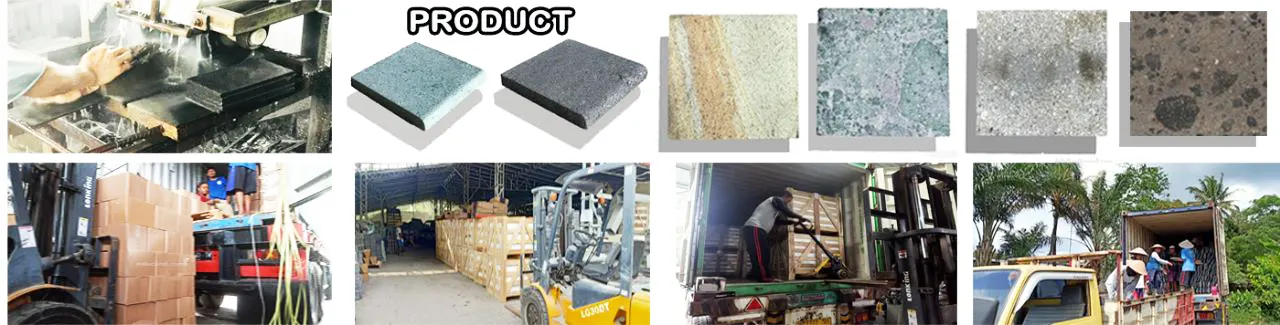

Indonesian natural stone tiles, particularly those derived from volcanic lava (commonly referred to as Batu Candi, Lahar, or Lava Stone), represent a pinnacle of durability, historical significance, and raw aesthetic beauty. Sourced directly from the fertile and geologically active slopes of Mount Merapi in Central Java, Indonesia, these stones have transcended their ancient origins to become a cornerstone of modern architectural design. Unlike synthetic materials or mass-produced ceramics, natural lava stone carries the unique fingerprint of the earth, offering a tactile and visual experience that evolves gracefully over time.
As a premier producer located strategically on the border of Sleman, Yogyakarta, and Magelang in Central Java, we are at the heart of Indonesia’s natural stone industry. We supply high-quality volcanic stone tiles for both domestic and international markets, catering to a diverse range of architectural needs. From the rugged, rustic charm of manually chiseled paving stones to the sleek, sophisticated elegance of precision-cut honed tiles, our catalog is designed to meet the exacting standards of global architects, interior designers, and homeowners. This comprehensive guide will explore every facet of Indonesian natural lava stone, from its geological formation and historical legacy to the intricate manufacturing processes, diverse surface finishes, and expert installation techniques.
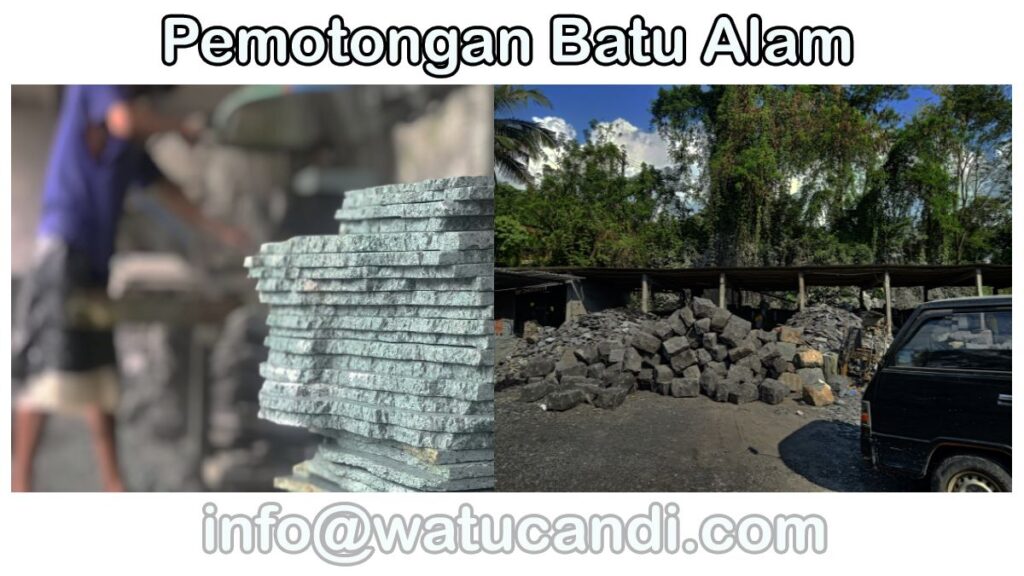
Table of Contents
- Geological Origins and Historical Legacy
- The Manufacturing Process: From Quarry to Tile
- Manual Cut Paving Stones: The Artisan’s Touch
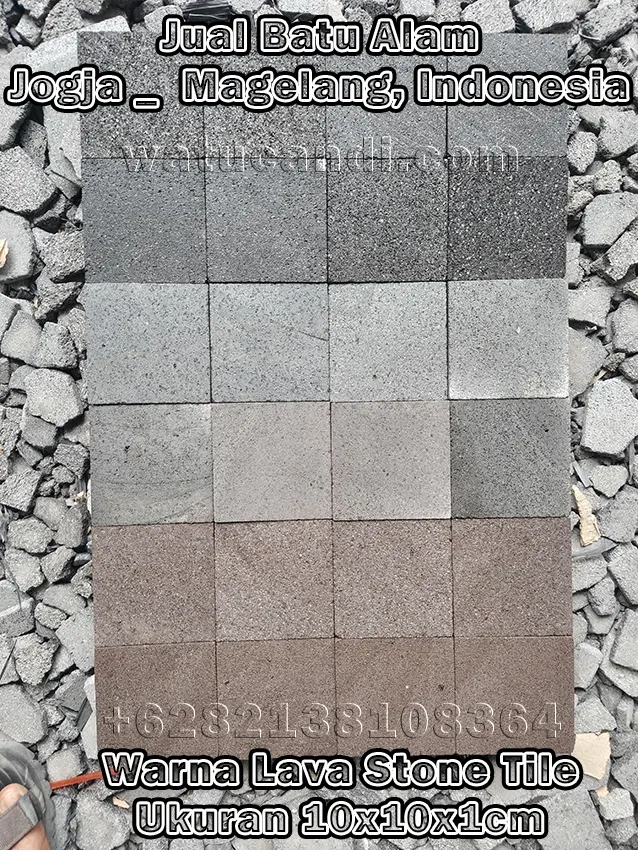
- Machine Cut Stone Tiles: Precision and Consistency
- Honed Finish Lava Stone: Elegance and Comfort
- Grooved and Linear Patterns: Visual Dynamics
- Random Skin and Abstract Stones: Organic Beauty
- Rough Side and Cobblestone Paving: Heavy-Duty Durability
- Architectural Applications and Design Trends
- Technical Installation Guidelines
- Maintenance, Care, and Longevity
- Complementary Natural Stone Solutions
Geological Origins and Historical Legacy
To truly appreciate Indonesian natural lava stone, one must understand its profound geological origins. Batu Candi, or Temple Stone, is an igneous rock primarily composed of andesite and basalt, formed from the rapid cooling of mineral-rich lava flows ejected during the violent eruptions of Mount Merapi. This volcanic activity, which has shaped the landscape of Central Java for millennia, deposits layers of dense, fine-grained rock that is incredibly hard, durable, and resistant to the elements. The unique mineral composition of Merapi lava gives the stone its characteristic deep charcoal, black, and dark gray hues, along with a subtle, natural porosity that provides exceptional slip resistance.
The historical significance of this stone cannot be overstated. Centuries ago, ancient Javanese architects and builders recognized the unparalleled strength of Merapi lava. Initially, it was utilized primarily for foundational structures, retaining walls (talud), and fortifications to prevent structural damage and soil erosion. However, as architectural ambitions grew, so did the mastery of stone carving. The most breathtaking testaments to this material are the Borobudur Temple in Magelang and the Prambanan Temple complex in Yogyakarta. These UNESCO World Heritage sites were constructed almost entirely using this versatile volcanic stone, proving its ability to withstand centuries of tropical weather, seismic activity, and the relentless passage of time. Today, advanced milling technology allows us to transform this rugged, historical material into elegant, precision-cut tiles, offering a unique, eco-friendly alternative to mass-produced ceramics and porcelain. For those seeking a lighter, classic white stone alternative for contrasting designs, consider exploring Palimanan stone tiles.
The Manufacturing Process: From Quarry to Tile
The journey of Indonesian natural lava stone from the slopes of Mount Merapi to your architectural project involves a meticulous process of extraction, selection, and milling. Our production facilities utilize a combination of traditional craftsmanship and modern industrial machinery to ensure that every tile meets stringent quality standards. The raw blocks are first extracted from the quarry using diamond-wire saws, ensuring minimal waste and preserving the structural integrity of the stone. Once extracted, the blocks are inspected for density, color consistency, and structural flaws before being sent to the cutting department.
In the milling phase, the stones are processed into various sizes, thicknesses, and surface finishes. This is where the distinction between local and export-grade products becomes evident. Local grade stones are typically cut directly from the raw blocks using standard gang saws, prioritizing speed and volume. As a result, local products may have dimensional tolerances ranging from +/- 2 to 5 millimeters. While this slight variation is perfectly acceptable for rustic, traditional designs, international markets often demand absolute precision. For our Premium Export grade, the stones undergo a secondary, precision-milling process. The initial cuts are made slightly oversized, and then the tiles are passed through calibrated polishing and sizing machines to achieve exact, uniform dimensions. This additional step increases production time and cost, but it guarantees a flawless, seamless installation that meets the exacting standards of global luxury resorts and high-end residential projects. For robust outdoor applications requiring similar volcanic durability, see our outdoor Merapi natural stone flooring.
Manual Cut Paving Stones: The Artisan’s Touch
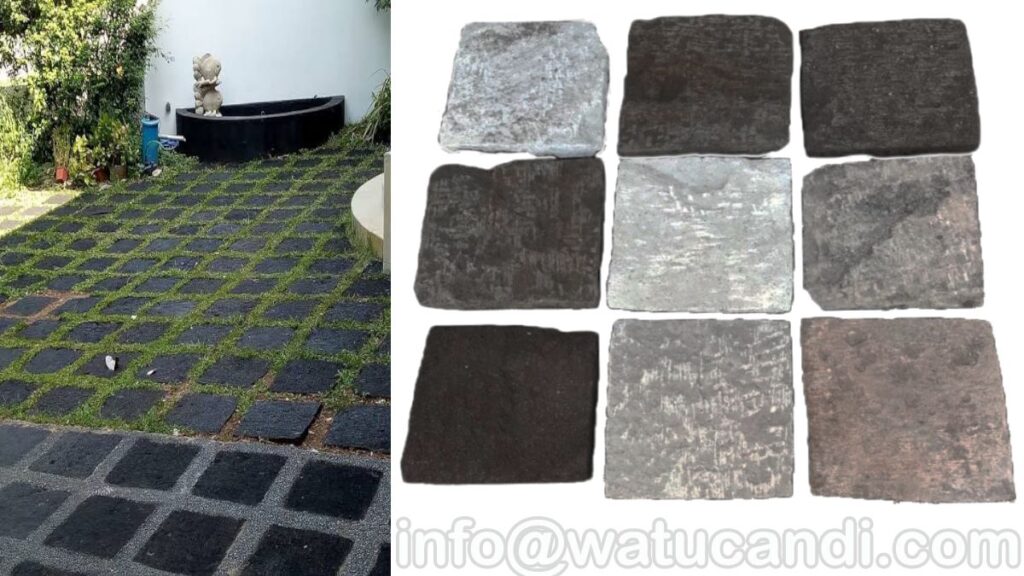
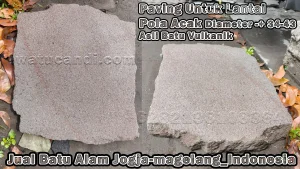
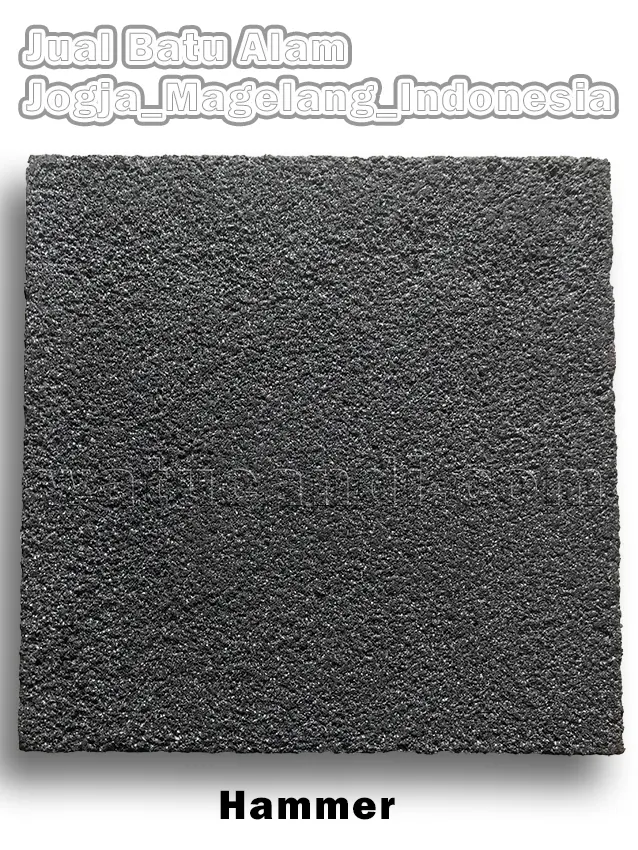
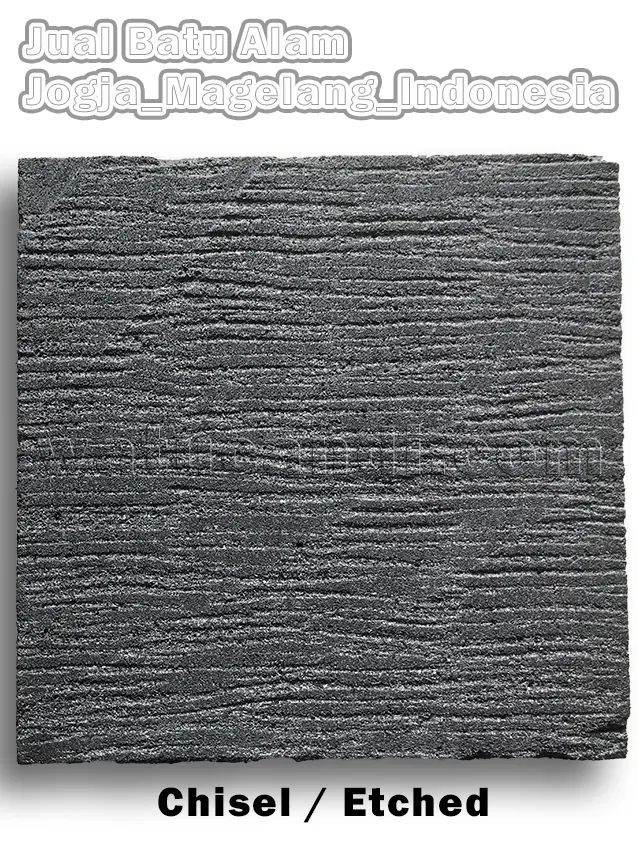
Manual cut stones represent the pinnacle of traditional Indonesian stonemasonry. Unlike machine-cut tiles, these stones are shaped entirely by hand using traditional tools, specifically heavy iron hammers and sharp, pointed chisels. The artisan carefully strikes the stone, cleaving it into squares or rectangles based on custom orders. This labor-intensive process results in a flat but distinctly rough surface, bearing the unmistakable marks of human craftsmanship. The edges are slightly irregular, and the surface texture is organic and raw, providing an authentic, earthy character that machines simply cannot replicate.
These manually chiseled stones are highly prized for outdoor landscaping. They are ideal for garden pathways, stepping stones, park stairs, and rustic patios. The naturally rough surface provides exceptional slip resistance, making it incredibly safe for wet environments or areas prone to moss growth. Standard sizes typically include approximately 30x60x5 cm, 40x40x5 cm, 30x30x5 cm, and 20x40x5 cm. However, due to the manual nature of the work, size variations of 2 to 3 centimeters are common and are considered part of the charm, contributing to a relaxed, classical aesthetic. It is important to note that production is significantly slower; a single skilled worker produces only about 10 square meters per day. Therefore, large orders require advance scheduling to accommodate the production queue and raw material availability. For those who appreciate a weathered, antique look similar to manual cuts but with a tumbled edge, explore tumbled finish natural stone.
Machine Cut Stone Tiles: Precision and Consistency
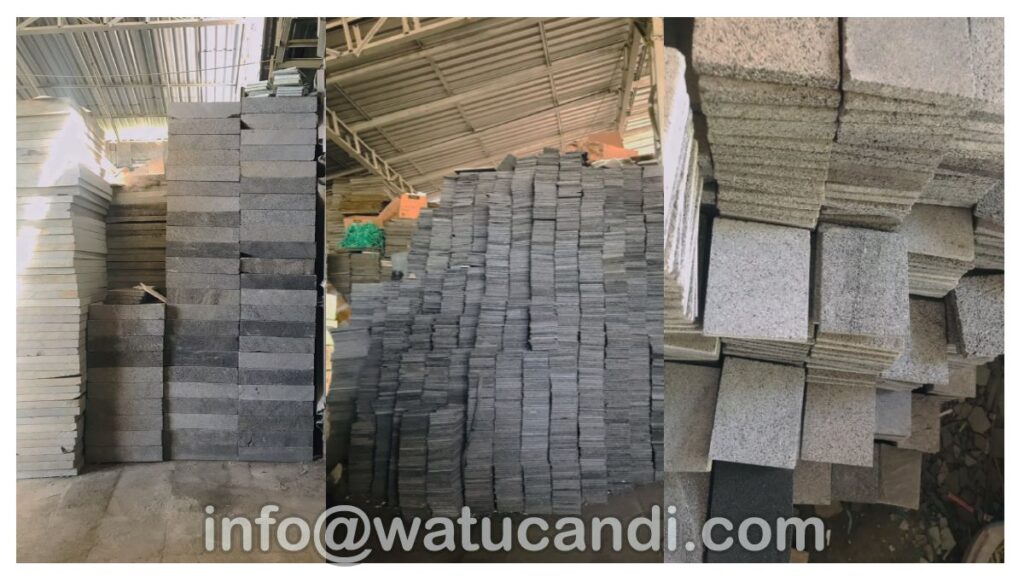
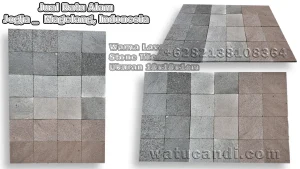
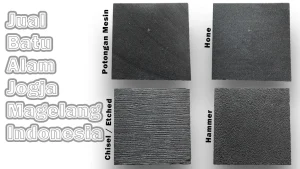
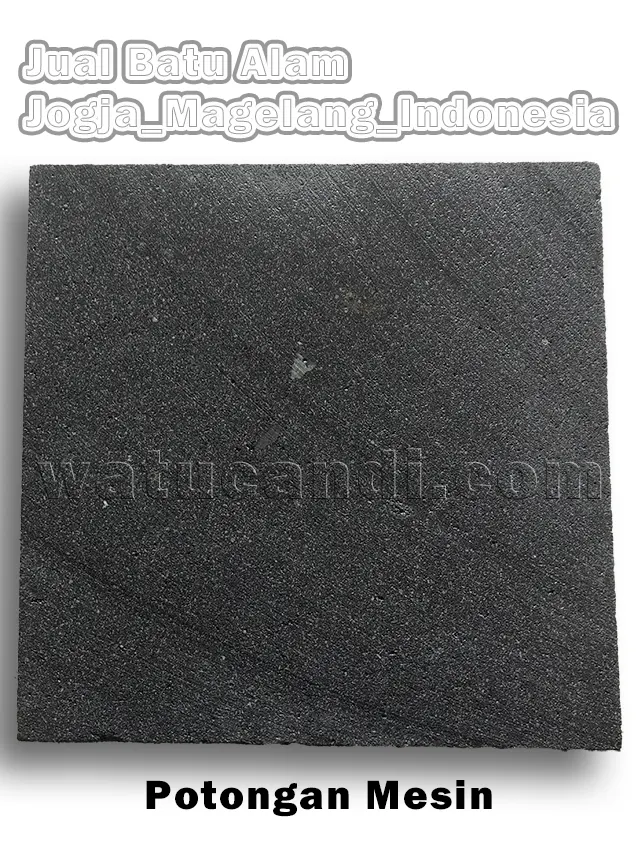
Machine-cut stone tiles, locally referred to as RTM (Rata Mesin), offer a level of consistency and precision that is essential for modern, contemporary architecture. The surface is smooth and flat, though it may retain faint, parallel saw marks left by the diamond blades of the cutting machine. These marks are not considered defects; rather, they are a testament to the natural origin of the material and can add a subtle linear texture to the design. All sides of the tile, including the edges, are precisely cut by the machine, ensuring sharp, 90-degree angles that allow for minimal grout joints and a seamless visual flow.
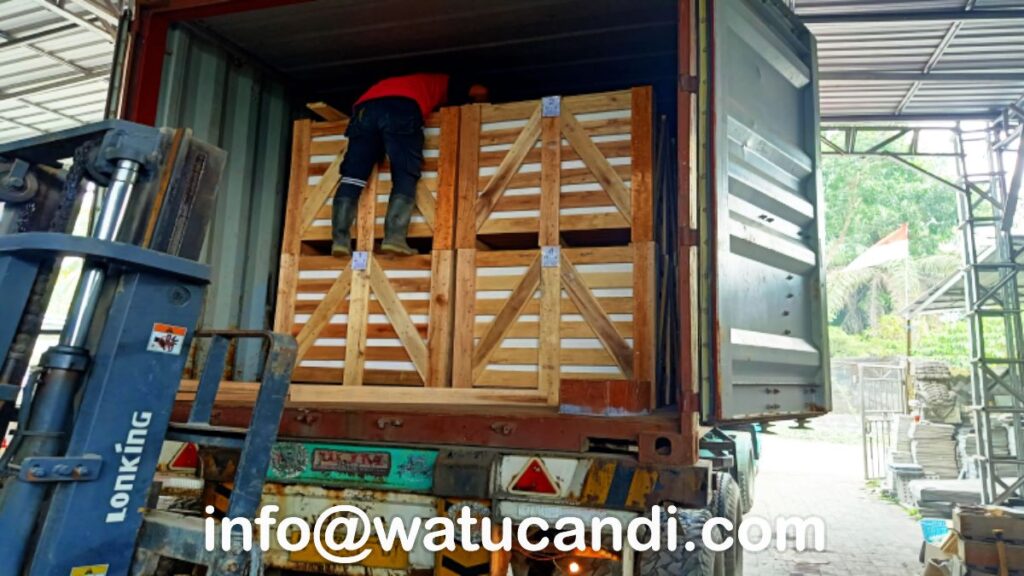
As mentioned in the manufacturing section, the quality of machine-cut tiles varies based on the intended market. Local products are cut directly from the block, prioritizing efficiency. Export products undergo a secondary calibration process to ensure exact dimensions, making them significantly more expensive but much easier and faster to install. When specifying machine-cut lava stone for your project, it is crucial to communicate your quality expectations clearly to your supplier.
Applications for Machine Cut Stone
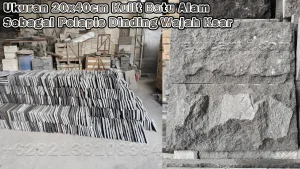
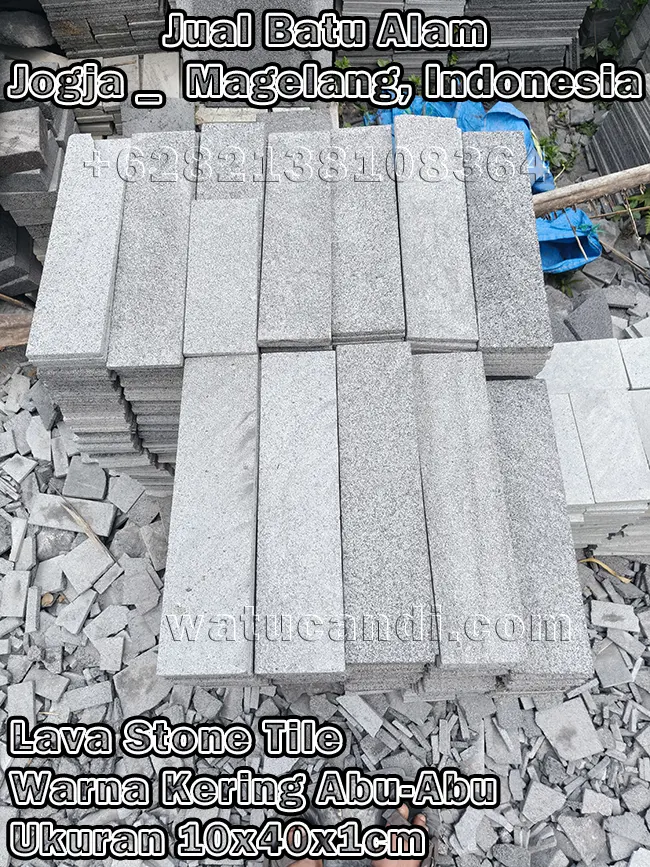
1. Wall Cladding: Machine-cut tiles are the industry standard for wall cladding, both interior and exterior. Standard sizes are highly varied to accommodate different design scales, including 30×60, 40×40, 30×40, 20×40, 20×30, 15×30, 20×20, 10×30, 10×20, 10×10, 15×15, and 7.5×23 cm, alongside fully custom dimensions. The thickness for wall applications typically ranges from 1 to 1.4 cm, calibrated to provide sufficient structural integrity without adding excessive weight to the substrate. These tiles are perfect for bathroom walls, exterior facades, terraces, and boundary fences. For a stacked, layered aesthetic on walls, view stacked stone slate surfaces.
2. Flooring and Pool Coping: Beyond walls, machine-cut lava stone is extensively used as flooring and pool coping (toping). Its dark, charcoal color is highly effective at minimizing sun glare, creating a visually cool and comfortable environment even under intense tropical sunlight. Furthermore, the natural micro-porosity of the stone provides excellent slip resistance, making it ideal for pool decks, fish ponds, and outdoor building floors. For heavy-duty applications like driveways and garages, a thickness of 3 to 5 cm is strongly recommended to prevent cracking under vehicular weight. For complete, integrated pool solutions, check our lava stone swimming pool installations.
Honed Finish Lava Stone: Elegance and Comfort
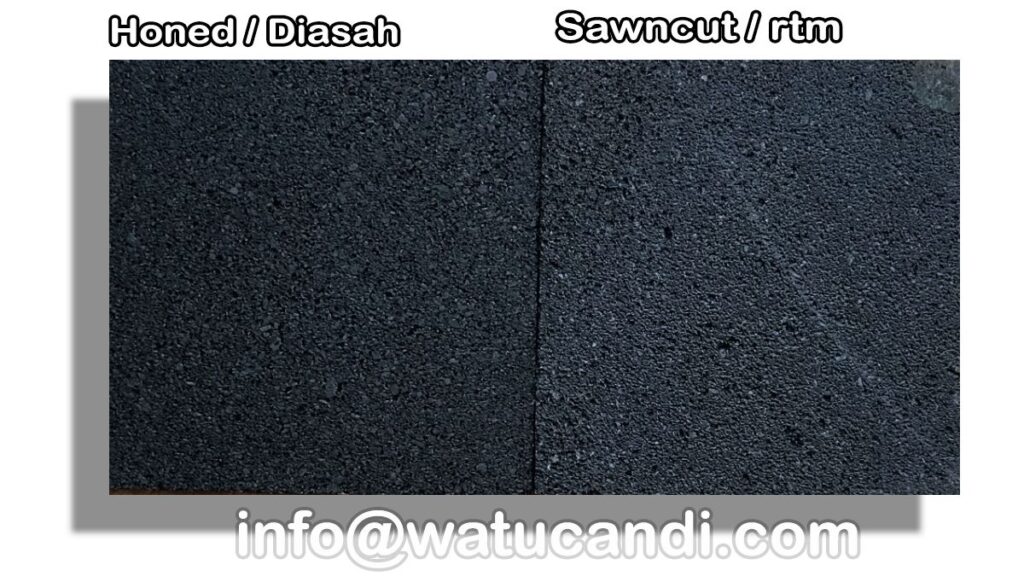
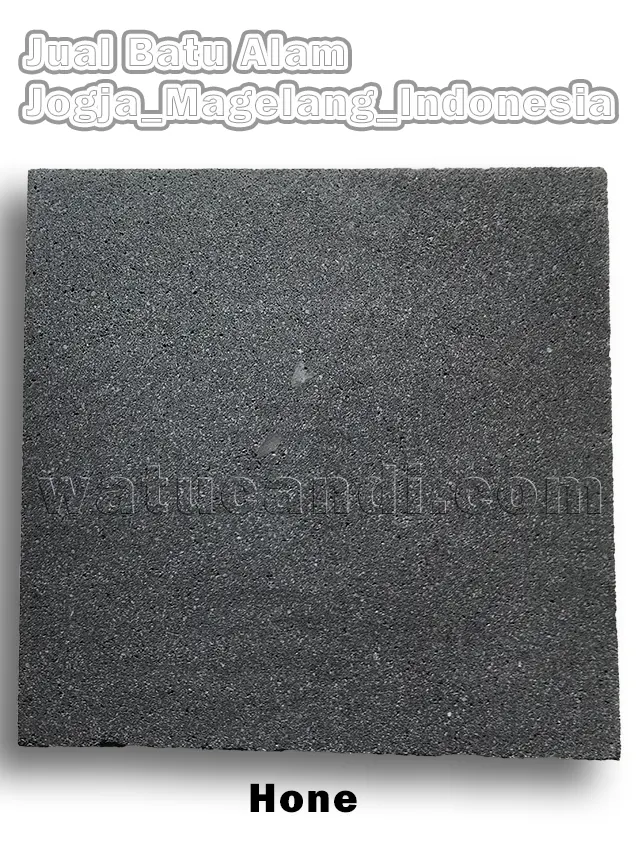
The honed finish represents a step up in the refinement of natural lava stone. After the initial machine cutting, the tiles are subjected to a rigorous grinding process using specialized abrasive pads and grinding machines. This process meticulously removes the faint saw marks and surface irregularities, resulting in a completely smooth, flat, and matte surface. Unlike a polished finish, which can be dangerously slippery when wet, a honed finish retains a subtle, velvety texture that provides adequate grip while feeling incredibly soft and comfortable to the touch.
This finish is highly sought after for specific, high-end applications. It is the premier choice for pool coping (the edge of the swimming pool) where users frequently sit, dangle their legs, and relax. The smooth surface prevents discomfort against the skin, while the natural stone properties ensure it remains relatively cool under the sun. Because the honing process requires additional time, specialized equipment, and results in a slight loss of material thickness, honed tiles are significantly more expensive than standard machine-cut tiles. They are typically reserved for luxury residential projects, high-end resorts, and bespoke architectural features. For dramatic, sculptural accent walls that contrast beautifully with smooth honed floors, consider 3D Merapi mountain stone.
Grooved and Linear Patterns: Visual Dynamics
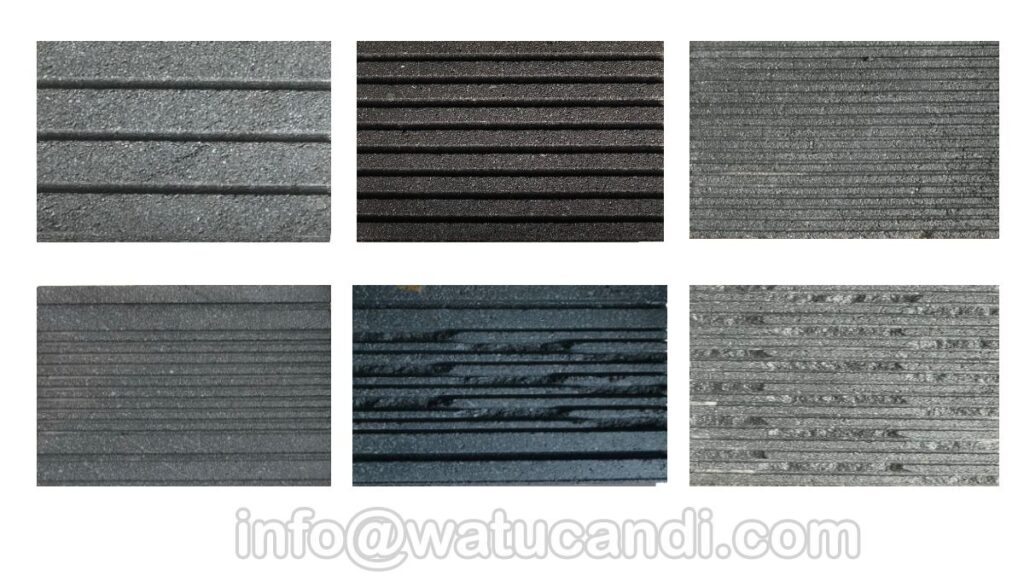
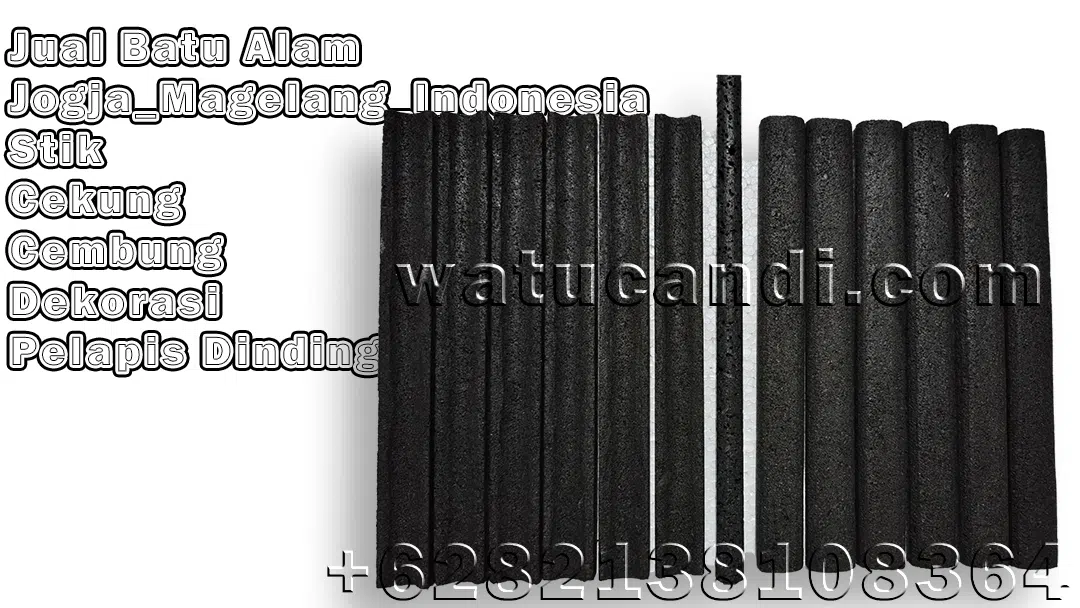
For architects and designers seeking to introduce rhythm, shadow, and tactile interest into their projects, grooved or linear patterned lava stone is an exceptional choice. This finish begins with a standard machine-cut tile, which is then passed through a secondary profiling machine. This machine is equipped with multiple, precisely spaced diamond blades that cut continuous, straight grooves across the surface of the stone. The result is a striking, ribbed texture that catches the light and creates dynamic shadows throughout the day.
The dimensions of these grooves are highly customizable. The width of the grooves is typically around 2 millimeters, with a standard minimum depth of 2mm, but larger or deeper profiles can be manufactured upon request. The spacing between the grooves can also be adjusted to create tight, subtle lines or bold, dramatic ridges. This finish is predominantly used for feature wall cladding, both indoors and outdoors, where the interplay of light and texture can be fully appreciated. Because the profiling process requires specialized blade setups and careful calibration, it is usually executed for large, bulk orders. The production capacity for grooved stone is approximately 50 square meters per day. For other highly textured, non-slip options, explore rough surface natural stone flooring.
Random Skin and Abstract Stones: Organic Beauty
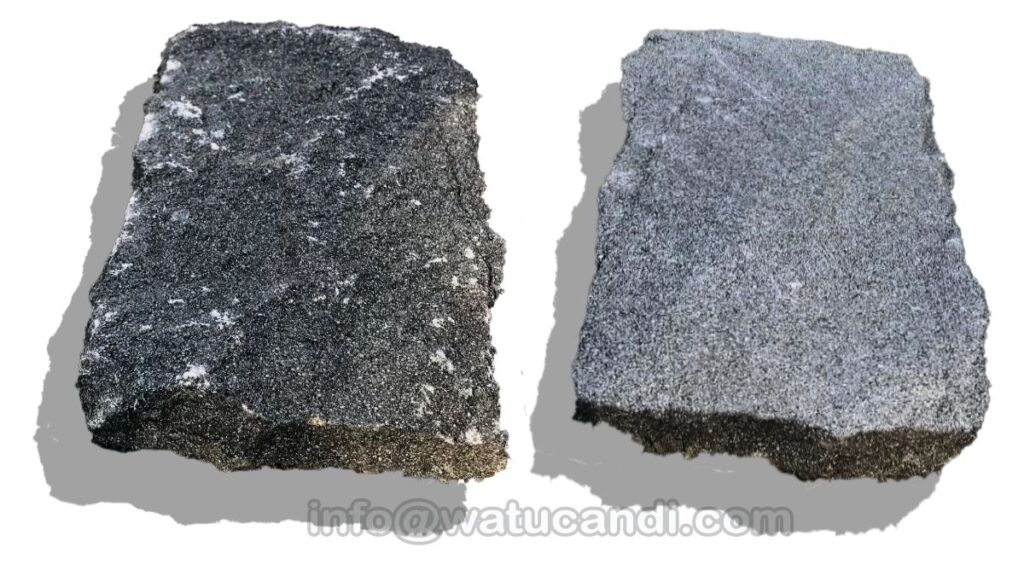
Random skin stones, often referred to as abstract or irregular stones, represent a brilliant intersection of economic efficiency and high-end artistic design. These tiles are produced from the irregular off-cuts and remnants generated during the standard block-cutting process. Instead of discarding these pieces, artisans clean and prepare them, resulting in a product that is entirely unique. No two random skin tiles are exactly the same in shape or size, offering an organic, puzzle-like aesthetic that is highly prized in contemporary and rustic design.
These stones possess a fascinating dual nature. One side is smooth, bearing the flat, machine-cut surface of the original slab. The opposite side and the edges retain the raw, rough, and irregular texture of the natural stone skin. This duality allows for two completely different design applications, depending on which side is faced outward.
1. Smooth Side Random Stone Flooring
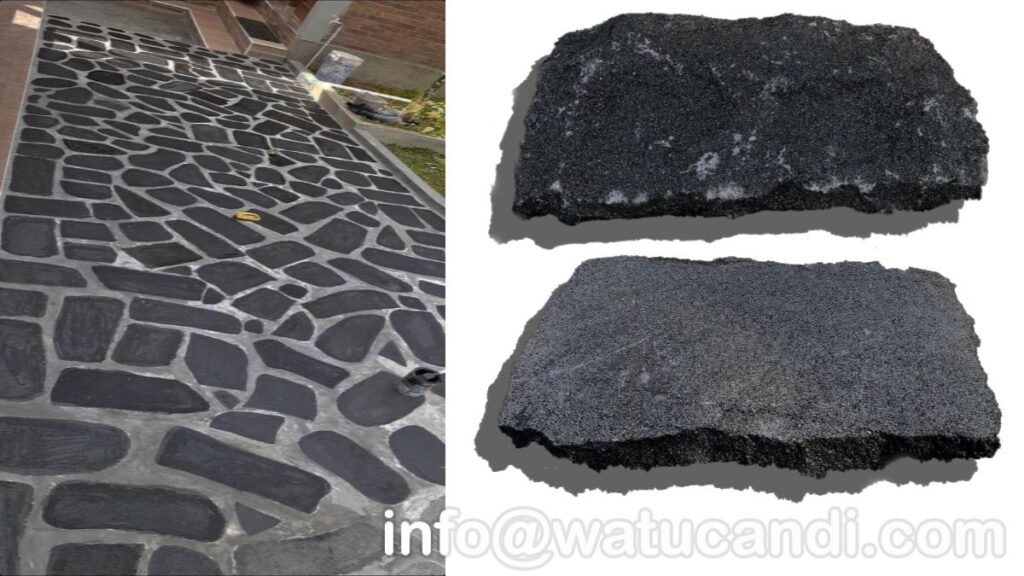
When installed with the smooth, machine-cut side facing up, random skin stones create a stunning, abstract mosaic floor. Because the shapes are irregular, the tiles are laid with intentionally wide grout joints. These joints are typically filled with a sand-cement mixture that is leveled flush with the surface of the stone. The contrast between the dark, smooth lava stone and the lighter grout lines highlights the organic, puzzle-like pattern of the floor. This technique is incredibly popular for patios, garden pathways, and indoor feature floors where a bespoke, artistic statement is desired. To complement this dark flooring with contrasting wall elements, pair it with black Candi lava stone cladding.
2. Rough Side Random Stone Wall Cladding
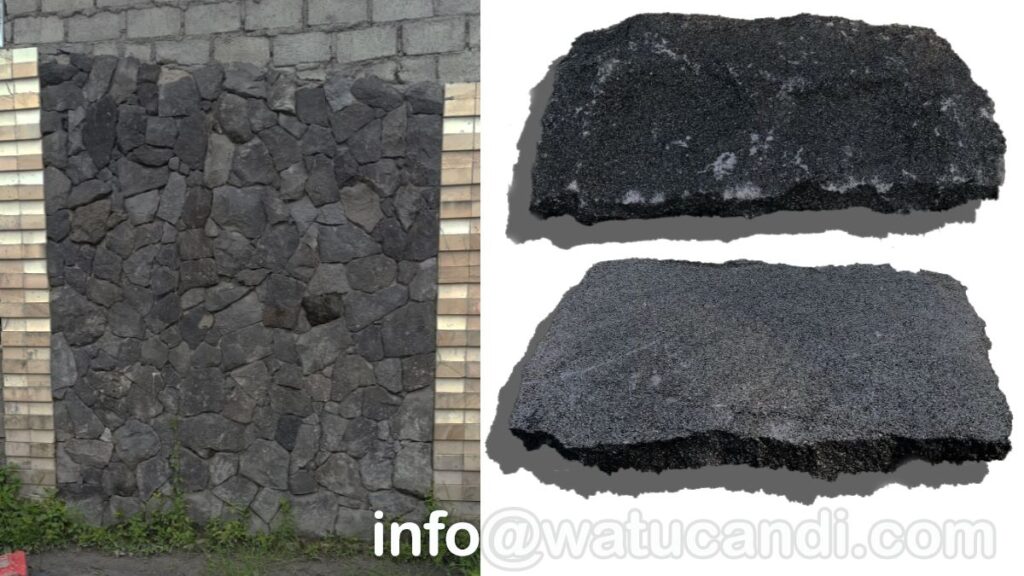
Conversely, when installed with the rough, irregular side facing outward, random skin stones become a powerful tool for creating highly textured, rustic wall cladding. The raw edges and natural skin of the stone protrude from the wall, creating a dramatic, three-dimensional effect that mimics a natural rock outcropping. This application is perfect for outdoor garden walls, boundary fences, and indoor feature walls, such as those surrounding a fireplace or in a tropical-themed bathroom. Because the stones are irregular, the installer must carefully select and fit each piece like a jigsaw puzzle, sometimes using an angle grinder to trim the edges for a perfect fit. Due to the high demand for this affordable yet artistic product, stock levels fluctuate rapidly. It is always advisable to contact us early to secure your required volume. For a more structured, yet still natural, layered wall look, see authentic stacked stone.
Rough Side and Cobblestone Paving: Heavy-Duty Durability
For projects that demand the utmost in rugged durability and rustic charm, rough side stones (RTS/RTA) and cobblestone pavers are the ultimate solutions. These products are derived from the outer “skin” or crust of the lava blocks, which is naturally denser and more textured than the inner core. The material is cut into specific dimensions and the edges are aggressively chiseled by hand to create a refined but distinctly rough profile. One face of the stone is left in its natural, heavily textured state, while the opposite face is machine-cut flat to ensure a stable base for installation.
1. Rough Wall Design Ideas
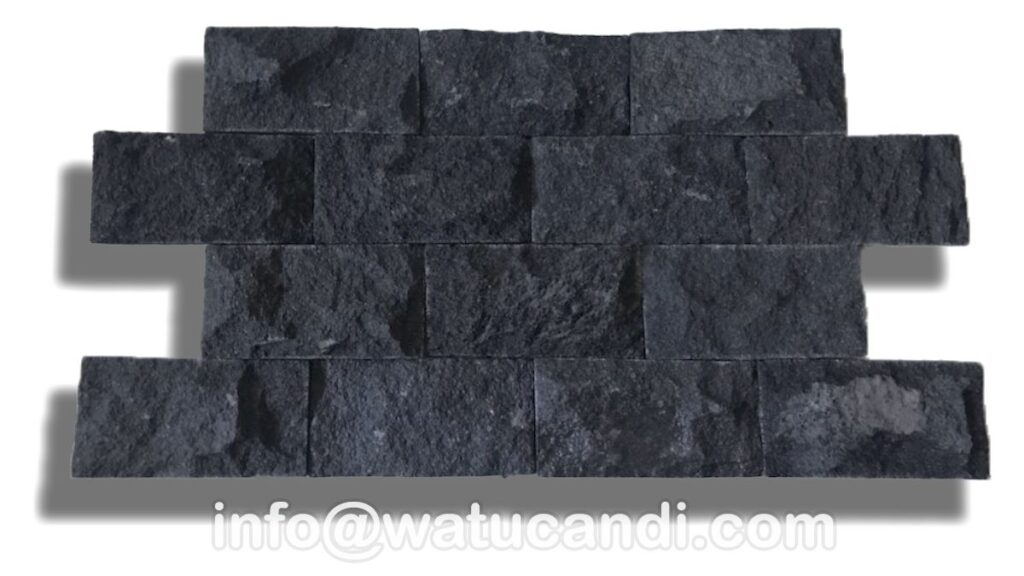
Rough side tiles are primarily utilized as exterior wall cladding. Their aggressive texture and dark color make them ideal for boundary walls, garden retaining walls, and outdoor terraces where a strong, natural presence is desired. For interior applications, they are frequently used to clad fireplace chimneys, creating a dramatic, industrial, or rustic focal point in living rooms. The dimensions of these tiles generally mirror the standard machine-cut sizes, but their visual weight is much greater. If you are looking to balance this heavy, dark texture with a lighter, vibrant green natural stone, visit authentic Sukabumi green stone tiles.
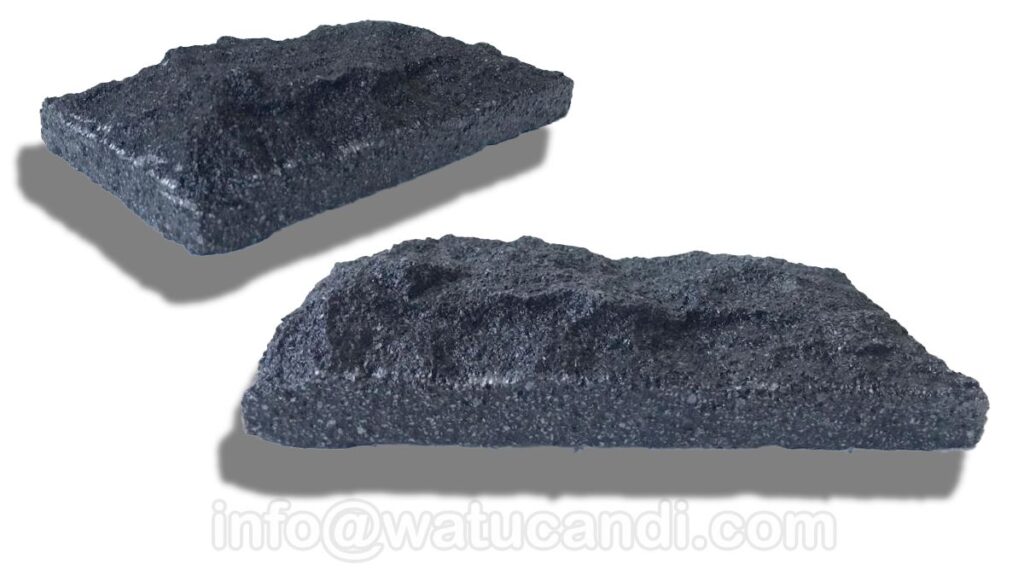
2. Cobblestone Paving (Cube Stone)
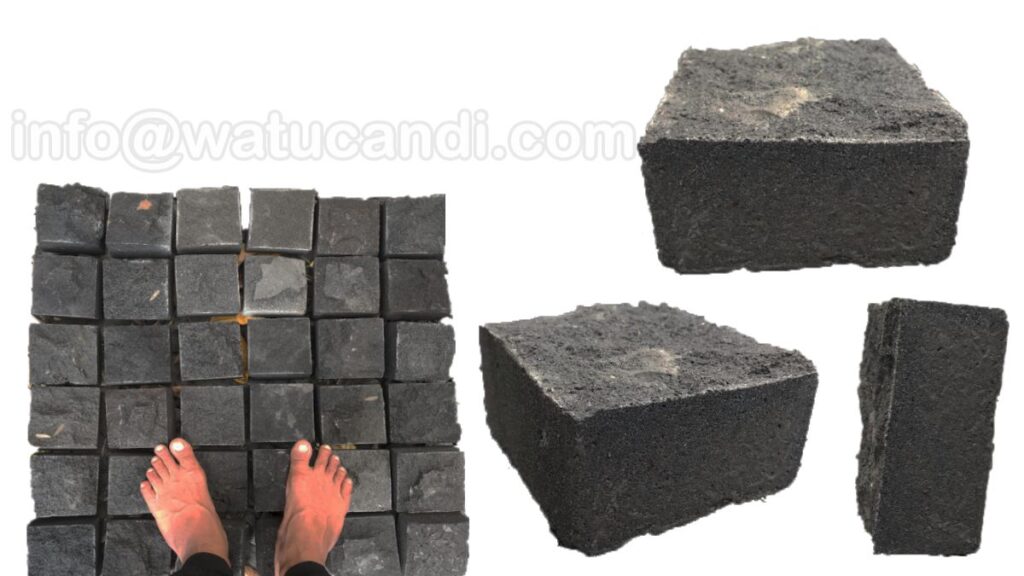
Cobblestone, or cube stone, is the heavy-duty champion of natural lava stone paving. Typically measuring 10x10x4.5 cm, these small, thick, and incredibly dense cubes are designed to withstand immense compressive forces. The top display face is left rough and textured, providing maximum slip resistance, while the bottom and sides are machine-cut to allow for tight, uniform installation. Cobblestones are frequently used for driveways, public plazas, parking areas, and high-traffic pedestrian zones. Unlike concrete pavers, which can fade, crack, or spall over time, natural lava cobblestones will only grow more beautiful as they weather, developing a rich, dark patina. While the production process is labor-intensive and the material cost is higher than concrete alternatives, the unparalleled aesthetic value and multi-generational durability make it a superior investment. To finish the edges of your cobblestone driveway beautifully, see natural stone edging.
Architectural Applications and Design Trends
The versatility of Indonesian natural lava stone allows it to be integrated into virtually any architectural style, from ultra-modern minimalism to traditional tropical rustic. In modern design, large-format, honed lava stones are used to create sleek, seamless floors and striking, monolithic wall features. The dark, matte surface provides a sophisticated, neutral backdrop that allows furniture, art, and landscaping to take center stage. In tropical and resort-style architecture, the stone is used to blur the lines between the built environment and nature. Rough-cut paving, random skin mosaics, and cobblestones are laid amidst lush greenery, creating pathways and patios that feel as though they have emerged organically from the earth itself.
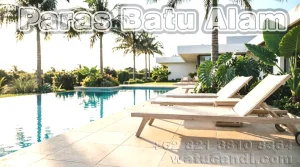
Water features represent another massive application for lava stone. Because the stone is highly resistant to water absorption and chemical degradation, it is the premier choice for swimming pool interiors, overflow edges, and pond liners. The dark color of the lava stone gives pool water a deep, reflective, mirror-like quality, enhancing the visual depth of the water. Furthermore, the stone’s natural thermal properties mean it does not absorb and retain heat as aggressively as concrete or synthetic materials, keeping pool decks comfortable for bare feet even in the peak of summer. For those interested in the specific dynamics of using dark stone in water features, explore black lahar options.
Technical Installation Guidelines
Proper installation is critical to ensuring the longevity and beauty of natural lava stone. Unlike ceramic tiles, natural stone is porous and susceptible to moisture movement, efflorescence, and staining if not installed correctly. The substrate must be perfectly clean, structurally sound, and completely cured. For floor installations, a thick-bed mortar method is often recommended to accommodate any slight variations in tile thickness, especially with manual cut or random skin stones.
The choice of adhesive is paramount. You must use a high-quality, polymer-modified thin-set mortar specifically formulated for natural stone. This type of mortar provides superior bond strength and flexibility, preventing the tiles from debonding due to thermal expansion or substrate movement. For wet areas like swimming pools and bathrooms, an epoxy-based adhesive is highly recommended due to its absolute waterproofing capabilities. When setting the tiles, ensure that you butter the back of each stone with a thin layer of mortar to eliminate any air pockets, which can lead to cracking under load.
Grouting natural stone requires careful consideration. For exterior applications and wet areas, use a high-performance, sanded cementitious grout or an epoxy grout. Epoxy grout is highly stain-resistant and impermeable to water, making it ideal for pools and kitchens. However, it is more difficult to install and requires skilled labor. Always apply a high-quality, penetrating sealer to the stone before grouting. This prevents the grout haze from sticking to the porous surface of the stone, making the final cleanup process much easier. For complex installation patterns and custom designs, review chiseled natural stone patterns.
Maintenance, Care, and Longevity
One of the greatest advantages of Indonesian natural lava stone is its low maintenance requirements, provided it was installed and sealed correctly. The dense, volcanic nature of the stone makes it highly resistant to scratching, heat, and UV degradation. However, because it is a porous material, it requires periodic sealing to protect against stains, oil spills, and organic growth like moss or algae.
For routine cleaning, use only a pH-neutral stone cleaner and a soft brush or mop. Never use acidic cleaners (like vinegar or muriatic acid) or harsh alkaline chemicals, as these can break down the sealer and etch the surface of the stone, particularly if it has a honed finish. For outdoor areas, periodic pressure washing on a low setting can help remove dirt and organic debris, but be cautious not to use a pressure so high that it dislodges the grout or damages the natural texture of the stone.
Efflorescence, the white, powdery salt deposit that can sometimes appear on the surface of natural stone, is a natural occurrence caused by water moving through the stone and evaporating. If this occurs, it can be carefully removed using a specialized efflorescence remover designed for natural stone. Re-sealing should be performed every 1 to 3 years, depending on the location, traffic, and exposure to the elements. A simple water bead test can help you determine if it is time to reseal; if water no longer beads up on the surface but instead darkens the stone and absorbs quickly, a fresh coat of penetrating sealer is required. For comprehensive care advice on similar volcanic materials, read our black lava stone gravel volcanic rock guide.
Complementary Natural Stone Solutions
While Indonesian natural lava stone is incredibly versatile, a well-rounded architectural project often benefits from the integration of various natural materials. Our extensive catalog includes a wide array of stones that can be used in harmony with lava stone to create depth, contrast, and visual interest. Understanding the unique properties of these complementary stones allows you to make informed design choices for every area of your project.
For projects requiring a lighter, warmer aesthetic to contrast the deep charcoal of lava stone, brown sandstone offers beautiful, earthy tones. If you are looking for a vibrant, lush green to bring life to water features or garden walls, Sukabumi green natural stone is the industry standard. We also offer detailed comparisons to help you choose the right grade for your budget, such as local versus precision green stone tiles. For a classic, creamy white limestone that exudes traditional elegance, explore our guide to natural limestone and travertine.
When designing expansive outdoor areas, combining different textures is key. You can use our andesite paving stone for driveways, transition into natural andesite stone for walkways, and finish with Merapi lava stone decking parquet around the pool. For those who love the raw, unrefined look of volcanic rock, our lava stone and Candi lava natural stone collections provide endless possibilities. We also carry specialized items like alkali lava stone for unique chemical-resistant applications, and specific dimensions like lava stone 75x230mm for linear designs. Browse our entire lava natural stone products catalog for more inspiration.
Interior design can also be elevated with natural stone. Beyond flooring and walls, consider integrating natural stone and furniture into your living spaces. A hand-carved authentic Merapi stone sink 49x49x13cm or a sleek black basalt stone sink can serve as a stunning focal point in a bathroom. For the outdoors, relax on a handmade stone table and chair set, or incorporate a handmade stone basin into your garden landscaping. If you require intricate, artistic wood and stone combinations, check our carved motif dressing table.
For wall cladding that demands attention, our black lava natural stone tiles offer profound depth. You can create historic, temple-inspired aesthetics with Borobudur temple stone or utilize practical temple stone paving floors for pathways. Learn about the intricate craftsmanship of stone carving paving floors for bespoke designs. To ensure your pool is perfectly tiled, read our complete guide to green stone tiles for swimming pools. Create beautiful garden transitions with Candi stone stepping floors and browse our general natural stone tiles collection. Discover hidden crystals in Merapi lava for unique accents, and utilize Pelinggih stone materials for spiritual structures. Experience the tactile brilliance of black lava brushed hammered surface, install traditional Candi lahar stone flooring, choose authentic hand-chiseled stone flooring, apply Yogyakarta green stone batik tiles, use large format black lava stone 100x100x10, explore black lava stone tiles, consider breccia natural stone tiles, and review Candi lahar Merapi flooring for ultimate durability.
Conclusion
Indonesian natural lava stone is more than just a building material; it is a connection to the earth’s raw power, a testament to centuries of architectural mastery, and a versatile canvas for modern design. Whether you are drawn to the rustic charm of manual cut pavers, the sleek elegance of honed finishes, or the heavy-duty resilience of cobblestones, this volcanic stone offers unmatched durability and timeless beauty. By understanding the geological properties, manufacturing nuances, and proper installation techniques, you can ensure that your natural stone project will stand strong and look magnificent for generations. Contact our expert team today to discuss your specific requirements, request samples, and begin the journey of transforming your architectural vision into a tangible, enduring reality.
Indonesian natural lava stone tiles
indonesian-natural-lava-stone-tiles-ultimate-guide`
Discover the ultimate guide to Indonesian natural lava stone tiles. Explore geological benefits, surface finishes, installation techniques, and design inspirations for durable, elegant architecture.
Tags: indonesian lava stone, batu candi, natural stone tiles, volcanic stone, stone paving, wall cladding, honed stone, cobblestone, merapi stone, architectural stone, outdoor flooring, pool coping, rustic stone, machine cut stone, manual cut stone, stone installation, natural stone maintenance, andesite, basalt, eco-friendly building,


3 thoughts on “Indonesian Natural Stone Tiles (Lava/Lahar): The Ultimate Architectural Guide”