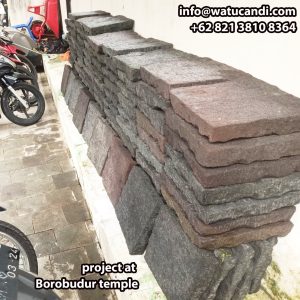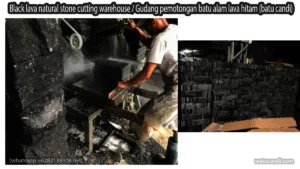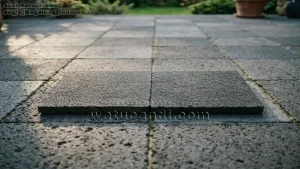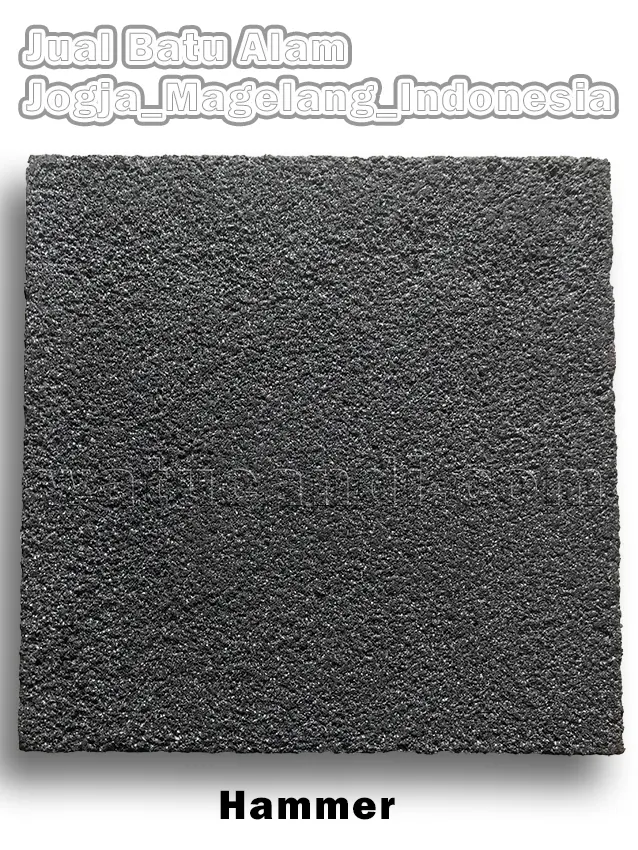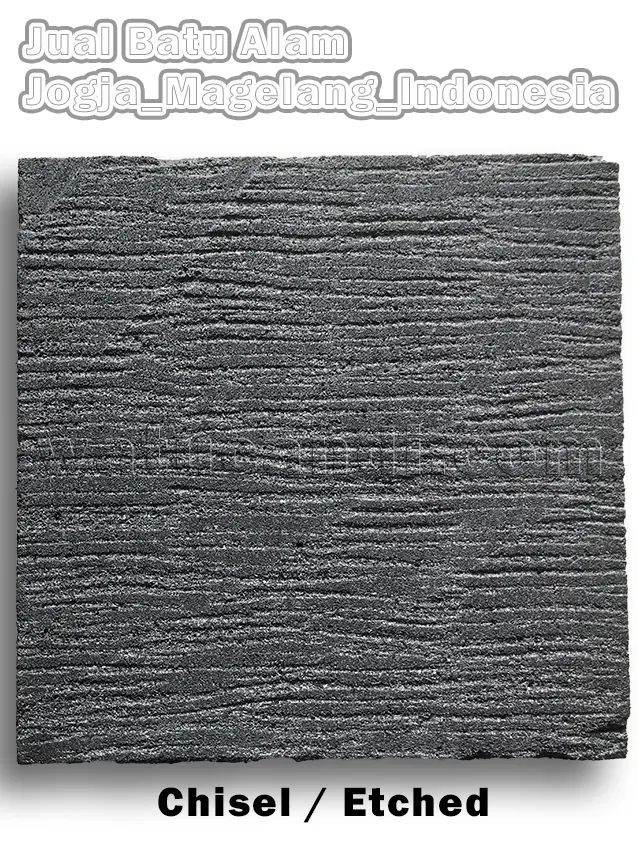
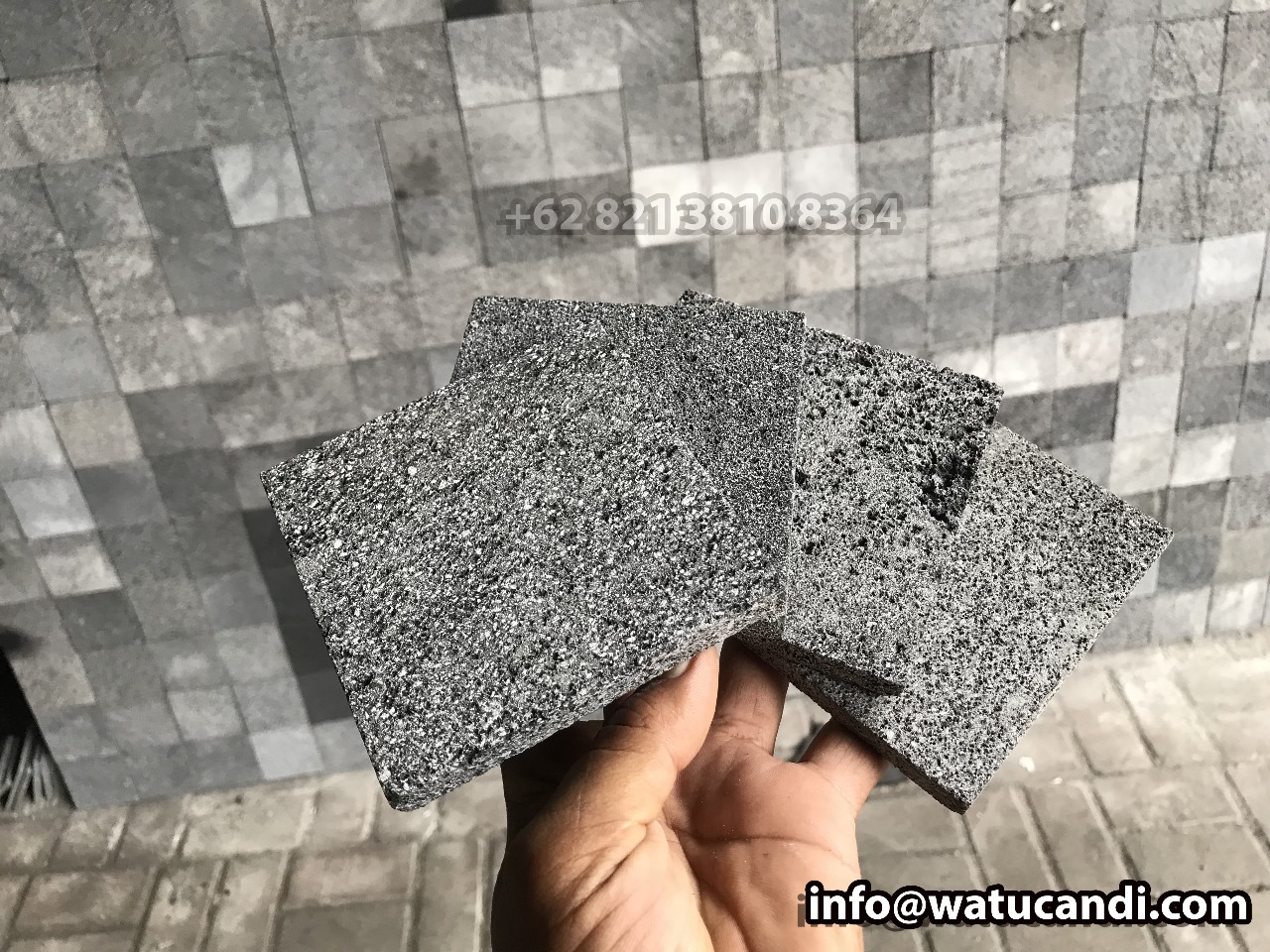
Black Lava is a distinctive term for Indonesian natural volcanic stone that is increasingly popular among architects, contractors, and property owners worldwide.
This material has become a favorite in the construction and design industry thanks to a unique combination of strength, natural beauty, and the historical value it embodies.
Its ever-growing popularity stems from its ability to bring an authentic natural nuance to various types of buildings, from private residences, luxury villas, star-rated resorts, to commercial buildings and public spaces.
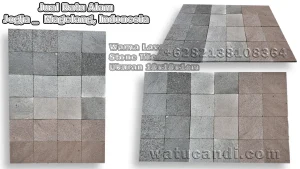
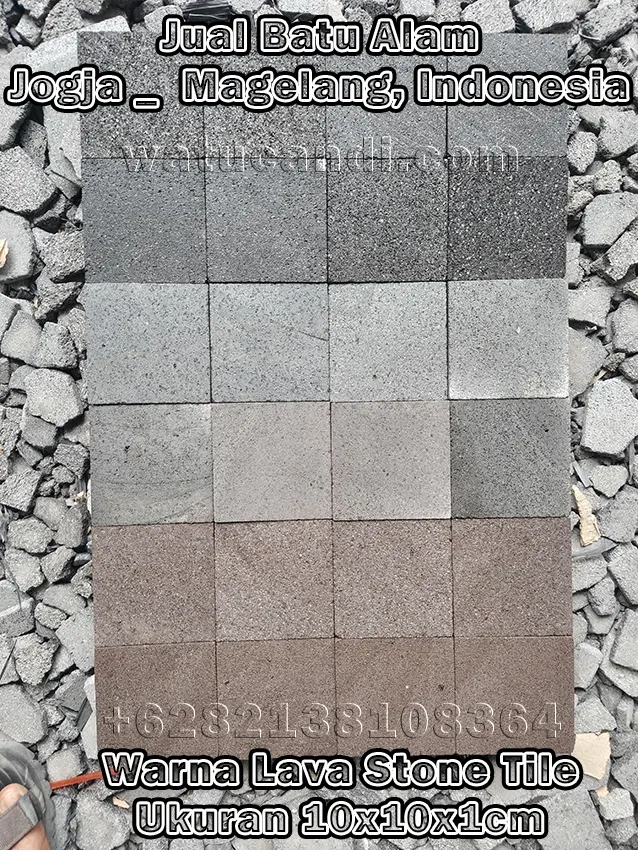
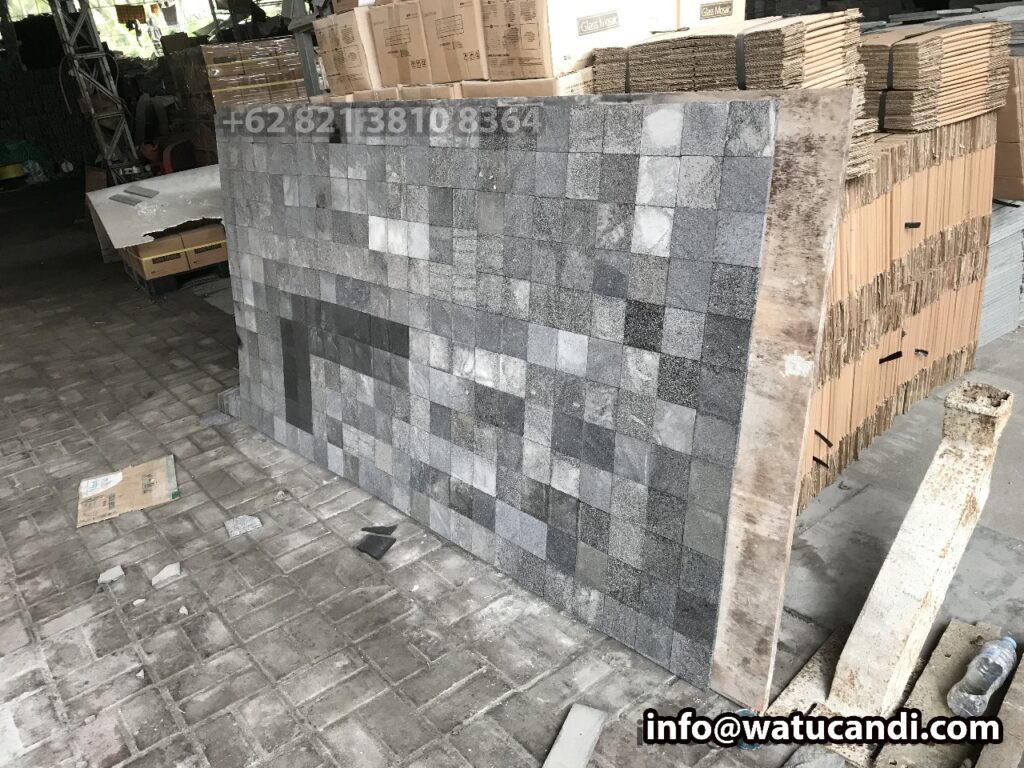
Although its name contains the word “hitam” (black), this material actually possesses a unique spectrum of natural colors: jet black, smoky gray, and hints of brown and reddish hues emerging from the oxidation of minerals within the stone. This color variation is not a production defect, but proof of the authenticity of natural material that cannot be replicated by man-made products. Every slab of Pedra Hitam has different visual characteristics, making each installation produce a truly unique and personal appearance. This combination makes Pedra Hitam the perfect choice for anyone wanting an elegant, masculine, yet warm touch on their residence or commercial project.
This article will thoroughly explore everything about Pedra Hitam so you can be more confident in making it your mainstay material. We will discuss starting from the definition, geological history, technical characteristics, advantages, applications, installation techniques, maintenance, to long-term investment value. With this comprehensive understanding, you will be able to make the best decision for your project.
Table of Contents
- Definition and Meaning of Pedra Hitam
- Geological History and Formation Process
- Production Areas of Pedra Hitam in Indonesia
- Physical, Chemical, and Mechanical Characteristics
- Living Color and Appearance Characteristics
- Other Names for Pedra Hitam in Local and Global Markets
- Advantages of Pedra Hitam Compared to Other Materials
- Versatile Applications in Design and Construction
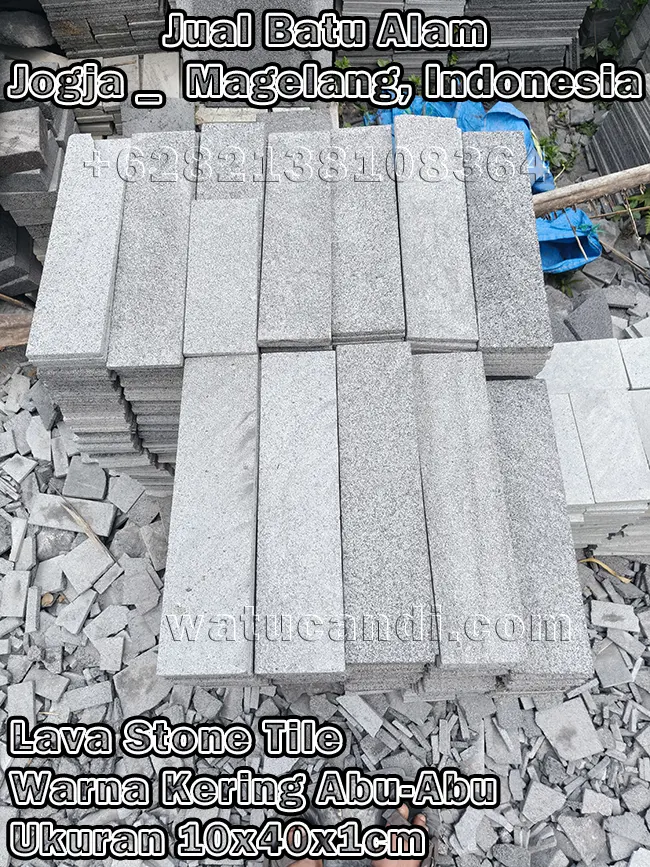
- Available Dimensions and Sizes
- Proper Installation Guide
- Simple Maintenance for Timeless Beauty
- Pedra Hitam in Indonesian History and Culture
- Modern Design Combination Inspiration
- Comparison with Other Natural Materials
- Investment Value and Sustainability
- How to Get Quality Pedra Hitam?
- Case Studies and Project Testimonials
- Export Trends and Global Demand
- Frequently Asked Questions (FAQ)
- Contact and Orders
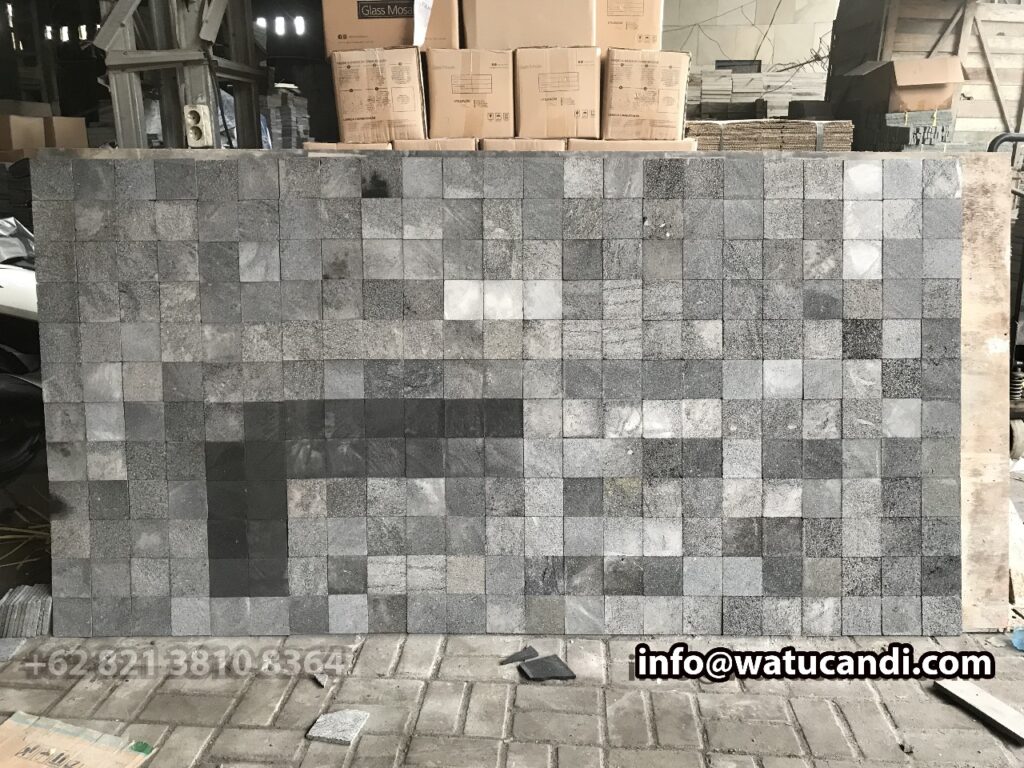
Definition and Meaning of Pedra Hitam
Pedra Hitam is a widely used term in the international market to refer to dark-colored natural volcanic stone originating from Indonesia. Literally, “Pedra” comes from the Portuguese word meaning “stone”, while “Hitam” is an Indonesian word meaning “black”. So, Pedra Hitam simply means “Black Stone”. This term became popular since the colonial era when Portuguese traders interacted with the local population in the archipelago and admired the beauty of the volcanic stone used to build magnificent temples.
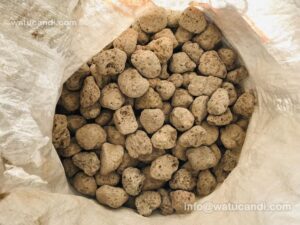
In a modern context, Pedra Hitam refers to volcanic rock of the basalt or andesite type that has characteristics of a porous surface, varying dark colors, and high mechanical strength. This material is formed from volcanic lava flows that cool and harden naturally, creating a dense stone structure that still possesses microscopic pores. This natural process creates the porous texture that is both a hallmark and a source of the material’s superiority. The existence of these pores is not a weakness, but a feature that provides natural anti-slip ability, thermal insulation, and unique aesthetic character.
Pedra Hitam is also popularly known as Black Temple Stone, Black Lava Stone, or even sometimes people call it Bali Sandstone. Among natural stone craftsmen in Central Java and Yogyakarta, this material is more familiarly called “Temple Stone” because of its extensive use in temple buildings since the Hindu-Buddhist kingdom era. However, the term “Pedra Hitam” itself has stuck in the international market as the identity of Indonesian lava stone. The use of this term facilitates product identification in the global market and provides added value in the form of strong branding for Indonesian natural products.
As a volcanic rock, cooling and solidifying volcanic lava flows form Pedra Hitam. This cooling process, which takes place over thousands to millions of years, produces a complex mineral crystal structure and pores that are evenly distributed. Unlike artificial stone produced under controlled conditions, every slab of Pedra Hitam has unique patterns and characteristics, making it a highly valued material in the world of design and architecture.
Geological History and Formation Process
To thoroughly understand the advantages of Pedra Hitam, we need to trace its fascinating geological history. The formation process of this stone began millions of years ago, when Indonesia was still part of an active volcanic chain stretching along the Pacific Ring of Fire. Intense tectonic activity in this region caused the formation of thousands of volcanoes, which periodically erupt and release large amounts of volcanic material.
Lava melt reaching temperatures between 700 to 1,200 degrees Celsius flows from volcanic craters and spreads over wide areas. When this lava reaches the cooler surface, the cooling process begins. Lava that cools rapidly on the surface will form a more porous structure because trapped gases do not have time to escape. Meanwhile, lava that cools more slowly in the interior will form a denser and more crystalline structure.
This varying cooling process is what creates the diversity of Pedra Hitam characteristics. Stone originating from the outer part of the lava flow tends to have larger pores and a coarser texture, while stone from the inner part has a finer texture and darker color. This natural variation provides diverse aesthetic options for designers and architects.
In terms of mineral composition, Pedra Hitam belongs to the extrusive igneous rock family rich in silica, feldspar, pyroxene, and olivine minerals. This mineral content provides superior physical characteristics, such as high hardness (around 6-7 on the Mohs scale), resistance to abrasion, and good chemical stability. This explains why ancient temples built using similar stone still stand strong today, even after hundreds of years.
Production Areas of Pedra Hitam in Indonesia
Indonesia, as part of the Pacific Ring of Fire, has many active volcanoes that produce high-quality lava stone. Various regions in Indonesia have slightly different Pedra Hitam characteristics, depending on the mineral composition and volcanic history of each mountain. Here are some of the best Pedra Hitam producing areas in Indonesia:
- Mount Merapi, Central Java and Yogyakarta: The main source of Pedra Hitam that since the kingdom era supplied material for magnificent temples such as Borobudur and Prambanan. Stone from Merapi is famous for its jet black color and relatively dense texture. The natural stone processing industry around Magelang and Sleman has developed over several generations, creating an economic cluster that supports thousands of families.
- Mount Semeru, East Java: As the highest mountain in Java, Semeru produces lava stone with a very dense and durable character. Stone from Semeru is often used for large infrastructure projects that require extra strong material.
- Mount Rinjani, West Nusa Tenggara: Produces lava stone with distinctive color and grain, often having unique bluish or greenish nuances. Stone from Rinjani is highly valued in the export market for its special visual characteristics.
- Mount Agung, Bali: Provides lava stone that craftsmen often process into tiles and handicrafts. The natural stone industry in Bali has grown into one of the most advanced in Indonesia, with products exported to various countries in Europe, America, and Australia.
- Mount Kelud, East Java: Produces lava stone with larger pore characteristics, often used for applications requiring natural drainage or maximum anti-slip effect.
- Mount Galunggung, West Java: Stone from this area has a distinctive gray color with bluish tinges, very popular for contemporary design applications.
Differences in mining locations provide slight variations in hue and stone porosity, but all share the same advantages: sturdy, weather-resistant, and long-lasting. In the natural stone processing industry, the selection of raw material sources is a critical step that determines the quality of the final product. Experienced craftsmen can identify stone quality just by looking at and feeling its texture, a skill passed down from generation to generation.
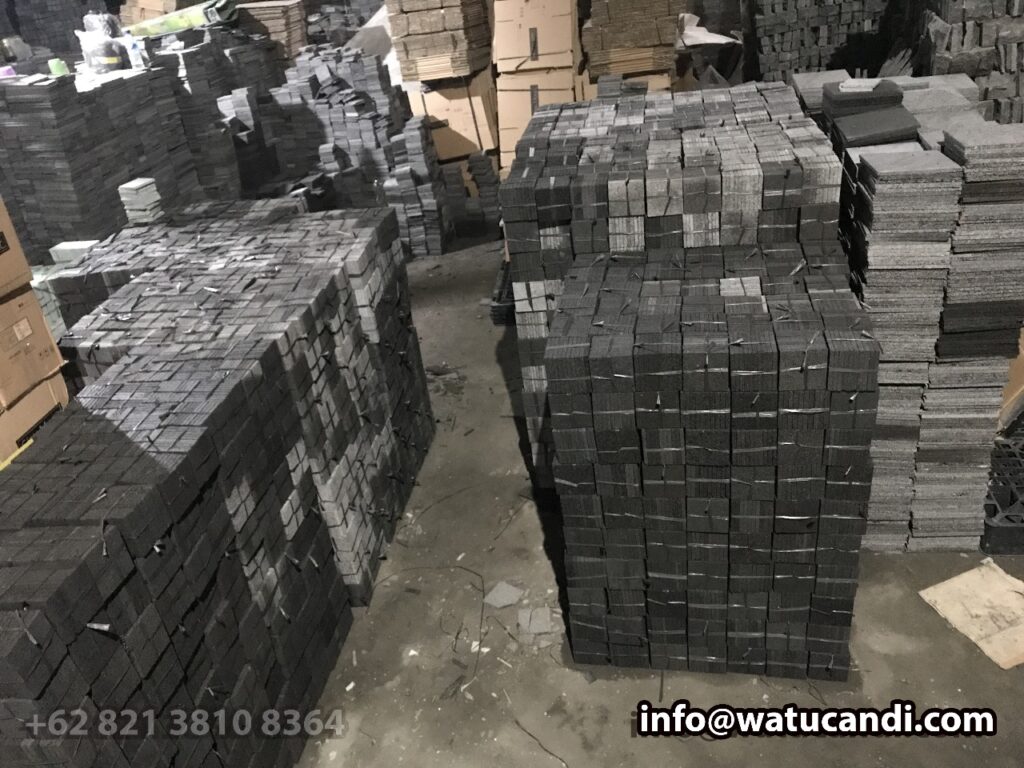
Physical, Chemical, and Mechanical Characteristics
To understand why Pedra Hitam is so suitable for various construction and design applications, we need to examine its technical characteristics more deeply. Here are the details of Pedra Hitam’s physical, chemical, and mechanical properties that make it superior:
- Hardness: Pedra Hitam has a hardness level of 6-7 on the Mohs scale, equivalent to granite and harder than marble (3-5). This means this material is highly resistant to scratches and abrasion, making it ideal for high-traffic areas such as commercial floors and footpaths.
- Compressive Strength: Laboratory tests show that Pedra Hitam has a compressive strength ranging from 100-300 MPa (Mega Pascal), far above ordinary concrete which is only around 20-40 MPa. This strength allows the stone to withstand heavy loads without cracking or breaking.
- Porosity: The porosity level of Pedra Hitam ranges from 1-5%, depending on the mining location and the part of the lava flow from which the stone was taken. This porosity is low enough to prevent excessive water absorption, but high enough to provide anti-slip texture and the ability to “breathe”.
- Water Absorption: With relatively low porosity, Pedra Hitam absorbs only a small amount of water. This makes it resistant to damage from freeze-thaw cycles and suitable for use in countries with four seasons.
- Chemical Resistance: Pedra Hitam has good resistance to weak acids and bases, although it is not recommended for continuous use with strong chemicals. This resistance makes it suitable for applications in areas exposed to mild chemicals such as swimming pool areas containing chlorine.
- Thermal Conductivity: Pedra Hitam has low thermal conductivity, meaning this stone does not easily conduct heat. This is what makes Pedra Hitam floors remain cool even under the blazing sun, providing natural thermal comfort without requiring artificial cooling.
- Specific Gravity: With a specific gravity of around 2.5-2.8 g/cm³, Pedra Hitam falls into the category of natural stone with medium density. This makes it light enough for wall installation without requiring special supporting structures, yet heavy and solid enough to give a sturdy impression.
The combination of these characteristics makes Pedra Hitam a very versatile material. It can be used for both structural applications requiring strength and decorative applications that prioritize aesthetics. Not many natural materials have a perfect balance between function and beauty like Pedra Hitam.
Living Color and Appearance Characteristics
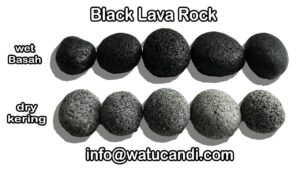
One of Pedra Hitam’s greatest attractions is its ability to change color. This phenomenon occurs due to the structure of microscopic pores on the stone surface that react to moisture. When dry, its surface displays a calm and neutral dark gray color, creating a serene and sophisticated atmosphere. Once water touches it, its color immediately changes to a dramatic jet black, providing stunning contrast and creating a strong focal point in the design.
This color change effect creates a captivating visual play, especially if you install it in areas that are frequently wet such as swimming pool edges or garden paths. Every time rain falls or water splashes the surface, Pedra Hitam will “come alive” and display its best color. This is a feature that cannot be imitated by artificial materials like ceramic or cast concrete, and is one of the reasons why landscape designers and architects really love this material.
Furthermore, the small pores on its surface are not defects, but proof of authenticity that provides a natural anti-slip texture and prevents excessive heat absorption. These pores act as a natural insulator that traps air and prevents direct heat transfer to the stone surface. As a result, you remain comfortable stepping on Pedra Hitam floor even as the blazing sun shines on it. This thermal comfort is very important for outdoor applications in tropical climates like Indonesia, where floor surface temperatures can reach more than 50 degrees Celsius during the day.
In addition to the wet-dry color change, Pedra Hitam also shows natural color variations originating from differences in mineral composition. Some slabs may have brownish tinges from iron oxidation, while others may display bluish nuances from certain mineral contents. This variation makes each installation unique and unreplicable, giving high artistic value to each project.
Other Names for Pedra Hitam in Local and Global Markets
The domestic and global markets know Pedra Hitam by various nicknames. Understanding these synonyms will make it easier for you when searching for references or shopping, as well as help you communicate effectively with suppliers from various regions. Here are other names you need to know:
- Black Temple Stone (Batu Candi Hitam): Points to its historical use as the main material of ancient temples in Java. This name is most commonly used among craftsmen and traders of natural stone in Indonesia. When you hear this term, it can be confirmed to refer to dark-colored basaltic or andesitic lava stone.
- Black Lava Stone: A general term in English for dark-colored lava stone. This name is most often used in the context of export and international trade. Searching with this keyword on digital platforms will yield various products from Indonesia.
- Volcanic Stone: Emphasizes its origin from volcanic activity. This term is more general and can include various types of volcanic rocks, not just black ones. However, in the Indonesian context, this term often refers to Pedra Hitam.
- Lava Stone Bali: Often attached to processed products from Bali, even though the raw material can come from Java or Lombok. Bali has become an important natural stone processing and export hub, so many products are labeled “Bali” even though the raw materials come from outside the island.
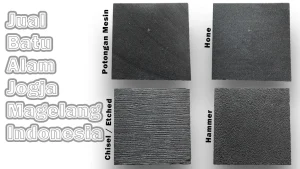
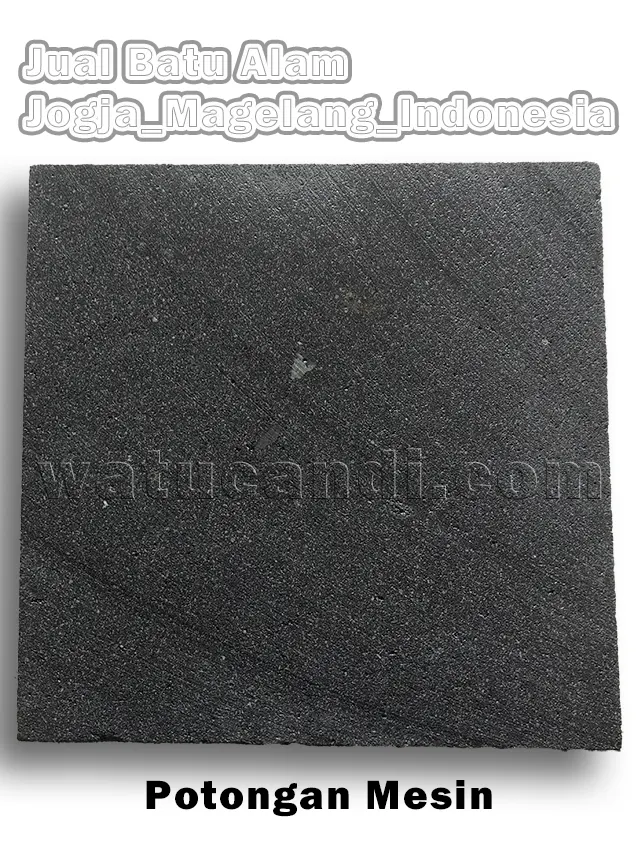
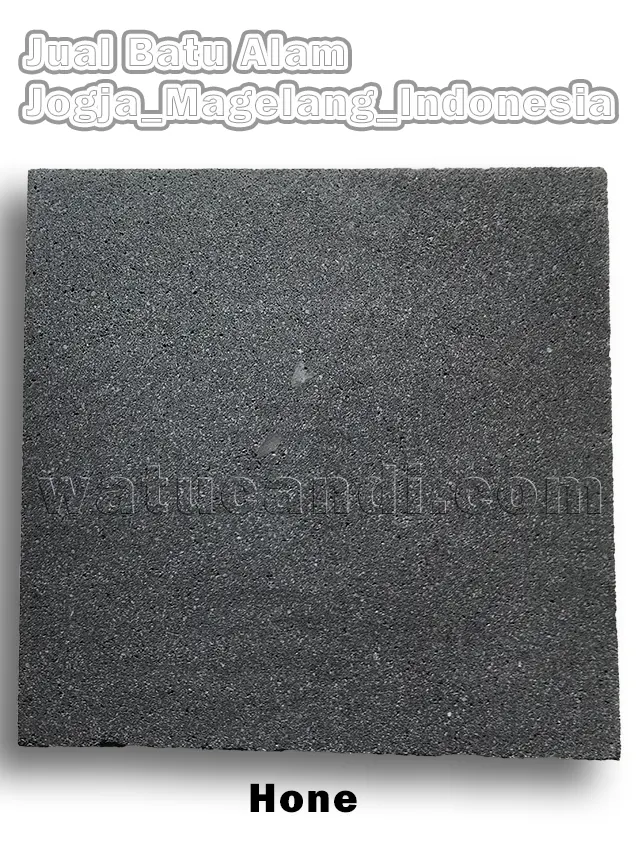
- Pedra Hitam Lisa: Refers to a variant with a relatively flat surface (lisa = smooth / RTM) but still has a natural texture. This variant is produced through a precise machine-cutting process, resulting in a smoother surface compared to the rough face variant.
- Black Andesite: A more technical geological term, referring to the mineral composition of the stone belonging to the andesite family. The use of this term is more common among professionals and academics.
- Black Basalt: Similar to black andesite, this term refers to the basaltic composition of the stone. Basalt tends to have a darker color and finer texture compared to andesite.
Although sometimes people equate it with Bali Sandstone, you need to note that sandstone has a different composition and character. Sandstone is formed from compacted sand sediment, while Pedra Hitam is formed from cooled lava. Pedra Hitam is much harder and denser, making it more suitable for high-traffic areas. This identification mistake often occurs among lay consumers, so it is important to understand the fundamental differences between the two materials.
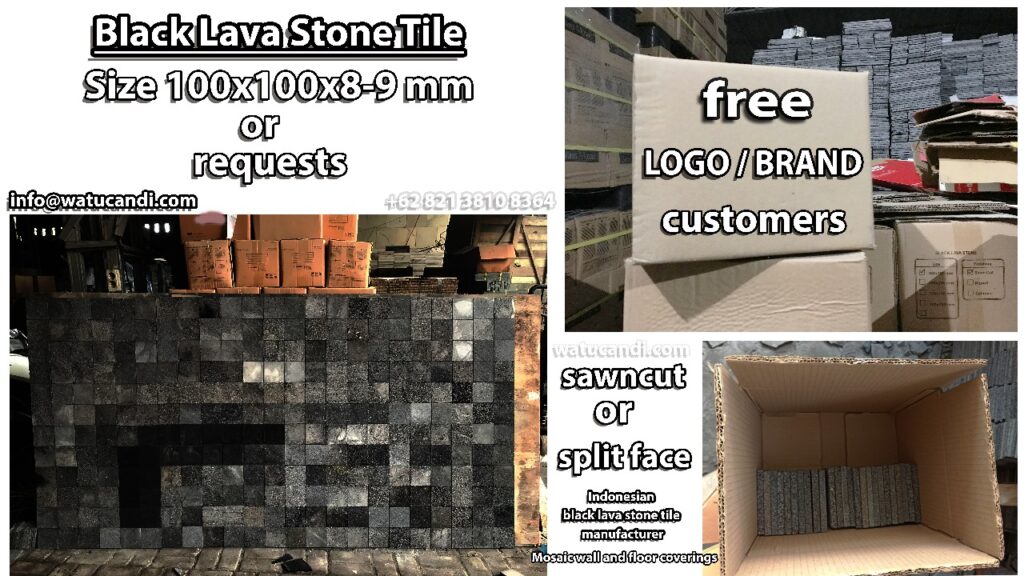
Advantages of Pedra Hitam Compared to Other Materials
There are many reasons why Pedra Hitam is increasingly in demand, both by private homeowners and commercial property developers. In competition with modern materials such as ceramic, porcelain, and cast concrete, Pedra Hitam offers advantages that cannot be matched by man-made products. Here are the advantages in more detail:
- Durable and not easily damaged. Volcanic stone naturally has high density, making it able to withstand heavy loads and extreme weather changes. Unlike ceramic which can crack or break due to heavy loads, Pedra Hitam can last for decades without significant damage. In fact, some temple buildings using similar materials have lasted for more than a thousand years.
- Natural anti-slip. The pores on the surface act as micro-texture that provides grip, very safe for wet areas. The coefficient of friction of Pedra Hitam is much higher compared to polished ceramic or marble, making it an ideal choice for areas that prioritize safety such as bathrooms, swimming pool edges, and ramps.
- Does not absorb heat. The floor remains cool even under direct sunlight, saving energy and increasing comfort. In the context of climate change and rising global temperatures, this natural thermal insulation ability becomes increasingly valuable. Buildings using Pedra Hitam on their facades can reduce cooling loads by up to 10-15%.
- Easy to maintain. Simply rinse with clean water and brush gently periodically. No need for complicated chemical coatings. This simplicity of maintenance is in stark contrast to materials like marble which require special and expensive care. For exterior applications, natural rain is often sufficient to clean the stone surface.
- Living and natural color. The color change from dry to wet provides an aesthetic dimension that cannot be matched by artificial materials. This is the feature that makes Pedra Hitam “alive” and interact with its environment. No two moments are the same on this stone surface, creating a dynamic visual experience.
- Historical and cultural value. Using Pedra Hitam means bringing a piece of the history of Nusantara civilization into your modern home. This material has been used since the ancient kingdom era and has been a silent witness to the development of civilization in Indonesia. By choosing Pedra Hitam, you not only get building material, but also a cultural heritage of high value.
- Environmentally friendly and sustainable. Pedra Hitam is a natural material that does not require a manufacturing process that produces high carbon emissions. Its mining and processing use simple technology with minimal environmental impact. In addition, this stone can be recycled or reused after the building is demolished.
- Increasing investment value. Properties using Pedra Hitam tend to have a higher resale value because of the luxurious and exclusive impression it gives. In the long run, investment in quality natural materials like Pedra Hitam will provide significant returns.
Versatile Applications in Design and Construction
Pedra Hitam is not just an ordinary wall tile. Its flexibility allows you to use it for various design and construction needs. Here is a more detailed explanation of each application:
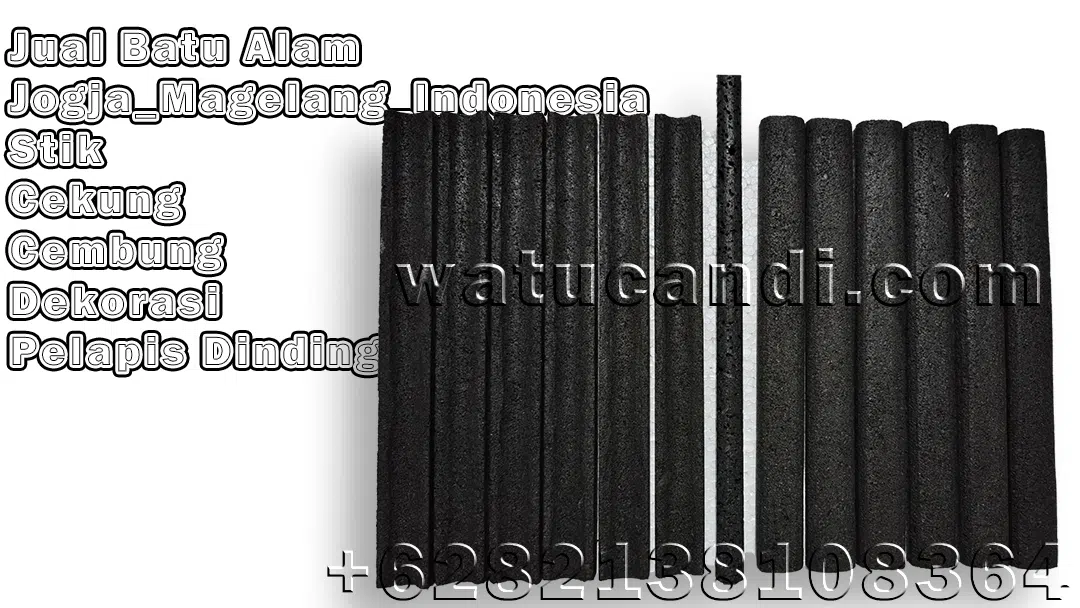
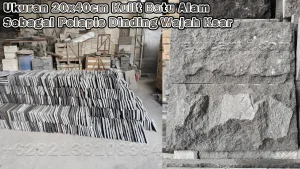
- Interior and exterior wall cladding: Gives dramatic texture to house facades, garden walls, or accent walls in living rooms. Installation on exterior facades not only provides aesthetic value, but also serves as a protective layer that protects walls from direct rain and heat. For interiors, Pedra Hitam accent walls can create a strong focal point in the room, especially if combined with proper lighting.
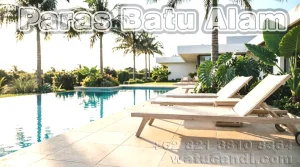
- Wet area flooring: Suitable for swimming pool edges, bathrooms, or stepping stones around fountains. Its porous surface provides excellent grip, thereby reducing the risk of slipping. For swimming pool areas, Pedra Hitam is also resistant to chlorine and will not discolor due to long-term exposure to pool chemicals.
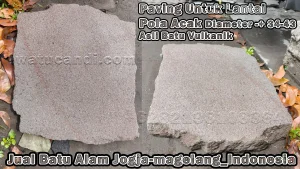
- Paving and pedestrian ways: Ideal for footpaths, yards, or parking areas. Its resistance to loads and weather makes it a long-term investment. Pedra Hitam paving can be installed with creative patterns to create paths that are both aesthetic and functional.
- Stepping stones in gardens: Natural forms or precision cuts create aesthetic paths that blend with the surrounding landscape. Pedra Hitam stepping stones can be combined with grass, gravel, or moss to create interesting visual effects.
- Decorative elements: Mortars, pestles, statues, temple miniatures, and garden ornaments. Craftsmen in Bali often use Pedra Hitam to make high-value art products. Pedra Hitam handicrafts have a high selling value in the international market because of their uniqueness and quality.
- Temple and historical building restoration projects: Thanks to its similarity to original stone, restoration experts often use this material to maintain cultural heritage sites. The use of materials consistent with the originals is very important in restoration projects to preserve the authenticity and historical integrity of buildings.
- Furniture and architectural elements: Pedra Hitam can also be used to make tables, garden benches, or architectural elements such as pillars and decorative beams. Its strength and beauty make it an ideal material for outdoor furniture that can withstand all weather conditions.
Available Dimensions and Sizes
You can get Pedra Hitam in various sizes to suit your design needs. This dimensional flexibility allows architects and designers to explore various installation patterns and create truly personal appearances. Here are some of the most popular standard dimensions:
- 10 x 10 x 1 cm (small tiles, suitable for mosaic patterns and areas with lots of detail)
- 7.5 x 23 x 1 cm (brick format, ideal for walls with offset or herringbone installation patterns)
- 10 x 20 x 1 cm (universal format suitable for various wall and floor applications)
- 20 x 20 x 1 cm (square format that gives a modern and clean look)
- 20 x 40 x 1 cm (large format ideal for spacious areas and creates a luxurious impression)
- 30 x 60 x 1.5 cm (large panel format for commercial applications and building facades)
- Custom (special sizes according to project requests, with certain minimum orders)
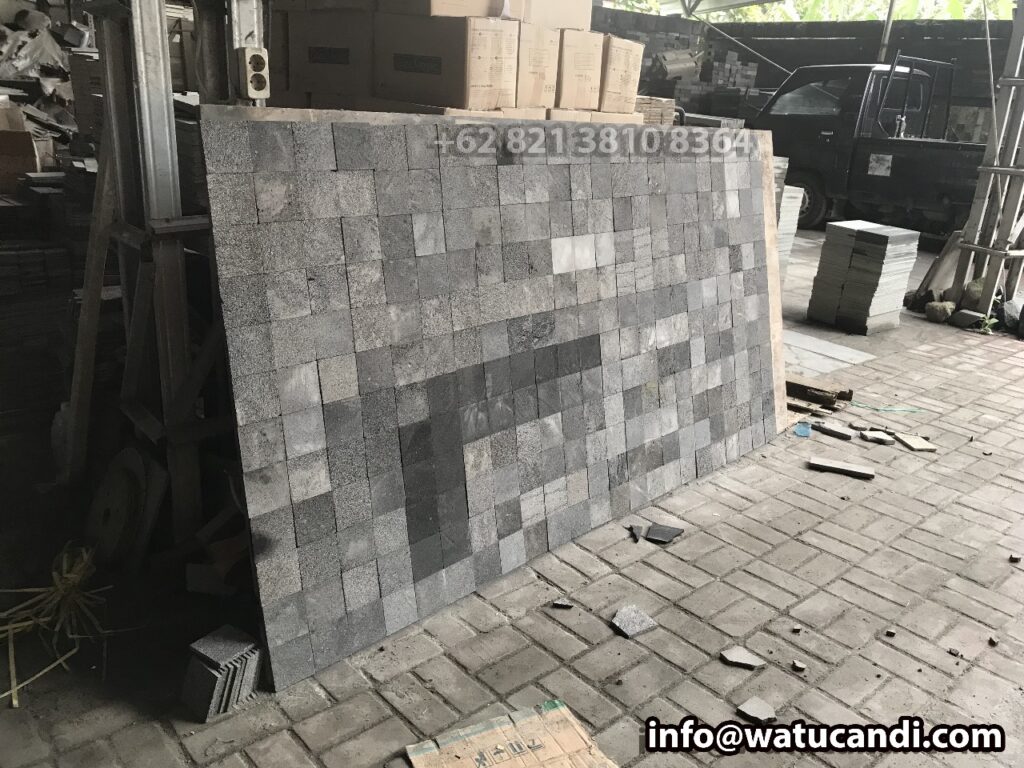
We maintain very strict dimensional tolerances for export quality, which is around 1 to 1.5 millimeters. This strict tolerance is very important to ensure neat and professional installation results. With minimal dimensional tolerance, installers can work more efficiently and produce uniform grout lines. This is especially important for commercial and high-end projects that demand a high level of precision.
If your project requires special sizes, custom orders are also available under certain terms and conditions. The production process for custom sizes may require a longer time and larger minimum orders, but the result will be very suitable to your project specifications. Make sure you discuss it directly with the supplier to get an accurate estimate of time and cost.
Proper Installation Guide
Proper installation of Pedra Hitam will ensure its beauty and durability for years. Here is a step-by-step guide for optimal installation:
- Substrate Preparation: Ensure that the base wall or floor is clean, flat, and strong. For concrete walls, apply even plaster and wait until it is completely dry (at least 7 days). For floors, ensure there is sufficient slope (1-2%) for drainage, especially for wet areas.
- Stone Soaking: Before installation, soak the stone in clean water for 10-15 minutes. The purpose is to prevent the stone from absorbing water from the cement mixture excessively, which can cause cracking or detachment later on.
- Appropriate Adhesive: Use instant cement specifically for natural stone (thinbed mortar) with high adhesion, minimum M-30. Avoid using ordinary cement because its adhesion is insufficient for porous stone. For wet or exterior areas, use adhesive that has flexible and waterproof properties.
- Installation Technique: Apply adhesive to the substrate and stone using a notched trowel. Attach the stone with sufficient pressure, ensuring there are no voids underneath. Use spacers to maintain uniform grout spacing (2-3 mm). For specific installation patterns, make a layout first to ensure the desired result.
- Grout Filling: After the adhesive dries (at least 24 hours), fill the grout gaps with a matching color grout. Choose grout that is appropriate for the application (cement grout for dry areas, epoxy grout for wet areas). Clean grout residue from the stone surface immediately before it hardens to avoid permanent stains.
- Optional Coating: If desired, apply a natural stone sealer to provide a wet-look effect and additional protection. Choose a water-based sealer that is environmentally friendly and does not alter the natural color of the stone. Repeat the application every 2-3 years for optimal results.
Simple Maintenance for Timeless Beauty
To ensure Pedra Hitam remains captivating for years, perform the following light maintenance steps. Maintenance of Pedra Hitam is very simple and does not require large costs, unlike materials like marble that require special and expensive care.
First, clean the surface of dust and dirt with running water regularly. For daily cleaning, simply use a soft broom or vacuum cleaner to remove dust and light dirt. For deeper cleaning, use clean water and a soft-bristled brush. Avoid using wire brushes or abrasive tools that can scratch the stone surface.
Second, avoid using harsh chemicals or acids that can damage the natural patina of the stone. Cleaning agents containing hydrochloric acid, sulfuric acid, or bleach can erode minerals on the stone surface and cause permanent discoloration. Instead, use a pH-neutral cleaner specifically formulated for natural stone.
Third, if you want to provide extra protection as well as a glossy effect, use a natural stone sealer recommended by the supplier. The sealer will fill the surface pores and prevent water and stain penetration, yet still allow the stone to “breathe”. Sealer application should preferably be done by a professional for optimal results.
For exterior areas, you may see moss or fungus growth on the stone surface, especially in shaded and damp areas. This is a natural process that can be easily addressed using a water and vinegar solution (1:1) or a commercial anti-moss cleaner. After cleaning, rinse with clean water and allow to dry naturally. With this minimal attention, Pedra Hitam will continue to display its charm without fading.
Pedra Hitam in Indonesian History and Culture
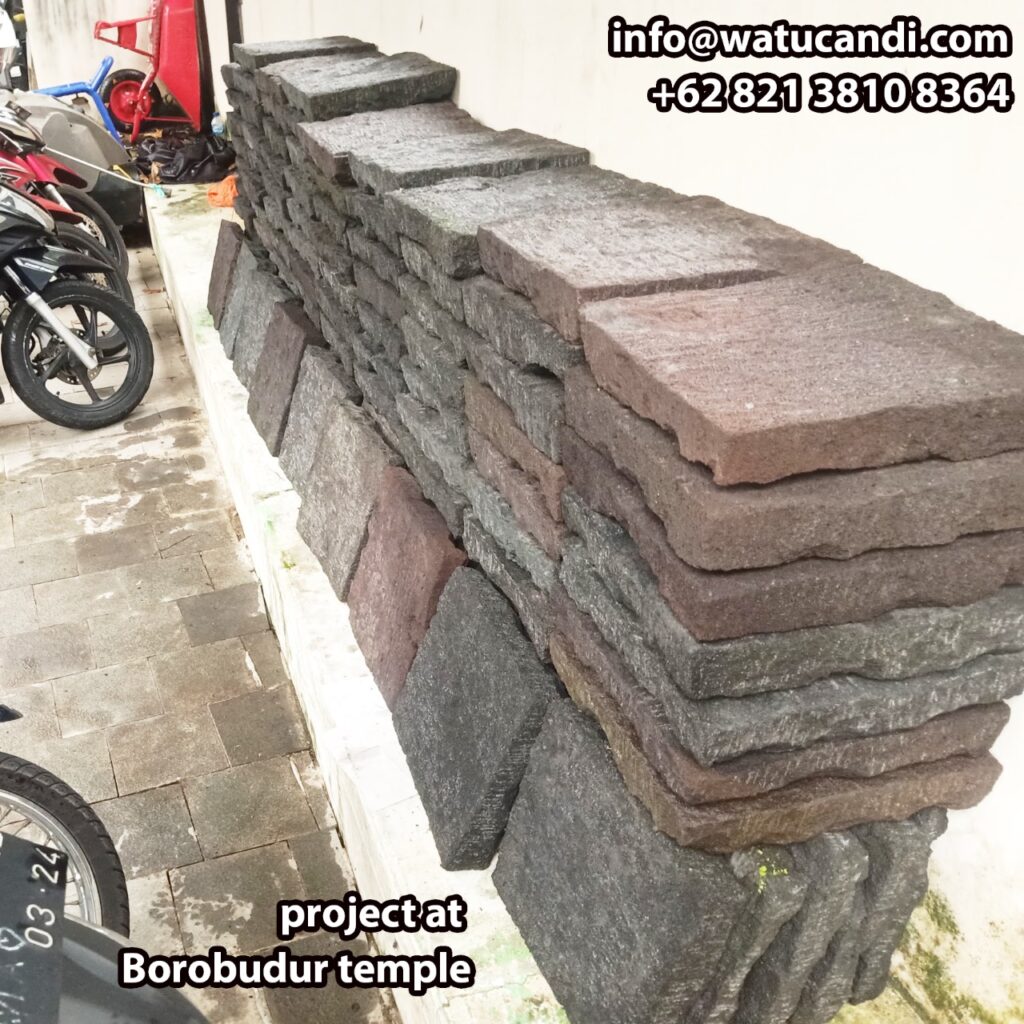
It feels incomplete to discuss Pedra Hitam without looking at its historical value. This material has been an integral part of Indonesian civilization for over a thousand years. Magnificent temples such as Borobudur and Prambanan, although mostly using andesite stone, show that volcanic material has been the primary choice of past civilizations because of its toughness. Our ancestors had understood the advantages of volcanic stone long before modern material science developed.
In Bali, the tradition of processing lava stone has lasted for centuries. Craftsmen have passed down the skills to process lava stone into mortars, statues, and temple miniatures that are now high-value souvenirs. This expertise is inherited from generation to generation, creating a creative industry that is the economic backbone of many villages in Bali. Handicraft products from Pedra Hitam can now be found in art galleries and souvenir shops around the world.
By choosing Pedra Hitam, you participate in preserving cultural heritage and local expertise that the world has recognized. Every slab of stone you install in your home or project carries a long story about the geological and cultural history of Indonesia. This is added value that cannot be measured with money, but is highly appreciated by those who understand and value authenticity.
Modern Design Combination Inspiration
Pedra Hitam is very versatile in style combinations. Its flexibility allows this material to adapt to various architectural styles, from the most traditional to the most contemporary. Here are some design combination inspirations you can apply:
For a modern industrial look, combine Pedra Hitam walls with exposed concrete and steel elements. The contrast between the rough texture of natural stone and the smooth surface of concrete and the shine of metal creates a dynamic and masculine composition. Add furniture with minimalist design and neutral colors to complete the look. This style is very popular for lofts, apartments, and commercial spaces such as cafes and restaurants.
For a contemporary tropical atmosphere, combine lava stone floors with lush green plants and natural wood. The dark color of Pedra Hitam becomes the perfect backdrop to highlight the freshness of tropical plants. Add water elements such as ponds or fountains to create a calming personal oasis. This style is ideal for villas, resorts, and homes in tropical areas.
For lovers of minimalist style, use Pedra Hitam on one side of the wall as a prominent accent, while the other side you leave pure white. This contrast produces a room that is clean, warm, and full of character. Proper lighting, such as spotlights directed at the stone wall, will highlight the texture and create a dramatic play of shadows. This style is perfect for modern homes with a “less is more” approach.
For Japandi (Japanese-Scandinavian) style, combine Pedra Hitam with light wood such as oak or ash, as well as simple and functional decorative elements. The dark color of the stone will provide depth to the typical Japandi neutral color palette, while its texture adds a tactile dimension that is important in this design philosophy.
Comparison with Other Natural Materials
To provide a clearer picture of Pedra Hitam’s position among other natural materials, here is a brief comparison with several popular materials:
- Pedra Hitam vs Marble: Marble offers luxury with its natural veins, but is very susceptible to acids and stains. Pedra Hitam is much more durable and practical, with a more masculine and contemporary appearance. In terms of price, Pedra Hitam is generally more affordable than premium marble.
- Pedra Hitam vs Granite: Both have comparable strength, but granite tends to have a glossier and slippery surface when wet. Pedra Hitam offers a safer natural anti-slip texture, at a more competitive price.
- Pedra Hitam vs Sandstone: Sandstone has attractive warm colors, but is much softer and easily eroded. Pedra Hitam is much harder and more durable, making it more suitable for high-traffic areas.
- Pedra Hitam vs Ceramic: Ceramic offers consistency in color and pattern, but lacks the natural character and uniqueness of each piece. Pedra Hitam provides higher aesthetic value and better long-term durability.
Investment Value and Sustainability
Choosing Pedra Hitam for your project is not just an aesthetic decision, but also a smart investment decision. Properties using premium natural materials like Pedra Hitam tend to have a higher resale value and sell faster on the market. This is because property buyers increasingly appreciate natural materials that are durable and give unique character to buildings.
From a sustainability perspective, Pedra Hitam is an environmentally responsible choice. The mining and processing process uses far less energy compared to the production of artificial materials such as ceramic or concrete. In addition, this stone can last for decades to hundreds of years, reducing the need for material replacement that contributes to construction waste.
By choosing Pedra Hitam, you also support the local economy and preservation of traditional skills. The natural stone industry in Indonesia supports thousands of families and is the economic backbone in many rural areas. Every purchase you make contributes to this economic and cultural sustainability.
How to Get Quality Pedra Hitam?
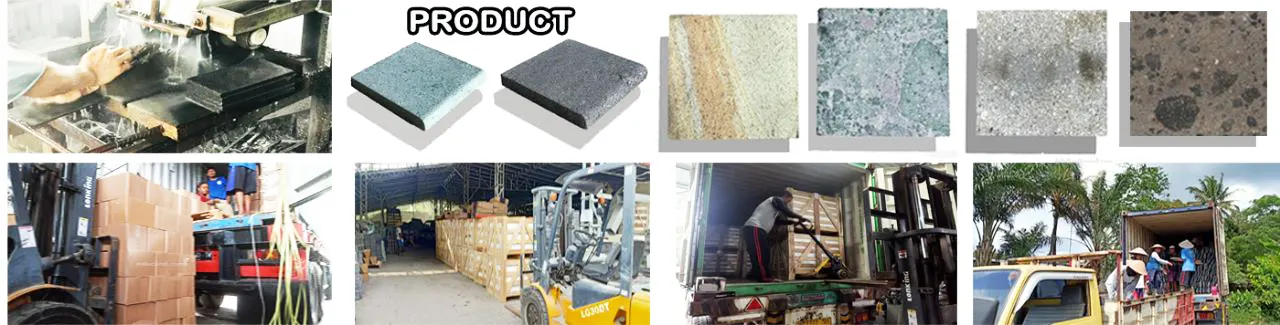
We are an official provider of Pedra Hitam and various other natural stone products. Our long experience serving the domestic and international markets ensures that every slab of stone passes strict selection. Our quality control process includes inspection of dimensions, surface flatness, color consistency, and stone density. Only products that meet our strict standards will be sent to customers.
We offer competitive prices, secure wooden packaging for shipping, and size customization options. All our products come directly from the best mines in Indonesia, and our skilled craftsmen maintain quality in every detail. We understand that every project has unique needs, and we are ready to work with you to find the best solution.
Case Studies and Project Testimonials
Pedra Hitam has been used in various prestigious projects at home and abroad. Here are some application examples that demonstrate the flexibility and advantages of this material:
A luxury resort in Bali used Pedra Hitam for all bathroom floors and swimming pool edges. The resort owner chose this material because of the combination of safety (anti-slip) and aesthetics it offers. After five years of use, the floors remain in excellent condition without needing special maintenance.
A fine dining restaurant in Jakarta used Pedra Hitam as an accent wall in the main area. The rough texture of the stone creates a warm and intimate atmosphere, while the color change when cleaned provides a unique visual experience for guests.
In the export market, Indonesian Pedra Hitam has been used in projects in Australia, Europe, and the United States. International architects appreciate the quality and unique character of this stone, as well as the historical value it contains.
Export Trends and Global Demand
Global demand for Pedra Hitam has continued to increase in recent years. Countries such as Australia, the United States, Canada, and various countries in Europe are the main export destinations. Design trends that prioritize natural and sustainable materials have driven interest in Indonesian volcanic stone.
The competitive advantage of Pedra Hitam in the global market lies in the combination of quality, price, and uniqueness. Volcanic stone from Indonesia has different characteristics from similar stones from other countries, providing added value for designers and architects looking for materials with strong identity.
Frequently Asked Questions (FAQ)
1. Is Pedra Hitam suitable for all climates?
Yes, Pedra Hitam is very resistant to various weather conditions, including extreme heat, heavy rain, and even sub-zero temperatures. Its property of not absorbing water excessively prevents damage due to freeze-thaw cycles.
2. Does Pedra Hitam require special maintenance?
No. Its maintenance is very simple: just clean with water and a soft brush periodically. For additional protection, you can apply a sealer every 2-3 years.
3. How long can Pedra Hitam last?
With proper installation and maintenance, Pedra Hitam can last for decades to hundreds of years. The proof is that ancient temples using similar stone still stand strong after more than a thousand years.
4. Will the color of Pedra Hitam fade over time?
The color of Pedra Hitam will not fade because it is the natural color of the stone, not the result of dyeing. In fact, this stone can develop a natural patina that adds character over time.
Contact and Orders
Don’t hesitate to contact us right now for a free consultation and attractive offers. Our expert team is ready to help you from the planning stage, product selection, to delivery. We understand that every project is unique, and we are committed to providing the solution that best suits your needs.
Visit our official website at https://watucandi.com to see the product catalog and projects we have worked on. On our website, you can see various choices of sizes, finishes, and applications of Pedra Hitam in real projects.
You can also directly communicate via phone or WhatsApp at +6282138108364. Our customer service is ready to answer your questions and provide the information you need.
Our team is ready to help realize your dream design with authentic Indonesian Pedra Hitam material. From stone selection to delivery to the project site, we will accompany you every step of the way.
Choose authenticity, choose durability, choose Pedra Hitam for your special project. Investing in quality natural materials is an investment in long-term beauty and comfort. Let nature speak through every slab of stone adorning your residence or commercial project.
Tags: lahar hitam, pedra hitam, black temple stone, black lava stone, volcanic stone, indonesian natural stone, natural stone floor, natural stone wall, lava stone, basalt stone, andesite stone, natural construction material, weather-resistant natural stone, anti-slip stone, stone for swimming pool, natural stone paving, natural stepping stone, temple restoration, historical natural stone, natural stone crafts, natural stone export, watucandi, affordable natural stone, buy natural stone, natural stone facade design, black natural stone, indonesia lava stone, natural stone texture, quality natural stone, natural building material,