'%3E%3Cpath%20stroke='%23000'%20stroke-width='4'%20d='m-35-37-13%2020m5%203%2013-20m5%203-13%2020m63%2042%206-9m1-2%206-9m5%203-6%209m-1%202-6%209m5%203%206-9m1-2%206-9m-96%200%2013%2020m5-3-6-9m-1-2-6-9m5-3%2013%2020m63-42-6-9m-1-2-6-9m5-3%2013%2020m5-3-6-9m-1-2-6-9'/%3E%3Ccircle%20r='24'%20fill='%23cd2e3a'/%3E%3Cpath%20fill='%230047a0'%20d='M0%200a12%2012%200%201%201%2020%2013%2024%2024%200%201%201-40-26A12%2012%200%201%200%200%200'/%3E%3C/g%3E%3C/svg%3E)


'/%3E%3Cpath%20fill='%23b2b2b2'%20d='M241%20382q0%2016%2017%2026%2017%2011%2042%2011t42-11q16-11%2017-26V269H241'/%3E%3Cpath%20fill='%239f7e00'%20d='M241%20379q0%2014%208%2023%209%209%2021%209%2014%200%2021-9%209-9%209-23V269h-59'/%3E%3Cpath%20d='M241%20339v-70h59v110q0%2014-9%2023l-6%205v-68h-15v72q-8%200-14-4v-68zm59%2040c0%2022%2015%2032%2029%2032%2021%200%2030-18%2030-32v-40h-59'/%3E%3Cpath%20fill='%239f7e00'%20d='M266%20277v5h2v12h-3v-5h2v-5h-9v5h2v5h-4v9h3v18h-5v10h34v-10h-5v-18h3v-9h-4v-5h2v-5h-9v5h2v5h-3v-12h2v-5zm42%20101q0%2010%206%2017%206%206%2015%207%2010-1%2016-7%206-7%206-17v-29h-43'/%3E%3Ccircle%20fill='%230044ad'%20cx='329.5'%20cy='372'%20r='6'/%3E%3Cellipse%20fill='%230044ad'%20cx='300'%20cy='340'%20rx='16'%20ry='21'/%3E%3C/svg%3E)


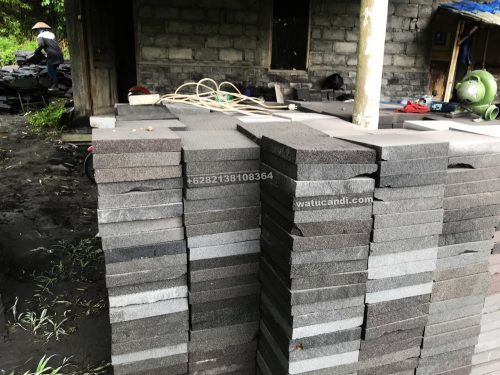
Sell Pelinggih Stone Materials – Discover the natural wonder that has shaped civilization, art, and spirituality across the archipelago.
This page is your main gateway to the finest sacred materials for building pelinggih (Balinese shrines), temples, gapura gates, fences, and all elements of traditional Balinese architecture.
We come directly from the heart of the candi natural stone industry in the Yogyakarta-Magelang region, presenting Mount Merapi lava stone tiles with unmatched quality, price, and supply.
Let us delve into every detail, philosophy, and technical advantage that makes this stone so special, while understanding why watucandi.com has become the reference for undagi (Balinese traditional architects), contractors, architects, and project owners from all corners of Bali and Indonesia.
Premium Lava Stone Tiles (Candi Natural Stone) Direct from Yogya-Magelang Artisans
Welcome to watucandi.com, the center for selling pelinggih stone materials based on candi natural stone directly from artisans in the Yogyakarta – Magelang area, Central Java.
We do not merely sell stones; we nurture tradition, support tens of thousands of artisan families, and maintain the quality and authenticity of materials trusted for more than two decades.
Every stone slab you receive bears the marks of skilled hands that have worked with dedication, from the slopes of Merapi to your sacred pelinggih.
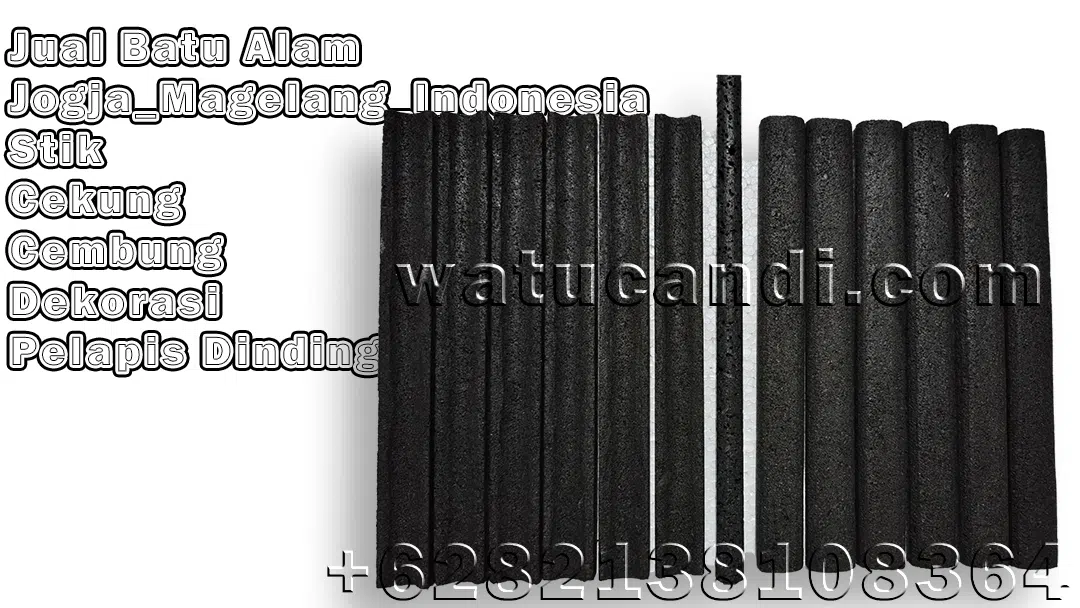
We provide genuine Mount Merapi lava stone tiles that have become the primary choice for the construction of various sacred buildings and traditional Balinese architecture, such as pelinggih, temples, fences, and gapura.
The strength, unique pore characteristics, and ease of shaping make this material a spiritual and aesthetic foundation that is timeless.
In every journey from Java to Bali, these stones carry a message of harmony between nature, humanity, and the Creator.
If you are looking for high-quality natural stone material that is not only sturdy but also has high aesthetic value, you are in the right place.
This article is designed to provide complete information, from geological origins, technical specifications, production processes, comparative advantages, ordering procedures, to design inspirations you can apply to your project.
We want you to be completely confident that candi natural stone from Yogya-Magelang is the best decision for building a sacred, timeless space.
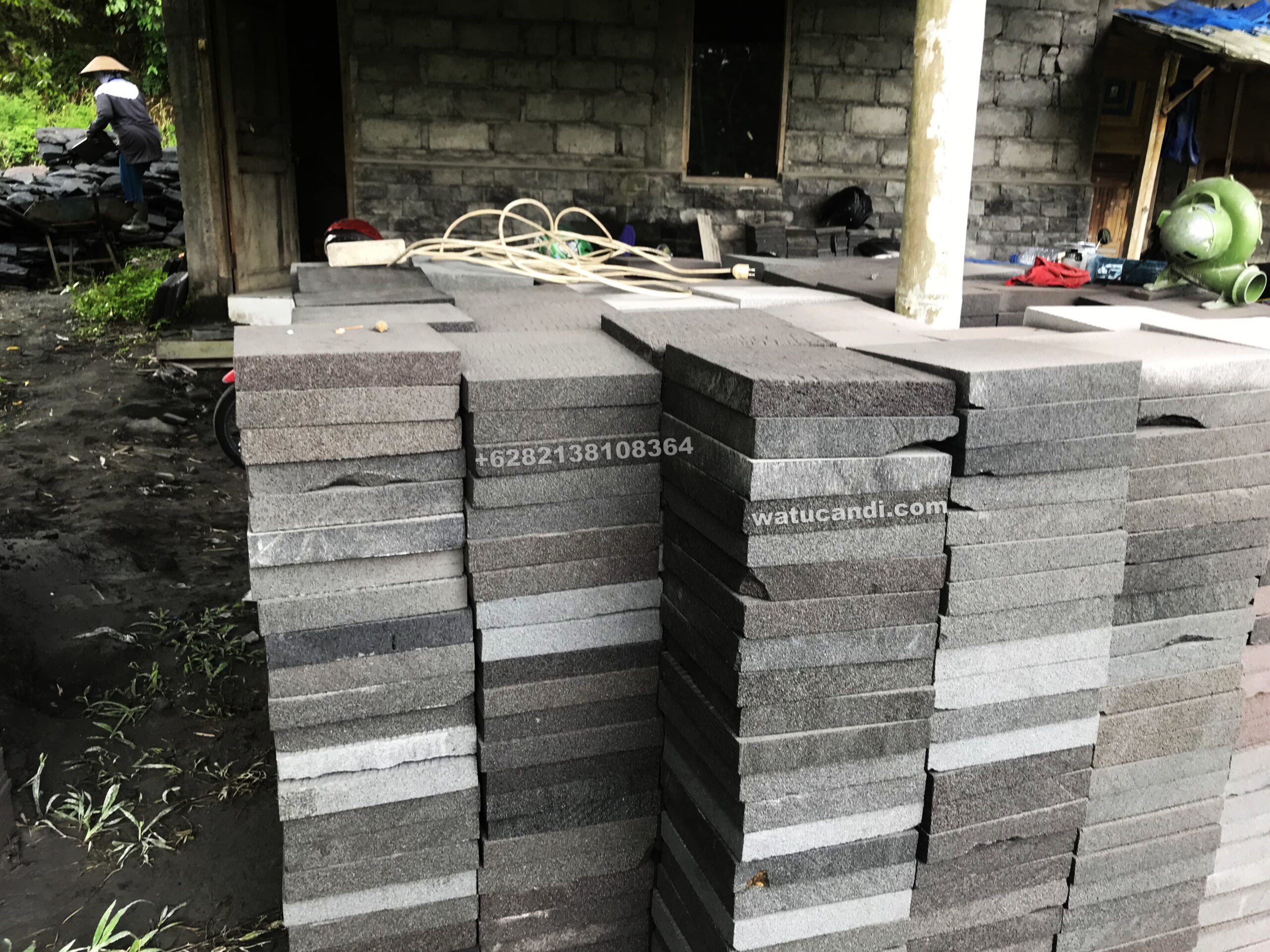
Why Choose Candi Natural Stone (Lava Stone Tile) for Pelinggih?
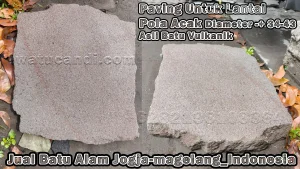
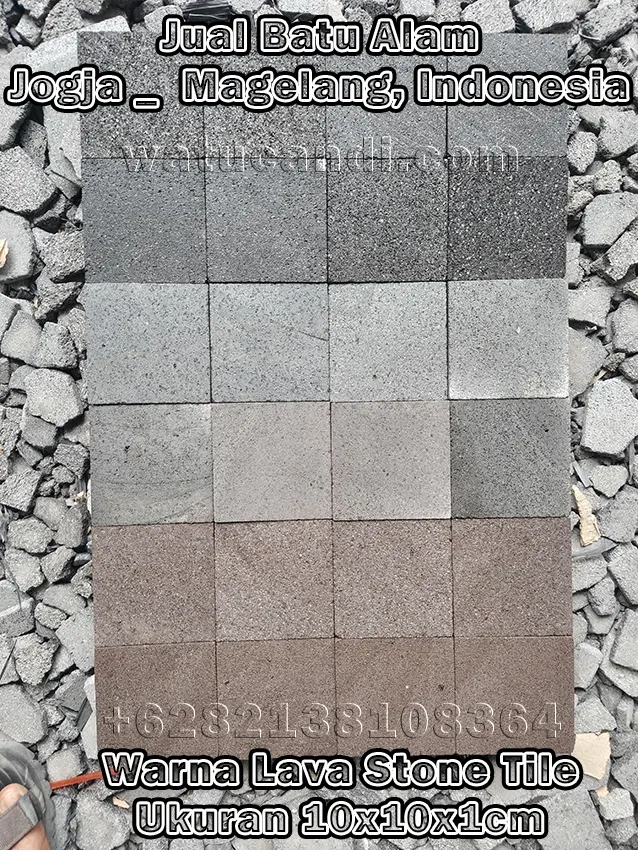
The candi natural stone (Indonesian Merapi Lava Stone) we sell comes from lava deposits of Mount Merapi.
This material has very ideal characteristics for the construction of pelinggih buildings and Balinese architectural elements.
Let us explore each of its special features in depth so you can understand why this material is so respected by Balinese undagi and becomes the primary choice in every sacred project.
First of all, it must be understood that Mount Merapi lava stone was formed from volcanic processes lasting thousands of years.
This material is no ordinary stone; it has a unique mineral composition, producing physical and mechanical characteristics that are hard to match by other types of natural stone.
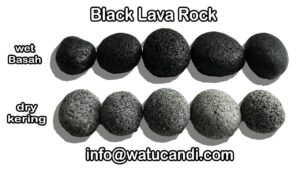
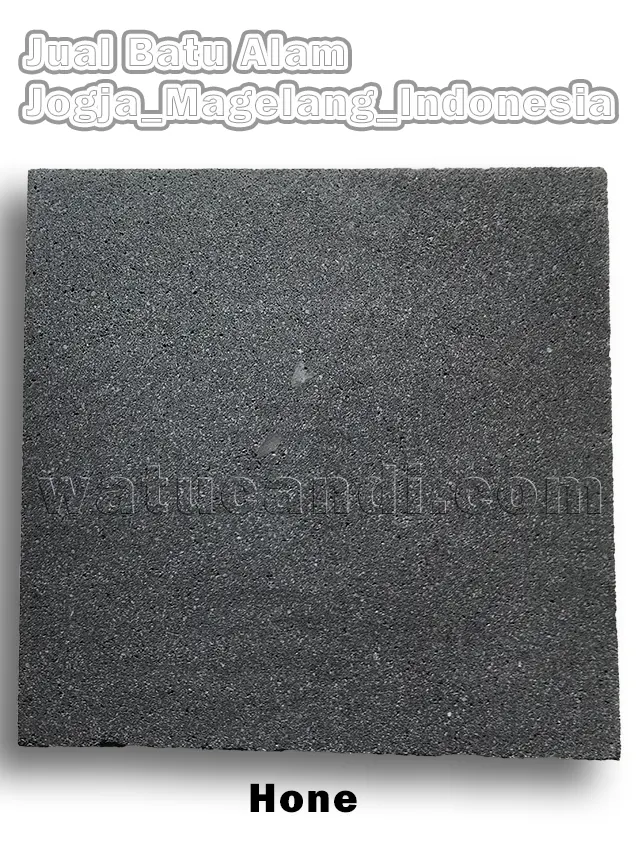
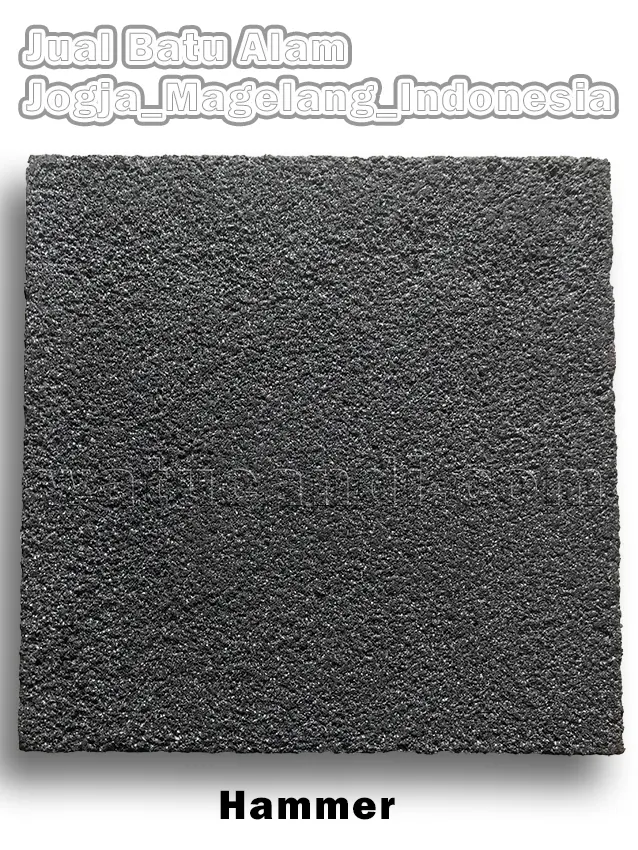
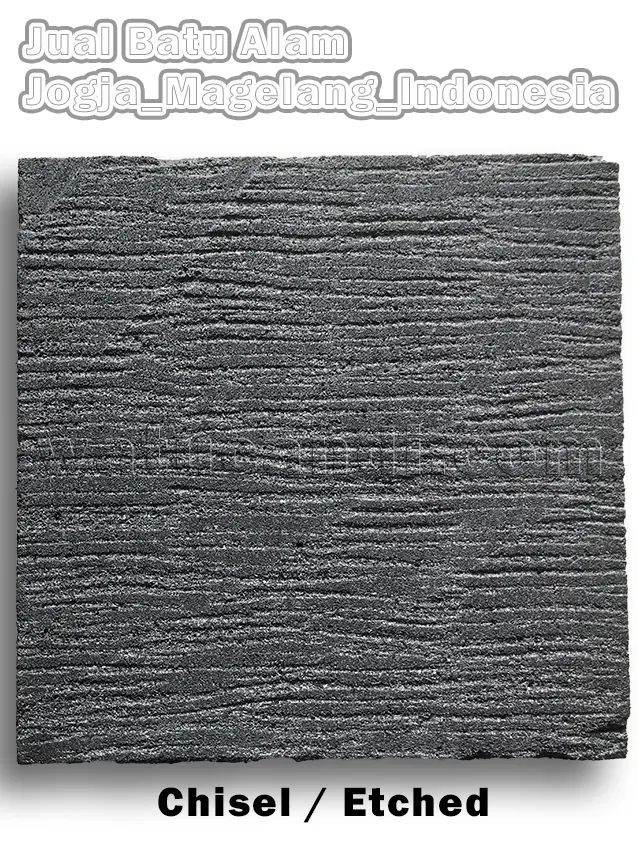
The slowly cooled lava deposits form a distinctive pore structure, dense on the inside yet maintaining a natural texture on the surface.
This natural process is the foundation of the quality we now present to you.
Here are the comprehensive advantages of candi natural stone that you need to know:
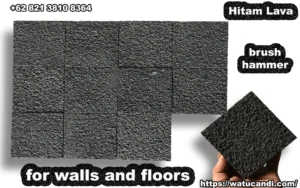
- Small and Compact Pore Texture – Its pore structure is tight and small, resulting in a dense stone that is not easily cracked and is resistant to extreme weather changes. This is very important for buildings placed outdoors. These microscopic pores allow the stone to breathe, reducing internal pressure due to thermal expansion, thereby minimizing the risk of hairline cracks that often occur in other materials.
- High Strength – Although porous, lava stone has exceptional resistance to pressure. It is very suitable for the construction of fences, gapura, and ornaments that require long-term stability. Laboratory tests show that this stone can withstand compressive loads of up to tens of MPa, making it equivalent to lightweight structural concrete but with natural aesthetic advantages.
- Easy to Shape – This stone is easily carved and shaped by artisans into various Balinese styles, from majestic candi bentar gates to intricate pelinggih ornamental details. This property comes from a homogeneous mineral composition, so chisels do not slip easily and carvings remain precise.
- Sacred Natural Nuance – The typical blackish-gray color of lava stone gives a natural, traditional, and sacred impression, in harmony with the character of Balinese Hindu worship buildings. This color does not fade because it comes from the stone’s own forming minerals, not from added pigments. In Balinese philosophy, dark colors also symbolize firmness and purity, making it very suitable for pelinggih.
There are many more advantages we will discuss, including resistance to moss, minimal maintenance, and harmony with tropical natural stone architecture concepts.
But before that, allow us to emphasize that every point above has been tested by hundreds of large projects in Bali and its surroundings.
This stone has been a silent witness to the rise of magnificent temples, exclusive villas, and public buildings that prioritize traditional values.
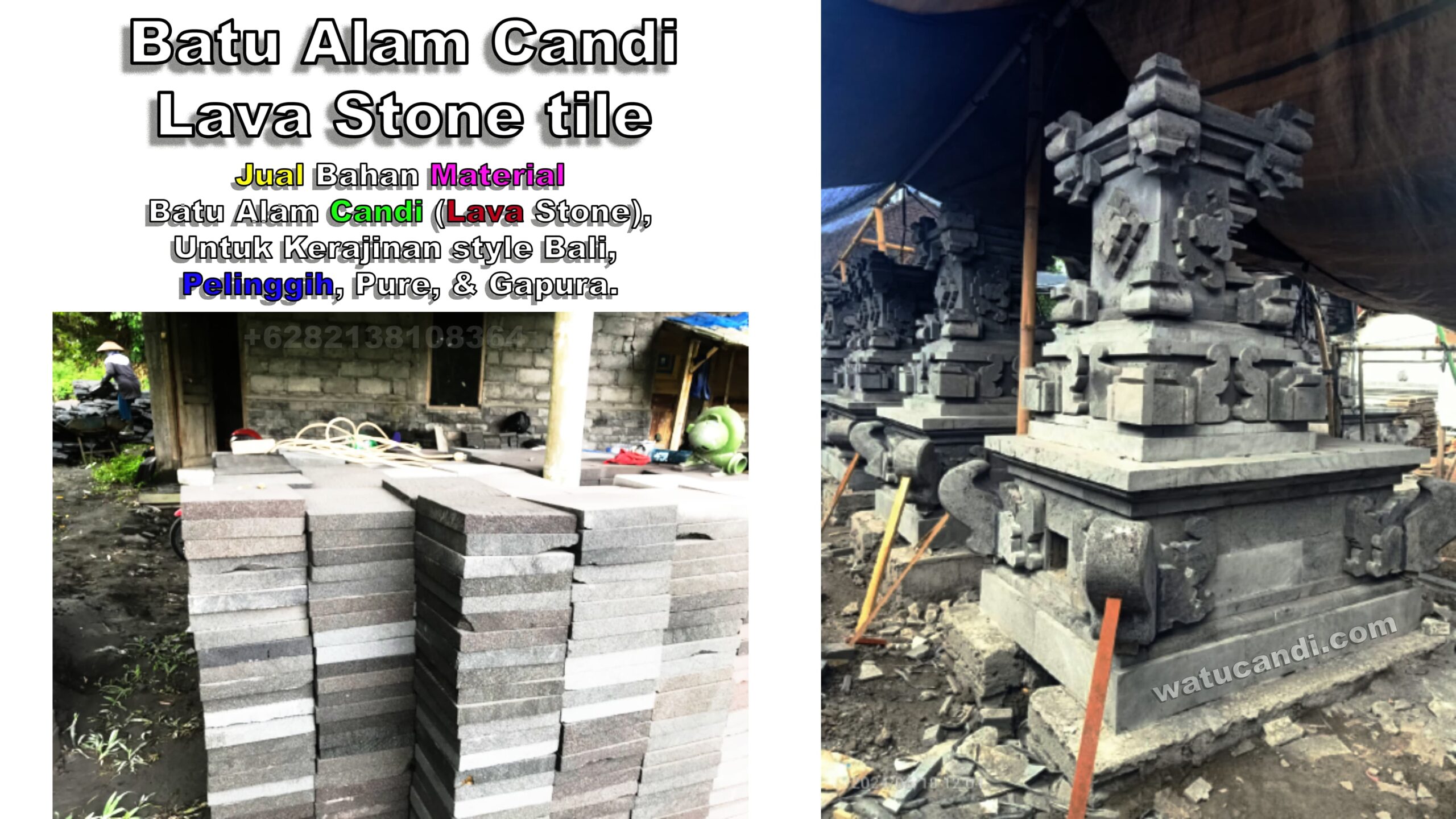
Available Dimensions of Pelinggih Stone Tile Materials
Choosing the right dimensions is a crucial step in ensuring material efficiency and the visual beauty of your building.
We at watucandi.com understand that every project has specific needs, therefore we provide several standard sizes most commonly used by contractors and artisans in Bali. Here are the complete details.
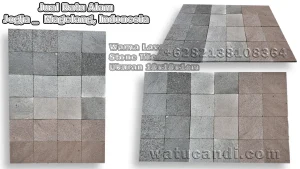
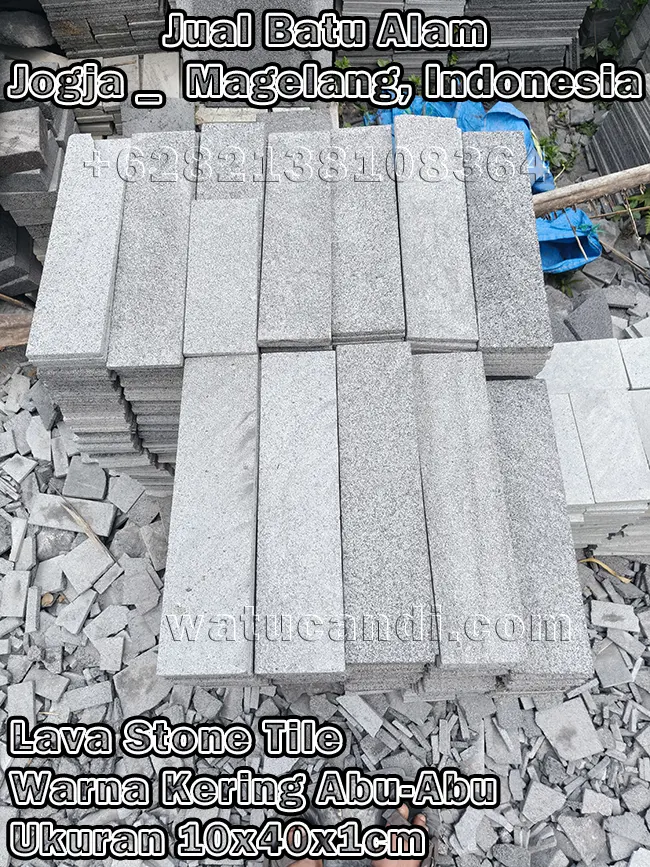
We provide candi natural stone tiles in the sizes most frequently used for development projects in Bali:
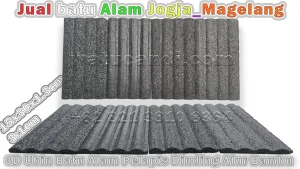
- 20 cm x 40 cm
- 20 cm x 30 cm
These sizes have become industry standards because they facilitate the installation process, minimize off-cut waste, and provide a proportional appearance on various building elements.
20×40 panels are ideal for wider surfaces such as fence walls, while 20×30 is often used for smaller details or pattern combinations.
For thickness, we offer several variations according to your construction needs:
- 1 cm – Suitable for wall cladding or decorative elements. This thickness is lightweight yet strong enough for vertical applications that do not bear heavy loads. Often used for attached ornaments, mouldings, or decorative panels that add a luxurious impression without adding excessive structural load.
- 2.5 cm – Standard for floors and fence walls that require a balance between weight and strength. This thickness is the most popular choice because it is versatile, easy to install, and provides adequate strength for light to moderate traffic areas. Suitable for small step treads, terrace floors, or exterior wall cladding.
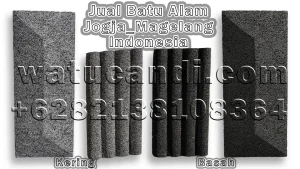
- 4.5 cm – Specifically for structural parts that require heavier load resistance, such as gapura pillars or pelinggih steps. With this thickness, the stone can become an independent structural element that can support the construction above it. Often used for gapura beams, main pelinggih bases, and parts that receive direct pressure.
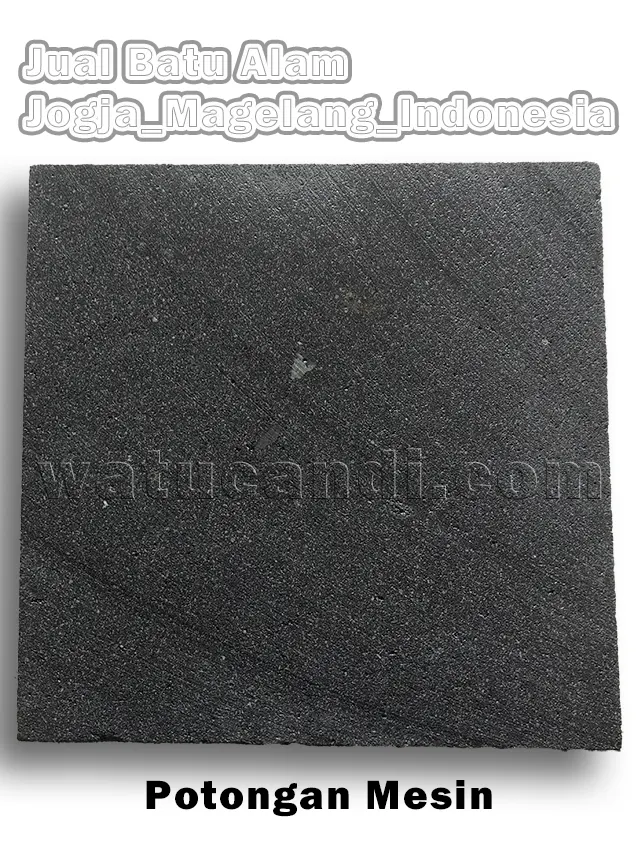
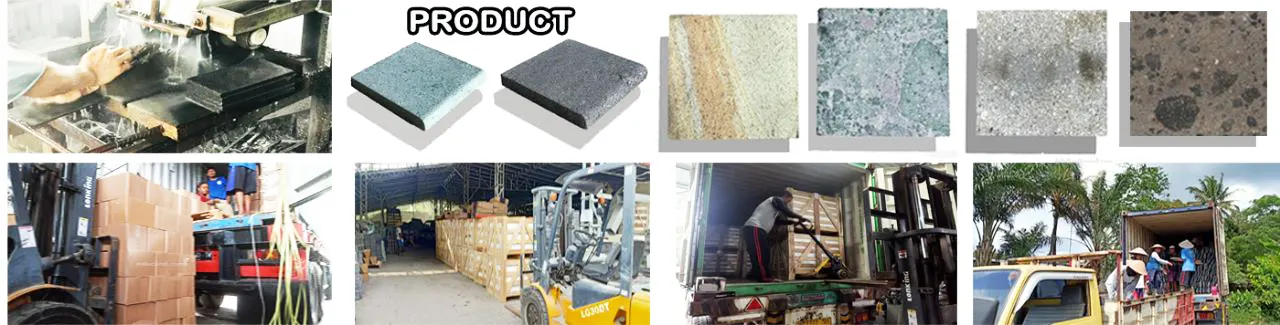
Our cutting process is carried out with special stone-cutting saw machines.
These machines are operated by experienced experts who have worked in this industry for years.
Each slab is visually inspected to ensure there are no cracks or defects that could affect the final quality.
It is important to know that because this material will later be processed and shaped further by artisans on the project site, we do not make dimensional precision as high as factory ceramics.
The size tolerance we provide ranges around ±2 mm (for Export) & Local Domestic is not determined, which is an intentional allowance.
This tolerance actually facilitates the final shaping and installation process in the field.
Undagi and stonemasons in Bali are already very accustomed to this characteristic, so they can adjust each piece of stone perfectly in its place.
This is the collaboration between nature and human skill that produces living architectural artwork.
We also accept special requests for non-standard dimensions, depending on order volume and cutting complexity.
Please consult your needs through the available contact.
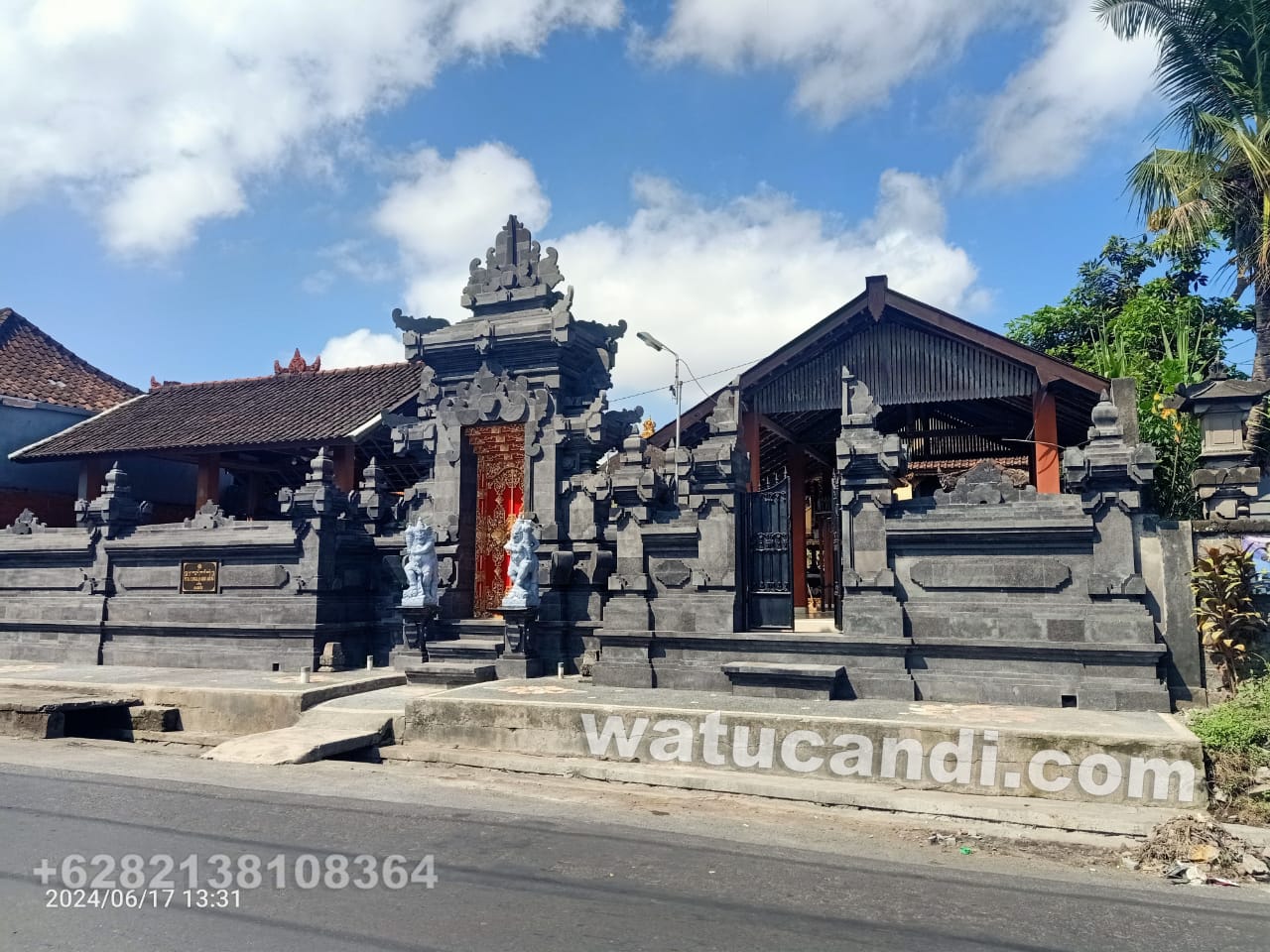
Regular Supply from Java to Bali – Driving Local Economy
The flow of candi natural stone from Central Java to Bali is not just ordinary trade activity.
This is an economic and cultural phenomenon that has been going on for more than two decades, strengthening the relationship between two large islands in Indonesia.
The story behind every truck departing from the slopes of Merapi to Denpasar, Gianyar, or Badung is a story about the lives of thousands of families.
From the early 2000s until now, the demand for candi natural stone tiles from Java to Bali has continued to show an increasing trend.
If initially there were only one or two trucks per week, now the shipping volume has jumped many times over.
This growth is in line with the booming construction of villas, hotels, restaurants, and of course non-stop sacred buildings on the Island of the Gods.
This material is the lifeblood for communities around the slopes of Mount Merapi.
Starting from miners who take raw stone blocks from the bowels of the earth, transport workers who move the material to cutting workshops, saw machine operators, artisans who shape the stone according to orders, to truck drivers who carry loads across the Ketapang-Gilimanuk port.
This supply chain absorbs a very large workforce and forms an independent economic ecosystem in the Magelang, Klaten, and Sleman areas.
On the other hand, in Bali, this material supports the rapid development of traditional architecture. Undagi (Balinese traditional architects) get a consistent supply of raw materials, allowing them to realize magnificent designs without material constraints.
This is a perfect symbiosis of mutualism: Java gets livelihood, Bali gets a cultural heritage that continues to live.
On average, every day there are 5 to 10 trucks of candi natural stone (Indonesian Merapi Lava Stone Tiles) departing from various cities in Central Java to Bali.
In certain seasons, such as ahead of major ceremonies or large-scale project work, this number can jump up to 15 trucks per day.
Each truck usually transports 8-12 tons of stone, depending on dimensions and thickness. Roughly calculated, there are tens of tons of stone crossing the Bali Strait every day.
This fact proves that lava stone tile is not just a building material, but also a productive economic bridge between Java and the Island of the Gods.
Interestingly, this shipping activity has its own rhythm following the Balinese religious calendar.
During major holidays such as Galungan, Kuningan, and Nyepi, the distribution flow usually slows down.
This is because workers, both in Java and Bali, respect these holy days. Trucks stop operating, drivers return to their families, and projects in Bali pause for a moment.
But this is precisely what strengthens cultural bonds, because this material is truly integrated with the spiritual life of the Balinese people.
Outside these moments, the distribution flow runs smoothly and is scheduled every week, ensuring your supply will not be interrupted.
We at watucandi.com have a solid logistics network to ensure your orders arrive on time.
We cooperate with expedition companies that have experience sending natural stone throughout Bali, from Denpasar, Badung, Gianyar, Tabanan, to Karangasem and Buleleng.
Even for projects outside Bali such as Lombok, Sumbawa, or East Java, we are ready to serve with careful shipping planning.
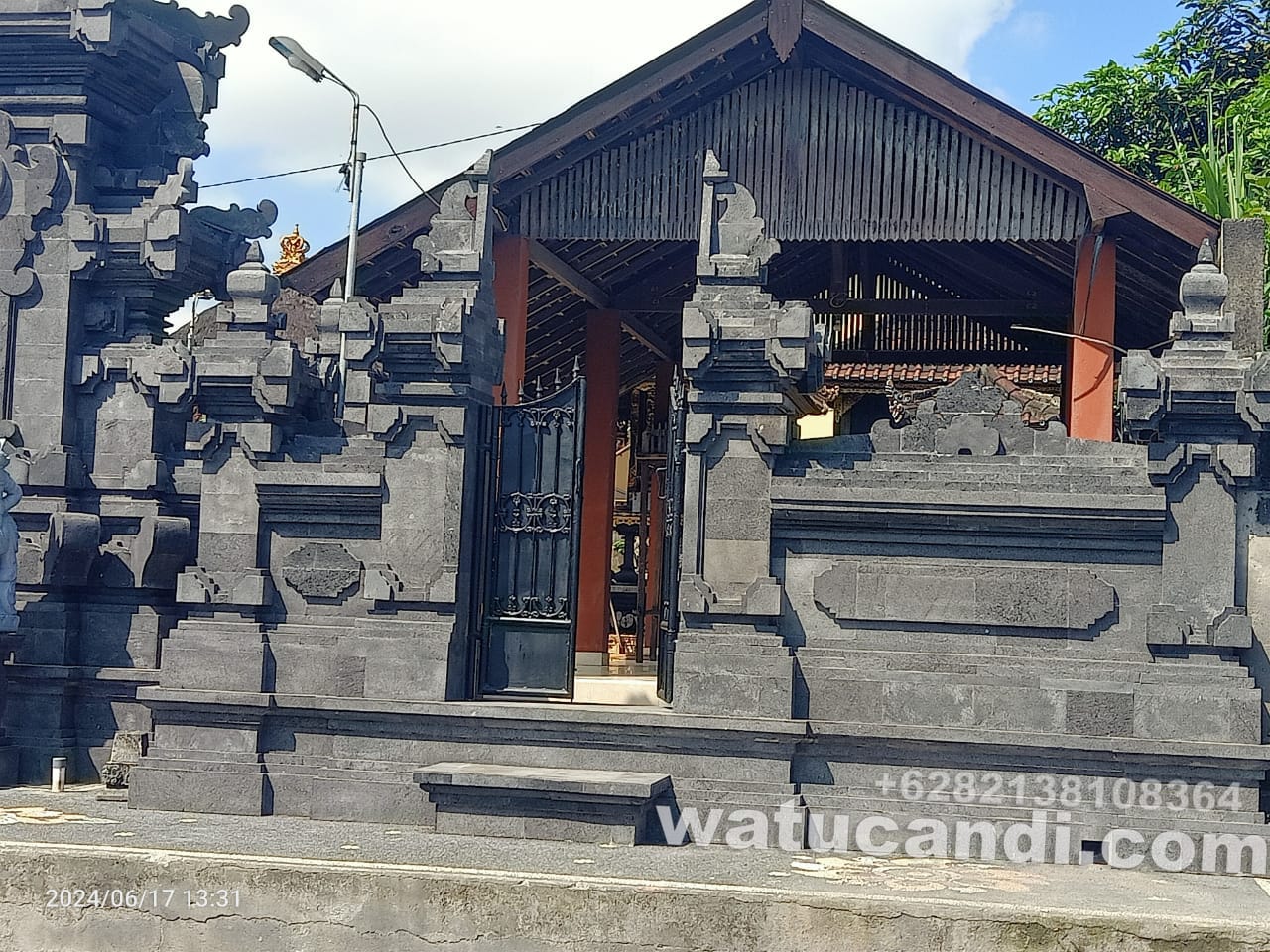
Advantages of Buying Directly from Yogya-Magelang Artisans
In this digital era, you may find many sellers of candi natural stone (Indonesian Merapi Lava Stone Tiles), both online and offline.
However, buying directly from the source — the artisan producers in Yogya-Magelang — provides advantages that cannot be matched by resellers or middlemen.
Here are the exclusive advantages you get when ordering through watucandi.com or contacting us at 6282138108364.
- More competitive prices, because it cuts the long distribution chain. Every intermediary in the supply chain will add a profit margin, which is ultimately charged to you. By buying directly from us, you get prices closest to production costs. This is very profitable for large projects that require high material volumes, where the price difference per square meter will accumulate into significant savings.
- Stock is always available, taken directly from mining and processing sources of Merapi stone. We have our own mining land and a network of traditional miners who have been our partners for many years. This guarantees material availability in large quantities, whenever you need it. There is no story of “out of stock” or “waiting for shipments from other suppliers”.
- Can serve large quantity purchases, for temple projects, resorts, and Balinese-style villas. Whether you need 100 square meters for a family temple, or 10,000 square meters for a resort area, we are ready to fulfill. Our production capacity is supported by dozens of cutting workshops and hundreds of artisans working simultaneously.
- Free consultation, regarding the selection of the right dimensions and thickness according to construction needs. Our team has long experience handling various projects in Bali. We can help you calculate estimated material requirements, suggest efficient size combinations, and provide optimal installation tips.
- Quality guaranteed, because every production stage is strictly supervised. From the selection of raw stone blocks, cutting, to packing, we apply consistent quality standards. Cracked, excessively hollow, or unevenly colored stones will be removed. You only receive usable material.
- Full transparency in every transaction. We will provide clear information regarding stock, shipping schedules, transportation costs, and estimated arrival times. There are no hidden costs. We also provide photos and videos of stone conditions before shipping, so you can ensure conformity with expectations.
Furthermore, by buying directly from us, you also contribute to the economic empowerment of local communities on the slopes of Merapi.
Every rupiah you spend will directly flow into the hands of miners, cutters, and artisans, not into speculators’ pockets.
This is an investment that not only builds your project but also builds community livelihoods.
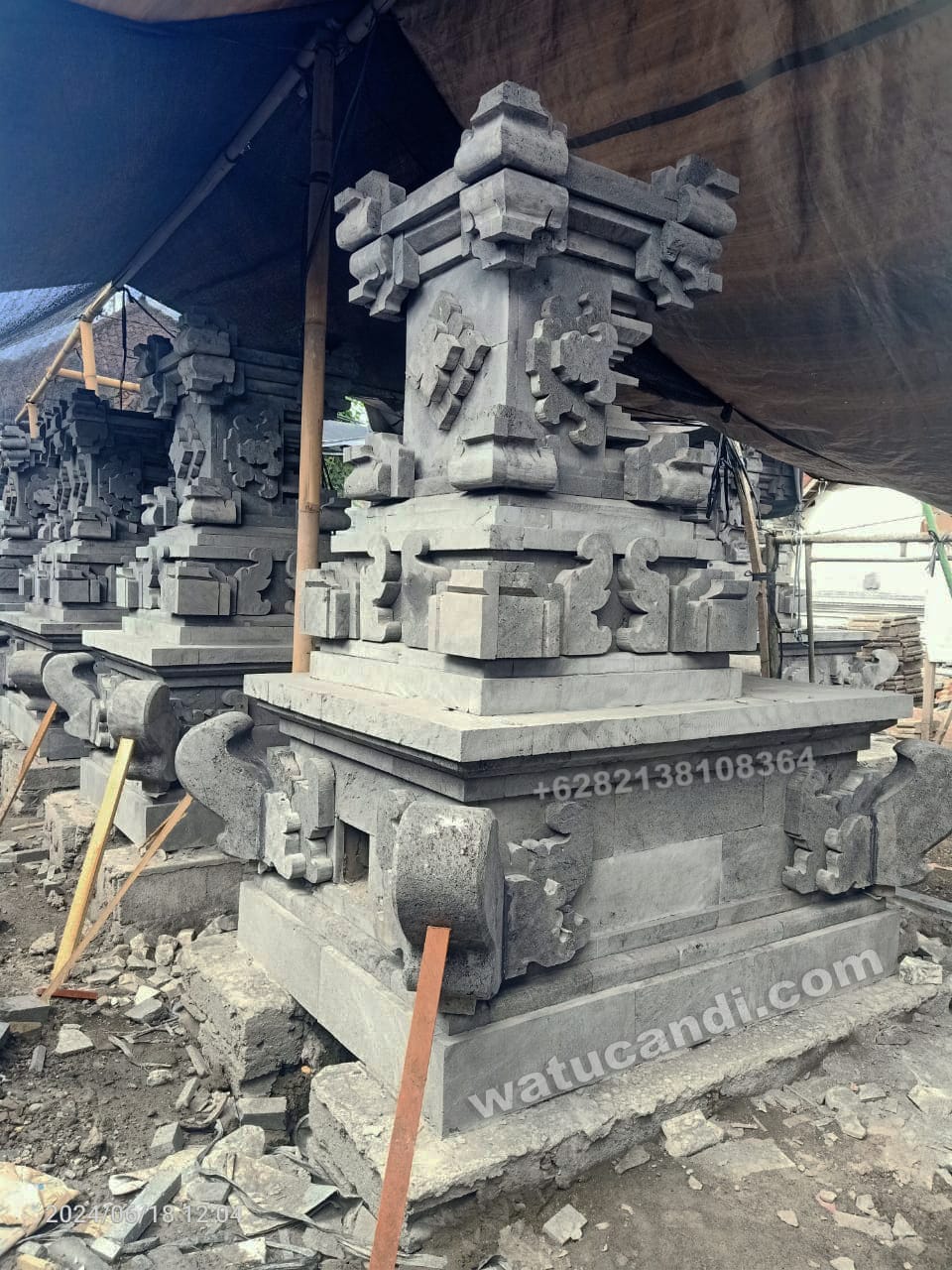
Production Process: From Magma Chamber to Ready-to-Use Slabs
Understanding how candi natural stone is produced will give you a greater appreciation for this material.
The process is long, involving nature, simple technology, and human skills passed down through generations.
Let us trace each stage.
1. Mining Raw Stone Blocks
Mining is carried out on the slopes of Mount Merapi, at certain depths below the ground surface. Traditional miners dig manually with crowbars, hammers, and other simple tools, following ancient lava deposit paths. Large stone blocks are lifted to the surface, then checked for quality. Stones that are too cracked or have large cavities will be separated for other purposes, while dense, high-quality stones will be sent to the cutting workshop.
This mining process relies heavily on local wisdom. The miners have “inherited knowledge” to read soil structures and predict where quality stone deposits are. They also deeply respect nature, performing small rituals before starting excavation as an expression of gratitude and a prayer for safety.
2. Cutting with Special Saw Machines
The stone blocks are then taken to the cutting workshop. Here, large-diameter saw machines with diamond blades cut the stone blocks into slabs of the desired thickness. This process requires high skill because the operator must ensure uniform thickness and minimize vibrations that could cause cracking. Water is continuously used to cool the saw blade and reduce dust.
After being cut into large slabs (usually 60×120 cm or 80×120 cm), the stone is then cut again into standard tile sizes of 20×40 or 20×30 using a more precision cutting machine. This is where the size tolerance we mentioned earlier occurs. However, the artisans have strict visual standards: each tile must have good surface flatness and square corners.
3. Quality Selection and Sorting
The cut slabs are then sorted manually. Experienced workers inspect each piece, ensuring there are no significant hairline cracks, excessive pores, or striking color differences. The stones are grouped into several grades (although we only ship the best grade for regular orders). This sorting process is crucial to maintain reputation and customer satisfaction.
4. Packing and Shipping Preparation
After passing sorting, the stone tiles are neatly stacked and tied with strapping bands. For long-distance shipping such as to Bali, we add a protective layer of wood on the corners of the stacks to prevent impact. These stacks are then loaded onto trucks using forklifts or manual labor, depending on available facilities.
Every departing truck is equipped with a delivery order and clear shipping documents.
Customers will receive a departure notification and estimated time of arrival.
We also provide shipping insurance for large-value orders, as additional assurance for the safety of your material.
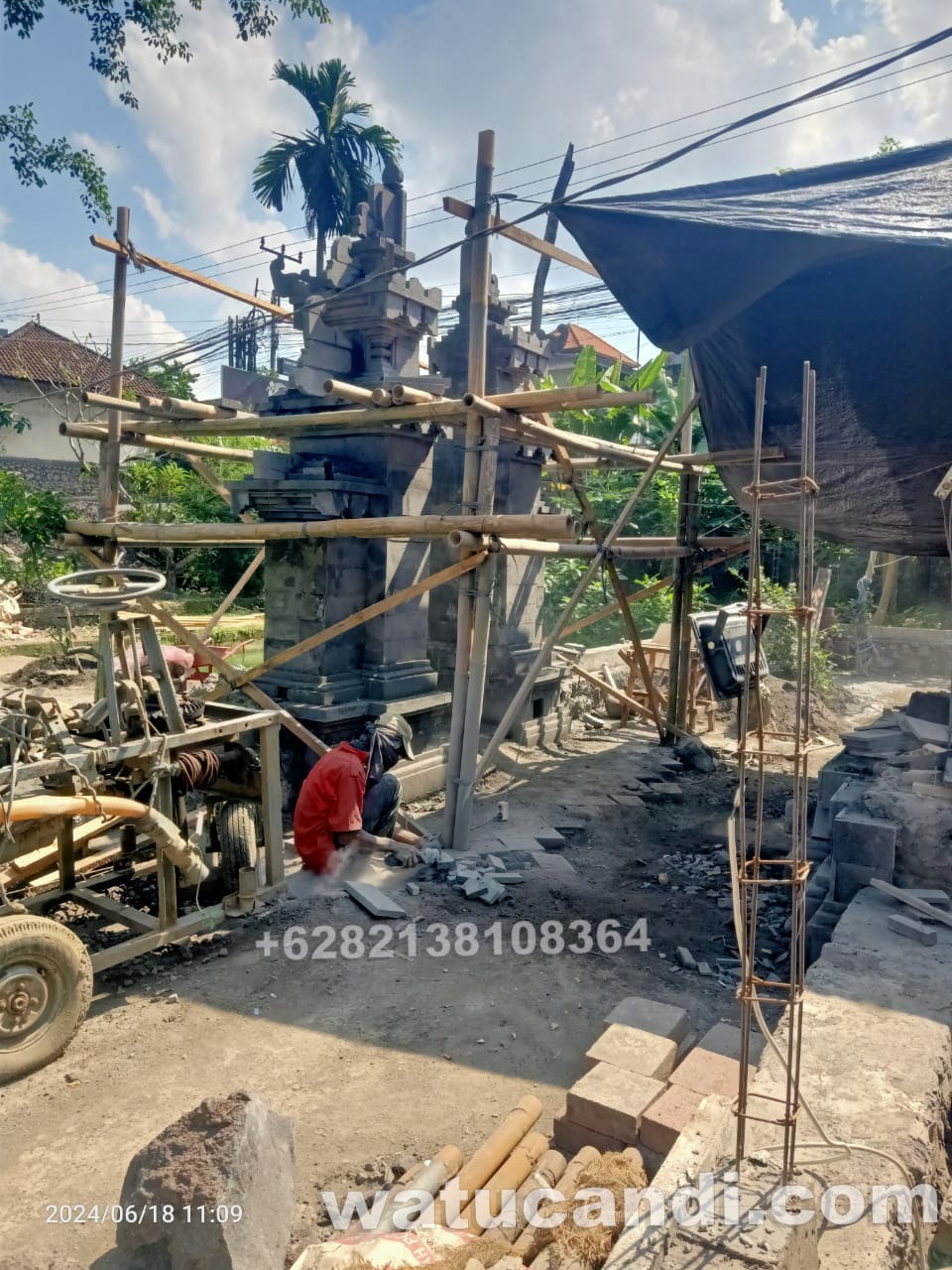
Applications of Pelinggih Stone Material in Balinese Architecture
Candi natural stone (Indonesian Merapi Lava Stone Tiles) has a very wide spectrum of applications in traditional Balinese architecture.
Not limited to pelinggih alone, this material is used in various building elements.
Here is a detailed explanation of how this stone is applied.
Pelinggih and Meru
Pelinggih is the most sacred structure in a temple or dwelling house in Bali. The material for pelinggih must be chosen very carefully, not only in terms of strength but also spiritual aspects. Candi natural stone, with its dark color and natural texture, is believed to have the right vibration to contain sacred energy. The pelinggih structure from the base (bebaturan), body, to the roof (which usually uses sugar palm fiber or thatch) requires stones of various thicknesses. Stones 4.5 cm thick are commonly used for bases and main pillars, while 2.5 cm thickness is used for walls and ornaments.
Candi Bentar and Paduraksa Gates
The gate is the entrance that becomes the face of a building complex. In Bali, the candi bentar gate (split gate) and paduraksa (roofed gate) are symbols of separation between the outer world and the sacred area. Candi stone material allows artisans to create intricate carvings on both sides of the gate, with stunning detail. The strength of the stone ensures the gate stands firm for decades, even in earthquake-prone areas. The 20×40 tile size is ideal for building gates because it provides a module that is easy to assemble and carve.
Fences (Penyengker)
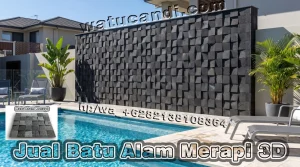
Penyengker or boundary fences not only function as physical boundaries but also as visual frames that beautify the overall spatial layout. Candi natural stone with 2.5 cm thickness is often used for fence walls, while pillars use thicker stones. The appearance of natural stone fences gives a massive, luxurious impression and blends with nature. Many resorts and villas in Bali choose candi stone fences as their main design element.
Steps and Floors
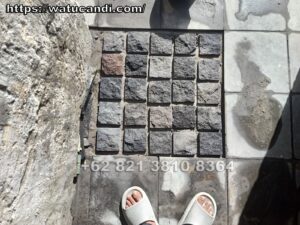
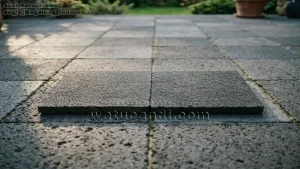
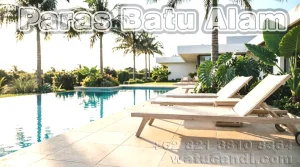
Steps made of candi natural stone provide good grip because of its slightly rough natural texture, making it safe even when wet. Candi stone floors are also popular for terraces, inner courtyards, or areas around swimming pools. Its non-slip nature and resistance to dampness make it a functional as well as aesthetic choice.
Ornaments and Reliefs
Candi natural stone is a perfect medium for relief carvings. Starting from reliefs telling Ramayana, Mahabharata stories, to typical Balinese flora and fauna motifs. The ease of carving this stone allows fine details to be produced without risk of breaking. Many large temples in Bali have walls adorned with beautiful candi stone reliefs, becoming tourist attractions as well as cultural education media.
Comparison of Candi Natural Stone with Alternative Materials
The market offers various materials for Balinese-style buildings, such as paras stone, limestone, cast concrete, or GRC (Glassfiber Reinforced Cement).
Let us objectively compare why candi natural stone is often the best choice.
- Vs Paras Stone: Paras stone (sandstone) has a light color and is softer, making it easier to carve. However, its strength is far below lava stone. Paras stone tends to be brittle, easily peels, and is not resistant to acid rain which can erode its surface. For structures requiring long-term strength and durability, candi stone is far superior.
- Vs Limestone: White limestone is often used for modern minimalist buildings. Unfortunately, limestone has high porosity and is very reactive to water, easily overgrown with moss and mold. Its white color also gets dirty quickly. Candi stone, with smaller pores and dark color, is easier to maintain.
- Vs Cast Concrete: Cast concrete can be made to resemble natural stone. However, in terms of aesthetics, concrete does not have the unique natural texture that lava stone has. Concrete is also prone to cracking due to temperature changes and requires periodic maintenance. Candi natural stone, on the contrary, becomes more characterful with age.
- Vs GRC: GRC is a modern material that is lightweight and flexible. However, for sacred buildings like pelinggih, GRC is often considered less “soulful” because it is not a natural material. In addition, GRC’s resistance to impact and extreme weather is still below solid natural stone.
In conclusion, candi natural stone (Indonesian Mount Merapi Lava Stone Tiles) offers a rare combination of strength, natural beauty, ease of carving, and spiritual value that other materials do not have.
Investing in this stone is an investment in a legacy that will last for generations.
Tips for Choosing and Caring for Candi Natural Stone
For your project to be successful and the material to remain beautiful over time, pay attention to the following tips:
- Choose the appropriate grade. For main pelinggih or gates, always choose the best quality stone (minimal pores, uniform color).
- Pay attention to grain direction. During installation, consult with the artisan about the natural grain direction of the stone so that loads are distributed properly.
- Use the right adhesive and grout. Special natural stone instant cement is more recommended than ordinary cement because it has better adhesion and flexibility.
- Apply coating if necessary. For areas frequently exposed to water or oil, you can apply a transparent natural stone sealer that does not change the color but protects against stains.
- Clean regularly. Simply use water and a soft brush. Avoid harsh chemicals that can damage the natural texture of the stone.
- Entrust installation to experts. Stonemasons experienced with lava stone material will produce a much neater and sturdier finish.
Case Studies: Successful Projects with Candi Natural Stone
To convince you, here are some examples of projects using our material (names disguised for privacy):
- Agung Temple in Gianyar: Required 2,500 m² of 20×40 stone with thickness 1.2 to 4.5 cm for the main pelinggih and fences. The project was completed in 8 months; to this day the stone condition remains excellent despite exposure to tropical rain and heat.
- Luxury Resort in Ubud: Used 1,200 m² of stone for gates, steps, and villa walls. The natural appearance of the stone blends perfectly with the resort’s tropical forest concept.
- Private Villa in Canggu: The owner chose 4.5 cm thick stone for the terrace floor and pillars. The result is a villa that looks sturdy and exclusive.
Frequently Asked Questions (FAQ)
Is this stone earthquake resistant? Yes, the dense stone structure and flexible grout installation system allow the building to move without cracking during minor to moderate earthquakes.
How long does shipping to Bali take? Usually 3-5 working days after the order is confirmed, depending on the destination location and volume.
Can I order custom sizes? Certainly, with a minimum volume requirement and slightly longer production time. Please contact us for discussion.
Is there a guarantee? We guarantee that the shipped stones are free from significant production defects. If there is damage during shipping, we will replace according to the agreed policy.
Realize Your Dream Pelinggih and Gapura Building Now
After reading this entire description, we are confident you are more convinced to choose candi natural stone as your project material.
Are you a contractor, architect, or private project owner who is planning the construction of a Balinese-style temple, fence, or gate?
Make sure you use the best material that has been tested and has been the primary choice of Balinese undagi for many years.
Sell Pelinggih Stone Materials – Genuine candi natural stone, not imitation.
Quality directly from the nature of Mount Merapi, crafted by the hands of experienced artisans in Yogyakarta and Magelang. Every slab of Natural Stone Tile is a tangible manifestation of the harmony between the power of nature and human perseverance.
By choosing us, you are not only building a physical structure but also weaving a cultural and spiritual heritage that will be remembered for ages.
Let us start this journey together. Our team is ready to assist you from the planning stage until the material arrives on site. No need to hesitate, no need to worry. Just convey your needs, and let us make it happen.
Contact us now for orders and more information:
📞 Phone/WhatsApp: 6282138108364
🌐 Website: https://watucandi.com
“Realize the beauty and strength of Balinese architecture with the best candi natural stone from us. Order now, and become part of the long story of the eternal glory of Merapi stone.“
sell pelinggih stone materials, lava stone tile, candi natural stone, Merapi lava stone, Balinese temple construction, natural stone tiles, Bali architecture stone, pelinggih material, gapura stone, traditional Balinese building materials, Indonesian natural stone, volcanic stone tiles, undagi stone supply, Yogya-Magelang stone artisans, watucandi.com,