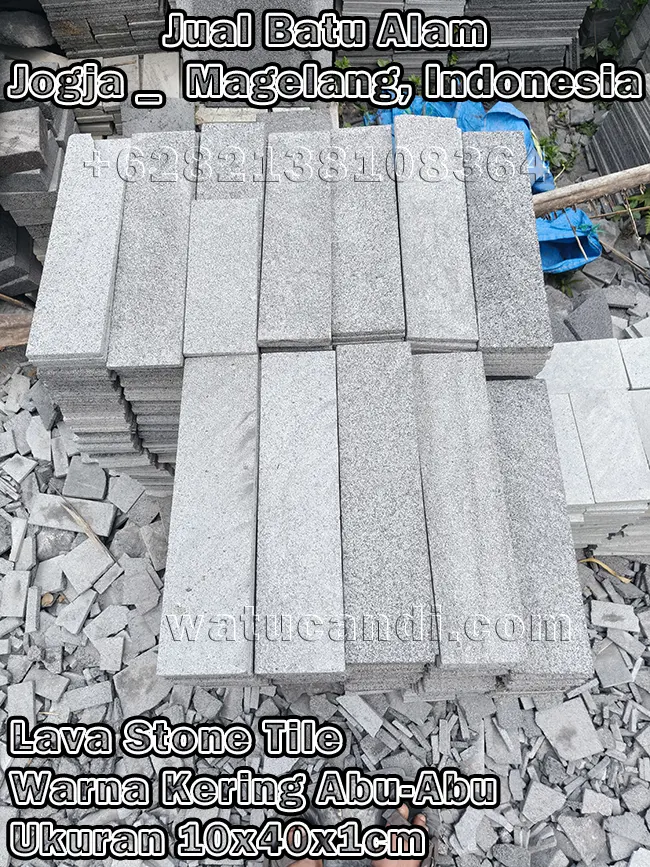

Are you looking for reference on stone floor of the temple (Merapi lava) that offers a classic atmosphere yet withstands all weather?
This volcanic material has been a top choice since the era of kingdoms, and now comes in two equally stunning surface types.
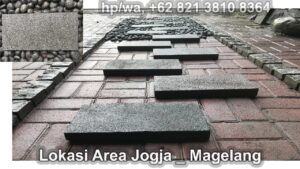
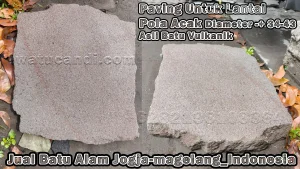
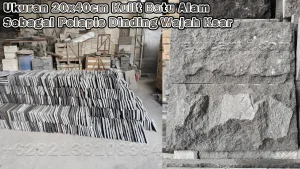
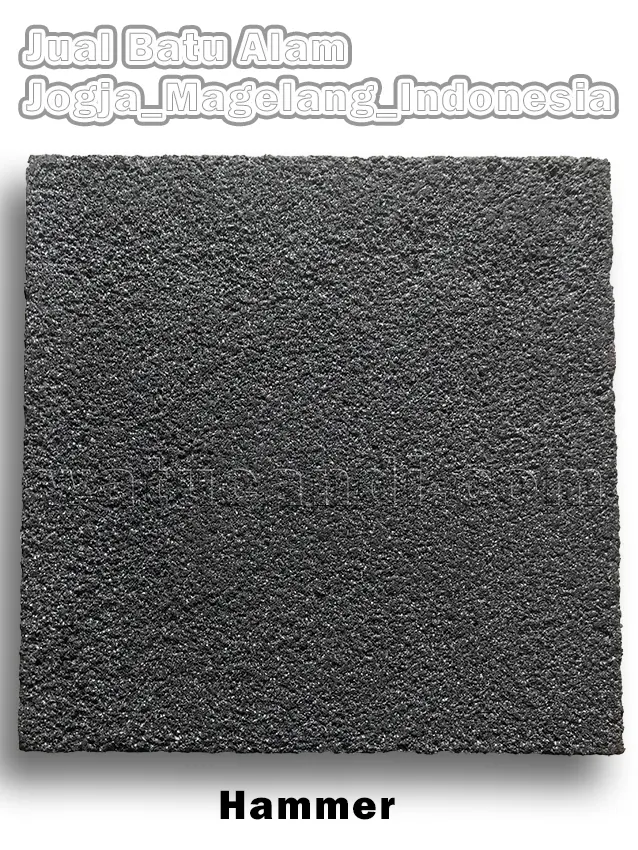
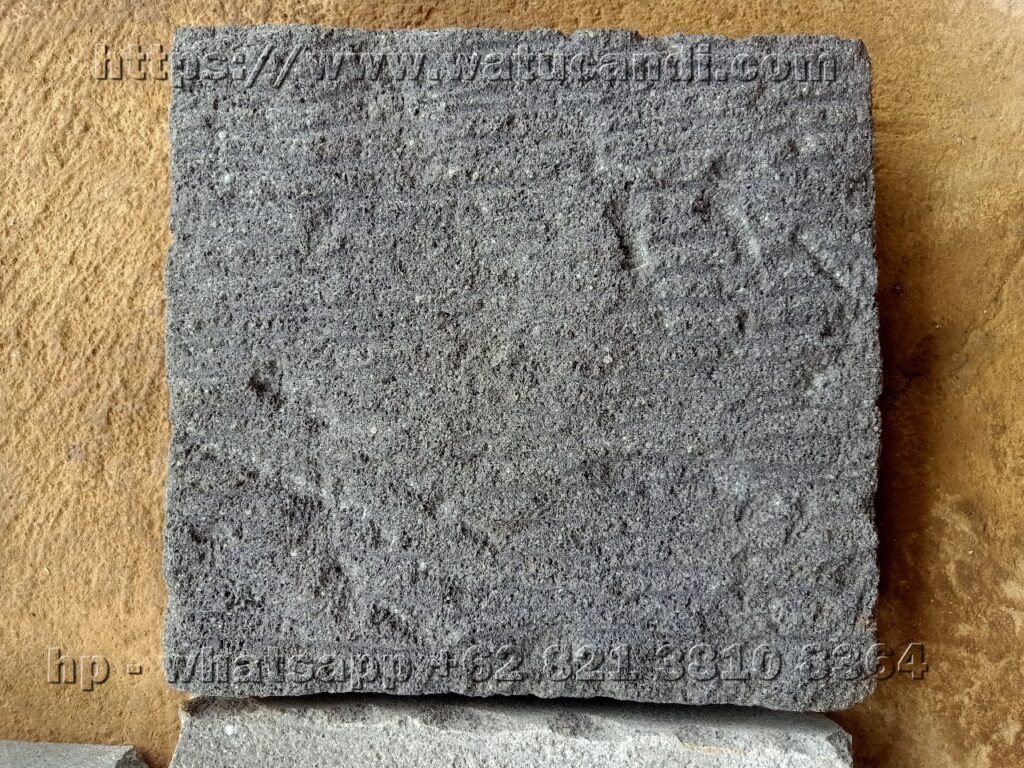
The first type is natural stone paving with a rough hand-made face, fully worked by manual chiseling to produce a very natural and irregular texture.
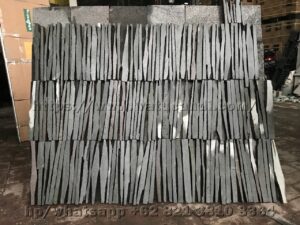
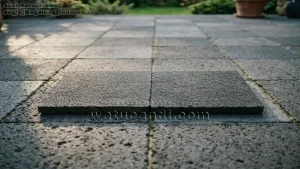
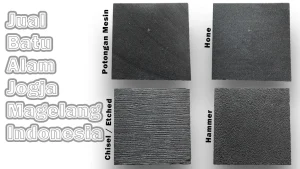
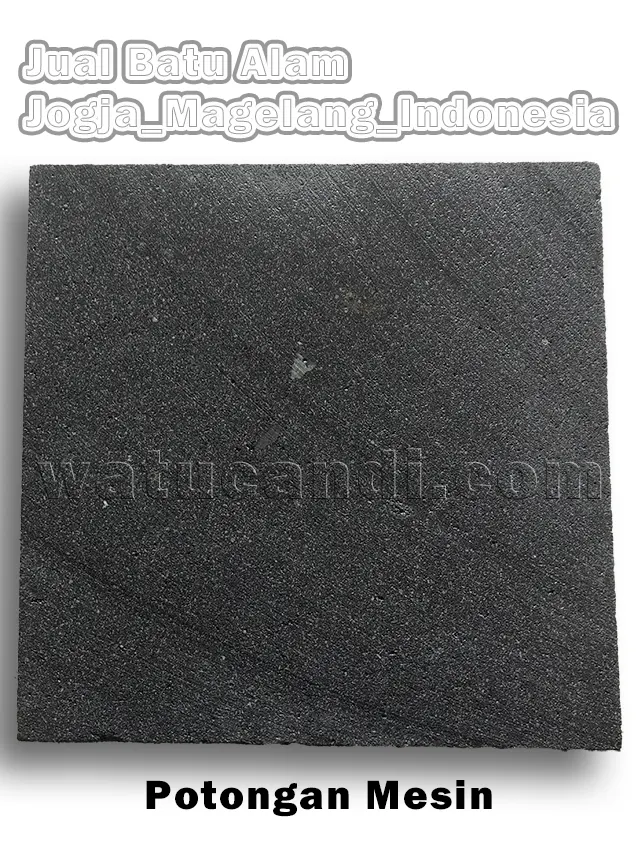
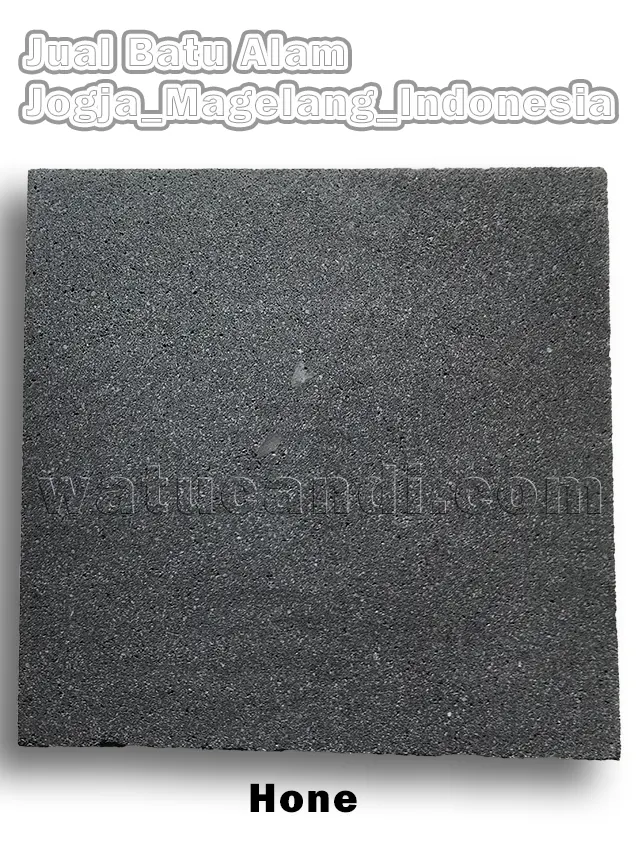
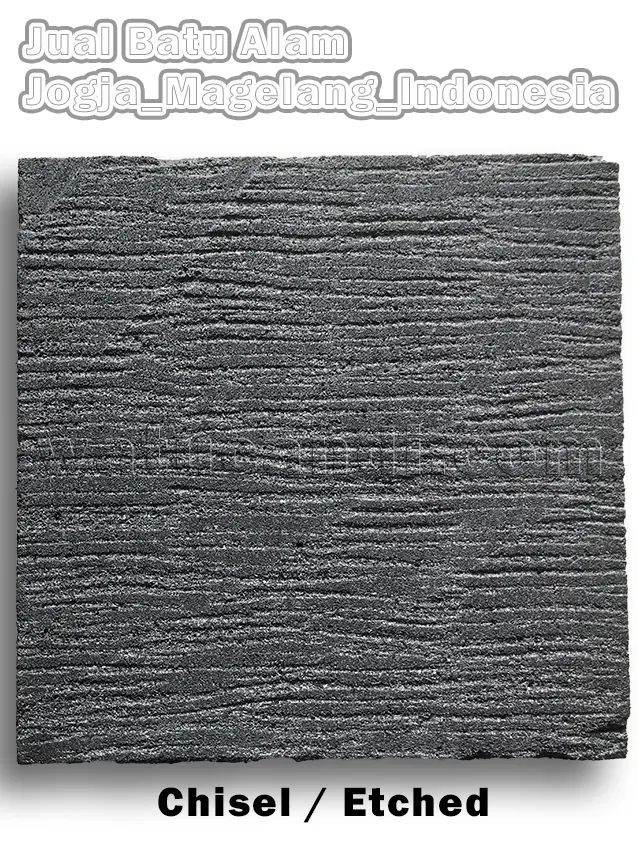
The second type is modern sawn-cut with machine-scratched motifs, offering precise dimensions and texture resembling chisel marks.
This article will thoroughly explore both finishes, from production processes, characteristics, to installation guides.
By reading this guide, you will understand why stone floor of the temple (Merapi lava) is always sought after by architects and natural material enthusiasts.
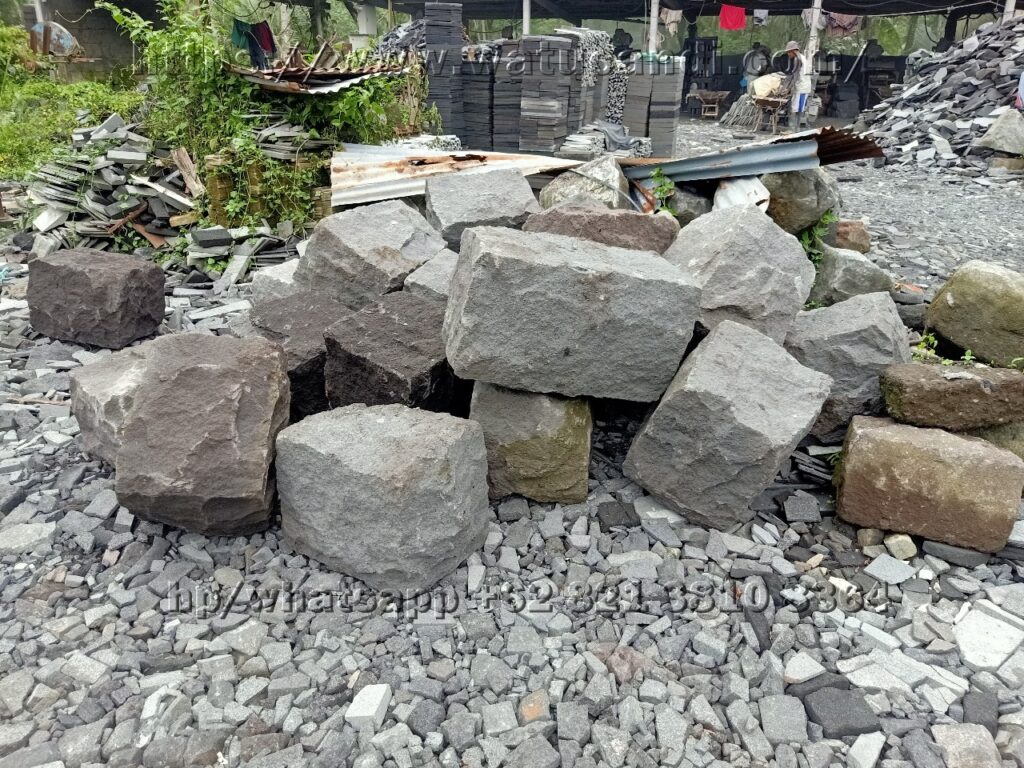
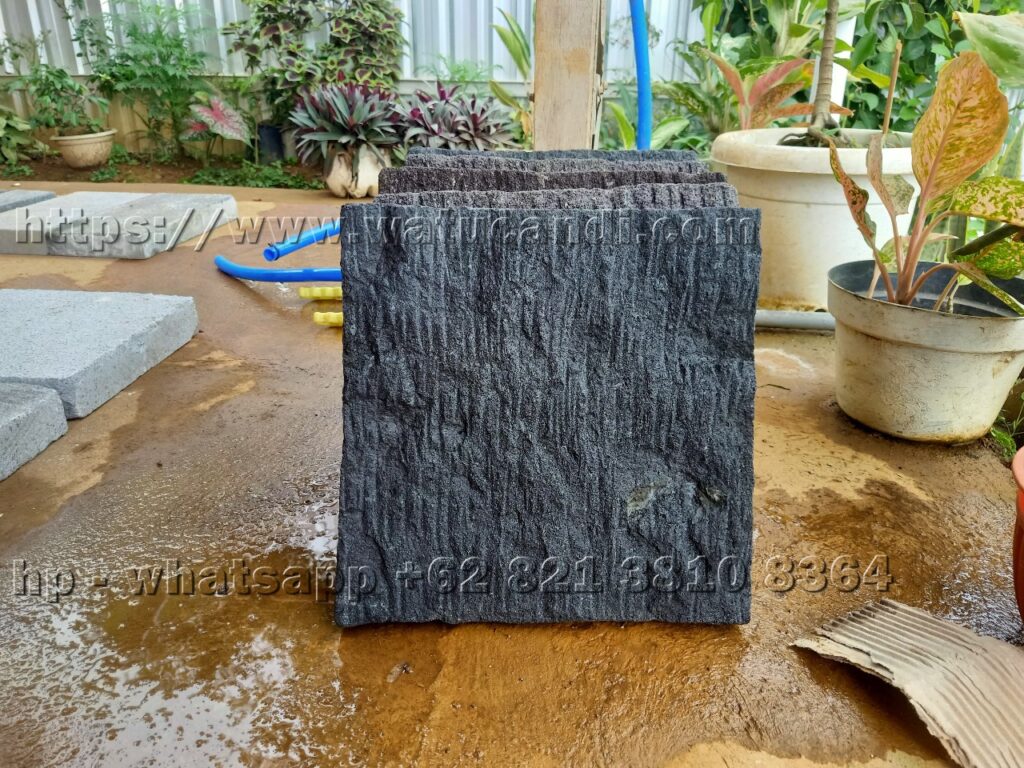
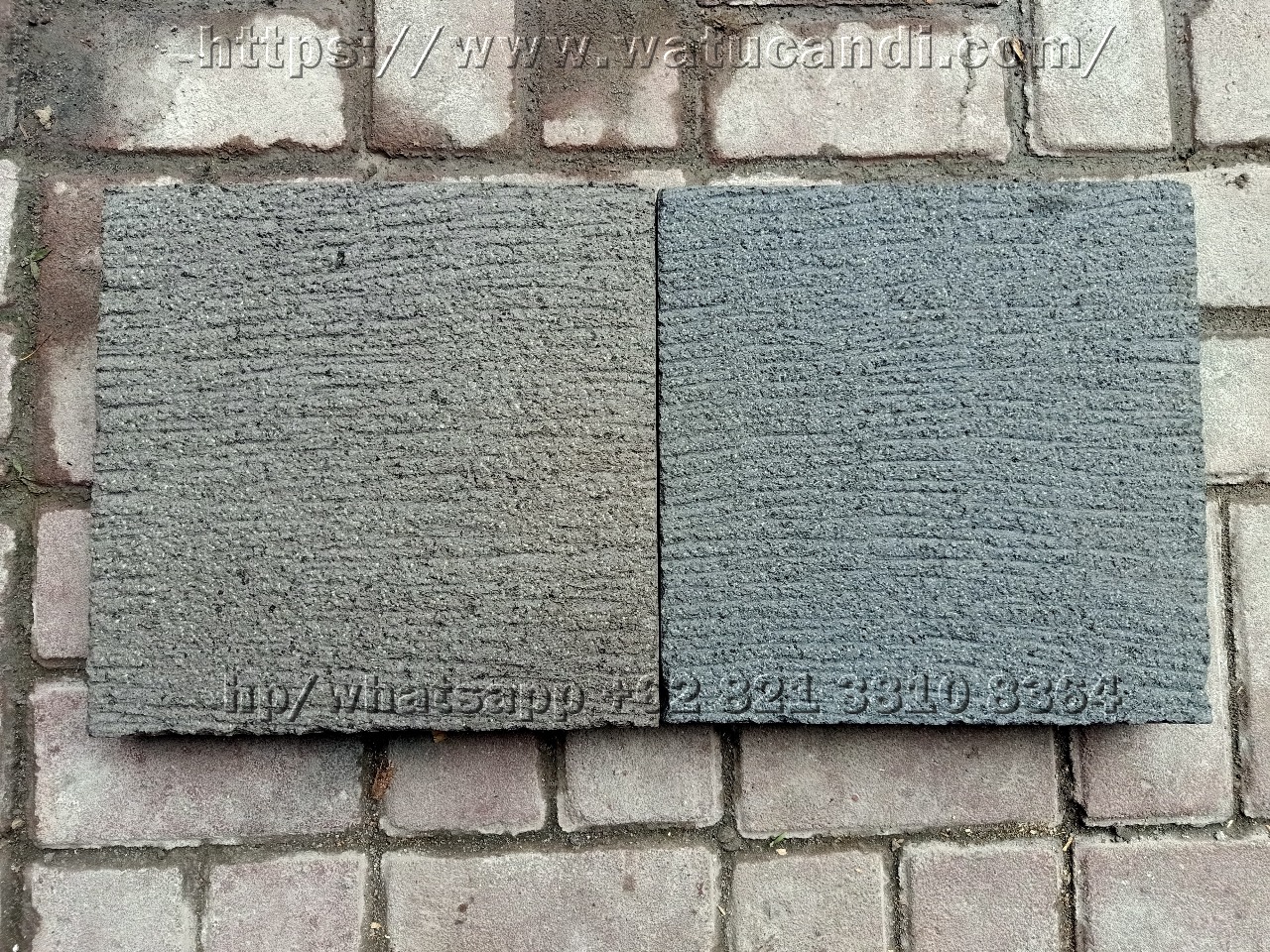
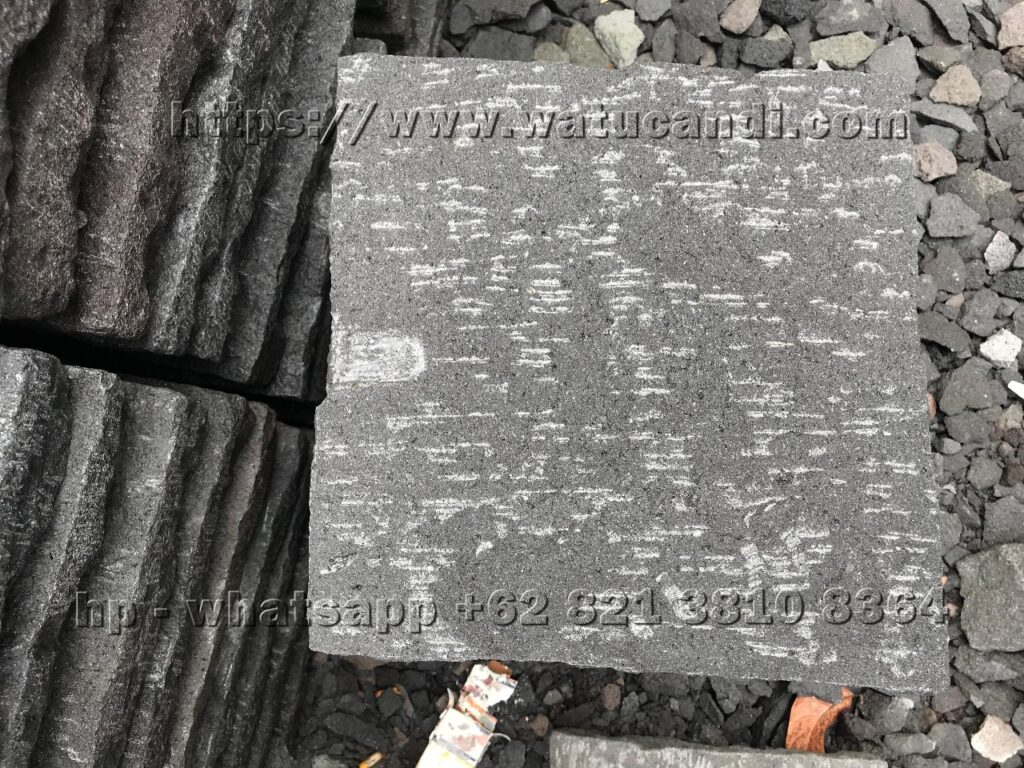
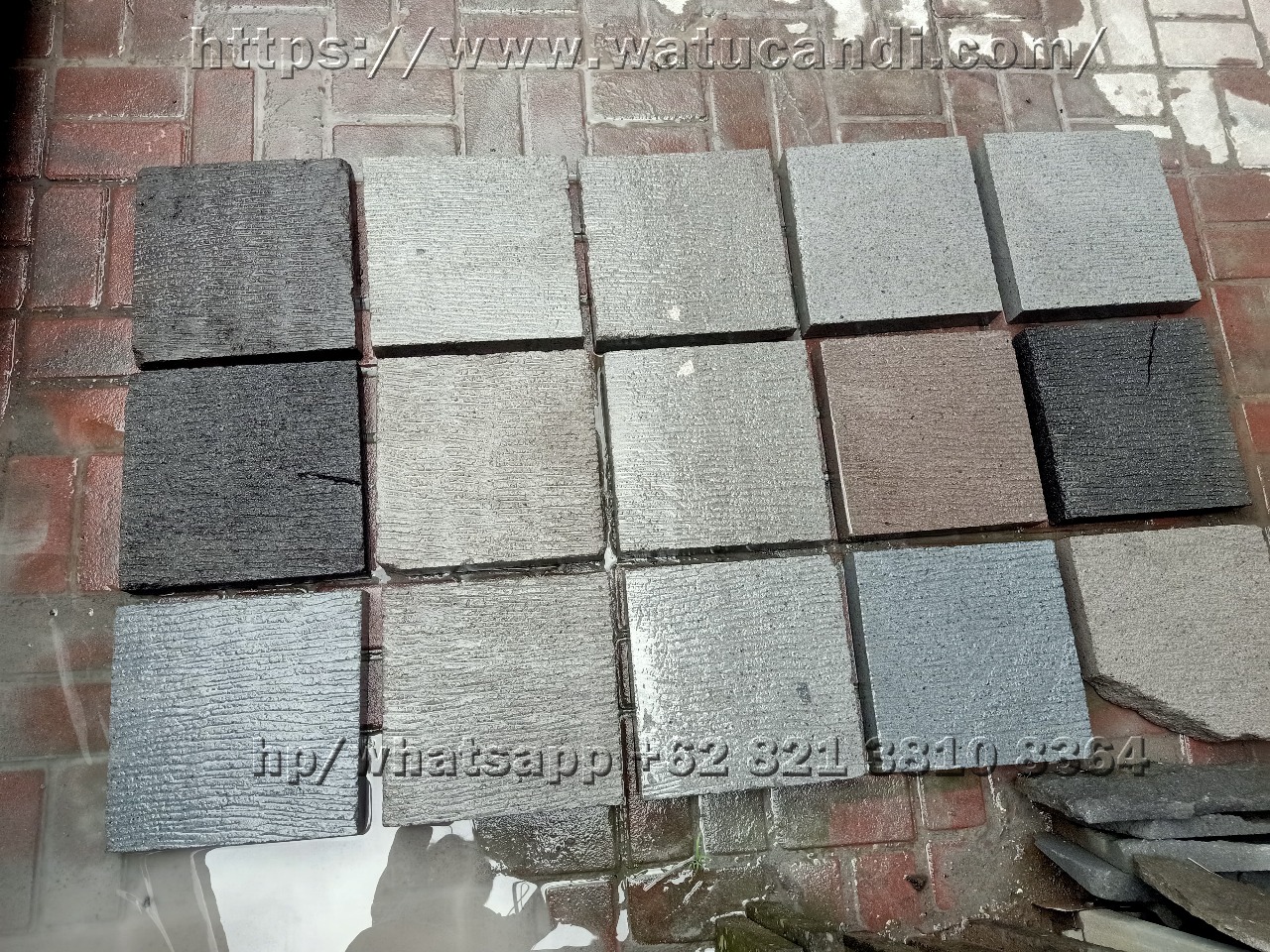
Table of Contents
- Origins of Merapi Lava as Temple Stone
- Hand-Chiseled Temple Stone Paving: An Eternal Manual Masterpiece
- Machine-Scratched Temple Stone Paving: Modern Technology with a Classic Look
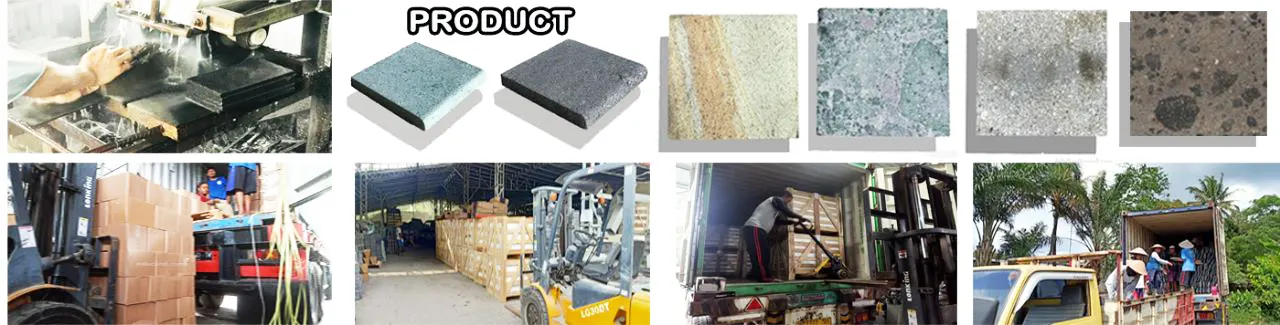
- General Production Process: From Boulders to Artistic Floors
- Traces in Historical Temples: Borobudur, Prambanan, and Balinese Pura
- Why Choose Merapi Lava Temple Stone Floor?
- Comparison Table: Hand-Chiseled vs Machine-Scratched
- Modern Applications for Homes and Public Spaces
- Installation Guide for a Temple Stone Floor that Lasts Hundreds of Years
- Care and Protection of Temple Stone Floor
- Pricing Info & How to Order
- Tips for Choosing the Right Temple Stone Floor
- Myths and Facts About Merapi Temple Stone
- Design Trends with Temple Stone Floor in the Modern Era
- Conclusion
- FAQ – Most Popular Questions
Origins of Merapi Lava as Temple Stone
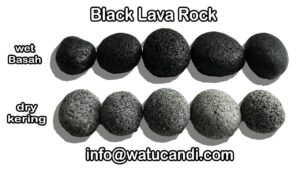
Mount Merapi periodically releases high-quality volcanic material through lava flows. A mixture of sand, gravel, and andesite boulders is carried by rainwater down the slopes, then settles in ancient rivers.
Over many years, this material compacts and forms the hard rock we now know as temple stone. Its high silica and alumina content makes it very dense, weather-resistant, and gives it a distinctive blackish-gray color with tiny crystal specks.
Thanks to these properties, temple stone became the primary foundation for historic buildings like Borobudur and Prambanan.
Geologically, Merapi lava stone is classified as basaltic andesite with a hardness of about 6–7 on the Mohs scale. Its controlled porosity offers a dual advantage: the surface remains non-slip when wet, while slowly absorbing heat so it feels cool underfoot.
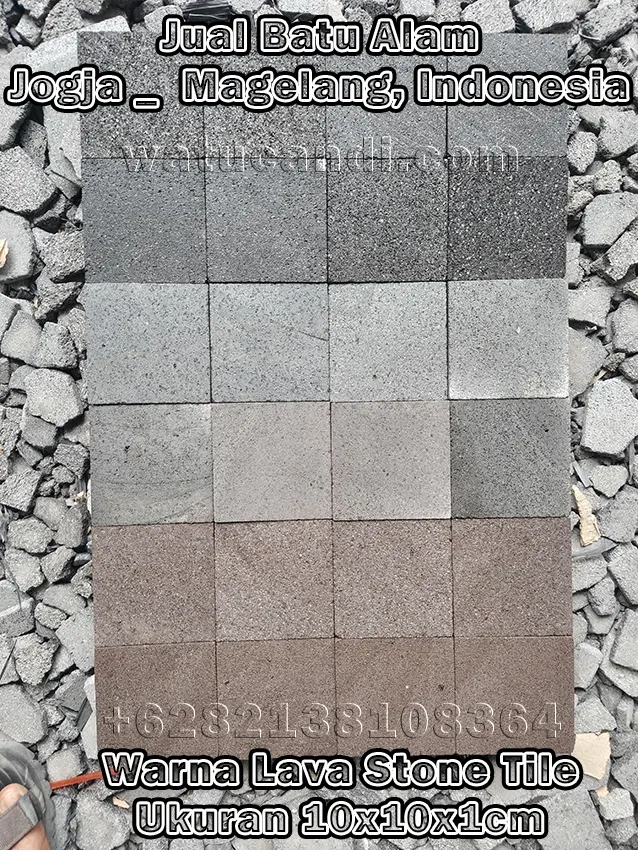
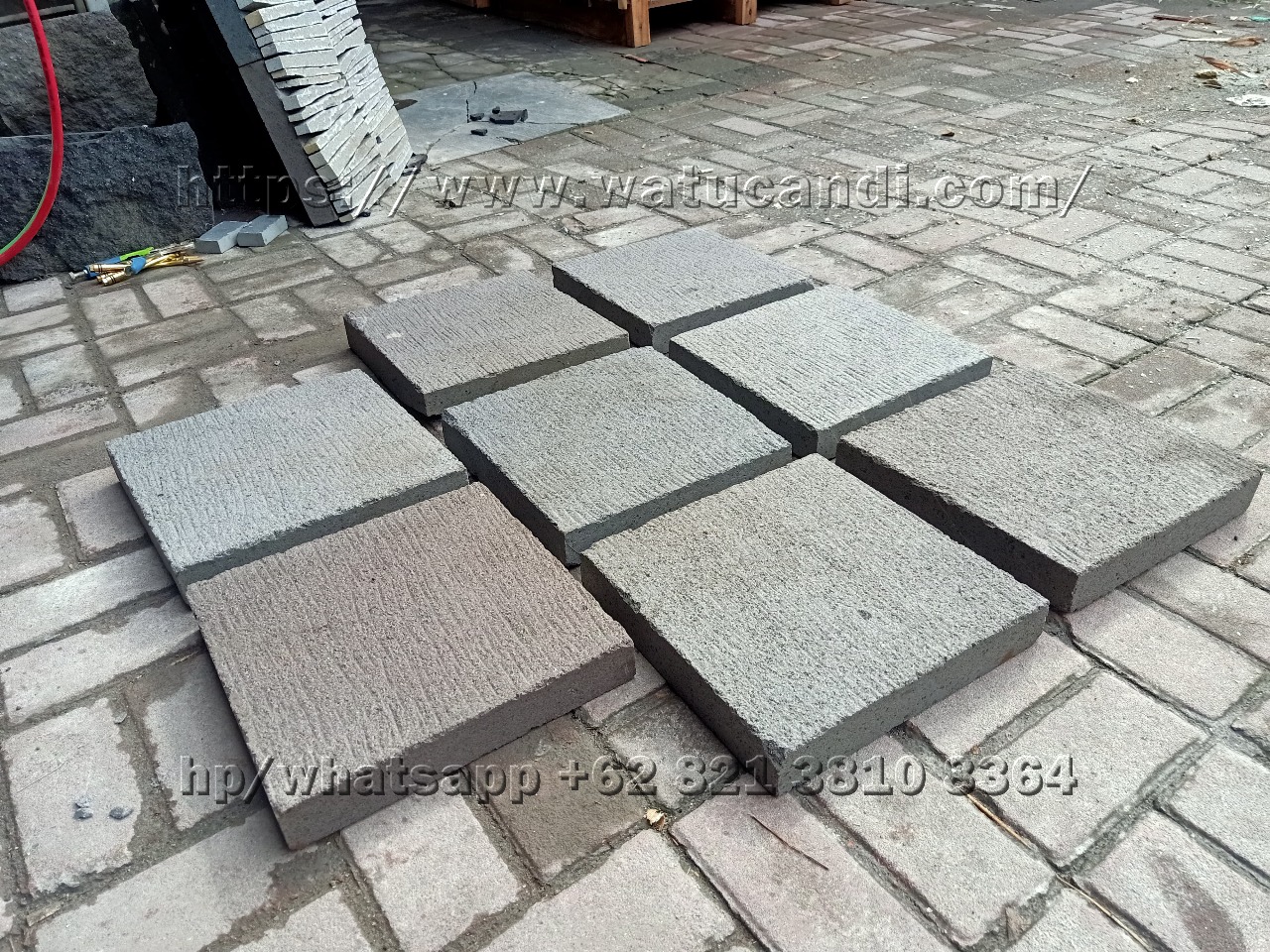
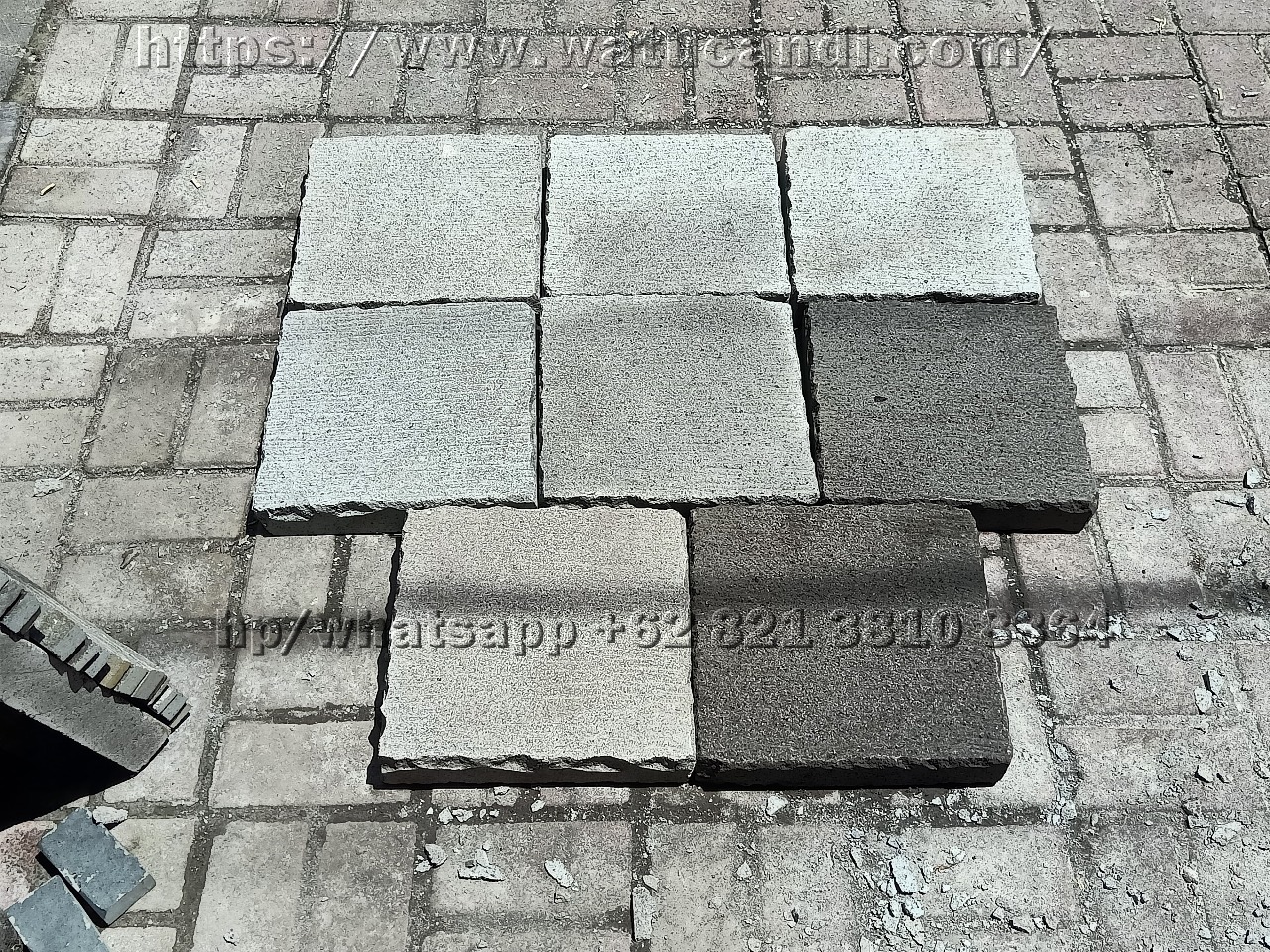
Its resistance to acid rain and extreme temperature changes also makes it an everlasting material. Each boulder has a unique pattern—some dark gray, brownish-gray, to solid black—so no two pieces of stone floor of the temple (Merapi lava) are truly identical.
Mining this stone is done manually in rivers around Magelang, Klaten, and Boyolali. Artisans in centers like Muntilan and Salam then process it into paving using techniques passed down for generations. Thus, stone floor of the temple (Merapi lava) hand-made is not just a building material, but also a geological and cultural heritage that continues to live in a modern guise.
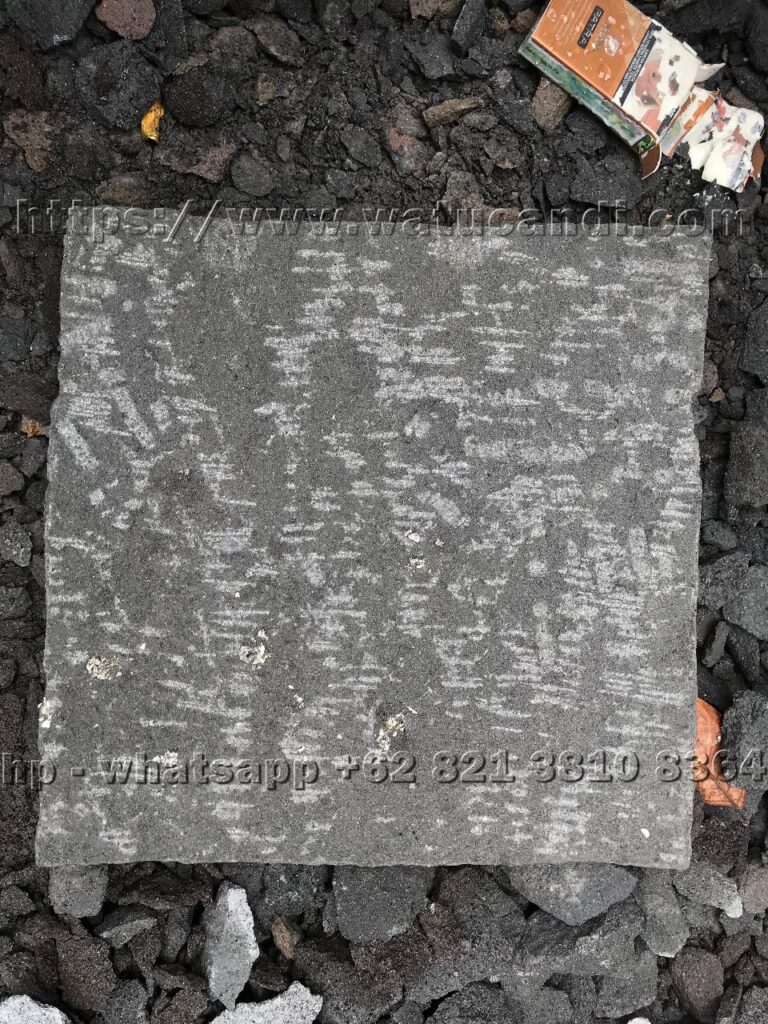
Hand-Chiseled Temple Stone Paving: An Eternal Manual Masterpiece
Natural stone paving with rough hand-made face is the most authentic type of stone floor of the temple (Merapi lava).
Its production fully relies on the skills of artisans passed down orally. Each piece is the result of hundreds to thousands of chisel blows, creating an organic texture impossible to replicate by machine.
If you witness this process firsthand, you will see how large boulders are transformed into natural stone floor slabs with a unique character.

History and Philosophy of Hand Chiseling
The technique of manually chiseling stone has existed since the megalithic era but reached its peak during the temple-building period in Central Java.
The undagi (temple architects) believed that every chisel blow not only shaped the physical stone but also infused it with spiritual energy.
This is why temple floors feel “alive” and bring tranquility. To this day, that philosophy is still held by some traditional craftsmen, who treat each natural stone paver as a work of art, not just a commodity.
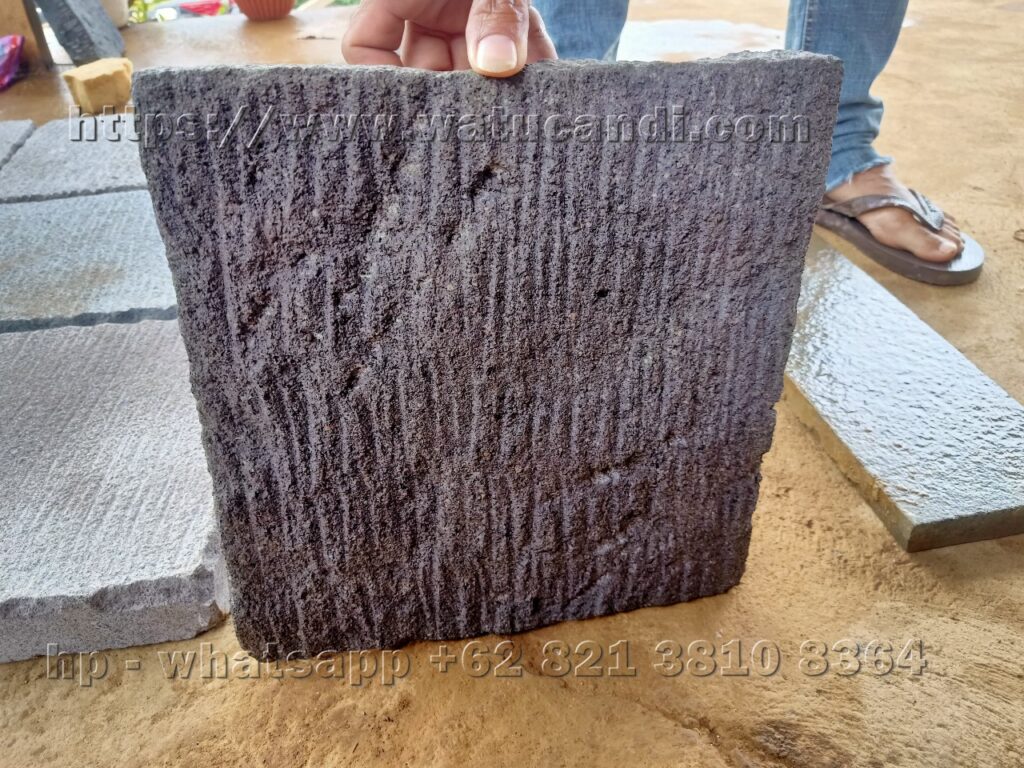
Simple Tools, Extraordinary Results
Craftsmen use only simple tools: a sledgehammer, pointed iron chisel, flat chisel, and small hammer.
No large cutting machines are involved in the early stages. With these tools, the artisan can read the stone’s grain, split it, and shape it into paving.
Sensitivity of hand and years of experience are the main keys. Even the sound of the hammer blow can tell the artisan whether the stone is of good quality or has hidden cavities.
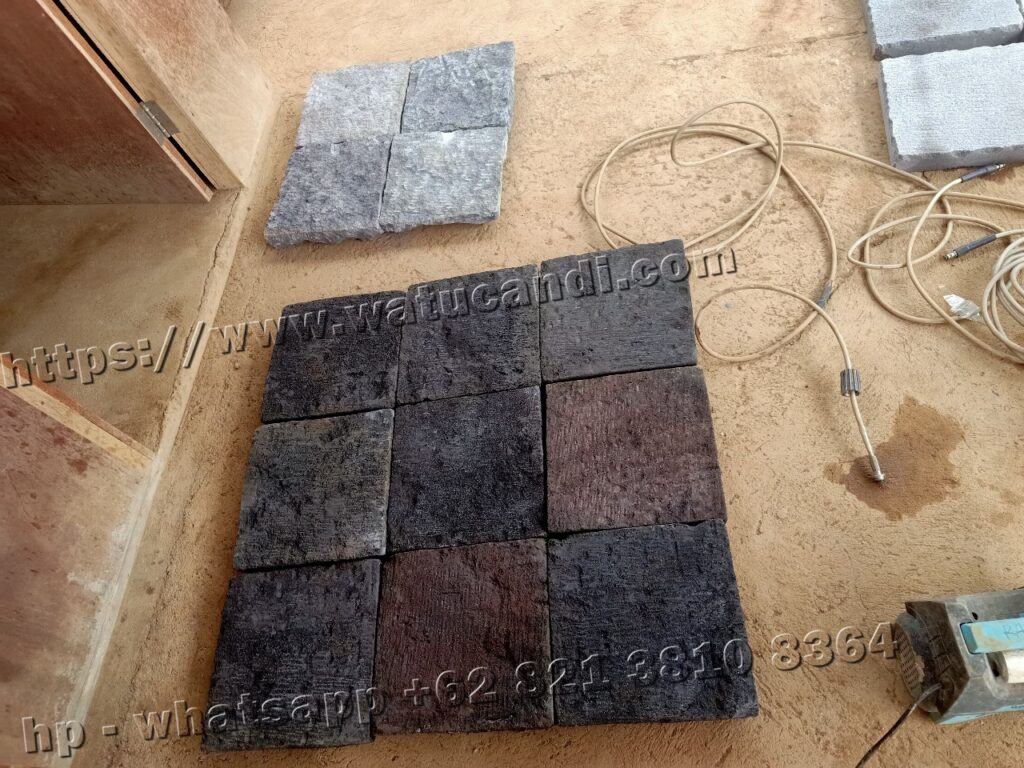
Step-by-Step Production Process
The hand-chiseled paving production process goes through several important stages.
First, raw material selection. Artisans take boulders from rivers and choose those with high density and minimal cracks. They will tap the stone with a hammer to listen to its resonance.
Second, initial splitting or nyekeli. Large boulders are split along the natural grain to avoid damaging the internal structure.
Third, base formation. The bottom side is flattened using a wide chisel so the paving can sit stably when installed.
The fourth stage is surface texture chiseling. The craftsman sits on the floor with the stone in front, holding the chisel in the left hand and hammer in the right. Rhythmic blows are struck for hours.
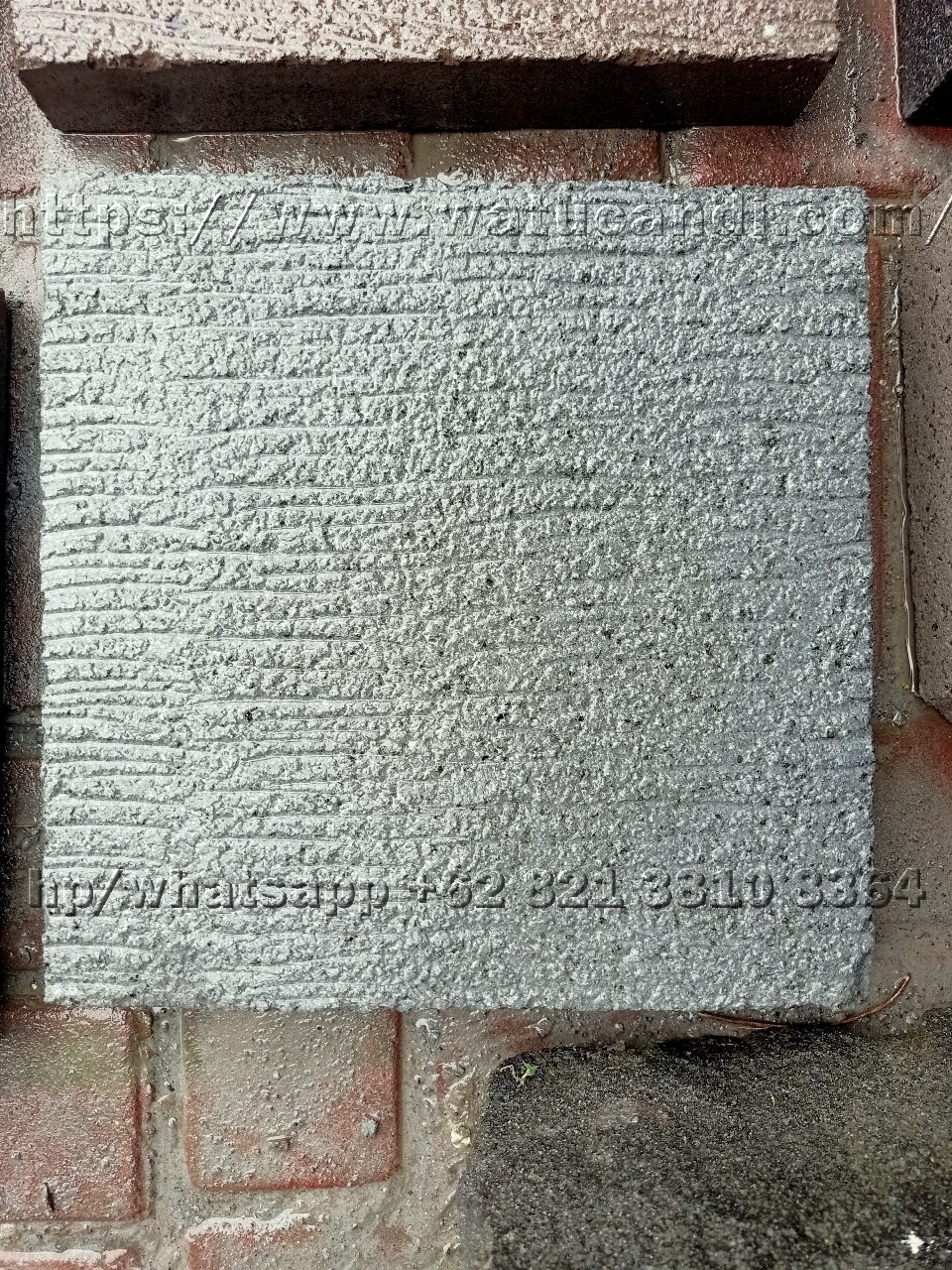
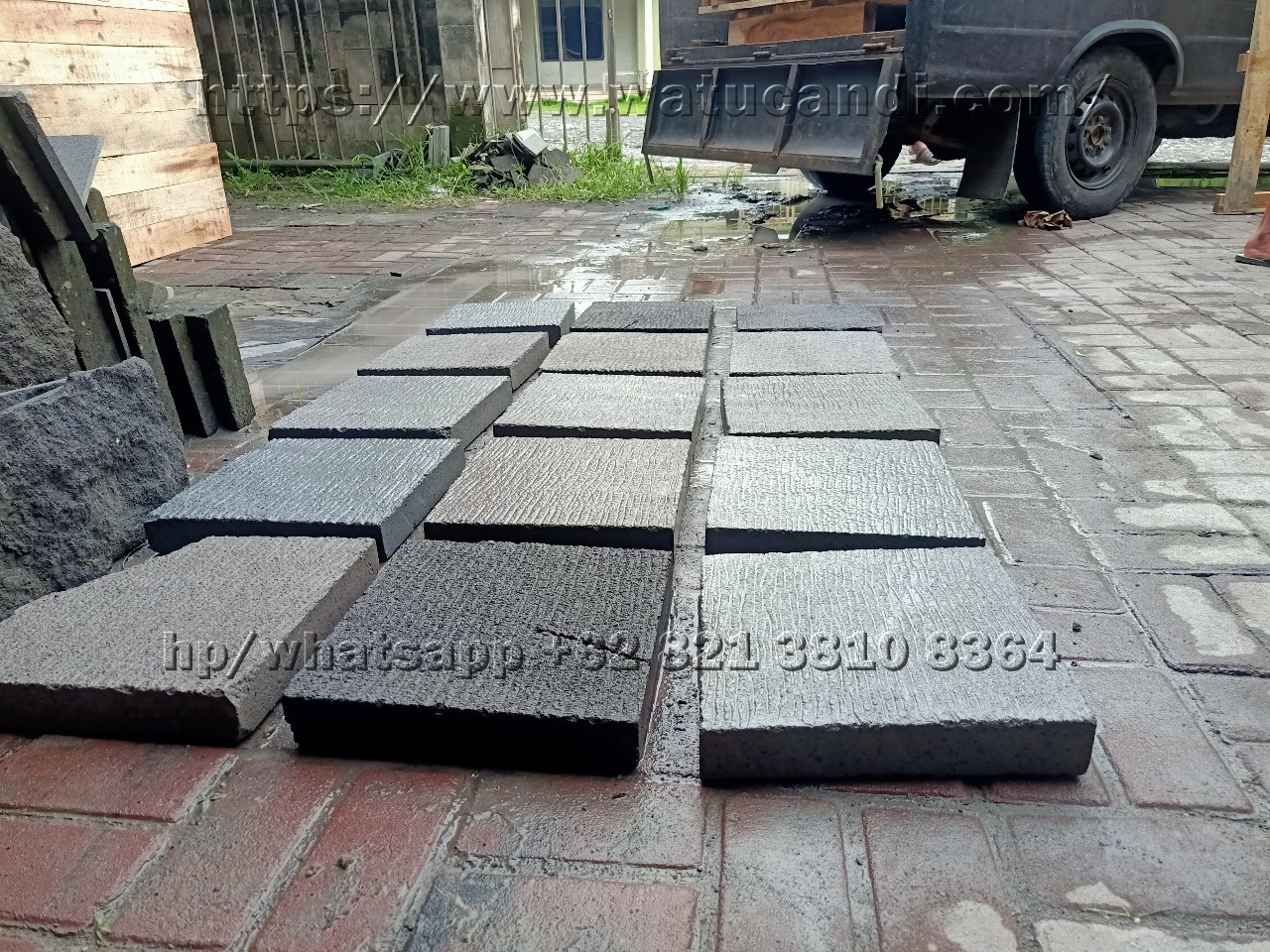
Several techniques can be chosen: pointing produces a very rough and deep texture, straight combing creates finer grooves, and random cross most closely resembles Borobudur temple floors.
Fifth, edge shaping. The sides of the paving are left naturally split or beveled to avoid sharpness.
Finally, washing and sorting. The paving is washed to remove dust, then sorted by dominant color and roughness level (depending on pre-purchase agreement).
An experienced craftsman can only produce 1–2 square meters of paving per day.
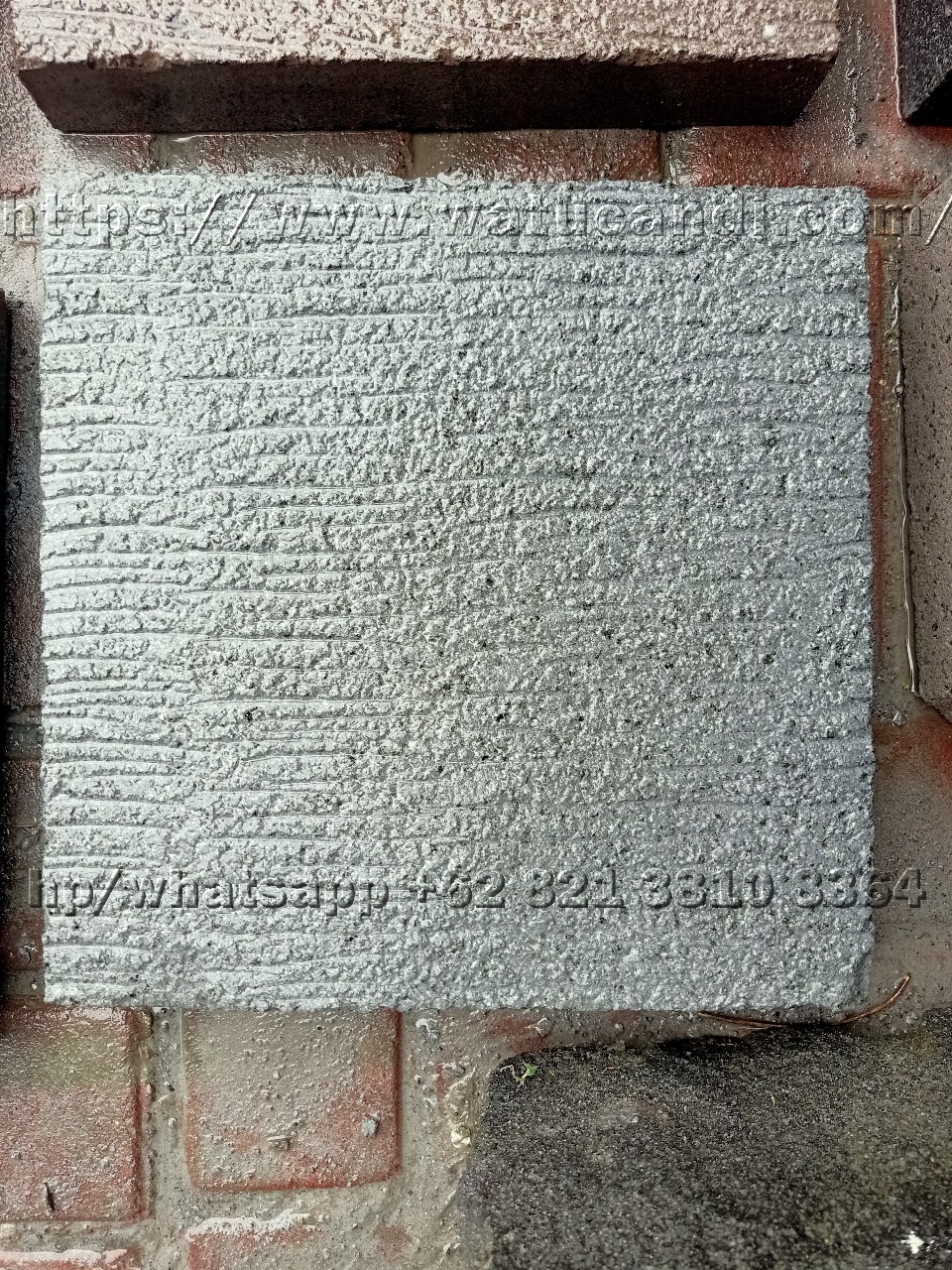
Texture depth varies between 2–5 mm, sufficient to provide strong grip for footwear.
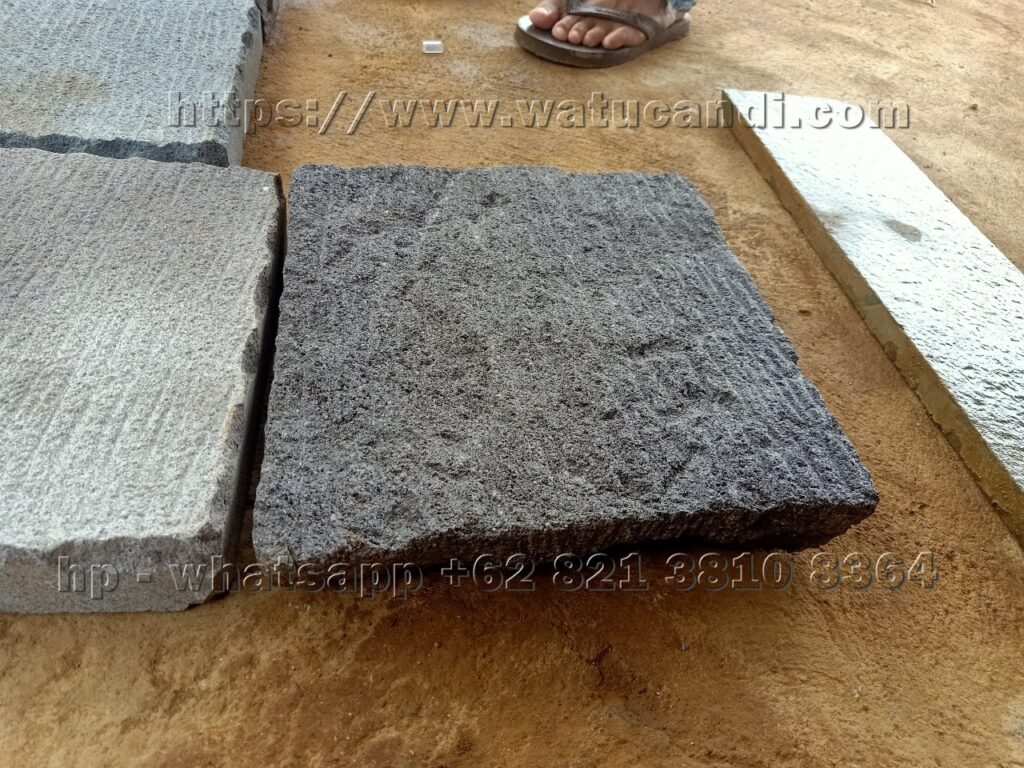
Paving thickness is generally 4–6 cm, with dimensional variations of ±1–3 cm. It is precisely this variation that makes each hand-chiseled stone floor of the temple (Merapi lava) very unique and artistically valuable from natural stone.
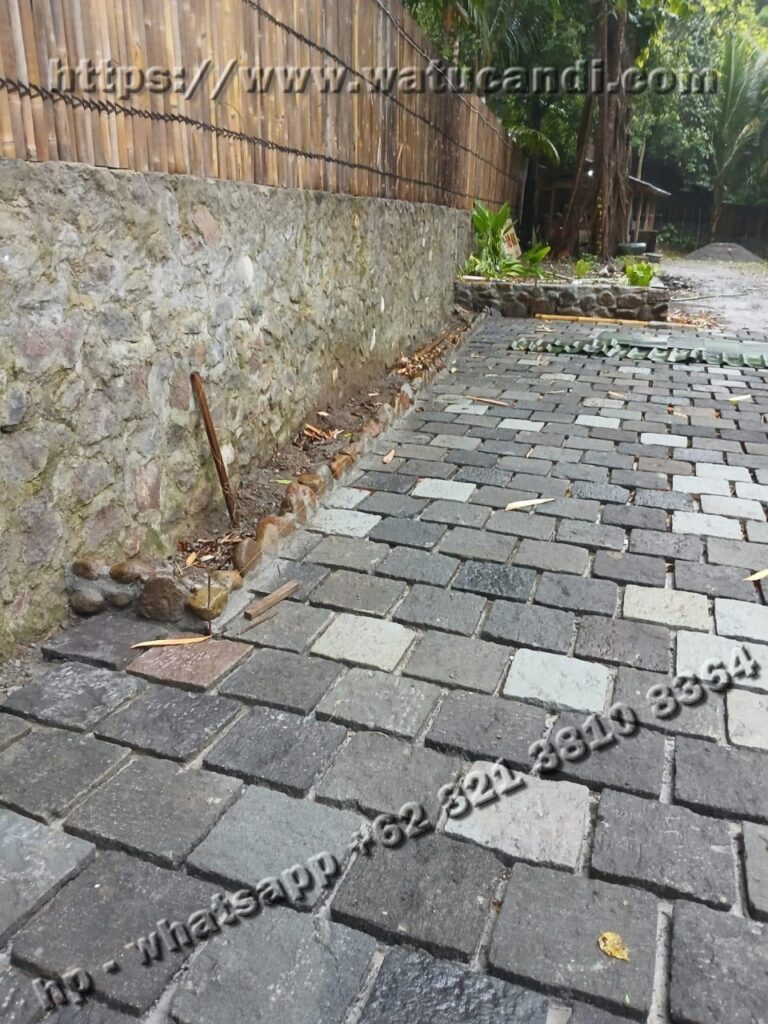
Visual Characteristics and Tactile Sensation
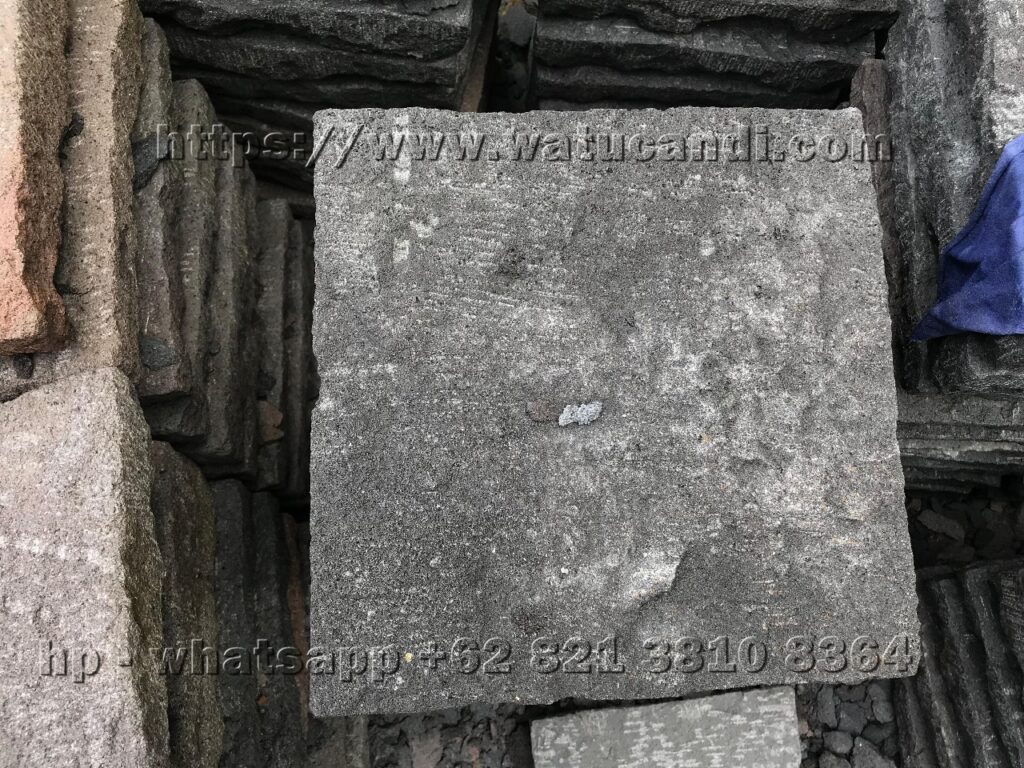
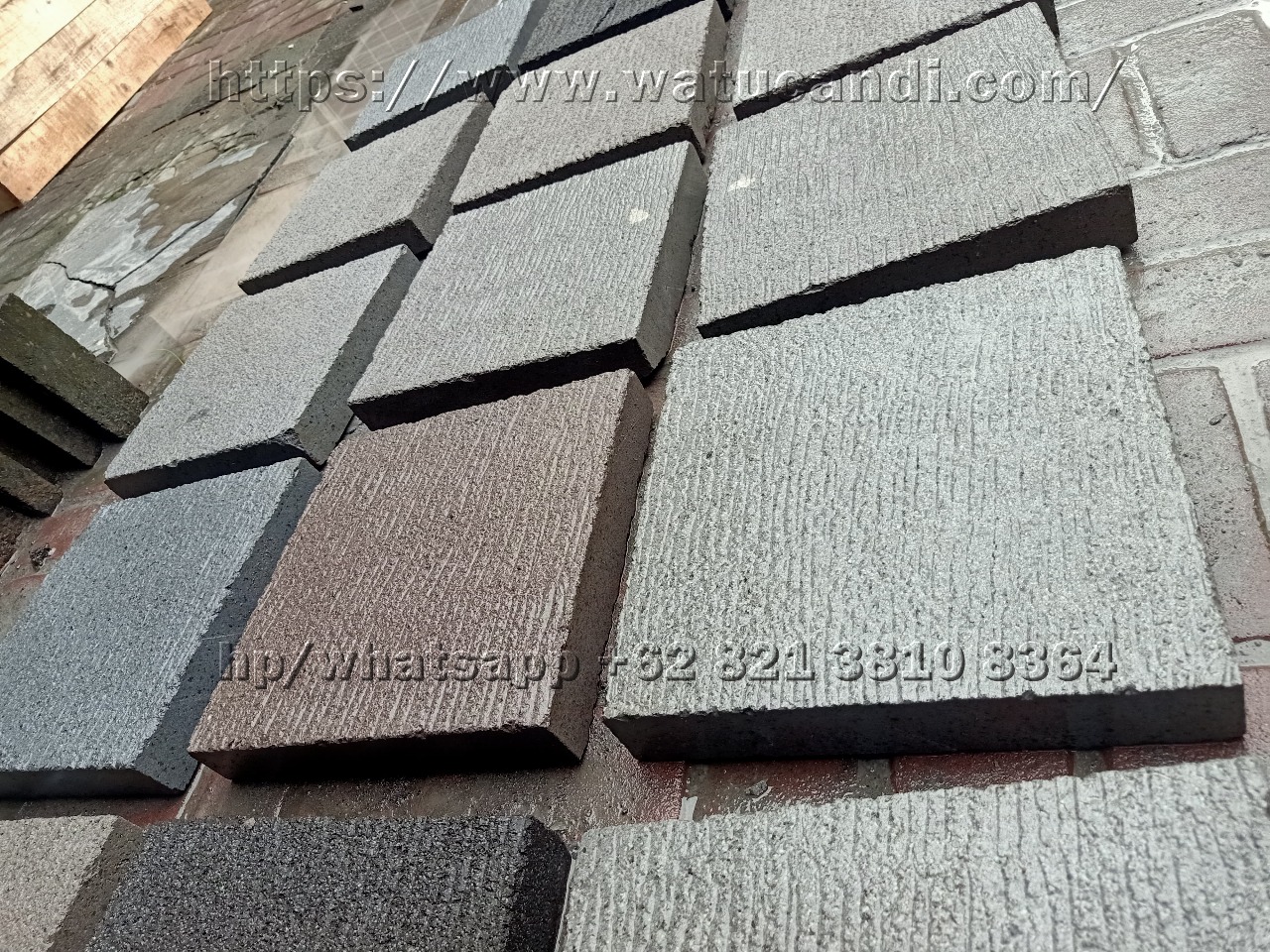
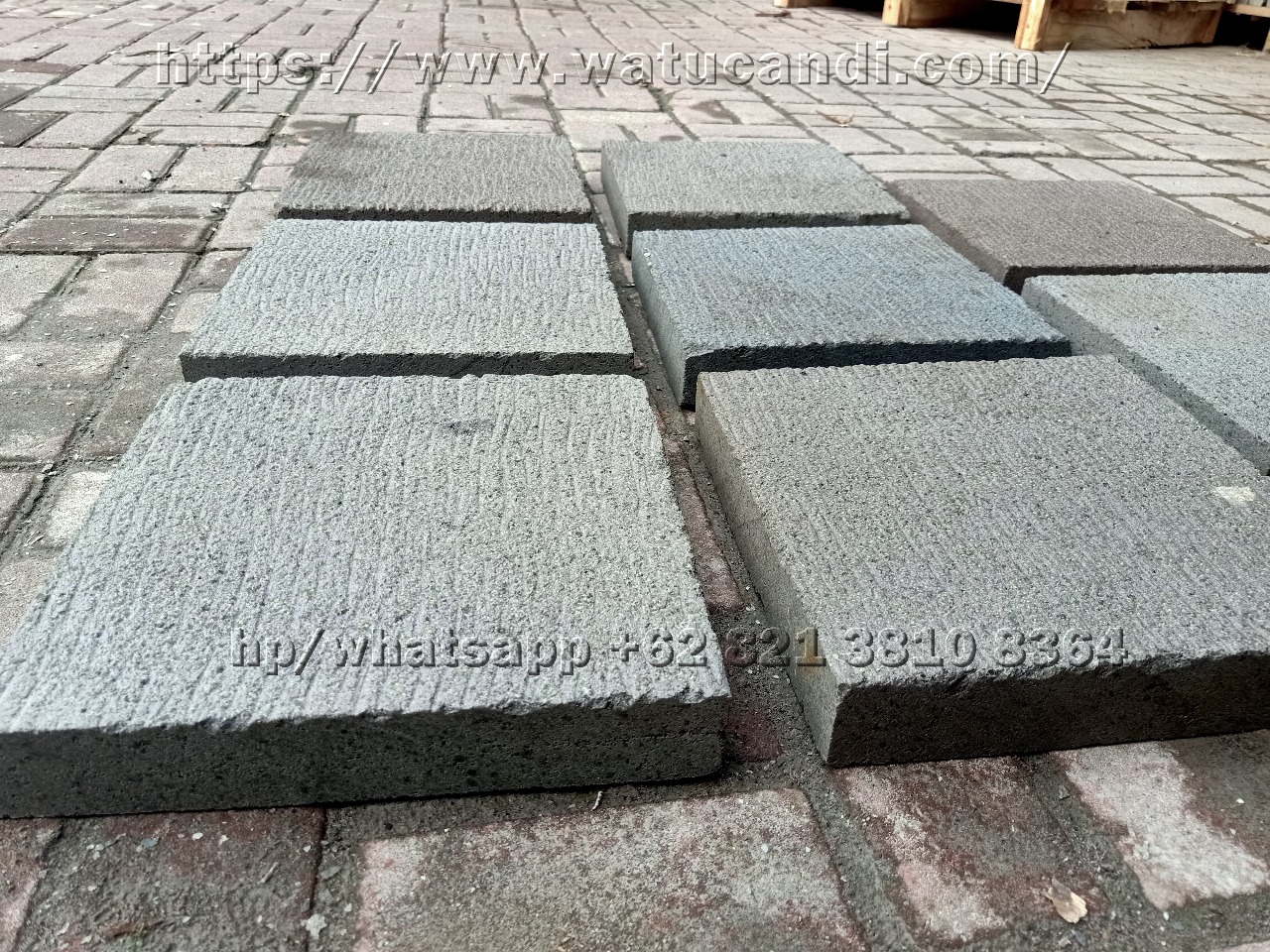
The final product displays a surface that not only looks rough but also feels like stepping on living natural stone. The chiseled pattern follows the original contour of the stone, creating a three-dimensional effect.
Under morning or evening sunlight, shadows in the indentations provide dramatic light play.
The blackish-gray color with white specks becomes a perfect canvas for tropical gardens or heritage-style courtyards.
Over time, frequently trodden surfaces will develop a natural patina—a smooth, glossy layer—that actually adds character.
Thus, the hand-chiseled stone floor of the temple (Merapi lava) is not only beautiful when first installed but also becomes more charming as it ages.
Advantages and Disadvantages of Hand-Chiseled
The main advantage of hand-chiseled paving is unmatched authenticity.
Each piece is unique, giving an exclusive and personal impression.
Its durability has been proven over centuries, as seen in ancient temples.
The deep texture provides maximum slip resistance, safe for wet or sloping areas.
Moreover, using this product means you help preserve traditional craftsmanship and support local artisans’ economies.
On the other hand, hand-chiseled paving is indeed more expensive due to intensive labor and long production time.
Installation is also more complex; skilled workers are needed to arrange pieces with non-uniform dimensions.
The slightly uneven surface may feel a bit rough initially, especially for those not used to walking barefoot.
Stock is often limited and requires indent waiting time. Nevertheless, for lovers of organic architecture and cultural value, these advantages far outweigh the disadvantages.
Regional Variations and Modern Adaptations
Interestingly, there are stylistic differences between artisan centers. Craftsmen in Magelang tend to produce deeper and more aggressive textures, while artisans in Klaten prioritize smoothness and rhythmic strike patterns.
Some luxury villa projects intentionally blend these two styles to create a dynamic visual transition. A number of artisans have started adopting power chisels (electric chisel) to speed up production without completely abandoning the manual touch.
However, purists still choose the fully manual method to maintain the authenticity visible in every hand-chiseled stone floor of the temple (Merapi lava).
Machine-Scratched Temple Stone Paving: Modern Technology with a Classic Look
Entering the modern era, the demand for stone floor of the temple (Merapi lava) that is more uniform and quickly produced led to the birth of precision sawn-cut with machine-scratched motifs.
Lava stone boulders are cut using diamond-blade sawing machines, producing slabs with precise dimensions.
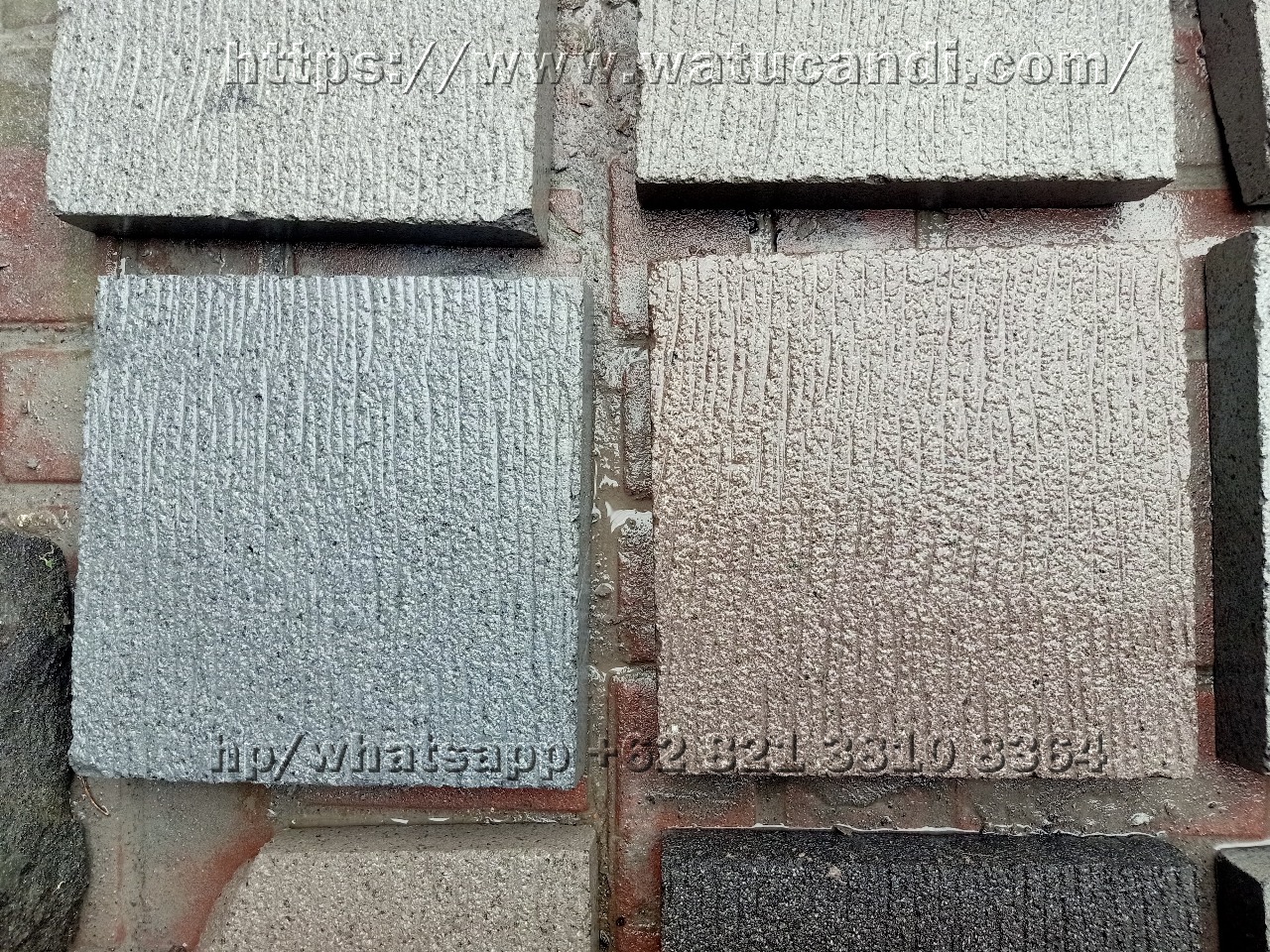
The smooth sawn surface is then textured to resemble chisel marks through mechanical scratching. The result is paving with a classic look but a high level of neatness.
Evolution of Cutting and Texturing Technology
Before modern machinery, craftsmen used hand saws with abrasive sand to split stone. However, efficiency was very low.
The entry of electric motor technology at the end of the 20th century revolutionized the natural stone industry. Now, bridge saw machines with diamond blades can cut hard boulders quickly and accurately.
The resulting slabs are then processed with texturing machines, which work with grinding wheels, patterned rollers, or computer-controlled pneumatic chisels (CNC).
Operators can set scratch depth, pattern, and spacing with high precision.
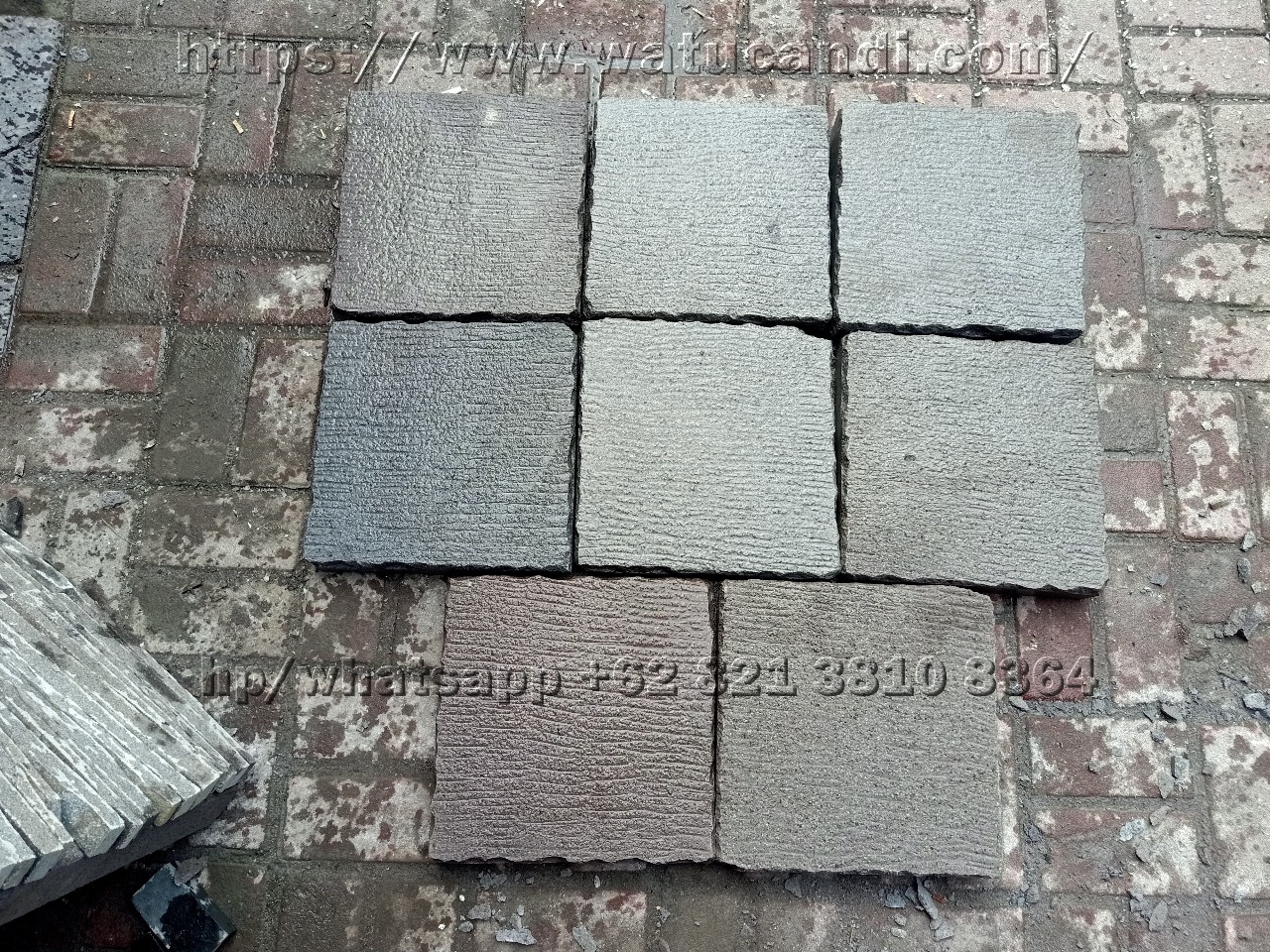
Detailed Production Process of Machine Scratched
The production process for machine-scratched paving consists of several standardized stages.
The first stage is block cutting. Large boulders are cut into slabs with a thickness of approx. 4–5 cm using a bridge saw. Cooling water is used to reduce dust and maintain blade quality.
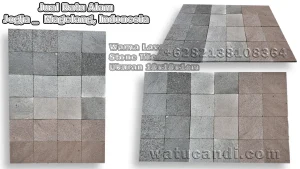
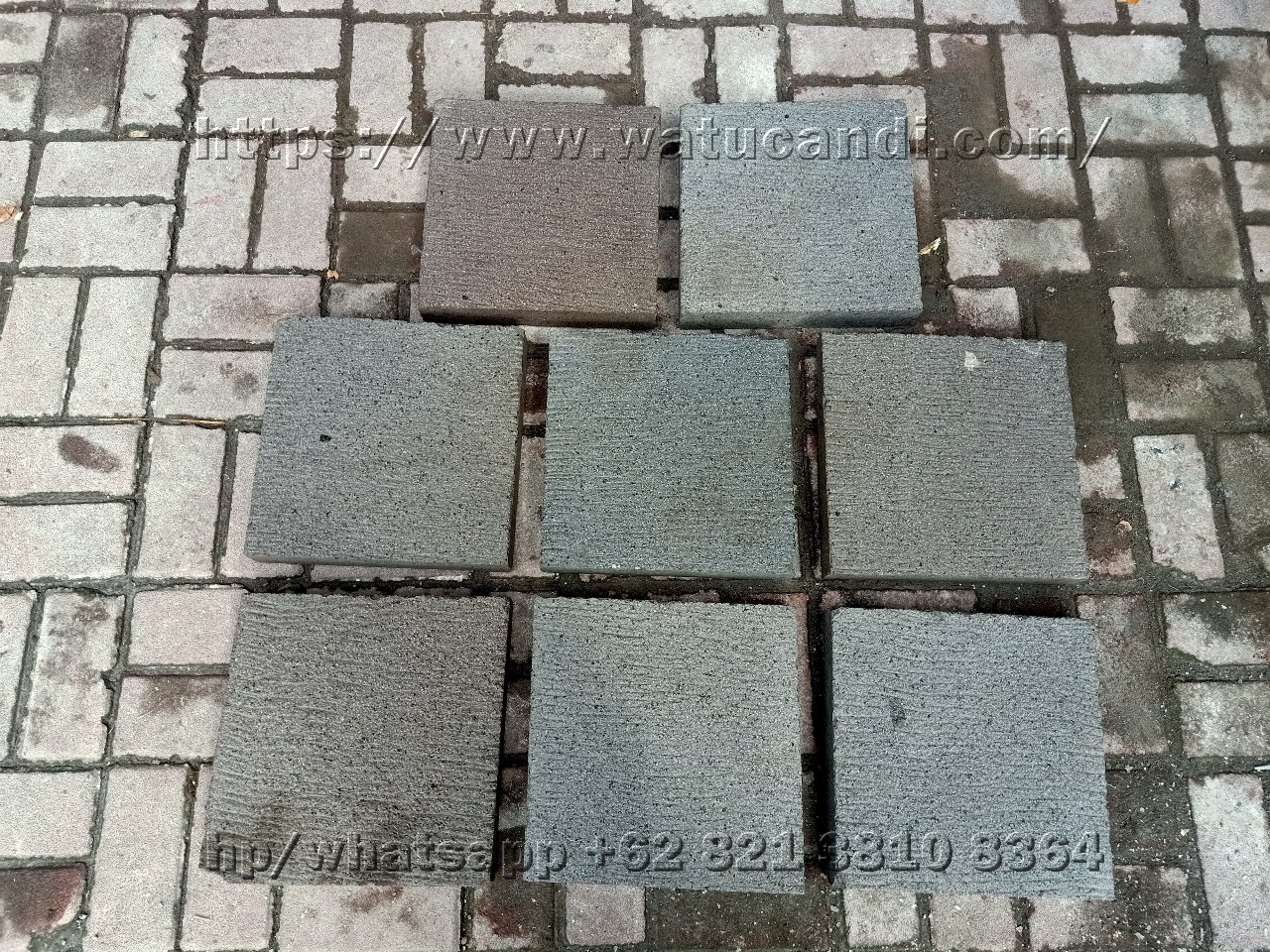
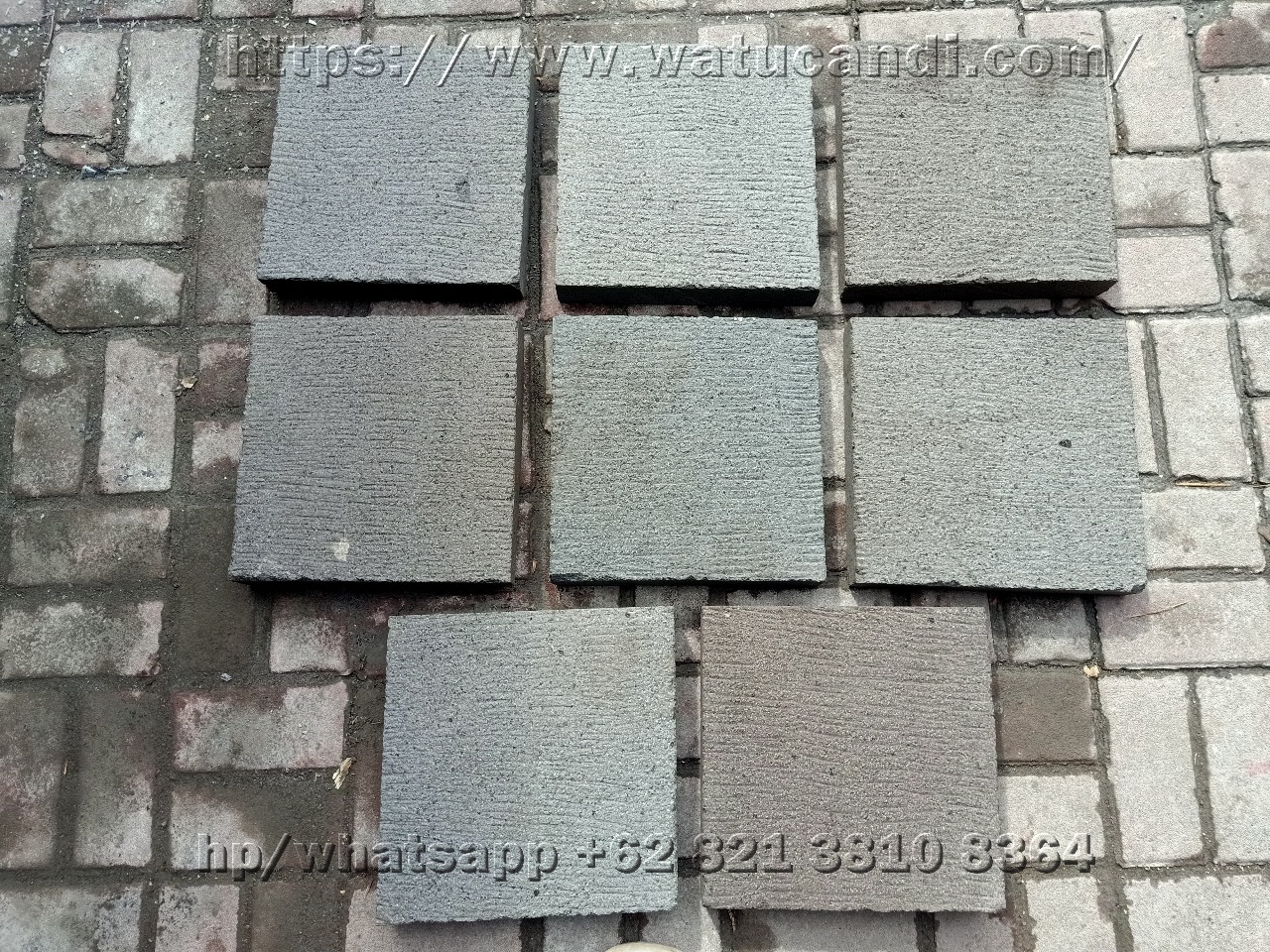
The second stage is size calibration (adjusting to request and agreement). Slabs are cut again into standard formats, such as 30×30 cm, 40×40 cm, or 60×30 cm.
Multi-blade cutting machines can produce dozens of pieces in one process.
The third stage is edge forming (chamfering) to remove sharpness and provide uniform joint gaps (conditional/agreement).
The fourth stage is surface texturing. The leveled slabs are fed into a texturing machine.
Several machine types are used. Rotary texturing machine uses profiled grinding wheels pressed onto the stone surface, producing parallel or circular scratches. Linear scratcher uses chisels that move back and forth mechanically, mimicking human hand movement. Meanwhile, CNC texture machine offers complex patterns such as woven or geometric motifs, and can even be programmed for random depth variations.
The final stage is washing and quality control. The paving is washed with high-pressure water, then checked for flatness, dimensions, and texture consistency (conditional/agreement).
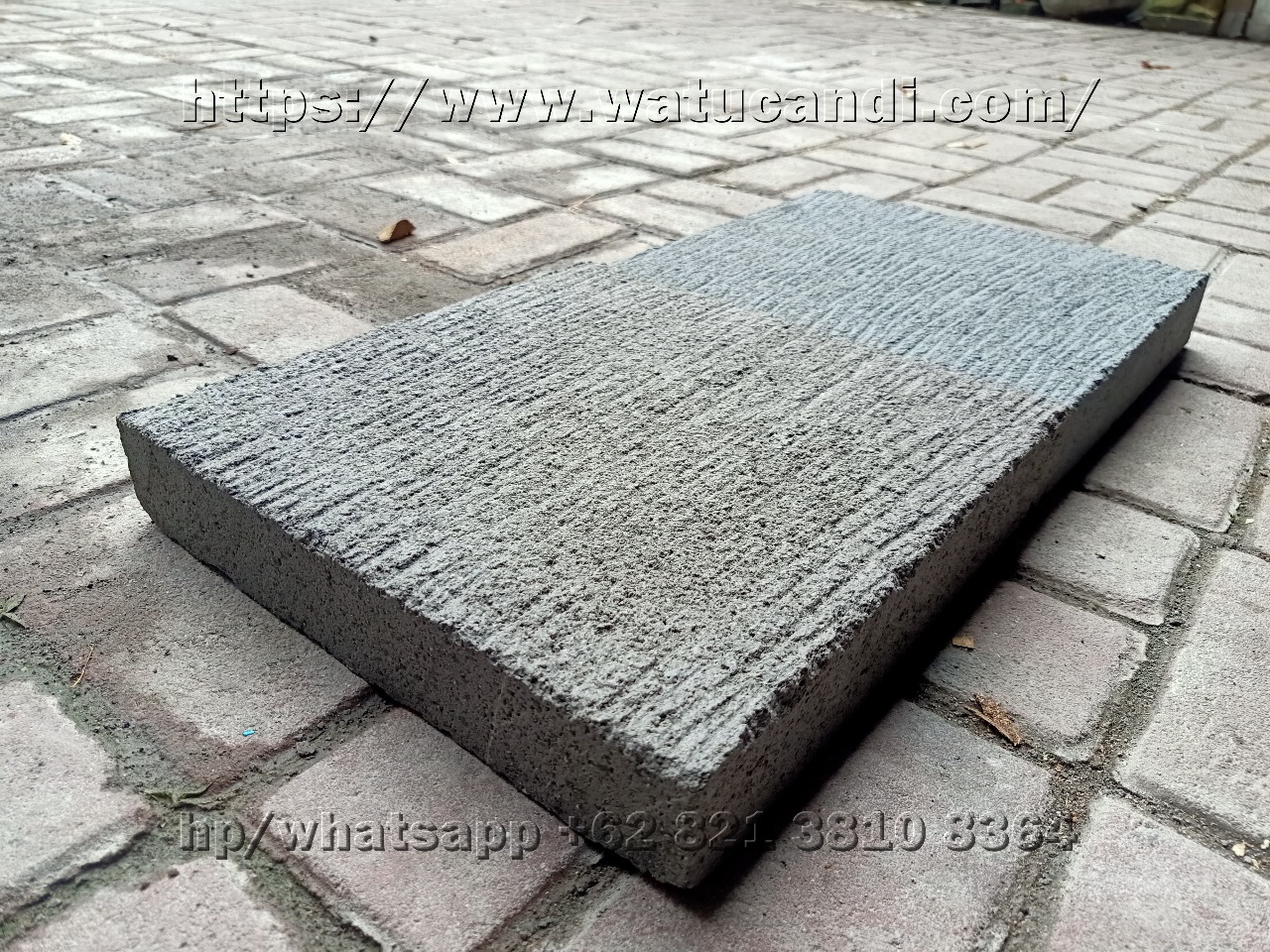
Popular Texture Patterns
Modern texturing machines are very flexible. Here are some commonly available patterns:
- Straight Groove: Straight parallel scratches, giving a neat and minimalist impression. Suitable for carports or contemporary-style terraces.
- Crosshatch: Two directions of scratches intersecting, producing an orange-peel-like texture. Optimal slip resistance and aesthetic.
- Random Machine: A simulated random chisel pattern mechanically. Although not as organic as hand chiseling, from eye level it is very similar.
- Wavy Grooves: Undulating scratches, giving a dynamic feel, often chosen for pool areas.
All these patterns provide a scratch depth of about 1–3 mm. This texture is enough to give grip without making the surface feel too rough. Therefore, machine-scratched paving is very suitable for areas frequently used by children or the elderly.
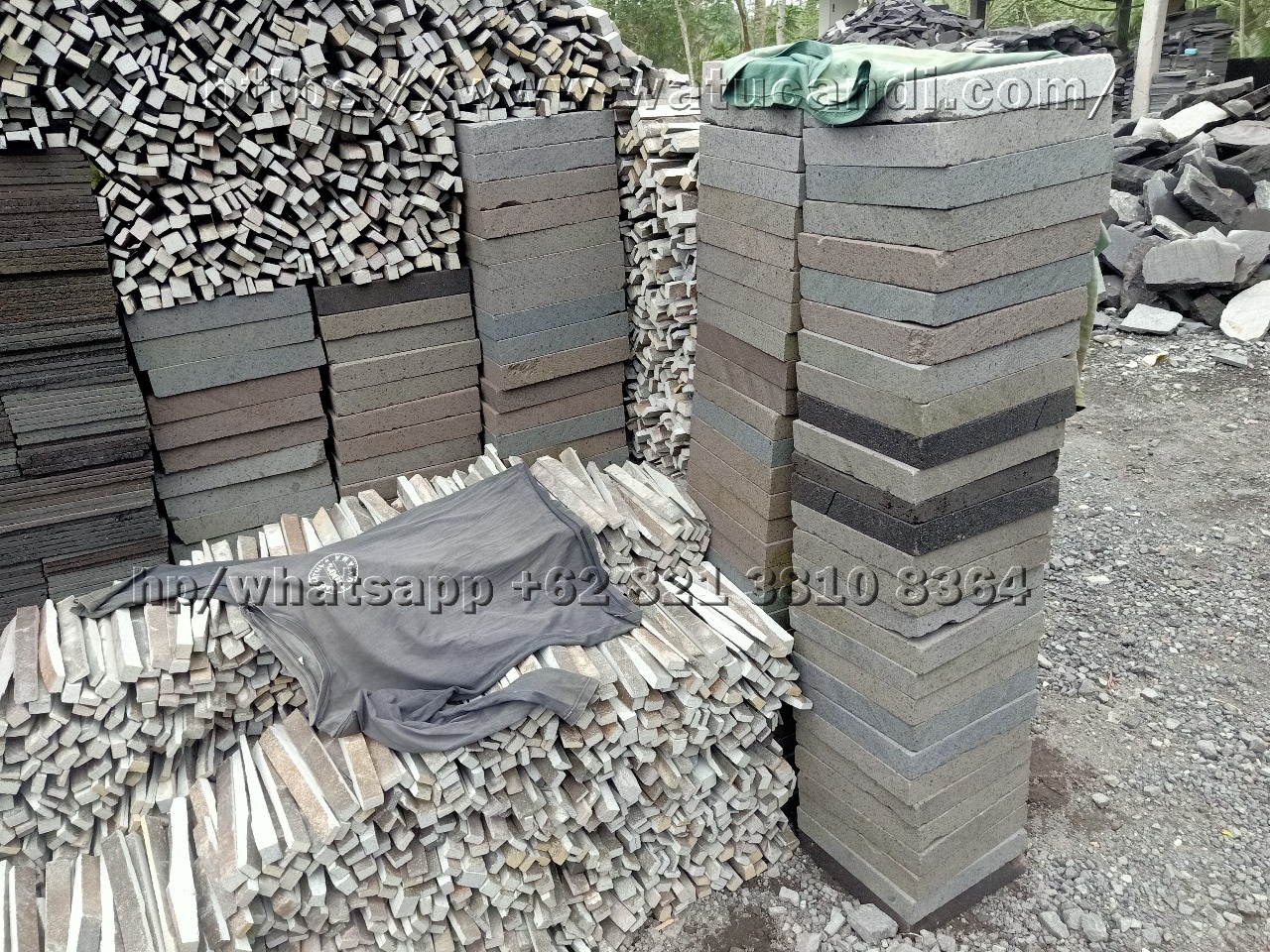
Competitive Advantages
The main advantage of machine-scratched paving lies in its dimensional consistency.
Precise dimensions facilitate installation, similar to laying large ceramic tiles. Joints become uniform (3–5 mm), so project work time can be shorter.
On-site waste is also less because not much adjustment is needed. In terms of cost, machine-scratched paving is more economical, about 30–40% more affordable than hand-chiseled.
Stock availability is also abundant, enabling purchase of natural stone flooring in large quantities without long waiting times.
This is why many contractors and developers choose this type for large-scale projects.
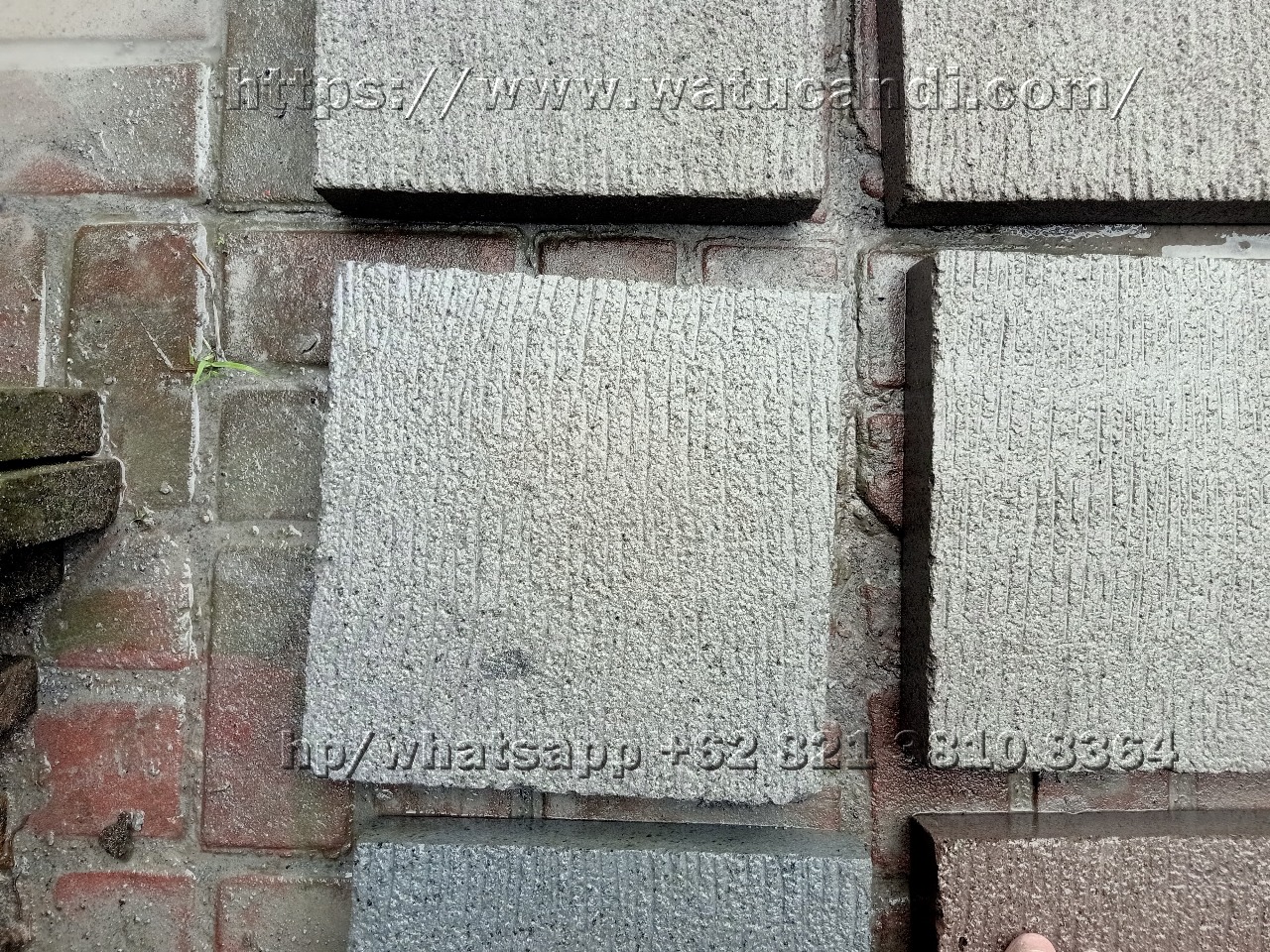
Limitations and How to Address Them
Despite offering efficiency, some natural stone enthusiasts consider machine scratching less “soulful” due to the regularity of its texture. The organic uniqueness characteristic of hand chiseling cannot be fully replicated.
However, for those who prioritize neatness and practicality, this is precisely an advantage.
Many architects overcome this by combining both types: hand-chiseled for focal points, and machine-scratched for large areas.
In this way, the stone floor of the temple (Merapi lava) can still display its original character without sacrificing efficiency.
General Production Process: From Boulders to Artistic Floors
Although the two finishes have different processes, there are general stages that every stone floor of the temple (Merapi lava) goes through.
The first step is mining in lava rivers. Boulders are manually selected, then transported to workshops or factories.
There, initial breaking is done with a large hammer or iron wedges to reduce size.
After that, the stone enters the base formation process: for hand-chiseled it is flattened with a chisel, while for machine-scratched it is directly cut with a saw.
Next, each undergoes the texturing process according to the desired method.
Finally, all paving is washed with high-pressure water to clean off dust, then sorted by quality and color.
This final process ensures that every piece that reaches you meets strength and aesthetic standards.
Traces in Historical Temples: Borobudur, Prambanan, and Balinese Pura
History records that stone floor of the temple (Merapi lava) has been used since the 8th century.
Borobudur Temple, a masterpiece of Buddhist architecture, used more than 2 million andesite blocks mostly from ancient Merapi lava flows.
Its courtyards display paving with a random cross texture produced by hand-chiseling techniques.
At Prambanan Temple, similar material was applied to corridors and steps.
Gedong Songo Temple on the slopes of Ungaran also used local volcanic stone with the same technique.
Meanwhile, in Bali, ancient temples like Besakih and Taman Ayun use similar stone for courtyards called bebaturan.
All this evidence confirms that this material has been time-tested and was the primary choice of past civilizations to create solid sacred spaces.
Why Choose Merapi Lava Temple Stone Floor?
There are many reasons why stone floor of the temple (Merapi lava) is a worthy long-term investment.
First, its durability is extraordinary. This volcanic andesite stone (temple stone / lava stone) withstands rain, heat, and heavy loads. It does not expand significantly and does not crack due to temperature differences.
Second is safety. The natural rough texture provides excellent traction, making it safe for wet areas such as pool edges or entryways.
Third, timeless aesthetics. Its gray color will not fade; instead, a patina will form that increasingly enriches its character.
Fourth, this material is environmentally friendly because its production process uses minimal energy and no burning. Cut waste can still be used as fill material.
Fifth, you participate in preserving the cultural heritage of the archipelago.
Comparison Table: Hand-Chiseled vs Machine-Scratched
| Aspect | Hand-Chiseled Paving | Machine-Scratched Paving |
|---|---|---|
| Surface Texture | Very rough, deep, organic, unique per piece | Moderately rough, regular lines, uniform between pieces |
| Dimensions & Shape | Not precise, variation ±1–3 cm, shape tends to be natural | Very precise (e.g., 30x30x4.5 cm ±1 mm), neat shape |
| Installation Process | More complex, needs skilled workers, many adjustments | Easy and fast, uniform joints 3–5 mm |
| Visual Impression | Authentic, ancient, very natural | Neat, semi-classic, suitable for modern minimalist |
| Cost | Higher due to intensive manual labor | More economical, about 30–40% lower |
| Stock Availability | Limited, often requires indent | Abundant, available in many material stores |
| Wear Resistance | Very high, deep texture does not disappear quickly | High, shallow scratches may slightly fade after decades |
Modern Applications for Homes and Public Spaces
Stone floor of the temple (Merapi lava) is very versatile. For carports and garages, machine-scratched paving is ideal because its surface is flatter and resistant to oil stains.
For terraces and backyards, hand-chiseled paving creates a beautiful transition between interior and garden.
Swimming pool decks are very suitable for both because of maximum slip resistance; pool water will not make the floor slippery.
Garden pathways can use irregular sizes with soil or grass joints, creating a very natural impression.
Many restaurants and cafés choose machine-scratched because it is easy to clean and still presents a heritage atmosphere. Even some upscale shopping centers now use it for outdoor areas to give a natural premium impression.
Installation Guide for a Temple Stone Floor that Lasts Hundreds of Years
Installing stone floor of the temple (Merapi lava) requires precision for long-lasting results.
The most recommended method is the dry laying system on a sand bedding.
First, dig soil 20–30 cm deep and compact. Fill with crushed stone (split) 10–15 cm thick, then compact again. This layer serves as drainage and prevents settlement.
Second, spread coarse sand 3–5 cm thick and level. For heavy load areas, add a little cement at a 1:8 ratio to lightly bind, but keep it semi-dry.
Third, place paving one by one, starting from a corner. Tap with a rubber mallet to lock into the sand layer. For hand-chiseled type, sort pieces so the size gradation looks natural, not random. Provide joint gaps of 5–10 mm.
Fourth, fill joints with fine sand or a dry sand-cement mixture, then sprinkle a little water to harden. Wider joints on hand-chiseled allow grass to grow if desired.
Fifth, use a plate vibrator to compact the entire surface. Special tip for machine-scratched: use spacers like large tiles for faster and more uniform installation.
Care and Protection of Temple Stone Floor
One of the advantages of stone floor of the temple (Merapi lava) is its minimal maintenance. For routine cleaning, simply use a stiff broom or blower. Wash with plain water once a month.
If moss appears in shady areas, you can brush it with a soft wire brush or leave it as a decorative element.
For oil stains, immediately sprinkle sawdust or flour to absorb, then clean with a mild detergent. Avoid harsh chemicals that can damage the stone’s natural pores.
Applying a water-based sealer every 3–5 years will keep the color deep and protect against stubborn stains.
Choose an impregnant-type sealer that does not form a film layer, so it does not make the surface slippery. If a piece ever cracks or sinks, you can easily remove and replace it without damaging a wide area.
This is the advantage of the modular paving system.
Pricing Info & How to Order
The price of stone floor of the temple (Merapi lava) varies depending on the finishing type, size, and order quantity.
For the latest price information and special offers, we suggest you contact our team directly.
Contact Us for the Latest Price Info or you can view our Natural Stone Catalog.
Our team will be happy to assist you in choosing the right product and provide cost estimates according to your project needs.
Tips for Choosing the Right Temple Stone Floor
Before deciding, consider the following factors. First, your home’s architectural style.
For ethnic, joglo, or resort designs, hand-chiseled is the peak of authenticity.
For modern minimalist, machine-scratched offers neatness that remains warm.
Second, budget. If funds are limited but you want a rough texture, machine-scratched can be the solution. You can also combine both.
Third, area function. Busy commercial areas are more suitable for machine-scratched that is uniform and easy to clean. Private gardens are perfect with organic hand-chiseled.
Fourth, foot comfort. If there are many small children or barefoot activities, choose machine-scratched with a lower texture.
Finally, consider the slope of the land; for sloping land, hand-chiseled has higher grip.
Myths and Facts About Merapi Temple Stone
Myth: Temple stone may only be used for sacred buildings and has indiscriminate mystical energy.
Fact: Physically, stone is a neutral material. Its use in temples was solely due to availability and technical properties. However, its cultural value is fine to respect; many homeowners actually feel calmer because of the connection to ancestors.
Myth: Temple stone paving absorbs a lot of water so it is easily damaged.
Fact: Its porosity actually prevents puddles. The stone structure itself is very strong. Damage usually occurs if there is a large cavity under the paving that causes it to break under load.
Myth: Hand-chiseled floors are uneven and dangerous.
Fact: Unevenness is design, not a defect. With proper installation, height differences are minimal and actually provide a natural foot massage effect that is good for foot reflexes.
Design Trends with Temple Stone Floor in the Modern Era
Biophilic design that emphasizes connection with nature is increasingly strengthening the position of stone floor of the temple (Merapi lava). Architects combine it with glass, steel, and exposed concrete to create stunning contrasts.
In Bali, hand-chiseled paving is often installed side by side with infinity pools and red brick walls.
In urban areas, large format 60×30 cm with machine scratching is installed in herringbone patterns as an accent for modern house entrances.
Even some boutique hotels have started using this material to create a calm resort atmosphere amidst the hustle and bustle of the city. The “Candi Chic” trend is expected to continue growing.
Conclusion
Stone Floor of the Temple (Merapi Lava) is a perfect blend of geological heritage, culture, and modern innovation.
Its two surface types—hand-chiseled paving that is authentic and machine-scratched paving that is precise—offer choices for every taste and need.
By understanding the differences, advantages, and installation and maintenance methods, you can now make the right decision to bring timeless beauty to your home.
Whatever your choice, make sure to get genuine products from a trusted source. For more information, do not hesitate to Contact Us for the Latest Price Info via the available link.
“Happy building a space that is not only beautiful but also full of meaning.”
FAQ – Most Popular Questions
What is the difference between Merapi lava temple stone and ordinary andesite?
Temple stone specifically comes from Merapi lava material with a distinctive blackish-gray color and moderate porous texture. Ordinary andesite can come from other mountains, is more homogeneous and harder, but does not have the same historical value.
Is temple stone floor slippery when it rains?
No. Its rough surface actually provides excellent grip, making it safe for wet areas.
How long can temple stone floor last?
With proper installation, this floor can last 50 – 100 years or even more, as evidenced by thousand-year-old temples.
Can it be installed indoors?
Yes, although it is more common in semi-outdoor areas. Use a sealer for comfort and extra protection.
How to distinguish genuine stone from imitation?
Genuine stone has unique natural fibers, heavier weight, and when scratched with metal leaves a whitish mark. Imitation concrete has a repeating pattern and feels lighter.
Are there special sizes for hand-chiseled?
Sizes are very varied with fairly large dimensional tolerances. Installers usually prepare extra stock for on-site adjustments.
Can temple stone be installed on a concrete slab?
Yes, using a special natural stone adhesive (thinbed mortar). Ensure the slab waterproofing is perfect before installation.
Stone Floor of the Temple, Merapi Lava, Natural Stone Paving, Borobudur Temple Stone, Prambanan Temple Stone, Hand-Chiseled Paving, Machine-Scratched Stone, Volcanic Stone Floor, Andesite Stone, Rough Paving, Temple Stone Installation, Temple Stone Price Info, Traditional Natural Stone, Modern Temple Floor, Temple Stone Texture, Outdoor Temple Stone, Natural Stone Tile, Temple Floor Inspiration, Heritage Material,