



Description
Complete Guide to Random (Irregular) Natural Stone Flooring — Dimensions, Colors, and Finishing Options.
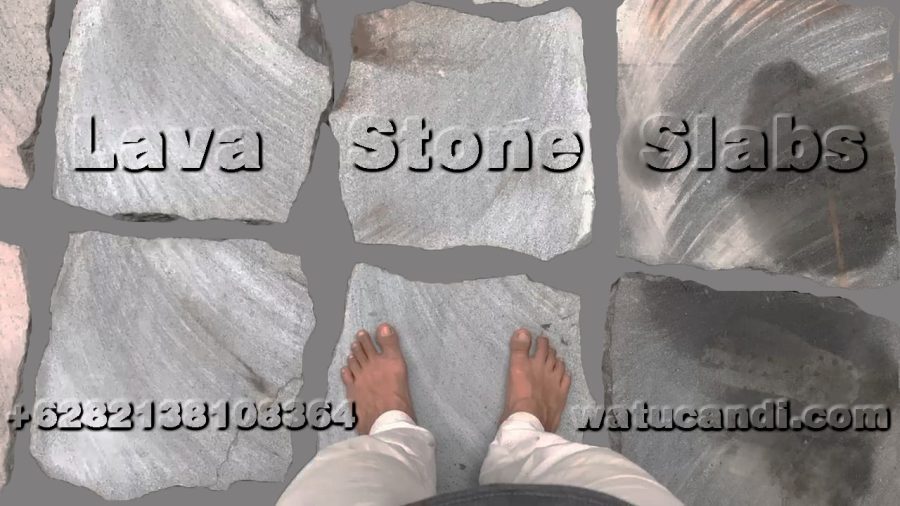
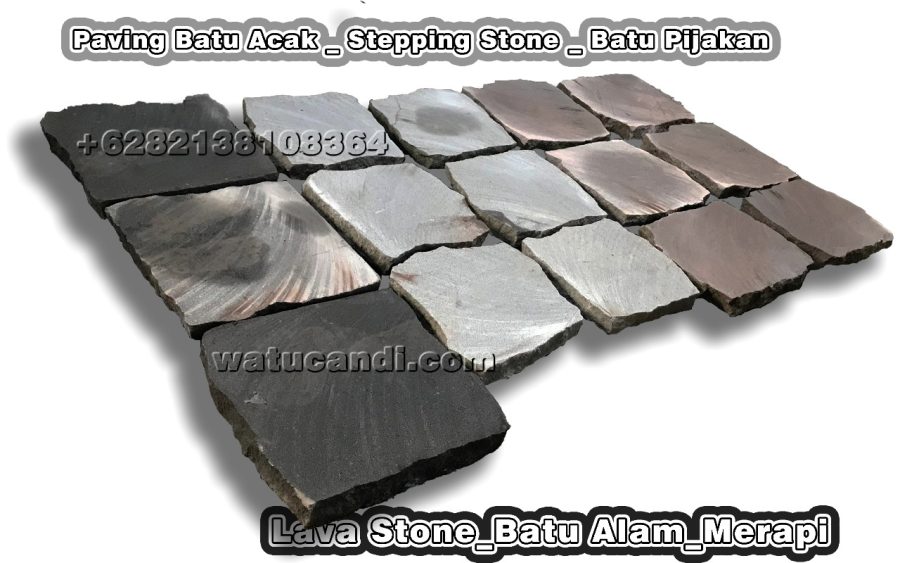
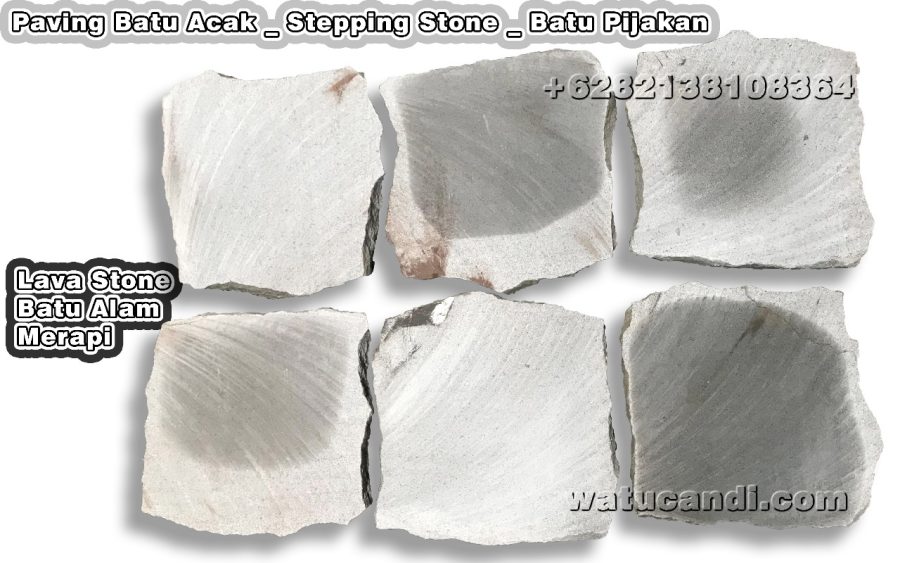
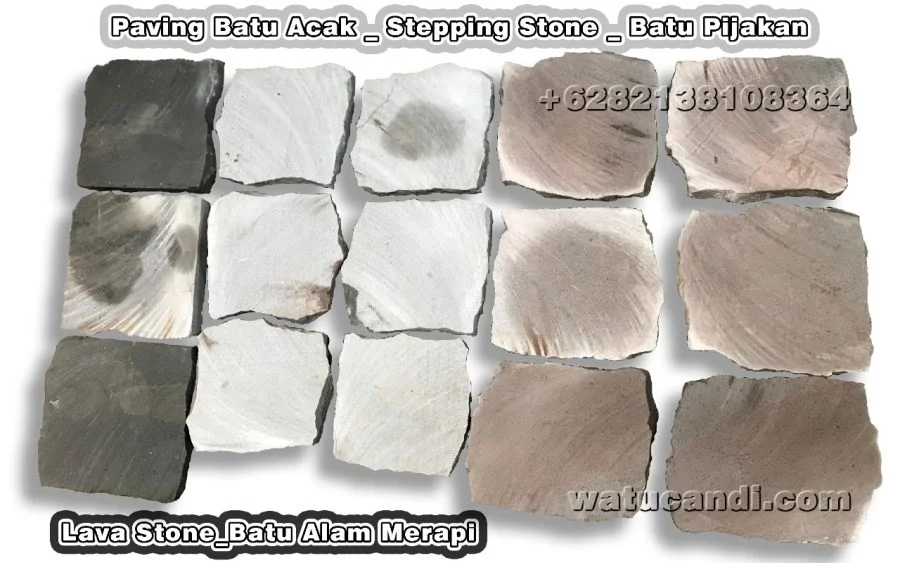
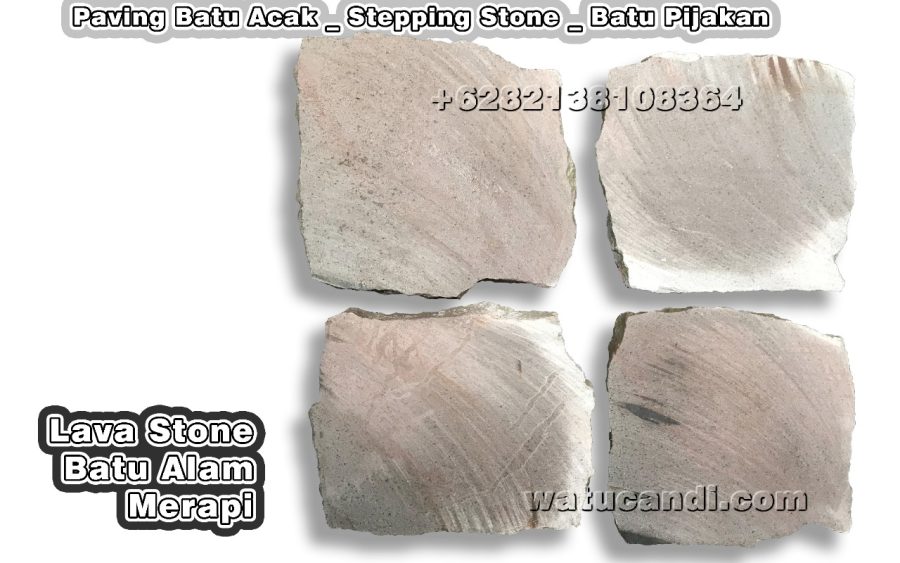
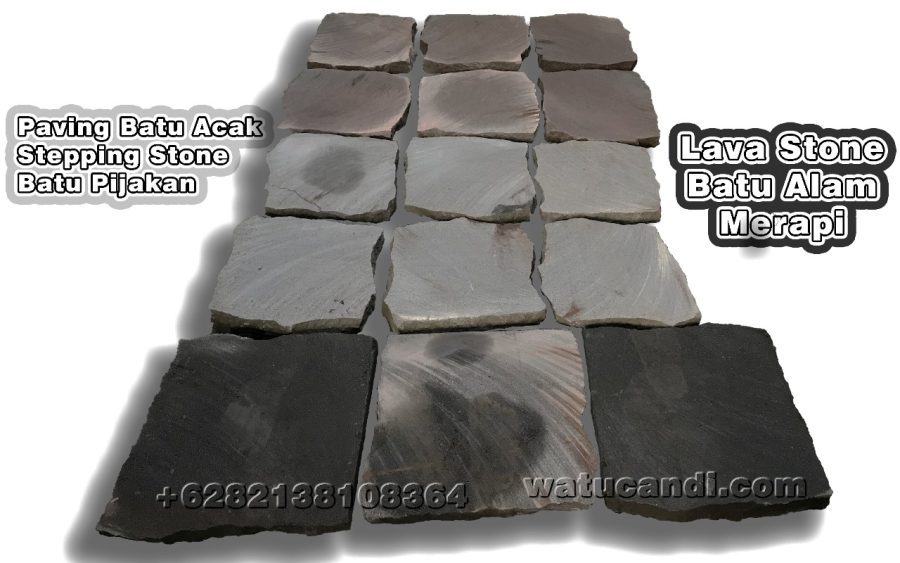
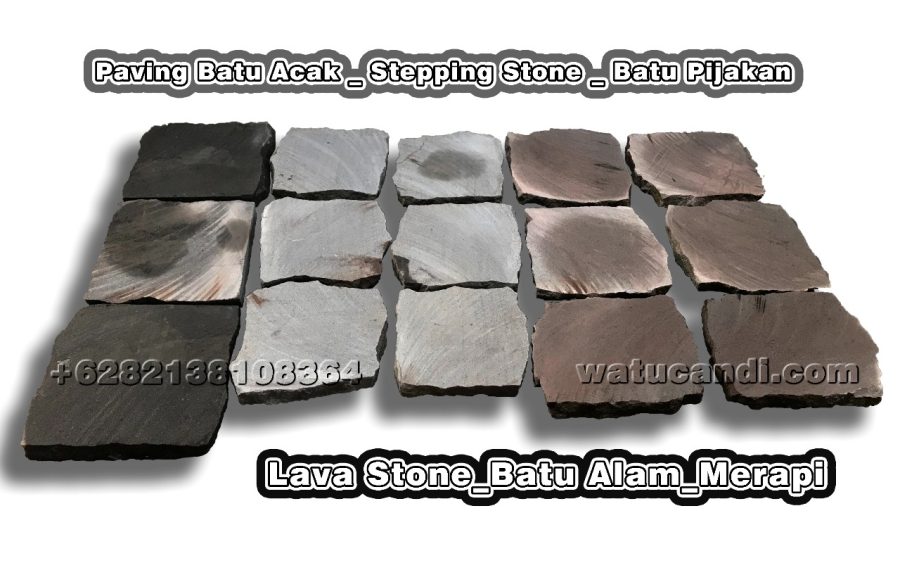
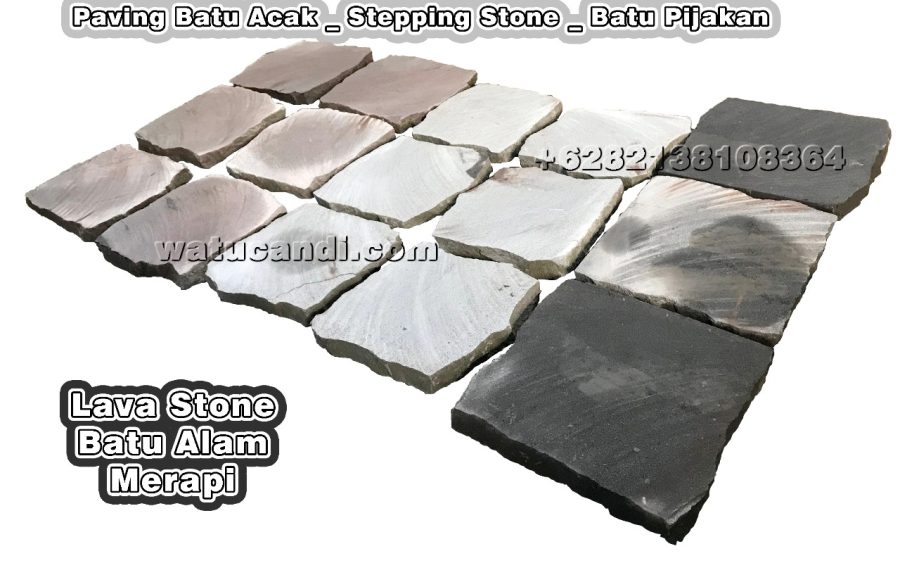
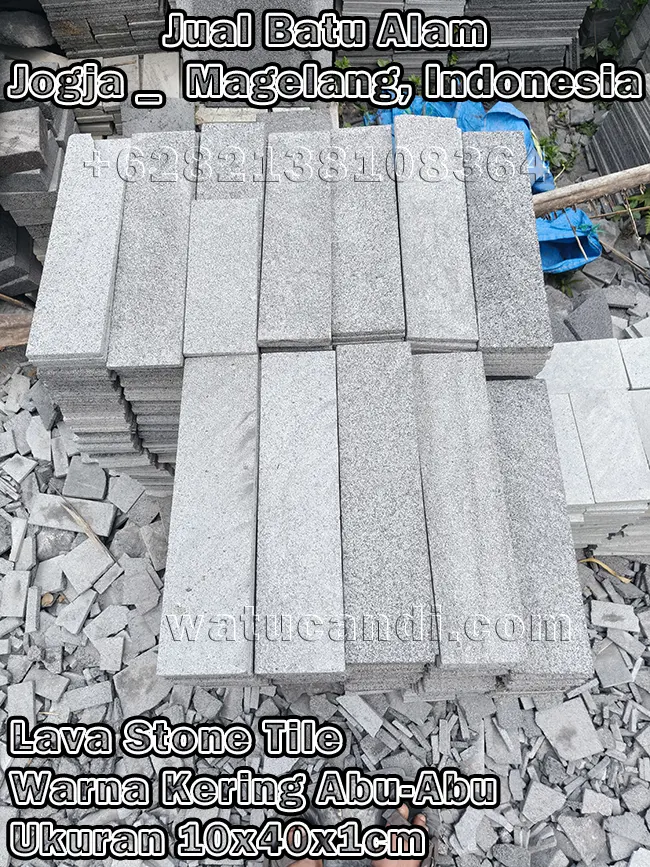
Random natural stone flooring (irregular, slabs, flagstones, stepping stones) comes from lava stone or temple stones of Mount Merapi. It is now a popular aesthetic and functional choice for both interiors and exteriors.
Therefore, this article describes the 25–65 cm size range, natural colors, and surface finishing options. These finishes are sawncut (slabs/rtm), honed, bush hammer, and chisel (etched/machine scratch chisel).
Characteristics of Random (Irregular) Natural Stone Flooring.
- The shape is irregular/random, so the asymmetrical cut gives an organic and natural look (natural square/oval/natural round).
- As for the material, it is lava stone (temple stone). This volcanic igneous rock from the Merapi area is notably strong and weatherproof. It also features natural black–gray tones.
- Meanwhile, its uses cover interior floors (living rooms, corridors), exteriors (terraces, gardens), up to commercial areas with medium‑high traffic.
Size Range of Random (Irregular) Natural Stone Flooring Dimensions.
- First, the size range falls within approximately ± 25–65 cm in length or width on one side. Then, we adjust the dimensions of random pieces to suit specific needs/custom orders. In addition, thickness varies by application. Floors are generally 8–20 mm for thin tiles. Paving and outdoor areas reach 10–40+ mm.
- The main advantage of this size is the balance between aesthetics and ease of installation. Large pieces deliver a natural look and rhythm. Furthermore, the larger format reduces the number of grout joints and speeds up installation.
- Nevertheless, larger pieces require a stable base plane and proper installation techniques (mortar, special glue) to prevent movement and cracking. However, for certain thicknesses a sand bed alone can actually be sufficient.
Natural Color of Temple Stones (Merapi Lava).
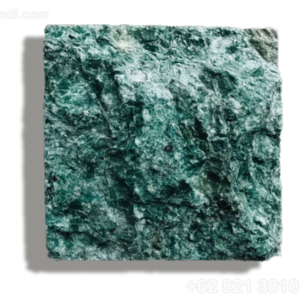
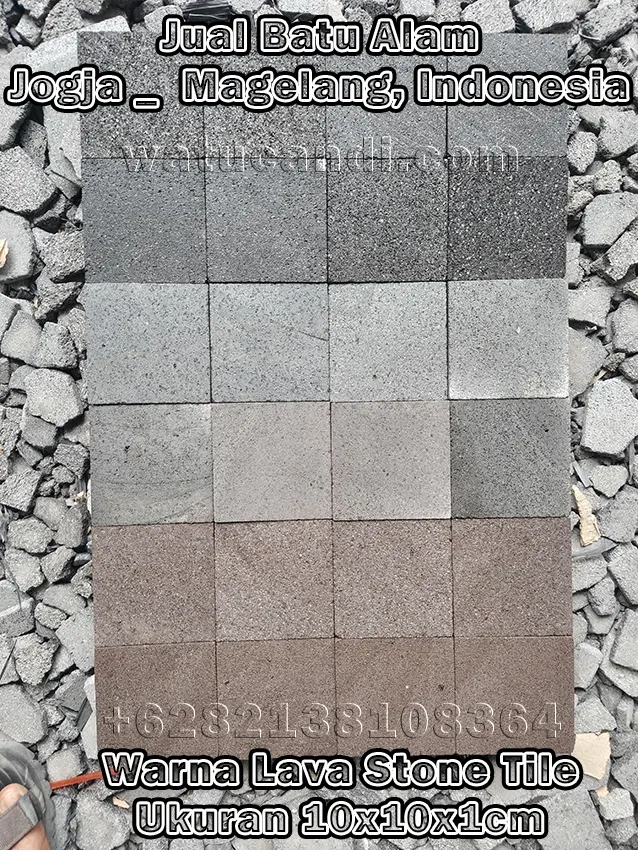
- The color palette includes deep black, dark gray, graphite variations, and slightly brown or bluish‑green tones. This depends on the mineral content.
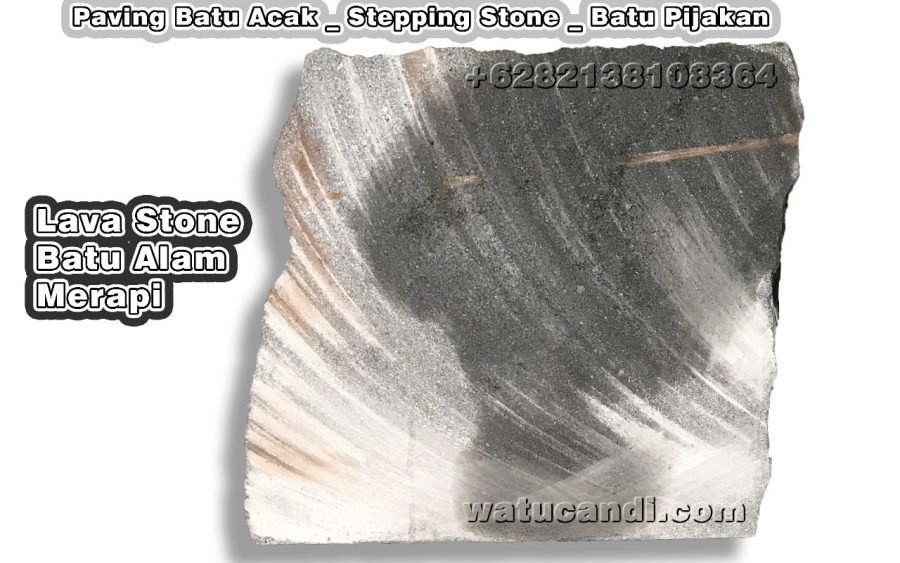
- In terms of visual character, the granular texture and small pores create non‑homogeneous patterns. This provides natural depth and contrast.
- With regard to color treatment, honed or sealed surfaces will appear deeper and shinier. Meanwhile, rough finishes maintain a matte and natural look.
Surface Finishing — Comparison and Application.
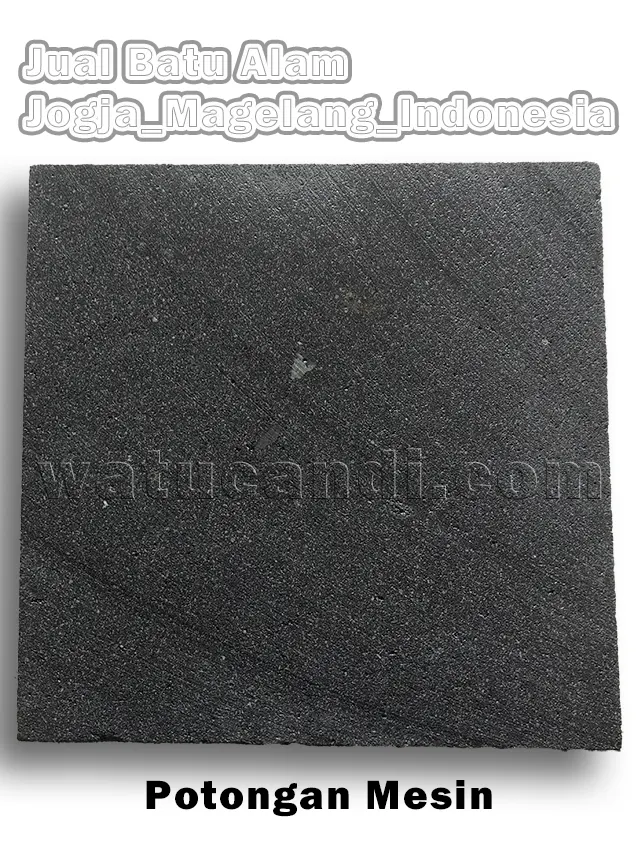
1. Sawncut / Slabs / RTM (machine‑cut flat cut).
- First of all, its primary character is a flat, clean surface with precision‑cut edges.
- For this reason, this finish suits modern/minimalist areas and indoor spaces. It also fits settings that need a precise level, such as commercial rooms.
- Its advantages: installation is neat, the grout lines stay thin, and the appearance remains elegant. Even better, the texture stays naturally anti‑slip when wet without needing any additional profile.
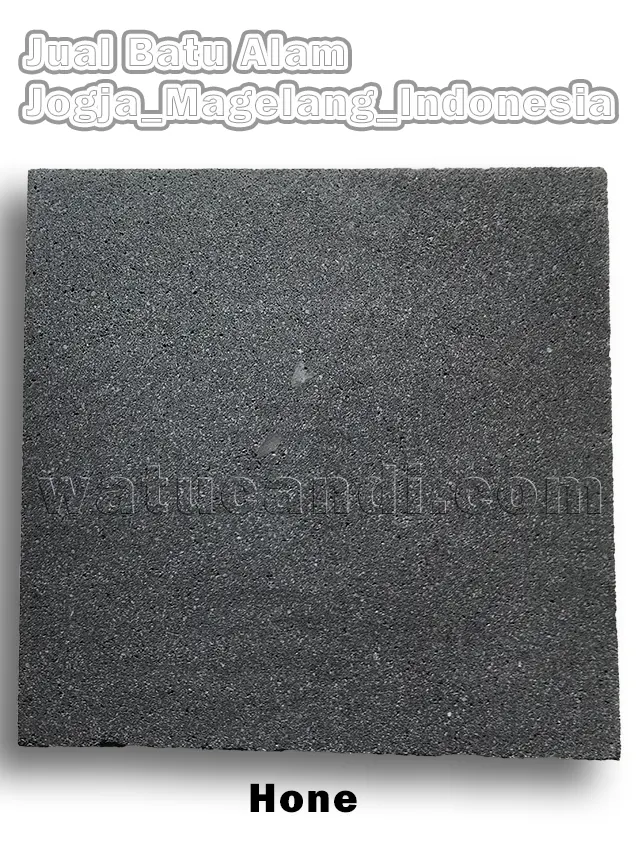
2. Honed (sharpened).
- For this finish, the grinding process creates a smooth surface with a matte‑to‑satin look and reduces the pores.
- Consequently, people often choose honed for interiors. This includes living rooms, bathrooms (with non‑slip maintenance), and areas that need a soft aesthetic.
- In addition to its elegant appearance, the surface is easy to clean. It remains non‑slip when wet. It also does not require an extra anti‑slip coating for wet areas.
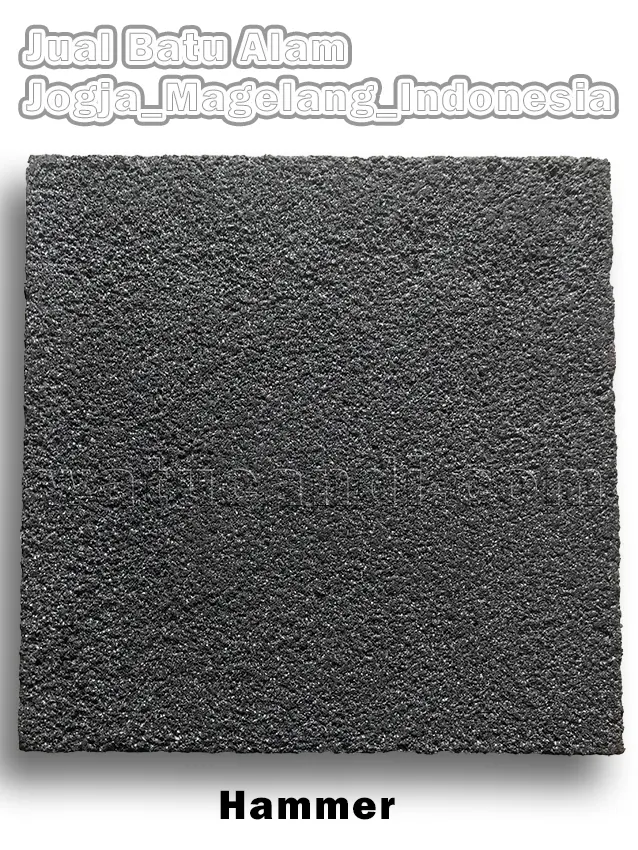
3. Bush Hammer.
- In contrast to the previous options, bush hammer delivers a rough textured surface with tiny dots/micro‑pitting.
- Given its character, this finish is ideal for outdoor areas, stairs, terraces, and places that demand high grip.
- On the one hand, its strengths are its high slip‑resistance and rustic‑industrial aesthetic. On the other hand, the downside is that it makes cleaning stuck‑on dirt more difficult because of the rougher appearance. Therefore, we recommend using a high‑pressure water spray.
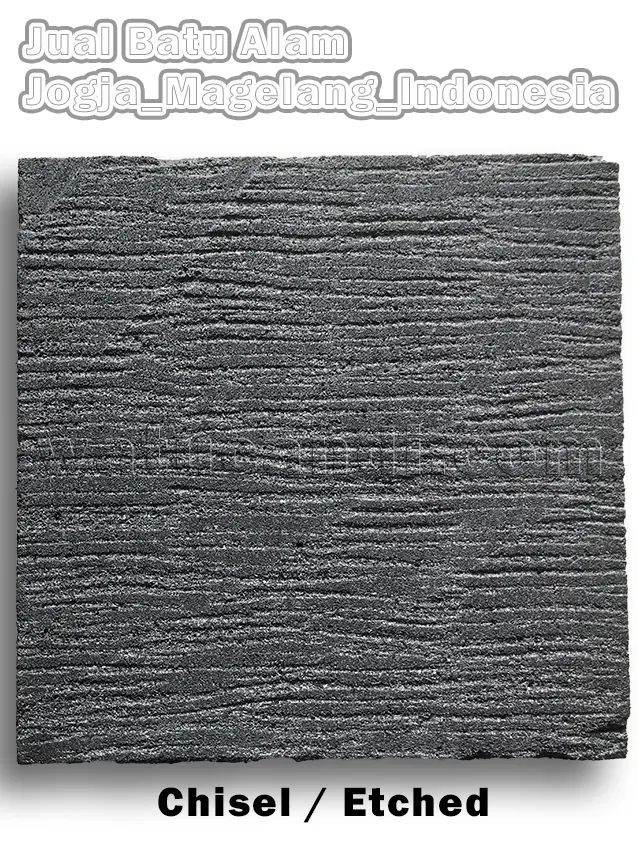
4. Chisel / Etched.
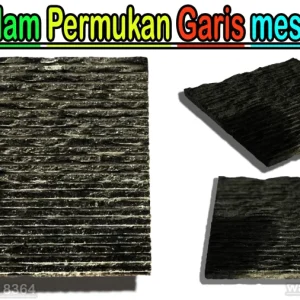
- Meanwhile, the chisel finish displays a surface with controlled linear scratches/texture resembling a chisel. You can leave the edges slightly ragged.
- Its main use is for decorative design elements and transition areas. It also works for walls or floors that aim for a specific visual effect.
- The advantage lies in its distinctive aesthetic that blends natural and applied impressions. Nevertheless, cleaning requires attention to the grooves. The result varies depending on the machine or technique you use. For this reason, we strongly recommend a high‑pressure water spray.
Selection of Finishes Based on Function.
- For formal/living room interiors, the best options are sawncut or honed.
- As for wet areas, terraces, and stairs, bush hammer or chisel are the go‑to choices. They provide the necessary traction.
- In commercial areas, combine sawncut for the main zone then bush hammer on pedestrian walkways to maintain safety.
- Finally, if you desire a strong natural visual, let some rough surfaces remain for contrast.
Maintenance and Installation at a Glance.
- Regarding cleaning, simply sweep or spray water. For stubborn stains, use a pH‑neutral cleaner.
- Next, we recommend applying a sealant. This enriches the color and prevents stains, especially on honed or sawncut finishes. For outdoor areas in particular, be sure to choose a UV‑resistant sealant.
- On the installation side, you need a stable base, appropriate mortar/glue, and careful control of grout joints and thickness tolerance. Because the pieces are random, you cannot skip pattern planning.
Factors to Consider When Choosing a Random (Irregular) Natural Stone Floor Finish.
- Consider the location of use: interior vs. exterior; wet or dry areas; and traffic intensity.
- Next, the safety aspect—the need for anti‑slip makes bush hammer and chisel safer for wet areas.
- From an aesthetic standpoint, the choice falls between modern/clean (sawncut/honed) or natural/rustic (bush hammer/chisel).
- When it comes to maintenance, smooth surfaces are easier to clean, whereas rough surfaces demand more care and sealing.
- Finally, regarding cost, precision cutting and smoothing are generally more expensive; moreover, special mechanical finishing like bush hammer also adds to production costs.
Random natural stone flooring clearly offers both aesthetic and functional flexibility.
In conclusion, for high‑traffic areas and a modern look, sawncut or honed are more suitable. Conversely, for safety and a natural outdoor feel, bush hammer or chisel are the better choice.
Therefore, carefully consider the usage conditions, maintenance, and budget when determining the finish. This ensures the final result is optimal in both appearance and function.
Reviews
There are no reviews yet.