'%3E%3Cpath%20stroke='%23000'%20stroke-width='4'%20d='m-35-37-13%2020m5%203%2013-20m5%203-13%2020m63%2042%206-9m1-2%206-9m5%203-6%209m-1%202-6%209m5%203%206-9m1-2%206-9m-96%200%2013%2020m5-3-6-9m-1-2-6-9m5-3%2013%2020m63-42-6-9m-1-2-6-9m5-3%2013%2020m5-3-6-9m-1-2-6-9'/%3E%3Ccircle%20r='24'%20fill='%23cd2e3a'/%3E%3Cpath%20fill='%230047a0'%20d='M0%200a12%2012%200%201%201%2020%2013%2024%2024%200%201%201-40-26A12%2012%200%201%200%200%200'/%3E%3C/g%3E%3C/svg%3E)


'/%3E%3Cpath%20fill='%23b2b2b2'%20d='M241%20382q0%2016%2017%2026%2017%2011%2042%2011t42-11q16-11%2017-26V269H241'/%3E%3Cpath%20fill='%239f7e00'%20d='M241%20379q0%2014%208%2023%209%209%2021%209%2014%200%2021-9%209-9%209-23V269h-59'/%3E%3Cpath%20d='M241%20339v-70h59v110q0%2014-9%2023l-6%205v-68h-15v72q-8%200-14-4v-68zm59%2040c0%2022%2015%2032%2029%2032%2021%200%2030-18%2030-32v-40h-59'/%3E%3Cpath%20fill='%239f7e00'%20d='M266%20277v5h2v12h-3v-5h2v-5h-9v5h2v5h-4v9h3v18h-5v10h34v-10h-5v-18h3v-9h-4v-5h2v-5h-9v5h2v5h-3v-12h2v-5zm42%20101q0%2010%206%2017%206%206%2015%207%2010-1%2016-7%206-7%206-17v-29h-43'/%3E%3Ccircle%20fill='%230044ad'%20cx='329.5'%20cy='372'%20r='6'/%3E%3Cellipse%20fill='%230044ad'%20cx='300'%20cy='340'%20rx='16'%20ry='21'/%3E%3C/svg%3E)


Expertise: Between the Philosophy of the Chisel and the Geometry of Space
True expertise never boasts. It is silent, it works, and it speaks through its creations. At Watu Candi, expertise is the quiet language between the craftsman and the material. Stone is not violated into shape; it is persuaded to reveal the beauty long hidden within its belly. Wood is not forced to be straight; it is invited to collaborate against gravity and the changing seasons. For over fifteen years, we have been refining this language. This article is an effort to translate it into words, so that you, who are about to entrust your dream space to us, may understand how deep the roots of our expertise truly go.
First Level: Philosophical Foundation. Why Do We Carve?
Before discussing techniques, we must talk about the “why”. Expertise without philosophy is merely mechanical skill. We carve because we believe that spaces inhabited by humans deserve authentic beauty. We reject imitation, uniformity, and the falseness of synthetic materials. Natural stone, with all its imperfections, is a metaphor for life itself: nothing is truly flat, nothing is entirely black or white, and it is precisely there that its uniqueness lies.
1.1. Reviving Ancestral Heritage in the Age of Machines
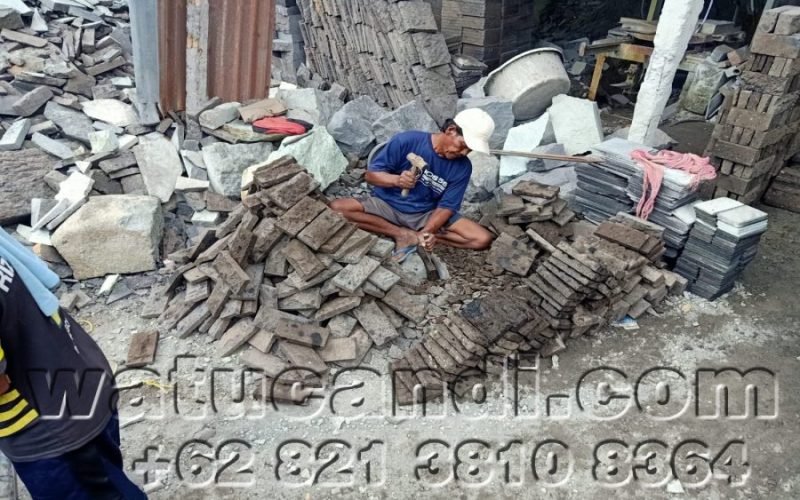
In our workshop, third and fourth generation craftsmen still use chisels of the same shape used to build Borobudur and Prambanan Temples. Not because we are anti technology, but because the touch of an iron chisel produces grooves that water jet cutting cannot imitate. Our rough surface natural stone floor, for example, deliberately retains a micro texture that is not only beautiful but also functional as anti slip. This is a lesson from our ancestors: beauty and utility must go hand in hand.
1.2. Stone as a Metaphor for Life
Every black lava stone we process has undergone a geological journey of millions of years. It melted, flowed, cooled, and solidified. It contains trapped air bubbles (pores) and micro cracks formed by the earth’s pressure. Our task is not to eliminate these “flaws”, but to embrace them. When you place an authentic Merapi stone sink in your bathroom, you are not placing a sink. You are placing a piece of volcanic history that still breathes.
Second Level: Material Mastery. Mastering the Language of Stone and Wood
If philosophy is the “why”, then material mastery is the “how”. We do not treat all stones the same. Black lava stone has a different character from Paras Palimanan stone tiles or Breksi natural stone tiles. Understanding these differences is the key to producing durable products.
2.1. Recognizing the Characteristics of Our 7 Main Stones
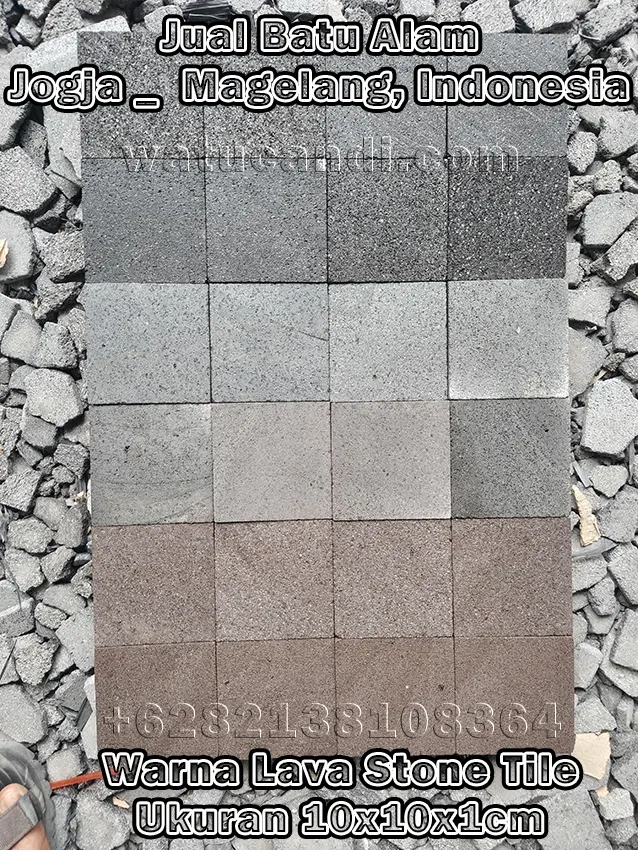
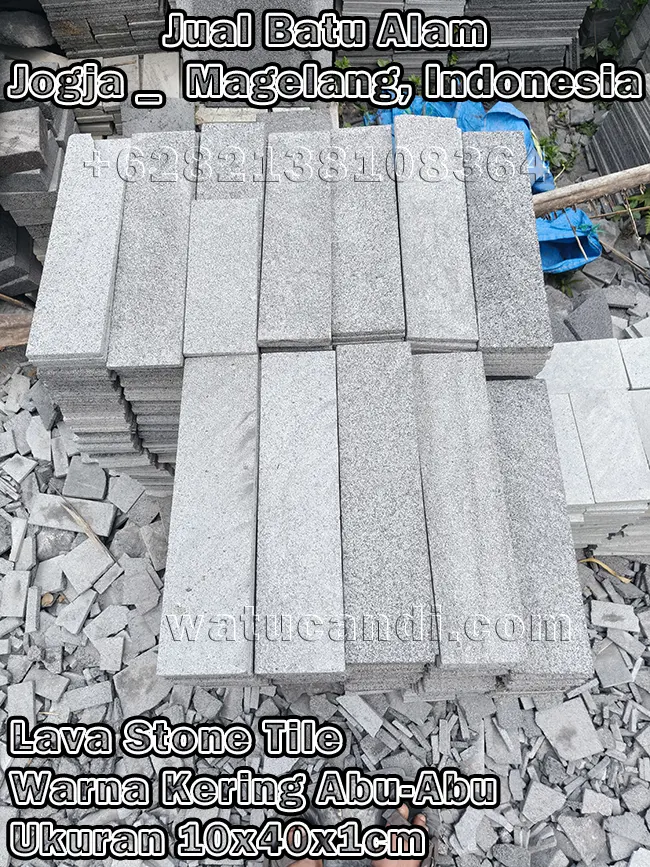
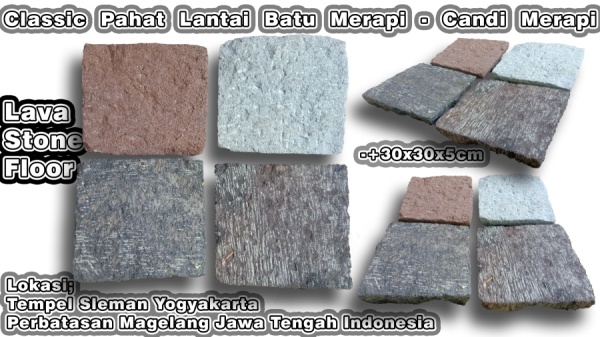
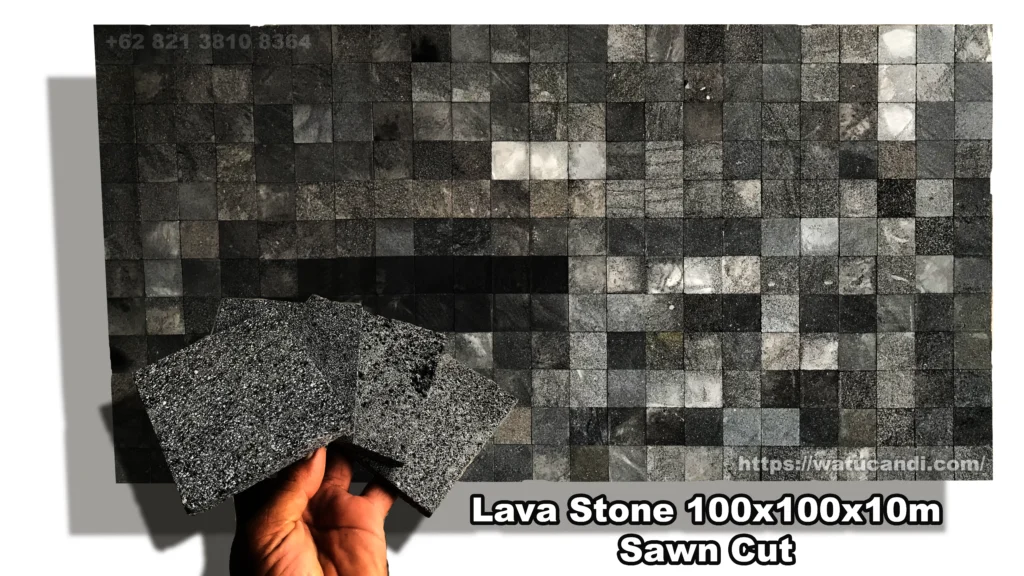
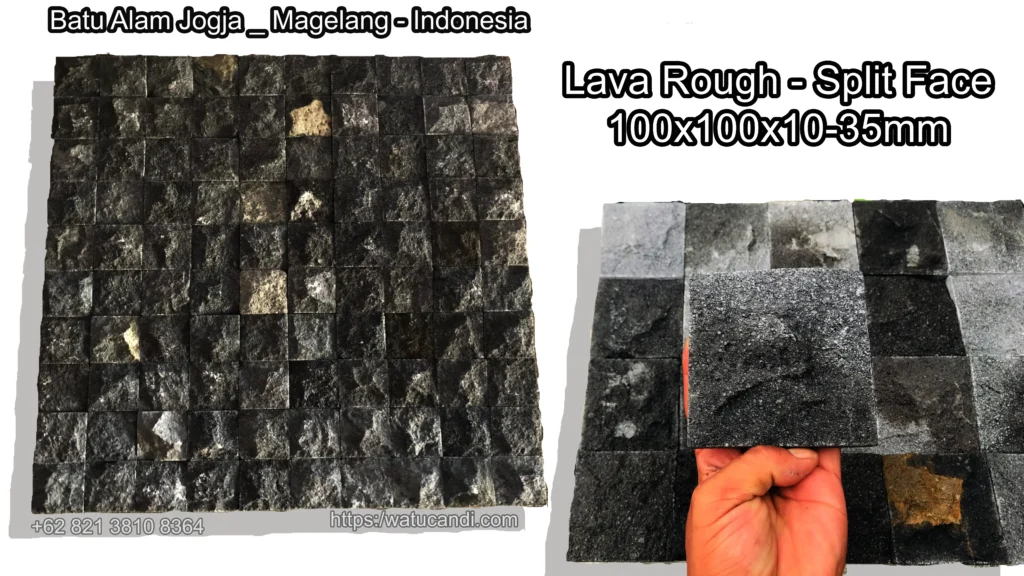
- Black Lava Stone (Merapi): Porous, lightweight, natural heat insulator. Ideal for lava stone flooring and black lava stone 100x100x10 mm for accent walls.
- Black Basalt Stone: Denser and heavier than lava stone. Its surface can be polished to a shine. Suitable for luxurious black basalt stone sinks.
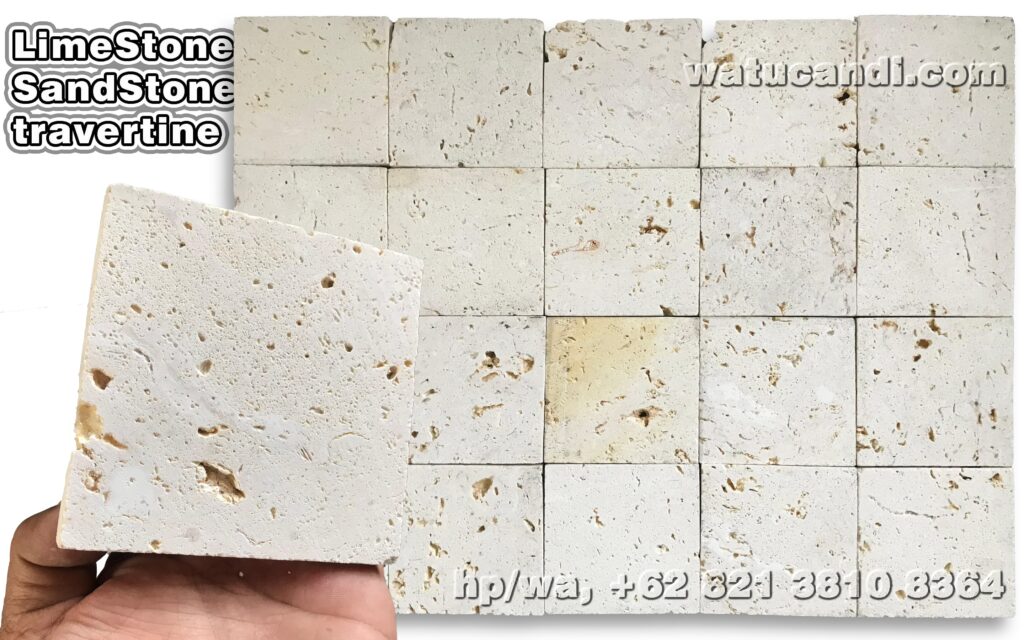
- Paras Palimanan Stone: Creamy brown in color with a warm texture. Very popular for commercial design as it gives a classic yet not boring impression.
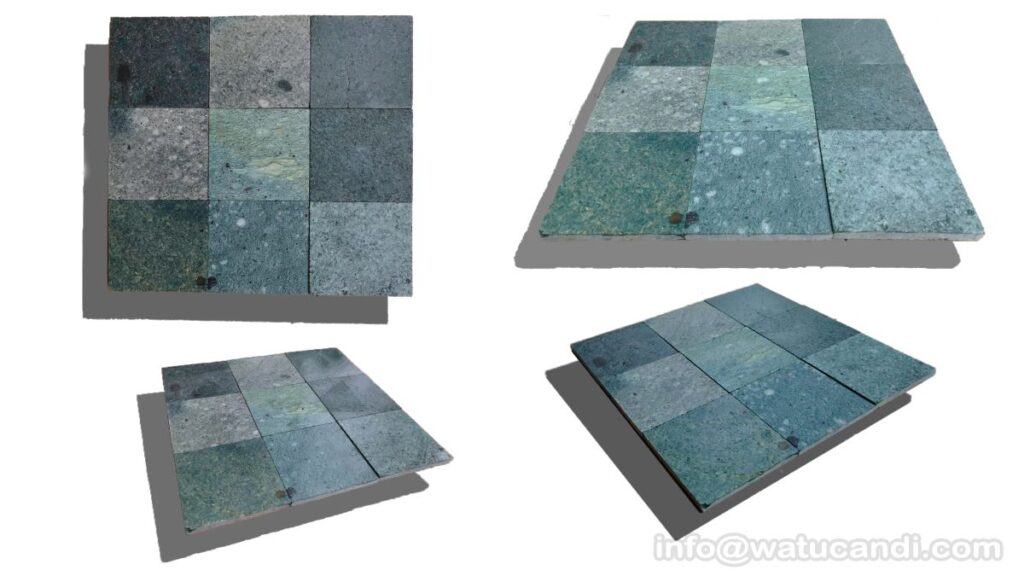
- Green Sukabumi Stone: A distinctive green stone from Indonesia, famous worldwide. Authentic Sukabumi green natural stone tiles are perfect for swimming pool waterlines and spa areas.
- Merapi Cold Lava Temple Stone: Solidified cold lava material. Its roughest and most “wild” texture. Used for Merapi cold lava temple stone flooring that prioritizes an extreme natural feel.
- Breksi Stone: Has visible fragments of minerals, creating a unique pattern. Widely used for Breksi natural stone tiles on interior walls.
- Templek Slab Stone: Irregular in shape, taken from waste or cut edges. Highly artistic for natural stone edging in vertical gardens.
2.2. Understanding Wood: More Than Just a Complementary Material
Our natural stone and furniture products would not be perfect without woodworking expertise. We use old teak wood (with high oil content, water resistant), mahogany (fine grain, easy to carve), and ironwood (from Kalimantan, very hard and weather resistant). Wood joining uses mortise and tenon techniques (not nails or screws) because this joint actually tightens over time instead of loosening. This is the secret why our furniture can last for decades.
Third Level: Production Techniques. From Rough Boulders to Fine Works
This is where our expertise is tested technically. The production process is not linear; it is cyclical, with iterations and quality control at every point.
3.1. Raw Material Selection (Sorting)
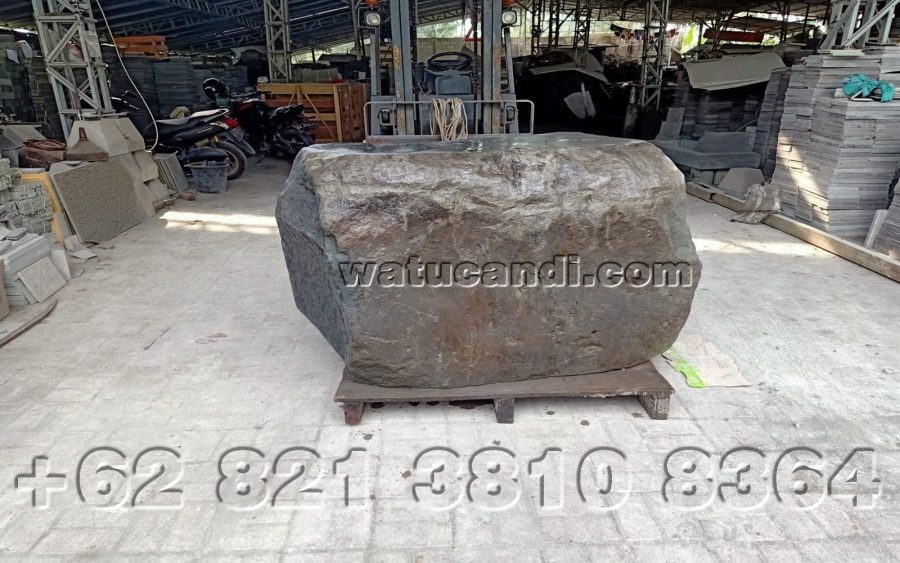
Not all stone boulders are worth processing. Our team manually inspects every ton of stone arriving from the quarry. We tap it (sound test), check for micro cracks by touch, and reject stones with overly large air cavities. Only quality materials pass.
3.2. Rough Cutting
Using diamond saws and water jet cutting to cut boulders into natural rock slabs with the desired thickness. For custom products, we can cut any shape according to the sketch.
3.3. Hand Carving – The Heart of Expertise
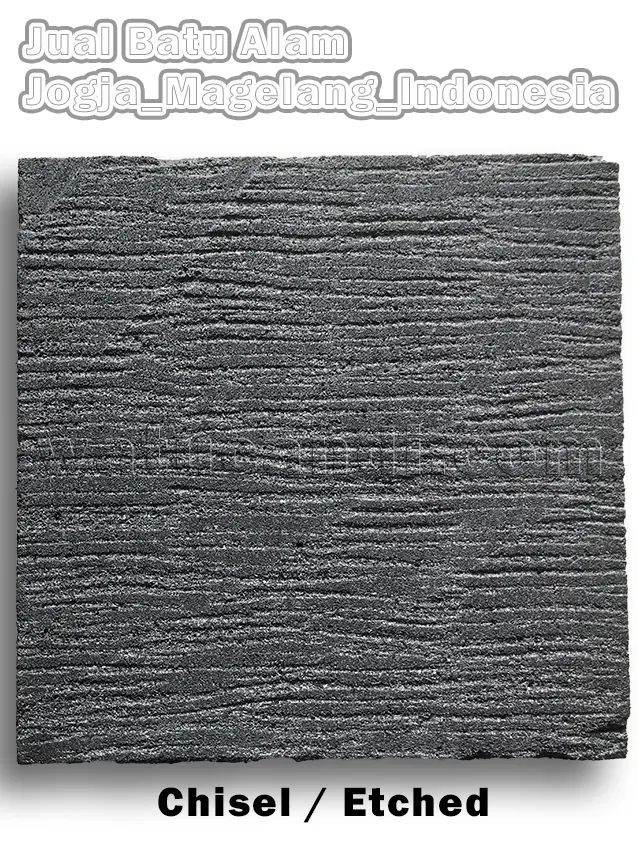
This is the stage most inviolable by machines. Our craftsmen use flat chisels, concave chisels, and wooden mallets to shape authentic Merapi stone sinks, black basalt stone sinks, or carving details on Yogyakarta batik green stone tiles. For unique models, this process can take up to 14 days for a single product.
3.4. Gradual Smoothing (Grading)
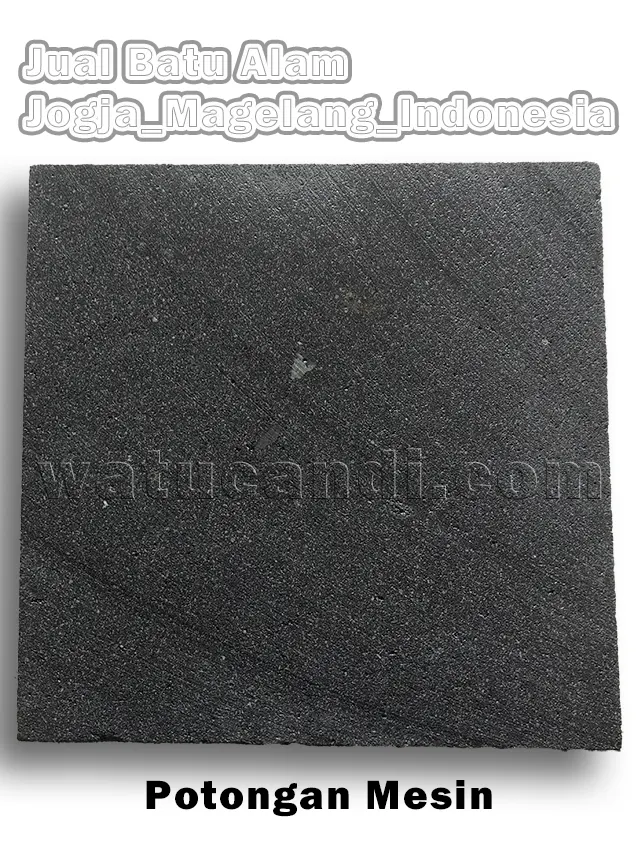
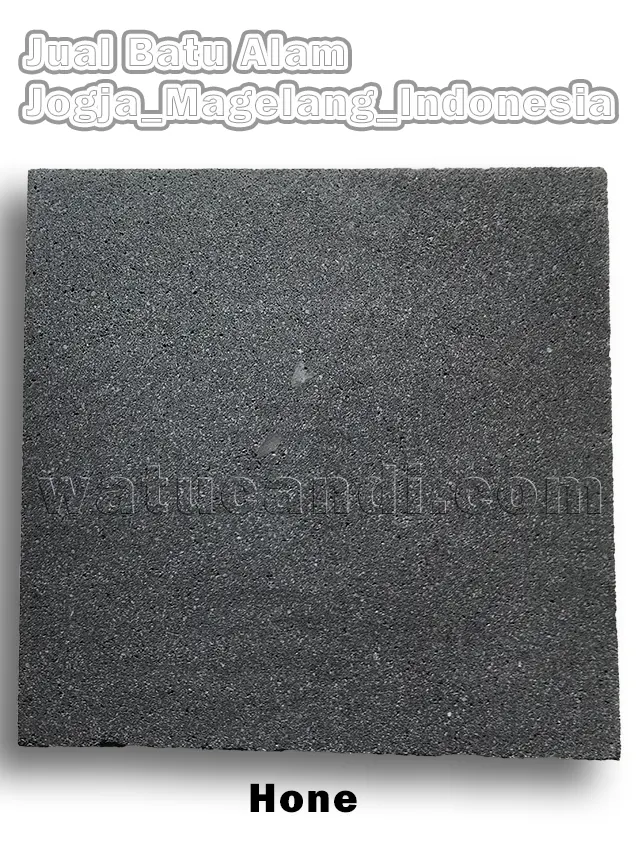
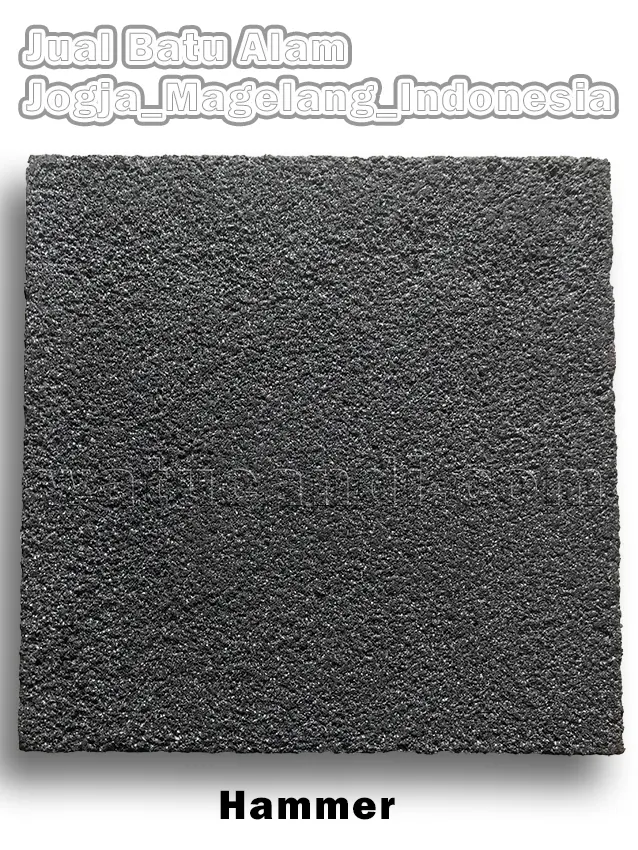
From the coarsest (grit 50) to the finest (grit 1500), every stone and wood surface is smoothed gradually. We have four finishing levels: Polished (mirror like shine), Honed (smooth but matte), Brushed (soft, brushed texture), and Flamed (rough, burnt, for extreme anti slip). The choice of finish is adjusted to the function of the space and lighting design.
3.5. 5 Step Quality Control
Every product passes five quality tests: (1) visual test (color and pattern consistency), (2) dimensional test (size precision), (3) load test (compressive strength), (4) water absorption test (especially for wet areas), and (5) scratch test. Products that do not pass will be reprocessed or discarded. No compromise. This is what we mean by guaranteed work.
Fourth Level: Contextual Application. Expertise in Various Project Types
Expertise that only stays in the workshop is useless. We bring it to the field, to real projects with different challenges.
4.1. Expertise for Business Spaces (Commercial & Corporate)
Commercial design and corporate design projects prioritize durability and ease of maintenance. We often recommend stacked stone slab surfaces for lobby walls because they give a solid yet artistic impression. For floors, we use black lava stone 100x100x10 mm which is anti slip and easy to clean. We also have experience working on large scale projects with tight deadlines, thanks to our production capacity of 2,500 square meters per month.
4.2. Expertise for the Hospitality & Culinary Industry
For hospitality design and restaurant design, atmosphere is everything. We have supplied authentic Sukabumi green natural stone tiles for swimming pool waterlines at resorts in Bali, as well as Merapi lava stone parquet decking for outdoor restaurant areas. Our expertise here is selecting materials that are resistant to chlorine, oil, and high traffic, without sacrificing aesthetics.
4.3. Expertise for Private Residences (Luxury & Unique Homes)
Every homeowner has a different dream. For modern luxury home design, we are often asked to create Yogyakarta batik green stone tiles for living room walls, or natural stone edging for vertical gardens inside the house. Our custom expertise here is the ability to turn sketches and imagination into real products, with a very high level of detail.
4.4. Expertise for Decorative Elements and Furniture
Not all projects are large scale. Sometimes, a client only wants one coffee table made from natural stone and furniture teak wood, or a set of guest chairs with distinctive carvings. For this, our expertise is patience. One table with intricate carvings can take up to 3 weeks, because every detail is worked on with small chisels and a magnifying glass. The result is furniture that is not only functional but also a heirloom to be passed down.
Fifth Level: After Sales Expertise. Keeping the Beauty Eternal
Our expertise does not stop when the product is delivered. We provide complete maintenance support.
5.1. Daily Care Guide
Natural stone is easy, really. Just wipe with a damp microfiber cloth and neutral pH soap. Never use cleaners containing acid (vinegar, ceramic cleaner, bleach) as they can erode the stone’s surface and make it dull. For stubborn stains on porous stone, use a paste of baking soda and water, leave overnight, then rinse.
5.2. Periodic Sealer Application
For stones located in wet areas (bathrooms, kitchens, swimming pools), we recommend reapplying a stone sealer (penetrating sealer) every 6 to 12 months. We can recommend the right sealer product and how to apply it. This will prevent oil or water stains from penetrating the stone’s pores.
5.3. Restoration Services
If deep scratches or impact damage occur, our team can assist with repairs. We can come to the location (for projects in the Yogyakarta area and surrounding areas) or provide remote repair guidance with video tutorials. This is part of the guaranteed work we are proud of.
Sixth Level: Continuous Innovation. Expertise That Never Stops Learning
We realize that expertise is a living organism. It must grow, adapt, and learn new things. We regularly follow the development of latest styles in architecture and interior design. We experiment with new finishes, such as combining honed and brushed on a single product. We are also open to collaboration with young designers who have fresh ideas.
A tangible proof of this innovation is the birth of Yogyakarta batik green stone tiles. We did not find this product in the market; we created it after months of experimentation, because a designer asked, “Can you carve batik onto stone?” Now, this product has become one of the most sought after, both domestically and internationally.
More Than Just Expertise: This Is a Calling
In the end, what differentiates us from mere stone masons or furniture factories? A calling. We do not chase project after project with profit targets alone. We chase the satisfaction of seeing clients smile at our work. We chase the peace of hearing that the stone floor we installed ten years ago is still strong. We chase a legacy: that a century from now, there will still be people walking on Merapi cold lava temple stone flooring made by our hands, and wonder, who was the person who carved it.
If you appreciate expertise like this, if you believe that spaces deserve to be filled with materials that have stories, then we are the right partner. Why should you choose us? Because our expertise is not an empty claim on a website. It is the heartbeat of our workshop, beating every day since 2008.
True expertise does not need to be shown off. It simply needs to be presented. Let the chisel speak. Let the stone bear witness. And let time judge whether what we do today is merely work, or an offering.
Watu Candi Craftsman Team, Yogyakarta – Magelang Border, Indonesia.
Tags: watu candi expertise, fourth generation stone craftsmen, stone carving philosophy, stone finishing techniques, indonesian natural stone types, stone and wood furniture, commercial stone projects, hospitality stone design, restaurant natural stone, luxury home natural stone, black lava stone, green sukabumi stone, paras palimanan stone, breksi stone, batik on stone, merapi stone sink, basalt stone sink, natural stone flooring, irregular stone paving, stone pedestal, carved stone table, natural stone edging, interior design, lighting design, guaranteed work, reasonable price, quality materials, watu candi experience