'%3E%3Cpath%20stroke='%23000'%20stroke-width='4'%20d='m-35-37-13%2020m5%203%2013-20m5%203-13%2020m63%2042%206-9m1-2%206-9m5%203-6%209m-1%202-6%209m5%203%206-9m1-2%206-9m-96%200%2013%2020m5-3-6-9m-1-2-6-9m5-3%2013%2020m63-42-6-9m-1-2-6-9m5-3%2013%2020m5-3-6-9m-1-2-6-9'/%3E%3Ccircle%20r='24'%20fill='%23cd2e3a'/%3E%3Cpath%20fill='%230047a0'%20d='M0%200a12%2012%200%201%201%2020%2013%2024%2024%200%201%201-40-26A12%2012%200%201%200%200%200'/%3E%3C/g%3E%3C/svg%3E)


'/%3E%3Cpath%20fill='%23b2b2b2'%20d='M241%20382q0%2016%2017%2026%2017%2011%2042%2011t42-11q16-11%2017-26V269H241'/%3E%3Cpath%20fill='%239f7e00'%20d='M241%20379q0%2014%208%2023%209%209%2021%209%2014%200%2021-9%209-9%209-23V269h-59'/%3E%3Cpath%20d='M241%20339v-70h59v110q0%2014-9%2023l-6%205v-68h-15v72q-8%200-14-4v-68zm59%2040c0%2022%2015%2032%2029%2032%2021%200%2030-18%2030-32v-40h-59'/%3E%3Cpath%20fill='%239f7e00'%20d='M266%20277v5h2v12h-3v-5h2v-5h-9v5h2v5h-4v9h3v18h-5v10h34v-10h-5v-18h3v-9h-4v-5h2v-5h-9v5h2v5h-3v-12h2v-5zm42%20101q0%2010%206%2017%206%206%2015%207%2010-1%2016-7%206-7%206-17v-29h-43'/%3E%3Ccircle%20fill='%230044ad'%20cx='329.5'%20cy='372'%20r='6'/%3E%3Cellipse%20fill='%230044ad'%20cx='300'%20cy='340'%20rx='16'%20ry='21'/%3E%3C/svg%3E)



Explore the authentic charm of natural stone patterns that never fade with time. From the luxury of marble veining, the tranquility of andesite texture, to the exoticism of Sukabumi green stone, each type possesses unique visual character and architectural function. This complete guide thoroughly dissects geological philosophy, finishing variations, interior-exterior application tips, and maintenance secrets to keep the natural beauty of stone eternal in your home. Discover perfect inspiration to transform your space into an elegant and classy Nusantara-inspired work of art.
In the realm of architecture and interior or exterior design, material selection is never just about structural function. More than that, material is a visual language that tells the identity of a space. Among the many building material options, natural stone holds a special position due to its characteristics that cannot be replicated by any factory. Every slab, every cut, and every surface of natural stone carries a unique geological narrative. As a material for home decoration, natural stone indeed has distinctive and authentic patterns. It is because of these patterns and motifs that natural stone can serve as a decoration that adds significant value to your property. This time, we will comprehensively review natural stone patterns, going beyond basic definitions toward a deep understanding of how these natural patterns are formed, how they interact with light, and how to apply them in contemporary design contexts.
This discussion is categorized based on specific and detailed types of natural stone. We will not only explain colors but also micro-textures, porosity, weather response, and the aesthetic philosophy contained within. Thus, we will explain natural stone patterns one by one with a holistic approach. The goal is to make it easier for you to understand how the natural stone patterns we discuss can transform from mere raw materials into living design elements. Understanding natural stone patterns means understanding the dialogue between humans and the earth, a relationship that has existed since ancient civilizations built temples to modern architects designing minimalist villas. This knowledge is crucial so that you do not make the wrong choice and can maximize the aesthetic potential and durability of the material.
The image above represents how natural stone patterns are not just about color, but also about dimension and depth. The texture visible on the inscription is proof that natural stone patterns are three-dimensional; they come alive through the play of shadow and light. When you choose natural stone, you are actually choosing how light will reflect or be absorbed by the walls and floors of your home. Without further ado, here is a deep review of natural stone patterns that you need to know, equipped with technical and aesthetic insights to guide your design decisions.
Marble Natural Stone Patterns: The Luxury of Geological Metamorphosis
The first natural stone is marble, the prima donna in the world of luxury materials. It has unique patterns that make it look elegant and glamorous. Marble is the result of the metamorphosis of limestone rocks subjected to extreme pressure and temperature for millions of years. This recrystallization process creates flowing vein patterns like abstract natural paintings. This natural marble stone certainly has a high price, but the value it offers is commensurate with the visual beauty possessed by no other material. No two marble slabs are identical; each slab is a unique work of art from the earth.
As a natural stone, marble has a wide variety of color patterns, ranging from bright ones like white Carrara with thin gray veins, to dark ones like Nero Marquina with whitish accents. Its surface is smooth and shiny when polished, reflecting light that optically expands the perception of space. Furthermore, it has contrasting pigments that make this stone look luxurious and dramatic. Spots, lines, or other patterns in its appearance are formed from mineral impurities such as clay, iron, or graphite trapped during the formation process. Thus, if you smooth its surface, you will see a classy natural stone with stunning visual depth. For interior applications requiring a touch of eternal luxury, marble remains the irreplaceable gold standard.
Andesite Natural Stone Patterns: Minimalist Volcanic Strength
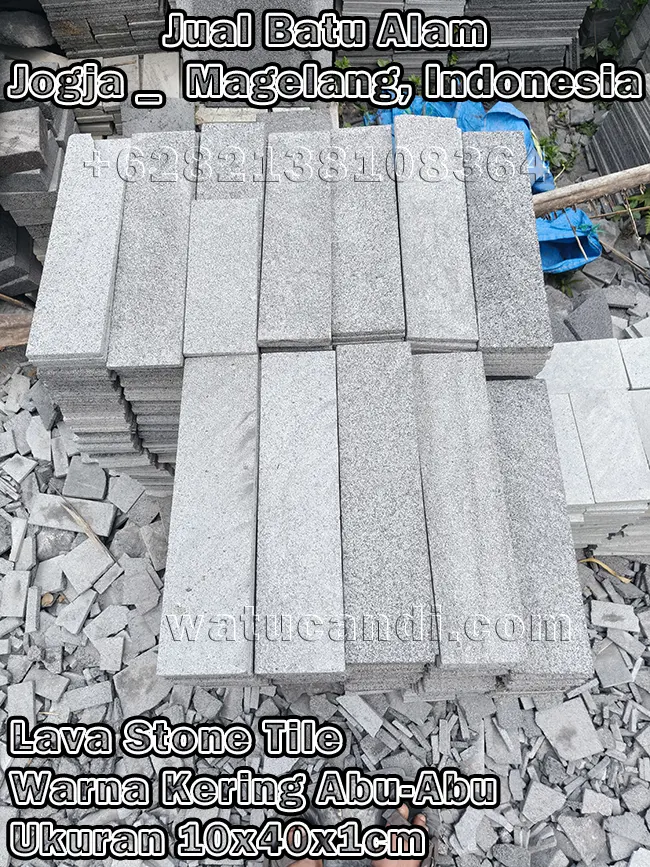
This stone, formed from volcanic eruptions, is a natural stone that is solid, hard, and does not easily absorb water, making it a favorite for Indonesia’s tropical climate. Andesite has bright colors, specifically bright gray to dark gray, with a calm and soothing visual character. Unlike marble which is visually “busy”, andesite offers tranquility suitable for minimalist, industrial, or modern tropical concepts. Its pattern is not in the form of long veins, but rather a consistent granular texture.
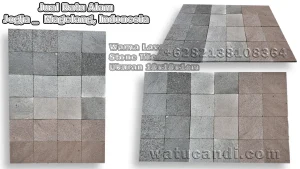
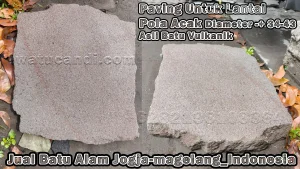
Its surface is naturally slightly rough and has black spots scattered across it due to plagioclase and hornblende mineral content. Andesite stone patterns consist of microscopic crystal dots, so when you install it, the natural impression looks strong without dominating other design elements. Because it is hard and does not easily absorb water, this stone is suitable for exterior designs such as facades, carports, or wet areas. It can be used for walls, tiles, or pillars exposed directly to rain and heat. If you are looking for further references on andesite finishing variations that can change its rough pattern into something smoother or artistically textured, you can explore the collection of premium andesite and lava natural stone flooring which offers various texture options for specific project needs.
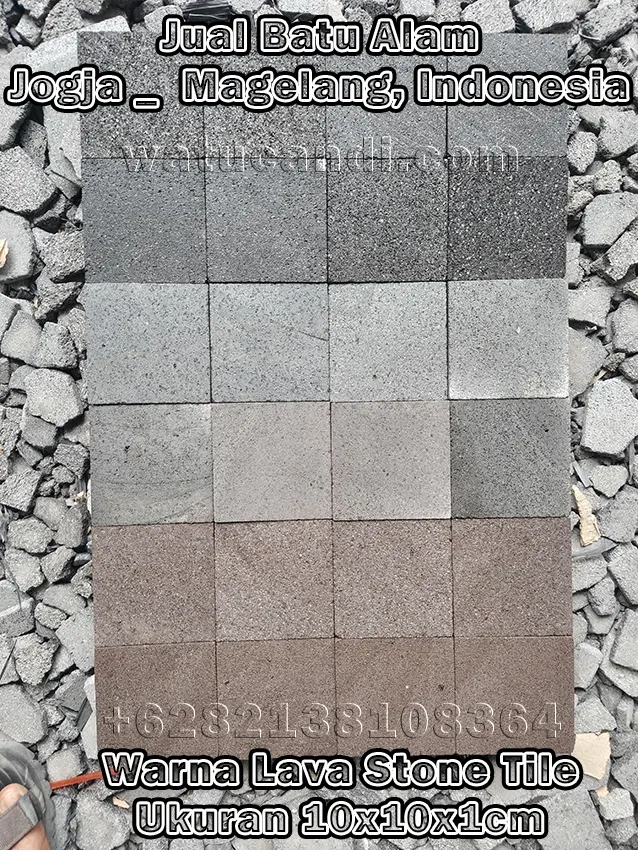
The visualization above confirms that andesite and basalt (andesite’s close relative) patterns have an “honest” character. What you see is the original mineral structure without color manipulation. This visual density provides a sense of security and permanence to buildings. In landscape applications, the dotted pattern of andesite also functions to disguise dust and dirt better than plain surfaces, making it a pragmatic yet aesthetic choice for high-traffic areas.
Candi Stone Natural Stone Patterns: Historical Heritage in Porous Texture
Candi stone is the exact stone you should use for exterior designs wanting a heritage, classic, or traditional tropical nuance. Geologically, candi stone comes from consolidated volcanic pyroclastic deposits, giving it the characteristic of relatively large pores while remaining strong. Candi stone patterns are certainly dark gray like the Borobudur or Prambanan temples in general. This dark color is not paint, but natural oxidation of iron and manganese minerals over thousands of years. This stone has extraordinary strength in facing extreme weather, proven by the survival of thousands of temples in Central Java.
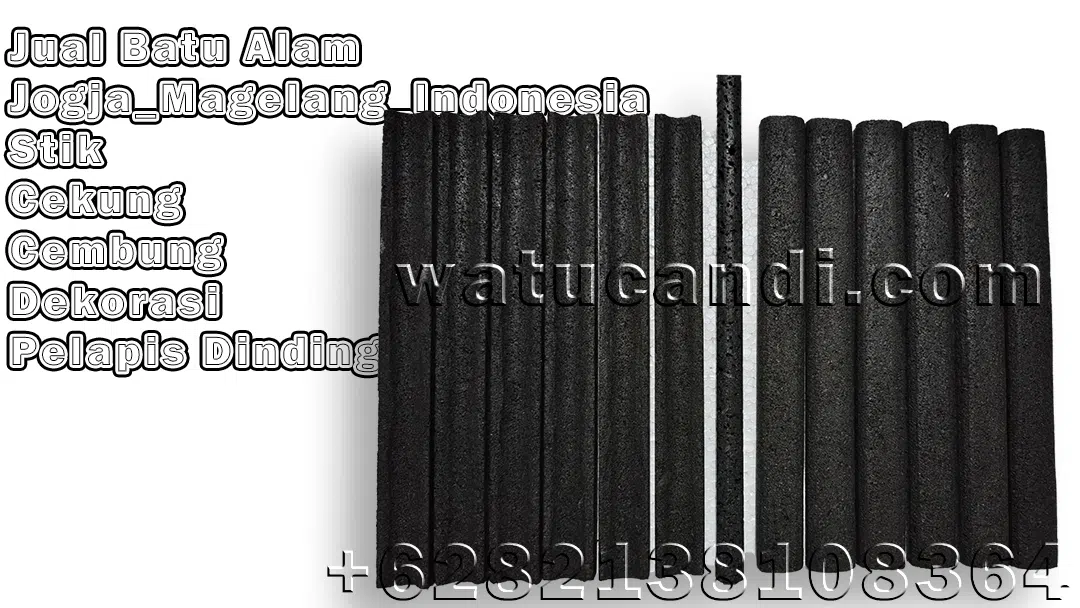
Candi stone patterns vary depending on the quarry location, but generally have a porous texture with small holes from ancient gas bubbles that froze. Unique lines often appear due to volcanic sedimentation layers. Thus, the installation process often uses a raised and recessed (bump) method to emphasize shadows from these pores. The patterns and motifs will look much more dramatic when hit by side lighting (grazing light). Because its patterns and motifs are darker and predominantly black, candi stone is more suitable for garden tiles, pathways, or wall accents. However, this does not mean it is unsuitable for other sides of the house. Like main walls, fences, and terrace columns. For wall application inspiration highlighting this typical texture, visit the guide on random candi stone skin cladding which shows how random arrangements can create stunning visual dynamics.
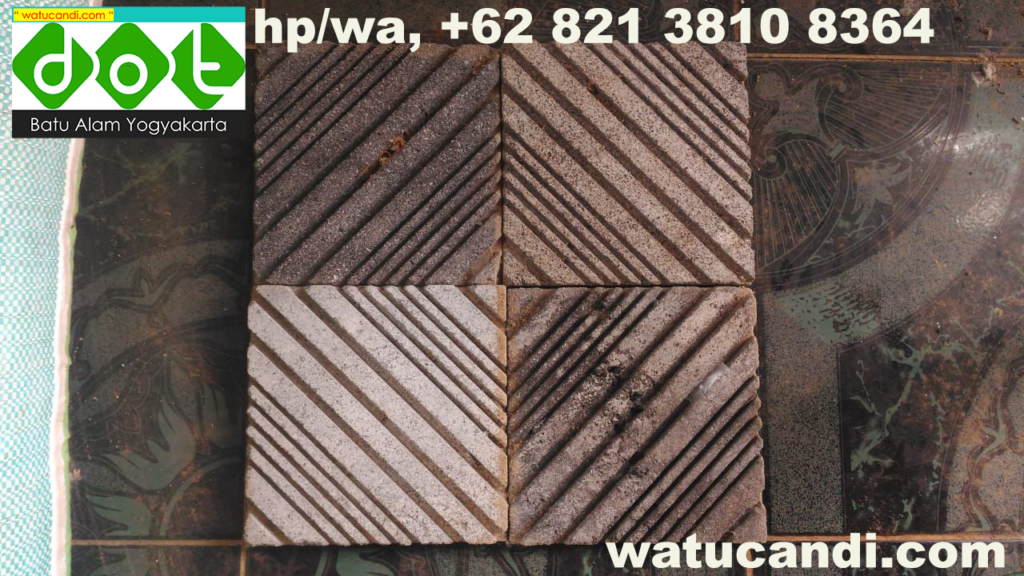
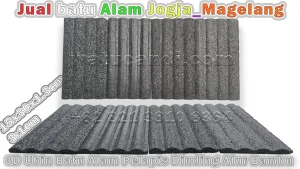
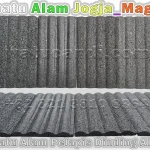
As seen in the image, candi stone patterns can be modified through grooving techniques. This proves that although natural stone has inherent patterns, artisans’ hands can add a second layer of motif that strengthens architectural character. The combination of natural pores and artificial geometric lines is what makes candi stone very flexible for application in design styles from classic to contemporary.
Palimanan Natural Stone Patterns: The Beauty of Earth’s Sedimentary Layers
Next is the Palimanan natural stone pattern, the icon of Indonesian sandstone. A stone whose production comes from the geological formation of Mount Ciremai, which has cream, bone white, to slightly yellowish gray colors. The most distinctive feature of Palimanan patterns is the presence of layers (bedding planes) that look like wood grain or frozen waves. These are traces of ancient river sedimentation recorded eternally in stone. You can install it horizontally following the natural grain direction to strengthen the impression of width, or vertically for a height impression, on the uneven surface typical of sedimentary stone.
Palimanan stone is famous for its strength as high-quality sandstone. Besides being stronger and harder than sandstone from other regions, this natural stone also has high durability against weathering. Thus, besides its good and warm patterns and motifs, we recommend this type of natural stone because it is durable and long-lasting in terms of usage. The unevenness of this natural stone’s surface also makes Palimanan stone look more natural and authentic, non-slip, and softly refracts light. Thus, besides being strong when you install it on the exterior of the house, this stone is also good for interior houses wanting a warm and earthy atmosphere. Learn more about its color variants and quality through the article on Palimanan paras stone tiles to ensure you get the best grade.
Limestone Natural Stone Patterns: The Purity of White Lime Color
Surely you have seen this stone before. Colored clean white, cream, to slightly yellowish, its pattern tends to be plain and does not have specific line motifs like marble or Palimanan. Limestone is formed from the accumulation of ancient marine organism shells, so its texture is dense but still has an organic character. This natural stone is water-absorbent, so it requires special coating care if installed in wet areas. However, it is precisely this absorption that makes it “breathe” and suitable for room humidity regulation.
Nevertheless, we consider this stone strong and having structural durability proven in Dutch colonial buildings that still stand firm. You can install it on walls or certain sides of the house as a balance to dark colors. Another advantage of limestone is that it is easy to shape and carve, so the installation process adjusts to the needs of ornaments or listplank profiles. As an interior natural stone, limestone can be your choice to create a clean, pure, and spacious impression. Its price is also considered more affordable, especially compared to marble stone, making it a smart alternative for budget-conscious design without sacrificing aesthetics. See examples of its carving and ornament applications at sandstone limestone natural stone for architectural detail inspiration.
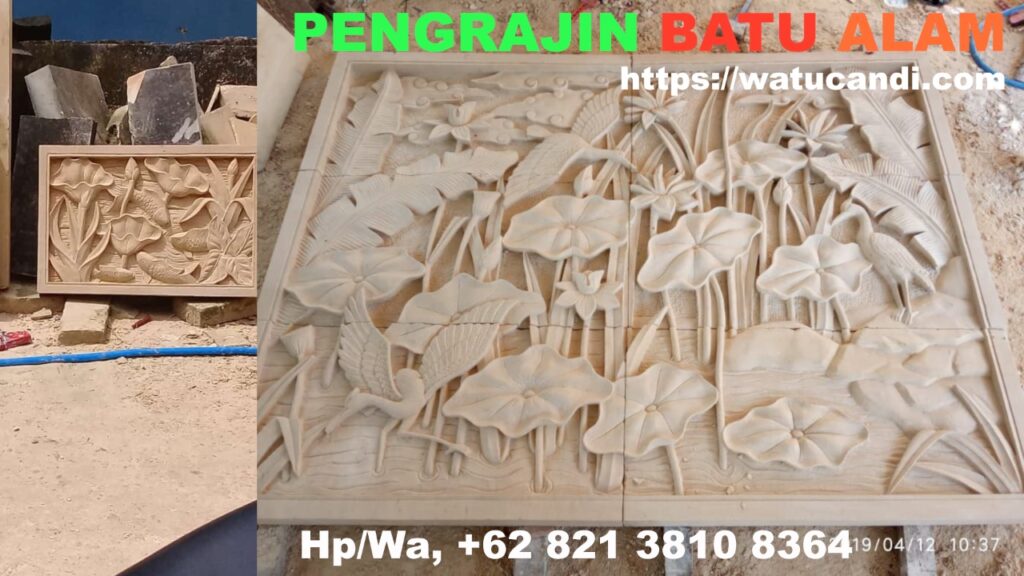
The ornament image above proves that limestone patterns are not only what exists on its original surface, but also patterns that can be “created” on it. Its soft nature when newly mined allows artisans to carve complex reliefs that then harden over time. This makes limestone a favorite material for classic and religious decorative elements.
Granite Natural Stone Patterns: Spectacular Frozen Crystals
Next is granite natural stone which has varied speckled crystal patterns, some dark (Black Galaxy), bright (White Crystal), to reddish. Granite patterns are formed from slow cooling of magma under the earth’s crust, allowing quartz, feldspar, and mica crystals to grow large and interlock. Its installation process is also not limited to one method. It can be said to be more dynamic in terms of installation because it is available in large slab formats as well as modular tiles.
Granite stone is touted as the most weather-resistant stone, anti-fungal, and with almost zero porosity. Furthermore, granite stone is scratch-resistant with a Mohs hardness of 6-7. When you install it, this stone will emit a permanent cold and cool temperature sensation, ideal for tropical climates. Besides that, when you use it for floor tiles, granite stone will not be slippery especially if finished honed or flamed. Its random crystal dot patterns are very effective at disguising stains and hairline cracks, making it the most pragmatic choice for kitchens and public areas. For special applications requiring high precision such as guiding blocks or tactile paving, black granite offers unmatched durability as seen in premium natural stone tiles.
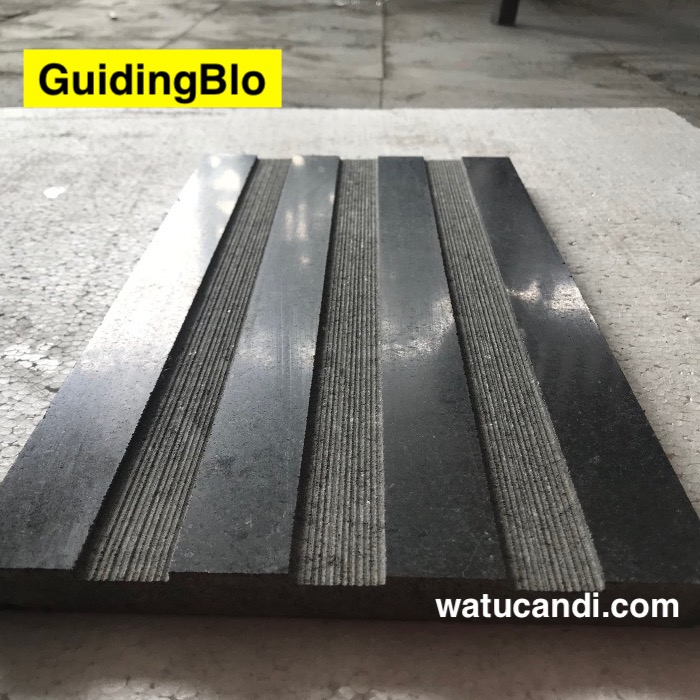
In the image above, granite and andesite patterns serve a dual function: aesthetic and social. The raised pattern on the guiding block is a “felt pattern”, not just seen. This shows another dimension of natural stone patterns namely the aspect of inclusivity and accessibility in public architecture design.
Slate Natural Stone Patterns (River Stone): Authentic Roughness of Ancient Rivers
Next is the pattern of slate stone or commonly known as river stone/split stone. This type of stone has a plain pattern, colored greenish black, dark gray, to brownish depending on the river source. Its texture is dense, layered (foliated), and capable of withstanding high compressive loads. Its pattern depends heavily on the splitting method: if split manually, its surface will show irregular natural layers that are very textural.
River stone can be used for building foundations due to its strength. Besides that, slate stone is more suitable for rustic, industrial, or tropical raw exterior designs. Regarding price, this slate stone has a relatively cheap price, so you do not need to worry about the cost when buying this stone in large volumes. Its rough, irregular pattern provides perfect contrast against smooth plastered walls or glass. Its application is very wide ranging from soil retaining walls, fences, to interior wall accents. Exploration of its irregular shape variations can be found in the irregular natural stone paving catalog which offers beauty in irregularity.
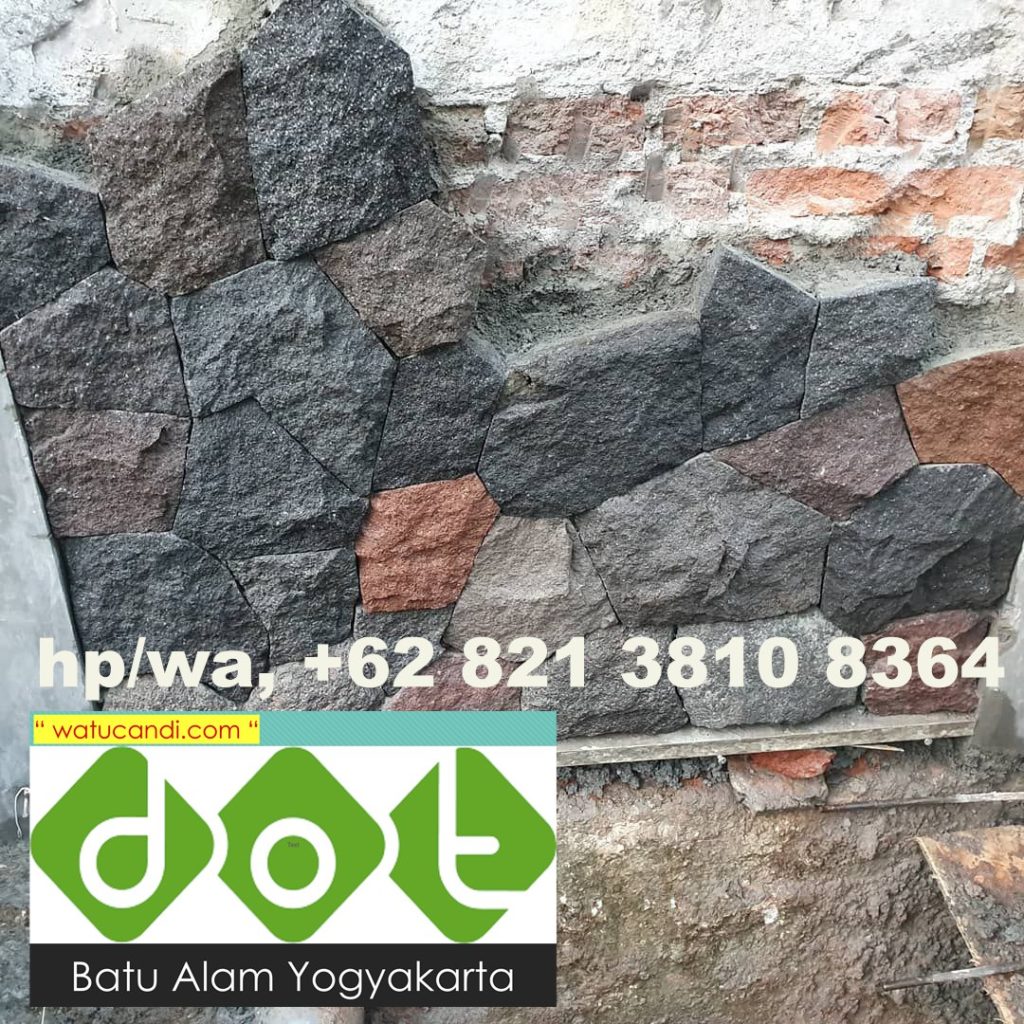
The visualization of the stone pile above reminds us that natural stone patterns are also about “batch variation”. Unlike uniform ceramics, slate and sandstone offer color gradations in one shipment. The designer’s skill lies in the ability to blend these variations into a harmonious composition, not a monotonous one.
Coral Stone Natural Stone Patterns: Living Pebble Mosaic
Next is the pattern of coral stone. Coral stone is a stone often used to decorate gardens, reflexology paths, or bathroom floor accents. This stone is a combination of small stones sized 1-5 cm that are scattered or cemented. Although united, this stone still has gaps on its sides creating rich three-dimensional texture. Its colors are very diverse: white, green, heart red, black, to mixed.
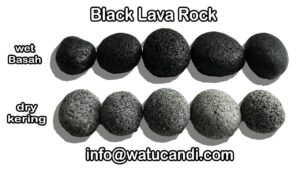
If you install it for brushed tiles (brushed coral), coral stone will be more prominent, so when you step on it, it will feel like a healthy reflexology massage. In terms of function, this stone actually has various functions including drainage and preventing soil water splashes. Besides being strong and hard, coral stone is also durable when you install it for tiles or garden decorations because it does not easily rot. Thus, coral stone is more suitable for exterior house use. However, this does not mean it is unfit for inside the house, for example in shower areas or balconies. As long as the installation process and method are correct (using epoxy grout or resin), coral stone will still look beautiful and charming when viewed. For variations of materials accompanying coral, check the guide on black lava rock pebbles which offers elegant dark color contrast.
Jogja Paras Stone Patterns: Warmth of Classic Volcanic Limestone
Besides being famous for its tourism, it turns out Jogja also has a characteristic stone named Jogja Paras. This stone has a plain pattern colored yellowish white to milk cream, with a finer texture than Palimanan. Its pattern is soft and radiates warmth typical of classic Javanese architecture. Its installation process can also be aligned so it looks neat and formal, or installed in a random model for a more relaxed impression.
There is one thing you need to know about this Jogja paras stone. This stone is a stone that easily absorbs water due to its high porosity. Thus if you use it for exterior without coating, it will be less durable and prone to moss. However, it is precisely the patina of moss and natural weathering that is often sought to create an “aged” or old effect of high artistic value on heritage-style buildings. For interiors, Jogja paras is a champion in creating a shady and cool atmosphere. Learn its complete characteristics in the article on versatile Jogja limestone before deciding to use it.
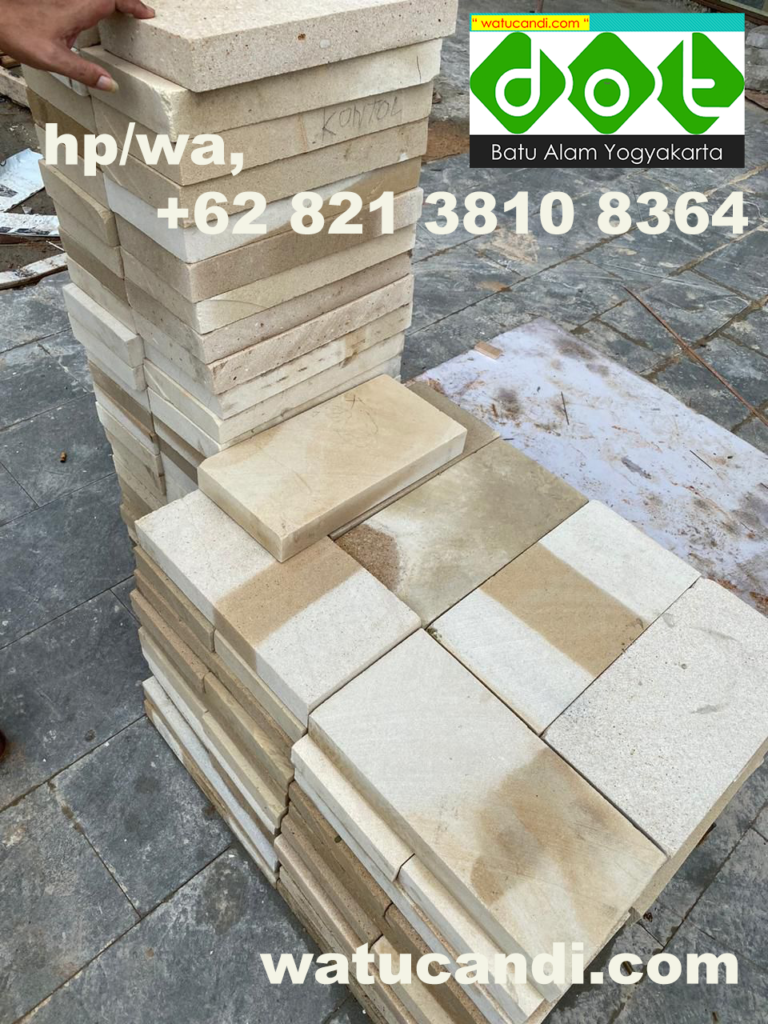
The limestone image above shows how paras/limestone patterns can give a “clean” yet organic impression. Unlike cold granite, the cream pattern of Jogja paras brings psychological comfort that is difficult to mimic with synthetic materials.
Templek Wall Stone Patterns: Dramatic Dark Gradation
This type of natural stone is more suitable for exterior use, specifically facades and fences. Besides its strength equivalent to andesite, templek wall natural stone also has diverse and unique patterns. Colored dark with gradation patterns from black to gray, sometimes with brown or natural rust tints. Its main characteristic is thin layers (slate-like) that can be split into thin but strong sheets.
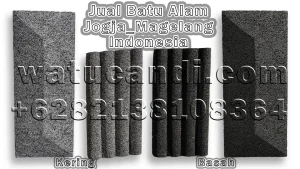
Templek wall natural stone is one type of natural stone resistant to weather and moss thanks to its density. If you install it with the correct technique, for example herringbone system or random cladding, templek wall stone will look elegant and beautiful. Not inferior to other imported stones. This stone is more suitable for walls, because indeed its shape, pattern, and motif strongly support shadow play. Its natural impression also remains strong, even becoming more characterful with age. For other bolder cladding options, consider natural rock face lava rock cladding which has more extreme three-dimensional texture.
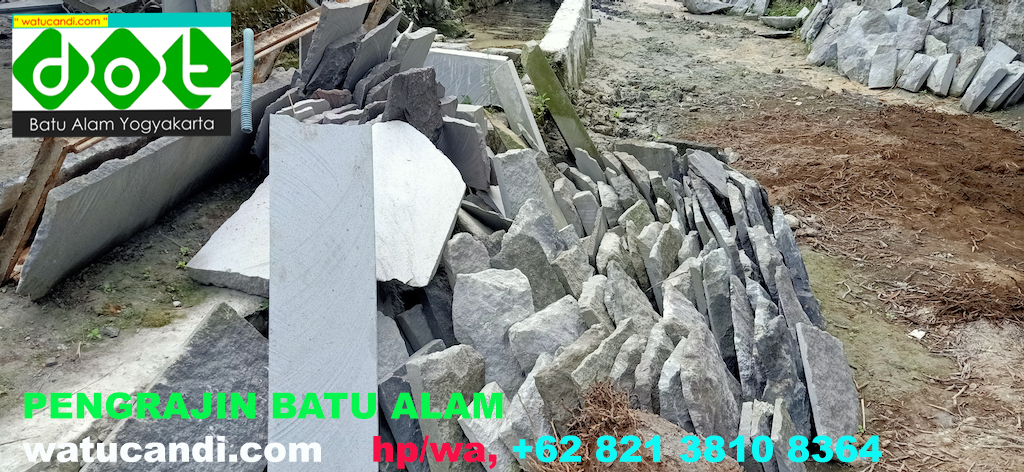
The “skin” texture in the image above is the visual definition of templek pattern. It is not flat, but naturally wavy following sedimentation layers. When illuminated by wall washer lights from below or above, this pattern will create spectacular shadow drama.
Susun Sirih Natural Stone: Modern Vertical Rhythm
The next natural stone is susun sirih natural stone. A natural stone shaped flat and thin like betel leaves, usually from slate or flat andesite types. More suitable for installation on modern minimalist houses as a vertical accent. Besides that, this natural stone also has characteristics that are strong and sturdy despite being thin. Its pattern is plain colored blackish gray with surface texture varying from smooth to naturally wavy.
The arrangement of susun sirih natural stone must not be done carelessly. Because if you do so, its shape will be messy and easily detach. Special expertise is needed to regulate adhesive thickness and slope so that rainwater does not enter the gaps. It can be said, this stone will only be elegant when installed by experts. Because unlike general stones, susun sirih stone is a type of stone that leans more towards standard modern architectural style emphasizing tight horizontal lines. See examples of its original material at genuine susun sirih slate to ensure you get material that is flexible and not easily broken.
Sukabumi Natural Stone: Rare Emerald Green Exoticism
Next is Sukabumi natural stone which people say is rare and exclusive. This stone can only be found in the Sukabumi area, West Java. It has a bright pattern colored iconic emerald green to tosca green. Some yellowish tints or white fibers scattered here and there add to its natural beauty. Its green color comes from unique zeolite and chlorite mineral content.
Because it is rare, Sukabumi natural stone is a natural stone with high selling value. Thus, if you install this type of natural stone in your house, we guarantee your house’s selling value will immediately rise. Its natural color and pattern and its ability to filter water make Sukabumi natural stone the international standard for luxury swimming pools, koi fish ponds, or spa water showers. Thus the natural impression is increasingly realized and pool water appears clear greenish. To understand the difference between local vs precision quality, read the guide on local vs precision green stone tiles so you do not buy imitations incorrectly.
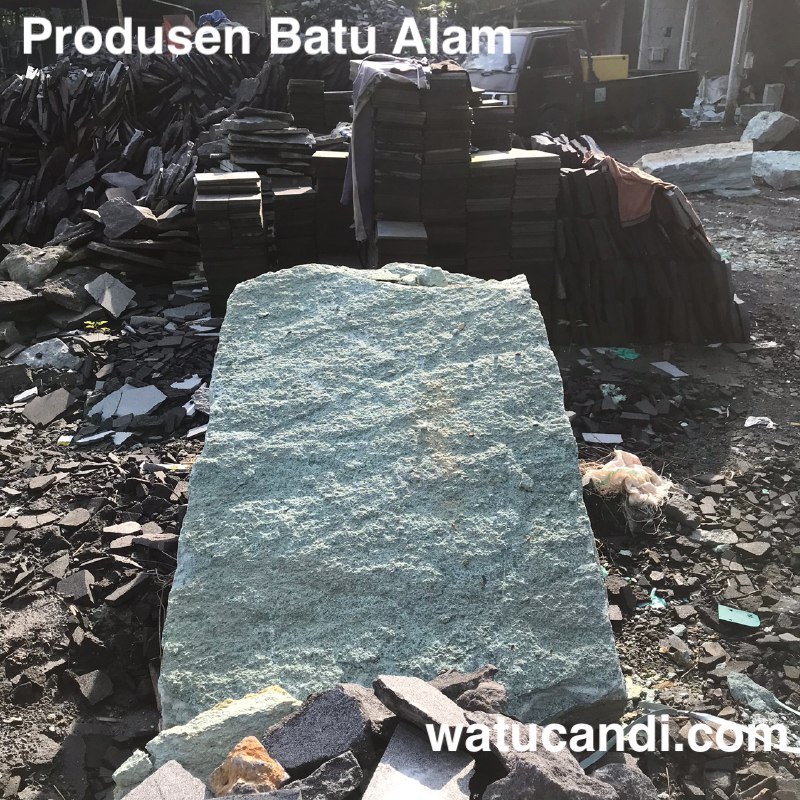
The green color in the image above does not fade due to chlorine or UV rays, instead it becomes more “prominent” when wet. This is the miracle of Sukabumi stone pattern: it reacts positively to water. Its green pattern is not a coating, but the soul of the stone itself.
Cladding Stone Patterns: The Art of Three-Dimensional Wall Mosaic
In this final discussion, there are cladding natural stone patterns and motifs. The term cladding actually refers to an installation method, but in the market it is often associated with small cut stones arranged to form a pattern. Natural stone that when you arrange will form like a mosaic or three-dimensional puzzle. Its arrangement is also done randomly or patterned (such as brick, herringbone, or diamond). Thus random yet harmonious color variation occurs.
Nevertheless, Wallcladding natural stone has a different natural impression and beauty from other natural stones due to light and shadow interaction on each small piece. In terms of beauty, this type of natural stone is suitable for installation in interior foyers, TV walls, or columns. Thus it can warm up the atmosphere in your house and create a strong focal point. The materials used can be andesite, candi, palimanan, or lava stone. For exotic lava mosaic variations, see candi lava natural stone mosaic.
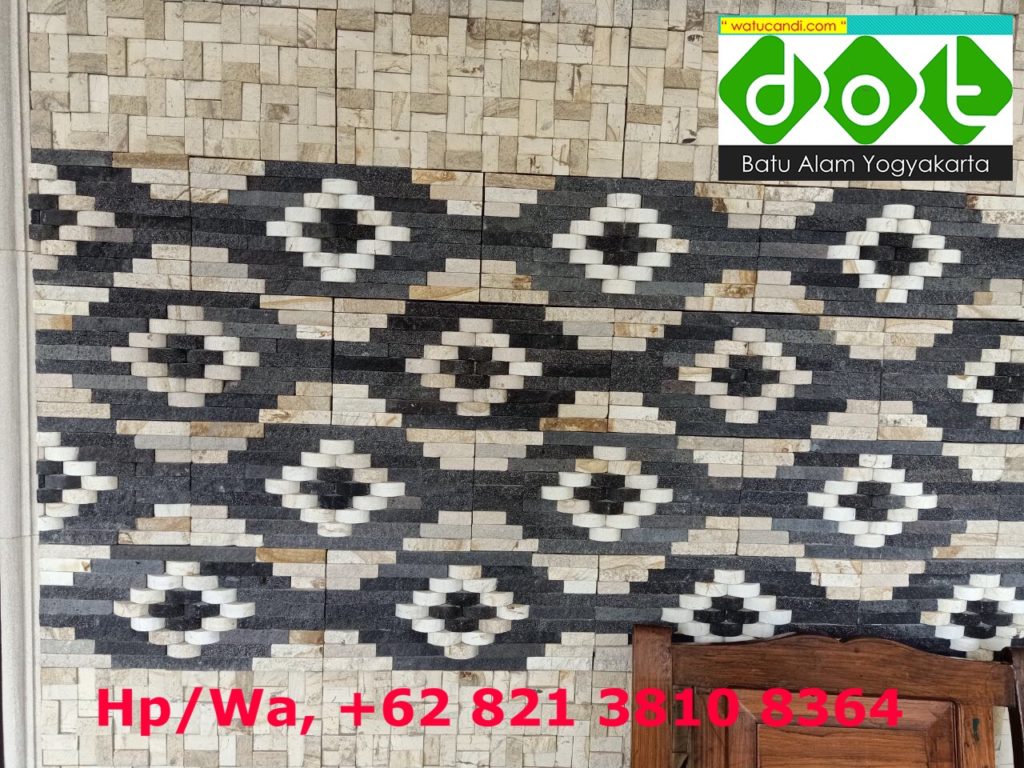
The visual comparison above is very important. Often natural stone patterns only show their differences when juxtaposed. The contrast between black candi and cream palimanan, or between green Sukabumi and gray andesite, is key to creating dynamic and non-boring designs.
Understanding Finishing: Key to Changing Inherent Stone Patterns
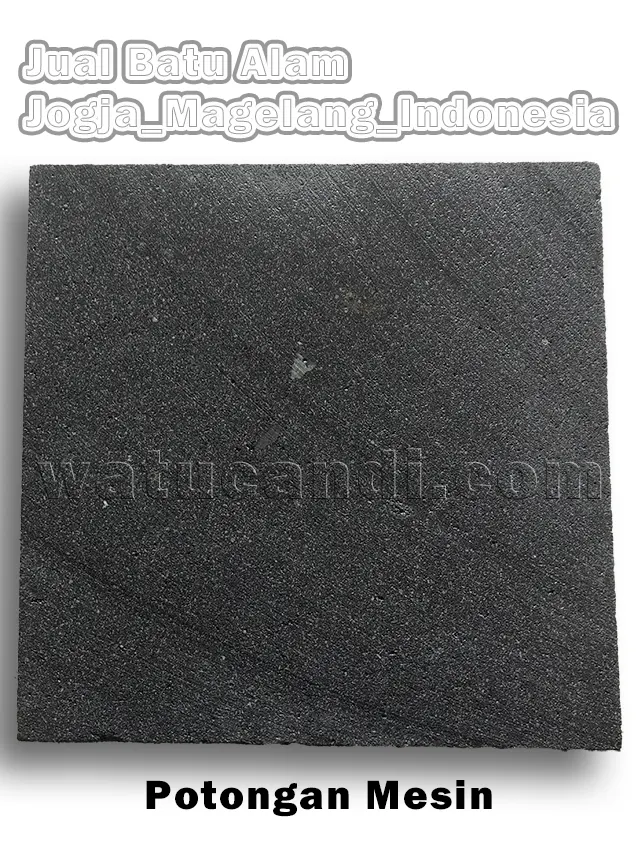
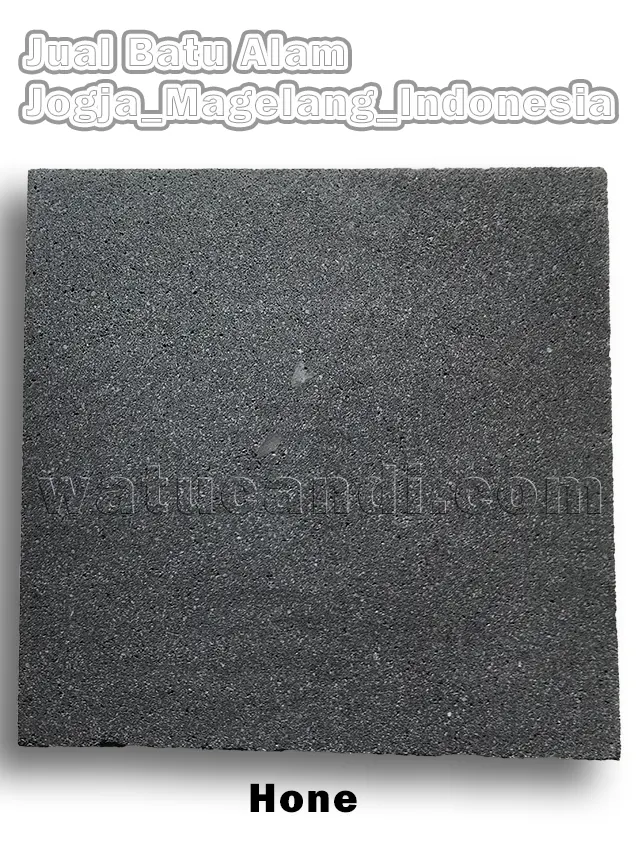
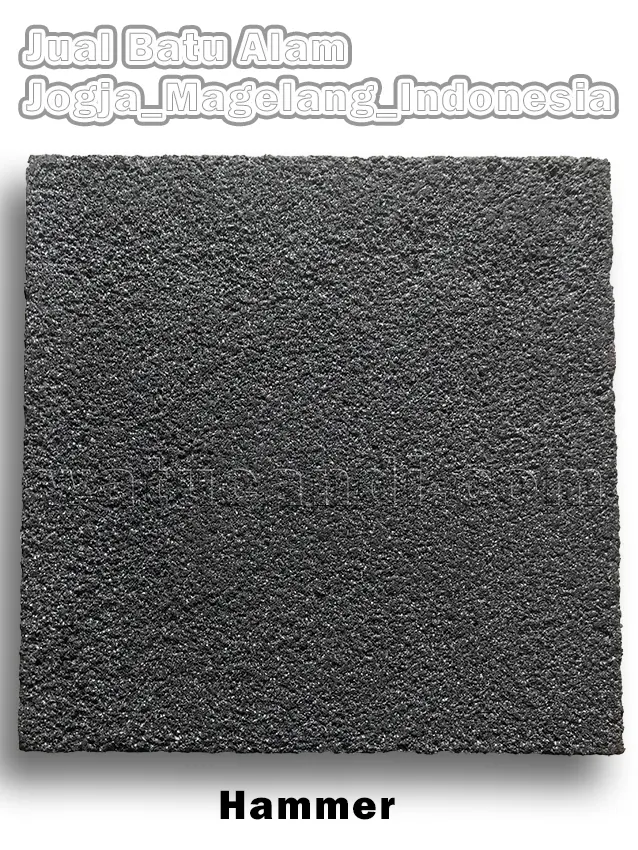
It is important to understand that natural stone patterns are not static. Surface finishing can drastically change the visual character of stone. The same andesite stone can look smooth and modern with honed finishing, rustic and rough with bush hammered, or wavy textured with CNC grooves. Understanding finishing types is key to getting the pattern that suits your design vision.
Honed/Sawn Cut Finishing: Provides a smooth, matte, and even surface. Stone dot or fiber patterns are clearly visible but flush with the surface. Suitable for interiors and areas requiring high cleanliness. Learn details at basalt honed sawn cut.
Bush Hammered Finishing: Hitting the surface with a special tool until evenly pitted. This pattern hides the stone’s original color (usually becomes lighter) and creates excellent anti-slip texture. Ideal for outdoor. Reference: lava bush hammer surface.
Flamed Finishing: Burning the surface with high-temperature fire until stone crystals break and peel off naturally. Creates very natural and anti-slip rough texture without damaging the stone’s original color. Popular for exterior granite and andesite.
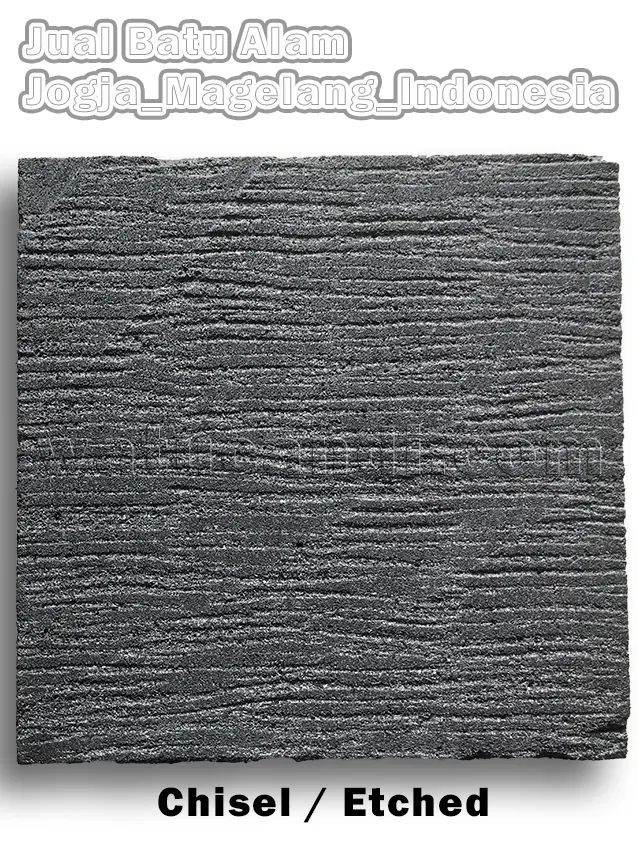
Chiseled/Manual Carving Finishing: Provides artistic and irregular hand chisel marks. This pattern brings strong craftsmanship and heritage nuance. Very suitable for candi and lava stone. See examples at authentic manually chiseled stone floor.
Tumbled Finishing: Rolling stone in a drum containing abrasives to artificially round edges and smooth surfaces. Gives an instant “aged” or old impression, very popular for cobblestone and travertine. Read more at tumbled natural stone finish.
Specific Applications Based on Pattern Character
Each natural stone pattern has its “best home”. Placing the right stone in the right place is key to design success and durability.
Swimming Pool Areas: Prioritize stone with patterns that are non-slip when wet and chemical resistant. Sukabumi stone (green stone) is king here because its green color blends with water and its zeolite properties clarify water. Another alternative is black lava stone which is anti-slip and heat resistant. Complete guide available at green stone tiles swimming pools ultimate guide and lava stone tiles for swimming pool. Do not forget to pay attention to coping stone at pool edges as explained in swimming pool coping stone tiles guide.
Facades and Exterior Walls: Choose stone with patterns resistant to UV and rain. Andesite, candi, lava stone, and templek are the best choices. Avoid marble and Jogja paras without coating because they easily get dirty and mossy. For dramatic facades, use lava rock face or split face candi. Lava stone exterior design inspiration is at lava stone exterior design and black lava candi stone wall cladding.
Interior Floors and Living Areas: Prioritize foot comfort and ease of maintenance. Marble, honed granite, honed andesite, or polished limestone are ideal choices. Patterns that are too rough will be difficult to clean and uncomfortable for sitting or lying down. For pavilion or joglo floors, hand-chiseled candi paving provides authentic heritage nuance as reviewed in hand chiseled candi stone paving.
Gardens and Landscapes: Use stone with natural and permeable patterns. Coral, river stone, lava stepping stone, and andesite grass block are environmentally friendly choices. Lava stepping stone is not only functional but also therapeutic, read at garden stepping stone paving block. For garden borders, use edge stone like in natural stone edges.
Furniture and Sanitary: Natural stone is now also furniture. Tables, chairs, bathtubs, and natural stone sinks offer patterns that merge with function. Lava stone sinks or marble rough face become statement pieces in bathrooms. See the collection at black basalt stone sink, marble rough surface sink, and handmade stone tub. For garden furniture, check handmade stone table and chairs.
Contemporary Natural Stone Pattern Trends: Beyond Tradition
The design world continues to evolve, and natural stone patterns adapt along with it. Current trends show a shift from using stone as a decorative veneer element toward structural and experiential integration.
3D Stone Slabs and Textured Walls: Patterns are no longer flat. CNC technology allows the creation of 3D stone panels with complex geometric or organic motifs impossible to make by hand. This transforms walls into art installations. Learn about this innovation at 3D stone slabs.
Mix Material and Hybrid Pattern: Designers now dare to mix various types of stone in one field. Combining plain andesite with porous candi, or inserting coral between andesite paving, creates new rich and personal patterns. Examples of creative installation patterns are at chiseled natural stone installation patterns.
Sustainable and Local Pride: There is a resurgence of appreciation for local stone with all its “imperfections”. Merapi candi stone patterns that are porous, colorful Yogyakarta breccia stone, or exotic green batik stone are now valued higher than imported stone. This is a movement celebrating local identity. Recognize these unique stone types at types of natural stone GC and brecci natural stone tiles.
Refined Roughness: The latest trend is stone that looks rough visually but smooth to the touch. Modern processing techniques allow “selective smoothing” that retains natural character but eliminates injury risk and maintenance difficulties. This concept is discussed in depth at refined rough face natural stone.
Care and Maintenance: Preserving Pattern Eternity
Beautiful natural stone patterns can fade or be damaged if not cared for properly. Natural stone care varies depending on type and location.
Coating and Sealing: High-porosity stones like candi, paras, and limestone must be coated with penetrating sealant or surface sealer to prevent stains, moss, and efflorescence. Coating can also clarify patterns (wet look) or maintain them natural (natural look). Repeat coating every 1-2 years for exteriors.
Routine Cleaning: Avoid harsh acid cleaners for limestone/marble because they will erode the surface and damage patterns. Use pH-neutral cleaner specifically for natural stone. For volcanic stone (andesite, lava, candi), mild alkaline cleaner is safer. Soft brush to lift dirt from pores without damaging texture.
Stain Handling: Immediately clean oil, wine, or coffee spills before they soak in. For stubborn stains, use special natural stone poultice. Never use pure bleach on colored stone because it can fade natural pigments.
Physical Protection: Use felt pads under furniture legs to prevent scratches on marble/granite floors. Avoid dragging heavy objects. In outdoor areas, ensure good drainage so water does not pool and accelerate weathering.
For specific maintenance guides per stone type, visit the following articles: maintenance black lava candi cladding, specifications and maintenance candi Merapi, and guide green stone tile crafts.
Conclusion: Choosing Patterns as a Lifestyle Choice
***
The previous explanation is a comprehensive explanation of natural stone patterns and motifs that goes beyond just a visual catalog. Indeed, not all natural stones are discussed in detail in one article, but the natural stones above are stones that are already popular in society and proven in quality in various architectural projects. Thus you may have encountered them in various iconic buildings or private residences.
Choosing natural stone patterns is not just choosing color or texture, but choosing the narrative you want to bring into your living space. Do you want the eternal luxury of marble, the minimalist tranquility of andesite, the heritage warmth of Jogja paras, or the exotic green of Sukabumi? Each choice reflects your taste, values, and lifestyle. The previous information can be used as a source of reading and deep reference when deciding to choose natural stone that you will install inside or outside your house.
Always remember that natural stone is a living material that will age with your building. Its patterns will evolve, its colors will mature, and its character will become stronger over time. Treat it with respect, care for it properly, and enjoy its natural aging process. Because in the end, the true beauty of natural stone does not lie in factory perfection, but in the honesty of nature and the traces of time recorded in every pattern. Happy exploring and finding the natural stone pattern that speaks most to your soul!
Natural Stone Patterns, Types of Natural Stone, Marble Stone, Andesite Stone, Candi Stone, Palimanan Stone, Limestone Stone, Granite Stone, Slate Stone, Coral Stone, Jogja Paras, Templek Stone, Susun Sirih Stone, Sukabumi Stone, Cladding Stone, Home Decoration, Exterior Design, Interior Design, Building Materials, Nusantara Architecture